Taxonomy & Classification
- Kingdom
- Animalia
- Phylum
- Echinodermata
- Class
- Crinoidea
- Order
- Comatulida
- Family
- Crinoidea
- Genus
- Antedon

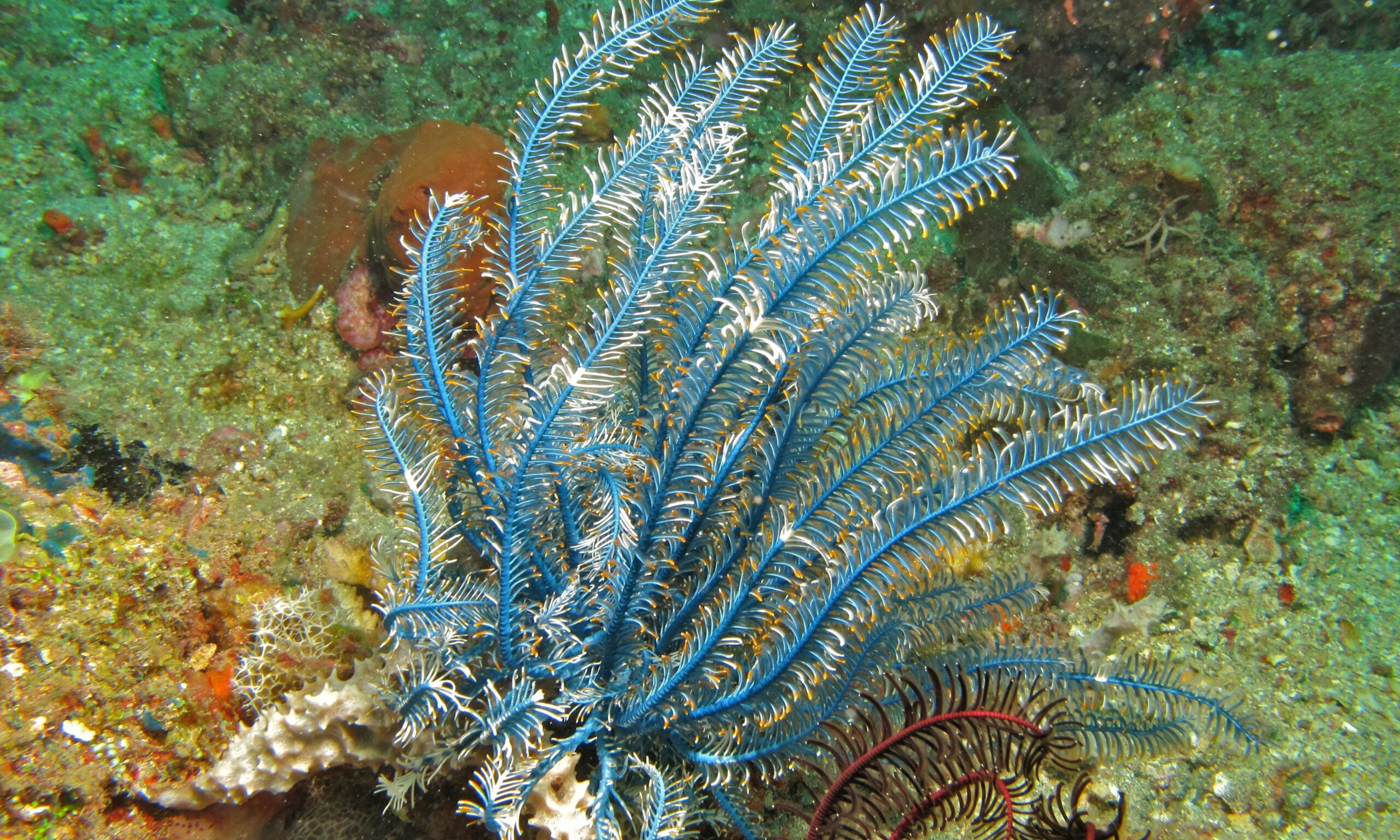 Photo Credit: Josve05a / Wikimedia Commons
In the shimmering depths of the ocean, where sunlight dances on the waves, lives a captivating creature known as the Feather Star, or Antedonidae. With its delicate, feathery arms extending outward like a blooming flower, this enchanting marine animal floats gracefully through its underwater world. Feather stars are not just a sight to behold; they are part of a fascinating family called Crinoidea, which has been around for over 500 million years. This ancient lineage makes them some of the oldest living animals on our planet, intriguing scientists and nature lovers alike.
As you dive deeper into their habitat, you might find feather stars nestled among vibrant coral reefs or clinging to rocky substrates, swaying gently with the currents. Their unique body structure, featuring a central disc and numerous long, slender arms, allows them to filter tiny plankton and organic particles from the water, showcasing their role as both predators and prey in the ocean’s food web. These nocturnal creatures come alive at night, emerging from their resting spots to feed and socialize, adding a touch of mystery to their already enchanting lives. With their graceful movements and vital ecological role, feather stars invite us to explore the wonders of the ocean and the intricate connections that sustain life beneath the waves.
Feather stars are captivating members of the animal kingdom, nestled within the phylum Echinodermata, which also includes starfish and sea urchins. What sets feather stars apart is their delicate, feathery arms that extend from a central body, resembling a blooming flower swaying in the ocean currents. These unique appendages are not just for show; they help the feather star capture tiny food particles from the water, showcasing a remarkable adaptation for survival. Their graceful movements and vibrant colors make them a stunning sight on coral reefs and in deep-sea environments.
| Taxonomic Rank | Scientific Name | Meaning & Significance |
|---|---|---|
| Kingdom | Animalia | This name means “animals” in Latin, highlighting that feather stars are multicellular organisms that consume organic material. |
| Phylum | Echinodermata | Derived from Greek, meaning “spiny skin,” this name reflects the tough, spiny exterior that many echinoderms possess, although feather stars have a softer appearance. |
| Class | Crinoidea | This term comes from Greek words meaning “lily” and “form,” indicating their resemblance to flowers, which is fitting given their graceful, plant-like appearance. |
| Order | Comatulida | From Latin, meaning “feathered,” this name emphasizes the feather-like arms that are characteristic of this group, aiding in their feeding and movement. |
| Family | Crinoidea | This name is the same as the class, reinforcing the connection between the feather stars and their relatives, all of which share similar features. |
| Genus | Antedon | Meaning “before the tooth,” this name refers to the absence of a hard mouth structure, which is a distinctive feature of feather stars compared to other echinoderms. |
The classification of feather stars reveals a rich evolutionary history that connects them to ancient marine life. As members of the Echinodermata phylum, they share a common ancestor with other echinoderms, dating back hundreds of millions of years. Their unique adaptations, such as their feathery arms and filter-feeding behavior, illustrate how they have evolved to thrive in diverse underwater habitats. This evolutionary journey not only highlights their resilience but also underscores the intricate web of life in our oceans, where each species plays a vital role in maintaining the balance of marine ecosystems.
The evolutionary journey of feather stars, belonging to the family Crinoidea, stretches back over 500 million years, making them some of the oldest living animals on Earth. These enchanting marine animals first appeared during the Cambrian period, a time when life was just beginning to flourish in the oceans. As the ages rolled on, feather stars adapted and evolved, witnessing dramatic changes in the planet’s ecosystems and the rise and fall of countless species.
Feather stars are descendants of ancient crinoids that once thrived in shallow seas. Their ancestors were more rigid and less mobile, resembling the fixed, stalked forms we often associate with crinoids today. Over time, these early forms transitioned to a free-swimming lifestyle, shedding their stalks and developing long, feathery arms. This transformation allowed them to capture food more efficiently and explore new habitats. The evolution of their arms, which can number from ten to over two hundred, enabled them to filter feed on tiny plankton and organic particles suspended in the water, a vital adaptation for survival in diverse marine environments.
These evolutionary adaptations have been key to the survival of feather stars through the ages. Their flexible arms and free-swimming abilities allow them to explore and exploit a variety of food sources, while their vibrant colors help them evade predators. The capacity to regenerate lost limbs ensures that even after facing danger, they can continue to thrive in their underwater worlds. As they gracefully drift through the oceans, feather stars remind us of the incredible resilience and adaptability of life on Earth.
Feather stars are enchanting marine animals that seem to float gracefully through the water, resembling delicate flowers swaying in a gentle breeze. Their bodies are composed of a central disc, from which long, feathery arms extend outward. These arms can number anywhere from five to several dozen, creating a stunning display that captures the light and colors of their underwater world. With a soft, flexible texture, feather stars can bend and sway, allowing them to navigate their environment with ease.
| Feature | Description |
|---|---|
| Size | Typically range from 10 to 30 centimeters in diameter, depending on the species. |
| Color | Vibrant hues of red, orange, yellow, and green, often with intricate patterns. |
| Skin Type | Soft and flexible, covered in tiny, hair-like structures called tube feet. |
| Body Structure | Central disc with numerous long, feathery arms that can be extended or retracted. |
These features work together beautifully to enhance the feather star’s survival in its underwater habitat. The vibrant colors not only attract potential mates but also help camouflage the star among coral and seaweed, making it less visible to predators. The soft, flexible arms are equipped with tiny tube feet that allow the feather star to capture tiny plankton and other food particles drifting by in the water. This combination of striking appearance and functional design makes feather stars a true marvel of the ocean, showcasing the wonders of evolution and adaptation.
Feather stars thrive in the vibrant underwater world of the ocean, where they find their homes nestled among coral reefs and rocky substrates. These enchanting animals often cling to the ocean floor, swaying gently with the currents, much like flowers dancing in the wind. Their habitats are rich in biodiversity, providing a perfect backdrop for their delicate arms to filter feed on tiny plankton and organic particles drifting by.
Feather stars prefer warm, shallow waters, typically found at depths ranging from just a few feet to over 600 feet. The climate in these regions is generally stable, with temperatures that can vary but usually remain between 20 to 30 degrees Celsius (68 to 86 degrees Fahrenheit). They thrive in areas with plenty of sunlight, which helps support the growth of the algae and other organisms that make up their food source. The gentle currents of these waters also play a crucial role, as they bring in nutrients while allowing feather stars to extend their arms to catch food.
To survive in their specific habitats, feather stars have developed some clever adaptations. Their long, feathery arms are not just for show; they are lined with tiny structures called tube feet that help them capture food particles from the water. This feeding strategy allows them to make the most of their surroundings, ensuring they get enough nourishment even in the bustling underwater ecosystem. Additionally, their ability to cling tightly to rocks and coral helps protect them from strong currents and predators, making them well-suited for life in these dynamic environments.
Feather stars lead a captivating life beneath the waves, primarily active during the night. As nocturnal creatures, they emerge from their resting spots on the ocean floor to feed and socialize under the cover of darkness. Their daily activities revolve around filtering tiny food particles from the water, using their feathery arms to capture plankton and other small organisms. This feeding process is not just about survival; it’s a dance of elegance as they sway gently with the currents, showcasing their beautiful, flower-like appearance.
Socially, feather stars are known to cluster together, forming groups that can be quite mesmerizing to observe. These gatherings provide safety in numbers, allowing them to share resources and protect one another from potential predators. Within these clusters, they communicate through subtle movements and the positioning of their arms, signaling to each other about food availability or changes in their environment. This social behavior not only strengthens their bonds but also enhances their chances of survival in the vast ocean.
| Behavior Type | Description |
|---|---|
| Feeding | Feather stars filter feed by extending their arms to capture plankton and small particles from the water. |
| Social Structure | They often cluster together in groups, providing safety and resource sharing among members. |
| Communication | They use subtle movements and arm positioning to signal to each other about food and environmental changes. |
The behaviors of feather stars are finely tuned to ensure their survival in the ocean’s depths. By being nocturnal, they avoid many daytime predators, while their clustering behavior enhances their safety and feeding efficiency. This combination of social interaction and adaptive feeding strategies allows them to thrive in their underwater world, showcasing the intricate balance of life in the ocean.
Feather stars are omnivores, meaning they enjoy a varied diet that includes both plant and animal matter. These fascinating marine animals primarily feed on tiny organisms like plankton, which are microscopic creatures drifting in the water. To catch their food, feather stars use their feathery arms, which are lined with specialized structures called tube feet. These tube feet help them capture plankton as it floats by, allowing them to filter feed efficiently.
| Dietary Aspect | Details |
|---|---|
| Diet Type | Omnivore |
| Favorite Foods | Plankton |
| Prey Items | Microscopic organisms |
| Hunting/Foraging Strategies | Filter feeding using feathery arms and tube feet |
This diet plays a crucial role in the ecology of feather stars and their surrounding environment. By feeding on plankton, they help regulate these tiny populations, contributing to the balance of marine ecosystems. Their nightly foraging routine not only sustains them but also supports the intricate web of life in coral reefs and rocky substrates, where they reside. In this way, feather stars are not just passive feeders; they are active participants in the vibrant underwater world, shaping their habitat with every meal.
When it comes to reproduction, feather stars have a rather intriguing approach. During the breeding season, which typically occurs in warmer months, these marine animals engage in a fascinating mating ritual. Males and females release their gametes—sperm and eggs—into the water column, where fertilization takes place. This method, known as external fertilization, allows for a greater chance of survival for the young, as the sheer number of eggs and sperm increases the likelihood that some will develop into healthy larvae.
| Reproductive Aspect | Details |
|---|---|
| Gestation Period | Not applicable; fertilization occurs externally |
| Litter Size | Thousands of eggs |
| Age of Maturity | 12 to 18 months |
| Name of Young | Larvae |
Once the eggs are fertilized, they develop into free-swimming larvae that drift through the ocean currents. These larvae are quite different from adult feather stars, as they have a more elongated shape and are equipped with tiny structures that help them swim. As they grow, they undergo a transformation, eventually settling on the ocean floor and metamorphosing into the familiar star-like shape of adult feather stars. Interestingly, feather stars do not provide parental care after the eggs are released, relying instead on the vastness of the ocean to ensure that some of their young survive to adulthood. This strategy, while risky, has allowed feather stars to thrive in their underwater habitats for millions of years.
Feather stars play a vital role in the ocean’s food web, serving as both predators and prey. These graceful creatures filter tiny plankton and organic particles from the water, contributing to the health of their ecosystems. However, they are also a target for various marine animals, making their survival a delicate balance in the underwater world.
To defend themselves against these threats, feather stars have developed several clever survival strategies. When faced with danger, they can quickly retract their arms and blend into their surroundings, making them less visible to predators. Additionally, their ability to regenerate lost limbs allows them to recover from attacks, ensuring they can continue to thrive in their vibrant ocean habitats. Through these adaptations, feather stars navigate the challenges of their underwater world with grace and resilience.
A keystone species is a vital part of its ecosystem, meaning its presence and activities have a significant impact on the environment and other organisms. Feather stars, with their unique feeding habits and role in marine habitats, can indeed be considered a keystone species. By filtering water and providing habitat for other marine life, they help maintain the balance of their underwater world.
Feather stars are fascinating for their ability to filter feed, which means they consume tiny organisms like plankton from the water. This feeding behavior not only provides them with nourishment but also helps keep the water clean and clear. When feather stars cluster together, they create a habitat that offers shelter for smaller fish and invertebrates. This clustering behavior enhances biodiversity, allowing various species to thrive in the same area. Additionally, feather stars serve as prey for larger animals, such as fish and sea turtles, making them an essential link in the food web.
Feather stars also contribute to the health of coral reefs. By filtering out excess nutrients and organic matter, they help prevent algal blooms that can suffocate corals. This balance is crucial for the survival of the entire reef ecosystem, which supports countless marine species. Their presence can indicate the overall health of the marine environment, making them important for scientists studying ocean ecosystems.
If feather stars were to disappear from their ecosystems, the consequences could be severe. Without their filtering abilities, water quality could decline, leading to harmful algal blooms that threaten coral reefs and other marine life. The loss of habitat they provide would also impact smaller fish and invertebrates, potentially causing a ripple effect throughout the food web. Larger predators that rely on feather stars for food would face challenges as their prey becomes scarce. In essence, the absence of feather stars would disrupt the delicate balance of marine ecosystems, highlighting their crucial role in ocean health.
Feather stars occupy a fascinating ecological niche in the ocean, where they play a crucial role in maintaining the health of their underwater environments. These graceful creatures, with their feathery arms and delicate movements, are not just beautiful to observe; they are essential for the balance of marine ecosystems. By filtering tiny plankton and organic particles from the water, feather stars help to keep the water clean and support the diverse life forms that depend on a healthy habitat.
| Ecosystem Service | Impact |
|---|---|
| Water filtration | Removes excess nutrients and particles, improving water quality |
| Habitat structure | Provides shelter and surfaces for other marine organisms |
| Food source | Serves as prey for various fish and invertebrates |
| Nutrient cycling | Contributes to the recycling of organic matter in the ecosystem |
Feather stars influence their environment in several specific ways. By feeding on plankton, they help control the population of these tiny organisms, which can otherwise bloom excessively and disrupt the balance of the ecosystem. Their presence also creates a habitat for smaller marine life, such as shrimp and small fish, which find refuge among their arms. This interaction fosters a rich community of species, all relying on one another for survival. Additionally, as feather stars die and decompose, they return nutrients to the ocean floor, enriching the substrate and supporting the growth of other organisms.
The broader ecological importance of feather stars cannot be overstated. As a keystone species, their activities significantly impact the health and stability of marine ecosystems. By maintaining water quality, providing habitat, and contributing to nutrient cycling, feather stars help sustain the intricate web of life in the ocean. Their graceful presence is a reminder of the interconnectedness of all living things and the vital roles that even the smallest creatures play in our planet’s health.
Symbiosis is a captivating concept in nature, where different species interact in ways that can benefit one or both parties involved. These ecological relationships can take many forms, including mutualism, where both species gain advantages, parasitism, where one benefits at the other’s expense, and commensalism, where one species benefits while the other is neither helped nor harmed. In the vibrant underwater world, feather stars engage in various partnerships that highlight the intricate web of life beneath the waves.
| Species/Type | Relationship Type | Description |
|---|---|---|
| Small fish (e.g., gobies) | Mutualistic | Feather stars provide shelter for small fish, while the fish help keep the feather stars clean by eating parasites and debris. |
| Sea anemones | Commensal | Feather stars may attach to sea anemones, gaining protection from predators without affecting the anemones. |
| Coral reefs | Mutualistic | Feather stars contribute to the health of coral reefs by filtering water and providing nutrients, while benefiting from the reef’s structure for habitat. |
The evolution of these relationships showcases the adaptability and interconnectedness of marine life. Over time, feather stars have developed these partnerships to enhance their survival and thrive in their underwater habitats. By forming bonds with other species, they not only secure their own well-being but also contribute to the health of the ecosystem as a whole. This beautiful dance of cooperation and coexistence illustrates the wonders of nature, reminding us of the importance of every creature in maintaining the balance of life in our oceans.
Feather stars are enchanting marine animals that capture the imagination with their graceful movements and unique adaptations. These fascinating creatures are not just beautiful; they also play important roles in their underwater ecosystems. Here are some surprising facts that showcase their remarkable nature.
Feather stars have long captured the attention of humans, both for their beauty and their intriguing behaviors. Historically, these delicate marine animals have been featured in various cultures, often symbolizing grace and fluidity. Ancient civilizations, such as the Greeks and Romans, marveled at their ethereal forms, sometimes incorporating them into art and mythology. In some coastal communities, feather stars were even used in traditional medicine, believed to possess healing properties. This rich tapestry of human interaction highlights how these creatures have inspired wonder and curiosity throughout the ages.
Today, the relationship between feather stars and humanity is evolving, particularly as we become more aware of the importance of marine conservation. As climate change and pollution threaten their habitats, conservationists are working tirelessly to protect these unique animals and their ecosystems. However, conflicts can arise, especially in regions where fishing and tourism impact their populations. While feather stars are not domesticated, they are increasingly studied in marine biology, helping scientists understand their role in ocean health and biodiversity. This research is crucial for developing strategies to ensure their survival in a changing world.
As we look to the future, the relationship between feather stars and humanity holds both challenges and opportunities. With increased awareness of environmental issues, there is hope that more people will advocate for the protection of these enchanting creatures and their habitats. By fostering a deeper understanding of the delicate balance within marine ecosystems, we can ensure that feather stars continue to thrive in our oceans for generations to come. Together, we can celebrate the beauty of these ancient animals while working to safeguard their future.
The conservation status of feather stars is currently classified as “Not Listed” by the International Union for Conservation of Nature (IUCN). This means that there is not enough information to determine their risk of extinction. While some populations may be stable, others could be facing challenges that are not yet fully understood. As a result, the overall population trends for feather stars remain unclear, making it essential to monitor their habitats and behaviors closely.
| Conservation Factor | Status/Details |
|---|---|
| IUCN Status | Not Listed |
| Population Estimates | Unknown |
| Trend Direction | Uncertain |
Feather stars face several threats that could impact their populations. One of the main challenges is habitat destruction, particularly due to human activities like coastal development and pollution. These delicate animals rely on healthy coral reefs and rocky substrates for shelter and feeding. Additionally, climate change poses a significant risk, as rising ocean temperatures and acidification can disrupt their ecosystems. Overfishing and the collection of marine life for aquariums can also lead to declines in local populations.
Conservation efforts for feather stars are still in the early stages, primarily because their status is not well-documented. However, raising awareness about the importance of marine ecosystems and the role of feather stars can help promote their protection. Initiatives aimed at preserving coral reefs and reducing pollution are crucial for the health of these enchanting creatures. With continued research and conservation actions, there is hope that feather stars can thrive in their underwater homes for generations to come.
| Question | Answer |
|---|---|
| What is a Feather Star? | A Feather Star is a type of echinoderm, which means it is related to sea stars and sea urchins. They are known for their long, feathery arms that help them catch food and move around in the ocean. |
| Where do Feather Stars live? | Feather Stars are found in the ocean, typically on the ocean floor. They prefer shallow waters, often hiding among coral reefs or rocky substrates where they can find food and shelter. |
| What do Feather Stars eat? | Feather Stars are omnivores, meaning they eat both plants and animals. They primarily feed on tiny plankton and organic particles that they filter from the water using their feathery arms. |
| How do Feather Stars reproduce? | Feather Stars can reproduce both sexually and asexually. In sexual reproduction, they release eggs and sperm into the water, where fertilization occurs. Asexually, they can regenerate lost arms, and in some cases, a new individual can grow from a severed arm. |
| What are the main threats to Feather Stars? | While Feather Stars are not currently listed as endangered, they face threats from habitat destruction and pollution. Changes in ocean temperature and acidity can also impact their survival, as these factors affect their food sources and habitats. |
| What are some interesting characteristics of Feather Stars? | Feather Stars have a unique ability to move their arms in a graceful, waving motion, which helps them catch food. They can also change color, blending in with their surroundings to avoid predators. |
| How do Feather Stars move? | Feather Stars can move by using their arms to crawl along the ocean floor. They can also swim by flapping their arms, which allows them to escape from predators or find new feeding areas. |