Taxonomy & Classification
- Kingdom
- Animalia
- Phylum
- Chordata
- Class
- Mammalia
- Order
- Carnivora
- Family
- Canidae
- Genus
- Vulpes
- Species
- Vulpes zerda

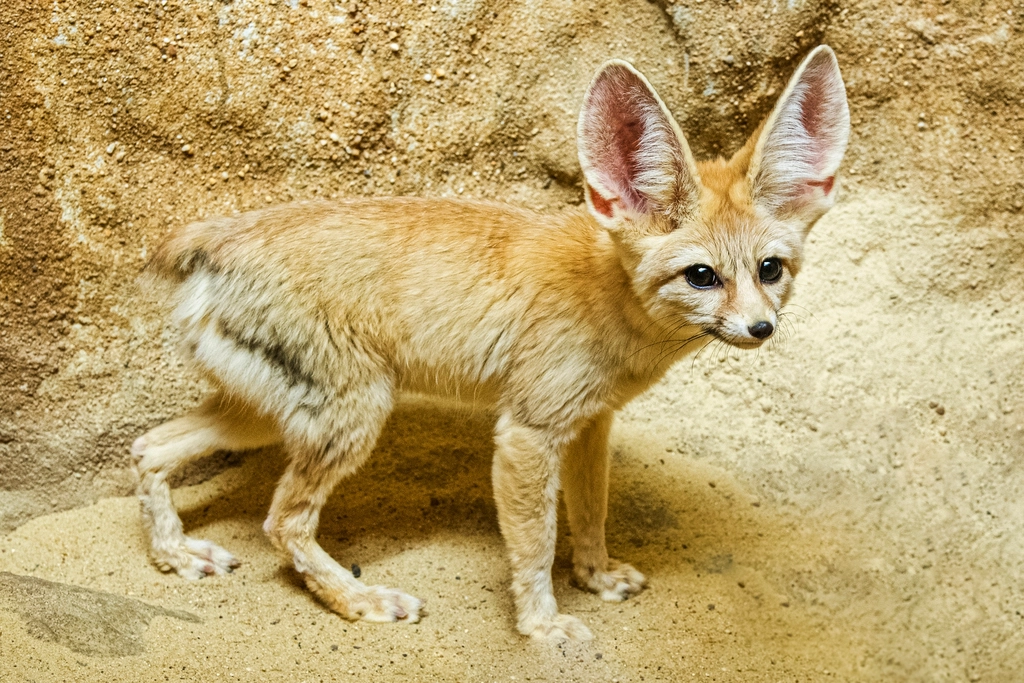 Photo Credit: Rawpixel
In the heart of the Sahara Desert, where golden sands stretch endlessly beneath a blazing sun, lives the enchanting Fennec Fox, scientifically known as Vulpes zerda. This small marvel of nature is instantly recognizable, thanks to its oversized ears that can measure up to six inches long—almost as big as its body! These remarkable ears are not just for show; they help the Fennec Fox hear the faintest sounds of prey scurrying beneath the desert floor, while also keeping it cool in the sweltering heat. With a weight of only 1 to 1.5 kilograms, or about 2.2 to 3.3 pounds, this little fox is a master of survival in one of the harshest environments on Earth.
As the sun dips below the horizon, the Fennec Fox awakens from its daytime slumber, ready to explore the cool desert night. Its soft, sandy-colored fur blends seamlessly with the dunes, providing excellent camouflage against predators. This nocturnal creature is not just a pretty face; it plays a vital role in its ecosystem, helping to control insect populations and disperse seeds. Scientists and nature enthusiasts alike are captivated by the Fennec Fox’s adaptability and playful demeanor, making it a symbol of resilience in the wild. Join us as we delve deeper into the life of this extraordinary animal, exploring its behaviors, diet, and the unique challenges it faces in its desert home.
The Fennec Fox, a small yet captivating member of the animal kingdom, holds a special place in the tree of life. Scientifically classified within the family Canidae, which includes dogs, wolves, and other foxes, the Fennec Fox is distinguished by its oversized ears and sandy-colored fur. These features not only make it adorable but also serve practical purposes, such as dissipating heat in its hot desert habitat. This little fox is a true survivor, perfectly adapted to the arid landscapes of North Africa, where it thrives in the harsh conditions of the Sahara Desert.
| Taxonomic Rank | Scientific Name | Meaning & Significance |
|---|---|---|
| Kingdom | Animalia | This name signifies that the Fennec Fox is part of the animal kingdom, which includes all multicellular organisms that are not plants, fungi, or bacteria. |
| Phylum | Chordata | Chordata means “having a notochord,” a flexible rod that supports the body. This group includes all animals with a backbone, like the Fennec Fox. |
| Class | Mammalia | Mammalia refers to mammals, which are warm-blooded animals that have fur or hair and typically give live birth. The Fennec Fox is warm-blooded and has a thick coat to help it survive in its environment. |
| Order | Carnivora | Carnivora is the order that includes meat-eating mammals. The Fennec Fox, while it eats insects and plants too, is primarily a carnivore, showcasing its hunting skills. |
| Family | Canidae | Canidae, or the dog family, includes animals like wolves and domestic dogs. The Fennec Fox shares traits with these relatives, such as social behavior and vocalizations. |
| Genus | Vulpes | Vulpes is the genus name for true foxes. The Fennec Fox is classified here due to its fox-like characteristics, including its bushy tail and cunning nature. |
| Species | Vulpes zerda | The species name “zerda” is derived from Arabic, reflecting the Fennec Fox’s native habitat in North Africa and its cultural significance in the region. |
Understanding the Fennec Fox’s classification reveals much about its evolutionary journey. As a member of the Canidae family, it shares a common ancestor with other canids, adapting over time to thrive in the extreme conditions of the Sahara. Its unique adaptations, such as its large ears for heat regulation and its nocturnal lifestyle to avoid daytime heat, highlight the incredible ways life evolves to meet the challenges of different environments. The Fennec Fox is not just a charming animal; it is a testament to the wonders of evolution and the diversity of life on our planet.
The evolutionary journey of the Fennec Fox, a small but striking inhabitant of the Sahara Desert, stretches back millions of years. This journey is part of the larger story of the Canidae family, which includes wolves, domestic dogs, and other foxes. The Fennec Fox, scientifically known as Vulpes zerda, diverged from its ancestors around 3 to 4 million years ago, adapting to the harsh conditions of its arid environment.
The ancestors of the Fennec Fox were likely larger, more generalized canids that roamed various habitats. Over time, as some of these canids ventured into the deserts of North Africa, they underwent significant changes. One major transition was the development of smaller body sizes, which helped them conserve water and energy. Additionally, their fur became lighter in color, providing better camouflage against the sandy landscape. These adaptations were crucial for survival in an environment where temperatures can soar during the day and plummet at night.
These evolutionary adaptations have equipped the Fennec Fox to thrive in one of the most challenging environments on Earth. Its large ears and nocturnal habits allow it to navigate the desert landscape effectively, while its specialized diet and water conservation strategies ensure it can find sustenance even when resources are scarce. This small fox is a testament to the power of evolution, showcasing how life can adapt and flourish in the face of adversity.
The Fennec Fox is a small marvel of nature, instantly recognizable by its oversized ears that seem almost too large for its petite body. Weighing in at just 1 to 1.5 kilograms, or about 2.2 to 3.3 pounds, this little fox is built for agility and survival in the harsh desert environment. Its body is compact, with a short, bushy tail that helps with balance as it navigates the sandy terrain. The Fennec’s fur is soft and dense, providing insulation against the extreme temperatures of the Sahara, where it can be scorching during the day and chilly at night.
| Feature | Description |
|---|---|
| Size | Small, weighing between 1kg and 1.5kg (2.2lbs – 3.3lbs) |
| Color | Light cream to sandy beige, blending seamlessly with its desert surroundings |
| Skin Type | Fur, which is soft and dense for temperature regulation |
| Most Distinctive Feature | Large, oversized ears that can be as long as 6 inches, helping with heat dissipation and keen hearing |
The Fennec Fox’s physical features are not just for show; they serve vital purposes in its survival. Those large ears are not only adorable but also act like radiators, helping to release excess body heat in the sweltering desert. Additionally, they provide exceptional hearing, allowing the fox to detect prey even beneath the sand. Its light-colored fur camouflages it against the desert landscape, making it harder for predators to spot. Together, these characteristics create a perfect blend of form and function, enabling the Fennec Fox to thrive in one of the most challenging habitats on Earth.
The Fennec Fox calls the sandy expanses of the Sahara Desert its home, where the golden dunes stretch endlessly under the blazing sun. This enchanting little fox thrives in a landscape that is both harsh and beautiful, filled with rolling sands and sparse vegetation. The desert’s quiet nights are filled with the sounds of the Fennec Fox as it scurries about, using its keen senses to navigate the starry skies above.
The climate of the Sahara is extreme, with scorching daytime temperatures that can soar above 100 degrees Fahrenheit (38 degrees Celsius) and chilly nights that can drop to near freezing. The Fennec Fox is perfectly suited to this environment, as it requires a habitat that is dry and semi-arid, where water is scarce and the sun blazes down relentlessly. This unique climate shapes the life of the Fennec Fox, influencing its behavior and survival strategies.
To thrive in such a challenging habitat, the Fennec Fox has developed remarkable adaptations. Its large ears not only help it hear the faintest sounds of prey but also dissipate heat, keeping its body cool during the hottest parts of the day. Additionally, its light-colored fur reflects sunlight, while its ability to dig deep burrows provides shelter from the sun and a safe place to rest. These clever adaptations allow the Fennec Fox to flourish in one of the most demanding environments on Earth.
As the sun sets over the Sahara Desert, the Fennec Fox begins its day. These small, nocturnal animals are most active at night, when the desert cools down. Their daily activities revolve around foraging for food, which includes insects, small rodents, and even fruits. With their keen sense of hearing, they can detect prey beneath the sand, making them expert hunters. As the moon rises, these little foxes venture out of their burrows, ready to explore their sandy kingdom.
Fennec Foxes are known for their sociable nature. They often live in small family groups, which can include a mating pair and their young. This social structure helps them thrive in the harsh desert environment. They communicate with each other through a variety of sounds, including barks, whines, and growls. These vocalizations help maintain group cohesion and alert others to potential dangers. When they are not hunting or playing, you might find them grooming each other, which strengthens their bonds and keeps their fur clean.
| Behavior Type | Description |
|---|---|
| Activity Patterns | Nocturnal foraging for food, primarily at night when temperatures are cooler. |
| Social Structure | Live in small family groups, typically consisting of a mating pair and their offspring. |
| Communication Methods | Use a range of sounds, including barks and whines, to communicate with each other. |
The behaviors of the Fennec Fox are finely tuned to ensure their survival in a challenging environment. By being nocturnal, they avoid the scorching heat of the day, while their social structure provides support and safety. Their ability to communicate effectively helps them coordinate during hunts and stay alert to threats. Together, these traits make the Fennec Fox a true survivor in the vast Sahara Desert.
The Fennec Fox has a diverse diet that reflects its adaptability to the harsh conditions of the Sahara Desert. As an omnivore, it enjoys a mix of plant and animal foods, which helps it thrive in an environment where resources can be scarce. This clever little fox uses its keen senses and nocturnal habits to hunt and forage for food during the cooler nighttime hours, making the most of its surroundings.
| Dietary Aspect | Details |
|---|---|
| Diet Type | Omnivore |
| Favorite Foods | Berries, fruits, and small mammals |
| Prey Items | Rodents and reptiles |
| Hunting/Foraging Strategies | Uses keen hearing to locate prey and digs to uncover hidden food |
This varied diet not only sustains the Fennec Fox but also plays a crucial role in its ecosystem. By consuming both plants and animals, it helps control the populations of small rodents and contributes to seed dispersal through the fruits it eats. Its nightly foraging routine allows it to avoid the heat of the day, making it a master of survival in one of the world’s most extreme environments.
When it comes to love in the desert, the Fennec Fox has some intriguing mating behaviors. Breeding season typically occurs between January and March, when the nights are cool and the moon shines brightly over the Sahara. During this time, male Fennec Foxes will perform a series of charming vocalizations and playful displays to attract a mate. Once a pair has formed a bond, they will often stay together for the breeding season, working as a team to prepare for the arrival of their young.
| Reproductive Aspect | Details |
|---|---|
| Gestation Period | 52 days |
| Average Litter Size | 3 |
| Age of Sexual Maturity | 9 months |
| Name of Young | Kit |
Once the kits are born, the parental care provided by the Fennec Foxes is truly heartwarming. The mother is primarily responsible for nurturing the young, keeping them safe and warm in a burrow. The kits are born blind and helpless, relying entirely on their mother for food and protection. As they grow, the father also plays a role, bringing food to the den and helping to teach the young how to hunt and survive in their harsh environment. By the time they reach about nine months of age, the kits are ready to venture out on their own, fully equipped with the skills they need to thrive in the wild.
The Fennec Fox occupies a delicate position in the food web of the Sahara Desert. As a small omnivore, it plays a vital role in controlling insect populations and dispersing seeds. However, it is also preyed upon by larger animals, making it an important link in the ecosystem. This tiny fox must navigate a world filled with dangers, both from predators and human activities that threaten its survival.
To defend itself against these threats, the Fennec Fox has developed several clever survival strategies. Its large ears not only help it hear potential dangers but also dissipate heat, keeping it cool in the desert. When threatened, it can quickly dig into the sand to hide or use its speed and agility to escape. Additionally, its nocturnal lifestyle allows it to avoid many predators that are active during the day. By staying alert and using its natural instincts, the Fennec Fox continues to thrive in a challenging environment.
A keystone species is an organism that has a disproportionately large impact on its environment relative to its abundance. In other words, if it were removed, the ecosystem would change dramatically. The Fennec Fox, with its unique adaptations and behaviors, qualifies as a keystone species in the Sahara Desert. Its presence helps maintain the balance of the ecosystem, influencing various other species and the overall health of its habitat.
The Fennec Fox plays a crucial role in controlling insect populations. As an omnivore, it feeds on a variety of small animals and insects, including beetles and rodents. By keeping these populations in check, the Fennec Fox helps prevent overpopulation, which could lead to resource depletion. Additionally, its foraging habits contribute to seed dispersal. When it eats fruits and plants, the seeds often pass through its digestive system and are deposited elsewhere, promoting plant growth in different areas of the desert.
Moreover, the Fennec Fox is a social animal, often living in family groups. This social structure allows them to work together to hunt and protect their territory. Their interactions with other species, including both predators and prey, create a dynamic balance in the ecosystem. For instance, their presence provides food for larger predators, while their hunting helps maintain the populations of smaller animals.
If the Fennec Fox were to disappear from the Sahara Desert, the consequences would be significant. Without this small fox, insect populations could explode, leading to overgrazing of vegetation and a decline in plant diversity. This, in turn, would affect other animals that rely on those plants for food and shelter. The delicate balance of the desert ecosystem would be disrupted, potentially leading to a cascade of changes that could threaten the survival of many species. The Fennec Fox is not just a charming inhabitant of the desert; it is a vital player in the intricate web of life that sustains its environment.
The Fennec Fox occupies a crucial ecological niche in the sandy expanses of the Sahara Desert. As a nocturnal omnivore, it plays a significant role in maintaining the balance of its environment. By foraging for a variety of foods, including insects, small mammals, and plants, the Fennec Fox helps regulate populations of these species. Its activities contribute to the health of the desert ecosystem, ensuring that no single species dominates the landscape. This small fox is not just a charming inhabitant of the desert; it is a vital player in the intricate web of life that thrives in this harsh environment.
| Ecosystem Service | Impact |
|---|---|
| Seed Dispersal | Helps plants grow by spreading seeds through its droppings. |
| Pest Control | Regulates insect populations, preventing overpopulation. |
| Soil Aeration | Burrowing activities improve soil quality and water retention. |
| Food Source | Serves as prey for larger predators, supporting the food web. |
The Fennec Fox’s influence on its ecosystem is evident in several ways. For instance, as it hunts for insects and small animals, it helps keep these populations in check, which is essential for the health of the desert. Additionally, when it consumes fruits and plants, the seeds pass through its digestive system and are deposited in new locations, allowing for the growth of new plants. This process not only supports plant diversity but also provides food and shelter for other desert inhabitants. Furthermore, the fox’s burrowing behavior aerates the soil, enhancing its ability to retain moisture, which is vital in such an arid environment.
The broader ecological importance of the Fennec Fox cannot be overstated. As a keystone species, its presence significantly shapes the desert ecosystem. If the Fennec Fox were to disappear, the balance of the Sahara would be disrupted, leading to potential overpopulation of certain species and a decline in plant diversity. This delicate interplay highlights how even the smallest creatures can have a profound impact on their surroundings. By understanding the role of the Fennec Fox, we gain insight into the intricate connections that sustain life in one of the world’s most challenging habitats.
In the intricate web of life, symbiosis refers to the close and often long-term interactions between different species. These relationships can take many forms, including mutualism, where both species benefit, parasitism, where one benefits at the expense of the other, and commensalism, where one benefits while the other is neither helped nor harmed. The Fennec Fox, with its charming personality and unique adaptations, engages in various ecological relationships that highlight the interconnectedness of desert life.
| Species/Type | Relationship Type | Description |
|---|---|---|
| Desert Beetles | Mutualistic | Fennec Foxes may help control beetle populations, while beetles contribute to soil aeration, benefiting the fox’s habitat. |
| Birds (e.g., Sandgrouse) | Commensal | Fennec Foxes may benefit from the insects stirred up by birds foraging in the same area, while the birds are unaffected. |
| Parasites (e.g., ticks) | Parasitic | Ticks can latch onto Fennec Foxes, feeding on their blood, which can harm the foxes if not managed. |
The evolution of these relationships showcases the adaptability and resilience of the Fennec Fox and its companions. Over time, these interactions have developed to enhance survival and reproduction for all species involved. By working together or simply coexisting, they create a balanced ecosystem that thrives in the harsh conditions of the Sahara Desert. Understanding these connections not only deepens our appreciation for the Fennec Fox but also highlights the importance of preserving the delicate relationships that sustain life in this unique environment.
The Fennec Fox is a small but extraordinary animal that captures the imagination of nature lovers everywhere. With its large ears and playful demeanor, this little fox is full of surprises that reveal the wonders of adaptation and survival in the harsh Sahara Desert.
The Fennec Fox has long captured the imagination of people living in and around the Sahara Desert. Historically, these small foxes have been part of local folklore and cultural stories, often symbolizing cleverness and adaptability. Their striking appearance, with large ears and a playful demeanor, has made them a subject of fascination in various cultures. In ancient times, they were sometimes seen as guides through the harsh desert landscape, embodying the spirit of survival in a challenging environment. This connection to humanity has woven the Fennec Fox into the rich tapestry of human culture, where it represents both the beauty and resilience of nature.
Today, the relationship between Fennec Foxes and humans is complex and multifaceted. While these foxes are admired for their unique traits, they also face challenges due to habitat loss and the encroachment of human activities. Conservation efforts are underway to protect their natural habitats and ensure their survival in the wild. However, conflicts can arise when humans and Fennec Foxes share the same space, particularly in areas where livestock is present. Some people have even attempted to domesticate these foxes, drawn by their playful nature, but this can lead to ethical concerns about their well-being and the impact on wild populations.
As we look to the future, the relationship between Fennec Foxes and humanity holds both promise and challenges. With increased awareness of conservation needs, there is hope for a more harmonious coexistence. By respecting their natural habitats and understanding their ecological importance, we can ensure that these enchanting foxes continue to thrive in the wild. The journey ahead will require collaboration between communities, conservationists, and researchers, all working together to protect the Fennec Fox and the delicate ecosystems they inhabit.
The Fennec Fox is currently classified as “Least Concern” by the International Union for Conservation of Nature (IUCN). This means that, at present, the species is not facing an immediate threat of extinction. However, while specific population estimates are unknown, the Fennec Fox is believed to have a stable population across its range in the Sahara Desert and surrounding areas. This stability is encouraging, but ongoing monitoring is essential to ensure that their numbers remain healthy.
| Conservation Factor | Status/Details |
|---|---|
| IUCN Status | Least Concern |
| Estimated Population Size | Unknown |
| Population Trend | Stable |
The main threats to the Fennec Fox include habitat loss and human encroachment. As deserts are developed for agriculture or urbanization, the natural habitats of these foxes can be disrupted. Additionally, hunting and trapping for the pet trade pose risks to their populations. While they are not currently endangered, these pressures could impact their future if not managed properly.
Conservation efforts for the Fennec Fox focus on habitat protection and raising awareness about their ecological importance. Organizations are working to educate local communities about the value of preserving these unique animals and their habitats. With continued efforts, the outlook for the Fennec Fox remains positive, as long as we remain vigilant in protecting their desert home.
| Question | Answer |
|---|---|
| What is the habitat of the Fennec Fox? | The Fennec Fox lives in sandy and semi-arid deserts, primarily in North Africa. These environments are hot during the day and cool at night, which suits the Fennec's adaptations perfectly. |
| What does a Fennec Fox eat? | Fennec Foxes are omnivores, meaning they eat both plants and animals. Their diet includes insects, small mammals, fruits, and even plants, allowing them to thrive in their harsh desert home. |
| How does the Fennec Fox behave? | Fennec Foxes are known for their playful and social behavior. They often live in family groups and are most active at night, which helps them avoid the desert heat during the day. |
| How do Fennec Foxes reproduce? | Fennec Foxes typically mate once a year, and after a gestation period of about 50 to 52 days, the female gives birth to a litter of 2 to 5 kits. The kits are born blind and rely on their parents for care and protection. |
| What threats do Fennec Foxes face? | While Fennec Foxes are currently listed as Least Concern, they face threats from habitat loss and hunting. Human encroachment into their desert habitats can disrupt their living conditions and food sources. |
| What is a unique characteristic of the Fennec Fox? | The most distinctive feature of the Fennec Fox is its large, oversized ears. These ears help dissipate heat and enhance their hearing, allowing them to detect prey even underground. |
| Can Fennec Foxes be kept as pets? | While Fennec Foxes are adorable and playful, they are wild animals and not typical pets. They require special care, a suitable environment, and a diet that mimics their natural food sources, making them challenging to keep at home. |