Taxonomy & Classification
- Kingdom
- Animalia
- Phylum
- Chordata
- Class
- Aves
- Order
- Passeriformes
- Family
- Estrildidae
- Genus
- Erythrura
- Species
- Erythrura gouldiae

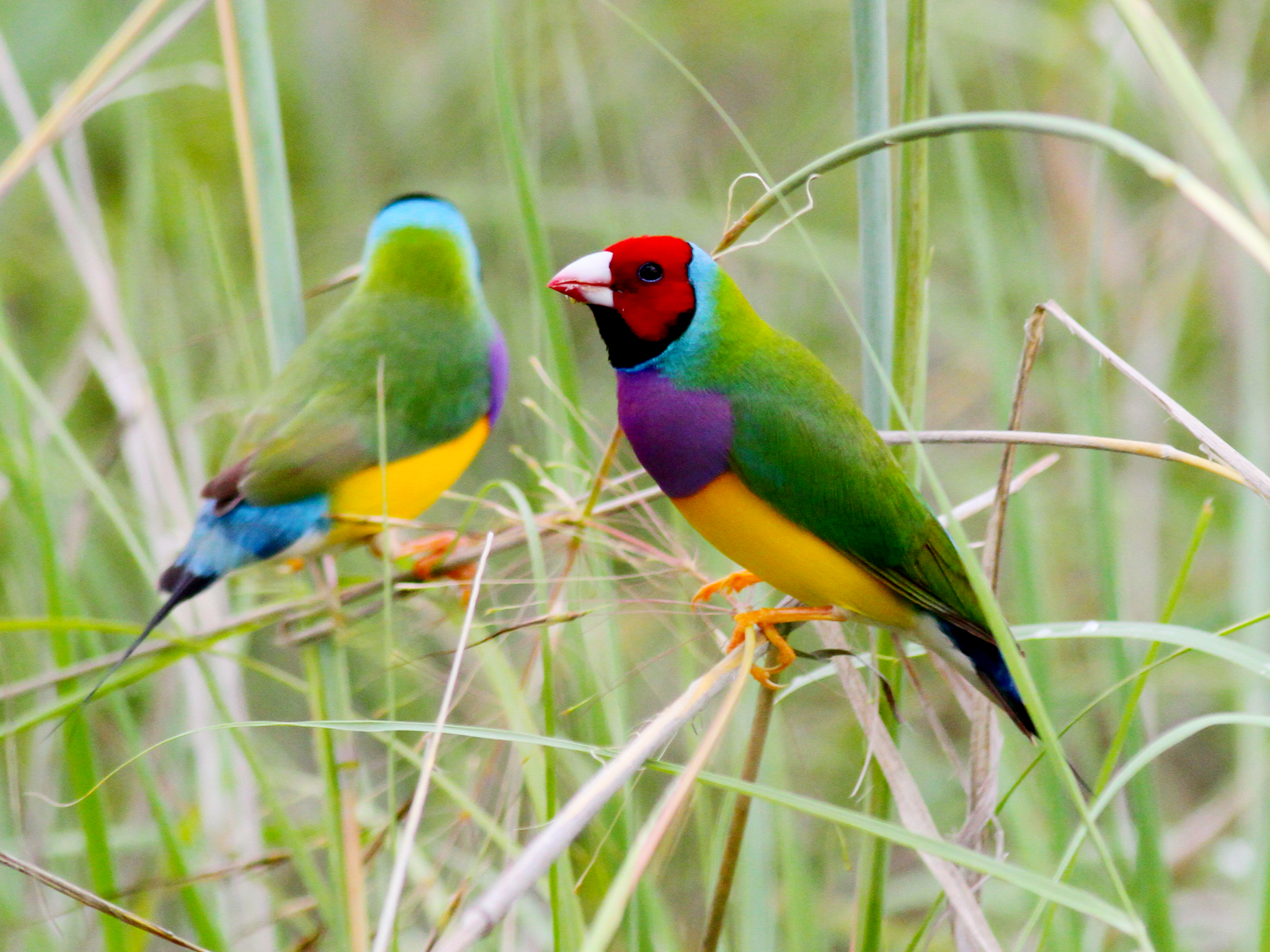 Photo Credit: MPF / Wikimedia Commons
In the sun-drenched grassy plains of Australia, the Gouldian Finch, known scientifically as Erythrura gouldiae, flits about in a dazzling display of color. With its vibrant plumage showcasing a kaleidoscope of greens, yellows, and reds, this small bird captures the imagination of anyone lucky enough to spot it. Measuring just about five inches long and weighing a mere 14 grams, the Gouldian Finch is a living jewel, its beauty not only a feast for the eyes but also a subject of fascination for scientists and nature lovers alike.
As dawn breaks, the air fills with the cheerful chirps of these finches, who are often seen foraging among the grasses for seeds and insects. Their habitat, dotted with tall Eucalyptus trees, provides both shelter and sustenance, making it an ideal home for these lively birds. The Gouldian Finch’s striking colors are not just for show; they play a crucial role in their social interactions and mating rituals. During the breeding season, males perform elaborate courtship displays, showcasing their vibrant feathers to attract potential mates. This captivating behavior, combined with their unique ecological role as seed eaters, makes the Gouldian Finch a vital part of its environment and a symbol of the rich biodiversity found in Australia.
The Gouldian Finch, a vibrant and colorful bird native to Australia, holds a special place in the tree of life. Taxonomically, it belongs to the kingdom Animalia, which includes all animals, and is classified under the phylum Chordata, meaning it has a backbone. This small finch is part of the class Aves, which encompasses all birds, and it falls within the order Passeriformes, known for its songbirds. What makes the Gouldian Finch particularly captivating is its striking plumage, which showcases a dazzling array of colors, including bright green, yellow, and red. This vivid appearance not only attracts mates but also plays a role in its social interactions.
| Taxonomic Rank | Scientific Name | Meaning & Significance |
|---|---|---|
| Kingdom | Animalia | This name signifies the broadest category of living organisms, encompassing all animals. |
| Phylum | Chordata | Derived from the Greek word “chordē,” meaning “string,” this term refers to animals with a notochord, or backbone, during some stage of their life. |
| Class | Aves | From the Latin word for “bird,” this classification includes all feathered creatures, highlighting their unique adaptations for flight. |
| Order | Passeriformes | This name comes from the Latin word “passer,” meaning “sparrow,” and includes the majority of songbirds, known for their vocal abilities. |
| Family | Estrildidae | This family name is derived from the Latin “estrilda,” referring to small finches, emphasizing their small size and social behavior. |
| Genus | Erythrura | From the Greek “erythros,” meaning “red,” this name highlights the vibrant red coloration found in many species within this genus, including the Gouldian Finch. |
Understanding the Gouldian Finch’s classification reveals much about its evolutionary journey. As a member of the Estrildidae family, it shares a lineage with other small, colorful finches, suggesting a common ancestor that adapted to various environments across Australia. The unique colors and social behaviors of the Gouldian Finch not only serve practical purposes in mating and communication but also reflect the rich tapestry of evolution that has shaped its existence. This bird is a living testament to the diversity of life and the intricate connections that bind all species within the animal kingdom.
The evolutionary journey of the Gouldian Finch, a dazzling bird native to Australia, stretches back millions of years. This small avian marvel belongs to the family Estrildidae and the genus Erythrura. Its ancestors likely emerged during the late Miocene epoch, around 5 to 10 million years ago, when the Australian landscape was transforming into the diverse habitats we see today. As the environment changed, so did the finches, adapting to new challenges and opportunities.
The Gouldian Finch’s ancestors were small, seed-eating birds that thrived in the lush grasslands and woodlands of Australia. Over time, they developed vibrant plumage, a trait that likely played a crucial role in attracting mates. This colorful display is not just for show; it also indicates the health and vitality of the bird. As these finches evolved, they began to specialize in different habitats, leading to variations in their diet and nesting behaviors. The transition from a generalist feeder to one that could exploit specific food sources, like seeds from certain grasses, marked a significant evolutionary step.
These adaptations have been vital for the Gouldian Finch’s survival in the wild. The combination of striking colors, specialized feeding habits, and social structures has allowed them to navigate the challenges of their environment. As habitats continue to change due to climate and human activity, these traits will be essential for their ongoing resilience and success in the Australian landscape.
The Gouldian Finch is a small yet striking bird that captures the eye with its dazzling colors and delicate form. Measuring about 5 inches in height, this little avian wonder weighs only 14 grams, making it light enough to flit gracefully among the branches of its native Australian habitats. Its body is compact and rounded, with a short tail that adds to its agile appearance. The overall impression is one of vibrancy and liveliness, as if the bird itself is a living piece of art.
| Feature | Description |
|---|---|
| Size | 5 inches in height |
| Weight | 14 grams |
| Color | Brightly colored plumage with a mix of green, yellow, red, and blue |
| Skin Type | Feathers, which are soft and vibrant |
| Distinctive Feature | Brightly colored plumage that varies among individuals |
The Gouldian Finch’s vivid plumage serves several important purposes. The bright colors not only attract potential mates during the breeding season but also help the birds blend into the colorful flowers and foliage of their environment. This camouflage can be crucial for avoiding predators. Additionally, the soft feathers provide insulation, keeping the finch warm in cooler weather. Together, these features create a beautiful and functional design that allows the Gouldian Finch to thrive in its natural habitat.
The Gouldian Finch calls the grassy plains of Australia its home, where the landscape is dotted with tall Eucalyptus trees. These vibrant birds thrive in open woodlands and savannas, where they can flit among the grasses and branches. The combination of lush greenery and scattered trees creates a perfect environment for foraging and nesting. Imagine a sun-drenched expanse, filled with the gentle rustle of leaves and the cheerful chirping of these colorful finches as they search for seeds and insects.
The climate in these regions is typically warm and tropical, with a distinct wet and dry season. During the wet season, the landscape transforms, providing ample food sources for the Gouldian Finch. They prefer areas where rainfall supports the growth of grasses, which are essential for their diet. The dry season, while harsher, also plays a role in their survival, as it encourages the birds to adapt their foraging habits and seek out water sources.
Adaptation is key for the Gouldian Finch in these specific habitats. Their vibrant plumage not only attracts mates but also helps them blend into the colorful environment of flowers and foliage. They have developed a keen ability to locate food in the grasses, using their sharp beaks to crack open seeds. Additionally, their social nature allows them to thrive in flocks, providing safety in numbers as they navigate the challenges of their habitat. This combination of physical traits and behavioral strategies ensures that the Gouldian Finch continues to flourish in its Australian home.
As dawn breaks over the Australian grasslands, the Gouldian Finch begins its day with a flurry of activity. These small, colorful birds are often seen foraging for seeds and insects among the grasses and shrubs. Their diet primarily consists of grass seeds, which they skillfully extract using their strong, conical beaks. Throughout the day, they engage in preening, a behavior that helps keep their feathers clean and waterproof. This daily routine is not just about feeding; it also includes moments of play and exploration, as they flit from branch to branch, showcasing their vibrant plumage in the sunlight.
Socially, Gouldian Finches are highly interactive and thrive in groups. They often form flocks that can number in the dozens, creating a lively atmosphere filled with chirps and whistles. Within these flocks, they establish a hierarchy, where dominant birds may have priority access to food and nesting sites. Communication is key in their social structure, and they use a variety of calls to convey messages, whether it’s to alert others of danger or to signal the presence of food. This social behavior not only strengthens bonds within the group but also enhances their ability to survive in the wild.
| Behavior Type | Description |
|---|---|
| Foraging | Gouldian Finches search for seeds and insects, using their strong beaks to extract food from grasses. |
| Preening | They clean and arrange their feathers to maintain insulation and waterproofing, essential for their survival. |
| Flocking | These birds gather in groups, which helps them find food more efficiently and provides safety in numbers. |
| Communication | They use a variety of chirps and whistles to communicate, alerting each other to food sources and potential threats. |
| Hierarchy | Within flocks, a social structure develops, with dominant birds having priority access to resources. |
The behaviors of the Gouldian Finch are finely tuned to ensure their survival in the wild. By foraging in groups, they increase their chances of finding food while also protecting themselves from predators. Their social interactions foster strong relationships, which are vital for raising young and maintaining a healthy flock. In a world where resources can be scarce, these vibrant birds demonstrate that cooperation and communication are just as important as individual skills. Through their daily activities, Gouldian Finches not only thrive but also paint a beautiful picture of life in the Australian landscape.
The Gouldian Finch primarily enjoys a herbivorous diet, which means it mainly eats plant-based foods. These charming little birds are particularly fond of seeds, especially those from grasses and various flowering plants. Their feeding behavior is quite social; they often forage in groups, hopping around on the ground or perched on low branches. This not only helps them find food more efficiently but also provides safety in numbers from potential predators.
| Dietary Aspect | Details |
|---|---|
| Diet Type | Herbivore |
| Favorite Foods | Seeds from grasses and flowering plants |
| Prey Items | Occasionally insects, but primarily seeds |
| Hunting/Foraging Strategies | Forages in groups, hopping on the ground and low branches |
The diet of the Gouldian Finch plays a crucial role in shaping its ecology and daily routine. By primarily consuming seeds, these birds help in the dispersal of plant species, contributing to the health of their grassy habitats. Their social foraging behavior not only enhances their chances of finding food but also strengthens their social bonds, making their daily lives vibrant and interconnected. This delightful interplay between diet and behavior showcases the intricate balance of life in the Australian grasslands.
The Gouldian Finch’s mating behavior is as colorful as its plumage. During the breeding season, which typically occurs from late spring to early summer, males engage in elaborate courtship displays. They puff out their chests, perform acrobatic flights, and sing melodious tunes to attract females. Once a pair forms, they work together to find a suitable nesting site, often in tree hollows or dense shrubs, where they can safely raise their young.
| Reproductive Aspect | Details |
|---|---|
| Gestation Period | About 12 days |
| Litter Size | 4 to 6 eggs |
| Age of Maturity | Approximately 3 to 4 months |
| Name of Young | Chicks |
After the eggs hatch, both parents take on the important role of caring for their chicks. They feed them a diet rich in seeds and insects, which helps the young birds grow strong and healthy. As the chicks develop, they begin to fledge, or grow their feathers, and eventually leave the nest. This journey from tiny, helpless chicks to vibrant adult finches is a remarkable transformation, showcasing the dedication of the parents and the resilience of the young birds as they learn to navigate their world.
The Gouldian Finch occupies a vibrant niche in the food web of Australia, where it plays a crucial role as a seed eater. This small bird, with its stunning plumage, is not just a feast for the eyes but also a vital part of the ecosystem. By consuming seeds from various grasses, it helps in seed dispersal, which is essential for plant growth. However, like many creatures in the wild, the Gouldian Finch faces several dangers that threaten its survival.
To defend itself against these threats, the Gouldian Finch employs a variety of survival strategies. When danger approaches, these birds often seek refuge in dense vegetation, where their colorful feathers blend in with the surroundings, providing camouflage. They are also social creatures, often found in flocks, which helps them keep an eye out for predators. By staying alert and communicating with one another, they increase their chances of spotting danger early and escaping to safety.
A keystone species is an organism that has a disproportionately large impact on its environment relative to its abundance. This means that if it were removed, the ecosystem would change dramatically. The Gouldian Finch, with its vibrant colors and unique behaviors, does play a significant role in its ecosystem, particularly in the grassy plains of Australia where it resides.
The Gouldian Finch primarily feeds on seeds, especially those from grasses. By consuming these seeds, it helps control plant populations, ensuring that no single species dominates the landscape. This seed-eating behavior promotes biodiversity, allowing various plant species to thrive. Additionally, as these birds forage, they inadvertently help with seed dispersal. When they eat seeds and later excrete them, they spread those seeds across different areas, contributing to the growth of new plants. This process is vital for maintaining healthy ecosystems, as it encourages a variety of flora to flourish.
Moreover, the Gouldian Finch serves as a food source for various predators, including birds of prey and snakes. By being part of the food web, it supports the survival of these predators, which rely on a diverse diet to thrive. The presence of the Gouldian Finch can indicate the health of its habitat, as these birds are sensitive to environmental changes. Their population levels can reflect the overall condition of the ecosystem, making them important indicators for conservation efforts.
If the Gouldian Finch were to disappear, the consequences could be severe. Without these birds, the balance of plant life in their habitat could shift dramatically. Certain grass species might overpopulate, choking out others and reducing overall biodiversity. This change would not only affect the plants but also the animals that rely on a diverse range of flora for food and shelter. Additionally, the absence of the Gouldian Finch would disrupt the food web, impacting predators that depend on them for survival. In essence, the loss of this colorful finch would ripple through the ecosystem, highlighting just how interconnected all living things truly are.
The Gouldian Finch occupies a vital ecological niche in the grassy plains of Australia, where it thrives among Eucalyptus trees. This small, colorful bird plays a significant role in its environment, influencing both plant life and the overall health of its ecosystem. By primarily feeding on seeds, particularly those from grasses, the Gouldian Finch helps to control plant populations and promote biodiversity. Its foraging habits not only support its own survival but also contribute to the balance of the habitats it inhabits.
| Ecosystem Service | Impact |
|---|---|
| Seed Dispersal | Helps spread plant species, promoting plant diversity. |
| Food Source | Serves as prey for larger birds and mammals, supporting the food web. |
| Habitat Maintenance | Encourages growth of grasses, which stabilize soil and prevent erosion. |
| Pollination | While primarily seed eaters, they may inadvertently assist in pollination. |
The influence of the Gouldian Finch extends beyond its immediate feeding habits. For instance, as these birds forage for seeds, they help to keep grass populations in check, allowing a variety of plant species to flourish. This diversity is crucial for maintaining healthy ecosystems, as it provides habitats for other wildlife. Additionally, the Gouldian Finch serves as a food source for larger predators, such as hawks and snakes, thus playing an integral role in the food web. Their vibrant presence also attracts birdwatchers and nature enthusiasts, contributing to local ecotourism.
The broader ecological importance of the Gouldian Finch cannot be overstated. As a keystone species, its presence helps maintain the balance of its ecosystem. If these colorful birds were to disappear, the effects would ripple through the environment, potentially leading to overgrowth of certain plants and a decline in other species that rely on a diverse habitat. By understanding the role of the Gouldian Finch, we gain insight into the intricate connections that sustain life in the Australian grasslands, reminding us of the delicate balance that exists in nature.
In the intricate web of life, symbiosis refers to the close and often long-term interactions between different species. These relationships can take many forms, including mutualism, where both species benefit, parasitism, where one benefits at the expense of the other, and commensalism, where one benefits while the other is neither helped nor harmed. The Gouldian Finch, with its vibrant colors and charming behavior, engages in various ecological relationships that highlight the interconnectedness of nature.
| Species/Type | Relationship Type | Description |
|---|---|---|
| Termites | Mutualistic | The Gouldian Finch often benefits from the presence of termites, which help aerate the soil. In return, the finches may help control the termite population by feeding on them. |
| Other Bird Species | Commensal | Gouldian Finches sometimes share their habitat with other birds, like the Zebra Finch. While the Zebra Finch may benefit from the same food sources, the Gouldian Finch is largely unaffected by their presence. |
| Parasitic Wasps | Parasitic | In some cases, parasitic wasps may lay their eggs in the nests of Gouldian Finches. While this benefits the wasps, it can be harmful to the finch chicks, as the wasp larvae may compete for resources. |
These relationships have evolved over time, shaped by the needs and behaviors of the species involved. The mutualistic interactions, like those with termites, showcase how species can work together for mutual benefit, enhancing their survival. Meanwhile, the parasitic relationships remind us that not all interactions are beneficial, highlighting the delicate balance of ecosystems. Understanding these connections helps us appreciate the complexity of nature and the roles each species plays in maintaining the health of their environment.
The Gouldian Finch is not just a feast for the eyes with its vibrant colors; it also has some surprising traits that make it truly special. These little birds are full of secrets that even seasoned nature enthusiasts might not know!
The Gouldian Finch, with its brilliant plumage and lively personality, has captivated humans for centuries. Indigenous Australians have long regarded this bird as a symbol of beauty and harmony in nature. Its vibrant colors and cheerful songs have inspired stories and art, weaving the finch into the cultural fabric of the land. Historical encounters between the Gouldian Finch and humanity often highlight a deep appreciation for the natural world, showcasing how this small bird has sparked curiosity and admiration across generations.
In modern times, the relationship between the Gouldian Finch and humans has evolved, reflecting both conservation efforts and challenges. As habitat loss and climate change threaten their populations, conservationists are working tirelessly to protect these stunning birds. Programs aimed at restoring their natural habitats and breeding in captivity have gained momentum. However, the finch also faces conflicts with agriculture, as farmers sometimes view them as pests due to their seed-eating habits. This complex interaction underscores the need for balance between human activities and wildlife preservation.
Looking ahead, the future of the Gouldian Finch and its relationship with humanity hinges on our commitment to coexistence. As we learn more about the ecological importance of this vibrant bird, we can foster a deeper understanding of the delicate balance within ecosystems. By prioritizing conservation and promoting sustainable practices, we can ensure that the Gouldian Finch continues to thrive, inspiring future generations with its beauty and resilience. Together, we can create a world where both humans and wildlife flourish side by side.
The Gouldian Finch is currently classified as Near Threatened, a status that highlights its precarious position in the wild. With an estimated population of around 2,500 individuals, this vibrant bird has seen a decline in numbers over recent years. While it remains a captivating sight in its native Australia, the challenges it faces are significant, prompting conservationists to take action to protect this colorful species.
| Conservation Factor | Status/Details |
|---|---|
| IUCN Status | Near Threatened |
| Estimated Population Size | Approximately 2,500 |
| Population Trend | Declining |
One of the main threats to the Gouldian Finch is habitat loss, primarily due to land clearing for agriculture and urban development. As their grassy plains and open woodlands are transformed into farmland or cities, these birds lose their natural homes. Additionally, changes in fire management practices can alter the landscape in ways that are not beneficial for the finches. Competition for food and nesting sites with other species also poses a challenge, making survival increasingly difficult for this stunning bird.
Conservation efforts are underway to help the Gouldian Finch thrive once more. Organizations are working to restore and protect their natural habitats, ensuring that these birds have safe places to live and breed. Breeding programs in captivity are also being implemented to bolster their numbers. With continued dedication and awareness, there is hope that the Gouldian Finch can rebound from its current status and once again flourish in the wild, bringing its vibrant colors back to the Australian landscape.
| Question | Answer |
|---|---|
| What is the natural habitat of the Gouldian Finch? | The Gouldian Finch thrives in grassy plains, particularly those dotted with Eucalyptus trees. These areas provide the seeds and shelter that the finches need to survive and breed. |
| What do Gouldian Finches eat? | Gouldian Finches are herbivores, meaning they primarily eat plant-based foods. Their diet mainly consists of seeds from grasses and other plants, which provide them with the nutrients they need to stay healthy. |
| How do Gouldian Finches behave in the wild? | These colorful birds are social creatures, often found in small flocks. They are known for their playful antics and can often be seen flitting about in search of food or engaging in courtship displays. |
| How do Gouldian Finches reproduce? | During the breeding season, Gouldian Finches build nests in tree hollows or dense grass. The female typically lays about 4 to 7 eggs, which both parents help to incubate until they hatch. |
| What threats do Gouldian Finches face? | Gouldian Finches are currently classified as Near Threatened due to habitat loss and changes in their environment. Factors such as agriculture, fire, and climate change have significantly impacted their populations. |
| What is the most distinctive feature of the Gouldian Finch? | The Gouldian Finch is famous for its bright and vibrant plumage, which can include shades of green, yellow, red, and blue. This striking coloration not only makes them beautiful but also plays a role in attracting mates. |
| Are Gouldian Finches kept as pets? | Yes, many people keep Gouldian Finches as pets due to their stunning colors and cheerful songs. However, they require specific care and a suitable environment to thrive, making them a commitment for bird enthusiasts. |