Taxonomy & Classification
- Kingdom
- Animalia
- Phylum
- Arthropoda
- Class
- Insecta
- Order
- Coleoptera
- Family
- Tenebrionidae
- Genus
- Tribolium

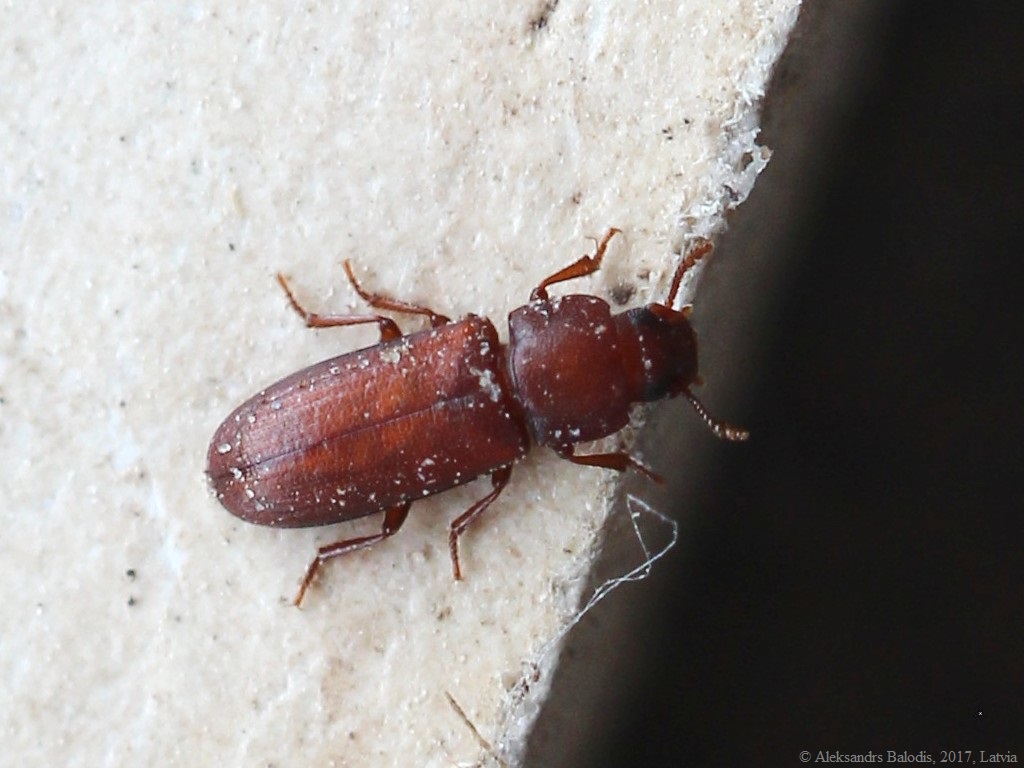 Photo Credit: AfroBrazilian / Wikimedia Commons
In the bustling world of the flour beetle, known scientifically as Tribolium, life unfolds in the shadows of our kitchens and food storage areas. Picture a tiny, flattened insect, no more than a few millimeters long, with a smooth, shiny exoskeleton that glimmers under the faintest light. These beetles are often found scurrying through grains and flour, their delicate bodies perfectly adapted for navigating the nooks and crannies of their environment. With their keen sense of smell and impressive ability to reproduce quickly, flour beetles have become a common sight in places where food is abundant.
What makes the flour beetle particularly captivating to scientists and nature lovers alike is its role in the ecosystem. These small creatures are not just pests; they play a vital part in breaking down organic materials, recycling nutrients, and maintaining the balance of their habitats. Their life cycle, which includes fascinating courtship dances and rapid growth, showcases the intricate dance of life that occurs even in the smallest corners of our world. As we delve deeper into the life of the flour beetle, we will uncover the secrets of its behavior, diet, and the surprising impact it has on both nature and human life.
The flour beetle, a small but significant member of the animal kingdom, occupies a unique position in the tree of life. Belonging to the Kingdom Animalia, it is part of the Phylum Arthropoda, which includes all insects, spiders, and crustaceans. Within this phylum, the flour beetle is classified under the Class Insecta, the largest group of animals on Earth. Its order, Coleoptera, is home to beetles, known for their hard outer wings. The flour beetle’s family, Tenebrionidae, consists of darkling beetles, which are often found in decaying organic matter. This classification highlights not only its biological relationships but also its ecological role as a decomposer, helping to break down organic materials.
| Taxonomic Rank | Scientific Name | Meaning & Significance |
|---|---|---|
| Kingdom | Animalia | The name means “animals” in Latin, representing all multicellular organisms that are not plants, fungi, or bacteria. |
| Phylum | Arthropoda | This term means “jointed legs” in Greek, referring to the segmented bodies and jointed appendages of insects, spiders, and crustaceans. |
| Class | Insecta | Derived from the Latin word for “cut,” this name reflects the segmented body structure of insects, which can appear as if they are cut into sections. |
| Order | Coleoptera | This name comes from the Greek words for “sheath” and “wing,” highlighting the hard outer wings that protect the delicate flying wings underneath. |
| Family | Tenebrionidae | The name means “dark” in Latin, which is fitting as many members of this family are dark in color and often found in dark environments. |
| Genus | Tribolium | This name is derived from the Greek word for “to disturb,” reflecting the beetle’s tendency to disrupt stored grains and flour. |
Understanding the flour beetle’s classification reveals much about its evolutionary history. As a member of the vast and diverse group of insects, it shares common ancestors with many other species, showcasing the incredible adaptability of life on Earth. Its role as a decomposer not only highlights its ecological importance but also illustrates how organisms evolve to fill specific niches in their environments. The flour beetle’s ability to thrive in human-made settings, such as grain storage, further emphasizes its resilience and adaptability, traits that have allowed it to persist alongside humans for thousands of years.
The evolutionary journey of the flour beetle, specifically from the genus Tribolium, stretches back millions of years. These small insects are part of the Tenebrionidae family, which includes darkling beetles. Their ancestors roamed the Earth during the late Cretaceous period, around 100 million years ago, a time when dinosaurs still dominated the landscape. Over the eons, flour beetles have adapted to various environments, showcasing a remarkable ability to thrive alongside humans.
The early ancestors of flour beetles were likely larger and more robust, living in diverse habitats. As they evolved, they transitioned to a more specialized diet, primarily feeding on decaying plant material and grains. This shift allowed them to exploit new ecological niches, particularly in human agricultural settings. Over time, flour beetles developed traits that enhanced their survival, such as a tough exoskeleton that protects them from predators and environmental hazards. Their ability to reproduce quickly also played a crucial role in their success, allowing populations to grow rapidly in favorable conditions.
These adaptations have been vital for the flour beetle’s survival in a world that is constantly changing. By mastering the art of living in human-made environments and developing resilience against threats, flour beetles have not only persisted but thrived. Their evolutionary story is a testament to the power of adaptation, showcasing how even the smallest of creatures can carve out a niche in the vast tapestry of life on Earth.
The flour beetle presents a striking appearance that captures the eye with its flattened form and smooth exoskeleton. These tiny insects, often measuring just a few millimeters in length, have a body that is both sleek and streamlined, allowing them to navigate through tight spaces with ease. Their overall shape resembles a small, shiny oval, which helps them blend into their surroundings, making them less visible to predators.
| Feature | Description |
|---|---|
| Size | Typically 3 to 5 millimeters long |
| Color | Reddish-brown to dark brown |
| Skin Type | Exoskeleton, providing protection and support |
| Body Shape | Flattened, allowing for easy movement in narrow spaces |
These physical characteristics work together to enhance the flour beetle’s survival in various environments. The exoskeleton not only shields them from potential threats but also helps retain moisture, which is crucial for their survival in dry conditions. Their flattened bodies allow them to slip into crevices and hide among grains and flour, making it difficult for predators to spot them. This clever combination of features ensures that flour beetles can thrive in their habitats, often found in pantries and food storage areas, where they can easily access their favorite meals.
The flour beetle thrives in environments where food is plentiful and easily accessible. These tiny insects are often found in places like silos, warehouses, and food storage facilities, where grains and other dry goods are stored. They can also make themselves at home in pantries and cupboards, sneaking into bags of flour, rice, and other pantry staples. Their presence in these areas is a testament to their adaptability and resourcefulness.
Flour beetles prefer warm, dry conditions, which is why they are often found in indoor environments. They thrive in temperatures ranging from 70 to 90 degrees Fahrenheit (21 to 32 degrees Celsius). These beetles are not fans of extreme cold or dampness, as such conditions can be detrimental to their survival. Instead, they flourish in the cozy corners of homes and storage facilities, where the climate is just right for their growth and reproduction.
To survive in these specific habitats, flour beetles have developed several clever adaptations. Their ability to reproduce quickly allows them to take advantage of available food sources before competitors can. They can also withstand periods of low food availability by entering a state of dormancy, which helps them conserve energy. This combination of rapid reproduction and resilience makes them well-suited to thrive in the environments they call home.
The flour beetle leads a life that revolves around food and survival. Each day, it scuttles through its environment, searching for grains and other organic materials to munch on. These beetles are most active during the warmer parts of the day, taking advantage of the heat to fuel their foraging. They have a keen sense of smell, which helps them locate food sources, and they often explore their surroundings with a curious determination. When they find a suitable meal, they feast, using their strong mandibles to break down tough grains.
While flour beetles are primarily solitary creatures, they do exhibit some interesting social behaviors. When food is abundant, you might find several beetles congregating in the same area, sharing a meal. This can lead to a temporary social structure where they communicate through pheromones, which are chemical signals that help them understand their environment and each other. However, they generally prefer to keep to themselves, avoiding competition for resources. This solitary nature allows them to thrive in various habitats without the need for complex social interactions.
| Behavior Type | Description |
|---|---|
| Activity Patterns | Flour beetles are most active during the day, foraging for food and exploring their surroundings. |
| Social Structure | Primarily solitary, but may gather in groups when food is plentiful. |
| Communication Methods | Use pheromones to communicate with each other, especially in food-rich environments. |
The behaviors of flour beetles are finely tuned to ensure their survival in a world filled with challenges. Their ability to find food efficiently and their solitary nature help them avoid competition and predators. By relying on chemical signals to communicate when necessary, they can navigate their environment effectively. This combination of foraging skills and social awareness allows flour beetles to thrive in diverse habitats, making them resilient little survivors in the grand tapestry of life.
The flour beetle primarily feeds on plant-based materials, making it an herbivore. Its diet mainly consists of grains, flour, and other starchy substances. These beetles have developed specialized mouthparts that allow them to chew through tough plant fibers, making it easier for them to access the nutrients they need. As they scavenge through their environment, they play a crucial role in breaking down organic matter, which helps recycle nutrients back into the ecosystem.
| Dietary Aspect | Details |
|---|---|
| Diet Type | Herbivore |
| Favorite Foods | Grains, flour, and other starchy materials |
| Prey Items | None, as they do not consume other animals |
| Hunting/Foraging Strategies | Scavenging and chewing through organic materials |
The flour beetle’s diet significantly influences its role in the ecosystem. By feeding on grains and organic matter, it helps to decompose and recycle nutrients, which is vital for soil health. This daily routine of foraging not only sustains the beetle but also supports the larger food web, as it provides a food source for various predators. In this way, the flour beetle is a small but essential player in maintaining the balance of its environment.
Flour beetles have a fascinating mating ritual that sets the stage for their reproduction. During the breeding season, which can occur year-round in warm environments, males engage in a courtship dance to attract females. This involves a series of movements and pheromone releases, which are chemical signals that help communicate their readiness to mate. Once a female is receptive, she will mate with a male, and the process of creating new life begins.
| Reproductive Aspect | Details |
|---|---|
| Gestation Period | About 7 to 10 days |
| Litter Size | Up to 300 eggs |
| Age of Maturity | Approximately 4 to 6 weeks |
| Name of Young | Mealworms |
After the eggs are laid, they hatch into tiny mealworms, which are the larval stage of the flour beetle. These mealworms are not just cute; they are voracious eaters, consuming organic material as they grow. Flour beetles do not provide direct parental care, but the environment they choose for laying eggs is crucial for the survival of their young. As the mealworms develop, they undergo several molts, shedding their skin to accommodate their growing bodies. Eventually, they will pupate, transforming into adult beetles ready to continue the cycle of life. This remarkable journey from egg to adult showcases the resilience and adaptability of flour beetles in their quest for survival.
The flour beetle plays a vital role in the food web, serving as both a consumer and a prey species. These tiny insects feed on grains and organic materials, helping to break down and recycle nutrients in their environment. However, their small size and abundance make them an easy target for various predators, highlighting their importance in the ecosystem as a food source for other animals.
To survive against these threats, flour beetles have developed several clever defensive behaviors. They often hide in crevices or blend in with their surroundings, making it difficult for predators to spot them. Additionally, when threatened, they can play dead, a tactic known as thanatosis, which can confuse or deter potential attackers. By using these strategies, flour beetles increase their chances of survival in a world filled with hungry predators.
A keystone species is an organism that has a disproportionately large impact on its environment relative to its abundance. This means that if it were removed, the ecosystem would change dramatically. The flour beetle, while not as well-known as some larger animals, plays a significant role in its habitat, particularly in food storage areas. Its activities can influence the health of the ecosystem, making it a candidate for a keystone role, especially in the context of human environments.
Flour beetles contribute to the breakdown of organic materials, particularly grains and starchy substances. By feeding on these materials, they help decompose and recycle nutrients back into the ecosystem. This process is essential for maintaining soil health and fertility, as it allows nutrients to be available for plants and other organisms. In addition, flour beetles serve as a food source for various predators, including birds and small mammals. Their presence supports a diverse food web, ensuring that other species can thrive.
Moreover, flour beetles can impact the population dynamics of other organisms in their environment. For instance, when they consume grains, they can influence the availability of food for other insects and animals that rely on similar resources. This can lead to shifts in the populations of those species, demonstrating how interconnected life can be. Their role in food storage facilities also highlights their importance in human contexts, where they can affect food security and the economy.
If flour beetles were to disappear, the consequences could be significant. Without these beetles, the decomposition of grains and organic materials would slow down, leading to a buildup of waste and a decline in soil health. This could affect plant growth and, in turn, the animals that depend on those plants for food. Additionally, the absence of flour beetles would disrupt the food web, potentially leading to a decline in predator species that rely on them for sustenance. Overall, the loss of flour beetles would create a ripple effect, altering the balance of their ecosystem in ways that could be detrimental to many other species, including humans.
The flour beetle, a small yet impactful insect, plays a crucial role in its ecosystem. Found in places like silos, warehouses, and even your kitchen pantry, these beetles thrive in environments rich in grains and starchy materials. As herbivores, they primarily feed on flour and other plant-based substances, helping to break down organic matter. This process not only recycles nutrients but also influences the health of the ecosystems they inhabit. By consuming and decomposing food sources, flour beetles contribute to the balance of their surroundings, making them essential players in the food web.
| Ecosystem Service | Impact |
|---|---|
| Nutrient Recycling | Break down organic materials, returning nutrients to the soil. |
| Food Source | Serve as prey for various predators, supporting biodiversity. |
| Pest Control | Help manage populations of other pests by competing for food resources. |
| Soil Aeration | Contribute to soil health by promoting aeration through their movement. |
Flour beetles influence their environment in several specific ways. For instance, by feeding on stored grains, they help prevent the buildup of mold and decay, which can harm other organisms. Their presence can also attract predators like birds and small mammals, creating a dynamic food web. Additionally, as they break down food sources, they enhance soil quality, making it more fertile for plants. This interaction not only supports plant growth but also benefits other insects and animals that rely on healthy vegetation for survival.
The broader ecological importance of flour beetles cannot be overstated. As a keystone species, their activities help maintain the balance of their ecosystems. If flour beetles were to disappear, the consequences could ripple through the food web, affecting everything from soil health to the populations of their predators. By understanding the role of these tiny beetles, we gain insight into the intricate connections that sustain life in our world. Flour beetles remind us that even the smallest creatures can have a big impact on the environment.
In the intricate web of life, symbiosis plays a vital role in shaping the relationships between different species. Symbiosis refers to the close interactions between organisms, which can be beneficial, harmful, or neutral. These ecological relationships can take many forms, such as mutualism, where both species benefit, parasitism, where one benefits at the expense of the other, and commensalism, where one benefits while the other is neither helped nor harmed. Understanding these connections helps us appreciate the balance of ecosystems and the roles that various species, like the flour beetle, play within them.
| Species/Type | Relationship Type | Description |
|---|---|---|
| Fungi (e.g., molds) | Mutualistic | Flour beetles often coexist with certain fungi, which break down organic materials. The beetles benefit from the nutrients released by the fungi, while the fungi thrive in the beetles’ presence. |
| Microorganisms (bacteria) | Mutualistic | Some bacteria in the gut of flour beetles help digest food, allowing the beetles to extract more nutrients. In return, the bacteria find a suitable habitat within the beetle’s body. |
| Predatory insects (e.g., spiders) | Parasitic | Flour beetles can fall prey to various predators, including spiders. In this relationship, the spider benefits by feeding on the beetle, while the beetle suffers. |
These relationships have evolved over time, shaped by the needs and adaptations of each species involved. The mutualistic partnerships between flour beetles and fungi or bacteria highlight how cooperation can enhance survival and resource utilization. Meanwhile, the predatory interactions remind us that life is a delicate balance of give and take. By understanding these connections, we gain insight into the complex dynamics of ecosystems, where every species, no matter how small, plays a crucial role in maintaining the health and stability of their environment.
Flour beetles may be small, but they are packed with surprises that can intrigue anyone interested in the natural world. These tiny insects, often found in our kitchens, have some remarkable traits and behaviors that make them truly fascinating.
The flour beetle has a long history of interaction with humanity, dating back thousands of years. These tiny insects, often found in our kitchens and food storage areas, have been both a nuisance and a source of fascination. In many cultures, they symbolize resilience and adaptability, thriving in environments where food is abundant. Ancient civilizations likely encountered these beetles as they stored grains, leading to a cultural awareness of their presence. Today, they are often seen as a reminder of the delicate balance between human food production and the natural world.
In modern times, the relationship between flour beetles and humans has evolved significantly. While they are still considered pests in homes and food facilities, they also play a role in scientific research. Researchers study flour beetles to understand genetics, evolution, and pest control methods. Some people even domesticate them for educational purposes, using them in classrooms to teach about life cycles and ecosystems. However, conflicts arise when these beetles invade food supplies, leading to economic losses and prompting the need for effective pest management strategies.
As we look to the future, the relationship between flour beetles and humanity will likely continue to change. With advancements in pest control and a growing understanding of their ecological roles, we may find new ways to coexist with these resilient insects. By appreciating their contributions to science and the environment, we can foster a more harmonious relationship that benefits both humans and the natural world.
The conservation status of the flour beetle is currently not listed by the International Union for Conservation of Nature (IUCN). This means that there is no specific assessment of its risk of extinction. Flour beetles are commonly found in various human environments, such as silos, warehouses, and even our own kitchens. Their population is not precisely estimated, but they thrive in areas where food is abundant, suggesting a stable presence in many regions.
| Conservation Factor | Status/Details |
|---|---|
| IUCN Status | Not Listed |
| Estimated Population Size | Commonly found in food storage areas |
| Population Trend | Stable |
Despite their stable population, flour beetles face several threats that could impact their future. One of the main challenges is the use of pesticides in agriculture and food storage. These chemicals can reduce their numbers by killing not only pests but also beneficial insects. Additionally, changes in food storage practices and the increasing use of airtight containers can limit their habitats, making it harder for them to find food and reproduce.
Conservation efforts for flour beetles are not specifically targeted, given their current status. However, maintaining healthy ecosystems and sustainable agricultural practices can help ensure that these beetles continue to thrive. By promoting awareness of their role in food webs and the importance of biodiversity, we can support the natural balance that flour beetles contribute to. As long as their habitats remain intact and food sources are available, the outlook for flour beetles appears positive.
| Question | Answer |
|---|---|
| Where do flour beetles live? | Flour beetles are commonly found in silos, warehouses, and food storage facilities. They often invade pantries and cupboards in homes, where they can find their favorite food sources. |
| What do flour beetles eat? | Flour beetles are herbivores, meaning they primarily eat plant-based materials. Their diet mainly consists of grains, flour, and other stored food products, which is why they are often found in kitchens. |
| How do flour beetles behave? | Flour beetles are known for their active and agile movements. They can quickly scurry around their environment, making them hard to catch, especially when they feel threatened. |
| How do flour beetles reproduce? | Flour beetles reproduce by laying eggs in food sources, where the larvae can find plenty of nourishment. A female can lay hundreds of eggs, and the larvae develop quickly, often becoming adults in just a few weeks. |
| What threats do flour beetles face? | Flour beetles do not have many natural predators, but they can be affected by environmental changes and pest control measures. In homes, they are often eliminated by cleaning and proper food storage practices. |
| What is a distinctive feature of flour beetles? | One of the most distinctive features of flour beetles is their flattened bodies, which help them navigate through tight spaces. This shape allows them to easily hide in cracks and crevices in food storage areas. |
| Are flour beetles harmful to humans? | Flour beetles are not harmful to humans in terms of disease, but they can contaminate food. Their presence in stored grains can lead to spoilage, making it important to keep food sealed and stored properly. |