Taxonomy & Classification
- Kingdom
- Animalia
- Phylum
- Chordata
- Class
- Reptilia
- Order
- Squamata
- Family
- Colubridae
- Genus
- Pantherophis
- Species
- P. vulpinus and P. ramspotti

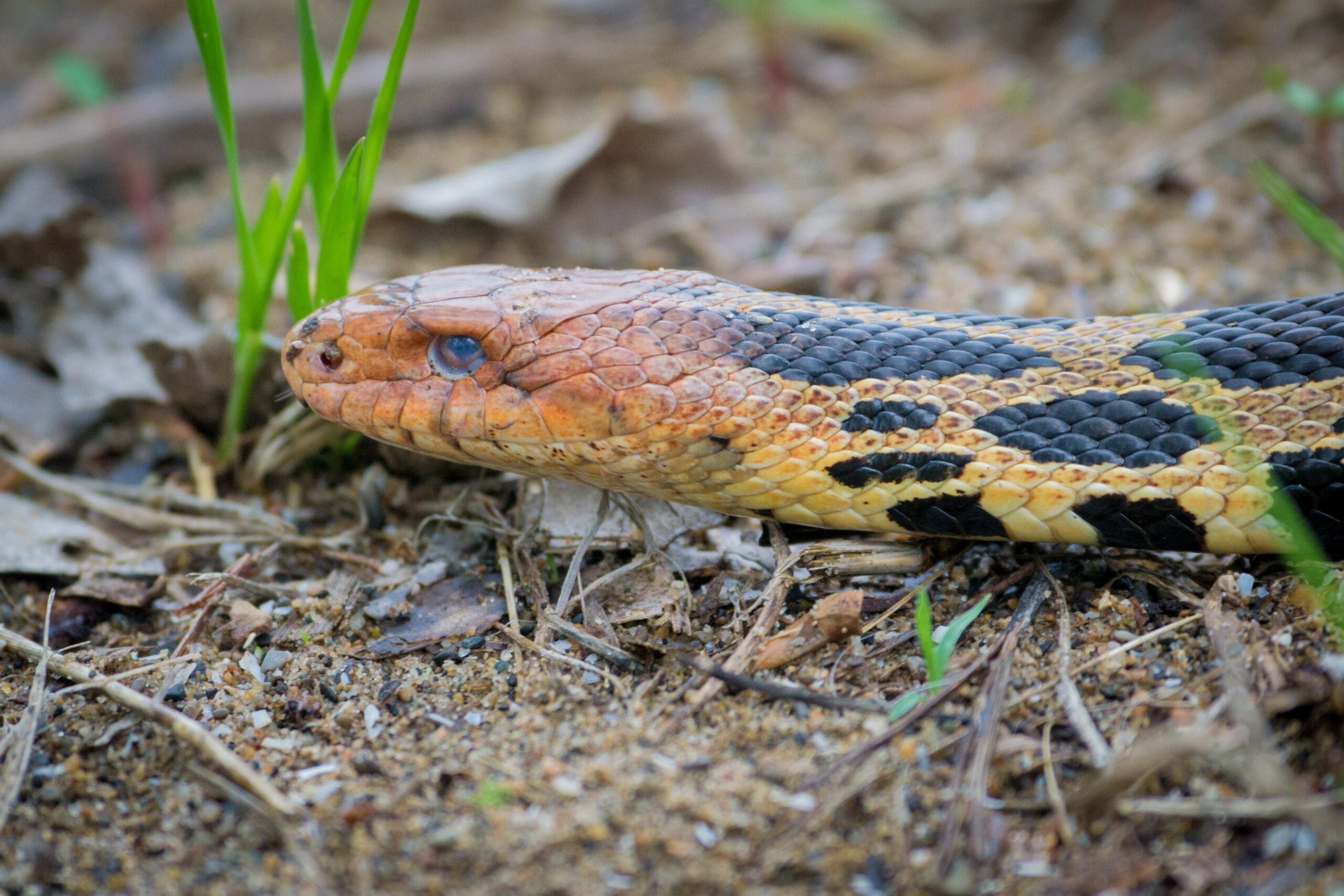 Photo Credit: Natuur12 / Wikimedia Commons
In the sun-dappled fields and lush wetlands of North America, the Fox Snake, scientifically known as Pantherophis vulpinus, slithers gracefully through its habitat. With its long, slender body often reaching up to five feet, this striking snake is adorned with a beautiful pattern of alternating blotches that run down its spine, resembling the colors of autumn leaves. Its vibrant hues not only make it a visual delight but also serve as a clever form of camouflage, helping it blend seamlessly into the grasses and reeds where it hunts for food.
What makes the Fox Snake particularly intriguing to scientists and nature lovers alike is its role in the ecosystem. As a skilled predator, it helps control populations of small mammals and birds, maintaining a delicate balance in its environment. This non-venomous snake is often seen basking in the warm sunlight, a behavior that not only warms its body but also showcases its striking appearance to anyone lucky enough to spot it. With a personality that is both curious and cautious, the Fox Snake invites us to explore the wonders of its world, revealing the intricate connections that bind all living things together.
The Fox Snake, a captivating member of the animal kingdom, holds a special place in the tree of life. Scientifically classified within the family Colubridae, which includes many non-venomous snakes, the Fox Snake is known for its striking coloration and unique patterns. This snake is particularly interesting because it exhibits a behavior called mimicry, where it resembles the venomous Eastern Diamondback Rattlesnake to deter potential predators. With its ability to adapt to various habitats, the Fox Snake showcases the incredible diversity and resilience of reptiles.
| Taxonomic Rank | Scientific Name | Meaning & Significance |
|---|---|---|
| Kingdom | Animalia | This name signifies that Fox Snakes belong to the broad group of multicellular organisms that are heterotrophic, meaning they consume organic material for energy. |
| Phylum | Chordata | Chordata refers to animals that have a notochord, a flexible rod that supports the body. In Fox Snakes, this structure is present during their early development. |
| Class | Reptilia | Reptilia indicates that Fox Snakes are reptiles, characterized by their scaly skin and cold-blooded nature, meaning they rely on external sources to regulate their body temperature. |
| Order | Squamata | Squamata is the order that includes all snakes and lizards, derived from the Latin word for “scaly,” highlighting the distinctive scales that cover the Fox Snake’s body. |
| Family | Colubridae | Colubridae is the family of non-venomous snakes, which includes the Fox Snake. The name comes from the Latin word “coluber,” meaning “snake,” emphasizing their non-threatening nature. |
| Genus | Pantherophis | Pantherophis combines the Greek words for “panther” and “snake,” reflecting the Fox Snake’s beautiful coloration and patterns that can resemble those of a big cat. |
Understanding the Fox Snake’s classification reveals much about its evolutionary journey. As a member of the Colubridae family, it shares a common ancestry with many other snakes, showcasing the adaptability and survival strategies that have evolved over millions of years. The Fox Snake’s ability to mimic more dangerous species is a fascinating example of how evolution shapes behavior and physical traits to enhance survival. This classification not only highlights the Fox Snake’s unique characteristics but also connects it to the broader tapestry of life on Earth, illustrating the intricate relationships among all living organisms.
The evolutionary journey of Fox Snakes stretches back millions of years, weaving through the complex tapestry of life on Earth. These snakes belong to the family Colubridae, which has a rich history that dates back to the late Cretaceous period, around 100 million years ago. As the world transformed through dramatic climate changes and shifting landscapes, the ancestors of Fox Snakes adapted to thrive in their environments, leading to the diverse species we see today.
The story begins with early reptiles that roamed the Earth, some of which eventually evolved into the first snakes. These ancestral forms were likely small, agile creatures that relied on their keen senses to hunt and evade predators. Over time, as the climate warmed and forests expanded, these early snakes adapted to a variety of habitats. The transition from a more generalized diet to specialized feeding habits marked a significant evolutionary step. This shift allowed snakes like the Fox Snake to develop unique hunting strategies, including constriction, where they wrap around their prey to subdue it.
The adaptations of Fox Snakes have been vital for their survival in a world filled with challenges. Their camouflage allows them to remain hidden from both prey and predators, while their heat-sensing abilities enhance their hunting prowess. By using constriction rather than venom, they have carved out a niche that minimizes competition with other snakes. Their adaptability to various habitats ensures they can find food and shelter, even as environments change. Together, these traits tell a story of resilience and evolution, showcasing how Fox Snakes have thrived through the ages.
The Fox Snake is a striking sight, with a body that captures the essence of its name. Its long, slender form can reach impressive lengths, often stretching up to five feet. The snake’s skin is covered in smooth, shiny scales that glisten in the sunlight, creating a beautiful contrast with its vibrant colors. The most eye-catching feature is its copper or bronze-colored head, which stands out against the rest of its body. This coloration not only adds to its charm but also serves a purpose in its natural habitat.
| Feature | Description |
|---|---|
| Size | Typically reaches lengths of up to 5 feet. |
| Color | Distinctive copper or bronze-colored head with a pattern of dark brown or black markings along the body. |
| Skin Type | Covered in smooth, shiny scales that reflect light. |
The combination of these features not only makes the Fox Snake visually stunning but also plays a crucial role in its survival. The copper or bronze head can help it blend into the earthy tones of its surroundings, providing camouflage against predators and prey alike. The smooth scales allow for easy movement through grass and underbrush, making it an agile hunter. Together, these characteristics create a perfect balance of beauty and functionality, allowing the Fox Snake to thrive in its environment.
The Fox Snake thrives in a variety of habitats that paint a vivid picture of its life. Imagine wide-open fields, lush wetlands, and the edges of woodlands where sunlight filters through the leaves. These snakes are often found basking on warm rocks or slithering through tall grasses, blending seamlessly into their surroundings. Their environment is a mix of open spaces and nearby cover, allowing them to hunt and hide with ease.
Fox Snakes prefer climates that offer a balance of warmth and moisture. They thrive in areas with a temperate climate, which means they experience four distinct seasons. These snakes enjoy warm summers that help them stay active and hunt for food, while the cooler winters prompt them to seek shelter in burrows or under rocks. The presence of water sources, like rivers and lakes, is also crucial, as it supports the diverse ecosystem they rely on for survival.
To adapt to their specific habitats, Fox Snakes have developed several clever strategies. Their coloration, which often includes shades of yellow and brown, helps them camouflage against the earthy tones of their surroundings, making it easier to avoid predators. Additionally, their ability to tolerate a range of temperatures allows them to be active during the day when the sun is shining, or at dusk when the air cools down. This adaptability not only aids in hunting but also ensures they can thrive in the varied environments they call home.
The daily life of a Fox Snake is a blend of sunbathing, hunting, and exploring its surroundings. As a diurnal creature, it is most active during the day, basking in the warm sunlight to regulate its body temperature. This behavior is essential for maintaining energy levels, as Fox Snakes are ectothermic, meaning they rely on external heat sources. During the day, they slither through their habitats, which can include fields, wetlands, and woodland edges, searching for small mammals, birds, and amphibians to eat. Their keen sense of smell helps them track down prey, making them skilled hunters.
While Fox Snakes are primarily solitary animals, they do have interesting social behaviors, especially during the mating season. Males may engage in competitive displays to attract females, showcasing their strength and agility. These interactions can involve wrestling matches, where two males entwine and push against each other. Outside of mating, Fox Snakes prefer to keep to themselves, using their camouflage to blend into their environment and avoid potential threats. This solitary lifestyle allows them to be stealthy hunters, but they are also aware of their surroundings, using their keen senses to detect any nearby dangers.
| Behavior Type | Description |
|---|---|
| Activity Patterns | Fox Snakes are diurnal, meaning they are active during the day, often basking in the sun and hunting for food. |
| Social Structure | These snakes are primarily solitary, preferring to live alone except during mating season when males may compete for females. |
| Communication Methods | Fox Snakes communicate through body language, such as posturing during mating displays, and they rely on their sense of smell to detect other snakes. |
The behaviors of Fox Snakes are finely tuned to ensure their survival in the wild. By being active during the day, they can take advantage of the warmth from the sun, which helps them hunt effectively. Their solitary nature allows them to avoid competition for food and reduces the risk of predation. During mating season, their competitive displays not only help them find mates but also strengthen their physical abilities. All these behaviors work together, allowing Fox Snakes to thrive in their diverse habitats.
The Fox Snake is a carnivore, meaning it primarily eats meat. This snake has a diverse diet that includes small mammals, birds, and even amphibians. Its hunting strategy is quite clever; Fox Snakes often rely on stealth and patience, waiting for the perfect moment to strike. They are skilled at using their surroundings to blend in, making it easier to ambush unsuspecting prey.
| Dietary Aspect | Details |
|---|---|
| Diet Type | Carnivore |
| Favorite Foods | Mice, rats, young rabbits, ground-nesting birds, and their eggs |
| Prey Items | Small mammals, birds, frogs, and lizards |
| Hunting/Foraging Strategies | Stealthy ambush, blending into surroundings, and waiting for the right moment to strike |
This varied diet plays a crucial role in the Fox Snake’s ecology. By preying on small mammals and birds, it helps control their populations, contributing to a balanced ecosystem. The daily routine of hunting and foraging not only provides sustenance but also shapes the snake’s interactions with its environment, making it an important player in its habitat.
As the warm days of spring arrive, Fox Snakes begin their courtship rituals. Mating typically occurs in April and May, when the temperatures rise and the snakes emerge from their winter dens. During this time, males engage in a fascinating dance, often wrestling with one another to impress potential mates. Once a female selects a partner, they will mate, and the female will store the male’s sperm until she is ready to fertilize her eggs. This clever strategy allows her to choose the best timing for her young to hatch.
| Reproductive Aspect | Details |
|---|---|
| Gestation Period | Approximately 60 to 70 days |
| Litter Size | Typically 10 to 30 eggs |
| Age of Maturity | About 3 to 4 years |
| Name of Young | Hatchling |
After laying her eggs in a warm, safe location, the female Fox Snake leaves them to develop on their own. The eggs incubate for about two months, during which time the hatchlings grow inside their shells. When they finally break free, these tiny snakes are fully formed and ready to face the world. Although they do not receive parental care after hatching, these young Fox Snakes are equipped with instincts that help them find food and shelter. As they grow, they will shed their skin several times, gradually transforming into the striking adults they are destined to become.
The Fox Snake plays an important role in its ecosystem, sitting comfortably in the middle of the food web. As a carnivore, it helps control populations of small mammals and birds, which in turn supports the balance of its habitat. However, this snake is not without its challenges. It faces various predators and threats that can impact its survival.
To defend itself against these dangers, the Fox Snake has developed several clever survival strategies. When threatened, it may flatten its body and hiss loudly, mimicking the sound of a rattlesnake to scare off potential predators. Additionally, its coloration helps it blend into the environment, making it harder for birds and mammals to spot. By using these tactics, the Fox Snake increases its chances of evading danger and continuing its vital role in the ecosystem.
A keystone species is an organism that has a disproportionately large impact on its environment relative to its abundance. This means that if it were removed, the ecosystem would change dramatically. The Fox Snake, with its role as a predator and its influence on prey populations, qualifies as a keystone species in its habitat. By maintaining the balance of various animal populations, it helps ensure the health of its ecosystem.
Fox Snakes primarily feed on small mammals, birds, and amphibians, making them important players in controlling these populations. For instance, by preying on rodents, they help keep their numbers in check. This is crucial because an overabundance of rodents can lead to overgrazing of vegetation, which can harm plant life and disrupt the entire food web. Additionally, Fox Snakes themselves serve as prey for larger predators, such as hawks and owls, creating a vital link in the food chain.
Moreover, the presence of Fox Snakes can influence the behavior of their prey. When small mammals sense the presence of these snakes, they may alter their foraging habits, which can lead to changes in plant growth patterns. This interaction highlights the interconnectedness of species within an ecosystem, where the actions of one can ripple through many others.
If Fox Snakes were to disappear from their ecosystems, the consequences could be severe. Without these snakes to regulate small mammal populations, there could be a rapid increase in rodents. This surge would likely lead to overgrazing, which would harm plant communities and disrupt the habitats of many other species. The loss of Fox Snakes would not only affect their immediate environment but could also trigger a cascade of changes that would impact the entire ecosystem, demonstrating just how vital they are to maintaining ecological balance.
The Fox Snake occupies a vital ecological niche, acting as both predator and prey within its environment. By controlling populations of small mammals and birds, it helps maintain a balanced ecosystem. This balance is crucial because it prevents any one species from overwhelming the habitat, allowing for a diverse array of plants and animals to thrive. The Fox Snake’s presence indicates a healthy environment, as it relies on various prey and specific habitats to survive.
| Ecosystem Service | Impact |
|---|---|
| Population Control | Regulates numbers of small mammals and birds, preventing overpopulation. |
| Food Source | Serves as prey for larger predators, contributing to the food web. |
| Soil Health | Through its hunting activities, it helps aerate the soil, promoting plant growth. |
| Habitat Indicator | Indicates the health of ecosystems, as they require specific habitats to thrive. |
The Fox Snake’s influence can be seen in various ways. For instance, by preying on rodents, it helps keep their populations in check. This is important because too many rodents can lead to overgrazing of vegetation, which can harm plant life and disrupt the entire ecosystem. Additionally, the Fox Snake itself becomes a food source for larger animals, such as hawks and foxes, creating a dynamic food web. Its presence signals a thriving habitat, as these snakes need clean water and ample prey to survive.
In the broader context, the Fox Snake plays a crucial role in maintaining ecological balance. As a keystone species, its removal would lead to significant changes in the ecosystem, potentially causing a ripple effect that could harm many other species. By supporting biodiversity and contributing to the health of its environment, the Fox Snake exemplifies the interconnectedness of life. Understanding its role helps us appreciate the delicate balance of nature and the importance of every creature, no matter how small.
In the intricate web of life, many species form partnerships that enhance their survival and well-being. These relationships, known as symbiosis, can take various forms, including mutualism, where both species benefit, parasitism, where one benefits at the other’s expense, and commensalism, where one benefits while the other is neither helped nor harmed. Understanding these connections helps us appreciate the delicate balance of ecosystems and the roles different animals play within them.
| Species/Type | Relationship Type | Description |
|---|---|---|
| Birds (e.g., Eastern Bluebird) | Mutualistic | Fox Snakes may benefit from birds that help control insect populations, while the birds gain protection from predators by nesting near the snake’s territory. |
| Small Mammals (e.g., Mice) | Parasitic | While Fox Snakes prey on small mammals, these mammals can also carry parasites that may affect the snake’s health. |
| Plants (e.g., Grasses) | Commensal | Fox Snakes often use grassy areas for camouflage and hunting, benefiting from the plants without affecting them. |
These relationships have evolved over time, shaped by the needs and behaviors of the species involved. For instance, the mutualistic bond between Fox Snakes and certain birds highlights how interconnected life can be; both species gain advantages that enhance their chances of survival. As ecosystems change, these partnerships may adapt, demonstrating the resilience and flexibility of nature. By understanding these connections, we can better appreciate the complexity of life and the importance of preserving the habitats that support such diverse interactions.
Fox Snakes are truly captivating reptiles that often surprise those who take the time to learn about them. With their striking appearance and intriguing behaviors, these snakes have much more to offer than meets the eye.
Throughout history, Fox Snakes have woven themselves into the fabric of human culture and folklore. Native American tribes often regarded these snakes with respect, seeing them as symbols of transformation and adaptability. In some cultures, they were believed to bring good luck or serve as protectors of the land. Early settlers in North America, however, sometimes viewed them with suspicion, mistaking their coloration for that of venomous snakes. This misunderstanding led to a mix of fear and fascination, shaping the way humans interacted with these remarkable reptiles.
In modern times, the relationship between Fox Snakes and humanity has evolved significantly. Conservation efforts are underway to protect their habitats, as urban development and agricultural practices threaten their populations. While some people still fear these snakes, many have come to appreciate their role in controlling rodent populations, which can be beneficial for farmers. Unfortunately, conflicts can arise when Fox Snakes are mistaken for dangerous species, leading to unnecessary killings. Education and awareness campaigns are crucial in fostering a more harmonious coexistence.
Looking ahead, the future of the Fox Snake and its relationship with humanity hinges on education and conservation. As more people learn about the ecological benefits these snakes provide, the fear surrounding them may diminish. By fostering a sense of respect and understanding, we can ensure that Fox Snakes continue to thrive alongside us. Together, we can create a world where these fascinating reptiles are celebrated rather than feared, enriching our shared environment for generations to come.
The Fox Snake currently holds a conservation status of “Least Concern,” according to the International Union for Conservation of Nature (IUCN). This means that, at present, the species is not facing an immediate threat of extinction. Population estimates suggest that Fox Snakes are relatively stable, although localized declines may occur in certain areas due to habitat changes. Overall, their numbers appear to be holding steady, which is encouraging news for this fascinating reptile.
| Conservation Factor | Status/Details |
|---|---|
| IUCN Status | Least Concern |
| Population Estimates | Stable in many regions |
| Trend Direction | Stable |
Despite their current stable status, Fox Snakes face several threats that could impact their future. Habitat loss is a significant concern, as urban development and agricultural expansion encroach on their natural environments. Additionally, road mortality poses a danger, as these snakes often cross roads in search of food or mates. Human fear and misunderstanding can also lead to persecution, as some people mistakenly believe that all snakes are dangerous.
Conservation efforts are underway to ensure the continued survival of Fox Snakes. Organizations are working to protect their habitats and educate the public about the importance of these snakes in the ecosystem. By promoting awareness and understanding, we can help reduce human-wildlife conflict and foster a more harmonious relationship with these remarkable reptiles. With ongoing efforts, the outlook for Fox Snakes remains hopeful, allowing them to thrive in their natural habitats for generations to come.
| Question | Answer |
|---|---|
| What is the habitat of Fox Snakes? | Fox Snakes are commonly found in the grasslands, wetlands, and woodlands of the Midwest United States. They prefer areas with plenty of cover, such as tall grasses and shrubs, which help them hide from predators and hunt for food. |
| What do Fox Snakes eat? | Fox Snakes are carnivores, meaning they primarily eat other animals. Their diet mainly consists of small mammals, birds, and sometimes amphibians, which they catch using their keen sense of smell and quick reflexes. |
| How do Fox Snakes behave? | Fox Snakes are generally non-aggressive and prefer to avoid confrontation. When threatened, they may hiss loudly and flatten their bodies to appear larger, but they would rather escape than fight. |
| How do Fox Snakes reproduce? | Fox Snakes are oviparous, which means they lay eggs. A female can lay between 10 to 30 eggs in a warm, moist location, and the eggs will hatch after about two months, producing baby snakes that are independent from birth. |
| What threats do Fox Snakes face? | While Fox Snakes are currently listed as Least Concern, they still face threats from habitat loss and road mortality. Human activities, such as urban development and agriculture, can reduce their natural habitats and increase the risk of being hit by vehicles. |
| What is an interesting characteristic of Fox Snakes? | One of the most distinctive features of Fox Snakes is their copper or bronze-colored head, which helps them blend into their surroundings. This coloration not only provides camouflage but also makes them look quite striking! |
| Are Fox Snakes dangerous to humans? | No, Fox Snakes are not dangerous to humans. They are non-venomous and pose no threat, although they may bite if they feel cornered. Their primary goal is to avoid humans and other large animals. |