Taxonomy & Classification
- Kingdom
- Animalia
- Phylum
- Chordata
- Class
- Reptilia
- Order
- Testudines
- Family
- Testudinidae
- Genus
- Chelonoidis
- Species
- Chelonoidis nigra

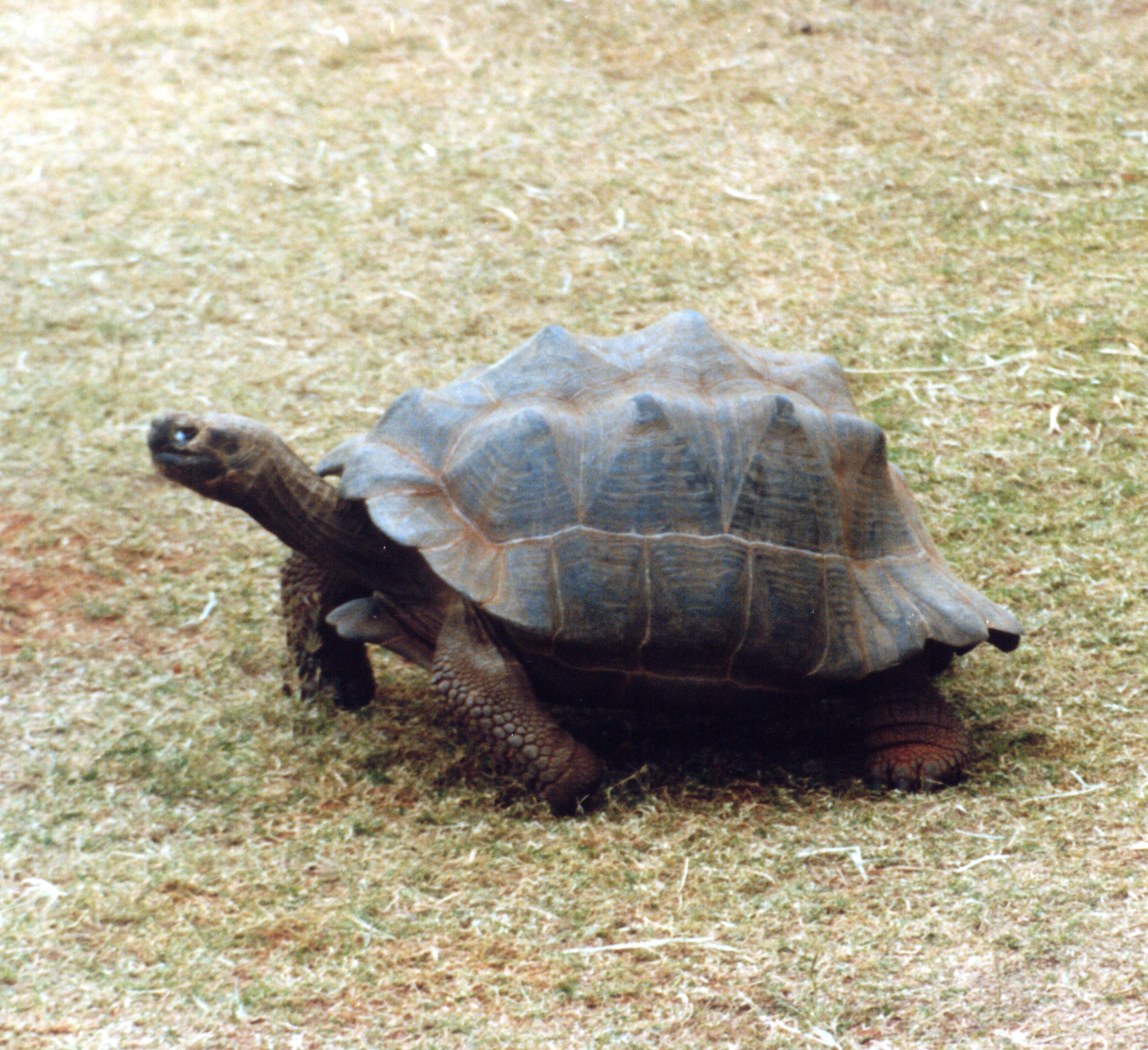 Photo Credit: kenhodge13 / Wikimedia
In the sun-drenched landscapes of the Galapagos Islands, the Galapagos tortoise, or Chelonoidis nigra, ambles slowly across the rugged terrain, embodying the spirit of these unique volcanic isles. With its massive, dome-shaped shell that can reach up to four feet in length, this gentle giant is a living testament to the wonders of evolution. Its sturdy limbs and leathery skin tell stories of survival, while its slow, deliberate movements invite us to pause and appreciate the beauty of nature’s design. Scientists and nature enthusiasts alike are captivated by these remarkable reptiles, not just for their size but for their fascinating role in the ecosystem.
As the sun rises over the horizon, the Galapagos tortoise emerges from its resting place, basking in the warm rays that energize its cold-blooded body. These tortoises are herbivores, munching on the lush grasses, fruits, and cacti that dot their island home. Their diet plays a crucial role in shaping the environment, as they help maintain the balance of plant life. With a lifespan that can exceed a century, these tortoises are not just ancient beings; they are living links to a time when their ancestors roamed the Earth alongside dinosaurs. Join us as we explore the captivating world of the Galapagos tortoise, uncovering its evolutionary history, unique behaviors, and the challenges it faces in a changing world.
The Galapagos tortoise holds a special place in the tree of life, showcasing the incredible diversity of the animal kingdom. As a member of the class Reptilia, this giant tortoise is part of a lineage that has thrived for millions of years. What sets the Galapagos tortoise apart is not just its impressive size, but also its unique adaptations to the harsh environments of the Galapagos Islands. These tortoises are known for their long lifespans, often living over a century, and their ability to store water, which is crucial for survival in their arid habitats.
| Taxonomic Rank | Scientific Name | Meaning & Significance |
|---|---|---|
| Kingdom | Animalia | This name signifies that the Galapagos tortoise is part of the animal kingdom, which includes all multicellular organisms that are not plants, fungi, or bacteria. |
| Phylum | Chordata | Chordata means “having a notochord,” a flexible rod that supports the body. This feature is a key characteristic of all vertebrates, including the Galapagos tortoise. |
| Class | Reptilia | Reptilia refers to reptiles, which are cold-blooded animals with scaly skin. The Galapagos tortoise’s tough, protective shell is a defining trait of this class. |
| Order | Testudines | Testudines comes from the Latin word for tortoise. This order is characterized by animals that have a bony or cartilaginous shell, providing them with protection. |
| Family | Testudinidae | This family includes tortoises, which are land-dwelling reptiles. The Galapagos tortoise is one of the largest members of this family, showcasing its impressive size. |
| Genus | Chelonoidis | Chelonoidis is derived from Greek, meaning “tortoise.” This name highlights the tortoise’s distinct characteristics and its place within the broader group of tortoises. |
Understanding the Galapagos tortoise’s classification reveals much about its evolutionary journey. As a species that has adapted to the unique conditions of the Galapagos Islands, it showcases the process of natural selection, where traits that enhance survival in specific environments are favored. The tortoise’s long lifespan and ability to thrive in limited resources illustrate how life can evolve in remarkable ways, leading to the diverse forms we see today. This ancient reptile not only tells us about its own history but also about the intricate web of life that connects all living beings on our planet.
The evolutionary journey of the Galapagos tortoise stretches back millions of years, beginning with its ancestors that roamed the Earth during the late Cretaceous period, around 70 million years ago. These early reptiles were part of a diverse group of tortoises that eventually adapted to various environments. As the Earth changed, so did these tortoises, leading to the emergence of the Galapagos tortoise, a species that would become a symbol of evolution itself.
The Galapagos tortoise, scientifically known as Chelonoidis, evolved from smaller, land-dwelling ancestors. Over time, as they colonized the isolated Galapagos Islands, they faced unique challenges and opportunities. This isolation allowed them to grow larger and develop distinct physical traits. For instance, some populations adapted to the arid conditions of certain islands by evolving longer necks, enabling them to reach higher vegetation. Others developed domed shells, which provided protection and helped them store water more efficiently. These adaptations were crucial for survival in the harsh environments of the islands.
These evolutionary adaptations have been vital for the Galapagos tortoise’s survival in a challenging environment. Their impressive size and unique shell shapes not only provide protection but also enable them to thrive on the sparse vegetation available. The ability to reach high food sources with their long necks and their slow metabolism allows them to endure long periods without food or water. Together, these traits illustrate the remarkable ways in which life can adapt to its surroundings, showcasing the beauty of evolution in action.
The Galapagos tortoise is a living testament to the wonders of evolution, with its massive, dome-shaped shell and sturdy limbs that seem to carry the weight of the ages. These gentle giants can weigh up to 575 pounds, making them one of the largest tortoise species on the planet. Their skin is covered in tough, protective scales, which not only add to their impressive appearance but also serve a vital role in their survival. With a slow, deliberate gait, they navigate their arid island habitats, embodying a sense of ancient wisdom and resilience.
| Feature | Description |
|---|---|
| Size | Can weigh up to 575 lbs and reach lengths of over 4 feet. |
| Color | Typically a dark brown or gray, with variations depending on the specific island. |
| Skin Type | Covered in tough, protective scales that help retain moisture. |
| Shell Shape | Dome-shaped, providing protection and support for their large bodies. |
The combination of their massive size, protective shell, and resilient skin allows Galapagos tortoises to thrive in their harsh environments. Their shells not only shield them from predators but also help them store water, a precious resource in their dry habitats. This remarkable adaptation enables them to survive long periods without drinking, showcasing how their physical features are finely tuned to the challenges of their island home. Each characteristic plays a crucial role in their survival, making the Galapagos tortoise a true marvel of nature.
The Galapagos tortoise calls the enchanting Galapagos Islands its home, a place where volcanic landscapes meet lush shrublands. Picture a rugged terrain dotted with cacti and low-lying vegetation, where the sun shines brightly and the air is filled with the salty scent of the ocean. These islands, formed by volcanic activity, create a unique environment that is both harsh and beautiful, providing the perfect backdrop for these magnificent reptiles.
The climate of the Galapagos Islands is a blend of warm and cool seasons, with temperatures typically ranging from 70 to 90 degrees Fahrenheit. The islands experience a dry season from June to December, which is crucial for the tortoises as it influences the availability of food. These gentle giants thrive in areas where the vegetation is abundant, relying on the shrubs and grasses that flourish in the volcanic soil. The unique weather patterns, including the cool Humboldt Current, help create a diverse ecosystem that supports their needs.
Over time, the Galapagos tortoise has developed remarkable adaptations to survive in this specific habitat. Their large, dome-shaped shells not only provide protection from predators but also help them retain moisture in the arid environment. Additionally, their ability to go long periods without water allows them to thrive even when rainfall is scarce. These adaptations are a testament to their resilience, enabling them to navigate the challenges of their volcanic home while playing a vital role in the delicate balance of the Galapagos ecosystem.
The daily life of a Galapagos tortoise is a slow-paced adventure filled with simple yet essential activities. These gentle giants typically rise with the sun, basking in its warm rays to kickstart their day. As ectothermic reptiles, they rely on external heat sources to regulate their body temperature. After soaking up the sun, they embark on a leisurely journey across their island habitat, munching on a variety of vegetation, including grasses, leaves, and even the prickly pads of cacti. Their day is punctuated by long periods of grazing, interspersed with moments of rest and hydration at nearby water sources.
Social interactions among Galapagos tortoises are quite limited, as they are primarily solitary creatures. While they may occasionally cross paths with one another, they do not form tight-knit groups or herds. Instead, they tend to maintain a respectful distance, each tortoise focused on its own foraging and basking routines. When they do interact, it is often during the breeding season, where males may engage in displays of dominance, such as vocalizations and posturing, to attract females. These interactions are brief and serve a specific purpose, highlighting the tortoises’ independent nature.
| Behavior Type | Description |
|---|---|
| Activity Patterns | Galapagos tortoises spend most of their day grazing on vegetation, with long periods of basking in the sun to regulate their body temperature. |
| Social Structure | These tortoises are solitary animals, rarely forming groups. They interact mainly during the breeding season. |
| Communication Methods | During mating season, males may use vocalizations and body postures to communicate with potential mates and assert dominance. |
The behaviors of Galapagos tortoises are finely tuned to their environment, ensuring their survival in the unique ecosystems of the Galapagos Islands. Their solitary lifestyle allows them to efficiently forage for food without competition, while their basking habits help them maintain the energy needed for their slow but steady movements. By understanding their daily routines and social interactions, we gain insight into how these ancient reptiles have thrived for millions of years, adapting to the challenges of their volcanic home.
The Galapagos tortoise is a dedicated herbivore, meaning it primarily eats plants. These magnificent reptiles have a diet that consists mainly of grasses, fruits, and cacti. With their strong, beak-like jaws, they can easily munch on tough vegetation, making the most of the plant life available in their arid island home. Their feeding behavior is quite leisurely; they spend a significant part of their day foraging for food, slowly moving from one patch of greenery to another, savoring each bite.
| Dietary Aspect | Details |
|---|---|
| Diet Type | Herbivore |
| Favorite Foods | Grass, fruits, and cacti |
| Prey Items | None (strictly herbivorous) |
| Hunting/Foraging Strategies | Slow movement, grazing on available vegetation |
This plant-based diet plays a crucial role in the ecology of the Galapagos tortoise. By consuming large amounts of vegetation, they help shape their environment, promoting the growth of certain plants while controlling others. Their slow and steady foraging routine allows them to thrive in the unique ecosystems of the Galapagos Islands, where they have adapted to the challenges of their surroundings. This gentle giant’s diet not only sustains its massive body but also contributes to the delicate balance of life on these remarkable islands.
The mating season for the Galapagos tortoise is a lively time filled with courtship rituals. Males often engage in a series of vocalizations, including deep, resonant sounds that can echo across the rocky terrain. During this period, males may also engage in head-bobbing displays to attract females. Once a male successfully courts a female, they will mate, and the female will later lay her eggs in a carefully chosen nesting site, often in sandy or loose soil.
| Reproductive Aspect | Details |
|---|---|
| Gestation Period | Approximately 60 days |
| Litter Size | 2-16 eggs |
| Age of Maturity | 20-25 years |
| Name of Young | Hatchlings |
After laying her eggs, the female tortoise leaves them to develop on their own, as there is no parental care after nesting. The eggs incubate in the warm, sandy environment, and after about two months, the hatchlings emerge. These tiny tortoises are vulnerable and must fend for themselves right from the start. They instinctively know to seek shelter and food, gradually growing and developing into the majestic adults they are destined to become. Over the years, they will learn to navigate their unique island habitat, embodying the resilience and adaptability that define the Galapagos tortoise.
The Galapagos tortoise occupies a unique position in its ecosystem, often seen as a keystone species. This means that its presence and activities significantly influence the environment and other species around it. While these gentle giants are not typically preyed upon by many animals due to their size and tough shells, they still face dangers that threaten their survival.
To defend themselves against these threats, Galapagos tortoises have developed several survival strategies. Their most notable defense is their impressive shell, which acts as a protective barrier against predators. When faced with danger, they can retract their heads and limbs into their shells, creating a nearly impenetrable fortress. Additionally, their slow and steady lifestyle allows them to conserve energy, making them resilient in the face of food scarcity. By adapting to their environment and using their natural defenses, these tortoises continue to thrive in the challenging landscapes of the Galapagos Islands.
A keystone species is an organism that plays a crucial role in maintaining the structure of its ecosystem. The Galapagos tortoise certainly qualifies as a keystone species due to its significant impact on the environment and the other species that share its habitat. By influencing the availability of resources and shaping the landscape, these tortoises help sustain the delicate balance of life in the Galapagos Islands.
One of the most important ways the Galapagos tortoise affects its ecosystem is through its feeding habits. As a herbivore, it primarily consumes grasses, fruits, and cacti. By grazing on these plants, the tortoise helps control their growth, preventing any single species from dominating the landscape. This grazing behavior promotes biodiversity, allowing various plant species to thrive and providing habitats for other animals. Additionally, the tortoise’s movement across the land creates pathways that other creatures can use, further enhancing the interconnectedness of the ecosystem.
The Galapagos tortoise also plays a vital role in seed dispersal. When it eats fruits, the seeds often pass through its digestive system unharmed. Once excreted, these seeds can germinate in new locations, helping to spread plant species across the islands. This process is essential for maintaining healthy plant populations and ensuring that the ecosystem remains vibrant and diverse. Furthermore, the tortoise’s large size and slow movement create microhabitats, such as depressions in the ground, which can collect water and provide a refuge for smaller animals during dry periods.
If the Galapagos tortoise were to disappear, the consequences would be profound. Without these gentle giants, plant species could become overgrown, leading to a decline in biodiversity. The loss of seed dispersal would hinder the growth of many plants, disrupting the entire food web. Other animals that rely on the tortoise for habitat and resources would struggle to survive, potentially leading to further extinctions. The delicate balance of the Galapagos Islands would be thrown into chaos, highlighting just how vital the Galapagos tortoise is to its ecosystem.
The Galapagos tortoise occupies a vital ecological niche in its island home, where it plays a key role in shaping the environment around it. As a large herbivore, this tortoise influences plant communities and contributes to the overall health of its ecosystem. By grazing on various types of vegetation, it helps maintain the balance of plant life, ensuring that no single species dominates the landscape. This balance is crucial for the diverse array of other species that share its habitat, making the tortoise an essential player in the ecological drama of the Galapagos Islands.
| Ecosystem Service | Impact |
|---|---|
| Grazing | Controls plant growth and promotes biodiversity |
| Seed Dispersal | Helps spread seeds through its droppings, aiding plant reproduction |
| Soil Aeration | Burrowing and movement help aerate the soil, improving its quality |
| Habitat Creation | Creates open spaces that benefit other species by providing sunlight and resources |
The Galapagos tortoise’s influence can be seen in specific examples throughout its habitat. For instance, as it munches on grasses and shrubs, it prevents any one plant species from taking over, allowing a variety of plants to thrive. This grazing behavior not only supports the tortoise’s own diet but also creates a more diverse environment for other animals, such as birds and insects, that rely on different plants for food and shelter. Additionally, when the tortoise moves through its territory, it inadvertently aerates the soil, making it easier for other plants to grow. This process is essential for maintaining the health of the ecosystem.
The broader ecological importance of the Galapagos tortoise cannot be overstated. As a keystone species, its presence is crucial for the stability of the entire ecosystem. By supporting plant diversity and creating habitats for other organisms, the tortoise helps maintain the intricate web of life on the islands. Protecting these magnificent reptiles is not just about preserving a single species; it is about safeguarding the delicate balance of the Galapagos Islands, ensuring that this unique environment continues to thrive for generations to come.
In the intricate web of life, symbiosis refers to the close interactions between different species, which can take many forms. These relationships can be mutualistic, where both species benefit, parasitic, where one benefits at the other’s expense, or commensal, where one benefits while the other is neither helped nor harmed. The Galapagos tortoise, a gentle giant of the islands, engages in various ecological partnerships that highlight the interconnectedness of life in its unique habitat.
| Species/Type | Relationship Type | Description |
|---|---|---|
| Galapagos Land Iguana | Mutualistic | The tortoise and iguana share the same habitat, with the tortoise’s grazing helping to keep vegetation low, which benefits the iguana by making food more accessible. |
| Ticks | Parasitic | Ticks can latch onto the tortoise’s skin, feeding on its blood, which can weaken the tortoise if infestations are severe. |
| Various Birds (e.g., Finches) | Commensal | Birds often perch on the tortoise’s shell, gaining a vantage point to spot predators while the tortoise remains unaffected. |
These relationships have evolved over time, shaped by the unique conditions of the Galapagos Islands. The mutualistic interactions, like that with the land iguana, demonstrate how species can adapt to thrive together, enhancing their survival. Meanwhile, parasitic relationships, such as those with ticks, remind us that not all interactions are beneficial. The commensal relationships with birds highlight the beauty of coexistence, where one species can gain an advantage without impacting the other. Together, these partnerships illustrate the delicate balance of life in the Galapagos, showcasing the importance of every species in maintaining the health of their ecosystem.
The Galapagos tortoise is not just a giant reptile; it is a living piece of history and a marvel of evolution. These magnificent creatures have some surprising traits that make them truly special.
The Galapagos tortoise has long captured the imagination of humanity, serving as a symbol of the natural world’s wonders. When explorers first encountered these majestic reptiles in the 16th century, they were struck by their size and unique characteristics. The tortoises became a part of maritime lore, often referenced in tales of adventure and discovery. Their cultural significance extends beyond stories; they have inspired scientific inquiry, notably influencing Charles Darwin’s theory of evolution. The tortoises’ varied forms across the islands provided key insights into how species adapt to their environments, making them a living testament to the power of nature.
Today, the relationship between Galapagos tortoises and humans is a complex tapestry woven with threads of conservation, conflict, and coexistence. As human activity has increased in the Galapagos Islands, so too have the challenges facing these gentle giants. Conservation efforts are underway to protect their habitats and ensure their survival, as invasive species and habitat destruction pose significant threats. However, conflicts can arise when human development encroaches on their natural environments. Additionally, some communities have explored the idea of domestication, raising questions about the balance between preserving wild populations and meeting human needs.
The future of the Galapagos tortoise and humanity hinges on our ability to foster a respectful and sustainable relationship. As awareness grows about the importance of biodiversity and the role these tortoises play in their ecosystem, there is hope for a harmonious coexistence. By prioritizing conservation and education, we can ensure that future generations will not only witness these magnificent creatures but also understand their significance in the grand tapestry of life on Earth. Together, we can protect the Galapagos tortoise, allowing it to thrive alongside humanity for years to come.
The Galapagos tortoise is currently classified as Vulnerable, according to the International Union for Conservation of Nature (IUCN). This status reflects the ongoing challenges these magnificent reptiles face in their natural habitat. While conservation efforts have led to some positive trends in population numbers, the overall situation remains precarious. The estimated population of Galapagos tortoises is around 20,000 individuals, but this number can fluctuate due to various environmental and human-related factors.
| Conservation Factor | Status/Details |
|---|---|
| IUCN Status | Vulnerable |
| Population Estimates | Approximately 20,000 individuals |
| Trend Direction | Slowly increasing due to conservation efforts |
The main threats to the Galapagos tortoise stem from both natural and human-induced factors. Invasive species, such as rats and goats, pose significant risks by competing for food and habitat. Additionally, habitat destruction due to agriculture and urban development further endangers their survival. Climate change also plays a role, as rising temperatures and changing rainfall patterns can affect the delicate ecosystems of the Galapagos Islands.
Conservation efforts are underway to protect the Galapagos tortoise and its habitat. Organizations are working tirelessly to control invasive species and restore natural environments. Breeding programs have also been established to help boost population numbers. Thanks to these initiatives, there is a glimmer of hope for the future of the Galapagos tortoise. With continued support and awareness, these ancient giants may thrive once more in their island paradise.
| Question | Answer |
|---|---|
| What is the habitat of the Galapagos Tortoise? | Galapagos Tortoises live in the volcanic lowlands and shrublands of the Galapagos Islands. These areas provide the right mix of vegetation and shelter that the tortoises need to thrive. |
| What do Galapagos Tortoises eat? | These tortoises are herbivores, meaning they primarily eat plants. Their diet includes grasses, leaves, and fruits, which they find in their natural habitat. |
| How do Galapagos Tortoises behave? | Galapagos Tortoises are generally slow-moving and spend a lot of time resting. They are also known for their social behavior, often seen interacting with one another in their natural environment. |
| How do Galapagos Tortoises reproduce? | During the breeding season, female tortoises lay eggs in nests dug into the ground. After about 120 days, the eggs hatch, and tiny tortoises emerge, ready to start their journey in the wild. |
| What threats do Galapagos Tortoises face? | Galapagos Tortoises are classified as vulnerable due to threats like habitat loss and invasive species. Predators such as rats and goats can eat their eggs and compete for food, making survival challenging. |
| What are some interesting characteristics of Galapagos Tortoises? | One fascinating feature of Galapagos Tortoises is their ability to live for over 100 years! They also have unique shell shapes that vary depending on the island they inhabit, which helps them adapt to different environments. |
| How do Galapagos Tortoises regulate their body temperature? | Galapagos Tortoises are ectothermic, meaning they rely on external sources to regulate their body temperature. They bask in the sun to warm up and seek shade or burrow into the ground to cool down. |