Taxonomy & Classification
- Kingdom
- Animalia
- Phylum
- Arthropoda
- Class
- Malacostraca
- Order
- Isopoda
- Family
- Cironlanidae
- Genus
- Bathynomus

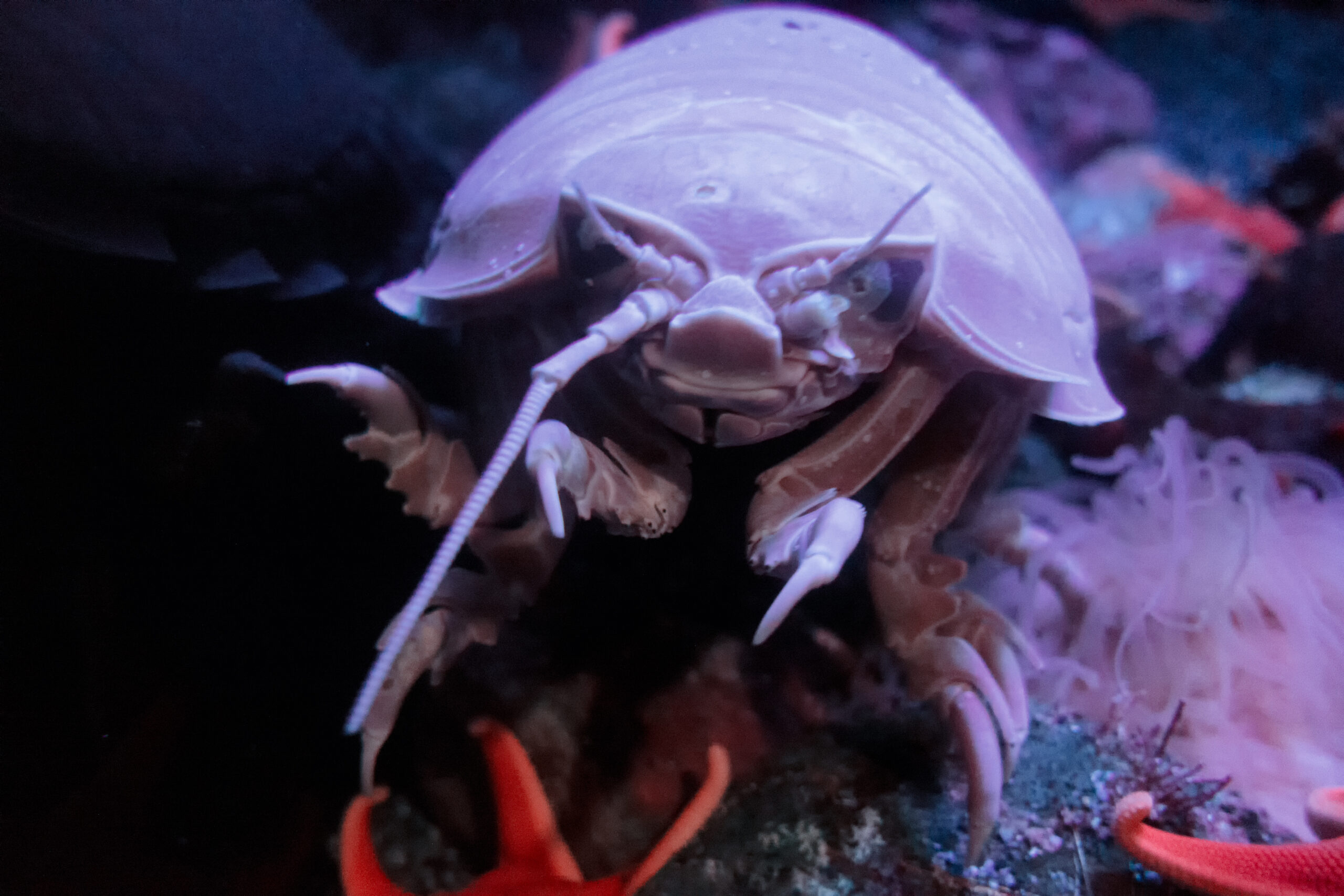 Photo Credit: Josve05a / Wikimedia Commons
In the shadowy depths of the ocean, where sunlight barely reaches and the water is a chilly blue, lives a remarkable creature known as the Giant Isopod, or Bathynomus giganteus. This fascinating marine inhabitant can grow up to 16 inches long, resembling a tiny armored tank as it scuttles across the ocean floor. With its segmented body and large, compound eyes, the Giant Isopod captures the imagination of scientists and nature enthusiasts alike. Its unique appearance and intriguing behaviors make it a subject of study and wonder, revealing secrets about life in one of Earth’s most mysterious environments.
Imagine a world where the pressure is immense, and the darkness is absolute. Here, the Giant Isopod thrives, playing a vital role as a scavenger in the deep-sea ecosystem. It feasts on the remains of dead fish and other organic matter, helping to recycle nutrients in a habitat that is often devoid of life. This remarkable creature not only survives but flourishes in conditions that would be inhospitable to many others. As we dive deeper into the life of the Giant Isopod, we will explore its evolutionary history, diet, and the critical role it plays in maintaining the health of its underwater home. Join us on this adventure to uncover the wonders of the deep sea and the extraordinary beings that inhabit it.
The Giant Isopod, a captivating inhabitant of the deep sea, holds a special place in the animal kingdom. Taxonomically, it belongs to the Kingdom Animalia, which includes all animals, and is classified under the Phylum Arthropoda, known for its jointed limbs and exoskeletons. Within this phylum, the Giant Isopod is part of the Class Malacostraca, which encompasses a wide variety of crustaceans, including crabs and shrimp. What sets the Giant Isopod apart is its impressive size, reaching up to 16 inches long, making it one of the largest isopods in existence. Its unique adaptations for life in the dark, cold depths of the ocean reveal much about its evolutionary journey.
| Taxonomic Rank | Scientific Name | Meaning & Significance |
|---|---|---|
| Kingdom | Animalia | From the Latin word for “animal,” highlighting its classification as a living organism. |
| Phylum | Arthropoda | Meaning “jointed feet,” referring to the jointed appendages that are a hallmark of this group. |
| Class | Malacostraca | Derived from Greek, meaning “soft shell,” which describes the flexible exoskeleton of these crustaceans. |
| Order | Isopoda | From Greek, meaning “equal feet,” indicating that the legs of these creatures are similar in structure. |
| Family | Cironlanidae | Named for the specific characteristics of this family, which includes deep-sea isopods. |
| Genus | Bathynomus | From Greek, meaning “deep sea,” reflecting its habitat in the ocean’s depths. |
The classification of the Giant Isopod reveals a fascinating evolutionary history that connects it to both terrestrial and marine environments. As a member of the Arthropoda phylum, it shares common ancestry with insects and spiders, showcasing the incredible adaptability of life forms. Its deep-sea habitat and unique adaptations, such as its ability to withstand high pressure and low temperatures, highlight the diverse evolutionary paths that organisms can take. Understanding where the Giant Isopod fits in the tree of life not only enriches our knowledge of biodiversity but also emphasizes the importance of preserving these extraordinary creatures and their habitats.
The evolutionary journey of the Giant Isopod, a fascinating marine inhabitant, stretches back millions of years. These intriguing creatures belong to a group known as crustaceans, which first appeared around 500 million years ago. Over time, they adapted to various environments, leading to the emergence of the Giant Isopod we recognize today, thriving in the dark depths of the ocean.
The ancestors of the Giant Isopod were likely small, shrimp-like creatures that roamed shallow waters. As they evolved, some species ventured into deeper habitats, where they faced unique challenges. One major transition was the development of a more robust exoskeleton, which provided protection against predators and the crushing pressures of the deep sea. Another significant change was the adaptation to a scavenging lifestyle, allowing them to feed on the remains of dead animals that drifted down from above. This shift not only expanded their diet but also helped them thrive in an environment where food sources are scarce.
These adaptations have been vital for the Giant Isopod’s survival in the deep sea. Their impressive size and sturdy exoskeleton allow them to navigate the harsh conditions of their habitat, while their scavenging habits ensure they have a reliable food source. As they continue to thrive in the depths, Giant Isopods remind us of the incredible ways life can adapt and flourish in even the most challenging environments.
The Giant Isopod is an astonishing sight, resembling a miniature armored tank of the ocean depths. With a body that can reach up to 16 inches long, this marine marvel is both impressive and a bit eerie. Its segmented body is covered in a tough, protective shell that is fused to its head, giving it a robust appearance. The isopod’s many legs, typically 14 in total, scuttle along the ocean floor, allowing it to navigate its dark, mysterious habitat with surprising agility.
| Feature | Description |
|---|---|
| Size | Can grow up to 16 inches (40 cm) long |
| Color | Generally a pale, grayish color, blending with the ocean floor |
| Skin Type | Hard shell that provides protection from predators |
| Most Distinctive Feature | Protective shell fused to the head, creating a formidable appearance |
These features work together to create a creature perfectly adapted to its deep-sea environment. The hard shell not only shields the Giant Isopod from potential threats but also helps it withstand the immense pressure of the ocean depths. Its size and coloration allow it to blend in with the rocky seabed, making it less visible to both predators and prey. This combination of traits ensures that the Giant Isopod thrives in the dark, cold waters where few other animals can survive, showcasing the incredible diversity of life in our oceans.
The Giant Isopod thrives in the mysterious depths of the ocean, where sunlight barely penetrates and the water is a chilly blue. These fascinating creatures make their homes in the dark, cold waters of the deep sea, often resting on the ocean floor among rocks and debris. This environment is a world of contrasts, where the pressure is immense and the temperatures are low, creating a unique habitat that few animals can endure.
To survive in these deep, cold oceans, the Giant Isopod requires specific environmental conditions. The water temperature typically hovers around 39°F (4°C), which is quite frigid for most creatures. The darkness of the deep sea means that these isopods have adapted to low light levels, relying on their keen sense of touch and smell to navigate their surroundings. The high pressure at these depths, which can be over 1,000 times that of the surface, is another challenge that they have evolved to withstand.
Adaptations are key to the Giant Isopod’s survival in such extreme conditions. Its thick, segmented exoskeleton provides protection against the crushing pressure of the deep sea, while its large, flat body allows it to scuttle along the ocean floor with ease. Additionally, the isopod’s ability to go long periods without food is a significant advantage in an environment where meals can be scarce. By being able to store energy and remain inactive for extended times, the Giant Isopod has carved out a niche in one of the most challenging habitats on Earth.
The Giant Isopod leads a life that is both intriguing and somewhat mysterious. These remarkable creatures spend much of their time in a state of constant hibernation, which means they slow down their metabolism and conserve energy. This behavior allows them to survive in the deep, dark ocean where food can be scarce. When they are active, they scavenge for food, primarily munching on the remains of dead animals that drift down from the surface. This scavenging is essential for their survival, as it provides the nutrients they need in an environment where meals are few and far between.
Socially, Giant Isopods are known to form colonies, which can be quite beneficial. Living in groups helps them find food more efficiently and offers some protection from predators. Within these colonies, they exhibit interesting dynamics, often communicating through subtle movements and chemical signals. This means they can share information about food sources or potential dangers, enhancing their chances of survival in the vast ocean depths.
| Behavior Type | Description |
|---|---|
| Activity Patterns | Giant Isopods spend most of their time in a state of hibernation, becoming active primarily to scavenge for food. |
| Social Structure | They live in colonies, which helps them find food and offers protection from predators. |
| Communication Methods | They communicate through movements and chemical signals, sharing information about food and threats. |
The behaviors of Giant Isopods are finely tuned to their environment, ensuring their survival in the deep sea. By hibernating, they conserve energy during times of scarcity, while their social structures and communication methods enhance their ability to thrive in a challenging habitat. This combination of strategies allows them to navigate the complexities of life in the ocean’s depths, making them a true testament to the wonders of adaptation in the natural world.
The Giant Isopod has a diverse diet that makes it a true scavenger of the deep sea. As an omnivore, it feeds on a variety of organic matter, primarily seeking out dying or dead fish, crustaceans, and even the remains of large marine animals like whale carcasses. This feeding behavior is crucial for its survival, as it allows the isopod to thrive in an environment where food can be scarce. With its keen sense of smell, the Giant Isopod can detect food from a distance, making it an efficient forager in the dark depths of the ocean.
| Dietary Aspect | Details |
|---|---|
| Diet Type | Omnivore |
| Favorite Foods | Dying or dead fish, crustaceans, whale carcasses |
| Prey Items | Dead marine animals, organic debris |
| Hunting/Foraging Strategies | Scavenging using keen sense of smell |
This scavenging diet plays a vital role in the ecology of the deep-sea environment. By consuming decaying matter, the Giant Isopod helps recycle nutrients back into the ecosystem, supporting the health of its habitat. Its daily routine revolves around searching for food, which can involve long periods of waiting and then bursts of activity when a food source is found. This behavior not only sustains the isopod but also contributes to the balance of life in the ocean’s depths, showcasing the interconnectedness of marine ecosystems.
When it comes to mating, Giant Isopods have a rather intriguing approach. These fascinating crustaceans typically breed during the warmer months, when food is more abundant and conditions are favorable. Males engage in a courtship dance, using their antennae to attract females. Once a female is receptive, the male will grasp her with his claws, ensuring a successful mating. This process can be quite competitive, as multiple males may vie for the attention of a single female, showcasing their strength and agility.
| Reproductive Aspect | Details |
|---|---|
| Gestation Period | Approximately 2 to 3 months |
| Litter Size | Up to 200 eggs |
| Age of Maturity | About 1 year |
| Name of Young | Juveniles |
After the eggs are fertilized, the female carries them in a special pouch on her abdomen until they hatch. This pouch, called a brood pouch, provides a safe environment for the developing embryos. Once the young, known as juveniles, emerge, they are miniature versions of their parents, ready to begin their journey in the deep sea. Parental care is minimal after hatching, as the juveniles must fend for themselves. They gradually grow and mature, eventually reaching their full size and becoming independent members of the ocean’s ecosystem. This fascinating life cycle highlights the resilience and adaptability of the Giant Isopod in the mysterious depths of the ocean.
The Giant Isopod plays a crucial role in the deep-sea food web, primarily as a scavenger. It helps recycle nutrients by consuming decaying organic matter, which is essential for the health of its underwater ecosystem. However, this fascinating creature is not without its dangers. It faces various predators and threats that challenge its survival in the dark, cold depths of the ocean.
To defend itself against these threats, the Giant Isopod has developed several survival strategies. Its hard, armored exoskeleton provides a tough barrier against predators, making it difficult to eat. Additionally, when threatened, it can curl up into a ball, much like a pill bug, to protect its softer underbelly. This combination of physical defenses and clever behaviors helps the Giant Isopod navigate the challenges of its deep-sea habitat, allowing it to thrive in an environment that is both beautiful and perilous.
A keystone species is an organism that has a disproportionately large impact on its environment relative to its abundance. In other words, if it were removed, the ecosystem would change dramatically. The Giant Isopod, a fascinating inhabitant of the deep sea, qualifies as a keystone species due to its critical role in nutrient recycling and its influence on the food web.
Giant Isopods are scavengers, meaning they feed on dead and decaying organic matter. By consuming the remains of fish and other marine life, they help break down and recycle nutrients back into the ecosystem. This process is vital for maintaining the health of deep-sea habitats, where food can be scarce. For example, when a large fish dies and sinks to the ocean floor, Giant Isopods are among the first to arrive, feasting on the carcass. This not only prevents the buildup of waste but also provides energy and nutrients for other organisms in the ecosystem.
Additionally, Giant Isopods contribute to the biodiversity of their environment. As they feed, they create a habitat for smaller organisms, such as bacteria and fungi, which thrive on the organic matter they leave behind. This interaction supports a complex web of life, where each species plays a role in the overall health of the ecosystem. Their presence helps maintain a balance, ensuring that no single species dominates the environment.
If Giant Isopods were to disappear, the consequences would be significant. Without these scavengers, dead organic matter would accumulate on the ocean floor, leading to a decline in nutrient recycling. This could result in a decrease in biodiversity, as other species that rely on the nutrients from decaying matter would struggle to survive. The entire food web could become unbalanced, affecting not just the deep-sea environment but also the larger ocean ecosystem. The loss of Giant Isopods would echo through the depths, illustrating just how interconnected life in the ocean truly is.
The Giant Isopod plays a vital role in its deep-sea habitat, acting as a key player in the ecosystem. This remarkable scavenger thrives in the cold, dark waters of the ocean, where it helps maintain the balance of life beneath the waves. By consuming decaying organic matter, the Giant Isopod ensures that nutrients are recycled, supporting the health of its environment. Its presence is crucial, as it helps to break down and decompose materials that would otherwise accumulate on the ocean floor.
| Ecosystem Service | Impact |
|---|---|
| Nutrient Recycling | Breaks down dead organic matter, returning nutrients to the ecosystem. |
| Food Source | Serves as prey for larger marine animals, contributing to the food web. |
| Habitat Maintenance | Helps keep the ocean floor clean, promoting a healthier environment for other species. |
The influence of the Giant Isopod can be seen in various ways. For instance, when it consumes the remains of dead fish and other marine life, it not only cleans up the ocean floor but also enriches the sediment with nutrients. This process supports the growth of microorganisms, which are essential for the overall health of the marine ecosystem. Additionally, as a food source for larger predators, such as fish and even some mammals, the Giant Isopod plays a crucial role in the food web, linking different levels of the ocean’s inhabitants.
The broader ecological importance of the Giant Isopod cannot be overstated. As a keystone species, its presence helps maintain the structure and function of its ecosystem. If these fascinating creatures were to disappear, the consequences would ripple through the food web, potentially leading to overpopulation of certain species and a decline in others. By fulfilling its role as a scavenger, the Giant Isopod not only supports its own survival but also contributes to the health and stability of the deep-sea environment, showcasing the interconnectedness of life in our oceans.
In the intricate web of life beneath the ocean’s surface, symbiosis plays a crucial role in shaping the relationships between different species. Symbiosis refers to the close interactions between organisms, which can be beneficial, harmful, or neutral. These ecological relationships can take many forms, such as mutualism, where both species benefit, parasitism, where one benefits at the expense of the other, and commensalism, where one benefits while the other is neither helped nor harmed. The Giant Isopod, a fascinating inhabitant of the deep sea, engages in various partnerships that highlight the complexity of marine ecosystems.
| Species/Type | Relationship Type | Description |
|---|---|---|
| Deep-sea fish | Commensal | Giant Isopods often scavenge on the remains of fish that have died, benefiting from the food source without affecting the fish. |
| Other scavengers | Mutualistic | In some cases, Giant Isopods may work alongside other scavengers, like certain types of crabs, to efficiently consume decaying matter, benefiting both parties. |
| Parasites (e.g., certain worms) | Parasitic | While not a primary relationship, Giant Isopods can sometimes host parasitic organisms, which may weaken them but do not typically lead to their death. |
The evolution of these relationships is a testament to the adaptability of the Giant Isopod and its companions. Over time, these interactions have developed to enhance survival and resource utilization in the challenging deep-sea environment. By scavenging on the remains of other creatures, Giant Isopods not only find nourishment but also help recycle nutrients back into the ecosystem. This interconnectedness illustrates how species can thrive together, each playing a role in the delicate balance of life beneath the waves.
The Giant Isopod is a truly astonishing creature that roams the dark depths of the ocean. With its unique adaptations and intriguing behaviors, it captures the imagination of nature enthusiasts everywhere.
Throughout history, the Giant Isopod has sparked curiosity and intrigue among humans. These remarkable creatures, often likened to alien beings due to their unusual appearance, have been part of folklore and cultural narratives in coastal communities. In some cultures, they are seen as symbols of the ocean’s mysteries, embodying the unknown depths that humans have long sought to explore. Historical encounters with these deep-sea dwellers have often been met with awe, as their size and armored bodies challenge our perceptions of marine life.
In modern times, our interactions with Giant Isopods have evolved significantly. While they are not commonly encountered by most people, scientists study them to understand deep-sea ecosystems better. Conservation efforts are underway to protect their habitats from pollution and climate change, which threaten the delicate balance of ocean life. However, there can be conflicts as well; for instance, some fishermen may view them as pests when they invade traps meant for other species. Interestingly, there are also discussions about the potential for domestication in research settings, where these creatures could help scientists learn more about marine biology and the effects of environmental changes.
As we look to the future, the relationship between humans and Giant Isopods is likely to deepen. With ongoing research and a growing awareness of the importance of marine conservation, we may find new ways to appreciate and protect these fascinating creatures. As we learn more about the roles they play in their ecosystems, we can better understand our own impact on the oceans. The Giant Isopod, with its ancient lineage and unique adaptations, serves as a reminder of the wonders that lie beneath the waves and the responsibility we have to safeguard them for generations to come.
The Giant Isopod currently holds a conservation status of “Not Listed” according to the International Union for Conservation of Nature (IUCN). This means that there is not enough information to determine if their populations are declining or stable. While they are not considered endangered, ongoing research is essential to monitor their numbers and understand their ecological role in the deep sea.
| Conservation Factor | Status/Details |
|---|---|
| IUCN Status | Not Listed |
| Population Estimates | Unknown |
| Trend Direction | Unknown |
Despite their current status, Giant Isopods face several threats that could impact their populations in the future. One of the main concerns is habitat degradation caused by deep-sea mining and pollution. As human activities expand into the ocean depths, the delicate ecosystems that support these creatures may be disrupted. Additionally, climate change poses a significant risk, as rising ocean temperatures can alter the habitats and food sources that Giant Isopods rely on.
Conservation efforts for the Giant Isopod are still in their infancy, but awareness is growing about the importance of protecting deep-sea ecosystems. Scientists and conservationists are advocating for more research to better understand these enigmatic creatures and their habitats. By promoting sustainable practices and reducing pollution, we can help ensure that the Giant Isopod continues to thrive in the mysterious depths of the ocean. The future of this fascinating species depends on our commitment to preserving the health of our oceans.
| Question | Answer |
|---|---|
| Where do Giant Isopods live? | Giant Isopods inhabit the deep, cold oceans, often found at depths of over 500 meters (1,640 feet). These dark and chilly environments provide the perfect habitat for them to thrive, away from the sunlight and warmer waters. |
| What do Giant Isopods eat? | Giant Isopods are omnivores, meaning they eat both plants and animals. Their diet mainly consists of dead fish, marine debris, and even the remains of larger animals that sink to the ocean floor. |
| How do Giant Isopods behave? | Giant Isopods are generally solitary creatures, preferring to roam the ocean floor alone. They are scavengers, using their keen sense of smell to locate food, and they can be quite slow-moving, which helps them conserve energy in their deep-sea environment. |
| How do Giant Isopods reproduce? | Giant Isopods reproduce by laying eggs, which the female carries in a special pouch until they hatch. This protective pouch helps keep the eggs safe in the harsh conditions of the deep sea. |
| What threats do Giant Isopods face? | While Giant Isopods are not currently listed as endangered, they can be affected by changes in their environment, such as pollution and climate change. These factors can impact their food sources and overall habitat health. |
| What is a unique feature of Giant Isopods? | One of the most distinctive features of Giant Isopods is their protective shell, which is fused to their head. This shell not only provides protection from predators but also helps them maintain their shape in the high-pressure environment of the deep sea. |
| How big can Giant Isopods get? | Giant Isopods can grow to impressive sizes, reaching lengths of up to 16 inches (40 centimeters). Their large size makes them one of the biggest isopods in the world, fascinating scientists and ocean enthusiasts alike. |