Taxonomy & Classification
- Kingdom
- Animalia
- Phylum
- Chordata
- Class
- Actinopterygii
- Order
- Perciformes
- Family
- Carangidae
- Genus
- Caranx
- Species
- Caranx ignobilis

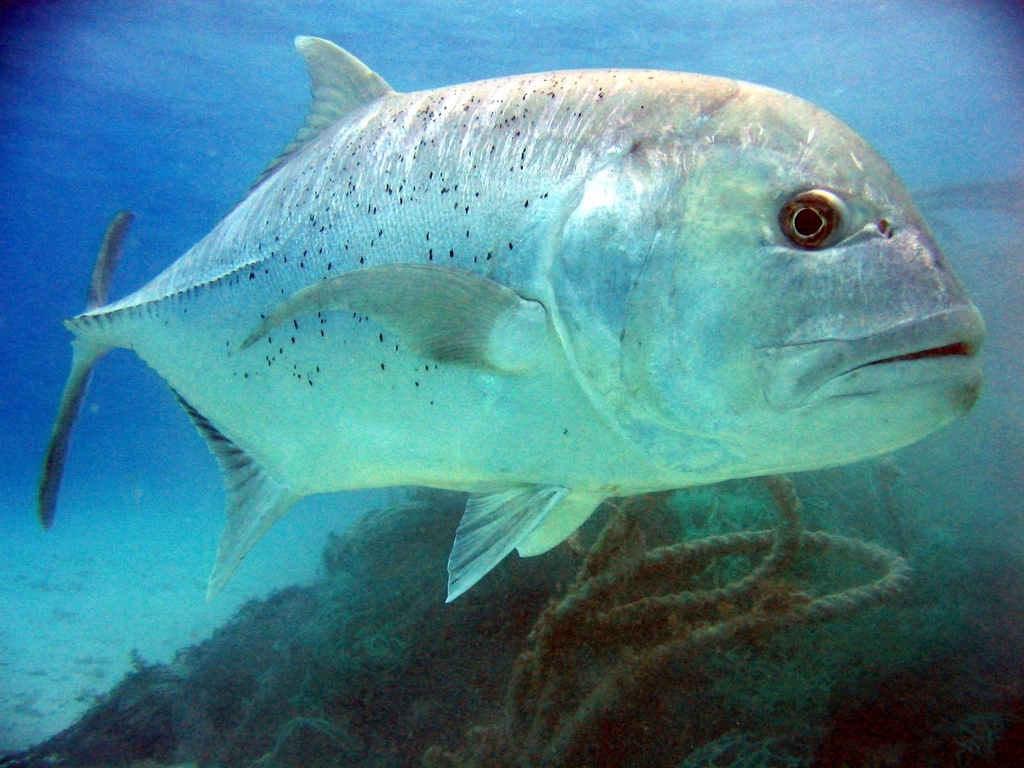 Photo Credit: Rawpixel
In the shimmering blue waters of the tropical oceans, the Giant Trevally, or Caranx ignobilis, glides with an elegance that belies its formidable size. This striking fish can grow up to four feet long, boasting a streamlined body that is perfectly designed for speed and agility. With its powerful, muscular build and a distinctive, silvery sheen, the Giant Trevally is not just a sight to behold; it is a master of its underwater domain. As it patrols the vibrant coral reefs and sandy shores, this top predator plays a crucial role in maintaining the balance of marine ecosystems, captivating scientists and nature enthusiasts alike.
Imagine a sun-drenched day where the ocean sparkles like a million diamonds, and the Giant Trevally is on the hunt. With keen eyesight and lightning-fast reflexes, it darts through schools of smaller fish, showcasing its impressive hunting skills. This carnivorous fish feasts on a diverse diet that includes crustaceans and cephalopods, making it a vital player in the ocean’s food web. As we dive deeper into the world of the Giant Trevally, we will explore its fascinating behaviors, its role in the ecosystem, and the unique relationships it forms with other marine life. Join us on this adventure to uncover the secrets of Caranx ignobilis and the vibrant underwater world it calls home.
The Giant Trevally, known scientifically as Caranx ignobilis, holds a prominent place in the animal kingdom, showcasing a fascinating blend of strength and agility. This powerful fish belongs to the family Carangidae, which includes many other fast-swimming species. What sets the Giant Trevally apart is not just its impressive size—growing up to 4 feet long and weighing over 100 pounds—but also its remarkable hunting skills. With a streamlined body and sharp eyesight, it is a master predator in the warm waters of the Indo-Pacific region, often seen hunting in schools or alone, demonstrating both social and solitary behaviors.
| Taxonomic Rank | Scientific Name | Meaning & Significance |
|---|---|---|
| Kingdom | Animalia | This name signifies that the Giant Trevally is part of the vast group of multicellular organisms known as animals, which are characterized by their ability to move and respond to their environment. |
| Phylum | Chordata | Chordata means “having a notochord,” a flexible rod that supports the body. In fish, this structure is replaced by the backbone, which is crucial for their swimming prowess. |
| Class | Actinopterygii | This class includes ray-finned fishes, which have fins supported by bony rays. The Giant Trevally’s fins allow for swift movements, making it an agile hunter. |
| Order | Perciformes | Perciformes translates to “perch-like,” indicating a diverse group of fish that often have a similar body shape. This order includes many species known for their adaptability and varied habitats. |
| Family | Carangidae | The name Carangidae comes from the Spanish word “caranga,” referring to a type of fish. This family is known for its fast swimmers, which are often found in open waters. |
| Genus | Caranx | Caranx is derived from the Tupi word for fish, highlighting the importance of these species in local cultures and their ecological roles as predators. |
| Species | ignobilis | This species name means “ignoble” or “common,” which may refer to its widespread presence in tropical waters, despite its impressive size and hunting skills. |
Understanding the Giant Trevally’s classification reveals much about its evolutionary journey. As a member of the Chordata phylum, it shares a common ancestry with all vertebrates, showcasing the incredible adaptations that have allowed it to thrive in diverse marine environments. Its position within the Actinopterygii class highlights the evolutionary innovations of ray-finned fishes, which have become some of the most successful vertebrates in the world. The Giant Trevally’s unique adaptations, from its powerful body to its predatory behavior, reflect millions of years of evolution, making it a true marvel of the ocean.
The evolutionary journey of the Giant Trevally, or Caranx ignobilis, stretches back millions of years, tracing its lineage through the vast oceans of the world. This species belongs to the family Carangidae, which includes a variety of fast-swimming fish. The ancestors of the Giant Trevally began to diverge from other fish around 50 million years ago, adapting to the challenges of their marine environment. Over time, these adaptations have shaped them into the powerful predators we see today.
The early ancestors of the Giant Trevally were likely smaller, less specialized fish that roamed the shallow waters of ancient seas. As they evolved, they developed traits that allowed them to thrive in diverse habitats, from coral reefs to open ocean. One major transition was the development of a streamlined body, which enhanced their swimming efficiency. This adaptation allowed them to chase down prey with remarkable speed and agility. Additionally, their powerful jaws and sharp teeth evolved to capture and consume a variety of prey, including smaller fish and crustaceans.
The adaptations of the Giant Trevally have been crucial for its survival in the competitive marine ecosystem. Their streamlined bodies and powerful jaws make them formidable predators, while their ability to maintain a higher body temperature gives them an edge in speed and agility. By forming schools, they not only enhance their hunting success but also create a sense of safety in numbers. These evolutionary traits have allowed the Giant Trevally to thrive in various oceanic environments, showcasing the incredible power of adaptation in the natural world.
The Giant Trevally is a striking fish that commands attention in the vibrant waters of the ocean. With a streamlined body that can reach impressive lengths of up to 4 feet, this fish is built for speed and power. Its muscular form is adorned with shimmering scales that reflect the sunlight, creating a dazzling display as it swims. The broad, flat head and large, expressive eyes give it a fierce appearance, while its strong, forked tail propels it through the water with remarkable agility.
| Feature | Description |
|---|---|
| Size | Can grow up to 4 feet (1.2 meters) in length |
| Color | Typically silver with hints of blue or green, often darker on the back |
| Skin Type | Covered in smooth, reflective scales |
| Most Distinctive Feature | Known for its aggressive behavior |
The combination of these features makes the Giant Trevally a formidable predator in its marine environment. Its sleek body allows for swift movements, enabling it to chase down prey with ease. The reflective scales not only add to its beauty but also help it blend into the shimmering ocean waters, providing a tactical advantage against both predators and prey. Meanwhile, its aggressive nature ensures it can defend its territory and compete for food, making it a true powerhouse of the ocean.
The Giant Trevally thrives in the warm, inviting waters of tropical and subtropical oceans. Picture a sun-drenched sea, where the waves gently lap against coral reefs and sandy shores. This fish is often found near coastal areas, where it can dart through the vibrant underwater landscapes filled with colorful corals and schools of smaller fish. The clear blue waters provide a perfect backdrop for this agile predator, making it a common sight in these lively marine environments.
The Giant Trevally prefers warm waters, typically ranging from 24 to 30 degrees Celsius (75 to 86 degrees Fahrenheit). These temperatures are ideal for its metabolism, which is the process that helps it convert food into energy. The fish is often found in areas with strong currents and plenty of structure, like reefs and rocky outcrops, where it can hunt for prey. The clarity of the water is also important, as it allows the Giant Trevally to spot its next meal from a distance.
Adapted to its dynamic habitat, the Giant Trevally has developed impressive hunting skills. Its streamlined body allows for swift movements, enabling it to chase down fast-swimming prey. With keen eyesight, it can detect even the slightest movements in the water, making it an effective predator. Additionally, its ability to thrive in both shallow and deeper waters gives it a versatile edge, allowing it to exploit various food sources and evade potential threats. This adaptability is key to its success in the diverse environments it calls home.
The Giant Trevally, or Caranx ignobilis, leads a dynamic life in the sunlit waters of tropical oceans. As a diurnal species, it is most active during the day, darting through coral reefs and open waters in search of food. These fish are known for their impressive hunting skills, often using their speed and agility to chase down smaller fish. They can be seen leaping out of the water or making sharp turns to catch their prey, showcasing their remarkable physical abilities.
While Giant Trevallies are primarily solitary, they do come together during mating season. This social behavior is crucial for reproduction, as it allows them to find mates and ensure the continuation of their species. Outside of this period, they prefer to roam alone, establishing their own territories. When they do gather, it’s often a lively spectacle, with males displaying their strength and agility to attract females. Communication among these fish can include body movements and changes in color, signaling their intentions to one another.
| Behavior Type | Description |
|---|---|
| Activity Patterns | Active during the day, hunting for food and patrolling their territory. |
| Social Structure | Primarily solitary, but congregate during mating season for reproduction. |
| Communication Methods | Utilizes body movements and color changes to convey messages, especially during mating. |
The behaviors of the Giant Trevally are finely tuned to ensure their survival in the competitive ocean environment. Their diurnal lifestyle allows them to take advantage of daylight for hunting, while their solitary nature helps them avoid predators. When it’s time to mate, their ability to gather and communicate effectively ensures that they can find partners and reproduce successfully. This blend of independence and social interaction is key to thriving in the vibrant underwater world they call home.
The Giant Trevally is a carnivore, meaning it primarily eats other animals. This powerful fish has a diverse diet that includes a variety of prey, such as crustaceans, cephalopods (like squids and octopuses), mollusks, eels, smaller fish, and even birds. With its keen eyesight and swift movements, the Giant Trevally is an adept hunter, often using speed and surprise to catch its meals. It can be seen darting through the water, chasing after schools of fish or lurking near coral reefs, ready to ambush unsuspecting prey.
| Dietary Aspect | Details |
|---|---|
| Diet Type | Carnivore |
| Favorite Foods | Crustaceans, cephalopods, mollusks, eels, smaller fish, birds |
| Prey Items | Anchovies, sardines, various small fish |
| Hunting Strategies | Speed and surprise, ambush tactics, often hunts in schools |
The diet of the Giant Trevally plays a crucial role in its ecological niche. By preying on a variety of marine life, it helps maintain the balance of the ocean ecosystem. Its hunting habits also influence the populations of smaller fish and invertebrates, ensuring that no single species dominates the environment. This dynamic feeding behavior shapes the daily routine of the Giant Trevally, as it must constantly search for food while also avoiding larger predators. In this way, the Giant Trevally is not just a hunter but an essential player in the vibrant tapestry of ocean life.
The mating behavior of the Giant Trevally is as dynamic as the waters it inhabits. During the breeding season, which typically occurs from late spring to early summer, these fish engage in spectacular courtship displays. Males often showcase their strength and agility, swimming rapidly and leaping out of the water to attract females. This vibrant display is not just for show; it plays a crucial role in ensuring successful reproduction.
| Reproductive Aspect | Details |
|---|---|
| Gestation Period | Approximately 4 to 6 weeks |
| Litter Size | Can produce thousands of eggs |
| Age of Maturity | About 3 to 4 years |
| Name of Young | Fry |
Once the eggs are fertilized, they float in the ocean, where they develop into tiny fry. These young fish are incredibly vulnerable at this stage, relying on the protection of their environment. As they grow, they begin to venture into shallower waters, where they can find food and shelter. While Giant Trevally do not exhibit parental care after spawning, the sheer number of eggs they produce increases the chances that some will survive to adulthood. Over time, these fry will grow into the powerful fish that roam the oceans, continuing the cycle of life in the vibrant marine ecosystem.
The Giant Trevally, or Caranx ignobilis, plays a crucial role in the marine food web. As a top predator, it helps maintain the balance of ocean ecosystems by controlling the populations of smaller fish and invertebrates. However, despite its impressive size and strength, the Giant Trevally faces several dangers that threaten its survival in the wild.
To defend itself against these threats, the Giant Trevally employs a variety of survival strategies. Its speed and agility allow it to make quick escapes from predators, darting away in a flash. Additionally, it often uses its environment to its advantage, hiding among coral reefs and rocky outcrops. By being aware of its surroundings and using its keen eyesight, the Giant Trevally can spot danger early and react swiftly, ensuring its place in the vibrant tapestry of ocean life.
A keystone species is an organism that has a disproportionately large impact on its environment relative to its abundance. In the case of the Giant Trevally, or Caranx ignobilis, this fish certainly qualifies as a keystone species in its ecosystem. As a top predator, it plays a vital role in maintaining the balance of marine life, influencing the populations of various species and the overall health of coral reef ecosystems.
The Giant Trevally is known for its impressive hunting skills, often preying on smaller fish, crustaceans, and cephalopods. By controlling the populations of these species, it helps prevent any one group from becoming too dominant, which could lead to imbalances in the ecosystem. For example, if the Giant Trevally were to decline in numbers, the populations of smaller fish could explode, leading to overgrazing of algae and other important marine plants. This could ultimately harm the coral reefs that rely on a balanced ecosystem to thrive.
Additionally, the Giant Trevally’s presence attracts other marine life, including smaller fish that seek shelter from predators. This creates a dynamic environment where various species can coexist, contributing to the biodiversity of the reef. The Giant Trevally also serves as a food source for larger predators, such as sharks, further linking it to the broader food web in the ocean.
If the Giant Trevally were to disappear from its habitat, the consequences could be severe. The unchecked growth of smaller fish populations could lead to overgrazing of essential marine vegetation, disrupting the entire coral reef ecosystem. This would not only affect the Giant Trevally’s prey but also the myriad of species that depend on healthy reefs for shelter and food. The loss of this keystone species would ripple through the ecosystem, highlighting just how interconnected life in the ocean truly is.
The Giant Trevally, known scientifically as Caranx ignobilis, occupies a vital ecological niche in tropical and subtropical marine environments. As a top predator, this powerful fish plays a crucial role in maintaining the balance of its ecosystem. By preying on smaller fish and invertebrates, the Giant Trevally helps regulate populations, ensuring that no single species dominates the underwater landscape. This balance is essential for the health of coral reefs and other marine habitats, where diverse species coexist.
| Ecosystem Service | Impact |
|---|---|
| Population Control | Regulates the numbers of smaller fish and invertebrates, preventing overpopulation. |
| Habitat Maintenance | Supports the health of coral reefs by controlling herbivore populations that can damage corals. |
| Nutrient Cycling | Contributes to nutrient cycling through its feeding habits, which helps sustain the ecosystem. |
| Food Source | Serves as a food source for larger predators, including sharks and humans. |
The influence of the Giant Trevally extends beyond its role as a predator. For instance, by hunting schools of smaller fish, it creates opportunities for other species to thrive. When the Giant Trevally chases its prey, it can stir up the ocean floor, releasing nutrients that benefit the surrounding marine life. Additionally, its presence attracts larger predators, such as sharks, which rely on the Giant Trevally as a food source. This interconnected web of relationships highlights how one species can impact many others in its environment.
The broader ecological importance of the Giant Trevally cannot be overstated. As a keystone species, its presence is essential for the overall health of marine ecosystems. By maintaining the balance of species and contributing to nutrient cycling, the Giant Trevally helps ensure that coral reefs and other habitats remain vibrant and diverse. Protecting this remarkable fish is crucial not only for its survival but also for the countless other species that depend on the intricate web of life in our oceans.
In the intricate web of ocean life, symbiosis plays a vital role in shaping the relationships between different species. Symbiosis refers to the close interactions between organisms, which can be beneficial, harmful, or neutral. These relationships can be mutualistic, where both species gain advantages; parasitic, where one benefits at the other’s expense; or commensal, where one benefits while the other is neither helped nor harmed. The Giant Trevally, a powerful predator of the sea, engages in various ecological partnerships that highlight the complexity of marine ecosystems.
| Species/Type | Relationship Type | Description |
|---|---|---|
| Cleaner Wrasse | Mutualistic | The Giant Trevally allows cleaner wrasses to remove parasites and dead skin from its body, benefiting from improved health while the wrasses receive food. |
| Remoras | Commensal | Remoras attach themselves to the Giant Trevally, gaining a free ride and access to food scraps, while the trevally is largely unaffected. |
| Small Fish | Parasitic | Some small fish may nip at the Giant Trevally’s fins, causing irritation and stress, which can be harmful to the trevally. |
These relationships have evolved over time, shaped by the needs and behaviors of the species involved. The mutualistic bond with cleaner wrasses is a prime example of how cooperation can enhance survival. By allowing these small fish to clean them, Giant Trevallies not only maintain their health but also foster a relationship that benefits both parties. Meanwhile, the commensal relationship with remoras showcases how some species can thrive by hitching a ride on larger animals without causing harm. Understanding these connections helps us appreciate the delicate balance of marine ecosystems and the roles each species plays in sustaining life beneath the waves.
The Giant Trevally, known for its impressive size and fierce demeanor, is a captivating fish that roams the warm waters of tropical oceans. This powerful predator is not just a sight to behold; it also has some surprising traits that make it truly stand out in the marine world.
The Giant Trevally, or Caranx ignobilis, has long been a significant figure in the lives of coastal communities around the world. Historically, these powerful fish have been revered by fishermen and local cultures, often symbolizing strength and resilience. In many Pacific Island nations, the Giant Trevally is not just a source of food but also a part of cultural traditions and rituals. Its impressive size and fighting spirit make it a prized catch, celebrated in local folklore and art. This deep-rooted connection highlights the fish’s importance beyond mere sustenance, weaving it into the very fabric of human life in coastal regions.
Today, the relationship between Giant Trevally and humanity is evolving, shaped by both conservation efforts and challenges. As overfishing threatens their populations, many communities are working to protect these magnificent fish through sustainable fishing practices and marine reserves. However, conflicts can arise when fishing regulations clash with local traditions or economic needs. Some areas have even seen attempts to domesticate or farm Giant Trevally, exploring ways to meet demand while ensuring the species’ survival. This delicate balance between conservation and human activity is crucial for the future of both the fish and the communities that depend on them.
Looking ahead, the future of the Giant Trevally and its relationship with humanity hinges on our ability to adapt and innovate. As awareness of environmental issues grows, there is hope that more communities will embrace sustainable practices that honor both the fish and their cultural significance. By fostering a deeper understanding of the Giant Trevally’s role in marine ecosystems, we can ensure that future generations will continue to appreciate and respect this remarkable species. Together, we can create a harmonious balance that benefits both the ocean and the people who rely on it.
The Giant Trevally, or Caranx ignobilis, currently holds a conservation status of “Least Concern” according to the International Union for Conservation of Nature (IUCN). This means that, at present, the species is not facing an immediate threat of extinction. Population estimates suggest that Giant Trevally are relatively stable, although localized declines may occur in certain areas due to fishing pressures. Overall, their numbers appear to be holding steady, allowing them to continue thriving in their tropical ocean habitats.
| Conservation Factor | Status/Details |
|---|---|
| IUCN Status | Least Concern |
| Population Estimates | Stable in many regions |
| Trend Direction | Stable |
Despite their current stable status, Giant Trevally face several threats that could impact their populations in the future. Overfishing is a significant concern, as these fish are highly sought after for both commercial and recreational fishing. Additionally, habitat degradation, particularly in coral reef areas, poses a risk to their breeding and feeding grounds. Climate change also plays a role, as rising ocean temperatures and acidification can affect the ecosystems that support Giant Trevally.
Conservation efforts are underway to ensure the continued health of Giant Trevally populations. Sustainable fishing practices are being promoted in many regions, helping to balance the needs of local communities with the preservation of marine life. Marine protected areas are also being established to safeguard critical habitats. With these initiatives in place, the outlook for the Giant Trevally remains positive, allowing this magnificent fish to continue its vital role in the ocean’s ecosystem.
| Question | Answer |
|---|---|
| What is the habitat of the Giant Trevally? | The Giant Trevally is commonly found in warm, tropical waters, especially around coral reefs and lagoons. They prefer shallow coastal areas but can also venture into deeper waters, making them versatile hunters. |
| What do Giant Trevally eat? | As carnivores, Giant Trevally primarily feed on smaller fish, crustaceans, and even squid. Their powerful jaws and sharp teeth help them catch and consume their prey efficiently. |
| How do Giant Trevally behave in the wild? | Giant Trevally are known for their aggressive behavior, especially when hunting. They often hunt in groups, using teamwork to corner and capture their prey, showcasing their intelligence and social skills. |
| How do Giant Trevally reproduce? | Giant Trevally are known to spawn in open waters, where females release eggs that are fertilized by males. This process usually occurs during warmer months, and the young fish are left to fend for themselves right after hatching. |
| What threats do Giant Trevally face? | While Giant Trevally are currently listed as Least Concern, they face threats from overfishing and habitat destruction. Their populations can be affected by unsustainable fishing practices and the degradation of coral reefs. |
| What is a unique characteristic of the Giant Trevally? | One of the most distinctive features of the Giant Trevally is its aggression. This fish is not only a fierce predator but also known to challenge larger animals, making it a fascinating species to observe. |
| Can Giant Trevally be found in aquariums? | Yes, Giant Trevally can be found in some large public aquariums, where they are admired for their size and striking appearance. However, they require ample space and specific water conditions to thrive, making them challenging to keep in home aquariums. |