Taxonomy & Classification
- Kingdom
- Animalia
- Phylum
- Chordata
- Class
- Actinopterygii
- Order
- Gadiformes
- Family
- Gadidae
- Genus
- Gadus
- Species
- Gadus chalcogrammus

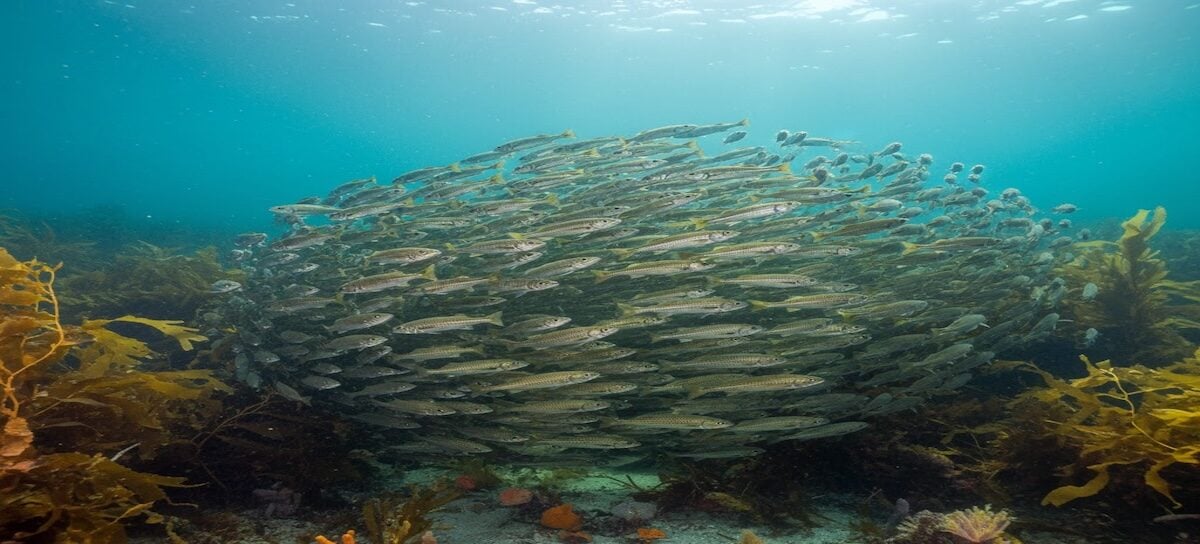 Photo Credit: AnimalsDiscovered
In the frigid waters of the North Pacific, the Alaskan Pollock, known scientifically as Gadus chalcogrammus, dances through the currents with a grace that captivates both scientists and nature lovers alike. This fish, with its sleek, streamlined body and shimmering silver sides, is perfectly designed for life in the ocean’s depths. As it glides through the chilly waters, the Pollock’s distinctive features, including its large, dark spots and a slightly forked tail, make it a striking sight against the backdrop of the vibrant marine ecosystem.
Imagine a bustling underwater world where schools of Alaskan Pollock weave through the waves, their movements synchronized like a well-rehearsed ballet. These fish thrive in nutrient-rich waters, often found near the ocean floor where they hunt for smaller organisms like zooplankton. Their role in the marine food web is crucial, as they serve as both predator and prey, supporting a diverse array of wildlife. This fascinating interplay of life not only highlights the Pollock’s importance in its habitat but also sparks curiosity about the delicate balance of ocean ecosystems. As we explore the life of the Alaskan Pollock, we will uncover its behaviors, diet, and the vital role it plays in the North Pacific, revealing why this remarkable fish is a subject of ongoing scientific interest and admiration.
Alaskan Pollock, a fish that swims through the icy waters of the North Pacific, holds a special place in the tree of life. This species belongs to the kingdom Animalia, which includes all animals, and is classified under the phylum Chordata, meaning it has a backbone. What sets Alaskan Pollock apart is its adaptability to cold environments and its significant role in both the ecosystem and the fishing industry. With its streamlined body and ability to thrive in frigid waters, this fish is not just a staple on dinner plates but also a vital part of marine food webs.
| Taxonomic Rank | Scientific Name | Meaning & Significance |
|---|---|---|
| Kingdom | Animalia | This name comes from the Latin word for “animal,” highlighting that Alaskan Pollock is part of the vast group of living organisms that are multicellular and capable of movement. |
| Phylum | Chordata | Derived from the Greek word “chordē,” meaning “string,” this classification indicates that Alaskan Pollock has a notochord, a flexible rod that supports its body during development. |
| Class | Actinopterygii | This term means “ray-finned fishes,” referring to the bony rays that support its fins, allowing for agile swimming in its cold ocean habitat. |
| Order | Gadiformes | From the Latin word “gadus,” meaning “cod,” this order includes fish that share similar features, such as a soft body and a preference for cooler waters. |
| Family | Gadidae | This family name also comes from “gadus,” emphasizing the close relationship between Alaskan Pollock and other cod-like fish, which often share habitats and behaviors. |
| Genus | Gadus | The genus name is derived from the Latin word for “cod,” reflecting the fish’s physical characteristics and its importance in fisheries. |
The classification of Alaskan Pollock reveals much about its evolutionary journey. As a member of the Chordata phylum, it shares a common ancestry with all vertebrates, showcasing the remarkable adaptations that have allowed it to thrive in the cold, nutrient-rich waters of the North Pacific. Its place in the Gadidae family highlights its close ties to other fish that have evolved similar traits for survival in similar environments. Understanding this taxonomic position not only enriches our knowledge of Alaskan Pollock but also illustrates the intricate web of life that connects all living beings in the ocean.
The evolutionary journey of Alaskan Pollock, scientifically known as Gadus chalcogrammus, stretches back millions of years, tracing its lineage through the icy waters of the North Pacific. This fish is part of the Gadidae family, which includes other well-known fish like cod. The story of Alaskan Pollock is one of adaptation and survival, shaped by the changing environments of the ocean and the challenges posed by predators and competition.
The ancestors of Alaskan Pollock were likely similar to other early fish that thrived in marine environments. Over time, these fish underwent significant changes, adapting to their surroundings. One major transition was the development of a streamlined body shape, which allowed them to swim efficiently through the water. This adaptation was crucial for escaping predators and catching prey. As the climate and ocean conditions evolved, so did the Pollock, leading to the emergence of traits that would help them thrive in colder waters.
These adaptations have been vital for the survival of Alaskan Pollock in their challenging environment. Their streamlined bodies and cold-water tolerance enable them to navigate the icy depths with ease, while their schooling behavior provides safety in numbers. With a flexible diet, they can take advantage of the abundant food sources available in their habitat. Together, these traits have allowed Alaskan Pollock to flourish, making them a key species in the North Pacific ecosystem and an important resource for both marine life and humans alike.
In the chilly depths of the North Pacific, the Alaskan Pollock glides gracefully through the water, showcasing a streamlined body that is perfectly adapted for life in the ocean. This fish typically weighs between 1 to 3 pounds, making it a medium-sized swimmer among its aquatic peers. Its sleek form is designed for speed, allowing it to dart away from predators and chase after smaller prey. The Alaskan Pollock’s skin is covered in smooth scales, which help reduce drag as it moves through the water, while its coloration blends beautifully with the ocean’s hues.
| Feature | Description |
|---|---|
| Weight | 1-3 lbs |
| Skin Type | Scales |
| Most Distinctive Feature | Speckling |
The Alaskan Pollock’s speckled skin serves a vital purpose, providing camouflage against the dappled light filtering through the water. This natural pattern helps it blend into its surroundings, making it harder for predators to spot. The combination of its streamlined body and protective coloration not only aids in evading danger but also enhances its ability to hunt for food. With these features working in harmony, the Alaskan Pollock thrives in its frigid habitat, showcasing the wonders of adaptation in the animal kingdom.
In the vast expanse of the North Pacific Ocean, Alaskan Pollock finds its home in cold, nutrient-rich waters. These fish thrive in areas where the ocean floor is relatively shallow, often near the continental shelf. Here, the water is teeming with life, providing a perfect environment for Alaskan Pollock to feed and grow. The shimmering blue depths are not just a backdrop; they are a bustling community filled with other marine species, creating a vibrant underwater world.
Alaskan Pollock prefers cooler waters, typically ranging from 2 to 10 degrees Celsius (36 to 50 degrees Fahrenheit). These temperatures are ideal for their growth and reproduction. The fish are often found in areas with strong currents, which help bring in the rich nutrients they need to survive. The ocean’s salinity, or saltiness, also plays a role in their habitat, as they are adapted to thrive in the briny waters of the Pacific.
To flourish in these chilly environments, Alaskan Pollock have developed several adaptations. Their bodies are streamlined, allowing them to swim efficiently through the water, while their ability to tolerate cold temperatures helps them survive in frigid conditions. Additionally, they have a keen sense of smell, which aids in locating food sources like plankton and small fish. These adaptations not only help them thrive but also make them a vital part of the marine ecosystem, supporting both their species and the larger food web.
As the sun rises over the North Pacific, Alaskan Pollock begin their day in the chilly waters, where they engage in a variety of activities that define their daily lives. These fish are most active during the early morning and late afternoon, swimming through the ocean in search of food. Their diet mainly consists of small fish, crustaceans, and zooplankton, which they hunt with agility and precision. Throughout the day, they alternate between foraging for food and resting in the depths, where they can avoid predators.
Alaskan Pollock are social animals that thrive in groups, known as schools. These schools can range from a few dozen to thousands of individuals, creating a mesmerizing spectacle as they move together in harmony. This social behavior not only helps them find food more efficiently but also provides safety in numbers. When threatened by predators like seals or larger fish, the school can quickly change direction, making it harder for the predator to single out an individual. Communication within the school is vital, as they use subtle movements and changes in swimming patterns to signal each other about potential dangers or food sources.
| Behavior Type | Description |
|---|---|
| Activity Patterns | Alaskan Pollock are most active during early morning and late afternoon, foraging for food and resting in deeper waters. |
| Social Structure | They live in schools, which can consist of dozens to thousands of fish, enhancing their chances of survival. |
| Communication Methods | Pollock communicate through movements and swimming patterns, alerting each other to food and potential threats. |
The behaviors of Alaskan Pollock are finely tuned to ensure their survival in the vast ocean. By swimming in schools, they not only increase their chances of finding food but also create a protective barrier against predators. Their ability to communicate and coordinate with one another enhances their efficiency and safety, allowing them to thrive in the nutrient-rich waters of the North Pacific. In this dynamic underwater world, every movement counts, and the Alaskan Pollock’s daily life is a testament to the wonders of adaptation and cooperation in nature.
Alaskan Pollock primarily feeds on a diet rich in protein, making it a carnivore. These fish are skilled hunters, often found in schools that help them locate and capture their prey more effectively. Their diet mainly consists of small crustaceans and other fish, which they hunt using a combination of speed and agility. By swimming in coordinated groups, they can overwhelm their prey, making it easier to catch a meal in the vast ocean.
| Dietary Aspect | Details |
|---|---|
| Diet Type | Carnivore |
| Favorite Foods | Crustaceans and small fish |
| Prey Items | Krill, shrimp, and juvenile fish |
| Hunting/Foraging Strategies | Swimming in schools to locate and capture prey |
The diet of Alaskan Pollock plays a crucial role in its ecological niche. By feeding on smaller marine organisms, they help maintain the balance of the ocean’s food web. Their hunting strategies not only ensure their survival but also influence the populations of their prey. This dynamic relationship shapes their daily routine, as they must constantly adapt to the availability of food in their environment, making them an integral part of the North Pacific ecosystem.
As the icy waters of the North Pacific begin to warm, Alaskan Pollock embark on their annual mating ritual. This breeding season typically occurs from January to March, when the fish gather in large schools to find mates. During this time, males display vibrant colors and engage in energetic courtship behaviors to attract females. Once a female selects a mate, she releases her eggs into the water, where males fertilize them. This process is known as external fertilization, meaning the eggs are fertilized outside the female’s body, allowing for a large number of eggs to be produced.
| Reproductive Aspect | Details |
|---|---|
| Gestation Period | Not applicable; eggs are fertilized externally |
| Litter Size | Up to 1 million eggs per female |
| Age of Maturity | 3 to 4 years |
| Name of Young | Larvae |
After the eggs are fertilized, they drift in the ocean currents, where they hatch into tiny larvae. These larvae are incredibly vulnerable and rely on the rich nutrients in their environment to grow. As they develop, they undergo several stages, gradually transforming into juvenile fish. Interestingly, Alaskan Pollock do not provide parental care; instead, they rely on the ocean’s abundant resources to support their young. Over time, these larvae grow into adults, maturing in about three to four years, and continue the cycle of life in the frigid waters they call home.
Alaskan Pollock plays a crucial role in the marine food web, serving as both predator and prey. These fish are a vital food source for larger marine animals, while also feeding on smaller organisms like zooplankton. Their position in the ecosystem highlights the delicate balance of ocean life, where every species, including Alaskan Pollock, contributes to the health of the ocean.
To survive against these threats, Alaskan Pollock have developed several clever strategies. They often swim in large schools, which helps confuse predators and makes it harder for them to single out an individual fish. Additionally, Pollock can quickly dart away when they sense danger, thanks to their streamlined bodies. This combination of social behavior and agility allows them to evade many of their natural enemies, ensuring their survival in the vast and sometimes perilous ocean.
A keystone species is an organism that has a disproportionately large impact on its environment relative to its abundance. In the case of Alaskan Pollock, this fish does indeed qualify as a keystone species in its ecosystem. By serving as a critical food source for various marine animals and influencing the structure of the marine community, Alaskan Pollock plays a vital role in maintaining the balance of its habitat.
Alaskan Pollock is a key player in the North Pacific food web. As a carnivore, it primarily feeds on smaller organisms like zooplankton and small fish, which helps regulate their populations. This feeding behavior not only supports the health of the ecosystem but also ensures that energy flows efficiently through the food web. When Alaskan Pollock schools together, they create a significant biomass that attracts larger predators, such as seals, sea lions, and various species of fish, including cod and halibut. This interaction highlights how Pollock supports both predator and prey dynamics in the ocean.
Moreover, Alaskan Pollock contributes to nutrient cycling in its environment. As these fish consume prey and excrete waste, they help distribute nutrients throughout the water column. This process is essential for the growth of phytoplankton, the microscopic plants that form the base of the marine food web. Without the presence of Alaskan Pollock, the balance of nutrient distribution could be disrupted, leading to potential declines in phytoplankton populations and, consequently, the entire marine ecosystem.
If Alaskan Pollock were to disappear from the North Pacific, the consequences would be profound. The absence of this keystone species would likely lead to overpopulation of smaller fish and zooplankton, which could disrupt the entire food web. Larger predators that rely on Pollock for sustenance would face food shortages, potentially leading to declines in their populations. This ripple effect could destabilize the marine ecosystem, highlighting just how crucial Alaskan Pollock is to the health and balance of its environment.
Alaskan Pollock is a vital player in the North Pacific ecosystem, occupying a unique ecological niche. As a carnivorous fish, it primarily feeds on smaller organisms, such as zooplankton and small fish. This feeding behavior not only helps control the populations of these smaller species but also ensures that energy flows through the food web. By being both predator and prey, Alaskan Pollock supports a balanced ecosystem, making it essential for the health of its marine environment.
| Ecosystem Service | Impact |
|---|---|
| Food Source | Provides nourishment for larger marine animals, including seals, sea lions, and various seabirds. |
| Nutrient Cycling | Contributes to the transfer of nutrients through the food web, supporting diverse marine life. |
| Habitat Structure | Influences the distribution of other species by creating habitats through its feeding and schooling behavior. |
| Commercial Importance | Supports local economies and global fisheries, impacting human communities and their reliance on marine resources. |
Alaskan Pollock’s influence extends beyond its immediate interactions. For instance, when these fish feed on zooplankton, they help regulate the populations of these tiny organisms, which can explode in numbers if left unchecked. Additionally, the large schools of Pollock create a dynamic environment that attracts predators, such as whales and larger fish, which rely on them for sustenance. This interaction not only supports the food web but also fosters biodiversity, as various species congregate around these schools.
The broader ecological importance of Alaskan Pollock cannot be overstated. As a keystone species, its presence significantly shapes the marine ecosystem. The health of Pollock populations directly affects the entire food web, influencing everything from the smallest plankton to the largest marine mammals. By maintaining balance in their environment, Alaskan Pollock plays a crucial role in ensuring the resilience and sustainability of the North Pacific Ocean, highlighting the interconnectedness of life in our oceans.
In the intricate web of life beneath the waves, Alaskan Pollock engages in various partnerships with other species, showcasing the beauty of symbiosis. Symbiosis refers to the close interactions between different species, which can be beneficial, harmful, or neutral. These relationships are essential for maintaining the balance of ecosystems, as they help species thrive and adapt to their environments. Alaskan Pollock, with its role as both predator and prey, interacts with a variety of marine organisms, forming connections that highlight the complexity of ocean life.
| Species/Type | Relationship Type | Description |
|---|---|---|
| Sea Lions | Mutualistic | Sea lions often hunt near schools of Alaskan Pollock, benefiting from the fish’s presence while also helping to keep their populations in check. |
| Remoras | Commensal | Remoras attach themselves to Alaskan Pollock, gaining a free ride and access to food scraps without harming the fish. |
| Parasitic Worms | Parasitic | Some parasitic worms can infect Alaskan Pollock, drawing nutrients from the fish and potentially harming its health. |
These relationships have evolved over time, shaped by the needs and survival strategies of the species involved. Mutualistic interactions, like those with sea lions, enhance the hunting efficiency of both species, while commensal relationships, such as with remoras, provide benefits without causing harm. However, parasitic relationships remind us that not all interactions are positive. Understanding these dynamics helps us appreciate the delicate balance of marine ecosystems and the vital role Alaskan Pollock plays within them.
Alaskan Pollock is not just a common fish; it’s a fascinating part of the North Pacific ecosystem with some surprising traits that might just blow your mind. Let’s dive into some intriguing facts about this remarkable fish!
The Alaskan Pollock has long been intertwined with human history, particularly for the indigenous peoples of Alaska. For centuries, these communities have relied on the fish as a vital food source, celebrating its abundance through traditional practices and cultural rituals. The fish is not just a meal; it represents a connection to the ocean and the natural world. As the demand for Alaskan Pollock grew, especially in the 20th century, it became a staple in global cuisine, appearing in everything from fish sticks to sushi. This relationship highlights the importance of the fish in both local cultures and the broader culinary landscape.
Today, the interaction between Alaskan Pollock and humanity is complex and multifaceted. On one hand, sustainable fishing practices have been developed to ensure that this vital species is not overexploited. Organizations and governments work together to monitor fish populations and set quotas, aiming to balance human consumption with ecological health. However, conflicts can arise, particularly with commercial fishing interests and environmental concerns. As climate change alters ocean conditions, the habitats of Alaskan Pollock are also affected, prompting discussions about conservation and the need for adaptive management strategies.
As we look to the future, the relationship between Alaskan Pollock and humanity will likely continue to evolve. With increasing awareness of environmental issues, there is a growing emphasis on sustainable practices that respect both the fish and the ecosystems they inhabit. Education and collaboration among fishermen, scientists, and local communities will be crucial in ensuring that Alaskan Pollock remains a thriving species for generations to come. By fostering a deeper understanding of this fish and its role in our lives, we can create a harmonious balance between human needs and the health of our oceans.
The Alaskan Pollock, a vital species in the North Pacific, currently holds a conservation status of Near Threatened. This means that while it is not yet endangered, it faces potential risks that could lead to a decline in its population. The exact number of Alaskan Pollock in the wild is unknown, but their population trends suggest that they are under pressure from various environmental and human-induced factors.
| Conservation Factor | Status/Details |
|---|---|
| IUCN Status | Near Threatened |
| Population Estimates | Unknown |
| Trend Direction | Potential decline |
One of the main threats to Alaskan Pollock comes from overfishing, which occurs when fish are caught at a rate faster than they can reproduce. This can lead to a decrease in their numbers, making it harder for the species to recover. Additionally, climate change poses a significant risk, as rising ocean temperatures and changing currents can disrupt their habitats and food sources. Pollution and habitat degradation also contribute to the challenges faced by this important fish.
Conservation efforts are underway to help protect Alaskan Pollock and ensure its future in the wild. Sustainable fishing practices are being promoted to prevent overfishing, while research is being conducted to better understand their population dynamics and habitat needs. With continued efforts and awareness, there is hope that Alaskan Pollock can thrive once again, maintaining its crucial role in the marine ecosystem and supporting the communities that rely on it.
| Question | Answer |
|---|---|
| What is the habitat of Alaskan Pollock? | Alaskan Pollock primarily lives in the cold waters of the North Pacific Ocean. They are often found near the surface and in deeper waters, especially in areas with plenty of food like zooplankton. |
| What do Alaskan Pollock eat? | Alaskan Pollock are carnivores, meaning they eat other animals. Their diet mainly consists of small fish, crustaceans, and various types of zooplankton, which are tiny floating animals. |
| How do Alaskan Pollock behave in the wild? | Alaskan Pollock are known for their schooling behavior, which means they swim in large groups. This helps them avoid predators and makes it easier to find food. |
| How do Alaskan Pollock reproduce? | During the spawning season, which usually occurs in the spring, female Alaskan Pollock release millions of eggs into the water. The males then fertilize these eggs, and they float to the surface where they develop into larvae. |
| What threats do Alaskan Pollock face? | Alaskan Pollock are currently classified as Near Threatened due to overfishing and habitat loss. Climate change also poses a risk by altering their ocean environment and food supply. |
| What is a distinctive feature of Alaskan Pollock? | One of the most distinctive features of Alaskan Pollock is their speckled skin. This speckling helps them blend into their surroundings, making it harder for predators to spot them. |
| Are Alaskan Pollock important to humans? | Yes, Alaskan Pollock are a significant fishery resource and are widely used in food products like fish sticks and imitation crab meat. They are also an important part of the marine ecosystem, serving as prey for larger fish and marine mammals. |