Taxonomy & Classification
- Kingdom
- Animalia
- Phylum
- Chordata
- Class
- Aves
- Order
- Passeriformes
- Family
- Oriolidae
- Genus
- Oriolus
- Species
- Oriolus oriolus

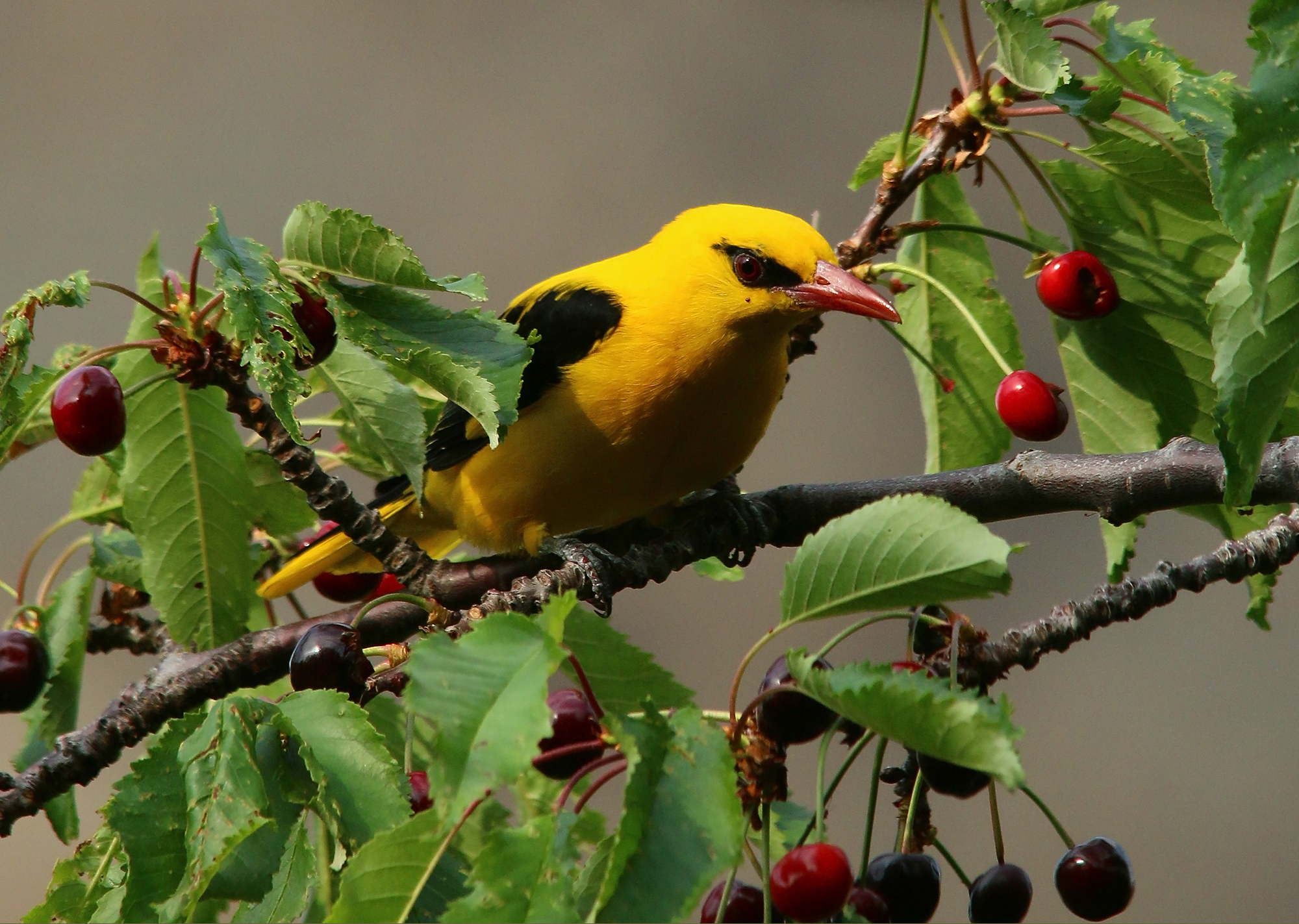 Photo Credit: Vysotsky / Wikimedia Commons
In the sun-dappled woodlands of Europe and Asia, the Golden Oriole, scientifically known as Oriolus oriolus, flits gracefully among the branches, a living splash of sunshine against the green backdrop. With its brilliant yellow feathers and striking black wings, this bird is not just a visual delight; it also enchants listeners with its sweet, melodic song that echoes through the trees. As it weaves through the foliage, the Golden Oriole captures the attention of both scientists and nature lovers alike, who are drawn to its vibrant beauty and intriguing behaviors.
These birds thrive in lush forests and open woodlands, where they feast on a diet rich in fruits and insects. Their role in the ecosystem is vital, as they help control insect populations while also spreading seeds, contributing to the health of their habitats. The Golden Oriole’s courtship rituals are equally captivating, with males singing to attract females, showcasing their dazzling plumage in a display of color and sound. As we explore the life of the Golden Oriole, we will uncover the secrets of its habitat, diet, and the important role it plays in the natural world, inviting readers of all ages to appreciate this remarkable avian wonder.
The Golden Oriole, a vibrant bird known for its striking yellow plumage and melodious song, occupies a special place in the tree of life. Taxonomically, it belongs to the Kingdom Animalia, which includes all animals, and is classified under the Phylum Chordata, meaning it has a backbone. This beautiful bird is part of the Class Aves, which encompasses all birds, and falls within the Order Passeriformes, often referred to as perching birds or songbirds. The Golden Oriole is a member of the Family Oriolidae, which is known for its colorful members and sweet songs. Its genus, Oriolus, highlights its unique characteristics, setting it apart from other birds in the vast avian world.
| Taxonomic Rank | Scientific Name | Meaning & Significance |
|---|---|---|
| Kingdom | Animalia | This term means “animals” in Latin, representing all multicellular organisms that are not plants, fungi, or bacteria. |
| Phylum | Chordata | Derived from the Greek word “chordē,” meaning “string,” this refers to animals with a notochord, a flexible rod that supports the body, which in vertebrates becomes the backbone. |
| Class | Aves | This Latin word means “birds,” highlighting the unique features of this class, such as feathers, beaks, and the ability to lay eggs. |
| Order | Passeriformes | From the Latin “passer,” meaning “sparrow,” this order includes the majority of bird species, known for their perching habits and complex vocalizations. |
| Family | Oriolidae | This name comes from the Latin “oriole,” referring to the bright yellow and orange colors of many birds in this family, which are often associated with gold. |
| Genus | Oriolus | Derived from the Latin word for “oriole,” this genus includes birds that are known for their striking colors and melodious songs, emphasizing their beauty and vocal abilities. |
The classification of the Golden Oriole reveals much about its evolutionary journey. As a member of the Oriolidae family, it shares a lineage with other colorful birds, suggesting that vibrant plumage may have evolved as a means of attracting mates or signaling to others. Its place within the Passeriformes order indicates a long history of adaptation to various environments, allowing it to thrive in diverse habitats across Europe and Asia. Understanding its taxonomic position not only highlights its unique traits but also connects it to the broader tapestry of life, showcasing the intricate relationships that exist within the animal kingdom.
The evolutionary journey of the Golden Oriole stretches back millions of years, intertwining with the rich tapestry of avian history. This bird, belonging to the Oriolidae family, has adapted and evolved through various environmental changes, showcasing the dynamic nature of life on Earth. Its lineage can be traced to the early ancestors of modern birds, which emerged after the age of dinosaurs, around 66 million years ago.
The Golden Oriole’s ancestors were likely small, insect-eating birds that thrived in forested habitats. Over time, these birds developed traits that allowed them to exploit a wider range of food sources, including fruits and nectar. This shift in diet was crucial, as it enabled them to occupy different ecological niches. As they spread across Europe, Asia, and Africa, they adapted to various climates and habitats, leading to the vibrant coloration and melodious calls we associate with them today.
These adaptations have been vital for the Golden Oriole’s survival. Their bright colors and enchanting songs help them communicate and reproduce, while their varied diet allows them to thrive in different environments. The ability to migrate also ensures they can escape harsh winters and find abundant food sources. Together, these traits have enabled the Golden Oriole to flourish across continents, making it a symbol of resilience and beauty in the avian world.
The Golden Oriole is a dazzling sight, a burst of sunshine flitting through the trees. With a body length ranging from 20 to 24 centimeters, or about 7.8 to 9.4 inches, this bird is perfectly sized for agile movements among branches. Its slender form is adorned with brilliant yellow feathers that shimmer in the sunlight, contrasting beautifully with its sleek black wings and tail. The combination of these colors creates a striking visual that captures the attention of anyone lucky enough to spot it.
| Feature | Description |
|---|---|
| Height | 20cm – 24cm (7.8in – 9.4in) |
| Weight | 15g – 20g (0.5oz – 0.7oz) |
| Skin Type | Feathers |
The Golden Oriole’s vibrant plumage serves multiple purposes in its life. The bright yellow feathers not only attract potential mates during the breeding season but also help it blend into the sunlit leaves of trees, providing camouflage from predators. Its lightweight body allows for swift flight, making it an agile hunter of insects and fruits. Together, these features create a bird that is not only beautiful but also well-adapted to thrive in its environment.
The Golden Oriole thrives in lush woodlands and open forests, where sunlight filters through the leaves, creating a dappled effect on the forest floor. These vibrant birds prefer areas rich in trees, especially those that bear fruit, as they feast on berries and insects. The gentle rustle of leaves and the sweet melodies of other birds fill the air, making these habitats a symphony of nature. The Golden Oriole’s bright yellow feathers stand out against the green backdrop, making it a delightful sight for anyone lucky enough to spot one.
The climate where Golden Orioles make their homes is typically warm and temperate. They enjoy regions that experience distinct seasons, with mild summers that provide plenty of food sources. These birds are often found in areas with a good amount of rainfall, which helps sustain the lush vegetation they rely on. The combination of warm weather and abundant trees creates the perfect environment for nesting and raising their young.
To thrive in these specific habitats, Golden Orioles have developed several adaptations. Their strong, agile bodies allow them to navigate through branches with ease, while their sharp beaks are perfectly designed for extracting insects and fruits from trees. Their vibrant coloration not only makes them beautiful but also helps them blend into the sunlit leaves, providing camouflage from predators. This clever mix of traits ensures that they can find food and stay safe in their woodland homes.
The Golden Oriole leads a lively and colorful daily life, filled with activities that reflect its vibrant nature. As a diurnal bird, it rises with the sun, taking advantage of the daylight to forage for food. These birds primarily feast on fruits, insects, and nectar, flitting from branch to branch in search of their next meal. Their melodious calls fill the air as they navigate through the treetops, showcasing their agility and grace. Throughout the day, they engage in various behaviors, from preening their bright feathers to basking in the sun, ensuring they stay healthy and ready for flight.
While Golden Orioles are often seen alone, they do exhibit interesting social behaviors during certain times of the year. During the breeding season, males sing to attract females, showcasing their vocal talents. This song is not just a call; it’s a way to establish territory and communicate their presence to others. Although they are primarily solitary, they may gather in small groups when food is abundant, especially in fruiting trees. This temporary social interaction allows them to share resources while still maintaining their independent lifestyles.
| Behavior Type | Description |
|---|---|
| Activity Patterns | Golden Orioles are active during the day, foraging for fruits, insects, and nectar. They often engage in preening and sunbathing to maintain their feathers. |
| Social Structure | These birds are generally solitary, but they may form small groups during the breeding season or when food is plentiful. |
| Communication Methods | They use melodious songs to attract mates and establish territory, as well as calls to communicate with each other. |
The behaviors of the Golden Oriole are finely tuned to ensure their survival in the wild. By being diurnal, they maximize their foraging opportunities in the light of day, while their solitary nature allows them to be agile and less conspicuous to predators. Their beautiful songs not only attract mates but also help them claim their territory, ensuring they have a safe space to thrive. In this way, the Golden Oriole’s daily activities and social interactions are essential for its continued existence in the vibrant ecosystems it inhabits.
The Golden Oriole has a diverse diet that reflects its omnivorous nature, meaning it enjoys a mix of both plant and animal foods. This bird primarily feeds on insects, fruits, and seeds, making it a versatile forager. With its keen eyesight, the Golden Oriole skillfully spots its meals among the leaves and branches of trees. It often uses its sharp beak to extract insects from crevices or to pluck ripe fruits, showcasing its adaptability in finding food.
| Dietary Aspect | Details |
|---|---|
| Diet Type | Omnivore |
| Favorite Foods | Insects, fruits, and seeds |
| Prey Items | Various insects, berries, and seeds |
| Hunting/Foraging Strategies | Uses keen eyesight to spot food, plucks fruits, and extracts insects from crevices |
This varied diet plays a crucial role in the Golden Oriole’s ecology and daily routine. By consuming both insects and fruits, it helps control insect populations while also aiding in seed dispersal, which is vital for plant reproduction. As the Golden Oriole flits from tree to tree, it not only nourishes itself but also contributes to the health of its forest habitat, making it an important player in the ecosystem.
As spring arrives, the Golden Oriole begins its enchanting courtship rituals. Males sing sweet, melodic tunes to attract females, showcasing their vibrant plumage in a dazzling display. This mating behavior is crucial, as it helps establish bonds between partners. The breeding season typically occurs from late spring to early summer, when the trees are lush and full of life, providing the perfect backdrop for nesting and raising young.
| Reproductive Aspect | Details |
|---|---|
| Gestation Period | About 14 days |
| Litter Size | 3 to 5 eggs |
| Age of Maturity | 1 year |
| Name of Young | Chick |
Once the eggs hatch, both parents take on the important role of caregivers. They work together to feed their chicks, bringing them a diet rich in insects and fruits. The young orioles grow quickly, developing their feathers and learning to fly within a few weeks. As they mature, they begin to explore their surroundings, practicing their songs and preparing for the adventures that await them. This nurturing environment is essential for their survival, helping them transition from vulnerable chicks to independent adults ready to take on the world.
The Golden Oriole plays a vital role in its ecosystem, primarily as an insectivore and frugivore, meaning it helps control insect populations while also dispersing seeds through its fruit consumption. This bird is part of the food web, where it serves as both predator and prey. Its bright colors and melodious calls attract attention, but they also make it a target for various predators.
To defend itself against these threats, the Golden Oriole employs several clever strategies. Its vibrant plumage allows it to blend into the bright foliage of trees, making it harder for predators to spot. Additionally, it is an agile flier, capable of quick, darting movements that help it evade capture. By nesting high in the trees and choosing locations that are difficult for predators to access, the Golden Oriole enhances its chances of survival in a world filled with dangers.
A keystone species is a vital part of its ecosystem, meaning its presence and activities have a significant impact on the environment and other living things. The Golden Oriole, with its striking yellow feathers and melodious song, does indeed play a keystone role in its habitat. By influencing the populations of insects and the distribution of plants, this bird helps maintain the balance of its woodland and open forest ecosystems.
One of the most important ways the Golden Oriole affects its environment is through its diet. As an omnivore, it feeds on a variety of insects, fruits, and seeds. By consuming insects, the oriole helps control their populations, preventing any one species from overwhelming the ecosystem. For example, if the oriole were to disappear, the number of certain insects could skyrocket, leading to overgrazing of plants and a decline in plant diversity.
Additionally, the Golden Oriole plays a crucial role in seed dispersal. When it eats fruits, it often travels some distance before excreting the seeds. This process helps plants spread their young in new areas, promoting genetic diversity and the health of the forest. Without the oriole, many plants might struggle to reproduce effectively, which could lead to a less vibrant and diverse ecosystem.
The Golden Oriole also serves as a food source for larger predators, such as hawks and owls. Its presence supports the food web, which is the interconnected system of who eats whom in nature. If the oriole were to vanish, these predators might find it harder to find enough food, potentially leading to declines in their populations as well.
If the Golden Oriole were to disappear, the ripple effects would be felt throughout its ecosystem. Insect populations could surge, leading to overconsumption of vegetation and a decline in plant species. This, in turn, would affect other animals that rely on those plants for food and shelter. The balance of the ecosystem would be disrupted, highlighting just how crucial the Golden Oriole is to the health and vitality of its environment.
The Golden Oriole plays a crucial role in shaping its ecosystem, primarily through its feeding habits and interactions with other species. This vibrant bird, with its striking yellow feathers, thrives in woodlands and open forests, where it forages for a variety of foods. By consuming insects and fruits, the Golden Oriole helps maintain a balance in the populations of these organisms, ensuring that no single species overwhelms the environment. Its presence in these habitats contributes to a dynamic and healthy ecosystem.
| Ecosystem Service | Impact |
|---|---|
| Insect Control | Reduces pest populations, benefiting plant health. |
| Seed Dispersal | Helps in the growth of new plants by spreading seeds. |
| Food Source | Serves as prey for larger birds and mammals, supporting the food web. |
The Golden Oriole’s diet is a fascinating blend of insects, fruits, and seeds, which allows it to influence its surroundings in multiple ways. For instance, by feeding on insects, it helps control their populations, preventing potential outbreaks that could harm plants. Additionally, as it consumes fruits, the bird plays a vital role in seed dispersal. When it eats berries and other fruits, it often travels to different areas, dropping seeds in new locations. This process encourages plant diversity and helps forests regenerate, creating a more vibrant ecosystem.
The broader ecological importance of the Golden Oriole cannot be overstated. As a keystone species, its activities support a wide range of life forms, from the plants it helps grow to the predators that rely on it for food. By maintaining the balance of insect populations and promoting plant growth, the Golden Oriole contributes to the overall health of its habitat. This interconnectedness highlights the delicate web of life in which every species, including the Golden Oriole, plays a vital role in sustaining the environment.
In the intricate web of nature, symbiosis refers to the close and often long-term interactions between different species. These relationships can take many forms, including mutualism, where both species benefit, parasitism, where one benefits at the other’s expense, and commensalism, where one benefits while the other is neither helped nor harmed. The Golden Oriole, with its vibrant colors and melodious song, engages in various ecological relationships that highlight the interconnectedness of life in its woodland and forest habitats.
| Species/Type | Relationship Type | Description |
|---|---|---|
| Fruit-bearing trees | Mutualistic | The Golden Oriole feeds on the fruits of these trees, helping to disperse their seeds through its droppings, which aids in plant reproduction. |
| Insects | Mutualistic | By consuming insects, the Golden Oriole helps control their populations, benefiting the overall health of its habitat. |
| Brood parasites (like cuckoos) | Parasitic | Some cuckoo species lay their eggs in the nests of Golden Orioles, leading to competition for resources and potential harm to the orioles’ own chicks. |
The evolution of these relationships showcases the dynamic nature of ecosystems. Over time, the Golden Oriole has adapted to thrive alongside fruit-bearing trees and insects, forming beneficial partnerships that enhance its survival. However, the presence of brood parasites like cuckoos illustrates the challenges that can arise in these interactions. Understanding these relationships not only highlights the Golden Oriole’s role in its environment but also emphasizes the delicate balance of life that sustains all species involved.
The Golden Oriole is not just a pretty face in the bird world; it has some surprising traits that make it truly special. Here are a few intriguing facts that will captivate nature enthusiasts of all ages.
The Golden Oriole has long captivated human imagination, appearing in folklore and art across various cultures. In many regions, this vibrant bird symbolizes joy and happiness, often associated with the arrival of spring. Historical encounters with the Golden Oriole have been marked by admiration for its striking appearance and melodious song. Ancient civilizations, such as the Greeks and Romans, revered these birds, believing they brought good fortune. Their bright yellow feathers and cheerful calls have inspired countless stories, making them a beloved figure in the tapestry of human culture.
Today, the relationship between the Golden Oriole and humanity is evolving, shaped by both conservation efforts and challenges. As urbanization expands, these birds face habitat loss, which threatens their populations. However, many organizations and individuals are working to protect their natural environments, planting trees and creating green spaces that support the Golden Oriole’s needs. While some people enjoy watching these birds in their gardens, others may inadvertently create conflicts, such as when fruit trees attract them, leading to disputes over crops. Understanding and respecting the needs of the Golden Oriole can help foster a more harmonious coexistence.
Looking ahead, the future of the Golden Oriole and its relationship with humanity hinges on our commitment to conservation and coexistence. As we become more aware of the impact of our actions on the environment, there is hope for a brighter future for these beautiful birds. By fostering a deeper understanding of their needs and the ecosystems they inhabit, we can ensure that the Golden Oriole continues to grace our skies and inspire generations to come. Together, we can create a world where both humans and wildlife thrive in harmony.
The Golden Oriole is currently classified as “Least Concern” by the International Union for Conservation of Nature (IUCN). This means that, at present, the species is not facing an immediate threat of extinction. Population estimates suggest that the Golden Oriole maintains a sustainable presence across its range, which includes parts of Europe, Asia, and North Africa. While the overall population appears stable, ongoing monitoring is essential to ensure that this vibrant bird continues to thrive in its natural habitats.
| Conservation Factor | Status/Details |
|---|---|
| IUCN Status | Least Concern |
| Estimated Population Size | Sustainable |
| Population Trend | Stable |
Despite its current stable status, the Golden Oriole faces several threats that could impact its future. Habitat loss is a significant concern, as deforestation and urbanization reduce the availability of the lush woodlands and open forests where these birds thrive. Additionally, climate change poses a risk by altering the ecosystems that support their food sources. Changes in weather patterns can affect the timing of insect hatches and fruit availability, which are crucial for the oriole’s diet and breeding success.
Conservation efforts are underway to protect the Golden Oriole and its habitats. Organizations are working to preserve and restore woodlands, ensuring that these birds have the lush environments they need to flourish. Public awareness campaigns also play a vital role, educating communities about the importance of biodiversity and the need to protect natural spaces. With continued efforts and a commitment to conservation, the outlook for the Golden Oriole remains hopeful, allowing future generations to enjoy the beauty and song of this enchanting bird.
| Question | Answer |
|---|---|
| What is the habitat of the Golden Oriole? | The Golden Oriole prefers woodlands and open forests. These areas provide plenty of trees for nesting and foraging, which are essential for their survival. |
| What does the Golden Oriole eat? | This bird is an omnivore, meaning it eats both plants and animals. Its diet includes fruits, berries, insects, and even small invertebrates, making it quite versatile in its food choices. |
| How does the Golden Oriole behave? | Golden Orioles are known for their beautiful, melodic songs and active behavior. They are often seen flitting through the trees, and they can be quite social, sometimes forming small groups. |
| How do Golden Orioles reproduce? | During the breeding season, female Golden Orioles build nests in the branches of trees. They typically lay 3 to 5 eggs, which they incubate for about two weeks before the chicks hatch. |
| What threats do Golden Orioles face? | While Golden Orioles are currently classified as Least Concern, they still face threats from habitat loss and changes in land use. Deforestation and urban development can reduce their nesting sites and food sources. |
| What are some interesting characteristics of the Golden Oriole? | One fascinating feature of the Golden Oriole is its striking yellow and black plumage, which makes it stand out in the forest. Additionally, they are known for their impressive flying skills, often soaring gracefully through the trees. |
| Are Golden Orioles migratory birds? | Yes, Golden Orioles are migratory, traveling long distances between their breeding and wintering grounds. They typically migrate to warmer regions in Africa during the colder months, returning to Europe in spring. |