Taxonomy & Classification
- Kingdom
- Animalia
- Phylum
- Chordata
- Class
- Mammalia
- Order
- Carnivora
- Family
- Canidae
- Genus
- Urocyon
- Species
- Urocyon cinereoargenteus

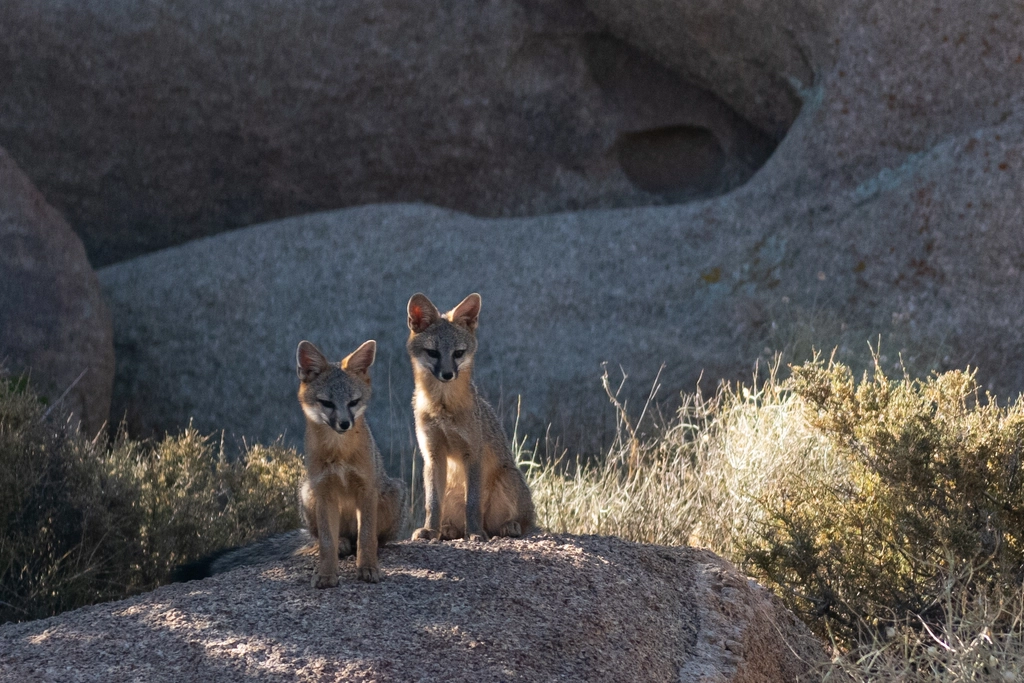 Photo Credit: National Park Service / Rawpixel
In the heart of North America’s woodlands and open plains, the Gray Fox, or Urocyon cinereoargenteus, weaves through the underbrush with a grace that captivates all who catch a glimpse. With its striking gray fur, accented by warm reddish-brown patches on its face and legs, this agile mammal is a master of camouflage, blending seamlessly into its surroundings. Its bushy tail, tipped with black, adds a touch of flair as it navigates the forest floor, showcasing its unique ability to climb trees—an unusual trait among foxes that sets it apart from its relatives.
Scientists and nature enthusiasts alike are drawn to the Gray Fox for its remarkable adaptability and intriguing behaviors. Unlike many of its canine cousins, the Gray Fox is primarily nocturnal, meaning it comes alive at dusk and dawn, when the world is painted in soft hues of twilight. This clever creature is an omnivore, feasting on a diverse diet that includes fruits, insects, and small mammals, making it a vital player in its ecosystem. As we explore the life of the Gray Fox, we will uncover the secrets of its habitat, its role in the food web, and the fascinating relationships it forms with other species, all while celebrating the beauty of this often-overlooked animal.
The Gray Fox, scientifically known as Urocyon cinereoargenteus, occupies a special place in the animal kingdom. As a member of the Canidae family, which includes dogs, wolves, and other foxes, the Gray Fox stands out due to its unique ability to climb trees. This skill is quite rare among canids, making it an intriguing subject for both scientists and nature enthusiasts. With its striking gray fur and bushy tail, the Gray Fox is not only visually captivating but also plays a vital role in its ecosystem as a small predator and scavenger.
| Taxonomic Rank | Scientific Name | Meaning & Significance |
|---|---|---|
| Kingdom | Animalia | This name signifies that the Gray Fox is part of the vast group of multicellular organisms known as animals, which are characterized by their ability to move and respond to their environment. |
| Phylum | Chordata | The term “Chordata” refers to animals that have a notochord, a flexible rod that supports the body. In the case of the Gray Fox, this means it has a backbone, which is a key feature of vertebrates. |
| Class | Mammalia | Mammals are warm-blooded animals that have fur or hair and typically give live birth. The Gray Fox, like all mammals, nurses its young with milk, showcasing its maternal care. |
| Order | Carnivora | This order includes meat-eating mammals. The Gray Fox has sharp teeth and claws that help it hunt small animals, making it a skilled predator. |
| Family | Canidae | Canidae, or the dog family, includes animals that are generally social and have a keen sense of smell. The Gray Fox shares this family with its more well-known relatives, like domestic dogs and wolves. |
| Genus | Urocyon | The name “Urocyon” means “tail of a fox,” which is fitting as the Gray Fox is known for its bushy tail that aids in balance while climbing. |
| Species | cinereoargenteus | This scientific name translates to “ash-gray and silver,” describing the beautiful coloration of the Gray Fox’s fur, which helps it blend into its woodland habitat. |
Understanding the Gray Fox’s classification reveals much about its evolutionary journey. As a member of the Canidae family, it shares a common ancestor with other canids, but its unique adaptations, like tree climbing, highlight its ability to thrive in diverse environments. This adaptability not only showcases the Gray Fox’s evolutionary success but also emphasizes the intricate connections between species and their habitats. By studying its place in the tree of life, we gain insights into the fascinating story of how this agile fox has evolved to become a master of both land and trees.
The evolutionary journey of the Gray Fox, or Urocyon cinereoargenteus, stretches back millions of years, weaving through the tapestry of time alongside its canine relatives. This agile mammal is part of the Canidae family, which emerged around 40 million years ago during the late Eocene epoch. As the world changed, so did the ancestors of the Gray Fox, adapting to new environments and challenges, leading to the clever and adaptable animal we see today.
The Gray Fox’s ancestors were small, weasel-like creatures that roamed the Earth long before modern dogs and foxes existed. Over time, these early canids evolved into various forms, adapting to different habitats. One significant transition occurred when some canids began to climb trees, a skill that would later benefit the Gray Fox. This adaptation allowed them to escape predators and access food sources that ground-dwelling animals could not reach. As the climate shifted and forests expanded, the Gray Fox developed a more versatile diet, becoming omnivorous, which means it eats both plants and animals. This flexibility in diet helped it thrive in diverse environments, from woodlands to urban areas.
The adaptations of the Gray Fox have been crucial for its survival in a changing world. Its climbing ability allows it to escape danger and find food in the trees, while its omnivorous diet ensures it can thrive in various environments. The camouflaged fur helps it remain hidden from both prey and predators, enhancing its hunting success. By being solitary and nocturnal, the Gray Fox minimizes competition and maximizes its chances of survival. Together, these traits tell a story of resilience and adaptability, showcasing how evolution shapes life on our planet.
The Gray Fox is a captivating sight, blending elegance with a touch of wildness. With a height ranging from 30 to 40 centimeters, or about 12 to 16 inches, this nimble animal has a compact body that allows it to navigate through dense underbrush with ease. Its most striking feature is its beautiful silver-gray coat, which shimmers in the sunlight, providing a perfect camouflage against the forest floor. The Gray Fox’s slender legs and bushy tail add to its graceful appearance, making it look both agile and alert.
| Feature | Description |
|---|---|
| Height | 30-40 cm (12-16 in) |
| Weight | 3.2-6.4 kg (7-14 lbs) |
| Skin Type | Fur |
| Most Distinctive Feature | Silver gray coat of fur |
These physical traits work together to enhance the Gray Fox’s survival in the wild. The soft, dense fur not only keeps it warm during chilly nights but also helps it blend seamlessly into its surroundings, making it less visible to both predators and prey. Its lightweight frame allows for quick movements, essential for hunting small mammals and birds. The bushy tail serves as a balancing tool, aiding in swift turns and agile leaps as it navigates through its habitat. Together, these features create a well-adapted hunter, perfectly suited for life in the diverse environments it calls home.
The Gray Fox thrives in a variety of habitats, painting a picture of adaptability and resilience. Typically, it calls home the lush forests and open plains, where the dappled sunlight filters through the leaves, creating a patchwork of light and shadow. These environments provide ample cover and a rich tapestry of food sources, from small mammals to fruits and insects. The Gray Fox is often found in areas where woodlands meet grasslands, allowing it to navigate both terrains with ease.
This clever fox prefers climates that offer a mix of seasonal changes. It enjoys areas with moderate temperatures, where winters can be chilly but not extreme. The Gray Fox is also comfortable in regions that experience a fair amount of rainfall, which helps sustain the vegetation it relies on for shelter and food. These environmental conditions create a balanced ecosystem, allowing the Gray Fox to thrive.
Adaptation is key to the Gray Fox’s success in its habitats. With its ability to climb trees, it can escape predators and find food in the branches above. Its thick fur provides insulation against the cold, while its keen senses help it detect danger and locate prey. This fox has also developed a varied diet, allowing it to take advantage of whatever food sources are available, whether in the forest or the open plains. Through these adaptations, the Gray Fox has become a master of its environment, showcasing the wonders of nature’s ingenuity.
The Gray Fox leads a life filled with activity and adventure, primarily during the twilight hours of dawn and dusk. This clever animal is mostly nocturnal, meaning it is most active at night. As the sun sets, the Gray Fox emerges from its den, ready to explore its territory. It spends its evenings hunting for small mammals, birds, and even fruits, showcasing its omnivorous diet. With keen senses and agile movements, it navigates through its environment, using its sharp eyesight and excellent hearing to locate prey.
While Gray Foxes are generally solitary creatures, they do exhibit interesting social behaviors, especially during mating season. They communicate through a variety of vocalizations, including barks and screams, which can be heard echoing through the night. Although they prefer to live alone, they may form temporary pairs during breeding. Mothers are particularly nurturing, caring for their kits—young foxes—until they are old enough to fend for themselves. This balance of independence and social interaction helps them thrive in their habitats.
| Behavior Type | Description |
|---|---|
| Activity Patterns | Primarily nocturnal, active during dawn and dusk, hunting for food and exploring territory. |
| Social Structure | Generally solitary, but may form temporary pairs during mating season. |
| Communication Methods | Uses vocalizations like barks and screams to communicate, especially during breeding. |
The behaviors of the Gray Fox are finely tuned to ensure its survival in the wild. By being mostly active at night, it avoids many daytime predators and can hunt more effectively. Its solitary nature allows it to be stealthy and resourceful, while its ability to communicate during mating ensures the continuation of its lineage. Each aspect of its daily life is a testament to its adaptability and resilience in the ever-changing landscape of nature.
The Gray Fox is an omnivore, which means it enjoys a varied diet that includes both plants and animals. This clever animal has a knack for finding food in its environment, using its keen senses to locate tasty treats. Its diet primarily consists of small mammals like rodents, birds, and insects, but it also loves to munch on fruits when they are in season. This adaptability in feeding habits allows the Gray Fox to thrive in different habitats, making it a resourceful forager.
| Dietary Aspect | Details |
|---|---|
| Diet Type | Omnivore |
| Favorite Foods | Rodents, birds, insects, and fruits |
| Prey Items | Small mammals, such as mice and voles, as well as various insects |
| Hunting/Foraging Strategies | Uses keen senses to locate food, often foraging at dusk and dawn |
The Gray Fox’s diverse diet plays a crucial role in its ecology and daily routine. By being an omnivore, it can adapt to seasonal changes in food availability, which helps it survive in various environments. This flexibility not only supports its own health but also influences the ecosystem by controlling rodent populations and dispersing seeds from the fruits it eats. As a result, the Gray Fox is not just a survivor; it is an important player in maintaining the balance of its habitat.
The Gray Fox has a fascinating mating ritual that typically occurs in late winter to early spring. During this time, males and females engage in a series of courtship behaviors, including playful chases and vocalizations. These interactions help strengthen their bond before they mate. Once paired, the female will prepare for the arrival of her young, creating a cozy den in a hollow tree or burrow, where she can safely give birth.
| Reproductive Aspect | Details |
|---|---|
| Gestation Period | 53-63 days |
| Litter Size | 2-7 pups |
| Age of Maturity | 10 months |
| Name of Young | Pups or kits |
After the pups are born, the mother takes on the primary role of caregiver. She nurses them and keeps them warm, while the father often helps by bringing food back to the den. As the pups grow, they begin to explore their surroundings, learning essential survival skills from their parents. By the time they reach about ten months of age, they are ready to venture out on their own, equipped with the knowledge and instincts needed to thrive in the wild. This nurturing process is crucial, as it ensures that the next generation of Gray Foxes is well-prepared for life in their diverse habitats.
The Gray Fox plays a vital role in its ecosystem, sitting comfortably in the middle of the food web. As an omnivore, it helps control populations of small mammals, insects, and plants, contributing to the balance of its environment. However, this clever creature faces several dangers that threaten its survival.
To navigate these threats, the Gray Fox has developed some impressive survival strategies. It is known for its agility and ability to climb trees, which helps it escape from predators. When faced with danger, it can also rely on its excellent camouflage, blending seamlessly into its surroundings. Additionally, the Gray Fox is a master of stealth, often moving quietly to avoid detection. These behaviors, combined with its adaptability, allow the Gray Fox to thrive despite the challenges it encounters in the wild.
A keystone species is an organism that has a disproportionately large impact on its environment relative to its abundance. In simpler terms, if you were to remove this species, the entire ecosystem could change dramatically. The Gray Fox, known scientifically as Urocyon cinereoargenteus, qualifies as a keystone species due to its role in maintaining the balance of its habitat. By controlling populations of various plants and animals, the Gray Fox helps ensure that no single species dominates the ecosystem.
The Gray Fox is an omnivore, which means it eats both plants and animals. This diverse diet allows it to influence the populations of many species. For example, by preying on small mammals like rodents, the Gray Fox helps keep their numbers in check. If rodent populations were to explode, they could overgraze vegetation, leading to habitat degradation. Additionally, the Gray Fox consumes fruits and berries, aiding in seed dispersal. This means that as it moves through its habitat, it helps plants grow in new areas, promoting biodiversity.
Moreover, the Gray Fox’s solitary nature means it occupies a unique niche in the food web. Unlike pack-hunting canids, the Gray Fox hunts alone, which allows it to exploit different food sources without competition from its own kind. This adaptability is crucial in changing environments, as it can shift its diet based on what is available. Its presence also provides a food source for larger predators, such as coyotes and hawks, further intertwining its role in the ecosystem.
If the Gray Fox were to disappear from its ecosystem, the consequences could be significant. Without this agile predator, small mammal populations could surge, leading to overconsumption of plants and a decline in vegetation health. This, in turn, would affect other species that rely on those plants for food and shelter. The ripple effects could destabilize the entire ecosystem, demonstrating just how vital the Gray Fox is to the health and balance of its environment.
The Gray Fox, known scientifically as Urocyon cinereoargenteus, plays a crucial role in its ecosystem, acting as both predator and prey. This adaptable mammal thrives in forests and open plains, where it forages for a diverse diet that includes fruits, insects, and small mammals. By occupying this ecological niche, the Gray Fox helps maintain the balance of its environment, influencing the populations of various species and contributing to the overall health of its habitat.
| Ecosystem Service | Impact |
|---|---|
| Population Control | Regulates numbers of small mammals and insects, preventing overpopulation. |
| Seed Dispersal | Helps in the spread of plant seeds through its varied diet, promoting plant diversity. |
| Prey for Larger Predators | Serves as a food source for larger carnivores, contributing to the food web. |
| Soil Aeration | Digging for food helps aerate the soil, improving its quality and health. |
The Gray Fox’s influence on its ecosystem is evident in several ways. For instance, by preying on small mammals like rodents, it helps keep their populations in check. This is important because too many rodents can lead to overgrazing of vegetation, which can harm plant life and disrupt the entire ecosystem. Additionally, as the Gray Fox consumes fruits and berries, it aids in seed dispersal, allowing new plants to grow in different areas. This not only enhances biodiversity but also supports other wildlife that depends on these plants for food and shelter.
The broader ecological importance of the Gray Fox cannot be overstated. As a keystone species, its presence helps maintain the structure of its ecosystem. If the Gray Fox were to disappear, the balance of predator and prey would be disrupted, potentially leading to a cascade of negative effects throughout the food web. By understanding the vital role of the Gray Fox, we gain insight into the intricate connections that sustain life in our natural world, reminding us of the importance of every species in maintaining ecological harmony.
In the intricate web of nature, symbiosis refers to the close and often long-term interactions between different species. These relationships can take many forms, including mutualism, where both species benefit, parasitism, where one benefits at the expense of the other, and commensalism, where one benefits while the other is neither helped nor harmed. The Gray Fox, a clever and adaptable creature, engages in various ecological relationships that highlight the interconnectedness of life in its forest and plains habitats.
| Species/Type | Relationship Type | Description |
|---|---|---|
| Small mammals (e.g., rodents) | Mutualistic | The Gray Fox helps control the population of small mammals, which in turn keeps the ecosystem balanced. The fox benefits by having a food source, while the small mammals benefit from the presence of the fox, which can help maintain a healthy environment by preventing overpopulation. |
| Birds (e.g., ground-nesting species) | Commensal | As the Gray Fox moves through its habitat, it may inadvertently disturb insects and small animals, which can attract birds looking for an easy meal. The birds benefit from the fox’s activity, while the fox remains unaffected. |
| Parasites (e.g., ticks) | Parasitic | Ticks can latch onto the Gray Fox, feeding on its blood. This relationship is harmful to the fox, as it can lead to health issues, but the ticks benefit by gaining nourishment. |
These relationships have evolved over time, shaped by the needs and behaviors of the species involved. The Gray Fox’s role as both predator and prey creates a dynamic balance in its ecosystem. By controlling populations of small mammals, it helps maintain a healthy environment, while its interactions with other species, whether beneficial or harmful, illustrate the complexity of life. Understanding these connections not only enriches our appreciation of the Gray Fox but also highlights the importance of preserving the delicate balance of nature.
The Gray Fox is a captivating animal that often surprises those who take the time to learn about it. With its unique adaptations and behaviors, this clever creature stands out in the wild.
The relationship between the Gray Fox and humanity is rich and varied, stretching back through history. Native American cultures often revered this clever animal, weaving it into their folklore and stories. The Gray Fox, known for its adaptability and cunning, has been a symbol of resourcefulness. In many regions, it has been seen as a trickster figure, embodying the cleverness that humans admire. As settlers moved across North America, they encountered these foxes, often viewing them as both a nuisance and a source of fascination. This duality reflects the complex ways in which humans have interacted with wildlife throughout history.
Today, the Gray Fox continues to navigate its relationship with humans, often living in close proximity to urban areas. While some people appreciate their presence, others see them as a threat to pets or livestock. Conservation efforts are underway to protect their habitats, as urban development encroaches on their natural environments. Interestingly, Gray Foxes are not typically domesticated, but they have adapted to human-altered landscapes, finding food and shelter in suburban backyards. This adaptability showcases their resilience, but it also raises concerns about conflicts with humans, especially as they scavenge for food in garbage bins or gardens.
As we look to the future, the relationship between Gray Foxes and humans will likely evolve. With increasing urbanization, it is crucial for communities to find ways to coexist with these clever animals. Education about their role in the ecosystem can foster appreciation and understanding, reducing conflicts. By protecting their habitats and promoting coexistence, we can ensure that the Gray Fox remains a vibrant part of our natural world, enriching our lives with its presence and stories for generations to come.
The Gray Fox, known scientifically as Urocyon cinereoargenteus, currently holds a conservation status of “Least Concern” according to the International Union for Conservation of Nature (IUCN). This means that, overall, the species is not facing immediate threats of extinction. However, specific population estimates remain elusive, as researchers have not been able to determine exact numbers. While the Gray Fox is generally stable, local populations may experience fluctuations due to various environmental factors.
| Conservation Factor | Status/Details |
|---|---|
| IUCN Status | Least Concern |
| Estimated Population Size | Unknown |
| Population Trend | Stable |
Despite its overall stable status, the Gray Fox faces several challenges that threaten its survival. Habitat loss is a significant concern, as urban development and agriculture encroach on its natural environments. Additionally, road mortality poses a danger, as these agile animals often cross roads in search of food or mates. Predation by larger animals, such as coyotes, can also impact local populations, particularly in areas where their habitats overlap.
Conservation efforts for the Gray Fox focus on habitat preservation and public education. By protecting forests and open spaces, we can help ensure that these clever mammals have the room they need to thrive. Wildlife corridors, which are safe passages that allow animals to move between habitats, are also being established to reduce road mortality. With continued efforts and awareness, the outlook for the Gray Fox remains hopeful, allowing future generations to appreciate this adaptable and resourceful species.
| Question | Answer |
|---|---|
| What is the habitat of the Gray Fox? | Gray Foxes are found in a variety of habitats, including forests and plains. They prefer areas with dense vegetation, which provides cover and places to hunt for food. |
| What do Gray Foxes eat? | Gray Foxes are omnivores, meaning they eat both plants and animals. Their diet includes fruits, insects, small mammals, and birds, allowing them to adapt to different environments. |
| How do Gray Foxes behave? | Gray Foxes are known for their agility and climbing skills. They are mostly nocturnal, meaning they are active at night, and they often hunt alone or in small family groups. |
| How do Gray Foxes reproduce? | Gray Foxes typically mate in late winter or early spring. After a gestation period of about 63 days, the female gives birth to a litter of 2 to 7 kits, which she raises in a den. |
| What threats do Gray Foxes face? | While Gray Foxes are currently listed as Least Concern, they face threats from habitat loss and hunting. They can also be affected by diseases that impact their populations. |
| What is a distinctive feature of the Gray Fox? | The Gray Fox is easily recognized by its beautiful silver-gray coat of fur. This unique coloration helps it blend into its forested surroundings, providing camouflage from predators and prey. |
| Can Gray Foxes climb trees? | Yes, Gray Foxes are one of the few canids, or dog-like mammals, that can climb trees. Their sharp claws and flexible bodies allow them to escape predators or find food in the branches. |