Taxonomy & Classification
- Kingdom
- Animalia
- Phylum
- Chordata
- Class
- Reptilia
- Order
- Saurischia
- Family
- Allosauridae
- Genus
- Allosaurus
- Species
- Allosaurus fragilis

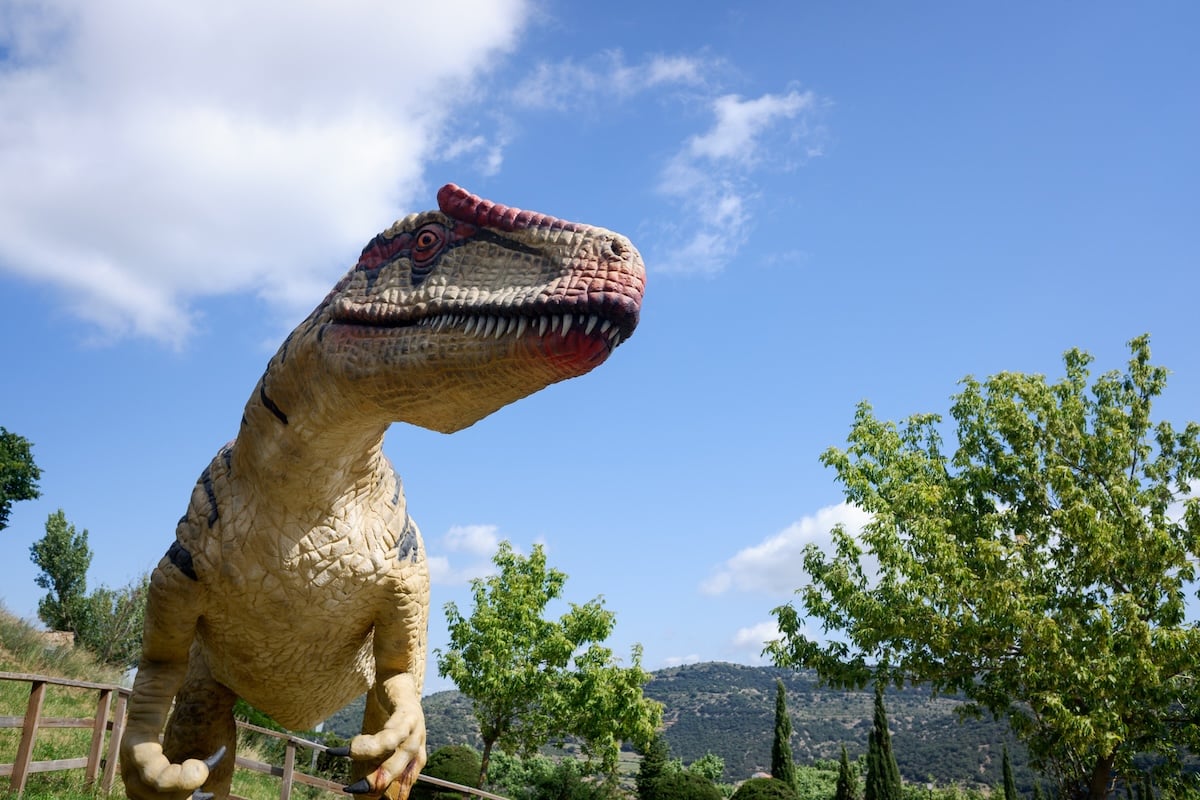 Photo Credit: joaquincorbalan on Deposit Photos
In the sun-drenched landscapes of the late Jurassic period, Allosaurus, known scientifically as Allosaurus fragilis, roamed the Earth as a powerful predator. Imagine a world filled with towering ferns and massive conifer trees, where the air buzzed with the sounds of ancient life. This dinosaur, stretching up to 28 feet long, was a sight to behold with its strong, muscular body and distinctive, elongated skull. Its sharp teeth, designed for slicing through flesh, and its keen eyesight made it a formidable hunter, capable of taking down some of the largest herbivores of its time, like the armored Stegosaurus.
What makes Allosaurus particularly intriguing to scientists and dinosaur enthusiasts alike is its role as a social predator. Unlike many solitary hunters, Allosaurus is believed to have lived and hunted in packs, showcasing complex behaviors that hint at a rich social life. This dynamic lifestyle, combined with its impressive physical features, paints a vivid picture of a creature that was not just a fearsome carnivore but also a key player in its ecosystem. As we delve deeper into the life of Allosaurus, we will explore its habitat, diet, and the fascinating interactions it had with other species in its vibrant world.
Allosaurus is a captivating figure in the tree of life, sitting comfortably within the realm of dinosaurs. This dinosaur, which roamed the Earth during the late Jurassic period, is classified under the family Allosauridae. What sets Allosaurus apart is its impressive size and predatory prowess, making it one of the top carnivores of its time. With its sharp teeth and powerful limbs, Allosaurus was well-adapted for hunting other large dinosaurs, showcasing the fierce competition that existed in prehistoric ecosystems.
| Taxonomic Rank | Scientific Name | Meaning & Significance |
|---|---|---|
| Kingdom | Animalia | This name signifies that Allosaurus belongs to the broad group of multicellular organisms known as animals, which are characterized by their ability to move and respond to their environment. |
| Phylum | Chordata | Chordata means “having a notochord,” a flexible rod that provides support. Allosaurus, like all chordates, had a backbone, which is a key feature of this group. |
| Class | Reptilia | Reptilia refers to reptiles, a class of cold-blooded vertebrates. Allosaurus fits here because it laid eggs and had scaly skin, typical of reptiles. |
| Order | Saurischia | Saurischia translates to “lizard-hipped,” a term that describes the hip structure of this group, which includes both theropods like Allosaurus and the long-necked sauropods. |
| Family | Allosauridae | This family name means “different lizards,” highlighting the unique characteristics of these large predatory dinosaurs compared to other dinosaur families. |
| Genus | Allosaurus | Allosaurus means “different lizard,” a name that reflects its distinct features, such as its large skull and sharp teeth, which set it apart from other dinosaurs. |
Understanding Allosaurus’s classification reveals much about its evolutionary history. As a member of the Allosauridae family, it shares a lineage with other large theropods, indicating a common ancestry that dates back millions of years. This classification not only highlights its physical traits but also provides insight into the ecological roles these dinosaurs played. By studying Allosaurus and its relatives, scientists can piece together the complex puzzle of dinosaur evolution and the environments they inhabited, helping us appreciate the rich tapestry of life that once thrived on our planet.
The story of Allosaurus unfolds during the late Jurassic period, around 155 to 150 million years ago. This was a time when dinosaurs ruled the Earth, and the landscape was filled with lush vegetation and diverse ecosystems. Allosaurus, a member of the Allosauridae family, was one of the top predators of its time, showcasing a fascinating evolutionary journey that helped shape its role in the prehistoric world.
Allosaurus evolved from earlier theropod dinosaurs, which were small, bipedal carnivores. These ancestors laid the groundwork for the larger, more powerful Allosaurus. Over millions of years, significant changes occurred, including the development of a larger skull and sharp, serrated teeth, perfect for slicing through flesh. Its limbs became more robust, allowing for greater speed and agility, which were essential for hunting. The evolution of a strong, flexible tail also played a crucial role, providing balance and support as it moved through its environment.
These adaptations were vital for Allosaurus’s survival in a world filled with competition and danger. Its ability to run swiftly, hunt effectively, and maintain balance allowed it to thrive as a top predator. The combination of physical prowess and potential social behavior made Allosaurus not just a survivor, but a dominant force in its ecosystem, showcasing the incredible power of evolution in shaping life on Earth.
Allosaurus stands as a striking figure from the past, a true titan of the late Jurassic landscape. With a robust body that could reach lengths of up to 28 feet, this dinosaur was built for both power and agility. Its long, muscular tail helped balance its weight, while its strong legs supported a formidable frame. The head of Allosaurus was particularly impressive, featuring a small horn and distinctive ridges that adorned its skull, giving it a fierce and commanding appearance.
| Feature | Description |
|---|---|
| Weight | 4600 lbs (2086 kg) |
| Skin Type | Scales |
| Most Distinctive Feature | Small horn and ridges on the skull |
The combination of Allosaurus’s powerful build and unique features played a crucial role in its survival. The scales provided protection against the elements and potential predators, while the small horn and ridges likely served as display features during mating rituals or as a means of intimidation. Together, these characteristics made Allosaurus not just a fearsome predator, but also a well-adapted survivor in a world filled with challenges.
Allosaurus thrived in a world that was both vibrant and challenging. Picture vast semi-arid floodplains, where the land was a patchwork of lush greenery and dry stretches. These areas were often dotted with rivers and streams, creating a dynamic environment that changed with the seasons. During the wet season, the floodplains would come alive with life, while the dry season would transform the landscape into a more arid setting. This ever-shifting habitat provided Allosaurus with ample opportunities to hunt and roam.
The climate in these regions was characterized by distinct wet and dry seasons, which played a crucial role in shaping the ecosystem. During the wet months, rain would nourish the land, allowing plants to flourish and attracting a variety of herbivores. In contrast, the dry season would challenge the survival of many species, creating a competitive environment where only the strongest thrived. Allosaurus, with its keen hunting skills, was well-suited to navigate these seasonal changes.
Adaptations were key to Allosaurus’s success in its habitat. Its powerful limbs and sharp teeth made it an efficient predator, capable of taking down large prey that roamed the floodplains. Additionally, its keen senses allowed it to detect changes in the environment, helping it find food and avoid danger. By evolving to thrive in both wet and dry conditions, Allosaurus became a dominant force in its world, showcasing the incredible resilience of life in the face of changing landscapes.
Allosaurus led a dynamic life filled with activity and interaction. Each day began with the sun rising over the lush, semi-arid floodplains of the late Jurassic period. As a social dinosaur, Allosaurus often started its day by moving in groups, known as packs, to search for food. These packs would roam the landscape, using their keen senses to detect the presence of prey. Their diet mainly consisted of large herbivorous dinosaurs, which required teamwork and strategy to hunt effectively. Throughout the day, Allosaurus would engage in various behaviors, from foraging for food to socializing with pack members, ensuring that each individual played a role in the group’s survival.
Social behavior was a cornerstone of Allosaurus life. These dinosaurs were not solitary hunters; instead, they thrived in groups, which provided safety in numbers and increased their hunting success. Within their packs, Allosaurus displayed a range of interactions, from playful sparring among younger members to more serious displays of dominance among adults. Communication was vital, and they likely used a combination of vocalizations, body language, and even scent marking to convey messages to one another. This social structure helped them coordinate during hunts and establish hierarchies, ensuring that each member understood its role within the group.
| Behavior Type | Description |
|---|---|
| Activity Patterns | Allosaurus spent its days foraging, hunting, and socializing within its pack, adapting to the rhythms of the environment. |
| Social Structure | These dinosaurs lived in groups, which allowed them to work together for hunting and protection against predators. |
| Communication Methods | Allosaurus likely used vocalizations, body language, and scent marking to communicate with pack members. |
The behaviors of Allosaurus were finely tuned to enhance their chances of survival in a world filled with challenges. By living in groups, they not only increased their hunting efficiency but also provided safety from larger predators. Their social interactions fostered strong bonds, which were essential for cooperation during hunts and for raising young. In this way, Allosaurus exemplified the power of teamwork in the animal kingdom, showcasing how social structures can lead to greater success in the wild.
Allosaurus was a fierce carnivore, meaning it primarily ate meat. This dinosaur had a taste for some of the largest herbivores of its time, including the mighty Stegosaurus and the towering Brachiosaurus. With its sharp teeth and powerful jaws, Allosaurus was well-equipped to hunt and consume these massive creatures. It likely used a combination of stealth and speed to ambush its prey, taking advantage of its keen senses to track down food in the lush, semi-arid floodplains where it lived.
| Dietary Aspect | Details |
|---|---|
| Diet Type | Carnivore |
| Favorite Foods | Stegosaurus, Brachiosaurus |
| Prey Items | Large herbivorous dinosaurs |
| Hunting Strategies | Stealth and speed to ambush prey |
The diet of Allosaurus played a crucial role in shaping its ecology and daily routine. By preying on large herbivores, it helped maintain the balance of the ecosystem, ensuring that plant life did not become overgrown. This predator’s hunting habits also influenced its social behavior, as it may have hunted in groups to take down larger prey. Each day was a blend of searching for food, engaging with other Allosaurus, and navigating the challenges of its environment, making it a vital player in the Jurassic world.
When it comes to mating, Allosaurus had its own special rituals. During the breeding season, which likely coincided with warmer months when food was plentiful, males would display their strength and size to attract females. This could involve roaring, posturing, and even engaging in mock battles with other males. These displays were not just for show; they helped establish dominance and secure a mate. Once a pair formed, they would engage in courtship behaviors that might include gentle nudging and vocalizations, strengthening their bond before laying eggs.
| Reproductive Aspect | Details |
|---|---|
| Gestation Period | 6 months |
| Litter Size | Typically 10-15 eggs |
| Age of Maturity | 15 years |
| Name of Young | Hatchlings |
After the eggs were laid, the real adventure began. Allosaurus likely exhibited some level of parental care, which is quite intriguing for a dinosaur. While it’s not entirely clear how much care they provided, it’s believed that at least one parent, possibly the female, would stay close to the nest to protect the eggs from predators. Once the hatchlings emerged, they were small and vulnerable, relying on their parents for safety and guidance. As they grew, these young dinosaurs would learn essential survival skills, such as hunting and foraging, preparing them for the challenges of adulthood. Over time, they would develop into the powerful predators that roamed the Earth millions of years ago.
Allosaurus was a formidable predator, sitting near the top of the food web during the late Jurassic period. As a large carnivore, it played a crucial role in maintaining the balance of its ecosystem. However, being a top predator also meant that Allosaurus faced various dangers, both from other creatures and environmental challenges.
To survive these threats, Allosaurus developed several defensive behaviors and strategies. Its keen senses allowed it to detect danger from afar, while its powerful legs provided the speed needed to escape if necessary. Additionally, Allosaurus likely used its sharp teeth and strong jaws not just for hunting, but also for defending itself against larger predators. By staying alert and using its agility, Allosaurus could navigate the challenges of its environment, ensuring its survival in a world filled with dangers.
A keystone species is an organism that has a disproportionately large impact on its environment relative to its abundance. In the case of Allosaurus, this dinosaur certainly qualifies as a keystone species in its ecosystem during the late Jurassic period. As a top predator, Allosaurus played a crucial role in maintaining the balance of its habitat, influencing the populations of other species and the overall health of the ecosystem.
Allosaurus was a fierce carnivore, primarily preying on large herbivores like Stegosaurus and Brachiosaurus. By hunting these massive plant-eaters, Allosaurus helped regulate their populations, preventing overgrazing of vegetation. This balance allowed various plant species to thrive, which in turn supported a diverse array of other animals. The presence of Allosaurus ensured that no single herbivore could dominate the landscape, promoting biodiversity in the semi-arid floodplains where it lived.
Moreover, Allosaurus likely engaged in social behaviors, hunting in packs to take down larger prey. This group behavior not only increased their hunting success but also influenced the dynamics of prey species. When herbivores sensed the threat of Allosaurus, they would alter their grazing patterns and movements, which further shaped the plant life in their environment. The interactions between Allosaurus and its prey created a complex web of relationships that sustained the ecosystem.
If Allosaurus were to disappear from its ecosystem, the consequences would be significant. Without this apex predator, herbivore populations could explode, leading to overconsumption of vegetation. This unchecked growth could result in habitat degradation, affecting not only plants but also the many species that depend on them for food and shelter. The loss of Allosaurus would ripple through the ecosystem, ultimately diminishing biodiversity and altering the landscape of the late Jurassic world.
Allosaurus played a vital role in shaping its ecosystem during the late Jurassic period. As a large carnivore, it occupied a significant ecological niche, meaning it filled a specific role in its environment. By preying on large herbivores, Allosaurus helped regulate their populations, ensuring that plant life could thrive. This balance allowed various species to coexist, creating a rich tapestry of life in the semi-arid floodplains where it roamed.
| Ecosystem Service | Impact |
|---|---|
| Population Control | Regulates herbivore numbers, preventing overgrazing. |
| Nutrient Cycling | Contributes to soil health through decomposition of prey remains. |
| Habitat Creation | Influences vegetation patterns by controlling herbivore behavior. |
| Food Source for Scavengers | Provides sustenance for smaller carnivores and scavengers. |
Allosaurus’s influence on its environment can be seen in several specific ways. By hunting large herbivores like Stegosaurus and Brachiosaurus, it kept their populations in check. This not only allowed various plant species to flourish but also created diverse habitats for other animals. When Allosaurus hunted, it often left behind remains that became food for scavengers, such as smaller dinosaurs and other creatures. This cycle of life and death enriched the ecosystem, promoting a variety of life forms.
The broader ecological importance of Allosaurus cannot be overstated. As a keystone species, its presence had a ripple effect throughout the ecosystem. By maintaining the balance between herbivores and vegetation, Allosaurus helped sustain the intricate web of life in its habitat. This dynamic interaction highlights how each species, no matter how large or small, plays a crucial role in the health of its environment. Understanding these relationships helps us appreciate the delicate balance of ecosystems, both past and present.
In the intricate web of life, symbiosis refers to the close interactions between different species, which can take on various forms. These relationships can be mutualistic, where both species benefit; parasitic, where one benefits at the expense of the other; or commensal, where one benefits while the other is neither helped nor harmed. Understanding these connections helps us appreciate how species like Allosaurus interacted with their environment and other organisms during the late Jurassic period.
| Species/Type | Relationship Type | Description |
|---|---|---|
| Small scavengers (e.g., certain prehistoric birds) | Commensal | These small creatures may have followed Allosaurus to feed on leftover scraps from its kills, benefiting from the predator’s hunting without affecting it. |
| Herbivorous dinosaurs (e.g., Stegosaurus) | Parasitic | While not a direct parasite, Allosaurus preyed on these herbivores, impacting their populations and creating a predator-prey dynamic that shaped their behaviors. |
| Fungi and bacteria in the soil | Mutualistic | As Allosaurus roamed its habitat, it may have helped disperse spores and nutrients through its movements, benefiting the soil ecosystem while supporting plant life. |
These relationships evolved over millions of years, shaped by the needs and behaviors of the species involved. Allosaurus, as a top predator, played a crucial role in maintaining the balance of its ecosystem. The interactions it had with other species, whether through hunting or indirectly supporting plant life, highlight the interconnectedness of life. Each relationship, whether beneficial or detrimental, contributed to the rich tapestry of the Jurassic world, demonstrating how every creature, big or small, plays a part in the grand story of evolution.
Allosaurus is a captivating dinosaur that roamed the Earth during the late Jurassic period, around 155 to 150 million years ago. This powerful predator was not only a fearsome carnivore but also played a crucial role in its ecosystem. Here are some surprising facts about Allosaurus that will intrigue nature enthusiasts of all ages.
The relationship between Allosaurus and humanity is a tale woven through time, stretching from the distant past to our present-day fascination with dinosaurs. While Allosaurus itself went extinct around 150 million years ago, its legacy lives on in our cultural imagination. From thrilling movies to captivating museum exhibits, this dinosaur has become a symbol of the prehistoric world. Ancient cultures, too, have left their mark, often interpreting the remains of these giants as the bones of dragons or mythical beasts, igniting the human spirit of adventure and curiosity.
Today, our interactions with Allosaurus are primarily through the lens of science and education. Paleontologists, the scientists who study ancient life, work tirelessly to uncover fossils and learn more about these magnificent creatures. While we cannot conserve Allosaurus in the traditional sense, we can protect the environments where their fossils are found, ensuring that future generations can continue to explore and learn. Additionally, the study of Allosaurus and other dinosaurs helps us understand evolution and extinction, providing valuable lessons about biodiversity and the importance of preserving our planet’s ecosystems.
Looking ahead, the relationship between Allosaurus and humanity will likely continue to evolve. As we uncover more about these ancient giants, we deepen our understanding of life on Earth and our place within it. The stories we tell about Allosaurus not only connect us to the past but also inspire us to protect the future of all living creatures. By fostering a sense of wonder and responsibility, we can ensure that the legacy of Allosaurus—and the lessons it teaches us—endures for generations to come.
Allosaurus, a magnificent predator of the late Jurassic period, is classified as extinct. This means that there are no living members of this species today. While it once roamed the Earth, its population has long since vanished, leaving behind only fossilized remains that tell the story of its existence. The extinction of Allosaurus marks a significant chapter in the history of life on our planet, highlighting the ever-changing nature of ecosystems and the species that inhabit them.
| Conservation Factor | Status/Details |
|---|---|
| IUCN Status | Extinct |
| Population Estimates | None (extinct) |
| Trend Direction | N/A |
The main threats that led to the extinction of Allosaurus are not entirely understood, but they likely included dramatic changes in climate and habitat loss. During the late Jurassic period, the Earth underwent significant geological and environmental shifts. These changes could have affected the availability of prey and suitable habitats for Allosaurus, making survival increasingly difficult. Additionally, competition with other large predators may have played a role in its decline.
While Allosaurus itself cannot be conserved, studying its fossils helps scientists understand the dynamics of ancient ecosystems and the factors that contribute to extinction. By learning from the past, conservationists can better protect today’s endangered species. The story of Allosaurus serves as a reminder of the importance of biodiversity and the delicate balance of life on Earth, encouraging us to take action to preserve the species that still roam our planet.
| Question | Answer |
|---|---|
| What was the habitat of Allosaurus? | Allosaurus lived in semi-arid floodplains, which are areas that experience both wet and dry seasons. These environments provided a mix of open spaces and vegetation, ideal for hunting and nesting. |
| What did Allosaurus eat? | Allosaurus was a carnivore, meaning it primarily ate meat. It likely hunted large herbivorous dinosaurs, using its sharp teeth and powerful jaws to catch and consume its prey. |
| How did Allosaurus behave? | Allosaurus is believed to have been a social dinosaur, possibly hunting in packs. This behavior would have helped them take down larger prey and protect each other from threats. |
| How did Allosaurus reproduce? | Like many dinosaurs, Allosaurus laid eggs to reproduce. The exact details of their nesting behavior are not fully known, but they likely built nests in safe areas to protect their eggs from predators. |
| What were the threats to Allosaurus? | As a top predator, Allosaurus faced threats from larger dinosaurs and environmental changes. Competition for food and habitat loss during dry seasons could have also impacted their survival. |
| What is a distinctive feature of Allosaurus? | One of the most distinctive features of Allosaurus is the small horn and ridges on its skull. These features may have played a role in display or combat with other dinosaurs. |
| Why is Allosaurus important in paleontology? | Allosaurus is significant because it helps scientists understand the evolution of theropod dinosaurs, the group that includes modern birds. Its fossils provide insights into the behavior and ecology of large predators during the Late Jurassic period. |