Taxonomy & Classification
- Kingdom
- Animalia
- Class
- Reptilia
- Family
- Boidae
- Genus
- Eunectes

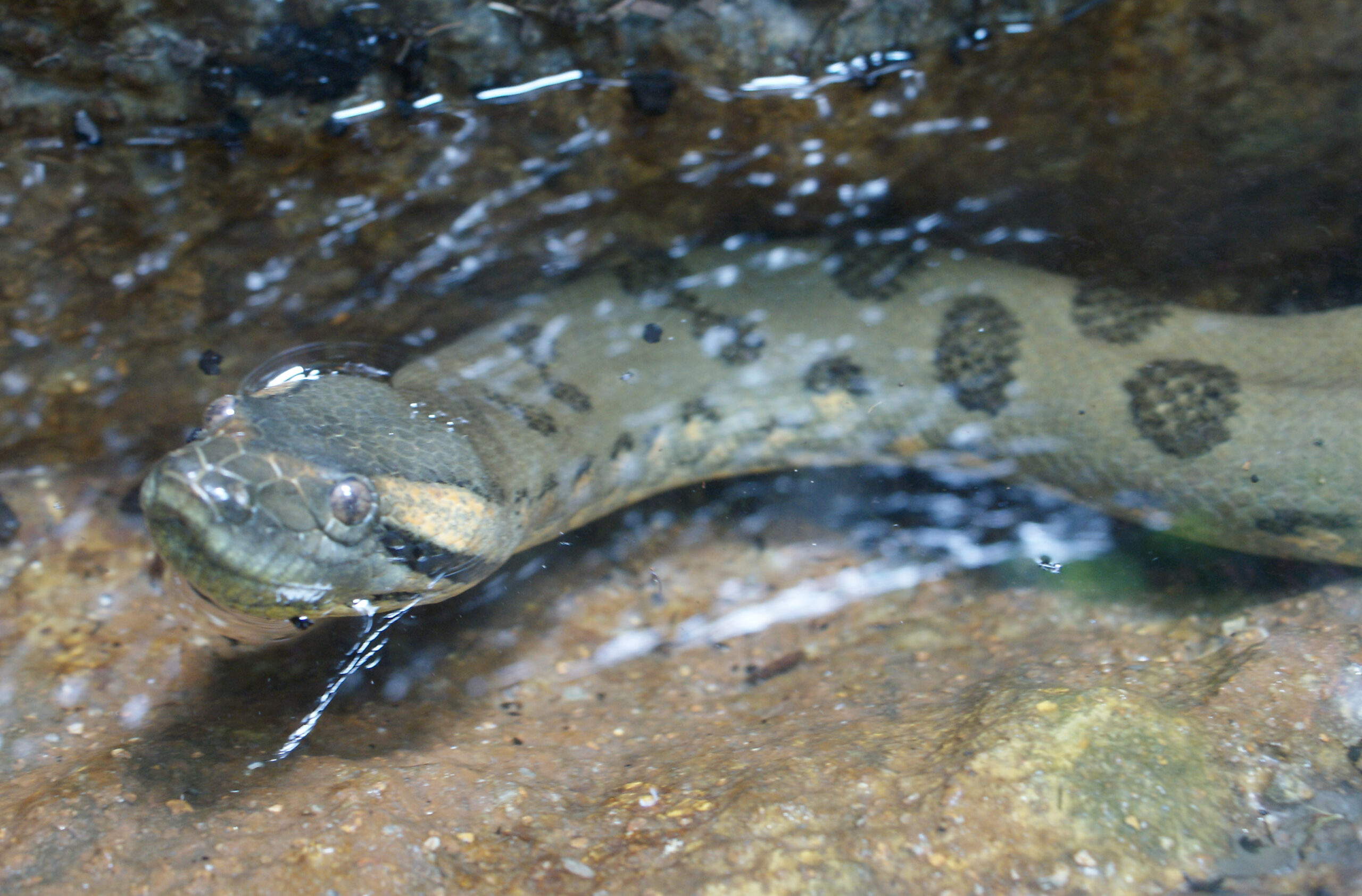 Photo Credit: TimVickers / Wikimedia Commons
In the heart of South America’s lush wetlands, the Green Anaconda, scientifically known as Eunectes murinus, glides silently through the murky waters. With its long, muscular body that can stretch up to 30 feet, this magnificent snake is a true titan of the animal kingdom. Its olive-green skin, adorned with dark, splotchy patterns, allows it to blend seamlessly into the vibrant tapestry of swamps and slow-moving rivers, making it a master of stealth. As it navigates its watery domain, the anaconda embodies both power and grace, captivating the imaginations of scientists and nature enthusiasts alike.
What makes the Green Anaconda particularly intriguing is not just its size, but its role as a top predator in its ecosystem. These snakes are known for their impressive hunting skills, often lying in wait for unsuspecting prey to come too close. With a diet that includes fish, birds, and even large mammals, the anaconda plays a crucial role in maintaining the balance of its environment. As we explore the life of this extraordinary serpent, we will uncover the secrets of its behavior, diet, and the vital role it plays in the intricate web of life in the wetlands. Join us on this adventure to learn more about the Green Anaconda and the wonders of its world.
The Green Anaconda, a true giant of the snake world, holds a special place in the animal kingdom. Taxonomically, it belongs to the Kingdom Animalia, which includes all animals, and is classified under the Class Reptilia, the group that encompasses reptiles like snakes, lizards, and turtles. What sets the Green Anaconda apart is its impressive size; it is one of the heaviest and longest snakes on the planet. This remarkable serpent is a member of the family Boidae, which includes other large constrictor snakes. Its scientific name, Eunectes murinus, hints at its aquatic lifestyle and powerful physique, making it a fascinating subject of study for both scientists and nature enthusiasts alike.
| Taxonomic Rank | Scientific Name | Meaning & Significance |
|---|---|---|
| Kingdom | Animalia | This name means “animals” in Latin, highlighting the Green Anaconda’s classification as a living organism that is multicellular and capable of movement. |
| Class | Reptilia | Derived from the Latin word “reptilis,” meaning “to creep,” this classification emphasizes the Green Anaconda’s scaly skin and cold-blooded nature. |
| Family | Boidae | This name comes from “boa,” which refers to the large, non-venomous snakes that constrict their prey, showcasing the Green Anaconda’s hunting method. |
| Genus | Eunectes | From the Greek word “eunektēs,” meaning “good swimmer,” this name reflects the Green Anaconda’s exceptional ability to navigate through water, where it often hunts. |
| Species | murinus | This species name is derived from the Latin word for “mouse,” possibly referring to the snake’s ability to hunt small mammals, although it primarily preys on larger animals. |
The classification of the Green Anaconda reveals much about its evolutionary journey. As a member of the Boidae family, it shares a lineage with other constrictors, showcasing adaptations that have allowed it to thrive in diverse environments, particularly in the wetlands and rivers of South America. Its unique genus, Eunectes, highlights its aquatic prowess, suggesting that its ancestors adapted to life in water long ago. This evolutionary history not only informs us about the Green Anaconda’s physical traits and behaviors but also connects it to the broader tapestry of life on Earth, illustrating how species evolve and adapt to their surroundings over time.
The evolutionary journey of the Green Anaconda, a member of the Boidae family, stretches back millions of years. This incredible snake has adapted to its environment in the lush wetlands and rivers of South America, where it has thrived for ages. Its ancestors roamed the Earth during the late Cretaceous period, around 100 million years ago, when the world was a very different place. Over time, these ancient serpents evolved, leading to the impressive Green Anaconda we know today.
The Green Anaconda’s lineage can be traced to early snakes that were more similar to lizards than the sleek, powerful swimmers we see now. These ancestral forms gradually adapted to a life in water, developing elongated bodies and a more streamlined shape. As they evolved, they became proficient hunters, relying on their ability to ambush prey in murky waters. The transition from land-dwelling to aquatic life was significant, allowing them to exploit a new range of food sources, including fish, birds, and even large mammals.
The adaptations of the Green Anaconda have been vital for its survival in the wild. Its impressive size and strength allow it to dominate its habitat, while its camouflage provides an edge in hunting. The ability to constrict prey ensures that it can tackle animals much larger than itself, making it a formidable predator. Together, these traits have enabled the Green Anaconda to thrive in the diverse ecosystems of South America, showcasing the wonders of evolution in action.
The Green Anaconda is a breathtaking sight, embodying the essence of power and grace. With its long, muscular body, this snake can reach lengths of up to 30 feet, making it one of the largest snakes in the world. Its thick, robust form is designed for strength, allowing it to constrict its prey with incredible force. The anaconda’s skin is smooth and glossy, adorned with a striking pattern of dark green and yellowish spots that help it blend seamlessly into its swampy surroundings. This camouflage is essential for both hunting and evading predators.
| Feature | Description |
|---|---|
| Size | Can grow up to 30 feet long, with some reports of even larger individuals. |
| Color | Dark green with lighter yellowish or tan spots, providing excellent camouflage. |
| Skin Type | Smooth and shiny scales that help reduce friction in water. |
| Body Structure | Thick and muscular, designed for strength and constriction. |
| Eyes and Nostrils | Located on top of the head, allowing it to see and breathe while mostly submerged. |
These physical features work together in a remarkable way to enhance the Green Anaconda’s survival. Its impressive size and strength allow it to overpower large prey, such as capybaras and even caimans. The coloration not only provides effective camouflage in the murky waters of its habitat but also helps it remain hidden from potential threats. The smooth scales reduce drag as it swims, making it an efficient hunter in its aquatic environment. Together, these adaptations make the Green Anaconda a master of its domain, perfectly suited to thrive in the wild.
The Green Anaconda thrives in the lush, watery landscapes of South America, where it finds the perfect blend of warmth and moisture. Picture a vibrant tapestry of swamps, marshes, and slow-moving rivers, all teeming with life. These habitats are often cloaked in dense vegetation, providing the snake with ample cover as it glides silently through the water or slithers along the banks. The rich ecosystem supports a variety of plants and animals, making it an ideal home for this magnificent serpent.
The climate in these regions is typically warm and humid, with temperatures often soaring above 80 degrees Fahrenheit (27 degrees Celsius). The Green Anaconda prefers areas that are consistently wet, as it is an aquatic snake that spends much of its time in the water. These environments are rich in biodiversity, providing not only a comfortable habitat but also a steady supply of food. The combination of warm temperatures and abundant water sources creates a thriving ecosystem where the Green Anaconda can flourish.
Adaptations have allowed the Green Anaconda to become a master of its watery domain. Its powerful, muscular body enables it to swim gracefully through the water, while its camouflaged skin helps it blend seamlessly into the lush surroundings. This snake has also developed the ability to hold its breath for long periods, allowing it to remain submerged while hunting or evading predators. These remarkable traits ensure that the Green Anaconda is perfectly suited to its environment, making it one of the most successful reptiles in its habitat.
The daily life of a Green Anaconda is a blend of stealth, patience, and opportunism. These magnificent snakes are primarily nocturnal, meaning they are most active at night. During the day, they often bask in the sun on riverbanks or hide in the water, blending seamlessly with their surroundings. Their primary activities include hunting for food, which consists mainly of fish, birds, and even larger mammals like deer. Anacondas are ambush predators, meaning they wait quietly for their prey to come close before striking with incredible speed and strength.
Socially, Green Anacondas are generally solitary creatures. They do not form permanent groups, but they may come together during the breeding season. Males will often compete for the attention of females, engaging in a fascinating ritual known as a “breeding ball,” where several males may entwine around a single female. This behavior showcases their competitive nature and helps ensure that the strongest genes are passed on to the next generation. While they are not known for vocal communication, they can sense vibrations in the water and use their keen sense of smell to detect potential mates or threats.
| Behavior Type | Description |
|---|---|
| Activity Patterns | Nocturnal hunters, primarily active at night; basking during the day. |
| Social Structure | Generally solitary, but may gather during breeding season. |
| Communication Methods | Use vibrations and scent to communicate; no vocal sounds. |
The behaviors of the Green Anaconda are finely tuned to ensure their survival in the wild. By being primarily nocturnal, they avoid many daytime predators and can hunt more effectively under the cover of darkness. Their solitary nature allows them to conserve energy and reduce competition for food. During breeding, their unique social interactions help maintain genetic diversity, which is crucial for the health of the population. Each of these behaviors plays a vital role in the life of an anaconda, allowing it to thrive in the rich ecosystems of South America.
The Green Anaconda has a diverse diet that reflects its role as a top predator in its aquatic habitat. This massive snake primarily feeds on a variety of animals, including fish, birds, mammals, and even other reptiles. Its feeding behavior is characterized by ambush tactics, where it patiently waits for prey to come close before striking with incredible speed and strength. Once it captures its meal, the anaconda uses its powerful muscles to constrict and swallow it whole, a process that can take a considerable amount of time due to the size of its prey.
| Dietary Aspect | Details |
|---|---|
| Diet Type | Carnivorous, meaning it eats meat |
| Favorite Foods | Fish, birds, small mammals, and occasionally larger animals like deer |
| Prey Items | Capybaras, caimans, and even other snakes |
| Hunting/Foraging Strategies | Ambush predator, using stealth and strength to capture prey |
This diet plays a crucial role in shaping the Green Anaconda’s ecology and daily routine. By preying on a variety of animals, it helps maintain the balance of its ecosystem, controlling populations of various species. Its hunting strategy requires patience and energy, influencing when and how often it hunts. This remarkable snake’s ability to consume large prey also means it can go for weeks or even months without eating, allowing it to thrive in the rich, yet sometimes unpredictable, environments of South America.
The mating behavior of the Green Anaconda is as intriguing as the snake itself. Breeding typically occurs during the warmer months, from April to August, when the conditions are just right for reproduction. During this time, males engage in a fascinating ritual known as a “breeding ball.” This is when several males entwine around a female, competing for her attention. The female, larger and more powerful, chooses her mate based on strength and persistence, ensuring that only the fittest genes are passed on to the next generation.
| Reproductive Aspect | Details |
|---|---|
| Gestation Period | 6 to 7 months |
| Litter Size | 20 to 40 young |
| Age of Maturity | 2 to 3 years |
| Name of Young | Neonates |
Once the female Green Anaconda gives birth, she becomes a remarkable example of nature’s nurturing side. The young, known as neonates, are born fully formed and ready to swim, measuring about 2 feet long. Unlike many other reptiles, the mother does not provide direct care after birth. Instead, the neonates must fend for themselves almost immediately. They instinctively know how to hunt and hide from predators, which is crucial for their survival. As they grow, these young snakes will develop into the powerful adults they are destined to be, continuing the cycle of life in the vibrant ecosystems of South America.
The Green Anaconda is a powerful predator at the top of its food web, primarily found in the wetlands and rivers of South America. As one of the largest snakes in the world, it plays a crucial role in maintaining the balance of its ecosystem. However, despite its size and strength, the Green Anaconda faces several dangers that threaten its survival.
To defend itself against these threats, the Green Anaconda employs a variety of survival strategies. It often relies on its excellent camouflage, blending seamlessly into the murky waters and dense vegetation of its habitat. When threatened, it can become quite aggressive, using its immense strength to constrict potential predators. Additionally, the Green Anaconda is a skilled swimmer, allowing it to escape danger by slipping into deeper waters. These adaptations help ensure that this magnificent snake continues to thrive in its natural environment.
A keystone species is an organism that has a disproportionately large impact on its environment relative to its abundance. In simpler terms, if you remove a keystone species, the entire ecosystem can change dramatically. The Green Anaconda, with its impressive size and predatory habits, qualifies as a keystone species in its habitat. By controlling the populations of various prey species, it helps maintain the balance of its ecosystem.
The ecological impact of the Green Anaconda is profound. As a top predator, it primarily feeds on a variety of animals, including fish, birds, and mammals. This predation helps regulate the populations of these species, preventing any one group from becoming too dominant. For example, by keeping the numbers of capybaras and other large herbivores in check, the anaconda indirectly supports the growth of aquatic plants, which are vital for the health of its wetland environment.
Moreover, the Green Anaconda plays a role in nutrient cycling. When it consumes prey, it contributes to the flow of energy through the food web. The remains of its meals provide nutrients to the soil and water, supporting the growth of plants and microorganisms. This process is essential for maintaining the rich biodiversity found in the wetlands of South America.
If the Green Anaconda were to disappear, the consequences would ripple through its ecosystem. Without this powerful predator, prey populations could explode, leading to overgrazing and a decline in plant diversity. This imbalance could ultimately affect other species that rely on those plants for food and shelter. The loss of the anaconda would not only disrupt the food web but could also lead to a decline in the overall health of the wetland ecosystem, showcasing just how vital this magnificent snake is to its environment.
The Green Anaconda occupies a vital ecological niche in the wetlands and rivers of South America. As one of the largest snakes in the world, it plays a crucial role in maintaining the balance of its ecosystem. This powerful predator helps regulate populations of various species, ensuring that no single group dominates the environment. By doing so, the Green Anaconda contributes to the overall health and diversity of its habitat, making it an essential player in the intricate web of life.
| Ecosystem Service | Impact |
|---|---|
| Population Control | Regulates prey species, preventing overpopulation. |
| Nutrient Cycling | Contributes to the decomposition process through predation. |
| Habitat Structure | Influences the distribution of other species in its environment. |
| Food Source | Provides sustenance for larger predators, such as jaguars and caimans. |
The Green Anaconda’s influence on its ecosystem is profound. For instance, by preying on animals like capybaras and caimans, it helps keep these populations in check. This balance is crucial because if these prey species were to multiply unchecked, they could overgraze vegetation and disrupt the habitat. Additionally, the remains of its meals contribute nutrients back into the soil and water, supporting plant life and other organisms. The presence of the Green Anaconda also affects the behavior of other animals, as many species adapt their habits to avoid this formidable predator.
The broader ecological importance of the Green Anaconda cannot be overstated. As a keystone species, its role extends beyond mere predation. The health of the entire ecosystem can hinge on the presence of this magnificent snake. By maintaining the balance of species and contributing to nutrient cycling, the Green Anaconda ensures that its watery world remains vibrant and diverse. In this way, it exemplifies the interconnectedness of life, reminding us that every creature, no matter how large or small, plays a part in the grand tapestry of nature.
In the intricate web of life, symbiosis plays a crucial role in shaping ecosystems. This term refers to the various ways in which different species interact and depend on each other for survival. These relationships can be mutualistic, where both species benefit, parasitic, where one benefits at the other’s expense, or commensal, where one benefits while the other is neither helped nor harmed. The Green Anaconda, a powerful predator of the wetlands, engages in several fascinating ecological partnerships that highlight the complexity of nature.
| Species/Type | Relationship Type | Description |
|---|---|---|
| Fish (e.g., catfish) | Commensal | Fish often swim near the anaconda, benefiting from the protection it provides from larger predators while the snake remains unaffected. |
| Birds (e.g., herons) | Mutualistic | Herons may feed on fish disturbed by the anaconda’s movements, while the anaconda benefits from the herons alerting it to potential threats. |
| Parasites (e.g., leeches) | Parasitic | Leeches attach to the anaconda to feed on its blood, benefiting at the snake’s expense, which can lead to health issues for the anaconda. |
The evolution of these relationships showcases the adaptability of species in their environments. Over time, the Green Anaconda and its partners have developed these interactions to enhance their survival. Mutualistic relationships, like those with herons, demonstrate how cooperation can lead to greater success in the wild. Meanwhile, parasitic relationships, such as those with leeches, remind us that not all interactions are beneficial. Understanding these connections helps us appreciate the delicate balance of ecosystems and the roles each species plays within them.
The Green Anaconda is not just a giant snake; it’s a marvel of nature with some surprising traits that even seasoned nature enthusiasts might not know. Let’s dive into some intriguing facts about this incredible reptile.
The Green Anaconda has long captivated human imagination, woven into the fabric of folklore and cultural narratives across South America. Historically, these magnificent snakes have been both feared and revered. Indigenous tribes often regard the anaconda as a powerful spirit, embodying strength and wisdom. Tales of encounters with these giants have sparked curiosity and respect, leading to a complex relationship that blends admiration with caution. In many cultures, the anaconda symbolizes the untamed wilderness, representing the mysteries of the natural world.
In contemporary times, the interactions between humans and Green Anacondas have evolved significantly. While some people still fear these snakes, others recognize their ecological importance and advocate for their conservation. Unfortunately, habitat destruction and hunting pose serious threats to their populations. In some regions, conflicts arise when anacondas venture into human settlements, leading to misunderstandings and fear. Interestingly, there are also efforts to study and understand these snakes better, with some researchers exploring the potential for coexistence and even domestication in controlled environments.
As we look to the future, the relationship between humans and Green Anacondas holds both challenges and opportunities. With increasing awareness of the importance of biodiversity, there is hope for a more harmonious coexistence. Education and conservation efforts can help dispel myths and foster respect for these incredible snakes. By understanding their role in the ecosystem, we can work towards protecting not only the Green Anaconda but also the rich tapestry of life it represents. Together, we can ensure that future generations appreciate the wonders of the natural world, including the majestic Green Anaconda.
The Green Anaconda, known scientifically as Eunectes murinus, currently holds a conservation status of “Least Concern” according to the International Union for Conservation of Nature (IUCN). This means that, at present, the species is not considered to be facing an immediate risk of extinction. However, population trends indicate that while they are still relatively abundant in their natural habitats, certain local populations may be declining due to various environmental pressures.
| Conservation Factor | Status/Details |
|---|---|
| IUCN Status | Least Concern |
| Population Estimates | Stable in many areas, but local declines noted |
| Trend Direction | Generally stable, with some local declines |
Despite their current status, Green Anacondas face several significant threats that could impact their future. Habitat destruction is a major concern, as wetlands and river systems are increasingly being drained for agriculture and urban development. Additionally, pollution from agricultural runoff can degrade their habitats, affecting the prey species they rely on. Illegal hunting and the exotic pet trade also pose risks, as some people seek to capture these magnificent snakes for personal collections or for use in traditional medicine.
Conservation efforts are underway to protect the Green Anaconda and its habitat. Organizations are working to raise awareness about the importance of wetlands and the role these snakes play in their ecosystems. Protected areas are being established to safeguard critical habitats, and local communities are being engaged in conservation initiatives. The outlook for the Green Anaconda remains cautiously optimistic, as long as these efforts continue and the threats to their environment are addressed. By fostering a deeper understanding of this incredible species, we can help ensure that future generations will also marvel at the beauty and power of the Green Anaconda.
| Question | Answer |
|---|---|
| What is the habitat of the Green Anaconda? | The Green Anaconda primarily lives in the swamps, marshes, and slow-moving streams of the Amazon and Orinoco river basins in South America. These habitats provide the warm, humid environment that this snake loves, along with plenty of water for swimming and hunting. |
| What does the Green Anaconda eat? | Green Anacondas are carnivorous, meaning they eat meat. Their diet includes a variety of prey such as fish, birds, mammals, and even other reptiles. They are known for their ability to consume large animals, including deer and caimans, thanks to their powerful bodies. |
| How does the Green Anaconda behave in the wild? | Green Anacondas are mostly solitary creatures, preferring to hunt and live alone. They are excellent swimmers and often hunt in the water, using their camouflage to blend in with the surroundings. When they are not hunting, they can be found basking in the sun on riverbanks. |
| How do Green Anacondas reproduce? | Green Anacondas are ovoviviparous, which means they give birth to live young rather than laying eggs. After a gestation period of about six months, a female can give birth to 20 to 40 baby snakes at once. The young are independent from birth and must fend for themselves immediately. |
| What threats do Green Anacondas face? | Green Anacondas face several threats, including habitat destruction due to deforestation and pollution. They are also hunted for their skin and meat, which can lead to population declines. Conservation efforts are important to protect their natural habitats and ensure their survival. |
| What are some interesting characteristics of the Green Anaconda? | The Green Anaconda is one of the largest snakes in the world, capable of growing over 20 feet long and weighing more than 500 pounds! They have a distinctive pattern of dark green and yellow markings that help them camouflage in their watery environment. Their size and strength make them apex predators in their ecosystem. |
| How do Green Anacondas hunt their prey? | Green Anacondas use a technique called ambush hunting, where they lie in wait for their prey to come close. Once the prey is within reach, they strike quickly, wrapping their powerful bodies around it to constrict and suffocate it. This method allows them to take down animals much larger than themselves. |