Taxonomy & Classification
- Kingdom
- Animalia
- Phylum
- Chordata
- Class
- Reptilia
- Order
- Squamata
- Family
- Elapidae
- Genus
- Dendroaspis

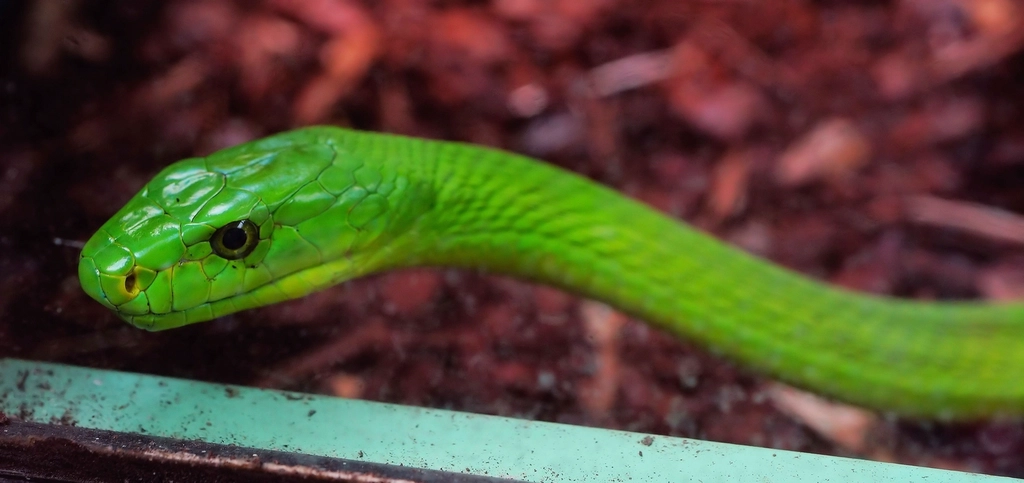 Photo Credit: Rawpixel
In the heart of Africa’s lush rainforests, the Green Mamba, scientifically known as Dendroaspis angusticeps, glides gracefully through the vibrant foliage. With its striking emerald scales shimmering in the dappled sunlight, this snake is a true marvel of nature. Its slender body can reach lengths of up to 2.5 meters, making it both an agile predator and a breathtaking sight for anyone lucky enough to encounter it. The Green Mamba’s vivid color not only serves as a stunning display but also provides excellent camouflage among the leaves, allowing it to blend seamlessly into its tropical surroundings.
What makes the Green Mamba particularly captivating to scientists and nature enthusiasts alike is its dual nature as both a predator and a vital part of its ecosystem. As a diurnal snake, it is most active during the day, hunting small birds, lizards, and even their eggs with remarkable precision. This elegant creature plays a crucial role in controlling the populations of these animals, maintaining a delicate balance in its habitat. With its fascinating behaviors and striking appearance, the Green Mamba invites us to explore the wonders of the natural world, revealing the intricate connections that sustain life in the wild.
The Green Mamba, a strikingly beautiful snake, occupies a special place in the animal kingdom. It belongs to the family Elapidae, which includes some of the most venomous snakes in the world. What sets the Green Mamba apart is not just its vibrant green color, which helps it blend seamlessly into the lush foliage of its African habitat, but also its agility and speed. This snake is a master of the trees, showcasing a lifestyle that is both arboreal and elusive. Its scientific classification reveals much about its evolutionary adaptations and ecological niche.
| Taxonomic Rank | Scientific Name | Meaning & Significance |
|---|---|---|
| Kingdom | Animalia | This term refers to all animals, highlighting the Green Mamba’s place among living organisms that are multicellular and capable of movement. |
| Phylum | Chordata | Chordata means “having a notochord,” a flexible rod that supports the body. This feature is a key characteristic of vertebrates, which includes the Green Mamba. |
| Class | Reptilia | Reptilia, or reptiles, are cold-blooded animals with scales. The Green Mamba’s scaly skin is not just for protection; it also helps in retaining moisture in its warm, humid environment. |
| Order | Squamata | Squamata means “scaly,” which perfectly describes the Green Mamba’s smooth, shiny scales that aid in camouflage and movement through trees. |
| Family | Elapidae | This family includes venomous snakes. The Green Mamba’s potent venom is a crucial adaptation for hunting and self-defense. |
| Genus | Dendroaspis | Dendroaspis translates to “tree asp,” reflecting the Green Mamba’s arboreal lifestyle and its affinity for living in trees. |
Understanding the Green Mamba’s classification sheds light on its evolutionary journey. As a member of the Elapidae family, it shares a lineage with other highly specialized snakes, showcasing adaptations that have allowed it to thrive in its environment. Its unique features, from its vibrant coloration to its potent venom, are not just random traits; they are the result of millions of years of evolution, fine-tuning its ability to survive and flourish in the diverse ecosystems of Africa. This classification not only highlights its biological relationships but also emphasizes the intricate web of life that connects all living beings.
The evolutionary journey of the Green Mamba, a member of the Elapidae family, stretches back millions of years. This snake, scientifically known as Dendroaspis, has adapted to its environment in remarkable ways, allowing it to thrive in the lush forests of Africa. Understanding its evolution helps us appreciate not just the Green Mamba itself, but also the intricate web of life that surrounds it.
The ancestors of the Green Mamba were likely terrestrial snakes that roamed the earth long before the rise of modern reptiles. Over time, these early snakes began to adapt to arboreal, or tree-dwelling, lifestyles. This transition was crucial, as it allowed them to escape ground predators and access new food sources. As they evolved, their bodies became more slender and agile, perfect for navigating branches and foliage. The development of potent venom was another significant step, enabling them to immobilize prey quickly and efficiently. This adaptation not only improved their hunting success but also provided a defense mechanism against larger threats.
These evolutionary adaptations have played a vital role in the Green Mamba’s survival. Its streamlined body and vibrant coloration allow it to navigate its leafy habitat with ease, while its potent venom ensures it can capture prey efficiently. The ability to live in trees not only provides safety from ground predators but also opens up a world of opportunities for hunting. Together, these traits make the Green Mamba a successful and fascinating inhabitant of its environment, showcasing the wonders of evolution in action.
The Green Mamba is a stunning spectacle of nature, captivating anyone lucky enough to catch a glimpse. With its slender, elongated body, this snake can reach lengths of up to 2.5 meters (about 8 feet). Its overall form is sleek and agile, designed for life in the trees. The Green Mamba’s vibrant coloration, a bright, velvety green, allows it to blend seamlessly into the lush foliage of its tropical habitat. Juveniles often sport a striking turquoise hue, adding to their charm and allure.
| Feature | Description |
|---|---|
| Size | Can grow up to 2.5 meters (8 feet) long |
| Color | Bright, velvety green; juveniles are often turquoise |
| Skin Type | Covered in smooth, shiny scales |
| Distinctive Markings | Western Green Mambas have bright green fading to yellow in their long tail, with black margins between their scales |
The combination of these features not only makes the Green Mamba a visual marvel but also serves crucial survival purposes. Its vibrant green color acts as excellent camouflage, allowing it to hide from both predators and prey among the leaves. The smooth scales reduce friction as it glides through branches, enhancing its agility and speed. This combination of beauty and functionality is a perfect example of how evolution shapes the physical traits of animals to help them thrive in their environments.
The Green Mamba thrives in lush, tropical environments that are as vibrant as its own emerald scales. Picture a warm, sun-drenched forest where the air is thick with humidity and the sounds of chirping birds and rustling leaves fill the atmosphere. These snakes are often found in the canopies of trees, where they can bask in the sunlight and blend seamlessly with the green foliage. Their habitat is a rich tapestry of life, filled with a variety of plants and animals, creating a perfect setting for this agile serpent.
The Green Mamba prefers a warm climate, typically found in areas where temperatures range from 20 to 30 degrees Celsius (68 to 86 degrees Fahrenheit). These snakes thrive in humid conditions, which help them stay hydrated and support their active lifestyle. The dense vegetation of their habitats provides not only shelter but also a rich source of food, as they primarily feed on small mammals and birds. The combination of warmth and moisture creates an ideal environment for their survival.
Adapted to life in the trees, the Green Mamba has developed several traits that enhance its ability to navigate this complex habitat. Its slender body allows for agile movement among branches, while its vibrant coloration provides excellent camouflage against the leaves. This snake is also an adept climber, using its strong muscles to grip onto branches and move with grace. These adaptations not only help it hunt for food but also allow it to evade predators, making the Green Mamba a true master of its arboreal domain.
The Green Mamba leads a life that is both active and stealthy, primarily during the day. As a diurnal snake, it takes advantage of the sunlight to hunt and bask. Its daily activities include slithering through the trees, searching for food, and soaking up warmth on branches. This snake is known for its agility, moving gracefully among the leaves and branches of its tropical habitat. When it’s not hunting, the Green Mamba often rests in the foliage, blending seamlessly with its surroundings, which helps it avoid predators.
In terms of social behavior, the Green Mamba is quite solitary. Unlike some snakes that may gather in groups, this species prefers to live alone. This solitary lifestyle means that interactions with other Green Mambas are rare and usually occur only during mating season. When they do meet, these encounters can be tense, as each snake is keen to establish its territory. Communication among them is subtle, often involving body language and scent marking rather than vocalizations.
| Behavior Type | Description |
|---|---|
| Activity Patterns | Active during the day, hunting and basking in the sun. |
| Social Structure | Solitary, preferring to live and hunt alone. |
| Communication Methods | Uses body language and scent marking to communicate. |
The behaviors of the Green Mamba are finely tuned to ensure its survival in the wild. By being diurnal, it maximizes its hunting opportunities while avoiding many nocturnal predators. Its solitary nature reduces competition for food and helps it maintain a low profile, making it less likely to be spotted by larger threats. These adaptations, combined with its incredible camouflage, allow the Green Mamba to thrive in its vibrant, tropical environment.
The Green Mamba is a carnivore, which means it primarily eats meat. This elegant snake has a taste for a variety of small animals, including birds, their eggs, small bats, and lizards. With its keen eyesight and swift movements, the Green Mamba is an adept hunter, often using its agility to navigate through the trees in search of prey. It relies on a combination of stealth and speed, striking quickly when the opportunity arises.
| Dietary Aspect | Details |
|---|---|
| Diet Type | Carnivore |
| Favorite Foods | Birds, their eggs, small bats, and lizards |
| Prey Items | Small mammals and reptiles |
| Hunting Strategies | Stealthy movement and quick strikes |
This diet plays a crucial role in the Green Mamba’s ecology and daily routine. By preying on birds and small mammals, it helps control their populations, contributing to the balance of its tropical habitat. The need to hunt during the day also shapes its behavior, as it must be alert and agile to catch its fast-moving prey. This dynamic lifestyle not only keeps the Green Mamba well-fed but also ensures that it remains an integral part of its ecosystem.
The mating behavior of the Green Mamba is as intriguing as its vibrant color. During the breeding season, which typically occurs in the warmer months, males engage in a fascinating courtship ritual. They may perform a dance-like display, intertwining their bodies and flicking their tongues to communicate with potential mates. This is a critical time for these snakes, as successful mating ensures the continuation of their species.
| Reproductive Aspect | Details |
|---|---|
| Gestation Period | Approximately 60 to 70 days |
| Litter Size | Usually 5 to 15 eggs |
| Age of Maturity | About 2 to 3 years |
| Name of Young | Hatchling |
Once the eggs are laid, the Green Mamba does not provide parental care. Instead, the hatchlings emerge fully formed and ready to face the world on their own. These young snakes are miniature versions of their parents, equipped with the same striking coloration and venomous capabilities. As they grow, they learn to navigate their environment, honing their hunting skills and adapting to their surroundings. Over the next few years, they will shed their skin multiple times, a process that allows them to grow and develop into the magnificent adults they are destined to become.
The Green Mamba plays a crucial role in its ecosystem, sitting near the top of the food web. As a skilled predator, it helps control populations of small animals like birds and lizards. However, this beautiful snake is not without its challenges. It faces various threats from both natural predators and human activities that can disrupt its habitat.
To survive these dangers, the Green Mamba has developed several clever defensive strategies. Its vibrant green color allows it to blend seamlessly into the leaves and branches of its forest home, making it hard for predators to spot. When threatened, it can also deliver a swift bite, injecting potent venom that can deter attackers. Additionally, this snake is known for its agility, allowing it to escape quickly into the treetops or dense foliage. By using these tactics, the Green Mamba continues to thrive in its tropical habitat, despite the challenges it faces.
A keystone species is an organism that has a disproportionately large impact on its environment relative to its abundance. In other words, if it were removed, the ecosystem would change dramatically. The Green Mamba, with its role as a predator in tropical forests, qualifies as a keystone species. By controlling the populations of its prey, it helps maintain the balance of its ecosystem.
The Green Mamba primarily feeds on small animals such as birds, lizards, and their eggs. By preying on these species, it prevents any one group from becoming too numerous, which could lead to overgrazing or depletion of vegetation. For example, if the Green Mamba were to disappear, the population of certain bird species might explode, leading to increased competition for food and nesting sites. This could disrupt the entire food web, affecting not just the birds but also the plants and other animals that rely on them.
Additionally, the Green Mamba’s presence influences the behavior of other animals. Many smaller creatures may alter their foraging habits or nesting locations to avoid becoming a meal. This creates a ripple effect throughout the ecosystem, as the actions of one species can impact many others. The Green Mamba also serves as a food source for larger predators, such as birds of prey, further intertwining its role in the ecological web.
If the Green Mamba were to vanish from its habitat, the consequences could be severe. Without this snake to keep prey populations in check, certain species could proliferate unchecked, leading to a decline in plant life and a shift in the entire ecosystem. This could result in a loss of biodiversity, as other species struggle to adapt to the new conditions. The delicate balance of life in the tropical forests would be disrupted, showcasing just how vital the Green Mamba is to its environment.
The Green Mamba, with its vibrant green scales and agile movements, plays a vital role in its ecosystem. As a diurnal predator, it occupies a unique ecological niche, primarily hunting small animals like birds, lizards, and their eggs. This snake not only helps regulate the populations of these species but also contributes to the overall health of its tropical forest habitat. By maintaining a balance in the food web, the Green Mamba ensures that no single species becomes too dominant, allowing for a diverse and thriving ecosystem.
| Ecosystem Service | Impact |
|---|---|
| Population Control | Regulates the numbers of small animals, preventing overpopulation. |
| Prey for Larger Predators | Serves as a food source for birds of prey and larger snakes. |
| Soil Health | Through its predation, it influences the distribution of species that affect soil quality. |
| Seed Dispersal | Indirectly aids in plant reproduction by controlling animal populations that consume seeds. |
The Green Mamba’s influence extends beyond just its immediate prey. For instance, by keeping the populations of birds and lizards in check, it allows various plant species to flourish, as these animals often compete for the same resources. When the Green Mamba hunts, it helps maintain a balance that supports a rich variety of flora and fauna. This balance is crucial for the health of the forest, as it ensures that different species can coexist and thrive together.
In a broader ecological context, the Green Mamba is considered a keystone species. This means that its presence is essential for the stability of its ecosystem. If the Green Mamba were to disappear, the effects would ripple through the food web, potentially leading to overpopulation of certain species and a decline in others. This delicate balance highlights the importance of every creature, no matter how small or seemingly insignificant, in maintaining the health of our planet’s ecosystems. The Green Mamba, with its striking beauty and critical role, reminds us of the intricate connections that bind all living things together.
In the intricate web of life, symbiosis refers to the close interactions between different species, which can take on various forms. These relationships can be mutualistic, where both species benefit; parasitic, where one benefits at the expense of the other; or commensal, where one benefits while the other is neither helped nor harmed. The Green Mamba, a striking inhabitant of tropical forests, engages in several ecological relationships that highlight the complexity of its environment. Understanding these partnerships not only reveals the Green Mamba’s role in its ecosystem but also showcases the interconnectedness of all living things.
| Species/Type | Relationship Type | Description |
|---|---|---|
| Birds (e.g., weavers) | Mutualistic | Green Mambas may benefit from the nests built by birds, which provide shelter and hunting grounds for small prey. In return, the presence of the snake can deter larger predators from the area. |
| Small mammals (e.g., rodents) | Parasitic | While the Green Mamba preys on small mammals, it benefits from their energy, which it uses to sustain itself. However, this relationship is detrimental to the mammals, as they become food. |
| Insects (e.g., ants) | Commensal | Insects may inhabit the same trees as Green Mambas without affecting them. The snakes can benefit from the insects’ presence, as they may attract birds that the mamba can then hunt. |
These relationships have evolved over time, shaped by the needs and behaviors of the species involved. The Green Mamba’s role as a predator helps maintain the balance of its ecosystem, controlling populations of small animals and ensuring that no single species dominates. Meanwhile, the mutualistic relationships with birds illustrate how different species can coexist and support one another. As these interactions continue to develop, they contribute to the rich tapestry of life in the tropical forests, reminding us of the delicate balance that sustains our planet’s biodiversity.
The Green Mamba is not just a beautiful snake; it’s a marvel of nature with some surprising traits that will intrigue any nature lover. Let’s dive into some lesser-known facts about this vibrant serpent.
The Green Mamba, with its dazzling emerald hue, has long captured the imagination of people across cultures. Historically, this snake has been both feared and revered. In some African traditions, it symbolizes danger and death, while in others, it represents protection and wisdom. Folklore often weaves tales of encounters with this snake, highlighting its elusive nature and the respect it commands in the wild. These stories reflect humanity’s complex relationship with the Green Mamba, where admiration and caution coexist.
In modern times, interactions between humans and Green Mambas have evolved significantly. Conservation efforts are underway to protect their habitats, as deforestation and human encroachment threaten their existence. However, conflicts can arise when these snakes venture into human settlements, leading to fear and misunderstanding. While domestication is not feasible for such a wild creature, education about their ecological role can help reduce negative encounters. Understanding that the Green Mamba is more than just a venomous snake can foster a more harmonious coexistence.
As we look to the future, the relationship between humans and the Green Mamba holds promise. By fostering a deeper understanding of this snake’s ecological importance, we can work towards coexistence rather than conflict. Education and conservation efforts will be key in ensuring that future generations appreciate the beauty and role of the Green Mamba in our world. With respect and knowledge, we can protect this stunning species while celebrating the rich tapestry of life it represents.
The Green Mamba, known for its vibrant green scales and agile movements, currently holds a conservation status of “Least Concern” according to the International Union for Conservation of Nature (IUCN). This means that, overall, the species is not facing immediate threats that could lead to its extinction. However, while the population is stable in many areas, localized declines can occur due to habitat loss and other factors.
| Conservation Factor | Status/Details |
|---|---|
| IUCN Status | Least Concern |
| Population Estimates | Stable in many regions, but specific numbers are not well-documented |
| Trend Direction | Stable overall, with some localized declines |
The main threats to the Green Mamba include habitat destruction, primarily due to deforestation and urban development. As forests are cleared for agriculture or human settlements, these snakes lose their natural homes. Additionally, they face risks from poaching and the illegal pet trade, where their striking appearance makes them targets for collectors. These pressures can lead to declines in local populations, even if the species as a whole remains stable.
Conservation efforts for the Green Mamba focus on habitat protection and raising awareness about the importance of this species in its ecosystem. Organizations are working to preserve the tropical forests where these snakes thrive, ensuring that they have safe environments to live and breed. With continued efforts and public support, the outlook for the Green Mamba remains hopeful, allowing this stunning snake to continue its role in the natural world for generations to come.
| Question | Answer |
|---|---|
| What is the habitat of the Green Mamba? | The Green Mamba primarily inhabits the coastal forests and woodlands of East Africa. They prefer areas with plenty of trees, as they are excellent climbers and spend much of their time in the branches. |
| What does the Green Mamba eat? | As a carnivore, the Green Mamba mainly feeds on small mammals and birds. They are skilled hunters, using their speed and agility to catch their prey quickly. |
| How does the Green Mamba behave? | Green Mambas are generally shy and prefer to avoid human contact. They are diurnal, meaning they are active during the day, and they often bask in the sun to regulate their body temperature. |
| How do Green Mambas reproduce? | Green Mambas are oviparous, which means they lay eggs. A female can lay between 5 to 17 eggs in a hidden location, and the young snakes are independent from birth. |
| What threats do Green Mambas face? | While the Green Mamba is currently listed as Least Concern, they face threats from habitat loss due to deforestation and human encroachment. Additionally, they are sometimes killed out of fear or misunderstanding. |
| What are some interesting characteristics of the Green Mamba? | The Green Mamba is known for its striking bright green color, which helps it blend into the leaves and branches of its habitat. Juveniles are often a beautiful turquoise color, making them even more unique. |
| Are Green Mambas dangerous to humans? | Yes, Green Mambas are venomous, and their bites can be very dangerous. However, they are not aggressive and will usually flee if they sense a human nearby. |