Taxonomy & Classification
- Kingdom
- Animalia
- Phylum
- Chordata
- Class
- Reptilia
- Family
- Dicraeosauridae
- Genus
- Amargasaurus
- Species
- Amargasaurus cazaui

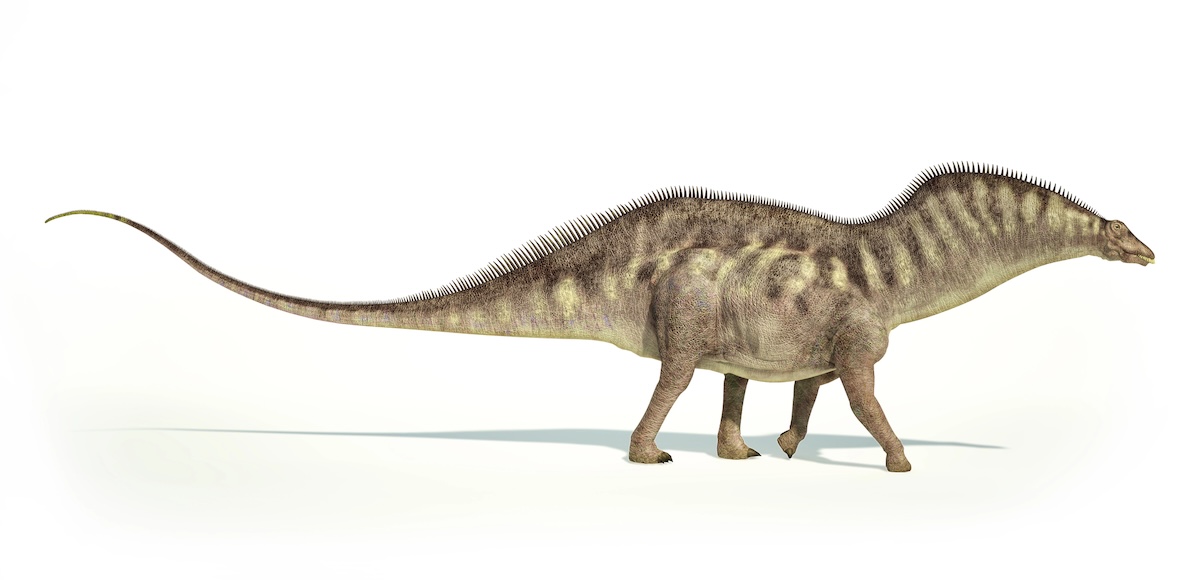 Photo Credit: Pixelchaos on Deposit Photos
In the sun-drenched landscapes of the Late Cretaceous period, around 130 million years ago, the Amargasaurus, known scientifically as Amargasaurus cazaui, roamed the earth with an air of gentle majesty. This long-necked herbivore, a member of the Dicraeosauridae family, was not just another dinosaur; it was a remarkable sight with its distinctive double row of tall spines running down its neck and back. Imagine a creature that could stretch its neck high into the treetops, reaching for the lush ferns and cycads that flourished in its vibrant habitat, while its spines glistened in the warm sunlight, creating a striking silhouette against the blue sky.
Scientists and dinosaur enthusiasts alike are captivated by Amargasaurus for its unique adaptations and the mysteries surrounding its life. The spines, which may have been used for display or defense, add an intriguing layer to its story, sparking questions about its behavior and interactions with other dinosaurs. As we explore the world of Amargasaurus, we will uncover how this gentle giant fit into its ecosystem, the role it played in shaping its environment, and what its existence tells us about the rich tapestry of life during a time when dinosaurs ruled the Earth. Join us on this adventure as we delve into the life of Amargasaurus, a creature that continues to inspire awe and curiosity in the hearts of those who seek to understand the ancient world.
Amargasaurus is a captivating dinosaur that roamed the Earth during the Late Cretaceous period, around 130 million years ago. This long-necked herbivore belongs to the family Dicraeosauridae, a group of sauropods known for their distinctive features. What sets Amargasaurus apart is its unique double row of spines along its neck and back, which may have been used for display or defense. This fascinating adaptation hints at a complex social behavior, making Amargasaurus not just another dinosaur, but a remarkable example of evolutionary creativity.
| Taxonomic Rank | Scientific Name | Meaning & Significance |
|---|---|---|
| Kingdom | Animalia | This name signifies that Amargasaurus is part of the animal kingdom, which includes all multicellular organisms that are not plants, fungi, or bacteria. |
| Phylum | Chordata | Chordata means “having a notochord,” a flexible rod that supports the body. In Amargasaurus, this structure evolved into a backbone, allowing for greater mobility. |
| Family | Dicraeosauridae | This family name comes from the Greek words “dichroos,” meaning “two-colored,” and “sauros,” meaning “lizard.” It reflects the unique double spines of Amargasaurus, which set it apart from other sauropods. |
| Genus | Amargasaurus | The name Amargasaurus translates to “Amarga lizard,” named after the Amarga Formation in Argentina where its fossils were discovered. This highlights the connection between the dinosaur and its geographical origins. |
The classification of Amargasaurus reveals much about its evolutionary journey. As a member of the Dicraeosauridae family, it shares a lineage with other long-necked dinosaurs, showcasing the diversity within the sauropod group. The unique adaptations of Amargasaurus, particularly its distinctive spines, suggest that it was well-suited to its environment, possibly using its impressive features for social interactions or protection. This evolutionary path illustrates how different species adapt to their surroundings, leading to the incredible variety of life we see today.
The evolutionary journey of Amargasaurus takes us back to the Late Cretaceous period, around 130 million years ago. This time was marked by a rich diversity of dinosaurs, where massive herbivores roamed the land and fierce predators ruled the skies. Amargasaurus, a member of the Dicraeosauridae family, was part of a lineage that evolved unique adaptations to thrive in its environment. Understanding its ancestry helps us appreciate how this dinosaur fit into the grand tapestry of life on Earth.
Amargasaurus descended from earlier sauropods, which were known for their long necks and massive bodies. These ancestors were primarily herbivorous, meaning they fed on plants, and they developed long necks to reach high vegetation. Over time, as the environment changed, so did the dinosaurs. Amargasaurus showcased a fascinating transition with its distinctive double row of spines along its neck. These spines likely evolved from earlier, simpler structures and may have served various purposes, such as display, defense, or even thermoregulation, which is the ability to maintain a stable internal body temperature.
The adaptations of Amargasaurus played a crucial role in its survival. The long neck allowed it to access food sources that other dinosaurs could not reach, while the impressive spines may have helped it communicate with others of its kind. Being a large herbivore also provided a significant advantage against predators, as its size made it less vulnerable to attacks. Together, these features enabled Amargasaurus to flourish in a dynamic and competitive world, leaving a lasting mark on the history of dinosaurs.
Amargasaurus presents a striking silhouette that captures the imagination. This dinosaur, with its elongated neck and robust body, stands out among its peers. Its long, slender tail balances its weight, while its sturdy legs support a frame that could reach lengths of up to 33 feet. The most eye-catching feature is the double row of tall, bony spines that run along its neck and back, giving it a distinctive, almost sail-like appearance. These spines likely added to its visual presence, making it a memorable sight in the lush landscapes of the Late Cretaceous.
| Feature | Description |
|---|---|
| Size | Up to 33 feet long, making it a sizable herbivore. |
| Color | Likely a mix of earthy tones, helping it blend into its environment. |
| Skin Type | Covered in scaly skin, similar to modern reptiles. |
| Spines | Double row of tall, bony spines along the neck and back. |
| Tail | Long and slender, aiding in balance and communication. |
These features work together to create a creature well-adapted to its environment. The long neck allowed Amargasaurus to reach high vegetation, while the bony spines may have served multiple purposes, from attracting mates to warding off predators. Its coloration likely provided camouflage among the foliage, helping it avoid detection. With its impressive size and unique adaptations, Amargasaurus was not just a sight to behold but a master of survival in its prehistoric world.
Amargasaurus thrived in a landscape that was both lush and diverse, filled with vibrant vegetation and sprawling plains. Picture a warm, sunlit environment where towering ferns and cycads flourished, creating a rich tapestry of greenery. This dinosaur’s home was likely dotted with rivers and lakes, providing ample water sources for both drinking and supporting the plant life it depended on. The terrain was varied, with gentle hills and valleys that offered a mix of open spaces and shaded areas, perfect for a large herbivore to roam and graze.
The climate in Amargasaurus’s habitat was generally warm and temperate, ideal for the growth of the lush vegetation it relied on. This environment would have experienced seasonal changes, with wet and dry periods that influenced the availability of food and water. The warm temperatures allowed for a thriving ecosystem, where plants could grow rapidly, providing a steady supply of leaves and foliage for this massive dinosaur to munch on.
To thrive in such a dynamic environment, Amargasaurus developed several adaptations. Its long neck allowed it to reach high into trees and shrubs, accessing leaves that other herbivores couldn’t. This gave it a competitive edge in a world where food could be scarce during dry spells. Additionally, its sturdy body and strong legs were perfect for traversing the varied terrain, enabling it to move easily between different types of vegetation. These adaptations helped Amargasaurus not only survive but flourish in its vibrant, prehistoric home.
As the sun rises over the lush landscapes of the Late Cretaceous period, Amargasaurus begins its day. This gentle giant, with its long neck and distinctive spines, starts by foraging for breakfast among the abundant ferns and cycads. With its specialized teeth, it skillfully strips leaves from branches, munching away to fuel its massive body. Throughout the day, Amargasaurus engages in a variety of activities, including basking in the sun to warm up and occasionally moving to new feeding grounds in search of fresh vegetation.
Socially, Amargasaurus is not a solitary creature. These dinosaurs often gather in small groups, which helps them stay safe from predators. Within these herds, they communicate through a series of low-frequency sounds and body movements, signaling to one another about food sources or potential dangers. The social structure is likely matriarchal, with older, more experienced individuals leading the group. This social behavior not only strengthens bonds among members but also enhances their chances of survival in a world filled with threats.
| Behavior Type | Description |
|---|---|
| Feeding | Amargasaurus spends a significant part of its day foraging for leaves and plants, using its long neck to reach high branches. |
| Social Structure | These dinosaurs often form small herds, likely led by older individuals, which helps them stay safe from predators. |
| Communication | They communicate through low-frequency sounds and body language, sharing information about food and threats. |
| Resting | Amargasaurus takes breaks to bask in the sun, which helps regulate its body temperature and conserve energy. |
The daily behaviors of Amargasaurus are not just routines; they are essential for survival. By foraging in groups, they can cover more ground and find food more efficiently. Their social interactions foster cooperation, allowing them to alert each other to dangers. This combination of feeding strategies and social dynamics ensures that Amargasaurus thrives in its vibrant, prehistoric world, navigating the challenges of life with grace and strength.
Amargasaurus was a dedicated herbivore, meaning it primarily fed on plants. With its long neck, this dinosaur could reach high into the trees or graze on low-lying vegetation, allowing it to access a variety of food sources. Its diet likely consisted of leaves, ferns, and other soft plant materials, which provided the necessary nutrients for its massive body. By using its specialized teeth, Amargasaurus could efficiently strip leaves from branches, making the most of the abundant plant life in its environment.
| Dietary Aspect | Details |
|---|---|
| Diet Type | Herbivore |
| Favorite Foods | Leaves, ferns, and soft plant materials |
| Prey Items | N/A (as a herbivore, it does not hunt prey) |
| Hunting/Foraging Strategies | Utilizes long neck to reach high vegetation and low plants |
The diet of Amargasaurus played a crucial role in shaping its ecology and daily routine. By feeding on a variety of plants, it helped maintain the balance of its ecosystem, promoting healthy plant growth and providing a food source for other herbivores. This gentle giant likely spent a significant portion of its day foraging, using its impressive neck to navigate through the lush vegetation. In doing so, Amargasaurus not only sustained itself but also contributed to the vibrant tapestry of life in its Late Cretaceous habitat.
Mating behavior in Amargasaurus likely revolved around the seasonal changes of its environment. During the breeding season, which would have coincided with warmer months when food was abundant, males may have engaged in displays to attract females. These displays could have included vocalizations, physical posturing, or even the use of their distinctive spines to impress potential mates. Once a pair formed, they would mate, setting the stage for the next generation of these magnificent dinosaurs.
| Reproductive Aspect | Details |
|---|---|
| Gestation Period | Approximately 12 months |
| Litter Size | 1 to 2 eggs |
| Age of Maturity | About 10 years |
| Name of Young | Hatchlings |
After hatching, the young Amargasaurus, known as hatchlings, would rely on their parents for protection and guidance. While it is believed that these dinosaurs did not exhibit extensive parental care like some modern birds, the presence of adults would still provide a safe environment for the young to grow. As they matured, hatchlings would gradually learn to forage for food and navigate their surroundings, developing the skills necessary to thrive in their lush habitat. Over time, they would grow into the impressive adults that once roamed the Earth, continuing the cycle of life in the vibrant ecosystems of the Late Cretaceous period.
Amargasaurus occupies a significant position in the food web of its Late Cretaceous environment. As a large herbivore, it primarily fed on the abundant vegetation around it, helping to shape the plant life in its habitat. However, being a sizable creature does not exempt it from the dangers lurking in its world. While it grazed peacefully, it had to remain vigilant against various predators that could threaten its survival.
To defend itself against these threats, Amargasaurus likely relied on a combination of size and social behavior. Its impressive stature could deter some predators, while its long neck and spines might have been used to intimidate attackers. Additionally, living in groups could provide safety in numbers, allowing them to keep watch for danger and alert each other. By using these strategies, Amargasaurus could navigate the challenges of its prehistoric world, ensuring its survival amidst the perils of the Cretaceous landscape.
A keystone species is an organism that plays a crucial role in maintaining the structure of its ecosystem. This means that its presence and activities significantly influence the types and numbers of other species in that environment. Amargasaurus, a large herbivorous dinosaur from the Late Cretaceous period, can be considered a potential keystone species due to its impact on the vegetation and the overall dynamics of its habitat.
As a herbivore, Amargasaurus would have played a vital role in shaping the plant life around it. By feeding on a variety of plants, it helped control the growth of certain species, allowing for a diverse range of flora to thrive. This diversity is essential because it supports various other organisms, from insects to larger animals, creating a balanced ecosystem. For example, by munching on taller trees, Amargasaurus would have encouraged the growth of smaller plants, which in turn provided food and shelter for smaller herbivores and insects.
Moreover, the presence of Amargasaurus would have attracted predators, creating a dynamic food web. Predators rely on herbivores like Amargasaurus for sustenance, and their hunting activities help regulate herbivore populations. This balance is crucial; if herbivores become too numerous, they can overgraze, leading to habitat degradation. Thus, Amargasaurus would have indirectly supported a variety of species, from plants to predators, by maintaining this delicate balance.
If Amargasaurus were to disappear from its ecosystem, the consequences could be significant. Without this giant herbivore, certain plant species might become overabundant, leading to a decline in biodiversity. This overgrowth could choke out smaller plants and disrupt the habitats of many other animals. Additionally, the absence of Amargasaurus would mean fewer food sources for predators, potentially leading to their decline as well. In essence, the loss of Amargasaurus would ripple through the ecosystem, highlighting just how interconnected all species are in maintaining a healthy environment.
Amargasaurus, a fascinating herbivore from the Late Cretaceous period, played a vital role in shaping its ecosystem. As a large dinosaur, it occupied a unique ecological niche, primarily feeding on the abundant vegetation of its lush habitat. This gentle giant used its long neck to reach high branches and graze on low-lying plants, influencing the growth patterns of various plant species. By consuming vast amounts of foliage, Amargasaurus helped maintain the balance of its environment, ensuring that no single plant type dominated the landscape.
| Ecosystem Service | Impact |
|---|---|
| Vegetation Control | Prevents overgrowth of certain plant species, promoting biodiversity. |
| Seed Dispersal | Helps spread seeds through its droppings, aiding plant reproduction. |
| Soil Aeration | Trampling by large feet loosens soil, improving water infiltration. |
| Habitat Creation | Creates open spaces that benefit smaller animals and plants. |
The influence of Amargasaurus extended beyond its immediate feeding habits. For instance, by munching on specific plants, it allowed sunlight to reach the ground, encouraging the growth of a variety of smaller flora. This, in turn, attracted insects and other small animals, creating a bustling ecosystem. Additionally, as Amargasaurus moved through its environment, it trampled the ground, which helped aerate the soil. This process improved water drainage and nutrient availability, benefiting the entire plant community.
The broader ecological importance of Amargasaurus cannot be overstated. As a keystone species, its presence was crucial for maintaining the structure and health of its ecosystem. The balance it created allowed for a diverse array of life to thrive, from the smallest insects to other larger herbivores. By understanding the role of Amargasaurus, we gain insight into the intricate web of life that existed millions of years ago, reminding us of the delicate connections that sustain ecosystems today.
In the intricate web of life, symbiosis refers to the close interactions between different species, which can take on various forms. These relationships can be mutualistic, where both species benefit; parasitic, where one benefits at the expense of the other; or commensal, where one benefits while the other is neither helped nor harmed. Understanding these connections helps us appreciate how species like Amargasaurus interacted with their environment and other organisms during the Late Cretaceous period.
| Species/Type | Relationship Type | Description |
|---|---|---|
| Small herbivorous dinosaurs | Mutualistic | Amargasaurus may have shared its habitat with smaller herbivores, which helped keep the vegetation trimmed. In return, these smaller dinosaurs could benefit from the protection offered by Amargasaurus against predators. |
| Insects (like beetles) | Commensal | Insects might have lived on Amargasaurus, feeding on parasites or dead skin. While the dinosaur was not affected, the insects gained a safe place to thrive. |
| Predatory dinosaurs | Parasitic | While not a direct relationship, larger predators may have targeted young or weak Amargasaurus, benefiting from the easy meal while posing a threat to the population. |
These relationships likely evolved over millions of years, shaped by the needs and behaviors of the species involved. Mutualistic partnerships, like those with smaller herbivores, would have provided both groups with advantages, such as safety in numbers and access to food. Commensal relationships with insects allowed for a balance in the ecosystem, while the presence of predators reminded Amargasaurus of the challenges of survival. Together, these interactions illustrate the dynamic and interconnected nature of life during the Late Cretaceous, highlighting how each species played a role in the grand tapestry of their environment.
Amargasaurus is a captivating dinosaur that lived during the Late Cretaceous period, around 130 million years ago. This long-necked herbivore is not just another giant from the past; it has some surprising traits that make it truly stand out in the dinosaur world.
The relationship between Amargasaurus and humanity is a tale woven through time, stretching from the distant past to our present-day fascination with dinosaurs. While Amargasaurus itself lived around 130 million years ago, its discovery has sparked the imagination of many. Fossils of this long-necked herbivore, with its distinctive spines, have been unearthed in Argentina, leading to a cultural significance that resonates in art, literature, and even film. These ancient giants have become symbols of the prehistoric world, inspiring countless stories and educational endeavors that connect us to a time when dinosaurs roamed the Earth.
Today, our interactions with Amargasaurus are primarily through the lens of paleontology, the study of ancient life through fossils. While we cannot directly conserve or protect Amargasaurus, we can learn from its existence to better understand the ecosystems of the past. Museums and educational programs often showcase its fossils, helping to raise awareness about the importance of preserving our planet’s biodiversity. However, the ongoing conflict between fossil excavation and land development poses challenges. As we dig deeper into the Earth to uncover these ancient wonders, we must also consider the impact on current ecosystems and the species that inhabit them.
Looking ahead, the future of our relationship with Amargasaurus and similar species hinges on our commitment to education and conservation. As we continue to uncover the mysteries of the past, we have the opportunity to inspire future generations to appreciate the natural world. By fostering a sense of wonder and responsibility, we can ensure that the stories of these magnificent creatures are not just relics of history but also lessons for a sustainable future. The legacy of Amargasaurus can guide us in our quest to protect the biodiversity that still thrives today, reminding us that every species, past and present, plays a vital role in the tapestry of life.
The conservation status of Amargasaurus is classified as extinct. This means that there are no living individuals of this dinosaur species today. Amargasaurus, which roamed the Earth during the Late Cretaceous period, has not been seen for millions of years, and its population has dwindled to zero. Understanding its extinction helps us learn about the past and the factors that can lead to the disappearance of species.
| Conservation Factor | Status/Details |
|---|---|
| IUCN Status | Extinct |
| Population Estimates | None |
| Trend Direction | Decreasing (extinct) |
The main threats that led to the extinction of Amargasaurus are not entirely clear, as they lived millions of years ago. However, scientists believe that significant environmental changes, such as climate shifts and volcanic activity, could have played a role. These changes would have affected the availability of food and suitable habitats, making survival increasingly difficult for this magnificent dinosaur.
Today, there are no conservation efforts aimed at Amargasaurus, as it is long gone. However, studying its extinction can provide valuable lessons for current conservation practices. By understanding the factors that led to the decline of species like Amargasaurus, we can better protect the animals that share our planet today. The hope is that by learning from the past, we can prevent other species from facing a similar fate.
| Question | Answer |
|---|---|
| What was the habitat of Amargasaurus? | Amargasaurus lived during the Early Cretaceous period, around 130 million years ago. It roamed the lush, green landscapes of what is now Argentina, where it likely thrived in a warm, semi-arid environment filled with vegetation. |
| What did Amargasaurus eat? | As a herbivore, Amargasaurus primarily fed on plants. Its long neck allowed it to reach high into trees and shrubs to munch on leaves, ferns, and other vegetation, making it well-suited for its environment. |
| How did Amargasaurus behave? | While we can't know for sure, scientists believe Amargasaurus may have lived in herds. This social behavior could have helped protect them from predators and allowed them to find food more efficiently. |
| How did Amargasaurus reproduce? | Like all dinosaurs, Amargasaurus laid eggs to reproduce. The exact details of its nesting behavior are still a mystery, but many dinosaurs built nests and cared for their young, which likely included protecting them from predators. |
| What were the threats to Amargasaurus? | As a large dinosaur, Amargasaurus faced threats from carnivorous dinosaurs that hunted it. Additionally, environmental changes and competition for food could have posed challenges to its survival. |
| What are some interesting characteristics of Amargasaurus? | One of the most striking features of Amargasaurus is its double row of spines along its neck and back. These spines may have been used for display, to attract mates, or even for defense against predators. |
| Is Amargasaurus still around today? | No, Amargasaurus is extinct. It lived millions of years ago, and like many dinosaurs, it disappeared during a mass extinction event that wiped out a large number of species. |