Taxonomy & Classification
- Kingdom
- Animalia
- Phylum
- Chordata
- Class
- Reptilia
- Order
- Squamata
- Family
- Pythonidae
- Genus
- Corallus
- Species
- Corallus hortulanus

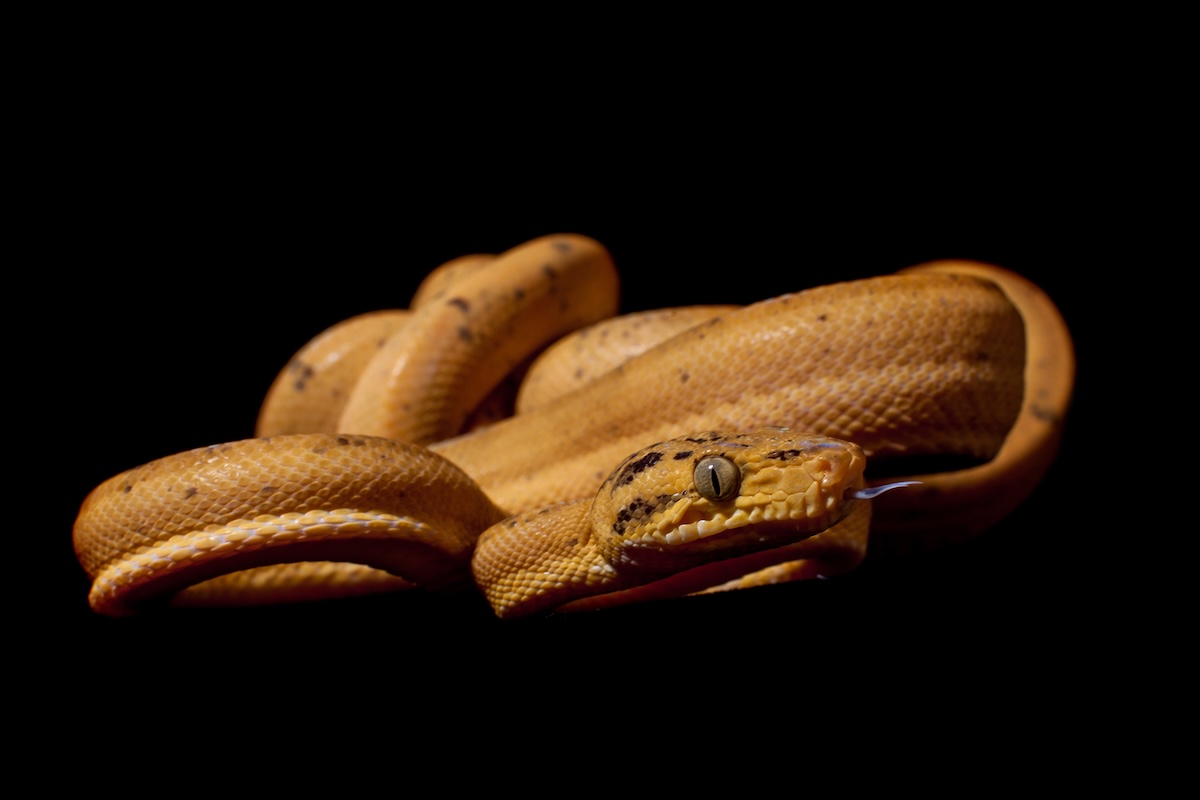 Photo Credit: Farinosa on Deposit Photos
In the heart of the Amazon rainforest, where the air is thick with humidity and the sounds of wildlife create a symphony of life, the Amazon Tree Boa, or Corallus hortulanus, elegantly weaves through the branches. This striking snake, with its vibrant green and yellow patterns, blends seamlessly into the lush foliage, making it a master of camouflage. Its slender body, which can reach lengths of up to 10 feet, coils gracefully around tree limbs, showcasing its remarkable ability to navigate the treetops. Scientists and nature enthusiasts alike are captivated by this snake, not just for its beauty, but also for its fascinating behaviors and vital role in the ecosystem.
As a nocturnal predator, the Amazon Tree Boa comes alive at night, using its keen senses to hunt small mammals, birds, and reptiles. Its unique method of constriction—wrapping around its prey to subdue it—demonstrates the snake’s incredible strength and adaptability. This species plays a crucial role in maintaining the balance of its environment, controlling populations of various animals and contributing to the rich tapestry of life in the rainforest. With its intriguing lifestyle and essential ecological functions, the Amazon Tree Boa continues to inspire curiosity and admiration, inviting us to explore the wonders of the natural world.
The Amazon Tree Boa, scientifically known as Corallus hortulanus, occupies a fascinating niche in the tree of life. This striking snake is part of the family Pythonidae, which is known for its non-venomous constrictors. What sets the Amazon Tree Boa apart is its vibrant coloration and remarkable ability to blend into the lush canopies of its rainforest habitat. With its prehensile tail, it can expertly navigate branches, showcasing adaptations that make it a master of arboreal living. This snake is not just another reptile; it embodies the intricate relationships and adaptations that define life in the Amazon rainforest.
| Taxonomic Rank | Scientific Name | Meaning & Significance |
|---|---|---|
| Kingdom | Animalia | This name signifies that the Amazon Tree Boa is part of the vast group of multicellular organisms that are primarily heterotrophic, meaning they consume other organisms for energy. |
| Phylum | Chordata | Chordata refers to animals that have a notochord, a flexible rod that supports the body. In snakes, this structure is replaced by a backbone, which allows for flexibility and movement. |
| Class | Reptilia | Reptilia indicates that the Amazon Tree Boa is a reptile, characterized by scaly skin and laying eggs or giving birth to live young, depending on the species. |
| Order | Squamata | Squamata is the order that includes lizards and snakes, known for their ability to shed their skin and their diverse adaptations to various environments. |
| Family | Pythonidae | This family includes pythons and boas, which are known for their constricting method of subduing prey, showcasing their evolutionary adaptations for hunting. |
| Genus | Corallus | The genus name Corallus is derived from the Latin word for “coral,” likely referencing the vibrant colors and patterns found on these snakes, reminiscent of coral reefs. |
| Species | hortulanus | This species name means “of the garden,” hinting at its habitat in lush, garden-like environments of the Amazon rainforest. |
Understanding the Amazon Tree Boa’s classification reveals much about its evolutionary journey. As a member of the Pythonidae family, it shares a lineage with other constrictors, highlighting the adaptations that have allowed these snakes to thrive in diverse environments. Its unique features, such as its striking coloration and arboreal lifestyle, are not just for show; they are the result of millions of years of evolution, fine-tuning its ability to survive and hunt in the complex ecosystem of the Amazon. This classification not only connects the Amazon Tree Boa to its relatives but also emphasizes the intricate web of life that exists within our planet’s rainforests.
The evolutionary journey of the Amazon Tree Boa, or Corallus hortulanus, stretches back millions of years, intertwining with the rich tapestry of life in the Amazon rainforest. This snake belongs to the family Pythonidae, which includes some of the largest and most powerful snakes on Earth. The Amazon Tree Boa’s ancestors slithered through ancient forests, adapting to their environments in ways that would shape their survival and success.
The story begins with the early ancestors of snakes, which emerged from lizard-like reptiles around 100 million years ago. These early serpents gradually lost their limbs, a transition that allowed them to navigate through dense vegetation more efficiently. As they evolved, they developed specialized features that helped them thrive in their arboreal, or tree-dwelling, habitats. Over time, the Amazon Tree Boa adapted to its environment, becoming an expert climber with a body designed for life among the branches.
The adaptations of the Amazon Tree Boa have been vital for its survival in the lush, competitive ecosystem of the Amazon rainforest. Its ability to camouflage itself helps it avoid detection by both predators and prey, while its prehensile tail and flexible jaw enhance its hunting prowess. The heat-sensing pits allow it to locate warm-blooded animals in the dark, making it a formidable predator. Together, these traits have enabled the Amazon Tree Boa to thrive in a world filled with challenges, showcasing the incredible power of evolution in shaping life on our planet.
The Amazon Tree Boa is a stunning sight to behold, with its slender, elongated body gracefully coiling among the branches of the rainforest. This snake can weigh between 1.1 to 3.3 pounds, making it light enough to navigate the treetops with ease. Its most distinctive features are its large, expressive eyes that seem to survey its surroundings with keen awareness. The combination of its sleek form and vibrant colors allows it to blend seamlessly into the lush foliage, making it a master of camouflage.
| Feature | Description |
|---|---|
| Size | Typically ranges from 5 to 8 feet in length |
| Color | Varies from green to brown, often with striking patterns |
| Skin Type | Covered in smooth, shiny scales |
| Eyes | Large and forward-facing, providing excellent vision |
| Body Shape | Slender and agile, perfect for climbing |
These features work together to create a highly effective predator in the dense Amazon rainforest. The Amazon Tree Boa’s slender body allows it to maneuver effortlessly among branches, while its vibrant colors help it blend into the dappled light of the canopy. The large eyes enhance its ability to spot prey, even in low light conditions. This combination of agility, stealth, and keen vision makes the Amazon Tree Boa a successful hunter, perfectly adapted to its arboreal lifestyle.
The Amazon Tree Boa thrives in the lush, vibrant world of the Amazon rainforest, a place where towering trees stretch high into the sky and a symphony of sounds fills the air. This snake is often found coiled among the branches, blending seamlessly with the dappled sunlight filtering through the leaves. The rainforest is a rich tapestry of life, with a dense canopy that provides both shelter and hunting grounds for this beautiful serpent.
The Amazon Tree Boa prefers a warm, humid environment, typical of tropical rainforests. These areas experience high rainfall, often exceeding 100 inches a year, and temperatures that hover around 75 to 90 degrees Fahrenheit. The humidity levels are crucial, as they help the boa maintain its skin health and hydration. This climate creates a perfect habitat for the diverse prey that the snake hunts, including small mammals and birds.
Adaptations have finely tuned the Amazon Tree Boa to its rainforest home. Its striking coloration, which can range from green to brown with beautiful patterns, allows it to camouflage among the leaves and branches, making it nearly invisible to both predators and prey. Additionally, its prehensile tail acts like a fifth limb, helping it navigate the complex network of branches with ease. These features not only enhance its survival but also make it a master of its arboreal domain.
The Amazon Tree Boa leads a life that is both intriguing and essential to its survival in the dense canopies of the rainforest. As a nocturnal creature, it comes alive at night, slithering through the branches in search of food. During the day, it often remains coiled around tree limbs, blending seamlessly with its surroundings. This camouflage helps it avoid predators and stay hidden from the eyes of curious animals. When night falls, the boa becomes active, using its keen senses to hunt for small mammals and birds, which make up its diet.
While the Amazon Tree Boa is primarily solitary, it does exhibit some interesting social behaviors, especially during mating season. Males may engage in a fascinating ritual of combat, where they entwine and push against each other to establish dominance. This behavior is not just about strength; it also showcases their agility and fitness. Outside of mating, these snakes prefer to keep to themselves, using their excellent camouflage to avoid encounters with others. Communication is subtle, often relying on body language and scent marking rather than vocalizations.
| Behavior Type | Description |
|---|---|
| Activity Patterns | Nocturnal hunters that are active at night, resting during the day to conserve energy. |
| Social Structure | Primarily solitary, with interactions mainly during mating season. |
| Communication Methods | Uses body language and scent marking to communicate, rather than vocal sounds. |
The behaviors of the Amazon Tree Boa are finely tuned to ensure its survival in a challenging environment. By being nocturnal, it avoids many daytime predators while taking advantage of the cover of darkness to hunt. Its solitary nature reduces competition for food and minimizes the risk of confrontation with other snakes. These adaptations, combined with its remarkable camouflage, make the Amazon Tree Boa a master of its arboreal domain, thriving in the vibrant ecosystem of the rainforest.
The Amazon Tree Boa has a diverse diet that primarily consists of small mammals, birds, and reptiles. This snake is an opportunistic feeder, meaning it will eat whatever is available and easy to catch. Its hunting strategy is particularly fascinating; it often relies on ambush tactics, waiting patiently for prey to come close before striking with precision. This method allows the boa to conserve energy while maximizing its chances of a successful meal.
| Dietary Aspect | Details |
|---|---|
| Diet Type | Carnivorous |
| Favorite Foods | Mice, rats, lizards, frogs, bats, and birds |
| Prey Items | Small mammals, birds, and reptiles |
| Hunting/Foraging Strategies | Ambush tactics, waiting for prey to approach |
The diet of the Amazon Tree Boa plays a crucial role in its ecological niche. By preying on various small animals, it helps control their populations, contributing to the balance of the rainforest ecosystem. Additionally, its nocturnal hunting habits shape its daily routine, as it becomes active at night when many of its prey are also on the move. This relationship between predator and prey is vital for maintaining the health of the vibrant Amazon rainforest.
When it comes to reproduction, the Amazon Tree Boa has some intriguing behaviors. Mating typically occurs during the rainy season, which is when the environment is most favorable for the survival of the young. Males will often engage in a courtship display, where they may wrap around each other and engage in a dance-like movement to attract females. This vibrant display is not just for show; it helps the female choose a mate based on strength and vitality.
| Reproductive Aspect | Details |
|---|---|
| Gestation Period | 4-5 months |
| Average Litter Size | 4-9 |
| Age of Maturity | 2-3 years |
| Name of Young | Neonates |
After the gestation period, the female gives birth to a litter of neonates, which are miniature versions of adult snakes. These young snakes are born fully formed and ready to start their lives in the treetops. Interestingly, Amazon Tree Boas do not provide parental care after birth. Instead, the neonates must fend for themselves right away, using their natural instincts to hunt and avoid predators. As they grow, they will shed their skin several times, a process that helps them develop into the striking adults they are destined to become. This journey from neonate to mature snake is a testament to the resilience and adaptability of life in the Amazon rainforest.
The Amazon Tree Boa plays a vital role in the food web of the rainforest, serving as both predator and prey. This beautiful snake helps control populations of small mammals, birds, and reptiles, ensuring a balanced ecosystem. However, it faces numerous dangers that threaten its survival in this lush habitat.
To defend itself against these threats, the Amazon Tree Boa has developed several clever survival strategies. Its ability to blend into the foliage with its vibrant colors helps it avoid detection by predators. When threatened, it may also adopt a defensive posture, coiling tightly and hissing to appear more intimidating. By using these tactics, the Amazon Tree Boa can navigate the challenges of its environment and continue to thrive in the heart of the rainforest.
A keystone species is an organism that has a disproportionately large impact on its environment relative to its abundance. In other words, if a keystone species were to disappear, the entire ecosystem could change dramatically. The Amazon Tree Boa, known scientifically as Corallus hortulanus, qualifies as a keystone species in its rainforest habitat. This snake plays a crucial role in maintaining the balance of its ecosystem, influencing the populations of various animals and plants around it.
The Amazon Tree Boa is an opportunistic predator, primarily feeding on small mammals, birds, and reptiles. By controlling these populations, it helps maintain a healthy balance in the ecosystem. For instance, if the snake’s population were to decline, the number of small mammals could surge, leading to overgrazing of vegetation. This overgrazing could, in turn, affect the entire plant community, altering the habitat for countless other species. Additionally, the Amazon Tree Boa serves as prey for larger predators, such as birds of prey and larger snakes, contributing to the food web’s complexity.
Moreover, the presence of the Amazon Tree Boa can influence the behavior of its prey. Small mammals and birds may alter their foraging habits or nesting sites to avoid predation, which can lead to changes in plant growth patterns. This dynamic interaction showcases how the Amazon Tree Boa not only affects the species it directly preys upon but also the broader ecosystem, including the plants that provide food and shelter for many animals.
If the Amazon Tree Boa were to vanish from the rainforest, the consequences could be severe. Without this snake to keep small mammal and bird populations in check, these animals could multiply unchecked, leading to significant changes in vegetation. Overgrazing could occur, resulting in habitat loss for many other species. The intricate balance of the rainforest ecosystem would be disrupted, demonstrating just how vital the Amazon Tree Boa is to its environment.
The Amazon Tree Boa, known scientifically as Corallus hortulanus, plays a vital role in its ecosystem, particularly within the lush confines of the Amazon rainforest. As a nocturnal predator, this snake occupies a unique ecological niche, where it helps maintain the balance of various animal populations. By preying on small mammals, birds, and reptiles, the Amazon Tree Boa contributes to the health of its environment, ensuring that no single species dominates the landscape. This balance is crucial for the overall biodiversity of the rainforest, which is home to countless other species.
| Ecosystem Service | Impact |
|---|---|
| Population Control | Regulates numbers of small mammals and birds, preventing overpopulation. |
| Food Source | Serves as prey for larger predators, supporting the food web. |
| Habitat Maintenance | Encourages plant growth by controlling herbivore populations. |
| Seed Dispersal | Indirectly aids in plant reproduction through its feeding habits. |
The influence of the Amazon Tree Boa extends beyond its immediate predatory role. For instance, by keeping the populations of small mammals in check, it allows for a diverse array of plant species to thrive, as fewer herbivores means less grazing pressure on young plants. Additionally, the snake’s presence in the canopy can help maintain the intricate balance of life in the rainforest, as it provides a food source for larger predators like hawks and jaguars. This interconnectedness highlights how the Amazon Tree Boa is not just a solitary hunter but a key player in a complex web of life.
The broader ecological importance of the Amazon Tree Boa cannot be overstated. As a keystone species, its presence is essential for the stability of the rainforest ecosystem. If this snake were to disappear, the ripple effects could lead to overpopulation of certain species, which in turn could disrupt plant life and alter the habitat for countless other organisms. By understanding the role of the Amazon Tree Boa, we gain insight into the delicate balance of nature and the importance of preserving such magnificent ecosystems for future generations.
In the intricate web of life within the Amazon rainforest, symbiosis plays a crucial role in shaping the relationships between species. Symbiosis refers to the close interactions between different organisms, which can be beneficial, harmful, or neutral. These relationships can take many forms, such as mutualism, where both species gain advantages, parasitism, where one benefits at the expense of the other, and commensalism, where one species benefits while the other is neither helped nor harmed. The Amazon Tree Boa, with its striking appearance and unique lifestyle, interacts with various species in ways that highlight the complexity of these ecological connections.
| Species/Type | Relationship Type | Description |
|---|---|---|
| Birds (e.g., tree-dwelling species) | Commensalism | Birds may nest in trees where the Amazon Tree Boa resides, benefiting from the snake’s presence as a deterrent to larger predators. |
| Small mammals (e.g., rodents) | Predation | The Amazon Tree Boa preys on small mammals, helping to control their populations and maintain balance in the ecosystem. |
| Parasites (e.g., ticks) | Parasitism | Ticks may attach to the Amazon Tree Boa, feeding on its blood, which can weaken the snake but does not usually lead to its death. |
The evolution of these relationships is a testament to the adaptability of species in the Amazon rainforest. Over time, the Amazon Tree Boa has developed strategies that not only enhance its survival but also influence the dynamics of its ecosystem. For instance, by preying on small mammals, it helps regulate their populations, which in turn affects the vegetation and other animals in the area. Meanwhile, the presence of the boa can provide safety for certain birds, creating a delicate balance where multiple species thrive. These interactions illustrate the interconnectedness of life in the rainforest, showcasing how each species, including the Amazon Tree Boa, plays a vital role in the health of its environment.
The Amazon Tree Boa is a captivating snake that thrives in the lush canopies of the Amazon rainforest. With its striking appearance and intriguing behaviors, this snake is full of surprises that will delight nature enthusiasts of all ages.
The Amazon Tree Boa, known scientifically as Corallus hortulanus, has long captivated the imaginations of people living in and around the Amazon rainforest. Historically, indigenous cultures have revered this snake, often weaving it into their myths and legends. The snake’s striking colors and graceful movements have made it a symbol of the rainforest’s beauty and mystery. In some communities, the Amazon Tree Boa is seen as a guardian of the forest, embodying the spirit of nature itself. These cultural connections highlight the deep-rooted relationship between the snake and humanity, showcasing how nature inspires stories and traditions.
In modern times, interactions between humans and the Amazon Tree Boa have evolved, reflecting both conservation efforts and challenges. As deforestation and habitat loss threaten the Amazon rainforest, conservationists are working to protect this species and its environment. However, conflicts can arise when humans encroach on the snake’s habitat, leading to misunderstandings and fear. Some people may view the Amazon Tree Boa as a threat, while others recognize its importance in maintaining the balance of the ecosystem. Additionally, the exotic pet trade has led to some individuals attempting to domesticate these snakes, which can be detrimental to their populations in the wild.
Looking ahead, the future of the relationship between humans and the Amazon Tree Boa will depend on our ability to balance conservation with development. As awareness grows about the importance of preserving the Amazon rainforest, there is hope that more people will appreciate the beauty and ecological significance of this snake. By fostering a sense of stewardship and respect for the natural world, we can ensure that the Amazon Tree Boa continues to thrive alongside humanity, enriching our lives with its presence and reminding us of the wonders of the wild.
The Amazon Tree Boa, or Corallus hortulanus, currently holds a conservation status of “Least Concern” according to the International Union for Conservation of Nature (IUCN). This means that, at present, the species is not facing an immediate threat of extinction. Population estimates are difficult to determine precisely due to the snake’s elusive nature and the vastness of its habitat. However, the overall trend appears stable, suggesting that these beautiful snakes continue to thrive in their lush rainforest homes.
| Conservation Factor | Status/Details |
|---|---|
| IUCN Status | Least Concern |
| Population Estimates | Not precisely determined |
| Trend Direction | Stable |
Despite its current stable status, the Amazon Tree Boa faces several threats that could impact its future. Habitat loss is a significant concern, primarily due to deforestation for agriculture and logging. As trees are cut down, the snake’s home shrinks, making it harder for them to find food and shelter. Additionally, illegal pet trade poses a risk, as some people capture these snakes for the exotic pet market, further reducing their numbers in the wild.
Conservation efforts are underway to protect the Amazon Tree Boa and its habitat. Organizations are working to promote sustainable land use practices that balance human needs with wildlife conservation. Education programs aim to raise awareness about the importance of preserving the Amazon rainforest, not just for the snakes but for the entire ecosystem. With continued efforts, the outlook for the Amazon Tree Boa remains hopeful, as it plays a crucial role in maintaining the health of its vibrant rainforest home.
| Question | Answer |
|---|---|
| What is the habitat of the Amazon Tree Boa? | The Amazon Tree Boa primarily lives in the lush rainforests of South America, particularly in the Amazon Basin. It prefers areas with plenty of trees, where it can easily climb and find shelter among the branches. |
| What does the Amazon Tree Boa eat? | This snake is a carnivore, meaning it eats other animals. Its diet mainly consists of small mammals, birds, and sometimes even lizards, which it captures using its keen sense of smell and excellent climbing skills. |
| How does the Amazon Tree Boa behave? | The Amazon Tree Boa is mostly nocturnal, which means it is active at night. During the day, it often rests coiled around branches, blending in with its surroundings to avoid predators and surprise its prey. |
| How does the Amazon Tree Boa reproduce? | Amazon Tree Boas are ovoviviparous, which means they give birth to live young rather than laying eggs. After a gestation period of about six to seven months, a female can give birth to anywhere from 10 to 30 baby snakes. |
| What threats do Amazon Tree Boas face? | While the Amazon Tree Boa is currently listed as Least Concern, it still faces threats from habitat destruction due to logging and agriculture. Additionally, they can be hunted for the pet trade, which can impact local populations. |
| What are some interesting characteristics of the Amazon Tree Boa? | One of the most distinctive features of the Amazon Tree Boa is its large eyes, which help it see well in low light. Its slender body allows it to navigate through trees with ease, and its coloration can vary, providing excellent camouflage among leaves and branches. |
| How does the Amazon Tree Boa hunt? | The Amazon Tree Boa uses a technique called ambush hunting. It remains still and waits for unsuspecting prey to come close, then strikes quickly with its sharp teeth to capture and constrict its meal. |