Taxonomy & Classification
- Kingdom
- Animalia
- Phylum
- Chordata
- Class
- Actinopterygii
- Order
- Labriformes
- Family
- Labridae
- Genus
- Lachnolaimus
- Species
- Lachnolaimus maximus

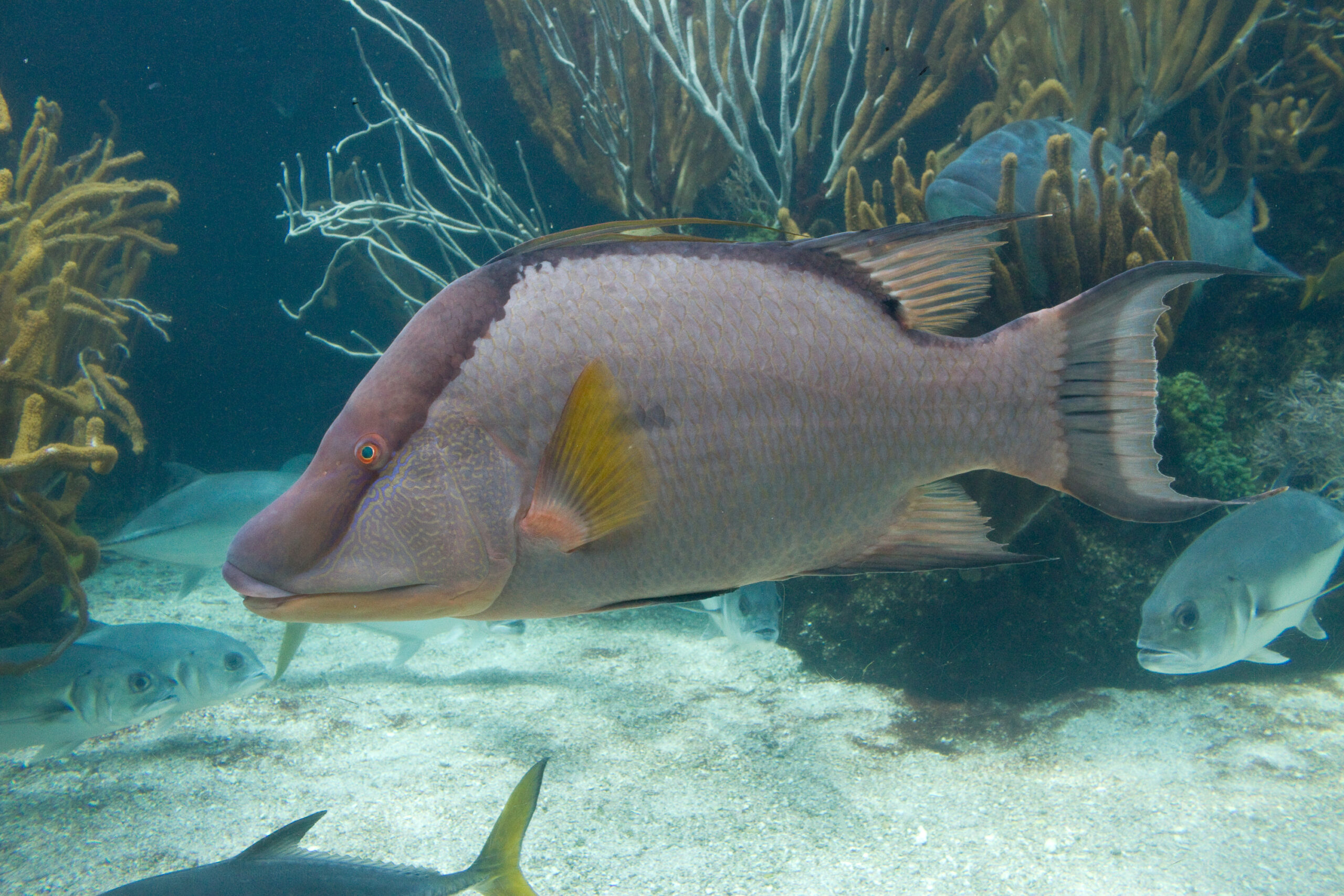 Photo Credit: Bloopityboop / Wikimedia Commons
In the sun-drenched waters of the Caribbean, the hogfish, scientifically known as Lachnolaimus maximus, glides gracefully through vibrant coral reefs. With its elongated body and striking hues of pink and green, this fish is a true marvel of the underwater world. As it navigates the swaying seagrass and rocky outcrops, the hogfish showcases its most distinctive feature: a specialized snout that allows it to root around in the sand for tasty morsels like crustaceans and mollusks. This unique feeding behavior not only makes it a fascinating subject for scientists but also a delight for snorkelers and divers who are lucky enough to encounter it.
The hogfish is more than just a pretty face; it plays a vital role in its ecosystem. As a benthic feeder, it helps maintain the balance of marine life by controlling the populations of smaller creatures. Its vibrant colors and lively antics capture the attention of nature enthusiasts, while its importance in the food web highlights the interconnectedness of ocean life. Whether it’s during the bustling mating season when males flaunt their brightest colors or while foraging along the ocean floor, the hogfish embodies the beauty and complexity of marine ecosystems, inviting us all to explore and appreciate the wonders beneath the waves.
The hogfish, a captivating member of the animal kingdom, occupies a special place in the tree of life. Scientifically classified under the genus Lachnolaimus, this fish is part of the family Labridae, which includes wrasses, known for their vibrant colors and diverse behaviors. What sets the hogfish apart is its unique ability to change color and its distinctive elongated snout, which it uses to forage for food in the sandy ocean floor. This adaptability not only helps it survive in various marine environments but also showcases the incredible diversity of life forms that have evolved over millions of years.
| Taxonomic Rank | Scientific Name | Meaning & Significance |
|---|---|---|
| Kingdom | Animalia | This name signifies that hogfish belong to the broad group of multicellular organisms that are heterotrophic, meaning they consume organic material for energy. |
| Phylum | Chordata | Chordata refers to animals that have a notochord, a flexible rod that supports the body. In hogfish, this structure is present during their early development. |
| Class | Actinopterygii | This class includes ray-finned fishes, characterized by their bony skeletons and fins supported by rays, which allow for agile swimming. |
| Order | Labriformes | The name Labriformes comes from the Latin word “labra,” meaning lips. This highlights the hogfish’s prominent, fleshy lips that aid in its feeding habits. |
| Family | Labridae | The Labridae family is known for its colorful and diverse species, with “labrus” meaning “lip” in Latin, again pointing to the importance of their lips in feeding and social interactions. |
| Genus | Lachnolaimus | This genus name is derived from Greek, where “lachnos” means “wool” and “laimos” means “throat,” possibly referring to the texture of the fish’s throat area. |
Understanding the hogfish’s classification reveals much about its evolutionary journey. As a member of the Labridae family, it shares a common ancestry with other wrasses, showcasing adaptations that have allowed it to thrive in diverse marine habitats. The hogfish’s unique features, such as its specialized feeding techniques and color-changing abilities, reflect the evolutionary pressures it has faced in its environment. This fascinating lineage not only highlights the hogfish’s role in the ecosystem but also emphasizes the intricate connections among all living organisms in the vast tapestry of life.
The evolutionary journey of the hogfish stretches back millions of years, tracing its lineage through the vibrant waters of the world’s oceans. This fish, belonging to the Labridae family, has adapted and thrived in various marine environments, showcasing a remarkable ability to evolve in response to changing conditions. As we dive into its history, we uncover a tale of survival, adaptation, and the intricate dance of life beneath the waves.
The ancestors of the hogfish likely swam the seas during the late Cretaceous period, around 100 million years ago. These early fish were part of a diverse group that began to develop specialized traits for life on the reef. Over time, the hogfish evolved from more generalized forms into a species that could exploit specific niches in its environment. One major transition was the development of a more elongated body shape, which allowed for greater maneuverability among the complex structures of coral reefs. This adaptation was crucial for hunting and evading predators.
These adaptations have been vital for the hogfish’s survival in a dynamic marine ecosystem. By blending into their environment, they avoid becoming a meal for larger fish, while their specialized teeth allow them to thrive on a diet that many other fish cannot access. Their social behaviors not only enhance their hunting success but also create a community that can better defend against dangers. Through these evolutionary changes, the hogfish has carved out a successful niche, demonstrating the power of adaptation in the natural world.
The hogfish is a striking marine inhabitant that captures attention with its elongated body and vibrant colors. Its streamlined shape allows it to glide gracefully through the water, while its slightly flattened head gives it a distinctive profile. With a mouth that protrudes slightly, the hogfish is well-equipped for foraging among the rocky reefs and sandy bottoms where it resides. This fish can grow to impressive lengths, often reaching up to 30 inches, making it a notable presence in its underwater habitat.
| Feature | Description |
|---|---|
| Size | Can grow up to 30 inches long |
| Color | Typically features a pinkish or reddish hue with a white underside |
| Skin Type | Has smooth, scaleless skin that helps reduce drag in the water |
| Head Shape | Characterized by a slightly flattened head, aiding in foraging |
| Mouth Structure | Protruding mouth designed for picking at prey |
The combination of these features not only makes the hogfish visually stunning but also perfectly suited for its environment. Its vibrant colors help it blend into the coral reefs, providing camouflage from predators. The streamlined body and smooth skin allow for swift movements, essential for escaping threats and catching prey. The hogfish’s specialized mouth is ideal for its diet, which includes crustaceans and small invertebrates. Together, these adaptations create a harmonious balance that enhances the hogfish’s survival in the dynamic underwater world.
The hogfish thrives in the warm, shallow waters of the Caribbean and the southeastern United States. Picture a vibrant underwater world filled with colorful corals, swaying seagrass, and rocky reefs. These habitats provide the perfect backdrop for the hogfish, where it can hunt for food and find shelter. The clear blue waters are not just beautiful; they are also rich in life, making them an ideal home for this fascinating fish.
Hogfish prefer warm waters, typically ranging from 70 to 80 degrees Fahrenheit. They are often found in areas with plenty of sunlight, which helps support the growth of seagrass and coral reefs. These environments are not only visually stunning but also provide essential nutrients and shelter. The hogfish enjoys a sandy or rocky substrate, where it can easily forage for crustaceans and other small marine creatures.
To thrive in these specific habitats, the hogfish has developed several adaptations. Its ability to blend in with the sandy ocean floor helps it avoid predators while hunting for food. The hogfish also has a specialized feeding mechanism, using its snout to root around in the sand for tasty morsels. This clever adaptation allows it to take advantage of the rich biodiversity found in its home, ensuring it can find enough to eat while staying safe from larger fish.
The hogfish leads a lively daily life in the warm, shallow waters of the Caribbean and southeastern United States. As the sun rises, these fish begin their day by foraging for food among the coral reefs and seagrass beds. They are known to hunt for crustaceans, mollusks, and small fish, using their keen eyesight and agile movements to spot their next meal. Throughout the day, hogfish engage in a variety of activities, including swimming, resting, and socializing with their peers. Their routine is a blend of exploration and interaction, making each day a new adventure in their vibrant underwater world.
Social behavior is a key aspect of hogfish life. These fish often form groups, which can provide safety in numbers against predators. Within these groups, hogfish display a fascinating social structure, where individuals may take on different roles. They communicate through body language and subtle color changes, signaling their mood or intentions to one another. This social dynamic not only helps them find food more efficiently but also strengthens their bonds, creating a sense of community in the bustling reef environment.
| Behavior Type | Description |
|---|---|
| Foraging | Hogfish search for food like crustaceans and mollusks, using their sharp eyesight to locate prey. |
| Group Formation | They often swim in groups, which helps protect them from predators and increases foraging success. |
| Communication | Hogfish use body language and color changes to convey messages to each other, indicating mood or intentions. |
| Resting | During the day, they take breaks in sheltered areas, allowing them to conserve energy for foraging. |
The behaviors of hogfish are not just fascinating; they are essential for survival. By foraging in groups, they increase their chances of finding food while reducing the risk of becoming a meal themselves. Their ability to communicate effectively ensures that they can coordinate their activities and respond to threats quickly. In the vibrant underwater world they inhabit, these social interactions and daily routines play a crucial role in their overall health and longevity, allowing them to thrive in their colorful marine environment.
The hogfish has a diverse diet that primarily consists of crustaceans, mollusks, and small fish. This fish is known for its unique feeding behavior, which involves using its specialized snout to root around in the sand and among rocks. With its keen eyesight and agile movements, the hogfish can spot its prey hiding in crevices or buried in the substrate. This foraging technique not only helps it find food but also showcases its adaptability in various marine environments.
| Dietary Aspect | Details |
|---|---|
| Diet Type | Carnivorous |
| Favorite Foods | Crustaceans, mollusks, and small fish |
| Prey Items | Crabs, shrimp, clams, and small fish |
| Hunting/Foraging Strategies | Rooting in sand and rocks, using keen eyesight to spot prey |
This varied diet plays a crucial role in the hogfish’s ecology and daily routine. By feeding on a range of prey, the hogfish helps maintain the balance of its ecosystem, controlling the populations of smaller marine animals. Its foraging habits also influence the health of the seafloor, as it stirs up sediment while searching for food. This interaction with its environment not only supports the hogfish’s survival but also contributes to the overall vibrancy of the underwater world it inhabits.
Hogfish have a fascinating mating ritual that takes place during the warmer months, typically from late spring to early summer. During this breeding season, males become particularly vibrant, showcasing their bright colors to attract females. They engage in elaborate courtship displays, which can include swimming in circles and performing quick movements to impress potential mates. Once a female is attracted, the pair will swim together to a suitable spawning site, often near coral reefs, where they release their eggs and sperm into the water simultaneously.
| Reproductive Aspect | Details |
|---|---|
| Gestation Period | Hogfish do not have a gestation period as they are oviparous, meaning they lay eggs. |
| Litter Size | Hogfish can release thousands of eggs in a single spawning event. |
| Age of Maturity | Hogfish typically reach sexual maturity at around 2 to 3 years of age. |
| Name of Young | Juveniles or Fry |
After the eggs are fertilized, they float in the water until they hatch into tiny fry, or juveniles. These young hogfish are incredibly vulnerable at this stage, relying on the protection of their environment to survive. As they grow, they begin to develop the distinctive features of adult hogfish, including their unique coloration and body shape. While hogfish do not provide parental care after spawning, the abundance of seagrass and coral reefs offers a rich habitat for the fry to find food and shelter. Over time, these young fish will mature into adults, continuing the cycle of life in the vibrant underwater world they call home.
The hogfish plays a vital role in its underwater ecosystem, sitting comfortably in the middle of the food web. As a predator, it helps control the populations of smaller marine creatures, while also serving as a meal for larger fish and other marine animals. This balance is crucial for maintaining the health of coral reefs and seagrass beds, where hogfish often reside.
To survive these threats, hogfish have developed some clever defensive strategies. They often seek refuge in rocky crevices and coral formations, where their colors can help them blend in with the surroundings. This camouflage makes it harder for predators to spot them. Additionally, hogfish are known to be quite agile swimmers, allowing them to dart away quickly when danger approaches. By using these tactics, they can navigate the challenges of their underwater world and continue to thrive.
A keystone species is an organism that has a disproportionately large impact on its environment relative to its abundance. In other words, these species play a crucial role in maintaining the structure of an ecosystem. The hogfish, with its unique feeding habits and social behavior, qualifies as a keystone species in its habitat. By influencing the populations of other marine life, the hogfish helps to shape the underwater community in significant ways.
Hogfish are known for their specialized feeding technique, which involves rooting around in the sand and seagrass beds to uncover hidden prey like crustaceans and mollusks. This behavior not only provides the hogfish with food but also helps to aerate the substrate, promoting healthier growth of seagrass. Healthy seagrass beds are vital for many marine species, providing shelter and nursery grounds for young fish. Additionally, by controlling the populations of smaller invertebrates, hogfish help maintain a balanced ecosystem, preventing any one species from overwhelming the environment.
Moreover, hogfish often form groups, which can enhance their foraging efficiency and provide safety in numbers from predators. This social behavior can influence the dynamics of the entire reef community. When hogfish are present, they can help regulate the populations of other fish species that share their habitat, ensuring that the ecosystem remains diverse and resilient. Their interactions with both prey and predators create a ripple effect that supports the overall health of the marine environment.
If hogfish were to disappear from their ecosystems, the consequences could be severe. Without these fish to control the populations of smaller invertebrates, certain species could explode in numbers, leading to overgrazing of seagrass beds. This would not only harm the seagrass but also the myriad of marine life that depends on these habitats for survival. The loss of hogfish would disrupt the delicate balance of the reef community, potentially leading to a decline in biodiversity and the overall health of the marine ecosystem. In essence, the hogfish is a vital player in the underwater world, and its absence would be felt far and wide.
The hogfish is an essential player in its marine ecosystem, particularly in the vibrant waters of the Caribbean and southeastern United States. As a benthic feeder, it forages along the ocean floor, where it plays a crucial role in maintaining the health of coral reefs and seagrass beds. By rooting around in the substrate, the hogfish helps to aerate the sand and sediment, promoting a healthy environment for other marine life. This behavior not only supports the growth of seagrasses but also contributes to the overall biodiversity of the area.
| Ecosystem Service | Impact |
|---|---|
| Foraging | Aerates the ocean floor, promoting healthy sediment and plant growth. |
| Predation | Controls populations of smaller fish and invertebrates, maintaining balance in the food web. |
| Habitat Structure | Creates spaces for other species by influencing the distribution of marine plants. |
| Food Source | Serves as prey for larger predators, supporting the broader marine food web. |
The hogfish’s foraging habits have a ripple effect throughout its habitat. For instance, by feeding on crustaceans and mollusks, it helps regulate their populations, preventing overgrazing of seagrass and coral. This balance is vital, as seagrass beds provide shelter and breeding grounds for many marine species. Additionally, the hogfish’s presence attracts larger predators, such as groupers and sharks, which rely on it as a food source. This interconnectedness highlights how the hogfish contributes to the stability and health of its ecosystem.
In the grand tapestry of marine life, the hogfish stands out as a keystone species, meaning its role is crucial for the overall health of its environment. By influencing the populations of other marine organisms and supporting the growth of vital habitats, the hogfish helps maintain the delicate balance of its ecosystem. Protecting this species and its habitat is essential, as it ensures the survival of countless other marine creatures, making the underwater world a thriving and diverse place for all.
In the intricate web of marine life, symbiosis plays a vital role in shaping ecosystems. Symbiosis refers to the close and often long-term interactions between different species. These relationships can be mutualistic, where both species benefit; parasitic, where one benefits at the expense of the other; or commensal, where one benefits while the other is neither helped nor harmed. The hogfish, a colorful inhabitant of the Caribbean and southeastern United States, engages in various partnerships with other marine species, showcasing the beauty and complexity of these ecological connections.
| Species/Type | Relationship Type | Description |
|---|---|---|
| Cleaner Shrimp | Mutualistic | The hogfish visits cleaner shrimp, which remove parasites and dead skin from its body. In return, the shrimp get a meal and a safe place to live. |
| Coral Reefs | Commensal | Hogfish often inhabit coral reefs, benefiting from the shelter and food provided by the corals without harming them. |
| Sea Urchins | Parasitic | While not a direct relationship, hogfish may feed on sea urchins, which can lead to a decline in their populations, affecting the balance of the ecosystem. |
These relationships have evolved over time, shaped by the needs and behaviors of the species involved. The mutualistic bond between hogfish and cleaner shrimp is a perfect example of how cooperation can enhance survival. By keeping each other healthy, both species thrive in their vibrant underwater world. Meanwhile, the hogfish’s interactions with coral reefs highlight the importance of habitat in supporting diverse marine life. Understanding these connections helps us appreciate the delicate balance of ecosystems and the roles each species plays in maintaining it.
The hogfish is a captivating marine inhabitant that not only enchants divers with its vibrant colors but also boasts some surprising traits that make it truly special. Here are a few intriguing facts about this remarkable fish that will surely pique the interest of nature enthusiasts.
The hogfish has a rich history intertwined with human culture, particularly in coastal communities of the Caribbean and southeastern United States. For centuries, fishermen have sought this colorful fish for its delicious taste and vibrant appearance. In many cultures, the hogfish symbolizes the bounty of the sea, often featured in local folklore and culinary traditions. Its striking colors and unique feeding habits have also made it a favorite among divers and marine enthusiasts, who admire its beauty and behavior in their natural habitat.
Today, the relationship between hogfish and humanity is evolving, marked by both conservation efforts and challenges. As overfishing and habitat destruction threaten their populations, many organizations are working to protect these fish and their ecosystems. Regulations on fishing practices and the establishment of marine protected areas are crucial steps in ensuring the hogfish can thrive. However, conflicts can arise when fishing communities face restrictions that impact their livelihoods. Additionally, some aquarists are exploring the possibility of domestication, aiming to keep hogfish in home aquariums, which raises questions about their care and well-being in captivity.
As we look to the future, the relationship between hogfish and humanity holds both promise and responsibility. With increased awareness of marine conservation, there is hope that we can protect these vibrant fish and their habitats for generations to come. By balancing our needs with the health of ocean ecosystems, we can ensure that hogfish continue to thrive in the wild while also enriching our lives through sustainable practices. The journey ahead will require cooperation and respect for the delicate balance of nature, reminding us that every creature, including the hogfish, plays a vital role in our shared world.
The conservation status of the hogfish is currently classified as “Least Concern” by the International Union for Conservation of Nature (IUCN). This means that, at present, the species is not facing an immediate threat of extinction. However, population trends indicate that while hogfish are generally stable, localized declines have been observed in certain areas due to various environmental pressures. Understanding these trends is crucial for ensuring the long-term survival of this vibrant fish.
| Conservation Factor | Status/Details |
|---|---|
| IUCN Status | Least Concern |
| Population Estimates | Stable in many regions, but localized declines noted |
| Trend Direction | Generally stable, with some areas experiencing declines |
The main threats to hogfish populations stem from overfishing and habitat degradation. As popular targets for both commercial and recreational fishing, hogfish can be heavily harvested, particularly in areas where fishing regulations are not strictly enforced. Additionally, the destruction of coral reefs and seagrass beds—critical habitats for hogfish—due to pollution, climate change, and coastal development poses significant risks to their survival. These factors can disrupt their breeding and feeding grounds, leading to declines in local populations.
Conservation efforts are underway to protect hogfish and their habitats. Many regions have implemented fishing regulations, such as size limits and seasonal closures, to help maintain healthy populations. Marine protected areas (MPAs) are also being established to safeguard critical habitats from destructive activities. The outlook for hogfish remains cautiously optimistic, as ongoing research and conservation initiatives aim to ensure that this colorful fish continues to thrive in its natural environment. By raising awareness and promoting sustainable practices, we can help secure a bright future for the hogfish and the vibrant ecosystems it inhabits.
| Question | Answer |
|---|---|
| What is the habitat of Hogfish? | Hogfish are typically found in warm, shallow waters of the western Atlantic Ocean. They prefer rocky reefs and seagrass beds, where they can easily find food and shelter from predators. |
| What do Hogfish eat? | Hogfish are carnivorous, meaning they primarily eat meat. Their diet mainly consists of crustaceans, like crabs and shrimp, as well as mollusks, which are soft-bodied animals like clams and snails. |
| How do Hogfish behave? | Hogfish are known for their curious and social nature. They often swim in small groups and can be seen foraging for food on the ocean floor, using their snouts to dig into the sand and rocks. |
| How do Hogfish reproduce? | Hogfish reproduce through a process called spawning, where males and females release their eggs and sperm into the water at the same time. This usually happens during the warmer months, and the fertilized eggs float to the surface, where they hatch into larvae. |
| What are the threats to Hogfish? | Hogfish face several threats, including overfishing and habitat destruction. As their natural habitats, like coral reefs, are damaged, it becomes harder for them to find food and shelter. |
| What are some interesting characteristics of Hogfish? | Hogfish have a unique appearance, with a long, slender body and a distinctive snout that resembles a pig's nose. They can change color based on their environment and mood, which helps them communicate with other fish. |
| How long do Hogfish live? | Hogfish can live for about 10 to 15 years in the wild. Their lifespan can be influenced by factors like food availability and environmental conditions. |