Taxonomy & Classification
- Kingdom
- Animalia
- Phylum
- Chordata
- Class
- Mammalia
- Order
- Carnivora
- Family
- Phocidae
- Genus
- Cystophora
- Species
- Cystophora cristata

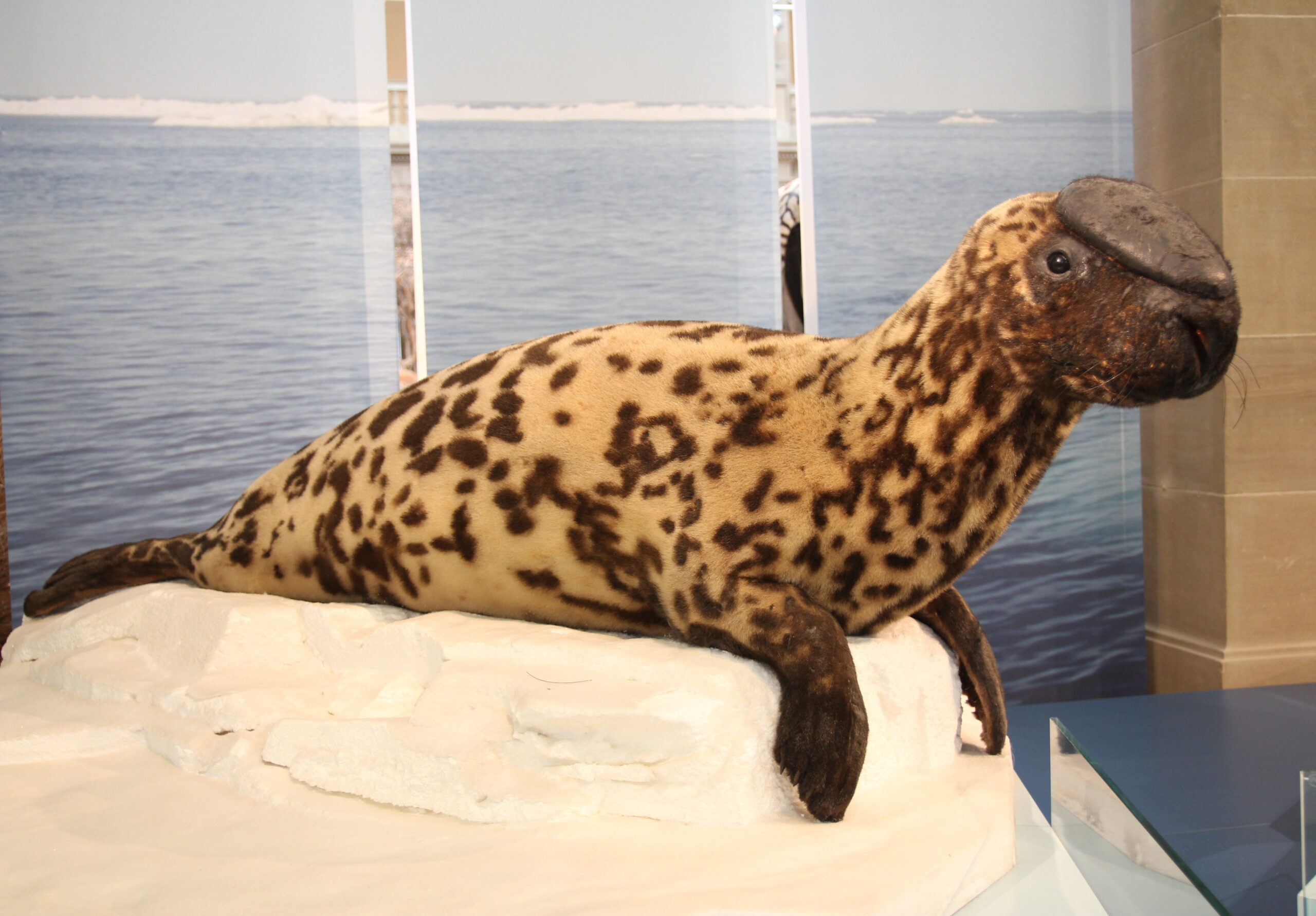 Photo Credit: Ellicrum / Wikimedia Commons
In the icy waters of the North Atlantic and Arctic Oceans, the Hooded Seal, or Cystophora cristata, glides gracefully beneath the surface, a master of its frigid domain. With its robust, streamlined body and distinctive features, this marine mammal captures the imagination of scientists and nature lovers alike. Males are particularly striking, showcasing a unique inflatable hood that can expand dramatically during mating displays, making them look like they are wearing a colorful balloon. This fascinating adaptation not only helps attract mates but also serves as a visual spectacle that highlights the wonders of evolution.
As the sun glimmers on the ice floes, the Hooded Seal can be seen lounging on the frozen surfaces, basking in the cold air. These seals are not just beautiful; they play a vital role in their ecosystem, helping to maintain the balance of marine life. Their diet is diverse, consisting of fish and squid, which they hunt with remarkable agility. The Hooded Seal’s life is a blend of solitary exploration and occasional social interactions, making it a captivating subject for researchers studying marine behavior. Join us as we dive deeper into the world of Cystophora cristata, exploring its habitat, behaviors, and the challenges it faces in a changing environment.
The Hooded Seal, known scientifically as Cystophora cristata, occupies a special place in the animal kingdom. This marine mammal is part of the Phocidae family, which includes true seals. What sets the Hooded Seal apart is its striking physical feature: the males possess a large, inflatable nasal sac that can be extended to form a distinctive hood. This unique adaptation not only serves as a visual display during mating rituals but also helps in producing deep, resonant sounds. The Hooded Seal’s ability to thrive in icy waters and its fascinating social behaviors make it a captivating subject of study in marine biology.
| Taxonomic Rank | Scientific Name | Meaning & Significance |
|---|---|---|
| Kingdom | Animalia | This name signifies that Hooded Seals are part of the vast group of multicellular organisms that are primarily heterotrophic, meaning they consume other organisms for energy. |
| Phylum | Chordata | Chordata refers to animals that have a notochord, a flexible rod that supports the body. In Hooded Seals, this structure is present during their early development. |
| Class | Mammalia | Mammalia indicates that these seals are warm-blooded, have fur, and nurse their young with milk, showcasing their close relationship to other mammals. |
| Order | Carnivora | Carnivora is the order that includes meat-eating mammals. Hooded Seals primarily feed on fish and squid, highlighting their role as predators in the marine ecosystem. |
| Family | Phocidae | Phocidae, or true seals, are characterized by their lack of external ear flaps and their ability to swim efficiently using their limbs. This family includes many species adapted to life in the water. |
| Genus | Cystophora | The genus name Cystophora comes from the Greek words “cystis,” meaning bladder, and “phoros,” meaning bearer. This refers to the male’s distinctive nasal sac, which resembles a bladder when inflated. |
| Species | cristata | The species name cristata means “crested” in Latin, referring to the hood that males display during mating season, making them easily recognizable. |
Understanding the Hooded Seal’s classification reveals much about its evolutionary journey. As a member of the Carnivora order, it shares a lineage with other carnivorous mammals, showcasing adaptations that have allowed it to thrive in a marine environment. The unique features of the Hooded Seal, such as its inflatable nasal sac, not only serve specific functions in its life but also highlight the diverse evolutionary paths taken by different species within the animal kingdom. This classification helps scientists trace the evolutionary history of seals and their relatives, providing insights into how these animals have adapted to their habitats over millions of years.
The evolutionary journey of the Hooded Seal stretches back millions of years, tracing its lineage through the icy waters of the North Atlantic. This marine mammal, scientifically known as Cystophora cristata, belongs to the Phocidae family, which includes true seals. The story of the Hooded Seal is one of adaptation and survival, shaped by the challenges of its environment and the changing climate over time.
The ancestors of modern seals emerged around 20 to 30 million years ago, during a period known as the Miocene epoch. These early pinnipeds, or fin-footed mammals, were likely land-dwelling creatures that gradually adapted to life in the water. Over time, they developed streamlined bodies and flippers, allowing them to swim efficiently. The Hooded Seal’s lineage diverged from other seals about 5 million years ago, evolving distinct features that would help it thrive in its cold, northern habitat.
The adaptations of the Hooded Seal have been essential for its survival in a challenging environment. The thick blubber not only insulates against the cold but also serves as an energy reserve during lean times. The inflatable nasal sac and strong swimming abilities enhance their chances of successful mating and hunting. Camouflage allows them to evade predators, while their breeding behavior ensures the safety of their young. Together, these traits illustrate the remarkable ways in which the Hooded Seal has evolved to thrive in the harsh conditions of the North Atlantic.
The Hooded Seal is an impressive sight, especially when you catch a glimpse of the male in full display. These seals have a robust, streamlined body that allows them to glide effortlessly through icy waters. Males can weigh between 352 to 661 pounds, making them significantly heftier than their female counterparts. Their skin is covered in a thick layer of fur, which not only keeps them warm in frigid temperatures but also adds to their striking appearance.
| Feature | Description |
|---|---|
| Size | Males weigh between 352 to 661 pounds, while females are smaller. |
| Color | Typically grayish with darker spots, giving them a camouflaged look against rocky shores. |
| Skin Type | Fur, which provides insulation against cold water. |
| Distinctive Feature | The male’s inflatable “hood” and red nose balloon, which they use during mating displays. |
These physical traits work together to enhance the Hooded Seal’s survival in its harsh environment. The thick fur not only insulates but also helps them blend into their surroundings, making it harder for predators to spot them. The impressive size of the males, combined with their unique hood, plays a crucial role during mating season, allowing them to attract females and assert dominance. In the icy waters of the North Atlantic, every feature of the Hooded Seal is a testament to its adaptation and resilience.
The Hooded Seal thrives in the chilly embrace of the Northern Atlantic and Arctic Oceans, where the waters are often frigid and the landscape is dotted with ice. Picture vast stretches of icy sea, punctuated by floating icebergs and rugged coastlines. These seals are often found lounging on the ice, basking in the sun, or diving into the deep blue to hunt for fish and squid. Their habitat is a stunning blend of stark beauty and harsh conditions, making it a perfect home for these resilient marine mammals.
The climate in these regions is characterized by long, cold winters and short, cool summers. Hooded Seals prefer areas with sea ice, which provides them with a platform for resting and breeding. The ice also serves as a crucial hunting ground, where they can catch their favorite meals. These seals are well-adapted to the cold, with a thick layer of blubber that keeps them warm in icy waters. The environment is challenging, but it is precisely this ruggedness that shapes their lifestyle and survival strategies.
To thrive in such extreme habitats, Hooded Seals have developed several fascinating adaptations. Their streamlined bodies allow them to swim swiftly through icy waters, while their large flippers help them navigate the challenging terrain of ice floes. During the breeding season, males display their distinctive inflatable nasal sacs, which they use to attract females and establish dominance. This unique behavior not only aids in reproduction but also showcases their ability to adapt to the social dynamics of their icy homes. In every way, the Hooded Seal is a testament to the wonders of evolution and the resilience of life in the cold.
The daily life of a Hooded Seal is a blend of solitary exploration and occasional social interactions. These seals are primarily found in the icy waters of the North Atlantic and Arctic Oceans, where they spend much of their time swimming and foraging for food. Their diet mainly consists of fish and squid, which they hunt with impressive agility. During the day, Hooded Seals can often be seen lounging on ice floes, basking in the sun, or resting on the shore. They are known to dive deep into the ocean, sometimes reaching depths of over 600 meters (about 2,000 feet) in search of their next meal.
While Hooded Seals are generally solitary animals, they do come together during breeding season. Males are particularly known for their dramatic displays, which include inflating a large, colorful sac on their heads to attract females. This behavior not only showcases their health and vitality but also plays a crucial role in establishing dominance among competing males. When they are not breeding, these seals prefer to keep to themselves, often found alone or in small groups. Their communication is subtle, consisting of soft vocalizations and body language, which helps them maintain their space while still being aware of their surroundings.
| Behavior Type | Description |
|---|---|
| Activity Patterns | Hooded Seals spend their days swimming, foraging for fish and squid, and resting on ice floes or shores. |
| Social Structure | Primarily solitary, they come together during breeding season, with males displaying to attract females. |
| Communication Methods | They use soft vocalizations and body language to communicate, especially during mating displays. |
The behaviors of Hooded Seals are finely tuned to ensure their survival in a challenging environment. Their solitary nature allows them to avoid competition for food, while their impressive hunting skills enable them to thrive in icy waters. During breeding season, their social displays help secure mates and ensure the continuation of their species. By balancing solitude with social interaction, Hooded Seals navigate their world with both grace and strategy, making the most of their unique habitat.
The Hooded Seal has a diverse diet that reflects its adaptability in the chilly waters of the North Atlantic and Arctic Oceans. As an omnivore, it enjoys a variety of foods, primarily focusing on marine fish, shrimp, and other crustaceans. This seal is also known to hunt octopus and squid, showcasing its skillful foraging techniques. With its keen eyesight and sensitive whiskers, the Hooded Seal can detect prey even in dark, murky waters, making it a proficient hunter.
| Dietary Aspect | Details |
|---|---|
| Diet Type | Omnivore |
| Favorite Foods | Marine fish, shrimp, crustaceans, octopus, squid |
| Prey Items | Various species of fish, small crustaceans, and cephalopods |
| Hunting/Foraging Strategies | Uses keen eyesight and sensitive whiskers to locate prey; dives to hunt |
The Hooded Seal’s diet plays a crucial role in its ecology and daily routine. By consuming a variety of prey, it helps maintain the balance of marine ecosystems, ensuring that no single species dominates. This diverse diet also influences its foraging behavior, as the seal must adapt to the availability of food in its icy habitat. As it dives and hunts, the Hooded Seal not only sustains itself but also contributes to the intricate web of life beneath the waves, showcasing the interconnectedness of all marine creatures.
As winter approaches, Hooded Seals engage in a captivating mating ritual. During the breeding season, which typically occurs from late March to early June, males display their impressive hood—a large, inflatable sac on their heads. This display is not just for show; it helps attract females and establish dominance among competing males. After a brief courtship, the female will choose a mate, and the pair will come together to breed in the icy waters where they feel most at home.
| Reproductive Aspect | Details |
|---|---|
| Gestation Period | 240 to 250 days |
| Litter Size | 1 pup |
| Age of Maturity | 2 to 9 years for females, 4 to 6 years for males |
| Name of Young | Pup |
Once the pup is born, usually in late spring, it is covered in a thick layer of white fur that helps it blend into the ice. The mother is fiercely protective and will nurse her pup for about three to four weeks, providing it with rich milk that helps it grow quickly. During this time, the pup learns essential survival skills, such as swimming and hunting, while remaining close to its mother. As the pup matures, it will gradually become more independent, eventually venturing out on its own to explore the vast ocean and learn the ways of the Hooded Seal. This nurturing bond between mother and pup is crucial for the young seal’s development into a strong adult, ready to thrive in its icy habitat.
The Hooded Seal plays a vital role in the marine food web, sitting comfortably as both predator and prey. These seals feast on fish and squid, helping to maintain the balance of their ecosystem. However, they are also vulnerable to various threats, which can impact their populations and overall health.
To survive these dangers, Hooded Seals have developed several clever strategies. They often rely on their ability to dive deep and hold their breath for long periods, evading predators lurking above. When threatened, they can quickly slip beneath the ice or blend into their surroundings, making it harder for predators to spot them. These adaptations, combined with their solitary nature, help them navigate the challenges of their icy world.
A keystone species is an organism that has a disproportionately large impact on its environment relative to its abundance. This means that if it were removed, the ecosystem would change dramatically. The Hooded Seal, or Cystophora cristata, qualifies as a keystone species in its habitat. Its presence influences the structure and health of the marine ecosystem in the Northern Atlantic and Arctic Oceans, where it plays a crucial role in maintaining balance among various marine life.
Hooded Seals are omnivores, meaning they eat both plants and animals, primarily focusing on fish and squid. By preying on these species, they help regulate their populations, preventing any one group from becoming too dominant. This balance is essential for the health of the entire marine ecosystem. For example, if Hooded Seals were to decline significantly, the fish populations they consume could explode, leading to overgrazing of the smaller fish and invertebrates that rely on the same food sources. This could create a ripple effect, disrupting the entire food web.
Additionally, Hooded Seals serve as prey for larger predators, such as polar bears and orcas. Their presence supports these apex predators, which are vital for maintaining the health of their own populations. The seals also contribute to nutrient cycling in the ocean. When they defecate, they release nutrients back into the water, which supports the growth of phytoplankton. This tiny plant life forms the base of the marine food web, supporting everything from small fish to large whales.
If Hooded Seals were to disappear from their ecosystem, the consequences would be severe. The balance of marine life would be disrupted, leading to overpopulation of certain fish species and a decline in others. This imbalance could affect not only the marine food web but also the fishing industries that rely on healthy fish populations. Furthermore, the loss of Hooded Seals would impact the predators that depend on them for food, potentially leading to declines in those species as well. In essence, the disappearance of this remarkable seal would echo through the entire ecosystem, highlighting its vital role in the marine world.
The Hooded Seal, or Cystophora cristata, plays a crucial role in its ecosystem, particularly in the frigid waters of the Northern Atlantic and Arctic Oceans. As an omnivore, it helps maintain the balance of marine life by preying on various fish and squid while also serving as a food source for larger predators. This dynamic interaction shapes the community of species in its habitat, making the Hooded Seal an essential player in the marine food web.
| Ecosystem Service | Impact |
|---|---|
| Prey for larger predators | Provides a food source for species like orcas and polar bears, supporting their populations. |
| Control of fish populations | Helps regulate the numbers of fish and squid, preventing overpopulation and promoting biodiversity. |
| Nutrient cycling | Contributes to nutrient distribution in the ocean through its feeding and excretion, supporting marine plant life. |
The Hooded Seal’s influence extends beyond its immediate interactions. For instance, by consuming various fish species, it helps keep those populations in check, which in turn allows other marine organisms to thrive. When Hooded Seals dive and forage, they also stir up sediments on the ocean floor, which can release nutrients that benefit the growth of phytoplankton. This tiny plant life is the foundation of the marine food web, supporting everything from small fish to massive whales.
The broader ecological importance of the Hooded Seal cannot be overstated. As a keystone species, its presence or absence can significantly alter the structure of its ecosystem. If Hooded Seals were to decline, the balance of marine life would be disrupted, potentially leading to overpopulation of certain fish species and a decline in others. This ripple effect highlights how interconnected life in the ocean truly is, reminding us that every species, no matter how small, plays a vital role in the health of our planet’s ecosystems.
In the intricate web of life, symbiosis refers to the close interactions between different species, which can take many forms. These relationships can be mutualistic, where both species benefit, parasitic, where one benefits at the other’s expense, or commensal, where one benefits while the other is neither helped nor harmed. Understanding these connections helps us appreciate the delicate balance of ecosystems, where every creature plays a role, including the Hooded Seal.
| Species/Type | Relationship Type | Description |
|---|---|---|
| Sea Birds | Commensal | Sea birds often follow Hooded Seals to feed on fish that are disturbed by the seals’ movements. The birds benefit from the seals’ foraging without affecting them. |
| Parasites (e.g., lice) | Parasitic | Hooded Seals can host various parasites, such as lice, which feed on their skin and blood. This relationship harms the seals while benefiting the parasites. |
| Fish | Mutualistic | While not a direct mutualistic relationship, Hooded Seals help maintain fish populations by preying on certain species, which can lead to healthier ecosystems for both seals and fish. |
The evolution of these relationships is a testament to nature’s adaptability. Over time, species have developed ways to coexist, whether through mutual benefits or the more challenging dynamics of parasitism. For the Hooded Seal, these interactions not only shape their survival strategies but also contribute to the health of their marine environment. By understanding these connections, we can better appreciate the complexity of life in the ocean and the importance of every species, big or small.
The Hooded Seal is a captivating marine mammal that showcases some truly surprising traits. From its unique physical features to its intriguing behaviors, this seal is full of wonders that even seasoned nature enthusiasts might not know.
The Hooded Seal has long captured the imagination of people living in coastal regions of the North Atlantic and Arctic. Historically, these seals have been part of local folklore and cultural practices, often symbolizing the wild beauty of the icy seas. Indigenous communities have relied on Hooded Seals for food, clothing, and tools, weaving their existence into the fabric of their daily lives. The striking appearance of the male, especially during mating displays, has also inspired stories and art, highlighting the seal’s significance in human culture.
In modern times, the relationship between Hooded Seals and humanity has evolved, marked by both conservation efforts and challenges. As climate change alters their icy habitats, scientists and conservationists are working to protect these seals and their environments. However, conflicts can arise, particularly in fishing communities where Hooded Seals may compete for fish. While there are no efforts to domesticate these wild animals, understanding their behavior and ecology is crucial for fostering coexistence.
Looking ahead, the future of the Hooded Seal and humanity’s relationship will depend on our ability to adapt and respond to environmental changes. As we learn more about these fascinating animals, we can work together to ensure their survival while respecting the needs of local communities. By fostering a deeper understanding of the Hooded Seal’s role in the ecosystem, we can create a harmonious balance that benefits both humans and wildlife.
The Hooded Seal, scientifically known as Cystophora cristata, is currently classified as Vulnerable according to the International Union for Conservation of Nature (IUCN). With an estimated population of around 650,000 individuals, these seals are facing challenges that could impact their future. While their numbers are relatively stable at the moment, ongoing threats could lead to declines if not addressed.
| Conservation Factor | Status/Details |
|---|---|
| IUCN Status | Vulnerable |
| Estimated Population Size | 650,000 |
| Population Trend | Stable |
The main threats to Hooded Seals include climate change, which affects their icy habitats, and human activities such as fishing and shipping. As the oceans warm, the sea ice they rely on for breeding and resting is diminishing. Additionally, entanglement in fishing gear can lead to injury or death, while increased shipping traffic poses risks of collisions and noise pollution, which can disrupt their communication and behavior.
Conservation efforts are underway to protect the Hooded Seal and its habitat. Organizations are working to monitor populations and advocate for policies that reduce human impact on their environment. By raising awareness about the importance of these seals and their role in the ecosystem, there is hope for a brighter future. With continued efforts, we can help ensure that the Hooded Seal remains a thriving part of our oceans for generations to come.
| Question | Answer |
|---|---|
| Where do Hooded Seals live? | Hooded Seals are found off the coasts of the Northern Atlantic and Arctic Oceans. They prefer icy waters and often haul out on sea ice to rest and breed. |
| What do Hooded Seals eat? | Hooded Seals are omnivores, which means they eat both plants and animals. Their diet mainly consists of fish, squid, and crustaceans, making them skilled hunters in their cold ocean habitat. |
| How do Hooded Seals behave? | Hooded Seals are known for their playful nature and can often be seen swimming and diving in the ocean. They are also social animals, often found in groups, especially during breeding season. |
| How do Hooded Seals reproduce? | Hooded Seals typically breed in the spring on sea ice. After a gestation period of about 11 months, females give birth to a single pup, which they nurse for several weeks before it learns to hunt on its own. |
| What threats do Hooded Seals face? | Hooded Seals are currently classified as vulnerable, facing threats from climate change, which affects their icy habitats. Additionally, hunting and fishing activities can also pose risks to their populations. |
| What is a unique characteristic of Hooded Seals? | The most distinctive feature of male Hooded Seals is their inflatable "hood" and red nose balloon. This unique trait is used during mating displays to attract females and assert dominance over other males. |
| How long do Hooded Seals live? | Hooded Seals can live up to 30 years in the wild. Their lifespan can be influenced by environmental factors and threats, but they are known for their resilience in harsh conditions. |