Taxonomy & Classification
- Kingdom
- Animalia
- Phylum
- Chordata
- Class
- Aves
- Order
- Bucerotiformes
- Family
- Bucerotidae
- Genus
- Buceros
- Species
- Bucerotidae

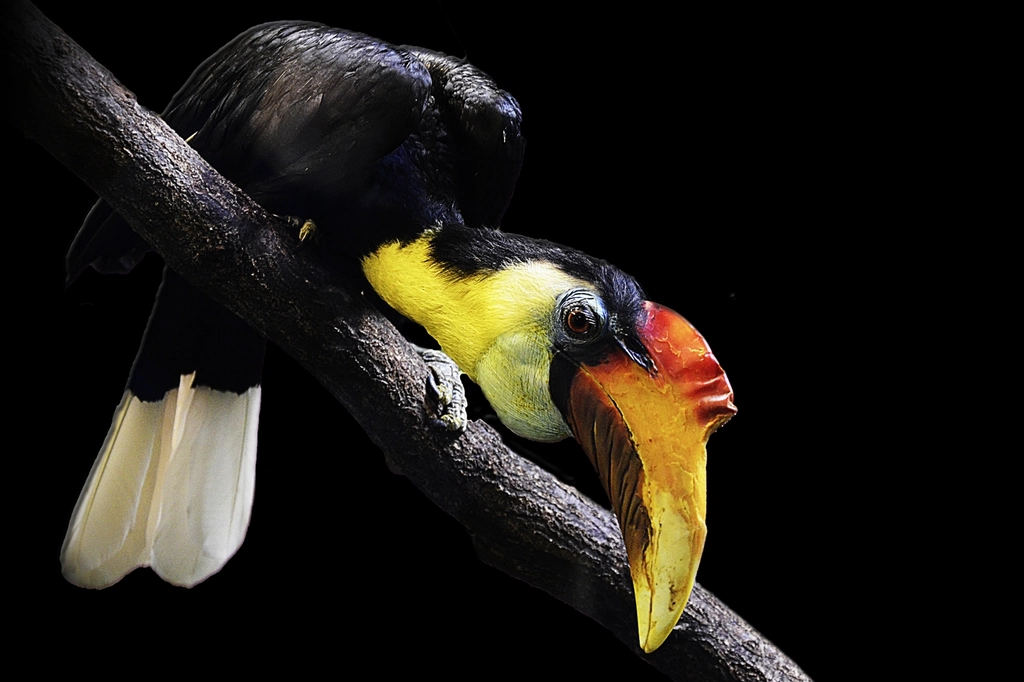 Photo Credit: Rawpixel
In the heart of tropical rainforests, where sunlight filters through a thick canopy of leaves, lives the hornbill, known scientifically as Bucerotidae. These remarkable birds are hard to miss, thanks to their striking features: a large, curved bill that can be as colorful as it is formidable, and a body that boasts vibrant plumage. With their impressive size and unique appearance, hornbills have captured the imaginations of scientists and nature enthusiasts alike, drawing them into the mysteries of their world.
As you wander through the lush greenery, you might hear the distinctive calls of these birds echoing through the trees. Hornbills are not just beautiful; they play a vital role in their ecosystems. They are known as keystone species, meaning their presence is crucial for maintaining the balance of their habitats. By feeding on fruits and dispersing seeds, they help to ensure the growth of new plants, creating a thriving environment for countless other species. With their lively behaviors and fascinating life cycles, hornbills invite us to explore the wonders of nature and understand the intricate connections that sustain life in the wild.
Hornbills are captivating birds that hold a special place in the animal kingdom. They belong to the family Bucerotidae, which is part of the order Bucerotiformes. This order is known for its distinctive beaks and unique nesting behaviors. Hornbills are particularly famous for their large, curved bills, which can be strikingly colorful and serve various purposes, from attracting mates to cracking open tough fruits. Their fascinating behavior of sealing themselves inside tree cavities during nesting is also a standout feature, making them truly one-of-a-kind among birds.
| Taxonomic Rank | Scientific Name | Meaning & Significance |
|---|---|---|
| Kingdom | Animalia | This name means “animals” in Latin, highlighting that hornbills are part of the vast group of living organisms that are multicellular and consume organic material. |
| Phylum | Chordata | Derived from the Greek word “chordē,” meaning “string,” this classification indicates that hornbills have a notochord, a flexible rod that supports their bodies during development. |
| Class | Aves | This Latin term means “birds,” and it signifies that hornbills are warm-blooded, feathered creatures that lay eggs, sharing this class with all other bird species. |
| Order | Bucerotiformes | This name comes from the Latin “buceros,” meaning “horned,” referring to the horn-like structures on the bills of many species in this order. |
| Family | Bucerotidae | This family name is derived from the same root as the order, emphasizing the horn-like features of their bills, which are a defining characteristic of these birds. |
| Genus | Buceros | This genus name also relates to the horn-like appearance of the bills, showcasing the evolutionary adaptations that help these birds thrive in their environments. |
Understanding the taxonomic classification of hornbills reveals much about their evolutionary journey. Their placement within the Chordata phylum and Aves class connects them to a long lineage of vertebrates, while their unique adaptations in the Bucerotiformes order highlight their specialized role in ecosystems. The distinctive features of their bills and nesting behaviors not only serve practical purposes but also reflect the evolutionary pressures that have shaped their development over millions of years. As we explore the tree of life, hornbills remind us of the incredible diversity and adaptability found in nature.
The evolutionary journey of hornbills stretches back millions of years, with their ancestors first appearing during the late Cretaceous period, around 70 million years ago. This timeline places them alongside the dinosaurs, showcasing their long-standing presence on Earth. As the world changed, so did these birds, adapting to new environments and challenges, which shaped their unique characteristics.
Hornbills are believed to have evolved from small, tree-dwelling birds that thrived in lush, tropical forests. Over time, they developed larger bodies and distinctive bills, which are not just for show. These adaptations allowed them to access a variety of food sources, from fruits to insects. One major transition in their evolution was the development of their iconic casque—a bony structure on top of their bills. This feature likely evolved for both display and sound amplification, helping them communicate in dense forests. As they spread across Africa and Asia, hornbills adapted to different habitats, leading to a diversity of species, each with its own unique traits.
These evolutionary adaptations have been vital for hornbills’ survival in their ever-changing environments. Their large bills allow them to exploit food sources that many other birds cannot reach, while their social behaviors enhance their chances of finding food and raising young. The unique nesting habits provide safety for their chicks, and their vocalizations help maintain strong bonds within their families. Together, these traits have enabled hornbills to thrive in diverse ecosystems, making them a fascinating part of our planet’s avian diversity.
Hornbills are striking birds that capture attention with their impressive size and distinctive features. With a robust body and a long tail, they often stand out in the lush canopies of their tropical habitats. Their most eye-catching characteristic is undoubtedly their enormous bill, which can be as long as their body. This bill, often adorned with a prominent horn-like structure, gives them a regal appearance, making them look like they belong in a fantasy world. Their feathers, which can range in color from bright yellows and reds to deep blacks and whites, add to their vibrant presence, making them a true spectacle of nature.
| Feature | Description |
|---|---|
| Weight | 13.6 lbs |
| Skin Type | Feathers |
| Most Distinctive Feature | The large bill and horn |
The combination of their large bill and colorful plumage serves several important purposes. The bill is not just for show; it helps hornbills forage for food, allowing them to reach fruits and insects that other birds might miss. The vibrant colors of their feathers can play a role in attracting mates and signaling health to potential partners. Together, these features not only enhance their beauty but also contribute to their survival in the wild, showcasing the incredible ways in which form and function intertwine in the animal kingdom.
Hornbills thrive in vibrant habitats that are as diverse as they are captivating. These birds are often found in lush rainforests, where the dense canopy provides both shelter and a rich source of food. They also inhabit woodlands, where trees are spaced out enough to allow for easy flight and foraging. In addition, hornbills can be spotted in savannas, where open grasslands meet scattered trees, creating a unique blend of environments that supports their lifestyle.
To flourish, hornbills require specific climate and environmental conditions. They prefer warm, humid areas that offer plenty of rainfall, which is essential for the growth of the fruit and insects they love to eat. The temperature in these regions typically stays mild, allowing hornbills to remain active year-round. These birds are particularly sensitive to changes in their environment, as they rely on the availability of food and nesting sites.
Hornbills have developed fascinating adaptations to thrive in their chosen habitats. Their strong, curved bills are not just for show; they are perfectly designed for cracking open hard fruits and nuts. This ability allows them to access food that many other birds cannot. Additionally, their social behavior, often seen in pairs or small groups, helps them communicate and find food more effectively. By nesting in tree cavities, hornbills also protect their young from predators, showcasing their cleverness in adapting to the challenges of their environment.
Hornbills lead a lively daily life filled with activity and interaction. As the sun rises, these birds begin their day by foraging for food, which mainly consists of fruits, insects, and small animals. They are known for their impressive flying skills, gliding gracefully through the trees in search of their next meal. Throughout the day, hornbills engage in various behaviors, including preening their feathers to keep them clean and healthy, and calling out to one another with their distinctive, echoing sounds. These vocalizations not only help them communicate but also establish their presence in the dense forest.
Socially, hornbills are quite engaging and often found in flocks. These groups can range from a few individuals to larger gatherings, depending on the species and the availability of food. Within these flocks, hornbills exhibit strong social bonds, often seen grooming each other and sharing food. Their interactions are filled with playful antics, which help strengthen their relationships. Communication is key in these social structures, as they use a variety of calls and body language to convey messages, whether it’s to warn of danger or to signal the location of food.
| Behavior Type | Description |
|---|---|
| Foraging | Hornbills search for fruits, insects, and small animals, using their keen eyesight to spot food in the canopy. |
| Social Grooming | They engage in preening each other’s feathers, which helps maintain hygiene and strengthens social bonds. |
| Vocal Communication | Hornbills use a variety of calls to communicate with flock members, signaling food sources or alerting to predators. |
| Flocking Behavior | They often travel in groups, which provides safety in numbers and enhances their foraging efficiency. |
The behaviors of hornbills are not just fascinating; they are essential for their survival. By foraging in groups, they can find food more efficiently and protect each other from predators. Their social interactions foster strong relationships, which are crucial for raising young and ensuring the continuation of their species. In the vibrant world of the rainforest, these daily activities and social dynamics play a vital role in the life of hornbills, helping them thrive in their lush, green habitats.
Hornbills are omnivores, which means they enjoy a varied diet that includes both plant and animal matter. Their primary food sources are fruits, which they find in the lush canopies of their rainforest homes. They also consume insects and small animals, showcasing their adaptability in obtaining food. Hornbills have a unique feeding behavior; they often use their long, curved bills to reach for fruits that are high up in trees. This not only helps them access food but also plays a role in seed dispersal, as they eat fruits and later excrete the seeds, helping new plants to grow.
| Dietary Aspect | Details |
|---|---|
| Diet Type | Omnivore |
| Favorite Foods | Fruits, insects, and small animals |
| Prey Items | Various fruits, beetles, and other insects |
| Hunting/Foraging Strategies | Using their long bills to reach fruits and catch insects |
The diet of hornbills significantly influences their role in the ecosystem. By consuming fruits and dispersing seeds, they help maintain the health of their forest habitats. Their foraging habits also keep insect populations in check, contributing to the balance of their environment. As they search for food throughout the day, hornbills engage in social interactions, often seen flying in pairs or small groups, which adds to the vibrant life of the rainforest. This daily routine not only sustains them but also enriches the biodiversity of their surroundings.
Hornbills have a fascinating approach to mating and raising their young. During the breeding season, which varies by species and location, these birds engage in elaborate courtship displays. Males often perform acrobatic flights and produce a variety of calls to attract females. Once a pair has formed a bond, they will work together to find a suitable nesting site, typically in tree cavities. This teamwork is essential, as it sets the stage for their future family.
| Reproductive Aspect | Details |
|---|---|
| Gestation Period | 23-96 days |
| Average Litter Size | 1-7 |
| Age of Sexual Maturity | up to 6 years |
| Name of Young | Chicks |
Once the eggs are laid, the female hornbill seals herself inside the nesting cavity, leaving only a small opening for the male to deliver food. This protective behavior helps keep the eggs and chicks safe from predators. After hatching, the chicks rely entirely on their parents for nourishment and care. As they grow, they undergo a remarkable transformation, developing the skills they need to thrive in the wild. Eventually, after several months of nurturing, the young hornbills will fledge, or leave the nest, ready to explore their vibrant world and begin their own adventures.
Hornbills play a vital role in their ecosystems, often acting as seed dispersers. This means they help plants grow by spreading seeds through their droppings. However, they are not at the top of the food web. Instead, they face various dangers that threaten their survival. Understanding these threats is crucial for appreciating the challenges hornbills encounter in their natural habitats.
To defend themselves against these threats, hornbills have developed several survival strategies. They often nest in tree cavities, which provides protection from predators. When threatened, they can be quite vocal, using their loud calls to warn others of danger. Additionally, their strong beaks allow them to forage effectively, helping them find food even in challenging conditions. By adapting to their environment and using their natural instincts, hornbills continue to thrive despite the dangers they face.
A keystone species is a vital part of its ecosystem, meaning its presence and activities have a significant impact on the environment and other living things. Hornbills qualify as keystone species due to their unique role in seed dispersal and their influence on the structure of their habitats. By helping to spread seeds, hornbills contribute to the growth of various plant species, which in turn supports a diverse range of animals and plants in their ecosystems.
Hornbills are particularly important in rainforests, woodlands, and savannas, where they thrive. As they feed on fruits, they consume seeds and then excrete them in different locations. This process helps to plant new trees and plants, promoting biodiversity. For example, when a hornbill eats a fruit from a tree, it may fly far away before dropping the seed, allowing it to germinate in a new area. This not only helps the plants but also creates habitats for other animals, as new trees provide food and shelter.
Additionally, hornbills are social birds that often travel in flocks. This group behavior enhances their ability to find food and protect themselves from predators. Their presence can also attract other species, creating a bustling community in the forest. The interactions between hornbills and other animals, such as insects and small mammals, further enrich the ecosystem, making it more resilient and vibrant.
If hornbills were to disappear from their ecosystems, the effects would be profound. Without these birds to disperse seeds, many plant species could decline, leading to less food and shelter for other animals. This could create a ripple effect, disrupting the balance of the entire ecosystem. Fewer plants would mean less oxygen production and more difficulty for other species to survive. In essence, the loss of hornbills would not only affect their immediate environment but could also lead to a decline in biodiversity, making the ecosystem less resilient to changes and challenges.
Hornbills are fascinating birds that play a crucial role in their ecosystems, particularly in rainforests, woodlands, and savannas. As omnivores, they consume a variety of foods, including fruits, insects, and small animals. This diverse diet allows them to thrive in different habitats while also influencing the plant and animal life around them. By foraging for food and interacting with their environment, hornbills help maintain the balance of their ecosystems, making them essential players in the natural world.
| Ecosystem Service | Impact |
|---|---|
| Seed Dispersal | Hornbills help plants grow by spreading seeds through their droppings, allowing new plants to take root in different areas. |
| Pest Control | By eating insects and small animals, hornbills help keep pest populations in check, which benefits other wildlife and plants. |
| Habitat Creation | As they feed on fruits, hornbills can create openings in the canopy, allowing sunlight to reach the forest floor and promoting plant growth. |
Hornbills are not just passive residents of their habitats; they actively shape their environment. For example, when they consume fruits, they often fly long distances before excreting the seeds. This behavior allows plants to colonize new areas, which is vital for forest regeneration. Additionally, their feeding habits can influence the types of plants that thrive in a given area, as some species rely on hornbills for seed dispersal. In this way, hornbills contribute to the rich tapestry of life in their ecosystems.
The broader ecological importance of hornbills cannot be overstated. As keystone species, their presence is vital for the health of their habitats. Without hornbills, many plants would struggle to reproduce, leading to a decline in biodiversity. This decline can have cascading effects on other species, including those that rely on the plants for food and shelter. By understanding the role of hornbills, we gain insight into the intricate connections that sustain life in our planet’s diverse ecosystems.
Symbiosis is a captivating concept in nature that describes how different species interact and depend on each other for survival. These relationships can take many forms, including mutualism, where both species benefit, parasitism, where one benefits at the other’s expense, and commensalism, where one benefits while the other is neither helped nor harmed. Hornbills, with their vibrant presence in rainforests, woodlands, and savannas, engage in various ecological partnerships that highlight the intricate web of life.
| Species/Type | Relationship Type | Description |
|---|---|---|
| Fruit Trees | Mutualistic | Hornbills help disperse seeds from the fruits they eat, promoting the growth of new trees, while the trees provide food for the hornbills. |
| Termites | Commensal | Hornbills may forage near termite mounds, benefiting from the insects disturbed by other animals, while the termites remain unaffected. |
| Small Mammals | Parasitic | In some cases, hornbills may prey on small mammals, benefiting from the food source while the mammals suffer from predation. |
These relationships have evolved over time, shaped by the needs and behaviors of the species involved. Hornbills have developed a keen ability to find food and interact with their environment, which has led to beneficial partnerships with fruit trees and other species. By dispersing seeds, hornbills not only ensure their own survival but also contribute to the health of their ecosystems. This interconnectedness illustrates the delicate balance of nature, where every species plays a role in maintaining the vibrant tapestry of life.
Hornbills are truly extraordinary birds that captivate both scientists and nature lovers alike. With their striking appearance and unique behaviors, they offer a glimpse into the wonders of the natural world. Here are some surprising facts about hornbills that will surely pique your interest.
Throughout history, hornbills have woven themselves into the fabric of human culture and mythology. In many regions of Africa and Asia, these birds are celebrated for their striking appearance and unique behaviors. Ancient tribes often viewed hornbills as symbols of fertility and prosperity, believing that their presence could bring good fortune. In some cultures, the hornbill is even featured in folklore and art, representing strength and resilience. These historical encounters have fostered a deep respect for hornbills, making them significant in various cultural narratives.
Today, the relationship between hornbills and humanity is complex and multifaceted. On one hand, conservation efforts are underway to protect these birds and their habitats, as many species face threats from deforestation and hunting. Organizations are working to raise awareness about the ecological importance of hornbills, which play a crucial role in seed dispersal and maintaining healthy forests. However, conflicts can arise when human activities encroach on their natural habitats, leading to competition for resources. In some areas, hornbills are even domesticated or kept as pets, which raises questions about their welfare and the impact on wild populations.
As we look to the future, the relationship between hornbills and humanity holds both promise and challenges. With increased awareness and conservation efforts, there is hope for a more harmonious coexistence. By valuing these birds not just for their beauty but also for their ecological roles, we can work towards protecting their habitats and ensuring their survival. The journey ahead will require collaboration between communities, conservationists, and governments, but together, we can create a world where hornbills thrive alongside us.
The conservation status of hornbills is a pressing concern, as many species are classified as Critically Endangered. This means they are at an extremely high risk of extinction in the wild. Population estimates vary significantly among different species, but overall, their numbers are declining due to various threats. Conservationists are working tirelessly to understand and protect these magnificent birds, but the challenges they face are daunting.
| Conservation Factor | Status/Details |
|---|---|
| IUCN Status | Critically Endangered |
| Estimated Population Size | Varies by species |
| Population Trend | Declining |
One of the main threats to hornbills is habitat loss, primarily due to deforestation for agriculture and urban development. As rainforests are cleared, these birds lose their homes and food sources. Additionally, hunting and poaching pose significant risks, as some cultures prize hornbill parts for traditional uses or as trophies. Climate change also plays a role, altering the ecosystems that hornbills depend on for survival.
Conservation efforts are underway to protect hornbills and their habitats. Organizations are working to establish protected areas and promote sustainable land-use practices. Education programs aim to raise awareness about the importance of hornbills in their ecosystems, encouraging local communities to participate in their conservation. While the outlook remains challenging, there is hope that with continued efforts, we can help secure a future for these extraordinary birds.
| Question | Answer |
|---|---|
| What is the natural habitat of hornbills? | Hornbills are typically found in rainforests, woodlands, and savannas. These environments provide the trees and fruits they need for food and nesting. |
| What do hornbills eat? | Hornbills are omnivores, which means they eat both plants and animals. Their diet includes fruits, insects, small mammals, and even other birds. |
| How do hornbills behave in the wild? | Hornbills are social birds that often live in small groups. They are known for their loud calls and can be quite playful, often engaging in aerial displays and acrobatics. |
| How do hornbills reproduce? | During breeding season, female hornbills seal themselves inside a tree cavity with mud and droppings, leaving only a small opening for the male to feed her. This unique nesting behavior helps protect the eggs and chicks from predators. |
| What threats do hornbills face? | Hornbills are critically endangered due to habitat loss from deforestation and hunting. As their natural habitats disappear, their populations decline, making conservation efforts crucial. |
| What is a distinctive feature of hornbills? | The most distinctive feature of hornbills is their large bill, which can be brightly colored and shaped like a horn. This bill is not only used for feeding but also plays a role in attracting mates. |
| Are hornbills important to their ecosystem? | Yes, hornbills play a vital role in their ecosystems as seed dispersers. By eating fruits and then flying long distances, they help spread seeds, which contributes to forest regeneration. |