Taxonomy & Classification
- Kingdom
- Animalia
- Phylum
- Chordata
- Class
- Mammalia
- Order
- Carnivora
- Family
- Canidae
- Genus
- Canis
- Species
- Canis lupus

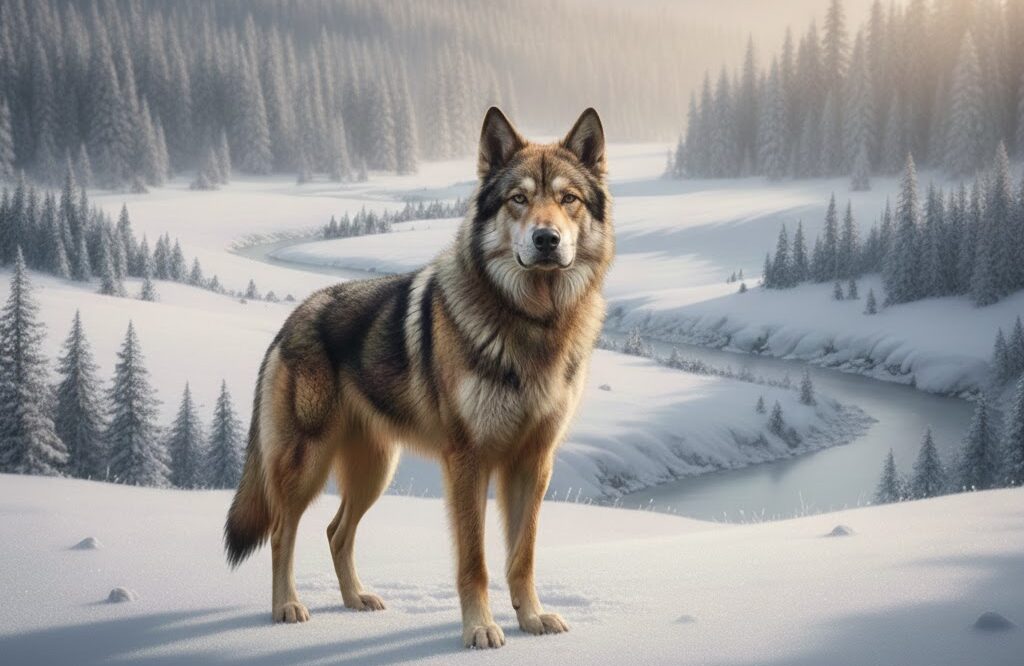 Photo Credit: AnimalsDiscovered
In the heart of the American wilderness, the American Alsatian, scientifically known as Canis lupus familiaris, roams with an air of quiet confidence. This breed, a blend of strength and grace, stands tall with a sturdy frame that can reach up to 26 inches at the shoulder. Its striking appearance, reminiscent of a wolf, features a thick, plush coat that varies in color from deep browns to soft grays, making it a captivating sight against the backdrop of rolling hills and expansive fields. As the sun sets, casting a golden hue over the landscape, the American Alsatian’s keen eyes glimmer with intelligence and curiosity, drawing the attention of both scientists and nature lovers alike.
What makes the American Alsatian particularly intriguing is not just its majestic looks but also its gentle temperament and strong bond with humans. Developed in the late 20th century, this breed was carefully crafted to embody the loyalty and protective instincts of its ancestors while maintaining a calm demeanor that makes it an ideal companion. As it explores its environment, the American Alsatian showcases its playful spirit, often bounding through the grass with a joyful energy that is infectious. This unique combination of physical prowess and affectionate nature has sparked interest among researchers and dog enthusiasts, who are eager to learn more about its role in the ecosystem and its relationship with people. Join us as we delve deeper into the world of the American Alsatian, uncovering the secrets of this remarkable breed and its place in the natural order.
The American Alsatian is a captivating breed that sits within the intricate web of life known as the taxonomic hierarchy. This breed is classified under the Kingdom Animalia, which includes all animals, and it belongs to the Phylum Chordata, characterized by having a backbone. As a member of the Class Mammalia, it shares traits like warm-bloodedness and fur with other mammals. The American Alsatian is part of the Order Carnivora, which includes meat-eating animals, and it falls under the Family Canidae, the group that encompasses dogs, wolves, and foxes. What makes the American Alsatian particularly interesting is its unique blend of physical traits and temperament, designed to be a companion and protector, reflecting its lineage and purpose.
| Taxonomic Rank | Scientific Name | Meaning & Significance |
|---|---|---|
| Kingdom | Animalia | This name comes from the Latin word “animalis,” meaning “having breath” or “living.” It signifies all living creatures that breathe and move. |
| Phylum | Chordata | Derived from the Greek word “chordē,” meaning “string,” this term refers to animals with a notochord, a flexible rod that supports the body, which in vertebrates becomes the backbone. |
| Class | Mammalia | This name comes from the Latin “mamma,” meaning “breast,” highlighting the defining feature of mammals: females possess mammary glands to nurse their young. |
| Order | Carnivora | From the Latin “carnivorus,” meaning “meat-eating,” this classification includes animals that primarily consume meat, showcasing their adaptations for hunting. |
| Family | Canidae | This name is derived from the Latin “canis,” meaning “dog.” It represents the family of animals that includes domestic dogs, wolves, and foxes, all known for their social behaviors and pack dynamics. |
| Genus | Canis | Also from the Latin word for “dog,” this genus encompasses various species of dogs and their wild relatives, emphasizing their close genetic ties. |
Understanding the American Alsatian’s classification reveals much about its evolutionary journey. As a member of the Canidae family, it shares a common ancestor with wolves and domestic dogs, which explains its loyalty and protective instincts. The breed was developed with specific traits in mind, combining the best characteristics of its ancestors to create a companion that is both gentle and strong. This classification not only highlights its physical attributes but also its role in human society, showcasing how selective breeding has shaped its development over time. The American Alsatian stands as a testament to the fascinating interplay between nature and nurture in the animal kingdom.
The American Alsatian is a relatively new breed, emerging in the late 20th century, but its evolutionary roots stretch back millions of years. This breed is part of the Canidae family, which includes wolves, foxes, and domestic dogs. The story of the American Alsatian begins with its ancestors, who roamed the Earth long before humans began to domesticate them. Understanding this timeline helps us appreciate how this breed has developed its unique characteristics.
The ancestors of the American Alsatian can be traced back to ancient wolves, which were among the first canids to form a bond with humans. Over time, selective breeding led to the development of various dog breeds, each adapted to specific roles in human society. The American Alsatian was specifically bred to resemble the majestic wolf while retaining the friendly and loyal traits of domestic dogs. This breed was created by crossing several breeds, including the German Shepherd and the Alaskan Malamute, to achieve a balance of strength, intelligence, and temperament.
These adaptations have played a crucial role in the survival and popularity of the American Alsatian. Their wolf-like appearance attracts those who admire the wild, while their friendly demeanor ensures they fit well into family life. The combination of intelligence and adaptability allows them to excel in various roles, from loyal companions to working dogs. As they continue to evolve alongside humans, the American Alsatian embodies the perfect blend of wild ancestry and domestic devotion.
The American Alsatian presents a striking silhouette that captures the eye and imagination. With a sturdy, well-proportioned body, this breed stands tall at 24 to 26 inches, exuding strength and confidence. Their muscular build is complemented by a broad head and expressive eyes, which convey intelligence and warmth. The overall impression is one of a loyal companion, ready to protect and engage with its family.
| Feature | Description |
|---|---|
| Height | 24-26 inches |
| Weight | 66-88 pounds |
| Skin Type | Hair |
These physical features work together to create a breed that is not only visually appealing but also well-suited for various roles, from family pet to working dog. The American Alsatian’s height and weight give it a commanding presence, while its thick hair provides insulation against the elements, making it adaptable to different climates. This combination of strength, intelligence, and protective instincts ensures that the American Alsatian thrives in both companionship and duty, embodying the spirit of loyalty and resilience.
The American Alsatian thrives in a variety of environments, but it particularly enjoys spacious, open areas that allow for plenty of movement and exploration. Picture rolling hills, expansive fields, and wooded regions where this breed can roam freely. These dogs are often found in suburban neighborhoods, where they can enjoy both the comforts of home and the excitement of outdoor adventures. Their ideal habitat is one that balances nature with human companionship, making them well-suited for families who love the outdoors.
The American Alsatian prefers a temperate climate, which means it enjoys moderate temperatures that are not too hot or too cold. This breed is well-adapted to environments where it can experience all four seasons, from the crispness of autumn leaves to the warmth of summer sunshine. They thrive in areas with plenty of fresh air and open spaces, as these conditions allow them to engage in their natural behaviors, such as running and playing.
Adaptation is key for the American Alsatian, and this breed has developed traits that help it flourish in its chosen habitats. With a thick, double coat, it can withstand cooler temperatures while still being comfortable in warmer weather. Their strong, muscular build allows them to navigate various terrains, whether it’s a grassy field or a forest trail. This adaptability not only makes them resilient but also enhances their ability to bond with families, as they can enjoy a wide range of activities together, from hiking to playing fetch in the backyard.
The daily life of an American Alsatian is a blend of activity, curiosity, and social interaction. These dogs are known for their playful yet calm demeanor, often starting their day with a burst of energy. Mornings might find them exploring their surroundings, sniffing out interesting scents, or engaging in a game of fetch with their human companions. As the day progresses, they balance their playful antics with periods of rest, lounging in a sunny spot or keeping a watchful eye on their family. Their routine is punctuated by regular meals and outdoor adventures, where they can stretch their legs and enjoy the fresh air.
Social behavior is a key aspect of the American Alsatian’s life. These dogs thrive in family settings and often form strong bonds with their human pack. They are known for their loyalty and protective instincts, making them excellent companions. In a group, they display a hierarchy, where older or more experienced dogs often take the lead. Communication among them is rich and varied, involving barks, growls, and body language. They are attentive to each other’s cues, which helps maintain harmony within the group. This social structure not only fosters companionship but also enhances their ability to work together, whether in play or in guarding their home.
| Behavior Type | Description |
|---|---|
| Activity Patterns | American Alsatians are active during the day, engaging in play, exploration, and exercise, followed by periods of rest. |
| Social Structure | They live in family units, forming strong bonds and displaying a hierarchy where older dogs often lead. |
| Communication Methods | These dogs communicate through a mix of vocalizations, such as barks and growls, as well as body language, like tail wagging and ear positioning. |
The behaviors of the American Alsatian are not just for fun; they play a crucial role in their survival. Their social bonds help them work together to protect their home and family, while their active lifestyle keeps them healthy and alert. By understanding and responding to each other, they create a supportive environment that enhances their well-being. This combination of playfulness, loyalty, and communication ensures that the American Alsatian thrives in both family life and the great outdoors.
The American Alsatian is primarily a carnivore, which means it mainly eats meat. This breed has a strong instinct to hunt and forage, reflecting its ancestry and natural behaviors. In the wild, its diet would consist of small to medium-sized animals, but domesticated American Alsatians often enjoy a balanced diet that includes high-quality dog food, which is specially formulated to meet their nutritional needs. Their feeding behavior is characterized by a keen sense of smell and a watchful eye, allowing them to track down food effectively.
| Dietary Aspect | Details |
|---|---|
| Diet Type | Carnivore |
| Favorite Foods | High-quality meat, including chicken, beef, and fish |
| Prey Items | Small to medium-sized animals, such as rabbits and rodents |
| Hunting/Foraging Strategies | Utilizes keen senses of smell and sight to locate food; may stalk or chase prey |
The diet of the American Alsatian plays a crucial role in shaping its ecology and daily routine. By consuming a carnivorous diet, these dogs maintain their energy levels and physical health, which is essential for their active lifestyle. Their natural hunting instincts not only keep them engaged but also foster a strong bond with their human companions, as they often participate in activities like fetch or agility training. This connection to their diet and behavior highlights the importance of understanding their needs, ensuring they thrive in both domestic and social environments.
The American Alsatian has a fascinating approach to reproduction, marked by a strong bond between mates. During the breeding season, which typically occurs once a year in the spring, these dogs engage in a series of courtship behaviors. Males often display their interest by playfully nipping at the female and performing a dance-like display. This bonding ritual helps to strengthen their connection, ensuring that both parents are committed to raising their young together.
| Reproductive Aspect | Details |
|---|---|
| Gestation Period | Approximately 63 days |
| Litter Size | Average of 6 to 8 puppies |
| Age of Maturity | About 18 to 24 months |
| Name of Young | Puppies |
Once the puppies are born, parental care becomes a top priority for the American Alsatian. The mother is particularly attentive, nursing her young and keeping them warm and safe. As the puppies grow, both parents play a role in their development, teaching them essential skills through gentle interactions and socialization. By the time they reach maturity, around 18 to 24 months, these young dogs are well-prepared to take on the world, embodying the traits and behaviors instilled by their caring parents. This nurturing process not only strengthens family bonds but also ensures the continuation of the breed’s unique characteristics.
The American Alsatian occupies a special place in the food web, primarily as a carnivore. This breed, known for its loyalty and protective nature, is not at the top of the food chain but rather plays a role as both predator and prey. While they are skilled hunters, their size and strength can also make them targets for larger predators. Understanding their position in the ecosystem helps us appreciate the challenges they face in the wild.
To defend themselves against these threats, American Alsatians rely on a combination of instincts and learned behaviors. Their strong pack mentality encourages them to stay close to their human companions, who provide safety and security. When faced with danger, they may bark loudly to alert others, using their vocalizations as a warning signal. Additionally, their keen senses of smell and hearing help them detect potential threats from a distance, allowing them to react quickly. By staying alert and using their natural instincts, American Alsatians can navigate the challenges of their environment and thrive.
A keystone species is an organism that has a disproportionately large impact on its environment relative to its abundance. This means that if it were removed, the ecosystem would change dramatically. The American Alsatian, while a fascinating breed, does not qualify as a keystone species. This breed, primarily a domesticated dog, does not play a critical role in its ecosystem like some wild species do. Instead, it is more of a companion animal, influencing human lives rather than the natural environment.
Even though the American Alsatian is not a keystone species, it still has an ecological impact, particularly in the context of human environments. For instance, these dogs can help control populations of small mammals, such as rodents, by their natural hunting instincts. This behavior can indirectly benefit local flora by reducing the number of herbivores that might otherwise overgraze plants. Additionally, their presence can encourage outdoor activities, leading to greater awareness and appreciation of nature among their human companions.
Moreover, American Alsatians can contribute to the social structure of human communities. By fostering connections between people, they can promote a sense of responsibility towards wildlife and conservation efforts. Their loyalty and protective nature can also make them excellent guardians for livestock, which helps maintain a balance in agricultural settings.
If the American Alsatian were to disappear, the immediate effects might not be as dramatic as those caused by the loss of a true keystone species. However, communities that rely on these dogs for companionship, protection, and even pest control would feel the impact. The absence of this breed could lead to increased rodent populations, which might affect local vegetation and disrupt the balance in human-managed environments. Ultimately, while the American Alsatian may not be a keystone species, its role in human society and its indirect effects on ecosystems highlight the interconnectedness of all living beings.
The American Alsatian plays a significant role in its ecosystem, acting as a keystone species that influences various environmental dynamics. As a carnivore, this breed helps regulate populations of smaller mammals and other prey species. By maintaining a balance in these populations, the American Alsatian contributes to the overall health of its habitat. This balance is crucial because it prevents overgrazing and allows plant life to thrive, which in turn supports a diverse range of other animals and plants.
| Ecosystem Service | Impact |
|---|---|
| Population Control | Regulates numbers of smaller mammals, preventing overpopulation. |
| Habitat Maintenance | Encourages plant growth by controlling herbivore populations. |
| Soil Health | Promotes nutrient cycling through predation and waste. |
| Food Source | Serves as prey for larger predators, contributing to the food web. |
The influence of the American Alsatian can be seen in various ecosystems where it resides. For instance, in open grasslands, its hunting activities help keep populations of rodents in check. This not only protects the grasses and plants from being overbrowsed but also creates a healthier environment for other species, such as birds and insects, that rely on these plants for food and shelter. Additionally, the waste produced by the American Alsatian enriches the soil, promoting plant growth and supporting a vibrant ecosystem.
The broader ecological importance of the American Alsatian cannot be overstated. By maintaining balance within its environment, this breed supports biodiversity, which is essential for resilient ecosystems. Healthy ecosystems provide numerous benefits, including clean air and water, fertile soil, and a stable climate. The American Alsatian, through its role as a predator, helps ensure that these vital resources remain available for all living organisms, showcasing the interconnectedness of life on our planet.
In the intricate tapestry of nature, symbiosis refers to the close and often long-term interactions between different species. These relationships can take many forms, including mutualism, where both species benefit, parasitism, where one benefits at the expense of the other, and commensalism, where one benefits while the other is neither helped nor harmed. Understanding these ecological relationships helps us appreciate how species like the American Alsatian fit into their environments and interact with other organisms.
| Species/Type | Relationship Type | Description |
|---|---|---|
| Humans | Mutualistic | American Alsatians often form strong bonds with humans, providing companionship and protection while receiving care and food in return. |
| Small mammals (like rabbits) | Predatory | As carnivores, American Alsatians may hunt small mammals, which helps control their populations but can be detrimental to the prey species. |
| Birds (like crows) | Commensal | Birds may follow American Alsatians to scavenge leftover food, benefiting from the dog’s activities without affecting the dog. |
The evolution of these relationships is a testament to the adaptability and interconnectedness of life. Over time, the American Alsatian has developed bonds with humans that enhance both species’ survival. These partnerships not only provide essential resources but also foster a sense of community in the natural world. As these relationships continue to evolve, they highlight the importance of cooperation and balance in ecosystems, reminding us that every species plays a role in the grand story of life on Earth.
The American Alsatian is a captivating breed that combines the strength of its ancestors with a gentle temperament, making it a fascinating subject for nature enthusiasts. Here are some surprising facts that showcase the unique qualities of this breed.
The American Alsatian, a breed that emerged in the late 20th century, has a rich tapestry of interactions with humanity. Originally bred to resemble the majestic wolf, these dogs were developed to serve as loyal companions and protectors. Their striking appearance and gentle nature have made them significant in various cultural contexts, symbolizing strength and loyalty. As they became more popular, the American Alsatian began to represent the bond between humans and animals, showcasing how companionship can transcend mere utility.
Today, the relationship between American Alsatians and humans continues to evolve. These dogs are not only cherished as family pets but also play vital roles in therapy and assistance work. Their calm demeanor and intelligence make them excellent candidates for service roles, helping individuals with disabilities or emotional challenges. However, challenges remain, such as the need for responsible breeding practices to ensure their health and well-being. As urbanization increases, conflicts can arise when these dogs, with their strong instincts, encounter wildlife or other pets, highlighting the need for education on responsible pet ownership.
As we look to the future, the bond between American Alsatians and humans is likely to deepen. With ongoing education about their needs and capabilities, these dogs can continue to thrive alongside us. As we learn more about their behavior and instincts, we can foster a relationship that benefits both species. By embracing responsible ownership and understanding their role in our lives, we can ensure that the American Alsatian remains a beloved companion for generations to come.
The American Alsatian currently holds a conservation status of “Not Listed,” which means it is not recognized as endangered or threatened by major conservation organizations like the IUCN (International Union for Conservation of Nature). This breed, while relatively new, has been steadily gaining popularity among dog enthusiasts. However, specific population estimates are not readily available, making it difficult to assess trends in their numbers accurately. As a result, the American Alsatian’s future remains uncertain, hinging on the breed’s continued appeal and responsible breeding practices.
| Conservation Factor | Status/Details |
|---|---|
| IUCN Status | Not Listed |
| Population Estimates | Not Available |
| Trend Direction | Uncertain |
Despite its growing popularity, the American Alsatian faces several challenges that could impact its future. One of the main threats is the potential for irresponsible breeding practices, which can lead to health issues and genetic problems. Additionally, as a relatively new breed, it may struggle to find a stable place in the competitive dog market, where trends can shift rapidly. This uncertainty can affect the breed’s overall population and health, making it crucial for breeders and enthusiasts to prioritize ethical practices.
Conservation efforts for the American Alsatian are still in their infancy, but there is hope for a positive outlook. Dedicated breeders are working to maintain the breed’s integrity while promoting responsible ownership. Education about the breed’s needs and characteristics is essential for ensuring that new owners understand how to care for their American Alsatians properly. As awareness grows and more people appreciate this breed’s unique qualities, the future for the American Alsatian could become brighter, fostering a sustainable population that thrives alongside its human companions.
| Question | Answer |
|---|---|
| What is the habitat of the American Alsatian? | The American Alsatian is a breed that thrives in a variety of environments, but they are most comfortable in spacious homes with access to outdoor areas. They enjoy being part of a family and need room to roam and play, making suburban or rural settings ideal for them. |
| What do American Alsatians eat? | As carnivores, American Alsatians primarily eat meat. A balanced diet for them includes high-quality dog food that contains protein sources like chicken, beef, or fish, along with some vegetables for added nutrients. |
| What is the behavior of American Alsatians? | American Alsatians are known for their friendly and loyal nature. They are intelligent and eager to please, which makes them great companions and easy to train. However, they can be protective of their families, so early socialization is important. |
| How do American Alsatians reproduce? | Like most dogs, American Alsatians reproduce through mating between a male and a female. The female typically goes into heat twice a year, and after a gestation period of about 63 days, she gives birth to a litter of puppies, usually ranging from 4 to 8 pups. |
| What threats do American Alsatians face? | While American Alsatians are not currently listed as endangered, they can face threats from irresponsible breeding practices and health issues common in dog breeds. Ensuring they are bred responsibly and receiving proper care can help mitigate these risks. |
| What are some interesting characteristics of American Alsatians? | American Alsatians are often praised for their wolf-like appearance, which can be quite striking. They are also known for their strong bond with their families, often displaying a gentle and nurturing demeanor, especially around children. |
| How much exercise do American Alsatians need? | American Alsatians require regular exercise to stay healthy and happy. Daily walks, playtime in the yard, and mental stimulation through training or games are essential to keep them physically fit and mentally engaged. |