Taxonomy & Classification
- Kingdom
- Animalia
- Phylum
- Chordata
- Class
- Mammalia
- Order
- Primates
- Family
- Indriidae
- Genus
- Indri
- Species
- Indri indri

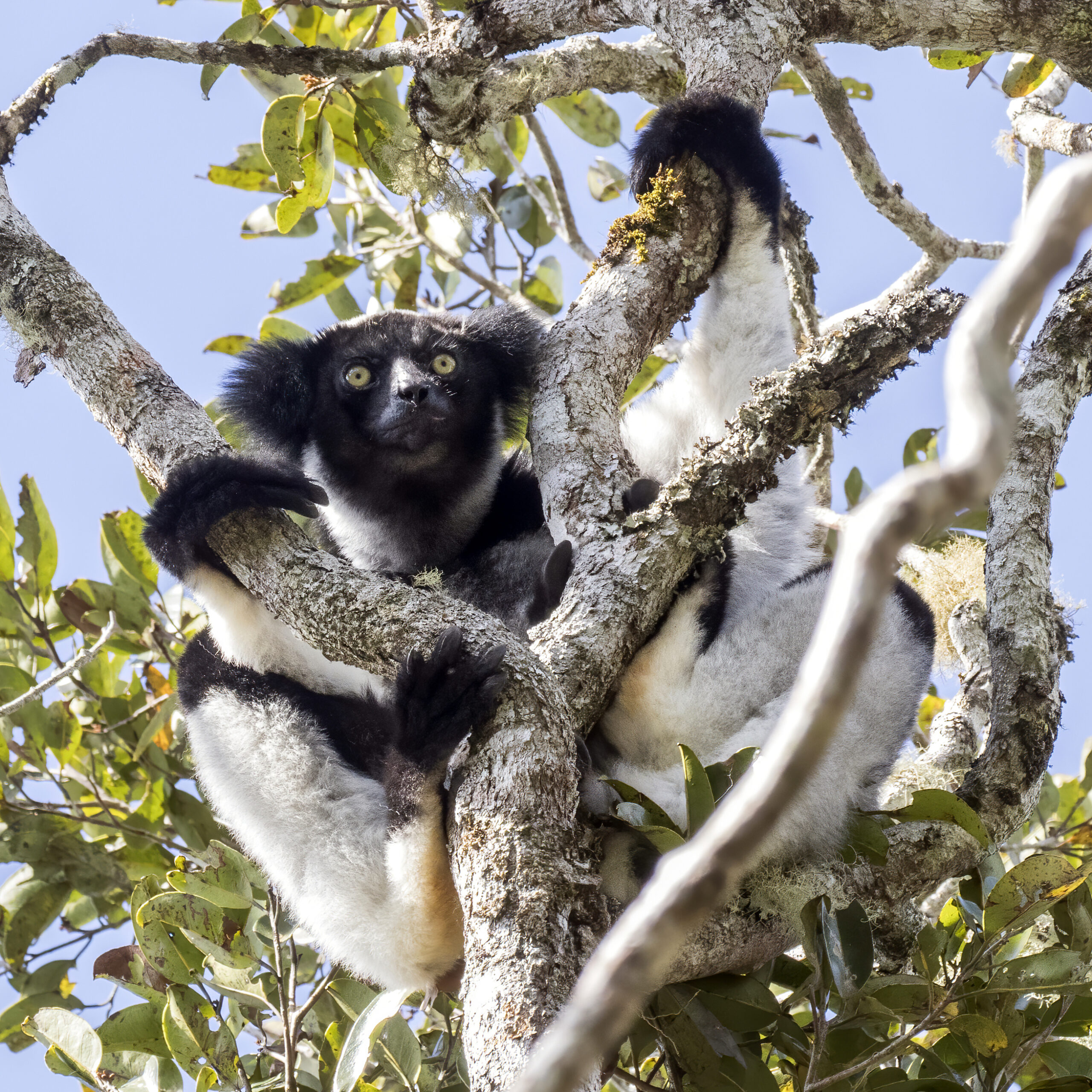 Photo Credit: Charlesjsharp / Wikimedia Commons
In the heart of Madagascar’s lush rainforests, the Indri, scientifically known as Indri indri, leaps gracefully among the towering trees. With its striking black and white fur and large, expressive eyes, this remarkable primate stands out in a world filled with vibrant greens and earthy browns. The Indri is not just another lemur; it is the largest living lemur species, reaching heights of up to 72 centimeters. Its long limbs and powerful legs allow it to navigate the treetops with astonishing agility, making it a true acrobat of the forest.
As the sun rises, the Indri begins its day with a series of loud, haunting calls that echo through the canopy. These vocalizations are not just for show; they serve to communicate with other Indris and establish territory. Scientists and nature enthusiasts alike are captivated by the Indri’s unique behaviors and social structures, which offer a glimpse into the complex lives of these fascinating creatures. With its herbivorous diet, primarily consisting of leaves, fruits, and flowers, the Indri plays a vital role in its ecosystem, helping to maintain the health of the forest. Join us as we explore the enchanting world of the Indri, uncovering its secrets and the challenges it faces in a rapidly changing environment.
The Indri, a captivating member of the animal kingdom, holds a special place in the tree of life. It belongs to the order Primates, which includes all monkeys, apes, and humans. What sets the Indri apart is its unique vocalizations and its impressive ability to leap through the trees of Madagascar, where it is found. This large lemur is not only the largest living lemur but also one of the few that does not have a long tail, making it a distinctive figure among its relatives. Its classification reveals much about its evolutionary journey and the adaptations that have allowed it to thrive in its forest home.
| Taxonomic Rank | Scientific Name | Meaning & Significance |
|---|---|---|
| Kingdom | Animalia | This name signifies that the Indri is part of the vast group of multicellular organisms that are heterotrophic, meaning they consume other organisms for energy. |
| Phylum | Chordata | Chordata refers to animals that have a notochord, a flexible rod that supports the body, at some stage of their development. This includes all vertebrates, like the Indri. |
| Class | Mammalia | Mammalia indicates that the Indri is a mammal, characterized by having fur or hair and the ability to nurse its young with milk. |
| Order | Primates | The term Primates means “first” in Latin, highlighting the advanced cognitive abilities and social structures found in this group, which includes the Indri. |
| Family | Indriidae | This family name is derived from the Malagasy word “indri,” which refers to the Indri itself, emphasizing its unique status among lemurs. |
| Genus | Indri | The genus name Indri is directly linked to the animal’s local name in Madagascar, showcasing its cultural significance and connection to its native habitat. |
The classification of the Indri not only highlights its biological characteristics but also tells a story of its evolutionary history. As a member of the family Indriidae, it shares a common ancestor with other lemurs, which diverged from other primates millions of years ago. This lineage reflects the adaptations that have allowed the Indri to thrive in Madagascar’s unique ecosystems, where it plays a crucial role in maintaining the health of its forest habitat. Understanding its place in the tree of life helps us appreciate the intricate connections between species and the importance of conserving these remarkable animals and their environments.
The evolutionary journey of the Indri, a fascinating primate native to Madagascar, stretches back millions of years. This journey begins in the late Eocene epoch, around 40 million years ago, when the ancestors of modern lemurs began to diverge from other primates. Over time, these early primates adapted to the unique environment of Madagascar, leading to the emergence of the Indri and its relatives.
The Indri’s ancestors were small, tree-dwelling creatures that thrived in the lush forests of Madagascar. As they evolved, they developed several key adaptations that helped them survive in this isolated ecosystem. One major transition was the shift from a more generalized diet to a specialized herbivorous diet, allowing them to exploit the abundant leaves and fruits found in their forest home. This dietary change was crucial, as it enabled them to thrive in a habitat where competition for food was fierce.
The adaptations of the Indri have been vital for its survival in the unique environment of Madagascar. Their strong hind limbs and flexible joints enable them to move swiftly through the trees, while their vocalizations help maintain social bonds and defend their territory. By living in family groups, they can share resources and protect one another from threats. These evolutionary traits not only showcase the Indri’s remarkable ability to thrive in its habitat but also highlight the intricate connections between species and their environments.
The Indri is a strikingly agile primate that captures attention with its impressive stature and lively demeanor. Standing at about 64 to 72 centimeters tall, it boasts a robust body that is both muscular and flexible. Its long limbs and powerful legs allow it to leap gracefully between the trees of Madagascar’s lush forests. With a short tail and a rounded face, the Indri presents a charming appearance that is both endearing and intriguing.
| Feature | Description |
|---|---|
| Height | 64cm – 72cm (25in – 28in) |
| Weight | 6kg – 9.5kg (13lbs – 21lbs) |
| Skin Type | Fur |
The Indri’s physical features are not just for show; they play vital roles in its survival. Its height and weight give it the strength needed to navigate the treetops, while its fur provides insulation and protection from the elements. This combination of traits allows the Indri to thrive in its forest habitat, where agility and warmth are essential for evading predators and finding food. Each characteristic works in harmony, making the Indri a true marvel of evolution in the vibrant ecosystem of Madagascar.
The Indri calls the lush lowland rainforests of Madagascar its home. These vibrant forests are alive with the sounds of chirping birds, rustling leaves, and the distant calls of other wildlife. Towering trees stretch high into the sky, their thick canopies creating a cool, shaded environment below. The undergrowth is rich with ferns and flowering plants, providing a perfect playground for this agile primate. The air is humid and filled with the earthy scent of damp soil, making it an ideal setting for the Indri to thrive.
This region experiences a tropical climate, characterized by warm temperatures and significant rainfall throughout the year. The rainforests are particularly lush during the wet season, which typically runs from November to April. This abundance of moisture supports a diverse array of plant life, which in turn sustains the Indri’s diet of leaves, fruits, and flowers. The climate is crucial for maintaining the delicate balance of this ecosystem, allowing the Indri to flourish in its natural habitat.
To adapt to these specific environments, the Indri has developed several remarkable traits. Its strong limbs and long legs enable it to leap gracefully from branch to branch, navigating the dense foliage with ease. The Indri’s vocalizations, which can be heard echoing through the forest, serve not only to communicate with others but also to establish territory. These adaptations help the Indri not only survive but also thrive in the vibrant, complex world of Madagascar’s rainforests.
The Indri’s day begins with the first light of dawn, as this diurnal primate is most active during the day. As the sun rises, the Indri stretches its long limbs and prepares for a day filled with exploration and foraging. These agile creatures leap gracefully from branch to branch, using their powerful legs to navigate the treetops of Madagascar’s rainforests. Their diet mainly consists of leaves, fruits, and flowers, which they skillfully find among the dense foliage. Throughout the day, they engage in various activities, including grooming, playing, and vocalizing, which are essential for their social interactions.
Indris are social animals that live in family groups known as troops. These troops typically consist of a few adults and their offspring, creating a close-knit community. Communication is vital for maintaining group cohesion, and Indris are known for their loud, distinctive calls that can be heard echoing through the forest. These calls serve multiple purposes, from signaling their location to warning others of potential threats. Within the troop, individuals often groom each other, reinforcing social bonds and ensuring harmony. This social structure helps them work together to find food and protect one another from predators.
| Behavior Type | Description |
|---|---|
| Activity Patterns | Indris are diurnal, meaning they are active during the day, engaging in foraging, playing, and grooming. |
| Social Structure | They live in troops, typically consisting of a few adults and their young, fostering strong family ties. |
| Communication Methods | Indris use loud calls to communicate with each other, signaling their location and alerting the troop to dangers. |
The behaviors of the Indri are not just fascinating; they are crucial for survival in the wild. By living in troops, they can share resources and protect each other from predators. Their vocalizations help maintain group cohesion, ensuring that no member gets lost in the vast forest. Through grooming and social interactions, they strengthen their bonds, which is essential for a harmonious living environment. All these activities contribute to their overall well-being and survival in the lush, competitive ecosystem of Madagascar.
The Indri is a dedicated herbivore, meaning it primarily eats plant material. This fascinating primate has a particular fondness for fruits, flowers, and leaves, which it skillfully forages from the trees of its rainforest home. With its strong limbs and agile body, the Indri leaps gracefully from branch to branch, using its keen sense of smell to locate the tastiest treats. Its diet not only sustains it but also plays a crucial role in the health of its ecosystem, as the Indri helps to disperse seeds through its feeding habits.
| Dietary Aspect | Details |
|---|---|
| Diet Type | Herbivore |
| Favorite Foods | Fruits, flowers, and leaves |
| Prey Items | Primarily plant material |
| Hunting/Foraging Strategies | Leaping between branches and using keen sense of smell |
This plant-based diet shapes the Indri’s daily routine and ecological role in significant ways. By consuming a variety of leaves and fruits, the Indri not only nourishes itself but also contributes to the health of the forest. As it moves through the trees, it helps to spread seeds, promoting new plant growth. This interaction with its environment highlights the interconnectedness of life in the rainforest, where every creature plays a part in maintaining the balance of nature.
The Indri’s mating behavior is as captivating as its appearance. These primates typically breed during the rainy season, which provides a lush environment for their young. Mating pairs often form strong bonds, and their vocalizations play a crucial role in attracting partners. The calls of the Indri echo through the forests of Madagascar, creating a symphony that helps establish territory and strengthen social connections.
| Reproductive Aspect | Details |
|---|---|
| Gestation Period | 4 – 5 months |
| Average Litter Size | 1 |
| Age of Sexual Maturity | 8 – 9 years |
| Name of Young | Infant |
After a gestation period of about four to five months, a single infant is born. The young Indri is entirely dependent on its mother for care and nourishment. Parental care is intense and nurturing; mothers carry their infants on their backs as they navigate the treetops, teaching them essential skills for survival. As the infant grows, it begins to explore its surroundings, learning to leap between branches and forage for food. By the time it reaches sexual maturity at around eight to nine years, the young Indri is well-prepared to take on the challenges of life in the vibrant forests of Madagascar.
The Indri occupies a crucial role in the food web of Madagascar’s rainforests. As a large herbivore, it primarily feeds on leaves, fruits, and flowers, making it an important player in the ecosystem. However, despite its size and agility, the Indri faces several dangers that threaten its survival.
To defend itself against these threats, the Indri has developed several survival strategies. Its strong limbs and impressive leaping ability allow it to navigate the treetops swiftly, escaping potential predators. Additionally, the Indri communicates through loud, distinctive calls that can alert others in its group to danger. By living in social groups, they can also keep watch for threats, enhancing their chances of survival in a world filled with challenges.
A keystone species is an organism that plays a critical role in maintaining the structure of its ecosystem. Its presence or absence can significantly impact the environment and the other species that inhabit it. The Indri, a large lemur native to Madagascar, qualifies as a keystone species due to its unique dietary habits and social structure, which influence the health of the rainforest ecosystem.
The Indri primarily feeds on leaves, fruits, and flowers, making it an important herbivore in its habitat. By consuming these plant materials, the Indri helps control plant growth and promotes biodiversity. For instance, its selective feeding habits can prevent certain plant species from dominating the forest, allowing a variety of plants to thrive. This diversity is crucial for other animals that rely on different plants for food and shelter. Additionally, the Indri’s vocalizations, which echo through the forest, help establish territory and social bonds within its troop, influencing the behavior of other species in the area.
Moreover, the Indri’s role in seed dispersal is vital for the regeneration of the forest. As it eats fruits, it inadvertently spreads seeds through its droppings, allowing new plants to grow in different locations. This process not only supports the growth of new vegetation but also creates habitats for other wildlife. The Indri’s presence thus fosters a rich and interconnected ecosystem, where various species depend on one another for survival.
If the Indri were to disappear, the consequences would ripple through the rainforest. Without this keystone species, certain plants could overgrow, leading to a decline in biodiversity. This shift would affect not only the plants but also the animals that rely on them for food and shelter. The loss of the Indri would disrupt the delicate balance of the ecosystem, potentially leading to a less vibrant and less resilient rainforest. In essence, the Indri is not just a fascinating animal; it is a vital thread in the intricate web of life in Madagascar’s rainforests.
The Indri, a fascinating primate native to Madagascar, plays a vital role in its ecosystem, particularly within the lush lowland rainforests it calls home. As a herbivore, the Indri primarily feeds on leaves, fruits, and flowers, which means it directly influences the plant life around it. By foraging for food, the Indri helps to shape the forest structure, promoting biodiversity and ensuring that various plant species thrive. This ecological niche not only supports the Indri’s survival but also contributes to the overall health of its environment.
| Ecosystem Service | Impact |
|---|---|
| Seed Dispersal | By eating fruits and moving through the forest, the Indri helps spread seeds, allowing new plants to grow in different areas. |
| Vegetation Control | As it feeds on leaves and flowers, the Indri helps regulate plant growth, preventing any one species from dominating the forest. |
| Habitat Creation | The Indri’s foraging habits can create openings in the canopy, allowing sunlight to reach the forest floor and supporting a variety of plant life. |
The Indri’s influence on its environment is evident in several ways. For instance, when it consumes fruits, it often drops seeds in different locations, which can lead to the growth of new plants. This process is essential for maintaining the diversity of the forest. Additionally, by munching on leaves, the Indri helps to keep certain plant populations in check, ensuring that no single species takes over. This balance is crucial for the health of the entire ecosystem, as it allows various plants and animals to coexist.
The broader ecological importance of the Indri cannot be overstated. As a keystone species, its presence is essential for maintaining the structure and function of the rainforest ecosystem. Without the Indri, the delicate balance of plant and animal life could be disrupted, leading to a decline in biodiversity. By supporting the growth of various plant species and facilitating seed dispersal, the Indri helps to create a vibrant and thriving habitat for countless other organisms. In this way, the Indri is not just a fascinating animal; it is a cornerstone of its ecosystem, highlighting the interconnectedness of all living things.
In the intricate web of life, symbiosis refers to the close and often long-term interactions between different species. These relationships can take many forms, including mutualism, where both species benefit, parasitism, where one benefits at the expense of the other, and commensalism, where one benefits while the other is neither helped nor harmed. The Indri, a fascinating primate from Madagascar, engages in various ecological relationships that highlight the interconnectedness of life in its lush rainforest habitat.
| Species/Type | Relationship Type | Description |
|---|---|---|
| Fruits and Flowers | Mutualistic | The Indri feeds on fruits and flowers, helping to disperse seeds through its droppings, which aids in plant reproduction. |
| Insects | Parasitic | Occasionally, the Indri may host parasites like ticks, which feed on its blood, benefiting the ticks while harming the Indri. |
| Birds | Commensal | Some birds may follow Indris to feed on insects disturbed by their movement, benefiting from the Indri’s foraging without affecting it. |
These relationships have evolved over time, shaped by the needs and behaviors of the species involved. The mutualistic bond between the Indri and the plants it consumes is particularly vital, as it not only provides nourishment for the Indri but also supports the growth of the forest. Meanwhile, the parasitic interactions remind us that not all relationships are beneficial, highlighting the complex balance of ecosystems. Understanding these connections helps us appreciate the delicate dance of life in Madagascar’s rainforests, where every species plays a role in maintaining the health of their shared environment.
The Indri, a fascinating primate from Madagascar, is full of surprises that even seasoned nature enthusiasts might not know. This unique animal is not just another lemur; it has some truly remarkable traits and behaviors that set it apart in the animal kingdom.
The Indri, a striking primate native to Madagascar, has long captured the imagination of humans. Historically, these remarkable animals have been woven into the cultural fabric of local communities. Indigenous Malagasy people regard the Indri as sacred, often associating it with ancestral spirits. Their haunting calls echo through the rainforests, inspiring folklore and traditional stories. These encounters have fostered a deep respect for the Indri, highlighting its significance in both the natural world and human culture.
In contemporary times, the relationship between the Indri and humanity has become more complex. As Madagascar faces environmental challenges, conservation efforts are crucial for the survival of this endangered species. Local communities are increasingly involved in protecting the Indri’s habitat, recognizing its role in maintaining the health of the rainforest ecosystem. However, conflicts can arise when human activities, such as agriculture and logging, encroach on the Indri’s territory. While domestication is not a factor for the Indri, the balance between conservation and human development remains a pressing issue.
Looking ahead, the future of the Indri and its relationship with humanity hinges on collaboration and understanding. As awareness grows about the importance of biodiversity, more people are recognizing the need to protect these incredible primates and their rainforest homes. By fostering a sense of stewardship, we can ensure that the Indri continues to thrive, enriching both the ecosystem and the cultural heritage of Madagascar for generations to come.
The Indri, a captivating primate from Madagascar, is currently classified as Endangered. With an estimated population of around 10,000 individuals, this species is facing significant challenges that threaten its survival. The population trend is concerning, as habitat loss and other factors continue to impact their numbers. Conservationists are working diligently to protect these remarkable animals and their lush rainforest homes.
| Conservation Factor | Status/Details |
|---|---|
| IUCN Status | Endangered |
| Estimated Population Size | Approximately 10,000 |
| Population Trend | Declining |
The main threats to the Indri stem from habitat destruction, primarily due to deforestation for agriculture and logging. As Madagascar’s forests are cleared, the Indri loses its home and food sources, making survival increasingly difficult. Additionally, hunting and the illegal pet trade pose serious risks to their population. These pressures create a challenging environment for the Indri, which relies on the dense forest for its unique lifestyle.
Conservation efforts are underway to help protect the Indri and its habitat. Organizations are working to establish protected areas and promote sustainable land-use practices that benefit both local communities and wildlife. Education programs are also being implemented to raise awareness about the importance of preserving this iconic species. With continued support and effective conservation strategies, there is hope for the Indri’s future, allowing it to thrive in the vibrant rainforests of Madagascar once more.
| Question | Answer |
|---|---|
| What is the natural habitat of the Indri? | The Indri lives in the lowland rainforests of Madagascar. These lush forests provide the perfect environment for them to thrive, offering plenty of trees for climbing and food sources. |
| What does the Indri eat? | Indris are herbivores, which means they primarily eat plants. Their diet consists mainly of leaves, fruits, and flowers, making them important for the health of their forest ecosystem. |
| How do Indris behave in the wild? | Indris are known for their social behavior, often living in family groups. They communicate with each other through loud, distinctive calls that can be heard over long distances, helping to strengthen their bonds. |
| How do Indris reproduce? | Indris typically mate for life, forming strong pair bonds. After a gestation period of about 4-5 months, a single baby, called an infant, is born, and both parents help care for it. |
| What are the main threats to the Indri? | The Indri is classified as endangered, primarily due to habitat loss from deforestation. Additionally, hunting and the illegal pet trade pose significant threats to their survival. |
| What are some interesting characteristics of the Indri? | One fascinating feature of the Indri is its unique vocalization, which sounds like a song. They are also the largest living lemurs, with a body length of up to 3 feet, making them quite impressive in size. |
| How do Indris contribute to their ecosystem? | Indris play a crucial role in their ecosystem by helping to disperse seeds through their diet. As they eat fruits and leaves, they help promote plant growth, which is vital for maintaining the health of their rainforest home. |