Taxonomy & Classification
- Kingdom
- Animalia
- Phylum
- Chordata
- Class
- Mammalia
- Order
- Lagomorpha
- Family
- Leporidae
- Genus
- Lepus
- Species
- Lepus californicus

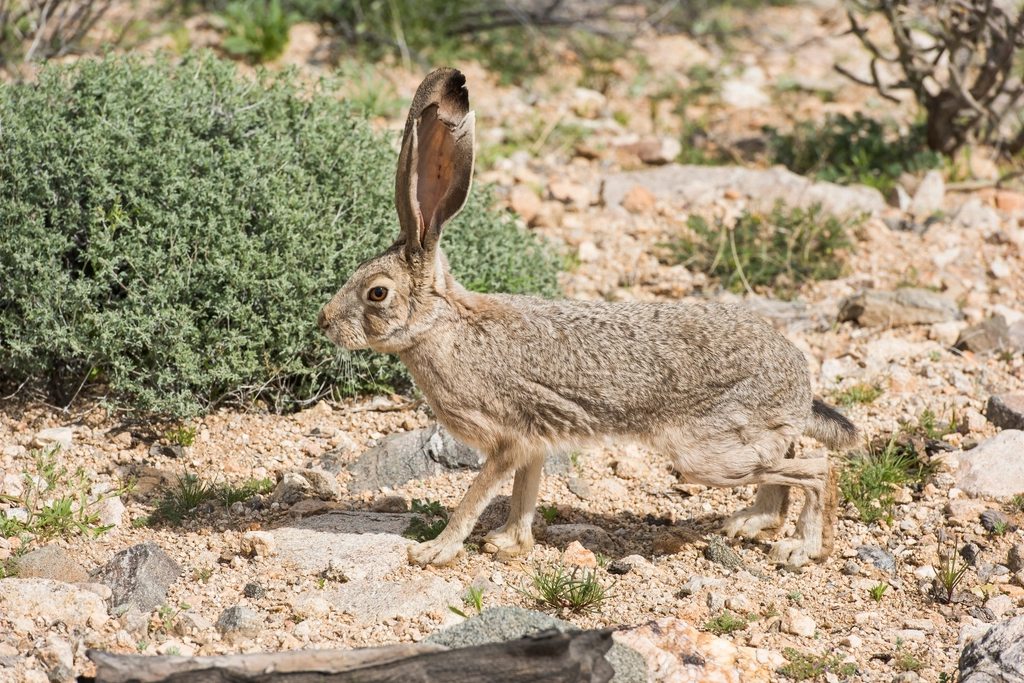 Photo Credit: National Park Service / Rawpixel
In the sun-drenched expanses of North America, the jackrabbit, scientifically known as Lepus, springs to life in a world of vibrant colors and sounds. Picture a vast landscape where golden grasses sway gently in the breeze, and the air is filled with the chirps of crickets and the rustle of leaves. Here, the jackrabbit stands out with its long, powerful legs and oversized ears that seem to dance with every sound. These remarkable features not only make it a master of speed but also a fascinating subject for scientists and nature lovers alike.
As the sun rises, the jackrabbit emerges from its hidden burrow, ready to forage on the tender grasses and twigs that make up its diet. With its keen senses, it navigates the open terrain, always alert for potential predators. This agile creature is not just a swift runner; it plays a vital role in its ecosystem, helping to maintain the balance of plant life. The jackrabbit’s ability to adapt and thrive in diverse habitats—from arid deserts to lush grasslands—captures the imagination and highlights the intricate connections within nature. Join us as we explore the life of the jackrabbit, uncovering the secrets of its behavior, diet, and the important role it plays in the wild.
The jackrabbit, a swift and agile member of the animal kingdom, occupies a fascinating niche in the tree of life. Taxonomically, it belongs to the Kingdom Animalia, which includes all animals, and is classified under the Phylum Chordata, meaning it has a backbone. Within this framework, the jackrabbit is part of the Class Mammalia, indicating it is a mammal that nurses its young with milk. Its order, Lagomorpha, groups it with other small mammals like hares and pikas, while the family Leporidae includes all rabbits and hares. The genus Lepus is where the jackrabbit truly shines, showcasing its long ears and powerful hind legs, which are adaptations that help it thrive in open habitats.
| Taxonomic Rank | Scientific Name | Meaning & Significance |
|---|---|---|
| Kingdom | Animalia | This name comes from the Latin word “animalis,” meaning “having breath,” highlighting the living nature of these organisms. |
| Phylum | Chordata | Derived from the Greek word “chordē,” meaning “string,” this refers to the notochord, a flexible rod that supports the body, found in all members of this group during some stage of development. |
| Class | Mammalia | This term comes from the Latin “mamma,” meaning “breast,” emphasizing the characteristic of mammals to nurse their young with milk. |
| Order | Lagomorpha | From the Greek “lagos,” meaning “hare,” and “morphē,” meaning “form,” this order includes animals that share similar physical traits, like long ears and strong hind legs. |
| Family | Leporidae | This name is derived from the Latin “lepus,” meaning “hare,” which reflects the family’s close association with these agile animals. |
| Genus | Lepus | Also from the Latin word for “hare,” this genus includes species known for their speed and adaptability, traits that are essential for survival in their environments. |
The classification of the jackrabbit reveals much about its evolutionary journey. As a member of the Lagomorpha order, it shares a common ancestor with other small mammals, indicating a long history of adaptation to various environments. Its unique features, such as long ears that help dissipate heat and powerful legs for quick escapes, are not just for show; they are vital for survival in the wild. Understanding where the jackrabbit fits in the tree of life helps us appreciate the intricate connections between species and the evolutionary pressures that shape their development over time.
The evolutionary journey of the jackrabbit stretches back millions of years, weaving through the tapestry of time to reveal a story of adaptation and survival. These nimble animals belong to the genus Lepus, which emerged around 30 million years ago during the late Eocene epoch. As the world changed, so did the ancestors of jackrabbits, evolving to thrive in diverse environments across North America.
The early ancestors of jackrabbits were small, rabbit-like creatures that roamed the forests and grasslands. Over time, they adapted to open habitats, developing longer legs and larger ears. These changes allowed them to run faster and hear better, crucial traits for escaping predators. The transition from forest-dwelling to open plains marked a significant evolutionary shift, as these animals became more specialized for life in the wild, where speed and agility were essential for survival.
The adaptations of the jackrabbit have been crucial for its survival in a world filled with challenges. Their long legs and powerful hindquarters allow them to outrun predators, while their keen hearing and large ears keep them alert to danger. The ability to blend into their environment with camouflage fur provides an extra layer of protection. Together, these traits have enabled jackrabbits to thrive in various habitats, showcasing the incredible power of evolution in shaping life on Earth.
The jackrabbit is a striking figure in the wild, instantly recognizable by its long, powerful legs and oversized ears that seem to catch every sound in the environment. With a body built for speed, it can reach impressive speeds when fleeing from predators. Its sleek form is covered in soft fur, which not only provides warmth but also helps it blend into its surroundings. The combination of its agile body and keen senses makes the jackrabbit a master of survival in the open landscapes it calls home.
| Feature | Description |
|---|---|
| Weight | Three to six pounds |
| Skin Type | Fur |
| Most Distinctive Feature | Long ears |
The jackrabbit’s long ears are not just for show; they serve a crucial purpose in its survival. These ears can detect the faintest sounds, alerting the jackrabbit to potential dangers lurking nearby. Its lightweight body allows for quick, agile movements, enabling it to dart away from threats with remarkable speed. Together, these features create a perfect blend of form and function, allowing the jackrabbit to thrive in its environment while evading predators and navigating the challenges of its habitat.
The jackrabbit thrives in a variety of open landscapes, where its long legs and keen senses help it navigate the terrain. Picture vast stretches of desert, sun-drenched savannas, and rolling grasslands, all offering the perfect backdrop for this agile animal. These habitats are often dotted with sparse vegetation, allowing jackrabbits to blend in while they forage for food and evade predators. The wide-open spaces provide ample room for their impressive speed, making them masters of escape in the wild.
Jackrabbits prefer climates that are warm and dry, which is why they are often found in areas with low rainfall. They thrive in environments where temperatures can soar during the day but may cool off significantly at night. This adaptability to fluctuating temperatures is crucial for their survival, as it allows them to remain active and alert in their search for food and shelter. The open grasslands and deserts they inhabit often experience strong winds, which can help keep them cool during the heat of the day.
In response to their specific habitats, jackrabbits have developed several remarkable adaptations. Their long ears not only help them hear potential threats from afar but also serve to dissipate heat, keeping them cool in the scorching sun. Their powerful hind legs enable them to make quick, agile movements, allowing them to dart away from danger with incredible speed. Additionally, their fur coloration blends seamlessly with the sandy and grassy environments, providing excellent camouflage against predators. These adaptations make the jackrabbit a true survivor in its diverse habitats.
The daily life of a jackrabbit is a blend of activity and rest, shaped by the rhythms of its environment. As dawn breaks, these agile animals emerge from their hiding spots, ready to forage for food. Jackrabbits primarily eat grasses, herbs, and shrubs, using their strong teeth to nibble on the tender greens. They are most active during the cooler parts of the day, often seen hopping gracefully across the landscape in search of sustenance. When the sun climbs high, they retreat to the shade, resting and conserving energy until the evening, when they resume their foraging.
While jackrabbits are generally solitary creatures, they do have interesting social behaviors. They may occasionally gather in small groups, especially in areas with abundant food. These gatherings are not permanent; rather, they are temporary and often consist of a few individuals. Jackrabbits communicate through a series of thumps and body language, signaling to one another when danger is near. Their keen senses help them stay alert, and they rely on their speed to escape predators.
| Behavior Type | Description |
|---|---|
| Activity Patterns | Jackrabbits are crepuscular, meaning they are most active during dawn and dusk, foraging for food and avoiding the heat of the day. |
| Social Structure | Primarily solitary, jackrabbits may form temporary groups in areas with plentiful resources, but they do not establish long-term social bonds. |
| Communication Methods | They communicate through thumping their hind legs and using body language to alert others of potential threats. |
The behaviors of jackrabbits are finely tuned to ensure their survival in the wild. By being active during cooler times and retreating to safety when the sun is high, they minimize the risk of overheating and predation. Their solitary nature allows them to be stealthy and less conspicuous, while their communication methods keep them connected to their surroundings. This combination of strategies helps jackrabbits thrive in their diverse habitats, showcasing the incredible adaptability of life in the wild.
Jackrabbits are herbivores, which means they primarily eat plants. Their diet mainly consists of grasses, twigs, and bark. These nimble animals are well-adapted to foraging in their open habitats, using their keen eyesight and powerful legs to navigate through the vegetation. Jackrabbits often feed during the cooler parts of the day, such as early morning and late afternoon, when they can avoid the heat of the sun. This feeding behavior helps them stay hydrated and nourished while minimizing the risk of predation.
| Dietary Aspect | Details |
|---|---|
| Diet Type | Herbivore |
| Favorite Foods | Grasses, twigs, and bark |
| Prey Items | Primarily plant material |
| Hunting/Foraging Strategies | Forages during cooler times of day, using keen eyesight to spot food |
The diet of jackrabbits plays a crucial role in their ecology and daily routine. By consuming a variety of plant materials, they help maintain the health of their ecosystems, promoting plant growth and providing food for other animals. Their foraging habits also influence their movement patterns, as they seek out areas with abundant vegetation. This connection to their environment not only shapes their survival but also highlights the intricate balance of life in the habitats they call home.
When it comes to mating, jackrabbits are quite the spirited animals. Their breeding season typically kicks off in the spring and can last until late summer. During this time, males engage in a lively courtship dance, which includes bounding around and showcasing their impressive speed. This energetic display helps attract females, who are selective about their mates. Once a female chooses a partner, they will mate multiple times to ensure successful reproduction.
| Reproductive Aspect | Details |
|---|---|
| Gestation Period | 41-47 days |
| Litter Size | Typically 1-4 young |
| Age of Maturity | About 243 days |
| Name of Young | Leveret |
Once the leverets are born, they are surprisingly well-prepared for life outside the womb. These young jackrabbits are born fully furred and with their eyes open, which is quite unusual in the animal kingdom. The mother provides minimal care, often leaving her young hidden in a nest made of grass and fur to protect them from predators. Leverets are weaned quickly and begin to venture out on their own within a few weeks. As they grow, they learn essential survival skills, such as foraging for food and evading danger, eventually maturing into independent adults ready to start the cycle anew.
The jackrabbit plays a crucial role in the food web, serving as both a herbivore and a prey species. By munching on grasses and shrubs, it helps maintain the balance of plant life in its ecosystem. However, this nimble creature is also a vital food source for various predators, making it an essential link in the chain of life. Its position means that while it contributes to the health of its environment, it must constantly be on guard against those that would like to make it their next meal.
To survive in a world filled with dangers, jackrabbits have developed impressive defensive behaviors. Their incredible speed allows them to dart away from predators in a flash, often zigzagging to confuse their pursuers. Additionally, their large ears are not just for show; they help them detect the faintest sounds of approaching threats. When faced with danger, jackrabbits can also rely on their ability to blend into their surroundings, using their fur’s coloration to stay hidden among the grasses and shrubs. These strategies, combined with their keen instincts, help ensure that jackrabbits can continue to thrive despite the challenges they face.
A keystone species is an organism that has a disproportionately large impact on its environment relative to its abundance. This means that if it were removed, the ecosystem would change dramatically. Jackrabbits, with their role as herbivores in various habitats like deserts, savannas, and grasslands, can be considered a keystone species. Their presence helps shape the plant community and influences the populations of other animals in their ecosystem.
Jackrabbits primarily feed on grasses, twigs, and bark, which means they play a vital role in controlling plant growth. By munching on these plants, they prevent any one species from dominating the landscape. This grazing behavior promotes biodiversity, allowing a variety of plants to thrive. In turn, this diverse plant life supports a wide range of other species, from insects to larger mammals, creating a rich tapestry of life.
Moreover, jackrabbits serve as a crucial food source for many predators, including coyotes, hawks, and foxes. Their population dynamics can influence the health and numbers of these predator species. When jackrabbit populations are high, predators may thrive, but if their numbers decline, it can lead to a decrease in predator populations as well. This interconnectedness highlights the jackrabbit’s role in maintaining the balance of the food web.
If jackrabbits were to disappear from their ecosystems, the consequences would be significant. Without their grazing, certain plant species could overgrow, leading to a decline in plant diversity. This change would ripple through the food web, affecting not only the predators that rely on jackrabbits for food but also other herbivores that share their habitat. Ultimately, the loss of jackrabbits could destabilize the entire ecosystem, demonstrating just how vital these agile animals are to the health of their environment.
The jackrabbit occupies a vital ecological niche, acting as both a herbivore and a prey species in its environment. Found in deserts, savannas, and grasslands, these agile animals play a significant role in shaping their ecosystems. By feeding on various plants, they help control vegetation growth, which in turn influences the habitat available for other species. Their presence is essential for maintaining the balance of life in these open landscapes, making them a key player in the intricate web of nature.
| Ecosystem Service | Impact |
|---|---|
| Vegetation Control | Jackrabbits help regulate plant growth by feeding on grasses and shrubs, preventing overgrowth and promoting biodiversity. |
| Prey for Predators | As a food source for various predators, jackrabbits support the survival of species like coyotes and hawks, contributing to the food web. |
| Soil Aeration | Their burrowing and movement through the soil help aerate it, improving water infiltration and nutrient cycling. |
| Seed Dispersal | By consuming and excreting seeds, jackrabbits assist in plant reproduction and the spread of various plant species. |
Jackrabbits influence their ecosystems in several specific ways. For instance, by munching on grasses, they prevent certain plant species from dominating the landscape, allowing a variety of plants to thrive. This diversity is crucial for other animals that rely on different plants for food and shelter. Additionally, their role as prey supports a range of predators, from birds of prey to larger mammals, ensuring that these species can find enough food to survive. Their burrowing habits also help aerate the soil, which is beneficial for plant growth and water absorption.
The broader ecological importance of jackrabbits cannot be overstated. As a keystone species, their presence or absence can dramatically alter the landscape and the dynamics of the ecosystem. When jackrabbits thrive, they contribute to a balanced environment that supports a rich tapestry of life. Conversely, if their populations decline, it can lead to overgrown vegetation and a decrease in predator populations, showcasing just how interconnected all living things are. By understanding the role of jackrabbits, we gain insight into the delicate balance of nature and the importance of every species within it.
In the intricate web of life, symbiosis plays a crucial role in shaping the relationships between different species. Symbiosis refers to the close interactions between organisms, which can be beneficial, harmful, or neutral. These ecological relationships can be classified into three main types: mutualism, where both species benefit; parasitism, where one species benefits at the expense of the other; and commensalism, where one species benefits while the other is neither helped nor harmed. Understanding these connections helps us appreciate the delicate balance of ecosystems and the roles that various species, including jackrabbits, play within them.
| Species/Type | Relationship Type | Description |
|---|---|---|
| Burrowing Owls | Mutualistic | Jackrabbits help maintain open areas in grasslands, which provide hunting grounds for burrowing owls. In return, the owls help control the population of pests that might threaten jackrabbit nests. |
| Ticks | Parasitic | Ticks attach to jackrabbits to feed on their blood, benefiting from the host while potentially harming the rabbit by spreading diseases. |
| Desert Plants | Commensal | Jackrabbits feed on various desert plants, which benefit from the removal of older leaves, allowing for new growth. The plants are not harmed by the jackrabbits’ grazing. |
These relationships have evolved over time, shaped by the needs and behaviors of the species involved. Mutualistic partnerships, like that between jackrabbits and burrowing owls, highlight how cooperation can enhance survival for both parties. Meanwhile, parasitic relationships, such as those with ticks, remind us of the challenges that come with living in close quarters with other organisms. Commensal interactions, like those with desert plants, illustrate how one species can thrive without negatively impacting another. Together, these connections create a dynamic ecosystem where each species, including the jackrabbit, contributes to the overall health and balance of their environment.
Jackrabbits are not just your average hares; they are fascinating animals with some surprising traits that make them stand out in the wild. Here are some intriguing facts that showcase their unique adaptations and behaviors.
Throughout history, jackrabbits have held a special place in the hearts and minds of many cultures. Native American tribes often viewed these swift creatures as symbols of agility and cleverness, weaving them into their folklore and art. In some stories, jackrabbits are depicted as tricksters, embodying the spirit of resilience and adaptability. As settlers moved westward in the United States, they encountered these remarkable animals, which became a part of the American landscape. The jackrabbit’s ability to thrive in harsh environments made it a subject of fascination and respect, highlighting the deep connection between humans and wildlife.
Today, our interactions with jackrabbits are a mix of admiration and conflict. As urban areas expand, these animals often find themselves in closer proximity to human habitats, leading to both conservation efforts and challenges. While some communities work to protect jackrabbit populations and their habitats, others face issues like crop damage, as these herbivores can munch through gardens and fields. Interestingly, there are also efforts to domesticate certain rabbit species, though jackrabbits remain wild and elusive. This complex relationship showcases the need for balance between human development and wildlife conservation.
As we look to the future, the relationship between jackrabbits and humanity will likely continue to evolve. With increasing awareness of environmental issues, more people are recognizing the importance of preserving natural habitats. By fostering coexistence and understanding, we can ensure that these agile animals thrive alongside us. The story of the jackrabbit is not just about survival; it’s about the shared journey of all living beings on this planet, reminding us of the delicate balance we must maintain.
The conservation status of jackrabbits is currently classified as “Least Concern” by the International Union for Conservation of Nature (IUCN). This means that, at present, they are not facing an immediate threat of extinction. Their populations are generally stable, although local fluctuations can occur due to environmental changes and habitat conditions. Overall, jackrabbits continue to thrive across their diverse habitats, which range from deserts to grasslands.
| Conservation Factor | Status/Details |
|---|---|
| IUCN Status | Least Concern |
| Population Estimates | Stable, with local variations |
| Trend Direction | Stable |
Despite their stable status, jackrabbits face several threats that can impact their populations. Habitat loss is a significant concern, as urban development and agricultural expansion encroach on their natural environments. Additionally, climate change can alter the availability of food and suitable habitats, making survival more challenging. Predation from animals like coyotes and hawks also plays a role in their population dynamics, as these predators rely on jackrabbits as a food source.
Conservation efforts for jackrabbits focus on habitat preservation and restoration. By protecting their natural environments, we can help ensure that these agile animals continue to thrive. Organizations and wildlife agencies are working to raise awareness about the importance of maintaining healthy ecosystems. With ongoing efforts, the outlook for jackrabbits remains positive, allowing them to continue their role in the intricate web of life.
| Question | Answer |
|---|---|
| What is a jackrabbit's habitat? | Jackrabbits are commonly found in deserts, savannas, and grasslands. These open areas provide them with plenty of space to run and hide from predators. |
| What do jackrabbits eat? | Jackrabbits are herbivores, which means they primarily eat plants. Their diet includes grasses, leaves, and even some fruits, helping them stay healthy and energetic. |
| How do jackrabbits behave? | Jackrabbits are known for their incredible speed and agility. They can run up to 40 miles per hour, using their long legs to escape from predators like coyotes and hawks. |
| How do jackrabbits reproduce? | Jackrabbits have a fascinating breeding cycle. A female can have several litters each year, with each litter containing up to four baby jackrabbits, called leverets, which are born fully furred and able to hop shortly after birth. |
| What are the main threats to jackrabbits? | While jackrabbits are currently classified as Least Concern, they face threats from habitat loss and predators. Changes in land use and climate can impact their populations and the availability of food. |
| What is a unique characteristic of jackrabbits? | One of the most distinctive features of jackrabbits is their long ears. These ears help regulate their body temperature and enhance their hearing, making them more alert to danger. |
| Can jackrabbits be found in urban areas? | Yes, jackrabbits can sometimes be seen in urban areas, especially if there are parks or open spaces. They adapt well to different environments as long as they have access to food and shelter. |