Taxonomy & Classification
- Kingdom
- Animalia
- Phylum
- Chordata
- Class
- Mammalia
- Order
- Rodentia
- Family
- Sciuridae
- Genus
- Sciurus
- Species
- Sciurus lis

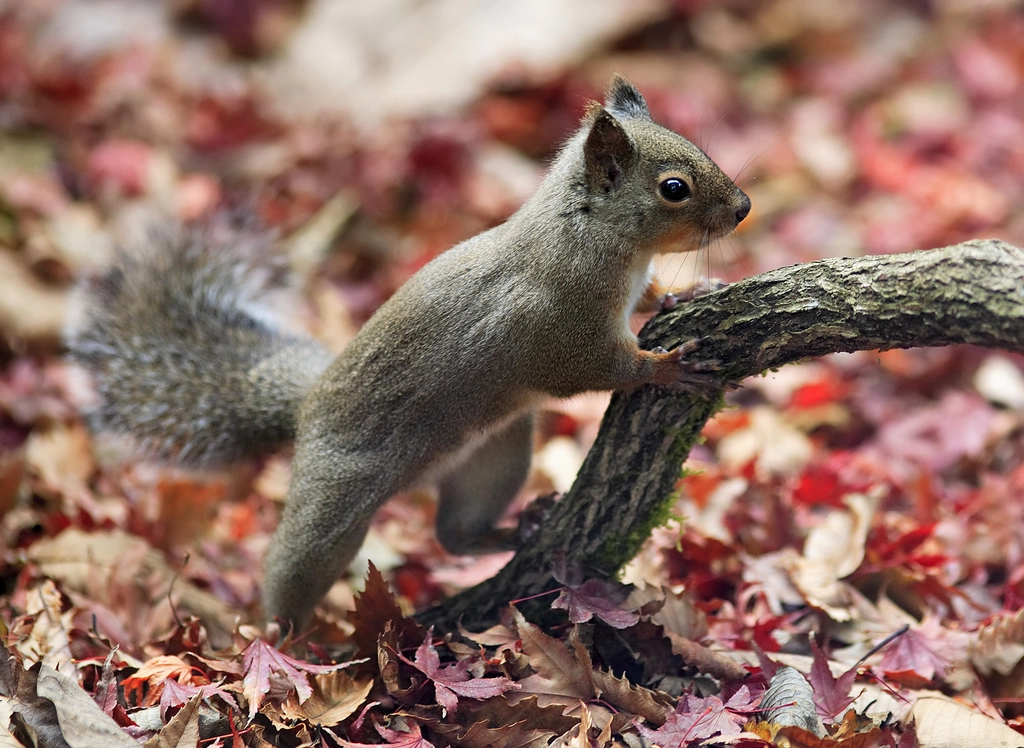 Photo Credit: Rawpixel
In the heart of Japan’s lush forests, the Japanese Squirrel, or Sciurus lis, dances among the branches, a lively embodiment of nature’s charm. With its strikingly bushy tail and soft, reddish-brown fur, this small mammal captures the attention of anyone lucky enough to spot it. As it leaps gracefully from tree to tree, the Japanese Squirrel showcases not only its agility but also its role as a vital player in the forest ecosystem. Scientists and nature enthusiasts alike are drawn to this delightful creature, intrigued by its behaviors and the important part it plays in its habitat.
Imagine a sun-dappled morning, where the air is filled with the sounds of rustling leaves and chirping birds. The Japanese Squirrel emerges from its nest, a cozy home built high in the trees, and begins its daily adventure. With a diet that includes seeds, nuts, and even the occasional insect, this omnivorous little forager scours the forest floor and branches for tasty treats. Its playful antics and social interactions, especially during the lively breeding season, reveal a world of communication and connection that adds depth to its character. As we explore the life of the Japanese Squirrel, we uncover not just its fascinating traits but also the intricate web of relationships that sustain its existence in the vibrant tapestry of Japan’s woodlands.
The Japanese Squirrel, known scientifically as Sciurus lis, occupies a special place in the tree of life. This small mammal belongs to the kingdom Animalia, which includes all animals, and is part of the phylum Chordata, meaning it has a backbone. As a member of the class Mammalia, it shares traits with other mammals, such as fur and the ability to nurse its young. What sets the Japanese Squirrel apart is its striking fur, which can range from gray to reddish-brown, and its bushy tail that helps with balance as it leaps between branches. This agile rodent is not just a charming sight in the forests of Japan; it also plays a vital role in its ecosystem by helping to disperse seeds.
| Taxonomic Rank | Scientific Name | Meaning & Significance |
|---|---|---|
| Kingdom | Animalia | This name signifies that the Japanese Squirrel is part of the vast group of multicellular organisms known as animals. |
| Phylum | Chordata | Chordata means “having a cord,” referring to the notochord, a flexible rod that supports the body, which all members of this group possess at some stage of development. |
| Class | Mammalia | Mammalia comes from the Latin word “mamma,” meaning breast, highlighting the characteristic of females nursing their young with milk. |
| Order | Rodentia | Rodentia is derived from the Latin word “rodere,” meaning to gnaw, which reflects the strong front teeth that rodents, including squirrels, use to chew through tough materials. |
| Family | Sciuridae | Sciuridae comes from the Greek word “skiouros,” meaning “shadow tail,” a nod to the bushy tails that help these animals balance and communicate. |
| Genus | Sciurus | Sciurus is also derived from Greek, meaning “squirrel,” and is used to classify various species of squirrels known for their agility and tree-dwelling habits. |
| Species | lis | The species name “lis” is less commonly discussed but helps distinguish this particular type of squirrel within the Sciurus genus. |
Understanding the Japanese Squirrel’s classification reveals much about its evolutionary journey. As a member of the Sciuridae family, it shares a common ancestor with other squirrels, which adapted to life in trees millions of years ago. This adaptation has led to specialized features, such as their excellent climbing abilities and keen sense of balance. The Japanese Squirrel’s place in the animal kingdom not only highlights its unique characteristics but also underscores the intricate web of life that connects all living beings through shared ancestry and evolutionary change.
The evolutionary journey of the Japanese Squirrel, or Sciurus lis, stretches back millions of years, intertwining with the rich tapestry of life on Earth. This small mammal is part of the Sciuridae family, which includes all squirrels, and has adapted to the lush forests of Japan. The story of the Japanese Squirrel is one of survival, adaptation, and the gradual changes that have shaped its existence in a dynamic environment.
The ancestors of modern squirrels emerged during the late Eocene epoch, around 40 million years ago. These early rodents were small and agile, living in trees and feeding on a diet of nuts and seeds. Over time, as the climate changed and forests expanded, these ancestral forms evolved into various species, including the Japanese Squirrel. One major transition occurred when squirrels developed a more specialized diet, allowing them to thrive in diverse habitats. This shift was crucial as it enabled them to exploit the abundant food sources found in Japan’s forests, such as acorns and chestnuts.
The adaptations of the Japanese Squirrel have been essential for its survival in the diverse and sometimes challenging environments of Japan. Its ability to thrive on a herbivorous diet, combined with physical traits like strong hind limbs and thick fur, allows it to navigate its forest home effectively. Moreover, its excellent memory for food storage ensures that it can endure through the seasons. Together, these traits not only highlight the resilience of the Japanese Squirrel but also illustrate the intricate dance of evolution that has shaped this captivating species over time.
The Japanese Squirrel is a delightful sight, embodying the charm of the forests it inhabits. With a body that reaches up to 15 centimeters in height and a weight ranging from 250 to 310 grams, this small mammal is perfectly designed for life among the trees. Its most striking feature is its big, bushy tail, which not only adds to its visual appeal but also plays a crucial role in its daily activities. The squirrel’s fur is soft and dense, providing insulation against the chill of its woodland home.
| Feature | Description |
|---|---|
| Height | Up to 15 cm (6 in) |
| Weight | 250-310 g (9-11 oz) |
| Skin Type | Hair |
| Most Distinctive Feature | Big, bushy tail |
The combination of its size, weight, and luxurious fur allows the Japanese Squirrel to thrive in its environment. The bushy tail serves multiple purposes: it acts as a parachute when the squirrel leaps from branch to branch, helping to stabilize its descent. Additionally, the tail can be used as a blanket during colder months, keeping the squirrel warm. This clever adaptation, along with its agile body, ensures that the Japanese Squirrel is well-equipped to navigate the treetops and evade predators, making it a true master of its arboreal domain.
The Japanese Squirrel thrives in the lush embrace of mixed forests, where towering trees create a vibrant canopy overhead. These woodlands are a tapestry of life, filled with a variety of trees, shrubs, and underbrush that provide both shelter and food. The dappled sunlight filters through the leaves, casting playful shadows on the forest floor, where the squirrels can often be seen darting between branches or foraging for acorns and seeds. This enchanting habitat is not just a home; it’s a bustling community teeming with life.
The Japanese Squirrel prefers a temperate climate, which means it enjoys mild summers and cool winters. These forests experience a good amount of rainfall, nourishing the trees and plants that make up its habitat. The changing seasons bring a variety of food sources, from fresh buds in spring to acorns in autumn. This climate supports a rich ecosystem, allowing the Japanese Squirrel to thrive among its leafy surroundings.
Adaptation is key for the Japanese Squirrel, enabling it to flourish in its forest home. Its sharp claws and agile body allow it to navigate the treetops with ease, while its bushy tail helps with balance and communication. The squirrel’s diet is diverse, allowing it to take advantage of whatever food is available throughout the year. By being both a forager and a climber, the Japanese Squirrel has become perfectly suited to life in the mixed forests of Japan, showcasing the beauty of nature’s design.
The Japanese Squirrel, or Sciurus lis, leads a lively and engaging daily life in the forests of Japan. As dawn breaks, these small mammals begin their day, scurrying through the trees in search of breakfast. Their diet mainly consists of nuts, seeds, and fruits, which they expertly forage from the forest floor and branches. Throughout the day, they alternate between foraging and resting, often taking breaks to groom their soft fur or bask in the sunlight. As evening approaches, they prepare for the night, finding cozy spots in tree hollows or nests made of leaves and twigs.
While Japanese Squirrels are primarily solitary creatures, they do exhibit interesting social behaviors, especially during the breeding season. Males may engage in playful chases to attract females, showcasing their agility and speed. Although they prefer to live alone, they can sometimes be seen sharing a tree or foraging in the same area, especially when food is abundant. Communication among these squirrels is subtle yet effective; they use a variety of vocalizations, such as chirps and barks, to signal their presence or warn others of potential threats.
| Behavior Type | Description |
|---|---|
| Activity Patterns | Active during the day, foraging for food, resting in trees, and grooming. |
| Social Structure | Primarily solitary, with occasional interactions during breeding season. |
| Communication Methods | Vocalizations like chirps and barks to signal presence and warn of danger. |
The behaviors of the Japanese Squirrel are finely tuned to ensure their survival in the wild. By foraging efficiently and maintaining a solitary lifestyle, they reduce competition for food and resources. Their ability to communicate effectively helps them navigate their environment and avoid predators. Each day is a blend of activity and rest, allowing these squirrels to thrive in their forest homes, showcasing the delicate balance of life in nature.
The Japanese Squirrel is an omnivore, which means it enjoys a varied diet that includes both plant and animal matter. This adaptability allows it to thrive in its forest habitat. These squirrels primarily feast on nuts, seeds, fruits, and even fungi, which they skillfully forage from the forest floor and the branches of trees. Their keen sense of smell helps them locate hidden food sources, while their agile climbing skills enable them to reach high branches where tasty treats await.
| Dietary Aspect | Details |
|---|---|
| Diet Type | Omnivore |
| Favorite Foods | Nuts, seeds, fruits, and fungi |
| Prey Items | Occasionally insects and small invertebrates |
| Hunting/Foraging Strategies | Forages on the ground and climbs trees to find food |
The diet of the Japanese Squirrel plays a crucial role in its ecology and daily routine. By consuming a variety of foods, these squirrels help disperse seeds throughout their forest home, promoting plant growth and maintaining the health of their ecosystem. Their foraging habits also mean they are constantly on the move, which keeps them active and engaged in their environment. This dynamic lifestyle not only supports their survival but also contributes to the vibrant life of the forests they inhabit.
The mating behavior of the Japanese Squirrel is a lively affair, marked by playful chases and vocalizations. Breeding season typically occurs in late winter to early spring, when the trees are still bare, and the squirrels are eager to find mates. During this time, males will often engage in spirited displays to attract females, showcasing their agility and strength. Once a pair has formed, they will mate multiple times over a few days, ensuring the female has a good chance of becoming pregnant.
| Reproductive Aspect | Details |
|---|---|
| Gestation Period | 40 days |
| Litter Size | 2 to 4 kits |
| Age of Sexual Maturity | 300 days |
| Name of Young | Kits |
After the kits are born, the mother takes on the crucial role of caregiver. She builds a cozy nest in tree hollows or dense foliage, providing a safe haven for her young. The kits are born blind and hairless, relying entirely on their mother for warmth and nourishment. As they grow, they begin to develop fur and open their eyes, becoming more active and curious about their surroundings. By the time they reach about 300 days old, they are ready to venture out on their own, equipped with the skills they need to thrive in the wild. This nurturing process is vital, as it helps the young squirrels learn how to forage and navigate their forest home, ensuring the continuation of their species.
The Japanese Squirrel, or Sciurus lis, plays a vital role in its ecosystem, serving as both a consumer and a prey species. As an omnivore, it helps control plant populations by feeding on seeds and fruits, while also providing nourishment for various predators. This delicate balance keeps the forest thriving, but it also places the Japanese Squirrel in a precarious position within the food web.
To survive against these threats, the Japanese Squirrel has developed several clever strategies. It relies on its agility and speed to dart through the trees, making it difficult for predators to catch it. When danger approaches, these squirrels can quickly climb to higher branches or hide in dense foliage. Additionally, their keen sense of hearing helps them detect potential threats early, allowing them to escape before being spotted. By using these defensive behaviors, the Japanese Squirrel continues to thrive in its forest home, despite the challenges it faces.
A keystone species is an organism that has a disproportionately large impact on its environment relative to its abundance. These species play critical roles in maintaining the structure of an ecosystem. The Japanese Squirrel, or Sciurus lis, qualifies as a keystone species due to its significant influence on forest dynamics and the overall health of its habitat.
The Japanese Squirrel contributes to its ecosystem in several important ways. As an omnivore, it feeds on a variety of foods, including seeds, nuts, and fruits. This feeding behavior helps control plant populations, ensuring that no single species dominates the forest. By consuming seeds, the squirrels also aid in seed dispersal. When they bury nuts for later consumption, some of these seeds are forgotten and can sprout into new trees, promoting forest regeneration. This process is vital for maintaining biodiversity, as it allows different plant species to thrive.
Additionally, the Japanese Squirrel serves as a food source for various predators, including birds of prey and small carnivores. By being part of the food web, it helps sustain these predator populations, which in turn keeps the ecosystem balanced. The presence of the Japanese Squirrel can indicate a healthy forest environment, as it relies on a rich habitat filled with diverse plant life.
If the Japanese Squirrel were to disappear, the effects on its ecosystem could be profound. Without this squirrel, seed dispersal would decline, leading to fewer new trees and a potential decrease in plant diversity. This could create a ripple effect, impacting other species that rely on these plants for food and shelter. Predators that depend on the Japanese Squirrel for sustenance might struggle to find enough food, leading to declines in their populations as well. Overall, the loss of the Japanese Squirrel would disrupt the delicate balance of its forest habitat, highlighting just how crucial this small mammal is to its environment.
The Japanese Squirrel, or Sciurus lis, plays a vital role in its ecosystem, particularly within the mixed forests of Japan. This small mammal occupies an ecological niche as both a forager and a prey species. By feeding on a variety of seeds, nuts, and fruits, it helps to shape the plant community and influences the growth of trees and shrubs. In turn, this activity supports a diverse range of other wildlife, creating a dynamic web of life in its forest home.
| Ecosystem Service | Impact |
|---|---|
| Seed Dispersal | Helps in the growth of new plants by burying seeds, which can sprout into new trees. |
| Food Source | Serves as prey for larger predators, contributing to the food chain. |
| Habitat Maintenance | Influences the structure of the forest by feeding on certain plants, allowing others to thrive. |
| Soil Aeration | Digging for food helps to aerate the soil, promoting healthier plant growth. |
The Japanese Squirrel’s influence is particularly evident in its role as a seed disperser. When these squirrels bury nuts and seeds for later consumption, they often forget about some of their hidden treasures. This behavior leads to the growth of new plants, which can alter the landscape over time. For example, by burying acorns, they contribute to the regeneration of oak trees, which are crucial for many other species in the forest. Additionally, their foraging habits help maintain a balance in the plant community, ensuring that no single species dominates the ecosystem.
The broader ecological importance of the Japanese Squirrel cannot be overstated. As a keystone species, it supports not only the plant life in its habitat but also the myriad of animals that depend on those plants for food and shelter. By maintaining the health of the forest ecosystem, the Japanese Squirrel plays a crucial role in sustaining biodiversity. This interconnectedness highlights the importance of every species, no matter how small, in the grand tapestry of nature.
In the intricate web of life, symbiosis refers to the close and often long-term interactions between different species. These relationships can take many forms, including mutualism, where both species benefit, parasitism, where one benefits at the expense of the other, and commensalism, where one benefits while the other is neither helped nor harmed. The Japanese Squirrel, or Sciurus lis, engages in various ecological partnerships that highlight the interconnectedness of forest ecosystems.
| Species/Type | Relationship Type | Description |
|---|---|---|
| Oak Trees | Mutualistic | The Japanese Squirrel helps disperse acorns, which allows oak trees to reproduce, while the squirrels benefit from the food source. |
| Birds (e.g., Blue Tits) | Commensal | Birds may follow squirrels to find seeds and nuts that the squirrels drop, benefiting from the leftovers without affecting the squirrels. |
| Parasites (e.g., fleas) | Parasitic | Fleas and other parasites live on the Japanese Squirrel, feeding on its blood, which can harm the squirrel’s health. |
These relationships have evolved over time, shaped by the needs and behaviors of the species involved. The mutualistic bond between the Japanese Squirrel and oak trees is a prime example of how cooperation can enhance survival. By helping to spread acorns, the squirrels ensure a future food supply, while the trees secure their propagation. Meanwhile, the commensal relationship with birds illustrates how different species can coexist and benefit from one another without direct competition. However, the presence of parasites reminds us that not all interactions are beneficial. Understanding these dynamics helps us appreciate the delicate balance of nature and the roles each species plays in maintaining healthy ecosystems.
The Japanese Squirrel, or Sciurus lis, is a captivating little mammal that brings life to the forests of Japan. With its big, bushy tail and lively antics, this squirrel is full of surprises that even seasoned nature enthusiasts might not know.
The Japanese Squirrel, or Sciurus lis, has long been intertwined with human culture and history in Japan. These charming creatures have been depicted in traditional art and folklore, often symbolizing playfulness and agility. In ancient times, they were admired for their lively nature and were sometimes seen as messengers of good fortune. As people settled in the lush forests of Japan, encounters with these squirrels became common, leading to a rich tapestry of stories and cultural significance that still resonates today.
In modern times, the relationship between Japanese Squirrels and humans has evolved, reflecting both cooperation and conflict. Conservation efforts are underway to protect their habitats, as urbanization and deforestation threaten their populations. While many people appreciate these squirrels for their role in the ecosystem, some view them as pests, particularly when they raid gardens or bird feeders. Interestingly, there are also efforts to domesticate them, with some enthusiasts keeping them as pets, although this practice raises ethical questions about their well-being and natural behaviors.
As we look to the future, the relationship between Japanese Squirrels and humanity will likely continue to evolve. With increasing awareness of environmental issues, more people may come to appreciate the vital role these squirrels play in their ecosystems. Balancing conservation efforts with the challenges of urban living will be key to ensuring that both humans and Japanese Squirrels can thrive together. By fostering a deeper understanding and respect for these delightful animals, we can create a harmonious coexistence that benefits both species.
The Japanese Squirrel, known scientifically as Sciurus lis, currently holds a conservation status of “Least Concern” according to the International Union for Conservation of Nature (IUCN). This means that, overall, the species is not facing immediate threats of extinction. However, specific population estimates remain unknown, making it difficult to assess trends accurately. While the species is generally stable, ongoing monitoring is essential to ensure that it continues to thrive in its natural habitat.
| Conservation Factor | Status/Details |
|---|---|
| IUCN Status | Least Concern |
| Estimated Population Size | Unknown |
| Population Trend | Stable |
Despite its current stable status, the Japanese Squirrel faces several threats that could impact its future. Habitat loss is a significant concern, primarily due to urban development and deforestation. As forests are cleared for agriculture and infrastructure, these squirrels lose their homes and food sources. Additionally, climate change poses a risk by altering the ecosystems they depend on, potentially affecting their food availability and breeding patterns.
Conservation efforts are underway to protect the Japanese Squirrel and its habitat. Initiatives include habitat restoration and the establishment of protected areas where these squirrels can thrive without the pressures of human encroachment. Public awareness campaigns also play a crucial role in educating communities about the importance of preserving these charming mammals and their forest homes. With continued efforts, the outlook for the Japanese Squirrel remains hopeful, ensuring that future generations can enjoy the lively antics of this delightful species.
| Question | Answer |
|---|---|
| What is the habitat of the Japanese Squirrel? | The Japanese Squirrel primarily lives in mixed forests, which are areas that contain both coniferous and deciduous trees. These forests provide the perfect environment for them to find food and build nests. |
| What does the Japanese Squirrel eat? | As an omnivore, the Japanese Squirrel has a varied diet that includes nuts, seeds, fruits, and even insects. This diverse menu helps them get the nutrients they need to stay healthy and energetic. |
| What are some interesting behaviors of the Japanese Squirrel? | Japanese Squirrels are known for their playful and agile nature. They often leap from tree to tree, using their big, bushy tails for balance, and they can even glide short distances between branches. |
| How do Japanese Squirrels reproduce? | During the breeding season, which typically occurs in spring and summer, female Japanese Squirrels build nests to raise their young. After a gestation period of about 44 days, they give birth to a litter of 2 to 5 baby squirrels. |
| What threats do Japanese Squirrels face? | While the Japanese Squirrel is currently classified as Least Concern, they still face threats from habitat loss due to deforestation and urban development. Additionally, they can be vulnerable to predators like birds of prey and domestic cats. |
| What is a distinctive feature of the Japanese Squirrel? | The most distinctive feature of the Japanese Squirrel is its large, bushy tail. This tail not only helps with balance but also serves as a warm blanket during cold weather and a parachute when they jump from heights. |
| Are Japanese Squirrels social animals? | Japanese Squirrels are generally solitary creatures, preferring to live alone or in small family groups. However, they can sometimes be seen interacting with each other, especially during the breeding season. |