Taxonomy & Classification
- Kingdom
- Animalia
- Phylum
- Chordata
- Class
- Mammalia
- Order
- Perissodactyla
- Family
- Equidae
- Genus
- Equus
- Species
- Equus kiang

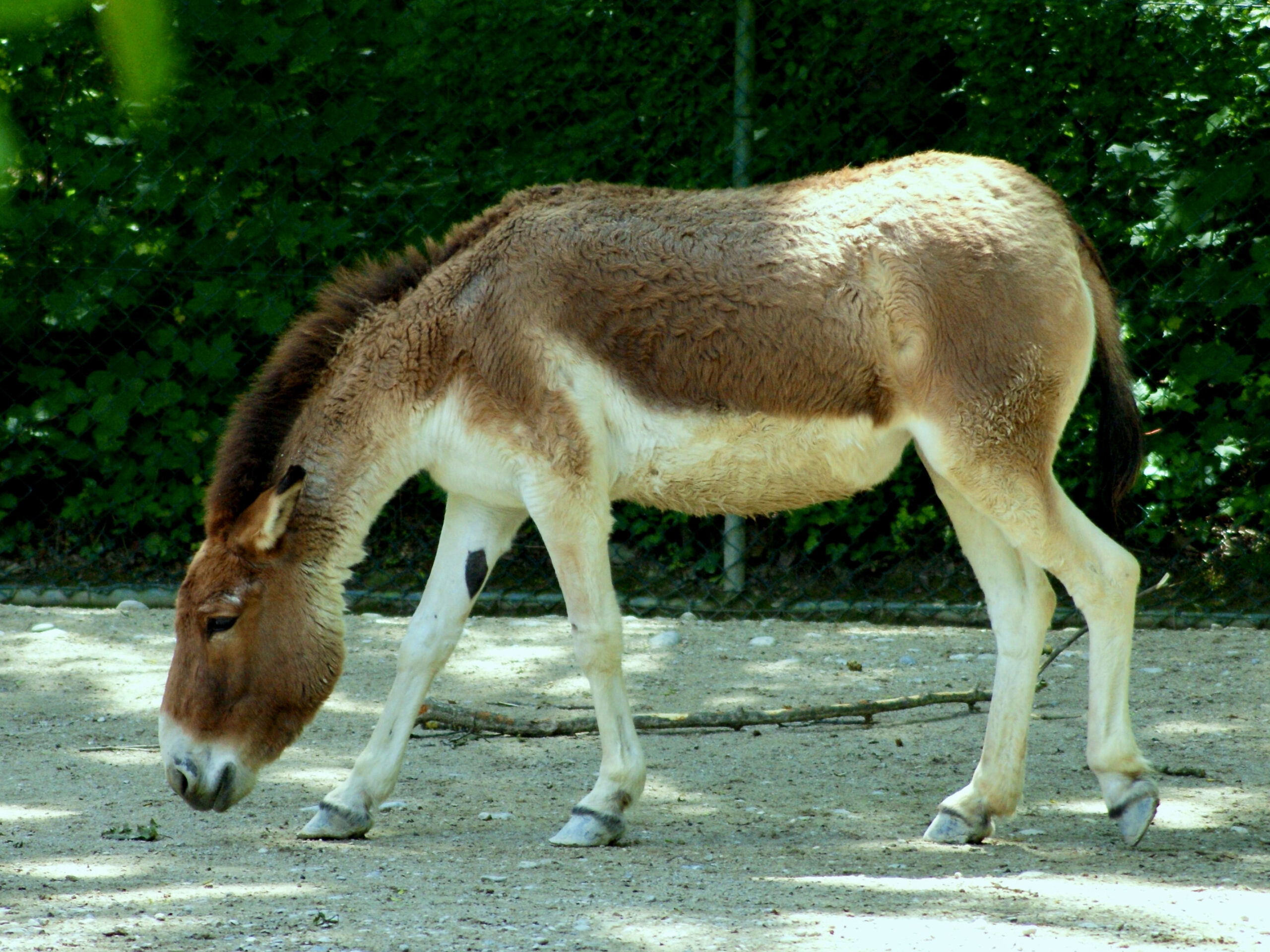 Photo Credit: NasserHalaweh / Wikimedia Commons
In the vast, windswept expanses of the Tibetan Plateau, the Kiang, scientifically known as Equus kiang, stands as a symbol of resilience and beauty. This wild donkey, with its striking chestnut coat and long, slender legs, is perfectly adapted to the high-altitude grasslands and rugged terrain that define its home. As the sun rises over the horizon, casting a golden hue across the landscape, the Kiang can be seen grazing on the sparse grasses that cling to life in this harsh environment. Its large, expressive eyes and tufted mane give it a distinctive appearance, making it a captivating sight for both scientists and nature lovers alike.
What makes the Kiang particularly intriguing is not just its striking looks but also its vital role in the ecosystem of the Tibetan Plateau. As a herbivore, it helps maintain the balance of plant life, grazing on grasses and other vegetation that might otherwise overgrow. This grazing behavior supports the health of the grasslands, allowing a variety of other species to thrive alongside it. With its ability to survive in elevations ranging from 2,700 to 5,400 meters (approximately 8,900 to 17,700 feet), the Kiang showcases the incredible adaptability of life in extreme conditions. As we delve deeper into the world of the Kiang, we will explore its behavior, diet, and the unique challenges it faces in its high-altitude home.
The Kiang, a wild donkey native to the high plateaus of Central Asia, holds a special place in the animal kingdom. Taxonomically, it belongs to the Kingdom Animalia, which includes all animals, and is classified under the Phylum Chordata, meaning it has a backbone. As a member of the Class Mammalia, it shares traits like warm-bloodedness and fur with other mammals. The Kiang is part of the Order Perissodactyla, which includes odd-toed ungulates like horses and rhinos. Its family, Equidae, is known for its hoofed members, and the genus Equus encompasses all modern horses, zebras, and donkeys. What makes the Kiang particularly interesting is its adaptation to life in harsh, high-altitude environments, showcasing the incredible diversity of life on Earth.
| Taxonomic Rank | Scientific Name | Meaning & Significance |
|---|---|---|
| Kingdom | Animalia | This name comes from the Latin word “animalis,” meaning “having breath,” highlighting the living nature of all animals. |
| Phylum | Chordata | Derived from the Greek word “chordē,” meaning “string,” referring to the notochord, a flexible rod that supports the body in all chordates during some stage of development. |
| Class | Mammalia | This term comes from the Latin “mamma,” meaning “breast,” indicating that members of this class nurse their young with milk. |
| Order | Perissodactyla | From the Greek “perissos,” meaning “odd,” and “dactylos,” meaning “finger,” this order is characterized by having an odd number of toes on their feet. |
| Family | Equidae | This name is derived from the Latin “equus,” meaning “horse,” which reflects the family’s close relationship with horses and their relatives. |
| Genus | Equus | Also from the Latin “equus,” this genus includes all modern horses, donkeys, and zebras, emphasizing their shared ancestry and characteristics. |
The classification of the Kiang reveals much about its evolutionary journey. As a member of the Equidae family, it shares a common ancestor with horses and zebras, illustrating how species can adapt to different environments over time. The Kiang’s unique adaptations to the rugged terrain of the Tibetan Plateau highlight the incredible ways life can evolve in response to challenges. Understanding its place in the tree of life not only enriches our knowledge of biodiversity but also emphasizes the interconnectedness of all living beings on our planet.
The evolutionary journey of the Kiang, a wild donkey found in the high plateaus of Central Asia, stretches back millions of years. This fascinating animal is part of the Equidae family, which includes horses, zebras, and other donkeys. The story of the Kiang is intertwined with the evolution of the genus Equus, which emerged around 4 to 5 million years ago. As the climate and landscapes of Central Asia changed, so too did the ancestors of the Kiang, adapting to survive in the harsh environments of the Tibetan Plateau.
The ancestors of the Kiang were small, forest-dwelling equids that roamed the grasslands and woodlands of ancient Eurasia. Over time, as the climate shifted and open grasslands expanded, these early equids began to adapt to a more terrestrial lifestyle. One major transition was the development of longer legs and a more robust body, allowing them to run faster and cover greater distances in search of food and water. This adaptation was crucial for survival in the vast, arid regions they began to inhabit.
These adaptations have been vital for the Kiang’s survival in one of the most challenging environments on Earth. By developing long legs for speed, a thick coat for warmth, and social behaviors for protection, the Kiang has thrived where few other animals can. Its ability to efficiently digest tough grasses ensures it can find sustenance even in the sparse high-altitude landscape. The evolutionary story of the Kiang is a testament to the resilience and adaptability of life in the face of changing environments.
The Kiang is an impressive sight, standing tall and proud against the backdrop of the rugged Tibetan Plateau. With a sturdy build, this wild donkey can weigh between 550 to 880 pounds, giving it a robust and powerful presence. Its long legs are designed for traversing the rocky terrain, while its strong body is covered in a thick layer of fur that helps it withstand the harsh climate. The Kiang’s overall appearance is a blend of strength and grace, making it a remarkable inhabitant of its high-altitude home.
| Feature | Description |
|---|---|
| Size | Weight ranges from 550 to 880 pounds, showcasing a robust physique. |
| Color | Typically a rich brown with lighter underparts, providing camouflage in its natural habitat. |
| Skin Type | Covered in thick fur, which insulates against cold temperatures. |
The Kiang’s physical features are not just for show; they play vital roles in its survival. The thick fur acts as a protective barrier against the biting cold of the high altitudes, while its sturdy legs allow it to navigate rocky paths with ease. The coloration of its coat helps it blend into the landscape, making it less visible to predators. Together, these characteristics enable the Kiang to thrive in one of the most challenging environments on Earth, showcasing the incredible adaptability of life in extreme conditions.
The Kiang roams the breathtaking landscapes of the Tibetan Plateau, a vast expanse characterized by its high-altitude grasslands and rugged terrain. Here, the air is crisp and thin, and the scenery is painted with sweeping vistas of mountains and valleys. The Kiang thrives in this dramatic environment, where the grasslands stretch endlessly, providing ample grazing opportunities. This wild donkey is perfectly at home in the stark beauty of its surroundings, where the sky meets the earth in a dazzling display of colors.
The climate of the Kiang’s habitat is as extreme as it is beautiful. These high-altitude regions experience significant temperature fluctuations, with chilly nights and warm days. The Kiang is well-suited to endure these conditions, as it can be found at elevations ranging from 2,700 to 5,400 meters (approximately 8,900 to 17,700 feet). The environment is often dry, with sparse vegetation, but the Kiang has adapted to thrive in these alpine and desert steppes, where grass and hardy plants are the primary food sources.
To survive in such a challenging habitat, the Kiang has developed several remarkable adaptations. Its thick coat provides insulation against the cold, while its strong legs allow it to navigate the rocky terrain with ease. The Kiang’s digestive system is also specially designed to extract nutrients from tough grasses, enabling it to make the most of the limited food available. This combination of physical traits and behavioral strategies ensures that the Kiang not only survives but flourishes in the high-altitude grasslands of Central Asia.
The Kiang leads a vibrant daily life on the Tibetan Plateau, where the sun rises over the rugged landscape. As a diurnal animal, it is most active during the day, spending its time grazing on the sparse grasses and shrubs that dot its high-altitude home. These wild donkeys are well-adapted to their environment, using their strong legs to navigate the rocky terrain with ease. Throughout the day, they engage in various activities, from foraging for food to resting in the shade during the hottest hours.
Socially, Kiangs are herd animals, often found in groups that can range from a few individuals to larger bands. This social structure is vital for their survival, as it provides protection against predators and helps them find food more efficiently. Within the herd, Kiangs communicate through a series of vocalizations and body language, strengthening their bonds and coordinating their movements. The dynamics of the group are fascinating, with established hierarchies that help maintain order and ensure that everyone has access to resources.
| Behavior Type | Description |
|---|---|
| Activity Patterns | Kiangs are diurnal, meaning they are active during the day, primarily grazing and socializing. |
| Social Structure | They live in herds, which provide safety in numbers and help with foraging. |
| Communication Methods | Kiangs use vocalizations and body language to communicate, reinforcing social bonds. |
The behaviors of the Kiang are not just interesting; they are essential for their survival in the harsh environment of the Tibetan Plateau. By living in herds, they can better protect themselves from predators and share knowledge about food sources. Their daily activities and social interactions help them thrive in a challenging landscape, showcasing the incredible adaptability of this wild donkey.
The Kiang is a herbivore, which means it primarily eats plants. This wild donkey has adapted to thrive in the harsh conditions of the Tibetan Plateau, where it grazes on a variety of grasses and other vegetation. Kiangs are social animals and often feed in groups, using their keen eyesight and strong sense of smell to locate food. They are well-suited to their environment, able to cover large distances in search of nutritious plants to sustain their energy levels.
| Dietary Aspect | Details |
|---|---|
| Diet Type | Herbivore |
| Favorite Foods | Grasses, herbs, and shrubs |
| Prey Items | None (as a herbivore) |
| Hunting/Foraging Strategies | Grazing in groups, using keen eyesight and smell |
The Kiang’s diet plays a crucial role in its ecology and daily routine. By grazing on the grasses of the Tibetan Plateau, it helps maintain the health of the grasslands, promoting biodiversity in its habitat. This feeding behavior not only supports the Kiang’s own survival but also influences the entire ecosystem, as the plants they consume provide food and shelter for other animals. The Kiang’s ability to adapt to its environment and efficiently forage for food allows it to thrive in one of the most challenging habitats on Earth.
The Kiang’s mating behavior is a captivating aspect of its life cycle. Breeding typically occurs in the spring, when the weather warms and food becomes more abundant. During this time, males engage in displays of strength and agility to attract females. They may bray loudly and perform impressive physical feats to showcase their fitness. Once a female is receptive, she will mate with a male, leading to a gestation period of about 12 months, which is quite typical for equines.
| Reproductive Aspect | Details |
|---|---|
| Gestation Period | 12 months |
| Average Litter Size | 1 |
| Age of Sexual Maturity | 2 years |
| Name of Young | Foal |
After the long wait of a year, a single foal is born, usually in late spring or early summer. This timing ensures that the young Kiang has access to plenty of nutritious grass to support its growth. The foal is able to stand and walk shortly after birth, a crucial ability for survival in the wild. Kiang mothers are attentive and protective, guiding their young as they learn to graze and navigate their rugged environment. As the foal matures, it will stay close to its mother for about a year, learning essential skills before reaching sexual maturity at around two years old. This nurturing phase is vital, as it helps the young Kiang develop into a strong and independent adult, ready to thrive in the challenging landscapes of the Tibetan Plateau.
The Kiang occupies a vital role in the food web of the Tibetan Plateau, where it serves as both a grazer and a prey species. As a herbivore, it primarily feeds on grasses and other vegetation, helping to maintain the balance of its ecosystem. However, this wild donkey is not at the top of the food chain. It faces various predators and threats that challenge its survival in this harsh environment.
To defend itself against these dangers, the Kiang has developed several survival strategies. When threatened, it can run at impressive speeds, reaching up to 40 miles per hour, allowing it to escape from predators like wolves and snow leopards. Additionally, Kiangs often live in herds, which provides safety in numbers. This social structure helps them keep a lookout for danger, as one member can alert the others to potential threats. By staying vigilant and using their speed, Kiangs can navigate the challenges of their environment and continue to thrive on the Tibetan Plateau.
A keystone species is an organism that plays a crucial role in maintaining the structure of its ecosystem. Its presence or absence can significantly impact the environment and the other species living there. The Kiang, a wild donkey native to the high plateaus of Central Asia, qualifies as a keystone species due to its unique interactions with the alpine grasslands and the diverse life forms that depend on it.
The Kiang’s grazing habits are vital for the health of its habitat. By feeding on grasses and other vegetation, it helps to control plant growth, preventing any single species from dominating the landscape. This grazing behavior promotes biodiversity, allowing various plant species to thrive. In turn, this variety supports a range of other animals, from insects to larger herbivores, creating a balanced ecosystem. Additionally, the Kiang’s movement across the rugged terrain helps to aerate the soil, which is essential for plant growth and nutrient cycling.
Moreover, Kiangs are social animals that live in herds. This group behavior not only provides protection from predators but also influences the distribution of plant life. When Kiangs graze in a particular area, they create patches of shorter grass, which can attract other herbivores and even predators. This dynamic interaction fosters a rich tapestry of life, where each species plays its part in the ecosystem.
If the Kiang were to disappear from its habitat, the consequences would be profound. Without this wild donkey, the balance of the alpine grasslands would be disrupted. Overgrown vegetation could lead to a decline in plant diversity, which would, in turn, affect the many species that rely on those plants for food and shelter. The absence of Kiangs would create a ripple effect, potentially leading to the decline of other herbivores and the predators that depend on them. In essence, the loss of the Kiang would unravel the intricate web of life that thrives in the Tibetan Plateau, highlighting just how vital this species is to its ecosystem.
The Kiang, a wild donkey native to the high plateaus of Central Asia, plays a vital role in shaping its ecosystem. Found primarily in the alpine grasslands and desert steppes of the Tibetan Plateau, this herbivore thrives at elevations ranging from 2,700 to 5,400 meters (about 8,900 to 17,700 feet). By grazing on grasses and other vegetation, the Kiang helps maintain the balance of its environment, influencing plant growth and the overall health of its habitat.
| Ecosystem Service | Impact |
|---|---|
| Grazing | Controls plant growth and promotes biodiversity by preventing any single species from dominating. |
| Soil Aeration | Hoof action helps to aerate the soil, improving water infiltration and nutrient cycling. |
| Seed Dispersal | Through their movement and feeding habits, Kiangs help disperse seeds, aiding in plant reproduction. |
| Prey for Predators | Serves as a food source for larger predators, contributing to the food web dynamics. |
The Kiang’s influence on its ecosystem is profound. By grazing on various grasses, it prevents overgrowth, which can lead to a decline in plant diversity. This grazing behavior not only keeps the grasslands healthy but also creates open spaces for other plant species to thrive. Additionally, as Kiangs move across the landscape, their hooves break up the soil, allowing water to penetrate more easily. This process is essential for maintaining the moisture levels in the high-altitude environment, which can be quite dry. Furthermore, as they consume plants, they inadvertently help in seed dispersal, allowing new plants to grow in different areas, thus enhancing the overall biodiversity of the region.
The broader ecological importance of the Kiang cannot be overstated. As a keystone species, its presence is crucial for the health of the Tibetan Plateau’s ecosystem. The balance it helps maintain supports not only the plant life but also the myriad of other animals that depend on this habitat. By ensuring that the grasslands remain diverse and productive, the Kiang contributes to the resilience of its environment, making it a key player in the intricate web of life that thrives in one of the world’s most challenging landscapes.
In the intricate web of life, symbiosis refers to the close and often long-term interactions between different species. These relationships can take many forms, including mutualism, where both species benefit, parasitism, where one benefits at the expense of the other, and commensalism, where one benefits while the other is neither helped nor harmed. The Kiang, a wild donkey native to the high plateaus of Central Asia, engages in various ecological relationships that highlight the interconnectedness of life in its alpine habitat.
| Species/Type | Relationship Type | Description |
|---|---|---|
| Grass species | Mutualistic | The Kiang grazes on grasses, helping to control their growth while benefiting from the nutrients they provide. |
| Birds (e.g., ground-nesting birds) | Commensal | As Kiangs move through their habitat, they may inadvertently disturb insects, making it easier for birds to find food. |
| Parasites (e.g., ticks) | Parasitic | Ticks can attach to Kiangs, feeding on their blood, which can weaken the animals and lead to health issues. |
The relationships that Kiangs have with other species have evolved over time, shaped by the demands of their environment and the need for survival. Mutualistic interactions, like those with grasses, are essential for maintaining the health of the ecosystem, as they promote biodiversity and nutrient cycling. Meanwhile, the presence of parasites, while detrimental to the Kiang, plays a role in regulating populations and maintaining ecological balance. Understanding these connections helps us appreciate the delicate dance of life on the Tibetan Plateau, where every species, including the Kiang, plays a part in the grand story of nature.
The Kiang, a wild donkey that roams the high plateaus of Central Asia, is full of surprises that even seasoned nature enthusiasts might not know. This remarkable animal has adapted to its harsh environment in ways that are both fascinating and essential for its survival.
The Kiang, a wild donkey native to the high plateaus of Central Asia, has a rich history intertwined with human culture. For centuries, these majestic animals have roamed the Tibetan Plateau, captivating the attention of local communities. In many cultures, the Kiang symbolizes strength and resilience, often appearing in folklore and traditional stories. Historical encounters between humans and Kiangs have led to a deep appreciation for their beauty and adaptability, as well as a recognition of their role in the delicate balance of the high-altitude ecosystem.
Today, the relationship between Kiangs and humans is complex and multifaceted. As conservation efforts gain momentum, many organizations are working to protect the Kiang’s natural habitat from threats like climate change and habitat loss. However, conflicts can arise, particularly when livestock grazing overlaps with Kiang territories. In some regions, there have been attempts to domesticate Kiangs, but their wild nature makes this a challenging endeavor. Understanding these interactions is crucial for fostering a harmonious coexistence between humans and these remarkable animals.
Looking ahead, the future of the Kiang and its relationship with humanity hinges on our ability to balance development with conservation. As awareness grows about the importance of preserving the Tibetan Plateau’s unique ecosystems, there is hope for a more sustainable coexistence. By fostering respect and understanding for the Kiang, we can ensure that this incredible species continues to thrive alongside human communities, enriching our shared world for generations to come.
The Kiang, a wild donkey native to the high plateaus of Central Asia, currently holds a conservation status of “Least Concern.” This means that, at present, the species is not facing an immediate threat of extinction. With an estimated population size ranging from 60,000 to 70,000 individuals, the Kiang’s numbers are relatively stable. However, ongoing monitoring is essential to ensure that this population remains healthy and resilient in the face of environmental changes.
| Conservation Factor | Status/Details |
|---|---|
| IUCN Status | Least Concern |
| Estimated Population Size | 60,000 to 70,000 |
| Population Trend | Stable |
Despite its current stable status, the Kiang faces several threats that could impact its future. Habitat loss due to human encroachment and climate change poses significant challenges. As the Tibetan Plateau experiences shifts in climate, the delicate grasslands that sustain the Kiang may become less hospitable. Additionally, competition for resources with livestock can lead to decreased food availability, further stressing this wild donkey’s population.
Conservation efforts are underway to protect the Kiang and its habitat. Various organizations are working to monitor populations and promote sustainable land use practices in the region. By raising awareness about the importance of preserving the Tibetan Plateau’s unique ecosystems, these initiatives aim to ensure that the Kiang continues to thrive. With continued support and effective management, the outlook for this remarkable species remains hopeful, allowing future generations to appreciate the beauty of the Kiang in its natural habitat.
| Question | Answer |
|---|---|
| What is the habitat of the Kiang? | Kiangs are found in high-altitude regions, specifically in alpine grasslands and desert steppes. They thrive at elevations ranging from 2,700 to 5,400 meters, which is about 8,900 to 17,700 feet above sea level. |
| What do Kiangs eat? | As herbivores, Kiangs primarily feed on grasses, herbs, and other vegetation found in their mountainous habitats. Their diet is well-suited to the sparse plant life available in the high-altitude areas they inhabit. |
| How do Kiangs behave in the wild? | Kiangs are social animals that often live in groups, which can include up to 30 individuals. They are known for their agility and speed, which help them escape predators in their rugged environment. |
| How do Kiangs reproduce? | Kiangs typically breed in the summer months, with a gestation period of about 11 months. Females usually give birth to a single foal, which is able to stand and run shortly after birth, an important survival trait in the wild. |
| What threats do Kiangs face? | While Kiangs are currently classified as Least Concern, they face threats from habitat loss and competition with livestock. Climate change also poses a risk, as it can alter their high-altitude habitats. |
| What are some interesting characteristics of Kiangs? | Kiangs are the largest wild asses in the world, known for their long legs and strong bodies. They have a unique coat that helps them adapt to cold temperatures, and their social structure is fascinating, often involving complex interactions within their groups. |
| How do Kiangs communicate? | Kiangs communicate through a variety of vocalizations, including brays and snorts. They also use body language, such as ear positioning and tail movements, to convey their feelings and intentions to other members of their group. |