Taxonomy & Classification
- Kingdom
- Animalia
- Phylum
- Chordata
- Class
- Mammalia
- Order
- Cetartiodactyla
- Family
- Bovidae
- Genus
- Oreotragus
- Species
- Oreotragus oreotragus

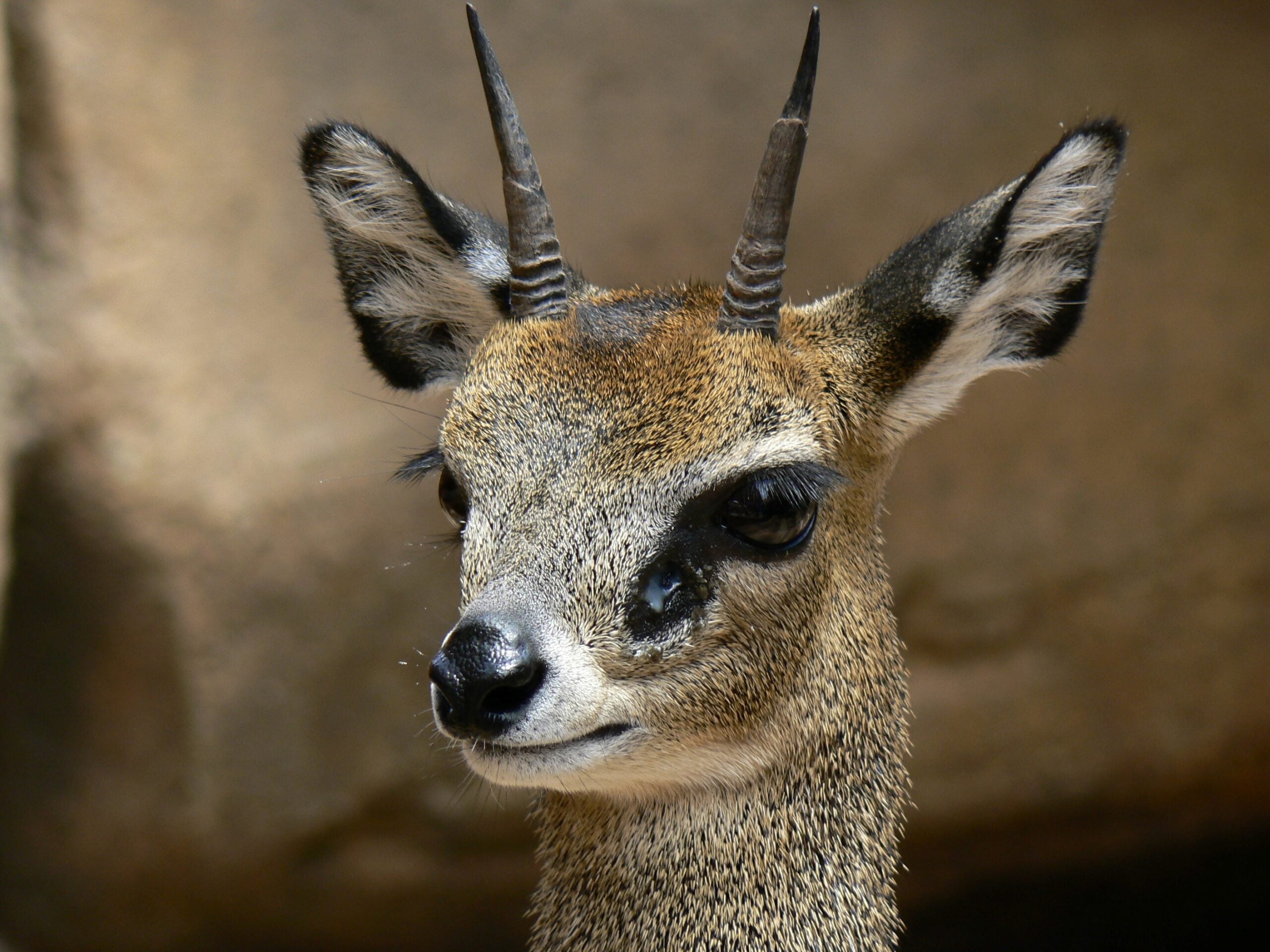 Photo Credit: MONGO / Wikimedia Commons
In the rugged landscapes of eastern and southern Africa, the Klipspringer, scientifically known as Oreotragus oreotragus, dances gracefully across rocky outcrops and steep cliffs. Imagine a small antelope, standing only about two feet tall at the shoulder, with a coat that shimmers like golden grass under the sun. Its large, expressive eyes and delicate, pointed ears give it an air of alertness, perfectly suited for its mountainous home. The Klipspringer’s unique hooves, which are specially adapted to grip the rocky terrain, allow it to leap effortlessly from ledge to ledge, showcasing a remarkable agility that captivates both scientists and nature lovers alike.
As you watch this enchanting creature navigate its environment, you can’t help but marvel at its adaptations. The Klipspringer is not just a pretty face; it plays a vital role in its ecosystem. By grazing on grasses, leaves, and tender shoots, it helps maintain the balance of plant life in its habitat. This small antelope is also a keystone species, meaning its presence significantly influences the types and numbers of other animals in the area. With its fascinating behaviors and strategic lifestyle, the Klipspringer invites us to explore the wonders of nature, reminding us of the intricate connections that bind all living things together in the wild.
The Klipspringer, a small antelope native to the rocky hills and mountains of eastern and southern Africa, holds a special place in the animal kingdom. Its scientific classification reveals much about its adaptations and lifestyle. As a member of the Bovidae family, which includes animals like cows and goats, the Klipspringer is uniquely adapted to its environment. Its name, derived from the Afrikaans words for “rock jumper,” perfectly captures its incredible agility and ability to navigate steep, rocky terrains with ease. This nimble antelope is not just a marvel of nature; it also plays a vital role in its ecosystem, showcasing the intricate connections within the tree of life.
| Taxonomic Rank | Scientific Name | Meaning & Significance |
|---|---|---|
| Kingdom | Animalia | This name signifies that Klipspringers are part of the vast group of multicellular organisms that are primarily heterotrophic, meaning they consume organic material for energy. |
| Phylum | Chordata | Chordata refers to animals that have a notochord, a flexible rod that supports the body. In Klipspringers, this structure is present during their development, highlighting their vertebrate lineage. |
| Class | Mammalia | Mammalia indicates that Klipspringers are warm-blooded animals with fur and mammary glands, which allow females to nurse their young, a key feature of all mammals. |
| Order | Cetartiodactyla | This order includes even-toed ungulates, which means animals that walk on an even number of toes. Klipspringers are part of this group, showcasing their specialized hoof structure for climbing. |
| Family | Bovidae | Bovidae encompasses a diverse group of hoofed mammals, known for their grazing habits. The Klipspringer’s classification here emphasizes its herbivorous diet and social behaviors. |
| Genus | Oreotragus | The name Oreotragus comes from Greek, meaning “mountain goat.” This reflects the Klipspringer’s habitat and its remarkable climbing abilities, which are essential for survival in rocky environments. |
The Klipspringer’s classification within the tree of life reveals a fascinating evolutionary history. Its adaptations for life in rugged terrains, such as its specialized hooves and keen eyesight, illustrate how species evolve in response to their environments. By understanding where the Klipspringer fits in the grand scheme of life, we gain insight into the complex relationships that bind all living organisms together, highlighting the beauty and diversity of nature.
The evolutionary journey of the Klipspringer, a small antelope found in the rugged terrains of eastern and southern Africa, stretches back millions of years. This fascinating animal belongs to the Bovidae family, which includes other hoofed mammals like cows and goats. The Klipspringer’s ancestors roamed the earth during the Miocene epoch, around 23 to 5 million years ago, a time when the planet was undergoing significant climatic changes that shaped the habitats we see today.
The Klipspringer’s lineage can be traced to early ruminants, which are animals that have a specialized stomach for digesting tough plant material. Over time, these ancestors adapted to their environments, leading to the emergence of the Oreotragus genus, which includes the Klipspringer. One major transition was the development of their unique body structure, allowing them to navigate steep, rocky landscapes with ease. Their limbs became more slender and agile, perfect for jumping and climbing, while their diet shifted to include a variety of grasses and shrubs found in their mountainous homes.
These adaptations have been crucial for the Klipspringer’s survival in a challenging environment. Their ability to navigate rocky terrains and blend into their surroundings helps them evade predators like leopards and hyenas. By forming small groups, they enhance their vigilance, making it easier to spot danger. Their diverse diet allows them to thrive even when food is scarce, showcasing the remarkable ways in which evolution has equipped the Klipspringer to flourish in its unique habitat.
The Klipspringer is a small yet striking antelope that captures the eye with its agile form and graceful movements. Standing at just about 24 to 30 inches tall at the shoulder, this nimble creature is perfectly adapted to its rocky habitat. Its body is compact and muscular, allowing it to navigate steep cliffs and uneven terrain with ease. The Klipspringer’s most distinctive feature is its tiny hooves, which are specially designed for gripping rocky surfaces, making it a master of its mountainous domain.
| Feature | Description |
|---|---|
| Weight | 22-40 pounds |
| Skin Type | Fur |
| Most Distinctive Feature | Tiny hooves |
These physical characteristics work together to create a perfect survival package for the Klipspringer. Its lightweight frame and small size allow it to leap effortlessly between rocks, while its fur provides camouflage against the rocky backdrop, helping it evade predators. The tiny hooves, a marvel of evolution, give it the grip needed to traverse steep cliffs, ensuring it can escape danger quickly. In this way, the Klipspringer is not just a beautiful animal; it is a finely tuned survivor in a challenging environment.
The Klipspringer thrives in a variety of habitats that showcase the beauty of eastern and southern Africa. Picture rocky hills and rugged mountains, where the sun casts long shadows over the craggy terrain. These nimble antelopes are often found in dry, arid regions, where they can leap gracefully from rock to rock. Their home is a blend of savannahs, shrublands, and even desert areas, creating a landscape that is both challenging and exhilarating for these agile animals.
The climate in these regions can be quite extreme, with hot, dry conditions prevailing for much of the year. Klipspringers are well-suited to withstand these temperatures, often seeking shelter in the shade of rocky outcrops during the hottest parts of the day. They thrive in areas where vegetation is sparse but nutritious, allowing them to graze on grasses and leaves that grow in the cracks of the rocks. This adaptability to varying environmental conditions is key to their survival.
To navigate their rocky homes, Klipspringers have developed impressive physical adaptations. Their specialized hooves are small and hard, allowing them to grip uneven surfaces with ease. This unique feature helps them escape predators by making quick, agile movements across steep cliffs and rocky ledges. Their keen eyesight also plays a crucial role, enabling them to spot danger from a distance. These adaptations not only help them survive but also allow them to flourish in some of the most challenging habitats in Africa.
The Klipspringer leads a life that is both active and strategic, primarily during the daylight hours. As a diurnal animal, it rises with the sun, spending its mornings and afternoons foraging for food. These agile antelopes are often seen leaping gracefully across rocky terrain, using their strong legs to navigate steep cliffs and boulders. Their diet mainly consists of grasses, leaves, and shoots, which they nibble on while keeping a watchful eye for predators. As the sun sets, they find a safe spot to rest, often nestled among the rocks where they can blend in with their surroundings.
Socially, Klipspringers are known to form family units, which typically consist of a male, a female, and their young. These small groups are essential for their survival, as they provide safety in numbers. The Klipspringer communicates with its family through a series of soft whistles and snorts, which help maintain contact and alert each other to potential dangers. This social structure not only strengthens bonds within the group but also enhances their ability to detect threats in their environment.
| Behavior Type | Description |
|---|---|
| Activity Patterns | Klipspringers are diurnal, meaning they are active during the day, foraging for food and exploring their rocky habitats. |
| Social Structure | They live in family units, typically consisting of a male, a female, and their offspring, which helps them stay safe from predators. |
| Communication Methods | These antelopes use soft whistles and snorts to communicate with each other, ensuring they remain connected and alert to dangers. |
The behaviors of the Klipspringer are finely tuned to ensure their survival in a challenging environment. By being active during the day, they can take advantage of visibility while foraging, and their family units provide a layer of protection against predators. Their ability to communicate effectively within their group enhances their awareness of threats, allowing them to respond quickly. This combination of social interaction and strategic behavior makes the Klipspringer a resilient inhabitant of the rocky landscapes it calls home.
The Klipspringer is a herbivore, which means it primarily eats plants. This agile antelope has a diet that consists mainly of grasses, leaves, and shoots. It is particularly fond of the tender foliage found in its rocky mountain habitat. Klipspringers are well-adapted to their environment, using their nimble feet to navigate steep and uneven terrain while foraging for food. They often graze in small groups, allowing them to keep an eye out for predators while they munch on their favorite snacks.
| Dietary Aspect | Details |
|---|---|
| Diet Type | Herbivore |
| Favorite Foods | Grasses, leaves, and tender shoots |
| Prey Items | None (as a herbivore, it does not hunt) |
| Hunting/Foraging Strategies | Forages in small groups, using agility to navigate rocky terrain |
The Klipspringer’s diet plays a crucial role in its daily life and ecological niche. By feeding on a variety of plant materials, it helps maintain the balance of its habitat, promoting healthy plant growth. This diet also influences its behavior, as the Klipspringer must be vigilant while foraging to avoid predators. Its ability to thrive in rocky areas not only showcases its adaptability but also highlights the interconnectedness of species within its ecosystem.
When it comes to mating, Klipspringers are quite the romantic! Their breeding season can vary depending on their environment, but generally, these agile antelopes mate throughout the year. Males often engage in playful displays to attract females, showcasing their strength and agility. Once a female is ready to mate, she will signal her interest, and the pair will engage in a courtship dance, leaping and bounding together in a display of energy and enthusiasm.
| Reproductive Aspect | Details |
|---|---|
| Gestation Period | 6 months |
| Average Litter Size | 1 |
| Age of Sexual Maturity | 7 to 12 months |
| Name of Young | Calf |
After a gestation period of about six months, a single calf is born. This little one is quite vulnerable at first, but Klipspringer mothers are attentive and protective. They often hide their calves in dense vegetation to keep them safe from predators. As the young calf grows, it learns to navigate the rocky terrain alongside its mother, developing the skills it needs to thrive in the wild. By the time it reaches sexual maturity at around seven to twelve months, the calf is well-prepared to embark on its own adventures, continuing the cycle of life in the rugged landscapes of Africa.
The Klipspringer occupies a vital role in the food web of its mountainous habitat. As a small herbivore, it serves as a food source for various predators, while also helping to maintain the balance of plant life by grazing on grasses and leaves. This delicate balance is crucial for the ecosystem, as it supports not only the Klipspringer but also the larger animals that depend on it for survival.
To evade these threats, Klipspringers have developed several clever survival strategies. Their incredible agility allows them to navigate rocky terrains with ease, making it difficult for predators to catch them. When danger approaches, they often freeze in place, blending into their surroundings thanks to their camouflaged fur. This behavior, combined with their keen eyesight and acute hearing, helps them detect threats early, giving them a chance to escape. By staying alert and using their environment to their advantage, Klipspringers continue to thrive in the wild despite the dangers they face.
A keystone species is an organism that plays a critical role in maintaining the structure of its ecosystem. This means that its presence and activities significantly influence the types and numbers of other species in that environment. The Klipspringer, a small antelope found in the rocky hills and mountains of eastern and southern Africa, qualifies as a keystone species due to its unique interactions with both its habitat and the animals that share it.
The Klipspringer has a profound ecological impact, particularly in its mountainous and rocky habitats. As a herbivore, it primarily feeds on grasses, leaves, and tender shoots, which helps control plant growth and maintain the balance of vegetation. By grazing selectively, Klipspringers prevent certain plant species from dominating the landscape, allowing a diverse range of flora to thrive. This diversity, in turn, supports various other species, from insects to larger herbivores that rely on the same plants for food.
Moreover, Klipspringers are an important food source for predators in their ecosystem. Animals such as leopards and hyenas depend on these agile antelopes for sustenance. The presence of Klipspringers helps sustain these predator populations, which are crucial for controlling herbivore numbers and maintaining the overall health of the ecosystem. Their family-oriented behavior also fosters social structures that can influence the dynamics of other species in the area.
If Klipspringers were to disappear from their ecosystems, the consequences could be significant. Without these small antelopes, plant life could become unbalanced, leading to overgrowth of certain species and a decline in overall biodiversity. This shift would not only affect the plants but also the many animals that rely on a diverse range of vegetation for food and shelter. Additionally, predator populations that depend on Klipspringers for sustenance might struggle to find enough food, leading to a ripple effect throughout the food web. The loss of this keystone species would ultimately disrupt the delicate balance of life in its mountainous home.
The Klipspringer occupies a fascinating ecological niche in the rocky hills and mountains of eastern and southern Africa. This small antelope is perfectly adapted to its rugged environment, where it plays a vital role in shaping the ecosystem. By grazing on grasses, leaves, and tender shoots, the Klipspringer helps control plant growth, ensuring that the vegetation remains healthy and balanced. Its unique adaptations, such as its ability to leap between rocky outcrops, allow it to thrive in areas that many other animals cannot access, making it a key player in its habitat.
| Ecosystem Service | Impact |
|---|---|
| Grazing | Controls plant growth and promotes biodiversity |
| Seed Dispersal | Helps spread plant seeds through its droppings |
| Prey for Predators | Serves as a food source for larger carnivores |
| Soil Aeration | Contributes to soil health through movement and grazing |
The Klipspringer’s grazing habits not only keep the vegetation in check but also encourage a diverse range of plant species to flourish. For instance, by nibbling on certain grasses, it allows other plants to grow, creating a varied habitat that supports numerous insects and birds. Additionally, as the Klipspringer moves through its environment, it inadvertently aids in seed dispersal. The seeds from the plants it consumes pass through its digestive system and are deposited elsewhere, helping new plants to sprout in different locations. This process is essential for maintaining the health of the ecosystem.
The broader ecological importance of the Klipspringer cannot be overstated. As a keystone species, its presence significantly influences the structure and dynamics of its habitat. By supporting plant diversity and serving as prey for larger predators, the Klipspringer helps maintain the balance of life in its mountainous home. Without this agile antelope, the ecosystem could face challenges, such as overgrown vegetation or a decline in predator populations. Thus, the Klipspringer is not just a charming inhabitant of the rocky hills; it is a crucial component of a thriving ecosystem.
In the intricate web of life, symbiosis plays a vital role in shaping the relationships between different species. Symbiosis refers to the close interactions between organisms, which can be beneficial, harmful, or neutral. These ecological relationships can take many forms, such as mutualism, where both species gain advantages, parasitism, where one benefits at the expense of the other, and commensalism, where one species benefits while the other is neither helped nor harmed. The Klipspringer, a small antelope found in the rocky terrains of Africa, engages in various partnerships that highlight the complexity of these interactions.
| Species/Type | Relationship Type | Description |
|---|---|---|
| Birds (e.g., oxpeckers) | Mutualistic | Oxpeckers feed on ticks and parasites found on the Klipspringer’s skin, providing relief to the antelope while enjoying a meal. |
| Rocky terrain | Commensal | The Klipspringer benefits from the rocky environment for shelter and safety, while the rocks remain unaffected by the antelope’s presence. |
| Predators (e.g., leopards) | Parasitic | While not a direct relationship, the presence of predators like leopards poses a threat to the Klipspringer, impacting its survival. |
These relationships have evolved over time, shaped by the needs and behaviors of the species involved. The mutualistic bond with birds like oxpeckers showcases how cooperation can lead to better health for the Klipspringer, while the rocky terrain provides essential protection from predators. However, the presence of predators also highlights the delicate balance of nature, where each species plays a role in the ecosystem. Understanding these connections helps us appreciate the Klipspringer’s place in its environment and the importance of preserving these intricate relationships for future generations.
The Klipspringer is a small antelope that captivates nature enthusiasts with its unique adaptations and behaviors. Found in the rocky terrains of eastern and southern Africa, this agile creature has some surprising traits that make it truly special.
The Klipspringer, a small antelope native to the rocky hills and mountains of eastern and southern Africa, has long been a part of human culture and history. Indigenous peoples have often regarded this agile animal as a symbol of grace and resilience. In various African folklore, the Klipspringer is celebrated for its ability to navigate steep terrains, embodying the spirit of survival in challenging environments. Historical encounters between Klipspringers and humans have often been marked by admiration, as these nimble creatures are not only a sight to behold but also play a role in the local ecosystem, influencing the way communities interact with their natural surroundings.
Today, the relationship between Klipspringers and humanity is evolving, shaped by both conservation efforts and challenges. As habitats are threatened by human expansion, conservationists are working to protect these agile antelopes and their mountainous homes. However, conflicts can arise when agricultural activities encroach on their territory, leading to competition for resources. While domestication of Klipspringers is not common, their adaptability and unique behaviors have sparked interest in wildlife tourism, where people can observe these animals in their natural habitats. This interaction fosters a greater appreciation for biodiversity and the importance of preserving these remarkable ecosystems.
Looking ahead, the future of the Klipspringer and its relationship with humanity hinges on our ability to balance development with conservation. As awareness grows about the importance of preserving wildlife, there is hope that more people will advocate for the protection of these agile antelopes and their habitats. By fostering a deeper connection with nature, we can ensure that the Klipspringer continues to thrive alongside human communities, enriching our shared world for generations to come.
The Klipspringer, a small antelope known for its remarkable agility and ability to navigate rocky terrains, currently holds a conservation status of Least Concern according to the International Union for Conservation of Nature (IUCN). With an estimated population of around 42,000 individuals, the species appears to be stable, showing no significant decline in numbers. This is encouraging news for wildlife enthusiasts and conservationists alike, as it suggests that the Klipspringer is managing to thrive in its natural habitat.
| Conservation Factor | Status/Details |
|---|---|
| IUCN Status | Least Concern |
| Estimated Population Size | 42,000 |
| Population Trend | Stable |
Despite its stable status, the Klipspringer faces several threats that could impact its future. Habitat loss is a significant concern, as human activities such as agriculture and urban development encroach on its rocky environments. Additionally, poaching poses a risk, as these agile antelopes can be hunted for their meat and hides. Climate change also plays a role, potentially altering the delicate ecosystems where Klipspringers thrive, affecting their food sources and overall habitat quality.
Conservation efforts are underway to ensure the continued survival of the Klipspringer. Protected areas and national parks in eastern and southern Africa provide safe havens for these agile antelopes, allowing them to roam freely without the threat of poaching or habitat destruction. Education and awareness programs are also crucial, helping local communities understand the importance of preserving this unique species and its habitat. With ongoing efforts and a stable population, the outlook for the Klipspringer remains hopeful, allowing future generations to appreciate this remarkable antelope.
| Question | Answer |
|---|---|
| What is a Klipspringer? | The Klipspringer is a small antelope found in Africa. Its name means "rock jumper" in Afrikaans, which reflects its incredible ability to navigate rocky terrains with ease. |
| Where do Klipspringers live? | Klipspringers inhabit a variety of environments, including deserts, rocky areas, savannahs, and shrublands. They prefer places with plenty of cover, like rocky outcrops, where they can hide from predators. |
| What do Klipspringers eat? | As herbivores, Klipspringers primarily feed on grasses, leaves, and shoots. They are known to be selective eaters, often choosing the most nutritious plants available in their habitat. |
| How do Klipspringers behave? | Klipspringers are social animals that often form small groups, usually consisting of a male and several females. They are known for their agility and can leap great distances, which helps them escape from predators. |
| How do Klipspringers reproduce? | Klipspringers have a gestation period of about seven months, after which a single calf is usually born. The young are able to stand and run shortly after birth, which is crucial for their survival in the wild. |
| What are the threats to Klipspringers? | While Klipspringers are currently classified as Least Concern, they face threats from habitat loss and hunting. As human activities expand into their natural habitats, these antelopes may find it harder to survive. |
| What is an interesting characteristic of Klipspringers? | One of the most distinctive features of Klipspringers is their tiny hooves, which are perfectly adapted for gripping rocky surfaces. This unique adaptation allows them to navigate steep and uneven terrain with remarkable agility. |