Taxonomy & Classification
- Kingdom
- Animalia
- Phylum
- Chordata
- Class
- Mammalia
- Order
- Diprotodontia
- Family
- Phascolarctidae
- Genus
- Phascolarctos
- Species
- Phascolarctos cinereus

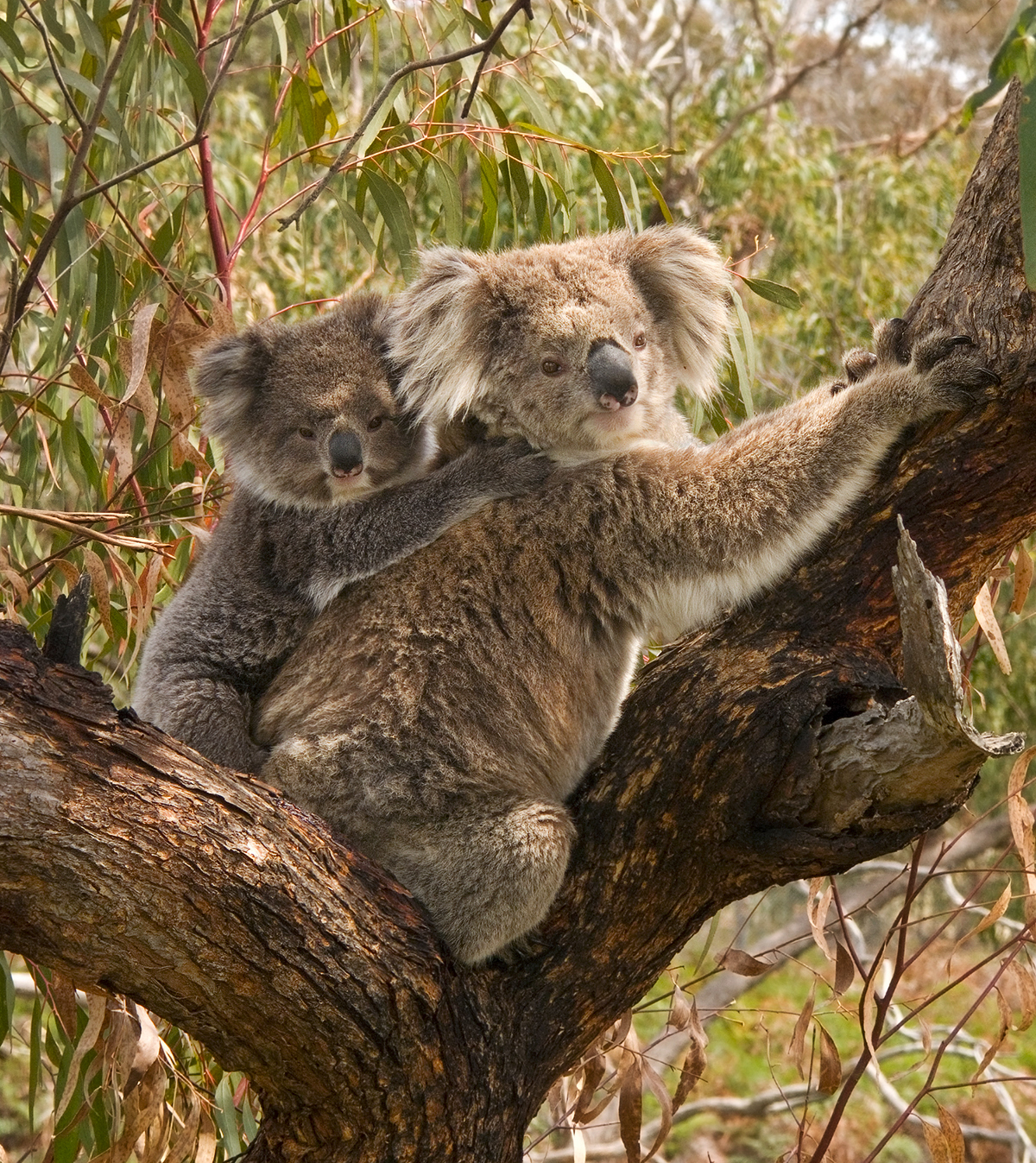 Photo Credit: Benjamint444 / Wikimedia Commons
In the sun-dappled eucalyptus forests of Australia, the koala, scientifically known as Phascolarctos cinereus, lounges lazily among the branches, embodying the essence of tranquility. With its round, fluffy ears and large, black nose, this marsupial looks like a living teddy bear, captivating the hearts of both children and adults alike. Its soft, gray fur blends seamlessly with the silvery-green leaves of its favorite trees, making it a master of camouflage in its natural habitat. As it clings to the trunk, munching on eucalyptus leaves, the koala’s gentle demeanor and sleepy eyes invite us to pause and appreciate the wonders of nature.
Scientists and nature enthusiasts are drawn to the koala not just for its adorable appearance but also for its unique adaptations. These fascinating creatures are herbivores, meaning they thrive on a diet primarily composed of eucalyptus leaves, which are tough and toxic to many other animals. This specialized diet has led to remarkable evolutionary traits, such as a highly developed digestive system that allows them to break down the tough plant material. As we explore the life of the koala, we will uncover the secrets of its behavior, its role in the ecosystem, and the challenges it faces in a rapidly changing world. Join us on this adventure to learn more about one of Australia’s most beloved animals!
The koala, a beloved marsupial native to Australia, holds a special place in the tree of life. Taxonomically, it belongs to the Kingdom Animalia, which includes all animals, and is classified under the Phylum Chordata, meaning it has a backbone. Within the Class Mammalia, koalas are part of the Order Diprotodontia, a group known for having two forward-facing teeth in their lower jaw. This unique dental feature, along with their specialized diet of eucalyptus leaves, sets them apart in the animal kingdom. Koalas are not just cute and cuddly; they are a vital part of their ecosystem, showcasing the incredible diversity of life on our planet.
| Taxonomic Rank | Scientific Name | Meaning & Significance |
|---|---|---|
| Kingdom | Animalia | This name comes from the Latin word “animalis,” meaning “having breath” or “living.” It signifies all living organisms that breathe and move. |
| Phylum | Chordata | Derived from the Greek word “chordē,” meaning “string,” this term refers to animals with a notochord, a flexible rod that supports the body, which koalas possess during their development. |
| Class | Mammalia | This name comes from the Latin “mamma,” meaning “breast.” It highlights that all mammals, including koalas, nurse their young with milk produced by mammary glands. |
| Order | Diprotodontia | From the Greek words “diprotos,” meaning “two forward,” and “odous,” meaning “tooth,” this name refers to the two prominent front teeth that are characteristic of this group. |
| Family | Phascolarctidae | This name is derived from the Greek “phascolos,” meaning “pouch,” and “arctos,” meaning “bear.” It reflects the koala’s pouch, a feature of marsupials, and its bear-like appearance. |
| Genus | Phascolarctos | Similar to the family name, “Phascolarctos” also comes from “phascolos” and “arctos,” emphasizing the koala’s pouch and its classification as a marsupial. |
The classification of the koala reveals much about its evolutionary journey. As a marsupial, it shares a common ancestor with other unique Australian animals, such as kangaroos and wombats. This lineage highlights how koalas have adapted to their specific environment, developing traits that allow them to thrive on a diet of eucalyptus leaves. Understanding where the koala fits in the tree of life not only deepens our appreciation for this charming animal but also underscores the importance of conserving its habitat to ensure its survival in the wild.
The evolutionary journey of the koala stretches back millions of years, tracing its roots to the ancient forests of Australia. This marsupial, known scientifically as Phascolarctos cinereus, is part of a lineage that has adapted to the unique challenges of its environment. The story of the koala is one of survival, shaped by the changing landscapes and climates of the continent.
Koalas are part of the family Phascolarctidae, which diverged from other marsupials around 30 million years ago. Their ancestors roamed the earth during a time when Australia was covered in lush forests. As the climate shifted and eucalyptus trees became more dominant, these early marsupials began to adapt to a diet primarily consisting of eucalyptus leaves. This transition was significant, as eucalyptus leaves are tough and low in nutrients, requiring specialized adaptations for survival. Over time, koalas developed a unique digestive system that includes a large cecum, a pouch-like structure that helps break down the fibrous leaves and extract the necessary nutrients.
These adaptations have been crucial for the koala’s survival in a challenging environment. By evolving to consume eucalyptus leaves, they have carved out a niche that few other animals can exploit. Their low metabolic rate allows them to thrive on a diet that would leave most creatures hungry, while their climbing abilities keep them safe from ground predators. As they continue to navigate the complexities of their habitat, the koala remains a symbol of resilience and adaptation in the ever-changing tapestry of life on Earth.
The koala is a charming marsupial that captures the imagination with its cuddly appearance and gentle demeanor. Standing about 60 to 85 centimeters tall, or roughly 24 to 34 inches, this adorable animal has a stocky body that is perfectly designed for life in the trees. Its most striking features include a large, wide head that gives it a distinctive look, complemented by tufted, round ears that seem to perk up at the slightest sound. With a soft, furry coat that ranges in color from gray to brown, the koala is not just cute; it’s also well-equipped for its arboreal lifestyle.
| Feature | Description |
|---|---|
| Height | 60cm – 85cm (24in – 34in) |
| Weight | 4kg – 15kg (8.8lbs – 33lbs) |
| Skin Type | Fur |
| Most Distinctive Feature | Large, wide head and tufted, round ears |
These physical traits work together to enhance the koala’s survival in its eucalyptus forest habitat. The thick fur not only provides warmth during cooler nights but also helps camouflage the koala among the leaves, making it less visible to predators. Its large head and round ears are not just for show; they help the koala hear the faint sounds of potential threats while also allowing it to communicate with other koalas. This combination of features makes the koala a well-adapted resident of the Australian bush, perfectly suited to its unique lifestyle.
In the heart of Australia, the koala finds its home among the lush eucalyptus forests. These trees, with their silvery-green leaves and aromatic scent, create a perfect canopy for the koala to thrive. The gentle rustle of leaves and the soft calls of other wildlife fill the air, making this habitat a serene retreat. Koalas spend most of their time perched high in the branches, where they can munch on eucalyptus leaves and enjoy the dappled sunlight filtering through the foliage.
The climate in these regions is typically warm and temperate, with plenty of sunshine and occasional rainfall. Koalas prefer areas where eucalyptus trees are abundant, as these trees are not just their food source but also provide shelter. The ideal environment has a mix of coastal and inland forests, where the temperature rarely drops too low, allowing koalas to stay comfortable and safe from harsh weather conditions.
To survive in their specific habitats, koalas have developed some impressive adaptations. Their specialized digestive system allows them to break down the tough eucalyptus leaves, which are low in nutrients. This means they can extract the energy they need from a diet that many other animals would find unappetizing. Additionally, their thick fur helps insulate them against temperature changes, keeping them cozy in both warm and cooler climates. These adaptations make the koala a true master of its eucalyptus domain.
Koalas lead a life that is both tranquil and intriguing, primarily active during the night. As nocturnal animals, they spend their days snoozing in the crooks of eucalyptus trees, where they can stay safe from predators and conserve energy. When the sun sets, these marsupials awaken to munch on their favorite leaves. Their diet consists almost entirely of eucalyptus, which is low in nutrients and high in fiber. This means they need to eat a lot—up to a kilogram of leaves each day—to meet their energy needs. After feasting, they often return to their cozy tree branches for more rest, making their daily routine a blend of eating and sleeping.
While koalas are generally solitary creatures, they do have interesting social behaviors. Adult males often establish territories that they mark with scent, letting other koalas know they are nearby. During the breeding season, males will call out with deep, bellowing sounds to attract females and ward off rivals. Although they prefer to live alone, koalas can sometimes be found in small groups, especially in areas with abundant food. These gatherings are usually temporary and revolve around feeding or mating, rather than forming lasting social bonds.
| Behavior Type | Description |
|---|---|
| Activity Patterns | Nocturnal lifestyle; primarily sleep during the day and forage at night. |
| Social Structure | Generally solitary; males establish territories and may gather during breeding season. |
| Communication Methods | Use vocalizations, especially during mating season, to attract mates and assert territory. |
The behaviors of koalas are finely tuned to their environment, ensuring their survival in the wild. By being nocturnal, they avoid the heat of the day and reduce the risk of dehydration. Their solitary nature allows them to minimize competition for food, while their unique communication methods help them find mates and maintain their territories. Together, these traits enable koalas to thrive in the eucalyptus forests of Australia, where they continue to enchant those who seek to learn about their lives.
Koalas are herbivores, which means they primarily eat plants. Their diet mainly consists of eucalyptus leaves, which are not only their favorite food but also a crucial part of their survival. These leaves are tough and low in nutrients, so koalas have developed a special way of feeding. They have strong, sharp teeth that help them tear the leaves apart, and their keen sense of smell allows them to select the freshest and most nutritious leaves.
| Dietary Aspect | Details |
|---|---|
| Diet Type | Herbivore |
| Favorite Foods | Eucalyptus leaves, including those from Brush, Paperbark, and Bloodwood trees |
| Prey Items | None, as they do not hunt |
| Hunting/Foraging Strategies | Koalas forage by climbing trees and using their sense of smell to find the best leaves |
This specialized diet shapes the koala’s ecology and daily routine significantly. Since eucalyptus leaves are low in calories, koalas must consume large quantities to meet their energy needs. This leads them to spend most of their day resting and conserving energy, which is why they are often seen sleeping in the trees. Their reliance on eucalyptus also means they are closely tied to their forest habitats, making them sensitive to changes in their environment. As such, the health of eucalyptus forests is vital for the survival of these charming marsupials.
When it comes to mating, koalas have a rather interesting approach. The breeding season typically occurs during the warmer months, from September to March. During this time, male koalas become quite vocal, using deep bellowing calls to attract females. These calls can be heard echoing through the eucalyptus forests, signaling their readiness to mate. Once a female is receptive, the pair will engage in a courtship dance, which includes gentle nuzzling and sniffing. This ritual helps strengthen their bond before they mate.
| Reproductive Aspect | Details |
|---|---|
| Gestation Period | 35 days |
| Average Litter Size | 1 |
| Age of Sexual Maturity | 2-3 years |
| Name of Young | Joey |
After a short gestation period of just 35 days, the mother koala gives birth to a tiny, hairless joey, which is about the size of a jellybean. This little one is born extremely underdeveloped and must crawl into its mother’s pouch, where it will continue to grow and develop. The pouch provides a safe and warm environment, allowing the joey to latch onto a teat and receive essential nutrients. As the joey matures, it will gradually begin to explore the world outside the pouch, eventually learning to eat eucalyptus leaves alongside its mother. Parental care is crucial during this time, as the mother teaches her young how to navigate their leafy habitat and find food. By the time the joey reaches sexual maturity at around 2 to 3 years, it will have developed the skills needed to thrive independently in the wild.
Koalas occupy a unique position in the food web of their Australian habitat. As herbivores, they primarily feed on eucalyptus leaves, which are tough and toxic to many other animals. This specialized diet allows them to thrive in a niche where few competitors exist. However, their reliance on eucalyptus trees also makes them vulnerable to various threats, as these trees are essential for their survival.
To defend themselves against these dangers, koalas have developed several survival strategies. They are excellent climbers, using their strong limbs and sharp claws to escape predators by retreating high into the trees. Their thick fur provides some protection from the elements, while their slow movements and gray coloration help them blend into the eucalyptus leaves, making it harder for predators to spot them. Additionally, koalas are known for their low-energy lifestyle, which allows them to conserve energy and stay hidden from threats.
A keystone species is an organism that plays a critical role in maintaining the structure of an ecosystem. Its presence or absence can significantly impact the environment and the other species that live there. The koala, with its specialized diet and unique habitat requirements, qualifies as a keystone species in its native Australian eucalyptus forests. By influencing the growth and health of eucalyptus trees, koalas help shape their ecosystem in profound ways.
Koalas primarily feed on eucalyptus leaves, which are tough and toxic to many animals. This diet means that they help control the growth of eucalyptus trees, preventing any one species from dominating the landscape. When koalas munch on these leaves, they promote new growth, allowing for a diverse range of plant life to flourish. This diversity is essential for other species that rely on various plants for food and shelter. Additionally, the koala’s presence supports a variety of insects and birds that depend on healthy eucalyptus forests for their survival.
Moreover, koalas contribute to nutrient cycling in their ecosystem. As they consume eucalyptus leaves, they produce waste that enriches the soil. This natural fertilizer helps other plants grow, creating a more vibrant and balanced ecosystem. The koala’s role in seed dispersal is also noteworthy; as they move through the trees, they inadvertently spread seeds, promoting the growth of new eucalyptus trees and maintaining the forest’s health.
If koalas were to disappear from their habitat, the consequences would be significant. Without these marsupials, eucalyptus trees could become overgrown, leading to a decline in plant diversity. This change would ripple through the ecosystem, affecting countless other species that rely on the eucalyptus forests for food and shelter. The loss of koalas would not only disrupt the balance of their environment but could also lead to the decline of other wildlife, showcasing just how vital these adorable animals are to their ecosystem.
The koala occupies a vital ecological niche in the eucalyptus forests of Australia. As a herbivore, it primarily feeds on eucalyptus leaves, which are tough and toxic to many other animals. This specialization allows koalas to thrive in their unique habitat while influencing the ecosystem around them. By consuming these leaves, koalas help shape the growth and health of eucalyptus trees, ensuring a balanced environment for various species that share their home.
| Ecosystem Service | Impact |
|---|---|
| Leaf Consumption | Regulates eucalyptus growth and health |
| Seed Dispersal | Facilitates the spread of eucalyptus trees |
| Habitat Creation | Provides shelter for other species |
| Soil Enrichment | Contributes to nutrient cycling through waste |
Koalas influence their environment in several specific ways. By munching on eucalyptus leaves, they help control the tree’s growth, preventing overcrowding and allowing sunlight to reach the forest floor. This creates a healthier ecosystem for other plants and animals. Additionally, as koalas move through the trees, they inadvertently help disperse eucalyptus seeds, promoting the growth of new trees. Their presence also provides shelter for various birds and insects, creating a bustling community within the forest.
The broader ecological importance of koalas cannot be overstated. As a keystone species, their role in maintaining the health of eucalyptus forests supports a diverse range of wildlife. The balance they help create allows for a rich tapestry of life, from the smallest insects to larger mammals. Protecting koalas and their habitats is crucial not only for their survival but also for the overall health of the ecosystems they inhabit. By safeguarding these adorable marsupials, we ensure that the intricate web of life in Australia continues to thrive.
In the intricate web of life, symbiosis plays a crucial role in shaping ecosystems. Symbiosis refers to the close and often long-term interactions between different species. These relationships can be mutualistic, where both species benefit, parasitic, where one benefits at the other’s expense, or commensal, where one benefits while the other is neither helped nor harmed. Koalas, with their unique lifestyle and habitat preferences, engage in various ecological relationships that highlight the interconnectedness of life in their eucalyptus forest homes.
| Species/Type | Relationship Type | Description |
|---|---|---|
| Eucalyptus Trees | Mutualistic | Koalas rely on eucalyptus trees for food and shelter, while the trees benefit from the koalas’ waste, which provides nutrients to the soil. |
| Koala Mites | Parasitic | These tiny mites live on koalas’ fur and can cause skin irritation, feeding on the koala’s skin cells. |
| Birds (e.g., kookaburras) | Commensal | Birds often nest in eucalyptus trees, benefiting from the shelter without affecting the koalas that inhabit the same trees. |
The evolution of these relationships showcases the adaptability of species like the koala. Over time, they have developed a dependence on eucalyptus trees, which not only provide food but also create a habitat that supports various other organisms. The koala’s interactions with other species, whether beneficial or neutral, illustrate the delicate balance of nature. Understanding these connections helps us appreciate the importance of preserving their habitats, ensuring that all species can thrive together in harmony.
Koalas are enchanting marsupials that capture the hearts of many with their adorable looks and laid-back lifestyle. But there’s so much more to these fascinating creatures than meets the eye!
The relationship between koalas and humans has a rich history that dates back to the early encounters of European settlers in Australia. These adorable marsupials quickly captured the hearts of many, becoming symbols of the Australian wilderness. Indigenous Australians have long revered koalas, viewing them as spiritual beings and integral to their cultural stories. The koala’s gentle nature and unique appearance have made it a beloved figure in art, literature, and tourism, representing the beauty of Australia’s natural heritage.
Today, the interactions between koalas and humans are complex and multifaceted. While many people are dedicated to conserving these iconic animals, their habitats are increasingly threatened by urban development, climate change, and bushfires. Conservation efforts are underway, with organizations working to protect koala populations and restore their eucalyptus forests. However, conflicts can arise when human activities encroach on their habitats, leading to road accidents and habitat loss. Unlike domesticated animals, koalas are not suited for life with humans, as they have specialized diets and behaviors that are best suited to their natural environment.
As we look to the future, the relationship between koalas and humanity holds both challenges and opportunities. With increasing awareness of environmental issues, more people are stepping up to protect these beloved marsupials and their habitats. By fostering a deeper understanding of koalas and their ecological role, we can work together to ensure that future generations will continue to marvel at these enchanting creatures in the wild. The journey ahead will require collaboration, innovation, and a commitment to preserving the delicate balance of nature that supports both koalas and humans alike.
The conservation status of the koala is currently classified as “Least Concern” by the International Union for Conservation of Nature (IUCN). However, this does not tell the whole story. While the koala population is still significant, it faces serious challenges that have led to alarming declines in certain regions. In some areas, particularly in New South Wales and Queensland, populations have been reported as endangered, highlighting the need for ongoing monitoring and conservation efforts.
| Conservation Factor | Status/Details |
|---|---|
| IUCN Status | Least Concern |
| Estimated Population Size | Endangered in some regions |
| Population Trend | Declining in certain areas |
The main threats to koalas stem from habitat loss, disease, and climate change. As urban areas expand, eucalyptus forests—their primary habitat—are being cleared for development. This not only reduces their living space but also fragments their populations, making it harder for them to find mates and food. Additionally, diseases like chlamydia can severely impact their health and reproductive success. Climate change poses another risk, as rising temperatures and changing weather patterns can affect the availability of eucalyptus leaves, their main food source.
Conservation efforts are underway to protect koalas and their habitats. Organizations are working to restore eucalyptus forests and create wildlife corridors that allow koalas to move safely between areas. Public awareness campaigns are also crucial, educating people about the importance of preserving these iconic marsupials. With continued efforts and support, there is hope that koala populations can stabilize and thrive once again in their natural environment.
| Question | Answer |
|---|---|
| Where do koalas live? | Koalas are native to Australia and primarily inhabit eucalyptus forests. They can be found in both inland and coastal areas, where they spend most of their time in the trees. |
| What do koalas eat? | Koalas are herbivores, meaning they only eat plants. Their diet mainly consists of eucalyptus leaves, which are tough and low in nutrients, so they need to eat a lot to get enough energy. |
| How do koalas behave? | Koalas are mostly nocturnal, which means they are active at night. During the day, they often sleep for up to 18 hours to conserve energy, as their diet requires a lot of effort to digest. |
| How do koalas reproduce? | Koalas typically breed once a year, with females giving birth to a single joey after a gestation period of about 35 days. The tiny joey climbs into its mother's pouch, where it continues to develop and grow for several months. |
| What threats do koalas face? | Koalas face several threats, including habitat loss due to deforestation and urban development. Climate change also poses a risk, as it can affect the availability of eucalyptus trees and their leaves. |
| What is a unique characteristic of koalas? | One of the most distinctive features of koalas is their large, wide head and tufted, round ears. These features not only make them adorable but also help them hear well in their forest habitat. |
| Are koalas endangered? | Koalas are currently classified as "Least Concern" by conservation organizations. However, their populations are declining in some areas, and ongoing conservation efforts are essential to protect their habitats. |