Taxonomy & Classification
- Kingdom
- Animalia
- Phylum
- Chordata
- Class
- Reptilia
- Order
- Squamata
- Family
- Varanidae
- Genus
- Varanus
- Species
- Varanus komodoensis

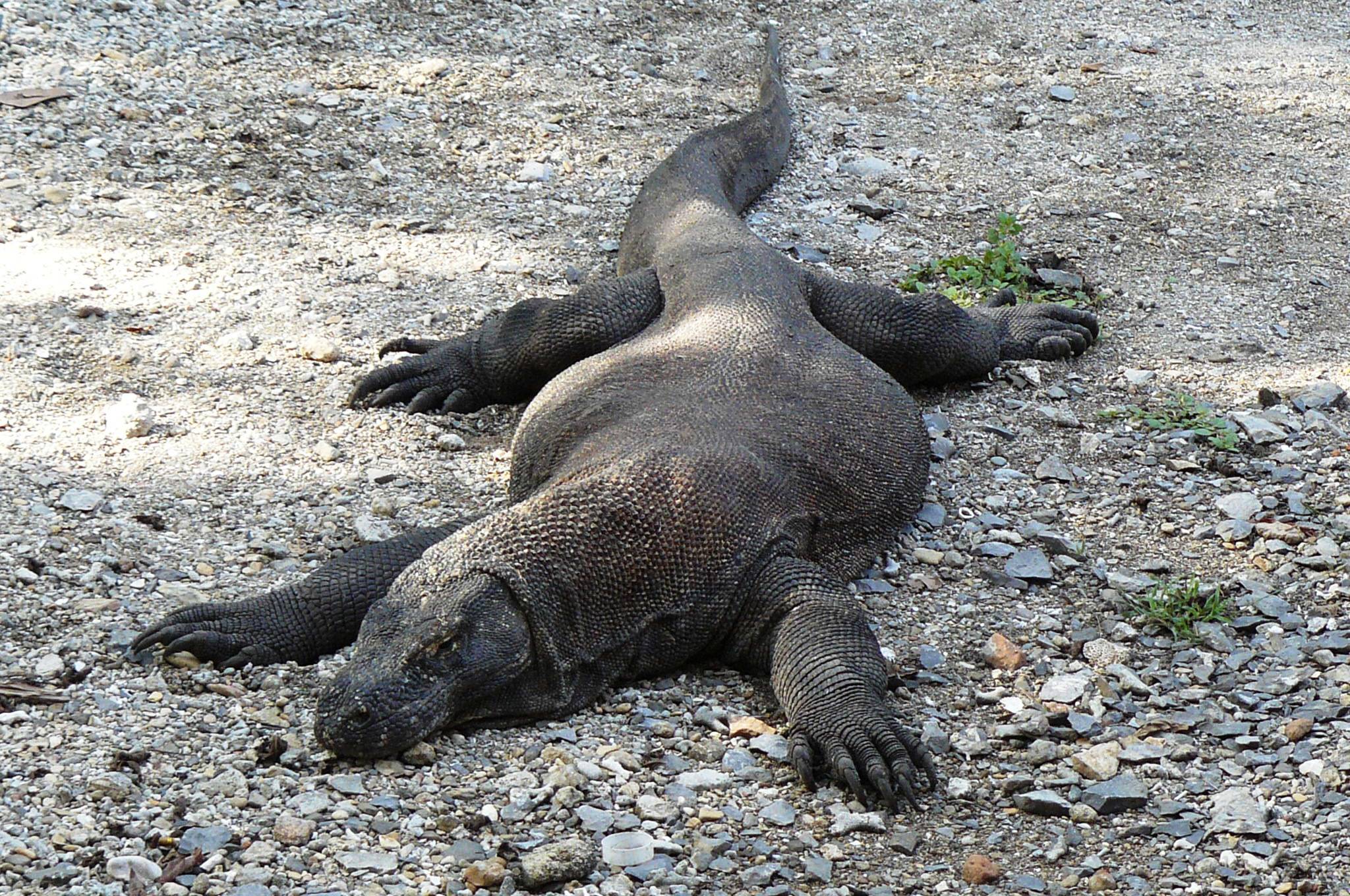 Photo Credit: Danadi Sutjianto / Wikimedia
In the sun-drenched landscapes of Indonesia, the Komodo dragon, or Varanus komodoensis, reigns as the largest lizard on Earth. Picture a rugged island terrain, where dry grasses sway in the warm breeze and scattered trees provide shade for this magnificent reptile. With its powerful body stretching up to ten feet long, the Komodo dragon is a sight to behold. Its scaly skin, a mix of earthy tones, helps it blend seamlessly into its surroundings, making it a master of stealth as it prowls through its territory.
What makes the Komodo dragon truly captivating is not just its size but also its role as a top predator in its ecosystem. These formidable creatures are equipped with sharp claws and a mouth full of serrated teeth, perfect for tearing into their prey. Scientists and nature enthusiasts alike are drawn to the Komodo dragon’s unique hunting techniques and its fascinating behaviors, such as basking in the sun to regulate its body temperature. As we explore the life of this extraordinary lizard, we will uncover the secrets of its evolutionary history, its vital role in the ecosystem, and the challenges it faces in a rapidly changing world. Join us on this adventure to learn more about the Komodo dragon and the wonders of its natural habitat.
The Komodo dragon, a true marvel of the animal kingdom, holds a special place in the tree of life. Scientifically classified within the Kingdom Animalia, it belongs to the Phylum Chordata, which includes all animals with a backbone. As a member of the Class Reptilia, it shares its lineage with snakes, lizards, and turtles. What sets the Komodo dragon apart is its status as the largest living lizard, reaching lengths of up to 10 feet and weighing over 150 pounds. This impressive size, combined with its predatory prowess, makes it a top predator in its native habitat of Indonesia’s Komodo Island and surrounding areas.
| Taxonomic Rank | Scientific Name | Meaning & Significance |
|---|---|---|
| Kingdom | Animalia | This name comes from the Latin word for “animal,” highlighting that Komodo dragons are part of the vast group of living organisms that are multicellular and capable of movement. |
| Phylum | Chordata | Derived from the Greek word “chordē,” meaning “string,” this term refers to the notochord, a flexible rod that supports the body in all vertebrates, including the Komodo dragon. |
| Class | Reptilia | This classification comes from the Latin word “reptilis,” meaning “creeping,” which describes the way reptiles move and their cold-blooded nature. |
| Order | Squamata | From the Latin “squamatus,” meaning “scaled,” this term reflects the scaly skin that is characteristic of lizards and snakes, including the Komodo dragon. |
| Family | Varanidae | This name is derived from the Latin “varanus,” which means “monitor lizard.” It signifies the Komodo dragon’s role as a monitor lizard, known for its keen senses and hunting skills. |
| Genus | Varanus | Also from the Latin “varanus,” this term emphasizes the monitor lizard’s ability to observe and track prey, showcasing its intelligence and adaptability. |
Understanding the Komodo dragon’s classification reveals much about its evolutionary journey. As a member of the Varanidae family, it shares a common ancestor with other monitor lizards, which have adapted to various environments over millions of years. This lineage showcases the incredible adaptability of reptiles, allowing them to thrive in diverse habitats. The Komodo dragon’s unique features, such as its powerful bite and keen hunting instincts, are a testament to its evolutionary success, making it a living link to the ancient world of reptiles.
The story of the Komodo dragon stretches back millions of years, weaving through the tapestry of evolution. These impressive reptiles, scientifically known as Varanus komodoensis, emerged around 4 million years ago on the islands of Indonesia. Their ancestors roamed the Earth long before humans, adapting to a variety of environments and challenges, which shaped them into the formidable predators we see today.
The Komodo dragon’s lineage can be traced to a group of lizards known as monitor lizards, which belong to the family Varanidae. These ancient reptiles were already well-adapted to their surroundings, but the Komodo dragon took a bold evolutionary leap. One significant transition was their size; while many of their ancestors were smaller, the Komodo dragon evolved to become the largest living lizard, reaching lengths of up to 10 feet. This size not only made them more intimidating but also allowed them to take down larger prey. Another key transition was the development of a powerful bite, enhanced by serrated teeth that can tear through flesh, making them effective hunters.
These adaptations have been crucial for the survival of the Komodo dragon in the harsh environments of their island habitats. Their size and strength allow them to dominate the food chain, while their venom and keen senses make them efficient hunters. The ability to camouflage helps them remain undetected by both prey and potential threats. Together, these traits have enabled the Komodo dragon to thrive in a world where competition for resources is fierce, ensuring that this ancient reptile continues to roam the Earth today.
The Komodo dragon is an awe-inspiring sight, a living testament to the power and mystery of nature. With a robust body that can reach lengths of up to 10 feet, these reptiles command attention. Their muscular limbs support a hefty weight, ranging from 150 to 300 pounds, giving them a formidable presence. The skin, covered in tough, scaly armor, glistens in shades of olive green and brown, allowing them to blend seamlessly into their rugged island habitats. Their most striking feature is their long, forked tongue, which flicks in and out, tasting the air and helping them detect scents from great distances.
| Feature | Description |
|---|---|
| Weight | 70kg – 150kg (150lbs – 300lbs) |
| Skin Type | Scales |
| Most Distinctive Feature | Long and deep forked tongue to taste the air |
These physical traits are not just for show; they play crucial roles in the Komodo dragon’s survival. The powerful body and weight allow them to take down large prey, while their scaly skin provides protection from the harsh elements and potential threats. The forked tongue is a remarkable adaptation, enabling them to sense their environment and locate food, even when it’s far away. Together, these features make the Komodo dragon a masterful predator, perfectly adapted to thrive in the wild landscapes of Indonesia.
The Komodo dragon roams the sun-drenched islands of Indonesia, where its habitat is a blend of open woodlands and rugged hillsides. Picture a landscape dotted with dry grasses and scattered trees, where the warm sun casts long shadows. This environment provides the perfect backdrop for these formidable lizards, allowing them to thrive in a setting that is both challenging and rich in resources. The terrain is often rocky, with steep slopes that offer vantage points for spotting prey, making it an ideal hunting ground for these apex predators.
The climate in this region is typically tropical, characterized by a distinct dry season and a wet season. Temperatures can soar, often reaching over 90 degrees Fahrenheit (32 degrees Celsius) during the day. The Komodo dragon is well-suited to this environment, as it prefers areas with plenty of sunlight and minimal rainfall. The dry season is particularly important, as it allows the dragons to bask in the sun and maintain their body temperature, which is crucial for their survival.
Adaptations have played a key role in the Komodo dragon’s success in these habitats. With their powerful limbs and sharp claws, they can navigate the rocky terrain with ease. Their keen sense of smell, aided by a forked tongue, helps them detect prey from miles away. Additionally, their tough, scaly skin protects them from the harsh sun and potential predators. These adaptations not only enhance their hunting skills but also ensure they can thrive in the diverse and sometimes harsh conditions of their island homes.
The daily life of a Komodo dragon is a blend of sunbathing, hunting, and exploring its territory. As diurnal creatures, these reptiles are most active during the day. They begin their mornings basking in the warm sunlight, which helps them regulate their body temperature. After soaking up the sun, they embark on their daily adventures, searching for food and patrolling their vast territories. With keen senses, they can detect the scent of potential prey from miles away, making them skilled hunters in their natural habitat.
While Komodo dragons are primarily solitary animals, they do exhibit interesting social behaviors, especially when it comes to feeding. When a large meal is available, such as a deer or a wild boar, multiple dragons may gather to feast. This can lead to a display of dominance, where larger individuals assert their strength to claim the best feeding spots. Communication among these reptiles is subtle but effective; they use body language, such as head bobbing and tail movements, to convey their intentions and establish their place in the social hierarchy.
| Behavior Type | Description |
|---|---|
| Activity Patterns | Active during the day, basking in the sun, hunting, and patrolling territory. |
| Social Structure | Primarily solitary, but may gather around large food sources. |
| Communication Methods | Uses body language like head bobbing and tail movements to communicate. |
The behaviors of Komodo dragons are finely tuned to ensure their survival in the wild. By basking in the sun, they maintain their energy levels for hunting. Their solitary nature allows them to be stealthy predators, while their occasional gatherings around food sources highlight their adaptability. Understanding these patterns not only reveals the complexity of their lives but also underscores the importance of their role in the ecosystem. Each action, from basking to hunting, is a vital piece of the puzzle that helps these magnificent reptiles thrive in their unique environment.
The Komodo dragon is a fierce carnivore, meaning it primarily eats meat. This giant lizard has a varied diet that includes a range of prey, from wild pigs to deer and even water buffalo. With its keen sense of smell, the Komodo dragon can detect carrion, or dead animals, from miles away. This ability helps it locate food sources, making it an opportunistic hunter. When it comes to feeding, the Komodo dragon employs a combination of stealth and strength, often ambushing its prey before delivering a powerful bite.
| Dietary Aspect | Details |
|---|---|
| Diet Type | Carnivore |
| Favorite Foods | Wild pigs, deer, water buffalo |
| Prey Items | Large mammals, carrion |
| Hunting/Foraging Strategies | Stealthy ambush, keen sense of smell |
The diet of the Komodo dragon plays a crucial role in its ecology and daily routine. By preying on large mammals, it helps control their populations, which in turn affects the entire ecosystem. This top predator also scavenges on carrion, ensuring that nothing goes to waste in its habitat. The need to hunt and forage for food shapes the Komodo dragon’s behavior, influencing its movements and interactions with other species. Each meal is not just a source of energy; it is a vital part of the intricate web of life on the islands it calls home.
When it comes to mating, Komodo dragons have a rather intriguing courtship ritual. The breeding season typically occurs between May and August, when males engage in fierce competitions to win the attention of females. These contests can involve wrestling and displays of strength, showcasing their impressive size and agility. Once a male successfully attracts a female, they mate, and the female will later lay her eggs in a safe location, often in a burrow or a hollowed-out tree.
| Reproductive Aspect | Details |
|---|---|
| Gestation Period | Approximately 8 weeks |
| Average Litter Size | 20 |
| Age of Maturity | 5 years |
| Name of Young | Pup |
After the eggs are laid, the female Komodo dragon leaves them to incubate on their own. Once the eggs hatch, usually around September, the tiny pups emerge, measuring about a foot long. These young dragons are independent from the start, relying on their instincts to survive. They often climb trees to avoid predators, including their own parents, as adult Komodo dragons are known to eat their young if given the chance. As they grow, these pups develop into formidable hunters, maturing into adults by the age of five, ready to take on the challenges of their wild environment.
The Komodo dragon, a top predator in its ecosystem, plays a crucial role in maintaining the balance of its environment. As a formidable carnivore, it sits at the apex of the food web on the islands of Indonesia, where it helps control the populations of various prey species. However, despite its impressive size and strength, the Komodo dragon faces several dangers that threaten its survival.
To defend itself against these threats, the Komodo dragon employs a variety of survival strategies. It relies on its powerful bite and sharp claws to fend off potential dangers. Additionally, its keen sense of smell helps it detect predators or competitors from a distance. When faced with danger, a Komodo dragon can also use its impressive size to intimidate others. By staying alert and adapting to changes in its environment, this remarkable reptile continues to navigate the challenges of its world.
A keystone species is an organism that has a disproportionately large impact on its environment relative to its abundance. In simpler terms, these species play a critical role in maintaining the structure of an ecosystem. The Komodo dragon, with its powerful presence and predatory habits, qualifies as a keystone species in its native habitat of Indonesia. By influencing the populations of other species, it helps to shape the ecological balance of its surroundings.
The Komodo dragon is a top predator, meaning it sits at the top of the food chain. This position allows it to control the populations of various herbivores, such as deer and wild pigs. By preying on these animals, the Komodo dragon prevents overgrazing, which can lead to habitat degradation. For example, if deer populations were to explode without natural predators, they could consume too much vegetation, disrupting the entire ecosystem. The Komodo dragon’s hunting habits help maintain a healthy balance among species, ensuring that no single group dominates the landscape.
Additionally, the Komodo dragon contributes to nutrient cycling in its environment. When it consumes large prey, it leaves behind carcasses that decompose and enrich the soil. This process supports plant growth, which in turn provides food and shelter for other animals. The presence of the Komodo dragon thus indirectly supports a diverse range of life forms, from insects to birds, all of which rely on healthy vegetation for survival.
If the Komodo dragon were to disappear, the consequences would ripple through its ecosystem. Without this apex predator, herbivore populations could surge, leading to overgrazing and a decline in plant life. This loss of vegetation would not only affect the plants themselves but also the myriad of species that depend on them for food and shelter. Ultimately, the absence of the Komodo dragon could destabilize the entire ecosystem, highlighting just how vital this magnificent reptile is to its environment.
The Komodo dragon occupies a vital ecological niche as a top predator in its habitat, which consists of open woodlands and rugged hillsides in Indonesia. This impressive reptile plays a crucial role in shaping its ecosystem by regulating prey populations and influencing the dynamics of the food web. By maintaining the balance of species, the Komodo dragon ensures that its environment remains healthy and diverse, showcasing the interconnectedness of life on Earth.
| Ecosystem Service | Impact |
|---|---|
| Prey Regulation | Controls populations of herbivores, preventing overgrazing and promoting plant diversity. |
| Scavenging | Clears carrion from the environment, reducing disease spread and recycling nutrients. |
| Habitat Maintenance | Influences the structure of the ecosystem by creating open areas through hunting and movement. |
| Tourism Attraction | Draws visitors to its habitat, supporting local economies and conservation efforts. |
The Komodo dragon’s influence extends beyond its role as a predator. By preying on large herbivores like deer and wild pigs, it helps to keep these populations in check. This regulation prevents overgrazing, which can lead to habitat degradation. Additionally, when Komodo dragons scavenge on carcasses, they play a vital role in cleaning up the environment. This scavenging behavior not only reduces the risk of disease but also helps recycle nutrients back into the soil, promoting healthy plant growth.
The broader ecological importance of the Komodo dragon cannot be overstated. As a keystone species, its presence is essential for maintaining the balance of its ecosystem. Without the Komodo dragon, the populations of herbivores could explode, leading to a decline in vegetation and a ripple effect throughout the food web. By understanding and protecting this magnificent reptile, we can help preserve the intricate web of life that thrives in its Indonesian home, ensuring that future generations can marvel at the wonders of nature.
In the intricate web of life, symbiosis refers to the close interactions between different species, which can take on various forms. These relationships can be mutualistic, where both species benefit; parasitic, where one benefits at the expense of the other; or commensal, where one benefits while the other is neither helped nor harmed. The Komodo dragon, a powerful predator, engages in several fascinating ecological relationships that highlight the complexity of its environment.
| Species/Type | Relationship Type | Description |
|---|---|---|
| Birds (e.g., cattle egrets) | Commensal | These birds often follow Komodo dragons, feeding on insects and small animals that are disturbed by the dragon’s movements. The birds benefit from easy meals, while the dragons are unaffected. |
| Scavengers (e.g., jackals) | Mutualistic | When Komodo dragons hunt and leave behind carcasses, scavengers like jackals benefit by feeding on the remains. In return, the presence of these scavengers helps keep the environment clean. |
| Parasites (e.g., ticks) | Parasitic | Ticks can latch onto Komodo dragons, feeding on their blood. This relationship is harmful to the dragons, as it can lead to health issues, but the ticks gain nourishment. |
These relationships have evolved over time, shaped by the needs and behaviors of the species involved. The Komodo dragon’s role as a top predator creates opportunities for other species to thrive, whether by scavenging leftovers or finding shelter from predators. Understanding these connections not only highlights the importance of the Komodo dragon in its ecosystem but also emphasizes the delicate balance of nature, where every species plays a part in the grand story of life.
The Komodo dragon is not just the largest lizard in the world; it’s a creature filled with surprises that can captivate anyone interested in the natural world. From its unique hunting techniques to its fascinating biology, this reptile has much to offer.
The relationship between Komodo dragons and humans is steeped in history and cultural significance. For centuries, these magnificent reptiles have inspired awe and fear among the people of Indonesia, particularly on the islands of Komodo, Rinca, and Flores. Local legends often depict them as dragons, mythical creatures that breathe fire and possess extraordinary powers. This cultural reverence has led to the Komodo dragon becoming a symbol of strength and resilience, deeply woven into the fabric of the communities that share their habitat. Historical encounters between humans and these giant lizards have often been dramatic, with tales of brave hunters and the dangers posed by these formidable predators.
In modern times, the interactions between Komodo dragons and humans have evolved, focusing on conservation and coexistence. As their natural habitat faces threats from human activities, such as deforestation and tourism, efforts are underway to protect these incredible reptiles. National parks have been established to safeguard their environment, allowing both the dragons and local communities to thrive. However, conflicts can arise, especially when dragons venture into human settlements in search of food. While domestication is not feasible due to their wild nature, education and awareness programs aim to foster a respectful relationship, encouraging people to appreciate these creatures from a safe distance.
Looking ahead, the future of the relationship between Komodo dragons and humanity hinges on mutual respect and understanding. As awareness of their ecological importance grows, so does the commitment to preserving their habitats. By fostering a balance between conservation and human activity, we can ensure that these ancient reptiles continue to thrive alongside us. The story of the Komodo dragon is not just about survival; it’s about the shared journey of two species learning to coexist in a rapidly changing world.
The Komodo dragon, a fascinating inhabitant of Indonesia’s islands, is currently classified as “Vulnerable” on the IUCN Red List. This means that while they are not yet endangered, their populations are at risk and require careful monitoring. Recent estimates suggest that there are between 3,000 and 5,000 individuals left in the wild. Unfortunately, the trend is not entirely positive, as their numbers are declining due to various threats.
| Conservation Factor | Status/Details |
|---|---|
| IUCN Status | Vulnerable |
| Estimated Population Size | 3,000 – 5,000 |
| Population Trend | Decreasing |
The main threats to the Komodo dragon stem from habitat loss, poaching, and climate change. As human activities expand, the forests and grasslands that these reptiles call home are being cleared for agriculture and development. This not only reduces their living space but also disrupts their hunting grounds. Additionally, illegal hunting poses a direct threat to their population, as some individuals are targeted for their skins and meat. Climate change is another looming danger, as rising sea levels and changing weather patterns can further erode their habitats and food sources.
Conservation efforts are underway to protect the Komodo dragon and its environment. National parks, such as Komodo National Park, have been established to safeguard their habitats and promote ecotourism, which helps raise awareness and funds for their protection. Local communities are also being engaged in conservation initiatives, emphasizing the importance of preserving this iconic species. With continued efforts and global support, there is hope that the Komodo dragon can thrive in its natural habitat for generations to come.
| Question | Answer |
|---|---|
| Where do Komodo Dragons live? | Komodo Dragons are found in the open woodlands and hillsides of a few Indonesian islands, including Komodo, Rinca, Flores, and Gili Motang. These habitats provide them with the space they need to roam and hunt. |
| What do Komodo Dragons eat? | As carnivores, Komodo Dragons primarily eat meat. Their diet includes large prey such as deer, wild boar, and even smaller Komodo Dragons, making them skilled hunters. |
| How do Komodo Dragons behave? | Komodo Dragons are solitary creatures, meaning they prefer to live and hunt alone. They are also known for their powerful sense of smell, using their long, forked tongues to taste the air and locate food. |
| How do Komodo Dragons reproduce? | During mating season, male Komodo Dragons compete for females, often engaging in displays of strength. After mating, females lay about 20 eggs, which they bury in the ground, and the eggs hatch after about 8 months. |
| What threats do Komodo Dragons face? | Komodo Dragons are classified as vulnerable, facing threats from habitat loss and poaching. Additionally, climate change poses a risk to their island habitats, affecting their survival. |
| What is a unique characteristic of Komodo Dragons? | One of the most distinctive features of Komodo Dragons is their long, forked tongue. This tongue helps them taste the air, allowing them to detect scents from great distances, which is crucial for hunting. |
| Can Komodo Dragons be dangerous to humans? | While Komodo Dragons are not typically aggressive towards humans, they can be dangerous if provoked. Their powerful bite can deliver venom, which can cause serious injury, so it's best to admire them from a safe distance. |