Taxonomy & Classification
- Kingdom
- Animalia
- Phylum
- Chordata
- Class
- Actinopterygii
- Order
- Aulopiformes
- Family
- Alepisauridae
- Genus
- Alepisaurus
- Species
- Alepisaurus ferox

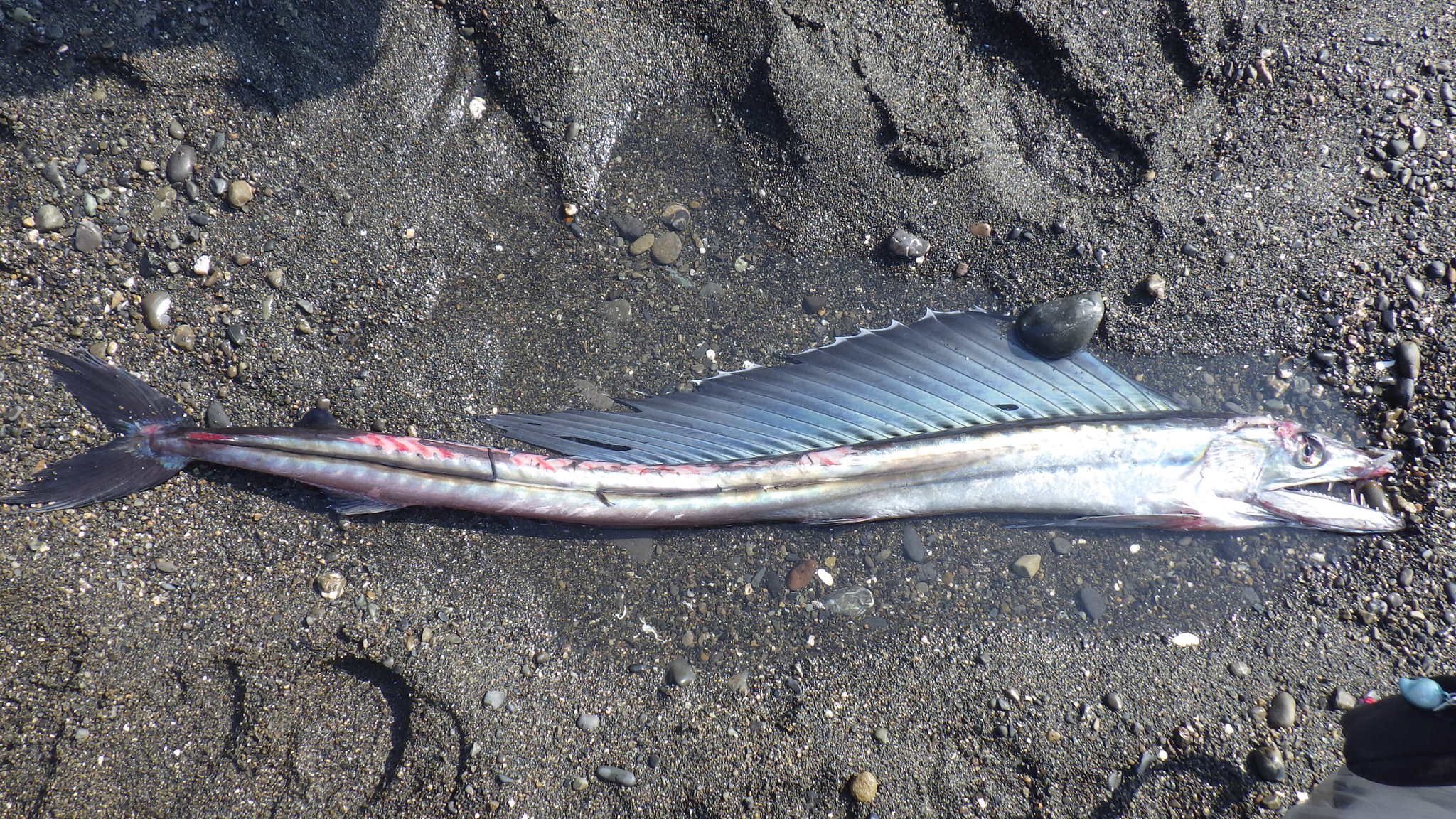 Photo Credit: Haplochromis / Wikimedia Commons
In the shadowy depths of the ocean, where sunlight barely penetrates, lives a remarkable fish known as the Lancetfish, or Alepisaurus. With its elongated, sleek body that can stretch up to six feet long, this creature glides through the water like a torpedo, showcasing a shimmering silver hue that reflects the faint light of its dark surroundings. The Lancetfish is not just a sight to behold; it is a master of its environment, equipped with sharp teeth and a fierce appetite for smaller fish and squid. This predatory lifestyle makes it a vital player in the ocean’s food web, helping to maintain the balance of life in these mysterious waters.
Scientists and nature enthusiasts alike are captivated by the Lancetfish for its unique adaptations and elusive behavior. Living in the mesopelagic and bathypelagic zones, it thrives in an area where few creatures dare to venture. Here, the pressure is immense, and the temperatures are chilling, yet the Lancetfish has evolved to not only survive but to excel. Its solitary nature adds to its intrigue, as it navigates the dark waters alone, hunting and evading predators. As we dive deeper into the world of Alepisaurus, we will explore its fascinating life cycle, diet, and the critical role it plays in the ocean’s ecosystem, revealing the secrets of this extraordinary fish that continues to inspire wonder and curiosity.
The Lancetfish, scientifically known as Alepisaurus, occupies a distinctive position in the tree of life. This intriguing fish belongs to the kingdom Animalia, which encompasses all animals, and is classified under the phylum Chordata, meaning it has a backbone. What sets the Lancetfish apart is its elongated body and sharp, pointed teeth, which make it a formidable predator in the deep ocean. With its unique adaptations, such as bioluminescent properties that help it navigate the dark depths, the Lancetfish is a captivating example of how life can thrive in extreme environments.
| Taxonomic Rank | Scientific Name | Meaning & Significance |
|---|---|---|
| Kingdom | Animalia | This name signifies the broad group of multicellular organisms that are heterotrophic, meaning they consume organic material for energy. |
| Phylum | Chordata | Derived from the Latin word “chorda,” meaning “string,” this name refers to animals with a notochord, a flexible rod that supports the body during development. |
| Class | Actinopterygii | This term means “ray-finned fishes,” highlighting the bony rays that support the fins, a key feature of this diverse class of fish. |
| Order | Aulopiformes | From the Greek “aulos,” meaning “pipe,” and “forma,” meaning “shape,” this order includes fish with elongated bodies and specialized adaptations for deep-sea living. |
| Family | Alepisauridae | The name comes from the Greek “alepas,” meaning “scaly,” which reflects the fish’s smooth, scale-less skin that is adapted for life in the ocean. |
| Genus | Alepisaurus | This name combines “alepas” with “sauros,” meaning “lizard,” indicating the fish’s elongated, lizard-like appearance. |
Understanding the Lancetfish’s classification reveals much about its evolutionary journey. As a member of the Aulopiformes order, it shares traits with other deep-sea fish, showcasing adaptations that have evolved over millions of years to survive in the dark, cold waters of the ocean. Its unique features, from its streamlined body to its predatory skills, highlight the incredible diversity of life forms that have emerged in response to the challenges of their environments. The Lancetfish is not just a fish; it is a testament to the wonders of evolution and the intricate web of life that connects all living beings.
The evolutionary journey of the Lancetfish, or Alepisaurus, stretches back millions of years, tracing its lineage through the depths of the ocean. This fascinating fish belongs to the family Alepisauridae and has adapted to life in the dark, cold waters of the deep sea. Its ancestors swam in ancient oceans, evolving through various environmental changes and challenges that shaped their survival strategies.
The story of the Lancetfish begins with its early relatives, which were likely more similar to other primitive fish. Over time, these ancestors underwent significant transformations, adapting to the unique pressures of their deep-sea habitat. One major transition was the development of a streamlined body, allowing for efficient movement through water. This adaptation was crucial for escaping predators and catching prey in the vast, open ocean. Additionally, the Lancetfish evolved large, sharp teeth, perfect for grasping slippery fish and squid, which are its primary food sources.
These evolutionary adaptations have been vital for the Lancetfish’s survival in the challenging environment of the deep sea. The streamlined body not only aids in swift movement but also reduces energy expenditure, allowing the fish to travel long distances in search of food. The sharp teeth ensure that it can effectively capture its prey, while the ability to produce light may offer advantages in communication and hunting. Together, these traits have enabled the Lancetfish to thrive in a world where few creatures can endure the extreme conditions of the ocean’s depths.
The Lancetfish is a striking inhabitant of the deep ocean, known for its elongated, streamlined body that can reach impressive lengths. With a sleek, almost torpedo-like shape, it glides effortlessly through the water, making it a master of its dark domain. Its skin is smooth, allowing for minimal resistance as it swims, while its large dorsal fin rises dramatically along its back, giving it a distinctive silhouette. The fish’s mouth is lined with sharp fangs, ready to capture prey in the depths where light barely penetrates.
| Feature | Description |
|---|---|
| Weight | 3-20 pounds |
| Skin Type | Smooth |
| Most Distinctive Feature | Large dorsal fin and fangs |
The combination of its sleek body, smooth skin, and formidable fangs makes the Lancetfish a well-adapted predator in the ocean’s depths. The large dorsal fin not only aids in swift movement but also helps it maintain stability as it navigates through the water. Its fangs are essential for gripping slippery prey, ensuring that it can catch and consume a variety of fish and squid. Together, these features create a perfect blend of form and function, allowing the Lancetfish to thrive in an environment where survival depends on speed and efficiency.
The Lancetfish, known scientifically as Alepisaurus, thrives in the mysterious depths of the ocean, specifically in the mesopelagic and bathypelagic zones. These regions are often referred to as the twilight and midnight zones of the sea, where sunlight barely penetrates. Here, the water is cool and dark, creating an environment that is both eerie and enchanting. The Lancetfish glides through these depths, navigating the vast underwater landscape filled with bioluminescent creatures and strange formations.
In these deep waters, the climate is stable but cold, with temperatures typically ranging from 4 to 10 degrees Celsius (39 to 50 degrees Fahrenheit). The pressure increases significantly as you descend, creating a unique environment that few animals can withstand. The Lancetfish has adapted to these conditions, relying on its specialized physiology to thrive where most other fish cannot. The darkness of the deep sea is also home to a variety of prey, making it an ideal hunting ground for this agile predator.
To survive in such a challenging habitat, the Lancetfish has developed several remarkable adaptations. Its streamlined body allows for swift movement through the water, while its large mouth and sharp teeth enable it to capture prey efficiently. Additionally, the Lancetfish has a unique ability to regulate its buoyancy, helping it navigate the varying pressures of the ocean depths. These adaptations not only enhance its survival but also make it a fascinating example of life in one of Earth’s most extreme environments.
The Lancetfish, or Alepisaurus, leads a life that is both solitary and intriguing. As it swims through the dark, mysterious waters of the ocean, this fish engages in a variety of daily activities. It spends much of its time hunting for prey, using its keen eyesight to spot smaller fish and squid. With its streamlined body, the Lancetfish can dart swiftly through the water, making it an efficient predator. During the day, it often resides in deeper waters, where it can rest and conserve energy, while at night, it ventures closer to the surface to hunt.
In terms of social behavior, the Lancetfish is known for its solitary lifestyle. Unlike many fish that form schools or groups, the Lancetfish prefers to roam the ocean alone. This independence allows it to be a stealthy hunter, as it can approach its prey without the distraction of other fish. Communication among Lancetfish is minimal, as they do not rely on social structures or group dynamics. Instead, they focus on their own survival, using their agility and hunting skills to thrive in the vast ocean.
| Behavior Type | Description |
|---|---|
| Activity Patterns | Hunts primarily at night, resting in deeper waters during the day. |
| Social Structure | Solitary; does not form schools or groups. |
| Communication Methods | Minimal communication; relies on stealth and hunting skills. |
The solitary behaviors of the Lancetfish play a crucial role in its survival. By hunting alone, it can be more agile and less conspicuous to its prey. This independence allows it to adapt to the challenges of its deep-sea environment, where competition for food can be fierce. The Lancetfish’s ability to thrive in solitude ensures that it remains a successful predator in the vast, dark ocean.
The Lancetfish, or Alepisaurus, is a carnivore, meaning it primarily eats other animals. This sleek predator hunts in the deep ocean, where it uses its speed and agility to catch a variety of prey. With its long, slender body, the Lancetfish is well-adapted for chasing down fish, octopus, squid, and crustaceans. It often employs a strategy of ambush, lurking in the shadows of the ocean depths before darting out to snatch its next meal.
| Dietary Aspect | Details |
|---|---|
| Diet Type | Carnivore |
| Favorite Foods | Fish, octopus, squid, crustaceans |
| Prey Items | Smaller fish, cephalopods, and various crustaceans |
| Hunting/Foraging Strategies | Ambush predator, using speed and stealth to catch prey |
The Lancetfish’s diet plays a crucial role in its ecological niche. By preying on smaller marine animals, it helps maintain the balance of the ocean’s food web. This feeding behavior not only shapes its daily routine but also influences the populations of its prey, contributing to the overall health of the deep-sea ecosystem. As a skilled hunter, the Lancetfish exemplifies the intricate relationships that exist beneath the waves, showcasing the wonders of ocean life.
The mating behavior of the Lancetfish is as mysterious as the depths it inhabits. These fish typically breed during specific seasons, although the exact timing can vary based on environmental conditions. During mating, males and females engage in a fascinating courtship dance, which may involve swimming in close proximity and displaying their vibrant colors. This ritual helps them find a suitable partner in the vast ocean, where encounters can be rare.
| Reproductive Aspect | Details |
|---|---|
| Gestation Period | Unknown |
| Litter Size | Variable |
| Age of Maturity | Approximately 2-3 years |
| Name of Young | Larva |
Once the eggs are laid, the young Lancetfish, known as larvae, begin their journey in the ocean. These larvae are quite different from adult Lancetfish, as they undergo significant changes as they grow. Parental care is minimal, as the larvae must fend for themselves in the vast and often perilous ocean. As they mature, they develop the characteristics of adult Lancetfish, including their sleek bodies and predatory skills. This transformation is a vital part of their life cycle, allowing them to thrive in the deep sea as they grow into formidable hunters.
The Lancetfish, or Alepisaurus, plays a crucial role in the ocean’s food web as a mid-level predator. It hunts smaller fish and squid, helping to maintain the balance of marine life. However, this sleek swimmer is not without its own challenges. Larger marine predators see the Lancetfish as a tasty meal, making it a target in the vast underwater world.
To survive against these threats, the Lancetfish has developed some clever defensive strategies. Its elongated body allows it to dart quickly through the water, making it harder for predators to catch. Additionally, the dark coloration of its skin helps it blend into the deep ocean’s shadows, providing camouflage from lurking hunters. By using speed and stealth, the Lancetfish navigates the dangers of its environment, showcasing the incredible adaptations that help it thrive in the deep sea.
A keystone species is an organism that has a disproportionately large impact on its environment relative to its abundance. These species help maintain the structure of an ecosystem, influencing the types and numbers of other species present. The Lancetfish, known scientifically as Alepisaurus, plays a significant role in its deep-sea habitat, but whether it qualifies as a true keystone species is a matter of ongoing research. Its position as a mid-level predator suggests it has important ecological functions, but its solitary nature may limit its influence compared to more social species.
In the dark depths of the ocean, the Lancetfish serves as a crucial predator, primarily feeding on smaller fish and squid. By preying on these species, it helps regulate their populations, preventing any one group from becoming too dominant. This balance is vital for the health of the ecosystem, as it allows for a diverse array of marine life to thrive. For example, if the Lancetfish were to decline in numbers, the populations of its prey could explode, leading to overgrazing of phytoplankton and other primary producers, which are essential for oxygen production and carbon cycling in the ocean.
Moreover, the Lancetfish is part of a larger food web. It is preyed upon by larger predators, such as certain species of sharks and larger fish. This relationship highlights its role in transferring energy up the food chain. By being both a predator and prey, the Lancetfish contributes to the dynamic balance of life in the mesopelagic and bathypelagic zones, where it resides.
If the Lancetfish were to disappear from its habitat, the consequences could be significant. Without this predator, the populations of its prey could surge, leading to overconsumption of vital resources like phytoplankton. This could disrupt the entire food web, affecting not only the species that rely on smaller fish and squid for food but also the larger predators that depend on them. The delicate balance of life in the deep ocean could be thrown into chaos, highlighting the interconnectedness of all species within an ecosystem.
The Lancetfish, known scientifically as Alepisaurus, occupies a vital ecological niche in the deep ocean. Found in the mesopelagic and bathypelagic zones, this solitary carnivore plays a significant role in the marine food web. By preying on smaller fish and squid, the Lancetfish helps regulate populations of these species, ensuring a balanced ecosystem. Its presence in these dark waters contributes to the intricate dance of life beneath the waves, where every creature, no matter how small, has a part to play.
| Ecosystem Service | Impact |
|---|---|
| Predation | Controls populations of smaller fish and squid, preventing overpopulation. |
| Food Source | Serves as prey for larger marine animals, supporting higher trophic levels. |
| Nutrient Cycling | Contributes to the transfer of energy through the food web, aiding in nutrient distribution. |
The influence of the Lancetfish extends beyond its role as a predator. For instance, by consuming smaller fish, it helps maintain a healthy balance in the ocean’s ecosystem. If Lancetfish populations were to decline, the species they prey upon could multiply unchecked, leading to a cascade of effects that disrupt the entire marine community. Additionally, as a food source for larger predators, such as sharks and larger fish, the Lancetfish supports the survival of these apex predators, which are crucial for maintaining the health of ocean ecosystems.
The broader ecological importance of the Lancetfish cannot be overstated. As a keystone species, it plays a critical role in shaping the structure of its environment. By influencing the populations of both its prey and its predators, the Lancetfish helps sustain the delicate balance of life in the deep sea. This balance is essential not only for the health of marine ecosystems but also for the overall well-being of our planet, as oceans are vital to global climate regulation and biodiversity. Understanding the role of the Lancetfish encourages us to appreciate the interconnectedness of all life forms in the ocean and the importance of preserving these mysterious underwater realms.
In the vast and mysterious ocean, many species engage in fascinating partnerships that help them survive and thrive. These relationships, known as symbiosis, can take various forms. Some species work together for mutual benefit, while others may rely on one another in ways that can be harmful or beneficial to one party. Understanding these ecological relationships not only reveals the complexity of marine life but also highlights the interconnectedness of all organisms in the ocean.
| Species/Type | Relationship Type | Description |
|---|---|---|
| Remora fish | Commensal | Remoras attach themselves to larger fish, like the Lancetfish, using a special suction disc on their heads. They benefit by getting free rides and access to leftover food, while the Lancetfish is generally unaffected. |
| Cleaner wrasse | Mutualistic | Cleaner wrasses eat parasites and dead skin off larger fish, including the Lancetfish. In return, they get a meal, and the Lancetfish enjoys better health and hygiene. |
| Parasitic copepods | Parasitic | Some copepods attach to the Lancetfish and feed on its blood or tissues. This relationship harms the Lancetfish, as it loses vital nutrients and energy. |
These relationships have evolved over time, shaped by the needs and behaviors of the species involved. Mutualistic partnerships, like that of the cleaner wrasse and the Lancetfish, enhance the health of both parties, while commensal relationships allow one species to benefit without harming the other. On the flip side, parasitic relationships can be detrimental, highlighting the delicate balance of life in the ocean. Each interaction plays a role in the larger ecosystem, demonstrating how interconnected and interdependent marine life truly is.
The Lancetfish, or Alepisaurus, is a captivating inhabitant of the deep ocean, known for its striking appearance and intriguing behaviors. Here are some surprising facts that showcase just how remarkable this fish truly is.
The Lancetfish, known scientifically as Alepisaurus, has a long history of encounters with humanity, often shrouded in mystery and intrigue. Ancient mariners and fishermen have recounted tales of this elusive fish, which can be found in the deep ocean. Its striking appearance and unusual behaviors have sparked curiosity and wonder across cultures. In some regions, the Lancetfish has been featured in folklore and local legends, symbolizing the unknown depths of the sea. These stories reflect humanity’s fascination with the ocean and its inhabitants, highlighting the Lancetfish’s role as a symbol of the mysteries that lie beneath the waves.
Today, interactions between Lancetfish and humans are more complex. While they are not commonly targeted for fishing due to their deep-sea habitat, they occasionally end up in nets meant for other species. This unintentional catch raises concerns about bycatch, which is when non-target species are caught during fishing operations. Conservation efforts are underway to better understand the ecological role of the Lancetfish and to minimize the impact of fishing practices on its population. Additionally, researchers are studying the Lancetfish to learn more about deep-sea ecosystems, which are still largely unexplored. This scientific interest may lead to a greater appreciation for the Lancetfish and its importance in maintaining the balance of marine life.
Looking ahead, the future of the relationship between Lancetfish and humanity holds promise. As awareness of ocean conservation grows, there is hope that more people will recognize the importance of protecting deep-sea species like the Lancetfish. By fostering a sense of stewardship for the ocean, we can ensure that these fascinating fish continue to thrive in their natural habitats. As scientists uncover more about the lives of Lancetfish, we may find new ways to appreciate and respect the intricate web of life that exists beneath the surface of the sea.
The Lancetfish, or Alepisaurus, currently holds a conservation status of “Not Evaluated” according to the International Union for Conservation of Nature (IUCN). This means that there hasn’t been enough comprehensive research to determine its population trends or overall health in the wild. While some fish populations are monitored closely, the Lancetfish remains somewhat of a mystery, making it difficult to assess how many are swimming in the depths of our oceans.
| Conservation Factor | Status/Details |
|---|---|
| IUCN Status | Not Evaluated |
| Population Estimates | Unknown |
| Trend Direction | Unknown |
Despite its elusive nature, the Lancetfish faces several threats that could impact its survival. Overfishing is a significant concern, as this species can be caught unintentionally in nets meant for other fish. Additionally, changes in ocean temperature and acidity due to climate change can disrupt the delicate balance of marine ecosystems, potentially affecting the Lancetfish’s habitat and food sources. Pollution, particularly plastic waste, poses another danger, as it can harm marine life and degrade the quality of the water they inhabit.
Conservation efforts for the Lancetfish are still in their infancy, primarily due to the lack of data on its population and ecology. However, raising awareness about the importance of deep-sea ecosystems is crucial. By promoting sustainable fishing practices and reducing ocean pollution, we can help protect not only the Lancetfish but also the myriad of species that share its habitat. As research continues, there is hope that we will gain a clearer understanding of this fascinating fish and its role in the ocean’s intricate web of life.
| Question | Answer |
|---|---|
| Where do Lancetfish live? | Lancetfish inhabit the mesopelagic and bathypelagic zones of the ocean. These zones are found at depths of about 200 to 2,000 meters, where sunlight barely reaches, making it a dark and mysterious environment. |
| What do Lancetfish eat? | As carnivores, Lancetfish primarily feed on smaller fish and squid. Their sharp fangs help them catch and hold onto slippery prey in the deep sea. |
| How do Lancetfish behave? | Lancetfish are known for their unique swimming style, which involves a combination of quick bursts and gliding. They are often solitary creatures, but they can sometimes be seen in small groups when hunting. |
| How do Lancetfish reproduce? | The reproductive habits of Lancetfish are not well-documented, but like many fish, they likely lay eggs in the open water. The eggs and larvae are thought to drift with ocean currents until they grow into adults. |
| What threats do Lancetfish face? | Currently, Lancetfish are not evaluated for conservation status, which means we don't know much about their population trends. However, like many deep-sea creatures, they could be affected by overfishing and habitat destruction. |
| What is a distinctive feature of Lancetfish? | One of the most striking features of Lancetfish is their large dorsal fin, which can help them stabilize while swimming. They also have impressive fangs that make them look quite fierce! |
| Are Lancetfish bioluminescent? | While Lancetfish are not known for bioluminescence, many deep-sea fish use light to attract prey or communicate. Lancetfish rely more on their keen senses and hunting skills in the dark depths of the ocean. |