Taxonomy & Classification
- Kingdom
- Animalia
- Phylum
- Chordata
- Class
- Chondrichthyes
- Order
- Carcharhiniformes
- Family
- Carcharhinidae
- Genus
- Negaprion
- Species
- N. brevirostis

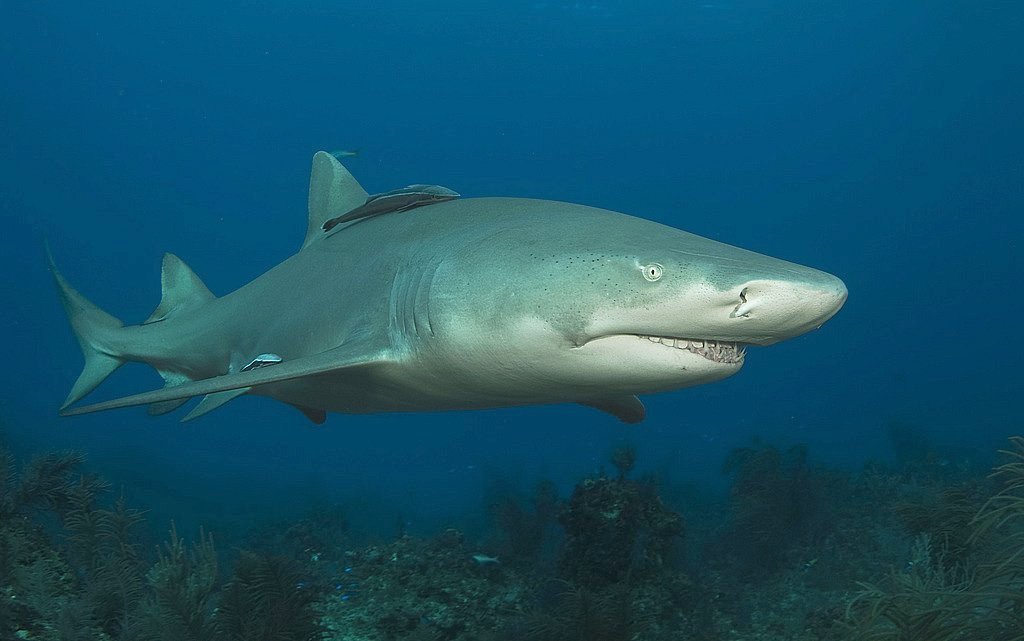 Photo Credit: Albert kok / Wikimedia Commons
In the sun-drenched waters of the Caribbean and the warm shallows of the Atlantic, the lemon shark, or Negaprion brevirostris, glides gracefully through its vibrant underwater realm. With its sleek, streamlined body reaching lengths of up to 10 feet, this shark is a master of agility, effortlessly navigating the coral reefs and seagrass beds that make up its home. Its distinctive yellow-brown hue, reminiscent of the citrus fruit it’s named after, allows it to blend seamlessly into the sandy ocean floor, making it both a striking and stealthy predator.
What makes the lemon shark particularly captivating to scientists and nature enthusiasts alike is its role as a keystone species in its ecosystem. This means that its presence is crucial for maintaining the balance of marine life. As an omnivore, the lemon shark has a varied diet that includes both fish and plant matter, showcasing its adaptability in the ever-changing coastal environment. Observing these sharks in their natural habitat reveals not just their beauty, but also the intricate relationships they share with other marine creatures, highlighting the delicate web of life beneath the waves. As we dive deeper into the world of the lemon shark, we will explore its behavior, diet, and the vital role it plays in the ocean’s ecosystem, inviting you to discover the wonders of this remarkable species.
The lemon shark, scientifically known as Negaprion brevirostris, occupies a fascinating niche in the tree of life. This species belongs to the kingdom Animalia, which includes all animals, and is part of the phylum Chordata, meaning it has a backbone. What sets lemon sharks apart is their unique coloration, which resembles the hue of a lemon, and their distinctive short snouts. These features not only make them visually striking but also play a role in their hunting strategies and social behaviors.
| Taxonomic Rank | Scientific Name | Meaning & Significance |
|---|---|---|
| Kingdom | Animalia | This term means “animals” in Latin, highlighting the lemon shark’s classification as a multicellular organism that consumes organic material. |
| Phylum | Chordata | Derived from the Greek word “chordē,” meaning “string,” this refers to the lemon shark’s backbone, a key feature of this group. |
| Class | Chondrichthyes | This name means “cartilaginous fish,” indicating that lemon sharks have skeletons made of cartilage, which is lighter and more flexible than bone. |
| Order | Carcharhiniformes | Translating to “ground sharks,” this order includes species that typically inhabit shallow waters, where lemon sharks are often found. |
| Family | Carcharhinidae | This family name means “requiem sharks,” a term used for sharks that are generally active hunters, which describes the lemon shark’s behavior well. |
| Genus | Negaprion | From the Greek “negas,” meaning “not,” and “prion,” meaning “saw,” this name reflects the absence of serrated teeth, a feature common in other shark species. |
| Species | brevirostris | This Latin term means “short snout,” aptly describing the lemon shark’s distinctive facial structure. |
The classification of the lemon shark reveals much about its evolutionary journey. As a member of the Chondrichthyes class, it shares a lineage with ancient fish that have thrived for hundreds of millions of years. This lineage showcases the lemon shark’s adaptations to its environment, such as its cartilaginous skeleton, which allows for greater agility in the water. Understanding where the lemon shark fits in the tree of life not only highlights its unique characteristics but also emphasizes the intricate connections between all living organisms, reminding us of the rich tapestry of life on our planet.
The evolutionary journey of the lemon shark, known scientifically as Negaprion brevirostris, stretches back millions of years, tracing its lineage through the ancient seas. Sharks, as a group, have been swimming in our oceans for over 400 million years, making them one of the oldest surviving lineages on Earth. The lemon shark itself has adapted and evolved over time, developing traits that have allowed it to thrive in coastal waters and estuaries.
The ancestors of modern sharks were quite different from the sleek, streamlined lemon sharks we see today. Early sharks had a more primitive body structure and lacked the advanced features that characterize contemporary species. Over time, sharks underwent significant changes, including the development of a cartilaginous skeleton, which is lighter and more flexible than bone. This adaptation allowed them to be agile hunters in the water. As they evolved, sharks also developed specialized teeth and improved sensory systems, such as the ability to detect electrical fields, which helped them locate prey more effectively.
The adaptations of the lemon shark have played a crucial role in its survival. The cartilaginous skeleton and electroreception allow it to be a nimble and effective predator, while its coloration helps it blend into its surroundings, making it a stealthy hunter. Social behavior enhances its ability to catch prey and avoid danger, while adaptability ensures that it can thrive in changing environments. Together, these traits have enabled the lemon shark to remain a successful species in the ever-evolving marine ecosystem.
The lemon shark is an impressive sight, gliding gracefully through warm coastal waters. With a streamlined body that can reach lengths of up to 10 feet, this shark is built for speed and agility. Its broad, flat head gives it a distinctive profile, while its long, slender tail helps propel it through the ocean with ease. The lemon shark’s overall shape is designed for efficient swimming, allowing it to navigate both shallow reefs and deeper waters with confidence.
| Feature | Description |
|---|---|
| Weight | Around 220 pounds |
| Skin Type | Smooth |
| Color | Light yellowish-brown, resembling the color of a lemon |
| Body Shape | Streamlined and elongated, ideal for swift movement |
| Fins | Long pectoral fins that aid in maneuverability |
The lemon shark’s physical features are not just for show; they play vital roles in its survival. The smooth skin reduces drag as it swims, allowing it to chase prey efficiently. Its coloration, a light yellowish-brown, provides excellent camouflage against the sandy ocean floor, helping it ambush unsuspecting fish. With its powerful body and agile fins, the lemon shark is a master of its underwater domain, perfectly adapted to thrive in its environment.
The lemon shark thrives in warm, shallow waters, often found in coastal regions where the sun’s rays dance on the surface. Picture a vibrant underwater world filled with coral reefs, seagrass beds, and sandy bottoms. These habitats provide not only shelter but also a rich buffet of food for the lemon shark. As it swims through these inviting waters, it navigates the intricate maze of its home, where the gentle currents and the play of light create a serene yet lively environment.
Lemon sharks prefer warm waters, typically ranging from 70 to 85 degrees Fahrenheit. They are often found in areas with plenty of sunlight, which helps maintain the temperature of their environment. These sharks are also drawn to regions with abundant food sources, such as fish and crustaceans, and they enjoy habitats that offer both shallow and deeper waters for hunting and resting. The presence of seagrass and coral reefs is crucial, as these ecosystems support a diverse range of marine life.
To thrive in their specific habitats, lemon sharks have developed several adaptations. Their bodies are designed for agility, allowing them to maneuver swiftly through tight spaces among coral and rocks. They have a keen sense of smell, which helps them detect prey even in murky waters. Additionally, their ability to tolerate varying salinity levels means they can venture into brackish waters, where rivers meet the sea. This versatility allows them to explore a wide range of environments, ensuring they can find food and shelter in the ever-changing coastal landscape.
The lemon shark’s day begins with the gentle light of dawn filtering through the warm coastal waters it calls home. These sharks are primarily active during the day, often seen swimming gracefully in search of food. They hunt for fish, crustaceans, and other small marine creatures, using their keen sense of smell to detect prey from a distance. As they glide through their environment, they exhibit a variety of behaviors, including foraging, resting, and socializing with other lemon sharks.
Socially, lemon sharks can be quite engaging. They often form small groups, known as pods, which can consist of a few individuals or more. These pods allow them to share information about food sources and potential threats. Within these groups, lemon sharks communicate through body language and subtle movements, helping to maintain harmony and cooperation. This social structure is essential for their survival, as it enhances their ability to hunt and evade predators.
| Behavior Type | Description |
|---|---|
| Activity Patterns | Lemon sharks are diurnal, meaning they are most active during the day. They spend their time swimming, hunting, and resting in shallow waters. |
| Social Structure | These sharks often form pods, which are small groups that help them cooperate in hunting and provide safety in numbers. |
| Communication Methods | Lemon sharks communicate through body language, using movements and positioning to convey messages to one another. |
The behaviors of lemon sharks are finely tuned to ensure their survival in the vibrant underwater world. By forming pods, they enhance their hunting efficiency and increase their chances of finding food. Their ability to communicate effectively within these groups helps them navigate their environment and avoid dangers. In this way, the lemon shark exemplifies the intricate balance of life in the ocean, where cooperation and adaptability are key to thriving in a dynamic ecosystem.
The lemon shark is an omnivore, which means it enjoys a varied diet that includes both plant and animal matter. This adaptable feeding behavior allows it to thrive in its coastal habitat. Lemon sharks primarily feast on bony fish and crustaceans, using their keen senses to locate prey. They are known for their opportunistic hunting style, often employing a combination of stealth and speed to catch their meals.
| Dietary Aspect | Details |
|---|---|
| Diet Type | Omnivore |
| Favorite Foods | Bony fish and crustaceans |
| Prey Items | Small fish, shrimp, and crabs |
| Hunting/Foraging Strategies | Stealthy swimming and quick bursts of speed |
The lemon shark’s diet plays a crucial role in its ecological niche. By preying on bony fish and crustaceans, it helps maintain the balance of marine life in its habitat. This feeding behavior not only shapes its daily routine but also influences the populations of its prey, contributing to the overall health of the coastal ecosystems where it resides. As these sharks glide through the water, they are not just hunters; they are vital players in the intricate web of ocean life.
The mating behavior of lemon sharks is as intriguing as their appearance. During the breeding season, which typically occurs in the warmer months, males engage in a courtship dance to attract females. This involves swimming closely alongside the female and sometimes even biting her fins gently. After a successful courtship, the female will mate with the male, leading to a fascinating reproductive process that takes place over the next several months.
| Reproductive Aspect | Details |
|---|---|
| Gestation Period | 10-12 months |
| Litter Size | Up to 14 pups |
| Age of Maturity | Around 12-13 years |
| Name of Young | Pups |
Once the pups are born, they are fully formed and ready to swim away from their mother, showcasing their independence right from the start. Lemon sharks do not provide parental care after giving birth, which means the young must fend for themselves in the vast ocean. As they grow, these pups will learn to navigate their environment, honing their hunting skills and adapting to life in the warm coastal waters. Over time, they will mature into adults, reaching their full potential and continuing the cycle of life in the sea.
The lemon shark plays a vital role in its marine ecosystem, sitting comfortably near the top of the food web. As a predator, it helps maintain the balance of fish populations and other marine life. However, despite its position, the lemon shark faces various dangers that threaten its survival.
To defend itself against these threats, the lemon shark employs several survival strategies. It often uses its speed and agility to evade larger predators, darting swiftly through the water. Additionally, lemon sharks can be found in shallow waters, where they can hide among coral reefs and seagrass beds, making it harder for larger threats to spot them. By being aware of their surroundings and using their natural instincts, lemon sharks continue to navigate the challenges of their underwater world.
A keystone species is a vital part of its ecosystem, meaning its presence has a significant impact on the environment and other species within it. The lemon shark, known scientifically as Negaprion brevirostris, qualifies as a keystone species due to its role in maintaining the balance of marine life in its habitat. By influencing the population dynamics of various species, the lemon shark helps ensure a healthy and diverse ecosystem.
Lemon sharks are top predators in their coastal environments, which means they help control the populations of smaller fish and invertebrates. By preying on these species, they prevent any one group from becoming too dominant, which could lead to overgrazing of seagrass beds or coral reefs. For example, if lemon sharks were to disappear, the populations of smaller fish could explode, leading to a decline in seagrass health as these fish consume the algae that would otherwise support the ecosystem.
Additionally, lemon sharks often feed on sick or weak individuals, which helps maintain the overall health of fish populations. This natural selection process ensures that only the strongest and healthiest individuals reproduce, leading to a more resilient community. Their presence also creates a ripple effect, influencing the behavior of other marine animals. For instance, smaller fish often seek shelter near lemon sharks, knowing that their presence can deter larger predators.
If lemon sharks were to vanish from their ecosystems, the consequences could be dire. Without these apex predators, the balance of marine life would be disrupted, leading to overpopulation of certain species and the decline of others. This imbalance could result in the degradation of vital habitats like coral reefs and seagrass beds, ultimately affecting the entire marine ecosystem and the human communities that rely on it for food and recreation. The loss of lemon sharks would not only diminish biodiversity but also threaten the health of our oceans.
The lemon shark, known scientifically as Negaprion brevirostris, plays a crucial role in its coastal ecosystem. As a keystone species, it helps maintain the balance of marine life in the warm, shallow waters it inhabits. By preying on various fish and invertebrates, the lemon shark influences the population dynamics of these species, ensuring that no single group dominates the ecosystem. This balance is essential for the health of coral reefs and seagrass beds, which provide habitat and food for countless other marine organisms.
| Ecosystem Service | Impact |
|---|---|
| Population Control | Regulates the numbers of prey species, preventing overpopulation. |
| Habitat Maintenance | Supports the health of coral reefs and seagrass beds by controlling herbivore populations. |
| Nutrient Cycling | Contributes to the breakdown of organic matter, enriching the ecosystem. |
| Food Source | Provides sustenance for larger predators, such as tiger sharks and orcas. |
The lemon shark’s influence extends beyond its immediate surroundings. For instance, by preying on smaller fish, it helps maintain a balanced ecosystem that supports diverse marine life. When lemon sharks hunt, they often target sick or weak individuals, which promotes healthier populations of prey species. This natural selection process ensures that the strongest fish survive and reproduce, leading to a more resilient ecosystem. Additionally, their presence encourages the growth of seagrass and coral reefs, as these habitats thrive when herbivore populations are kept in check.
The broader ecological importance of the lemon shark cannot be overstated. As a top predator, it plays a vital role in the food web, influencing the abundance and diversity of marine species. By maintaining the balance of its ecosystem, the lemon shark helps ensure the health of coastal environments, which are crucial for both marine life and human communities. Protecting this remarkable species is essential for preserving the intricate web of life that thrives beneath the waves.
In the vibrant tapestry of marine life, symbiosis plays a crucial role in shaping the relationships between different species. Symbiosis refers to the close interactions between organisms, which can be beneficial, harmful, or neutral. These ecological relationships can be classified into three main types: mutualism, where both species benefit; parasitism, where one species benefits at the expense of another; and commensalism, where one species benefits while the other is neither helped nor harmed. The lemon shark, known for its striking appearance and adaptability, engages in various symbiotic relationships that highlight the interconnectedness of ocean life.
| Species/Type | Relationship Type | Description |
|---|---|---|
| Remora Fish | Mutualistic | Remoras attach themselves to lemon sharks, gaining protection and transportation, while the sharks benefit from the cleaning services provided by the remoras, which eat parasites and dead skin. |
| Cleaner Shrimp | Mutualistic | Cleaner shrimp often inhabit areas where lemon sharks frequent. These shrimp remove parasites and dead tissue from the shark’s skin, promoting the shark’s health while receiving food in return. |
| Sea Turtles | Commensal | While not directly benefiting from lemon sharks, sea turtles may find safety in the presence of these sharks, as their size and predatory nature can deter smaller predators. |
The evolution of these relationships showcases the dynamic nature of marine ecosystems. Over time, lemon sharks and their partners have adapted to rely on one another for survival and health. The mutualistic relationships, like those with remora fish and cleaner shrimp, illustrate how cooperation can enhance the well-being of both species involved. Meanwhile, the commensal relationship with sea turtles highlights the complex web of interactions that define life in the ocean. These partnerships not only benefit the species directly involved but also contribute to the overall health of the marine environment, demonstrating the importance of interconnectedness in nature.
The lemon shark is a captivating inhabitant of warm coastal waters, known for its distinctive yellow-brown hue and playful behavior. Here are some surprising facts that showcase the intriguing life of this remarkable species.
The relationship between lemon sharks and humanity has evolved over centuries, marked by both fascination and fear. Historically, these sharks have been a part of coastal folklore and cultural narratives, often depicted as symbols of the ocean’s mystery. In many coastal communities, they are seen as both a source of livelihood and a subject of intrigue. Fishermen have long shared stories of encounters with these sleek predators, while artists and writers have drawn inspiration from their graceful movements and striking appearance. This cultural significance highlights the deep connection humans have with the natural world, particularly with creatures that inhabit the waters we rely on.
In contemporary times, interactions between lemon sharks and humans have taken on new dimensions. Conservation efforts are increasingly important as these sharks face threats from overfishing and habitat loss. Many organizations are working to protect their populations and educate the public about their ecological role. However, conflicts can arise, especially in areas where fishing and tourism intersect. Some people fear sharks, leading to negative perceptions that can hinder conservation efforts. Interestingly, researchers have also explored the potential for domestication, studying how lemon sharks can be trained to respond to human cues, which opens up exciting possibilities for future interactions.
As we look to the future, the relationship between lemon sharks and humanity holds both challenges and opportunities. With growing awareness of the importance of marine conservation, there is hope that we can foster a more respectful coexistence. By embracing education and sustainable practices, we can ensure that lemon sharks continue to thrive in our oceans. This partnership not only benefits the sharks but also enriches our understanding of the intricate web of life that connects us all. Together, we can create a future where both humans and lemon sharks flourish in harmony.
The lemon shark, known scientifically as Negaprion brevirostris, currently holds a conservation status of Near Threatened according to the International Union for Conservation of Nature (IUCN). This means that while the species is not yet endangered, it is at risk of becoming so if current trends continue. Population estimates suggest that lemon sharks are experiencing a decline, primarily due to human activities. As we explore the waters they inhabit, it becomes clear that their future depends on our actions today.
| Conservation Factor | Status/Details |
|---|---|
| IUCN Status | Near Threatened |
| Population Estimates | Declining |
| Trend Direction | Negative |
The main threats to lemon sharks stem from overfishing and habitat loss. As coastal areas are developed for tourism and urbanization, the delicate ecosystems that support these sharks are disrupted. Additionally, lemon sharks are often caught unintentionally in fishing gear, a practice known as bycatch. This unintentional capture can lead to injury or death, further impacting their populations. The combination of these pressures makes it crucial to address the challenges they face in their natural habitats.
Conservation efforts are underway to protect lemon sharks and their environments. Marine protected areas (MPAs) have been established in some regions, providing safe havens where these sharks can thrive without the threat of fishing or habitat destruction. Education and awareness campaigns are also vital, helping local communities understand the importance of preserving these magnificent creatures. With continued efforts and a commitment to sustainable practices, there is hope for the lemon shark’s future, ensuring that they continue to glide gracefully through our oceans for generations to come.
| Question | Answer |
|---|---|
| What is the habitat of the Lemon Shark? | Lemon Sharks are typically found in warm, shallow waters along the coasts of the Atlantic Ocean and the Caribbean Sea. They prefer sandy or muddy bottoms, often near coral reefs, mangroves, and estuaries where they can find plenty of food and shelter. |
| What do Lemon Sharks eat? | Lemon Sharks are omnivores, which means they eat both plants and animals. Their diet mainly consists of fish, crustaceans, and mollusks, but they are also known to munch on sea turtles and other small marine creatures when the opportunity arises. |
| How do Lemon Sharks behave? | Lemon Sharks are known for their social behavior, often forming groups called schools. They are curious and can be seen swimming close to divers, but they are generally not aggressive towards humans unless provoked. |
| How do Lemon Sharks reproduce? | Lemon Sharks reproduce through a process called viviparity, meaning the young develop inside the mother and are born live. After a gestation period of about 10 to 12 months, females give birth to around 4 to 17 pups, which are independent from the moment they are born. |
| What threats do Lemon Sharks face? | Lemon Sharks are currently classified as Near Threatened due to overfishing and habitat loss. They are often caught accidentally in fishing gear, and their coastal habitats are being damaged by pollution and development. |
| What are some interesting characteristics of Lemon Sharks? | One fascinating feature of Lemon Sharks is their ability to change color, which helps them blend into their surroundings. They also have a unique yellowish hue, which is how they got their name, and they can grow up to 10 feet long! |
| How do Lemon Sharks communicate? | Lemon Sharks communicate using body language and subtle movements. They can also use their sense of smell to detect chemical signals in the water, which helps them find food and interact with other sharks. |