Taxonomy & Classification
- Kingdom
- Animalia
- Phylum
- Chordata
- Class
- Mammalia
- Order
- Carnivora
- Family
- Phocidae
- Genus
- Hydrurga
- Species
- Hydrurga Leptonyx

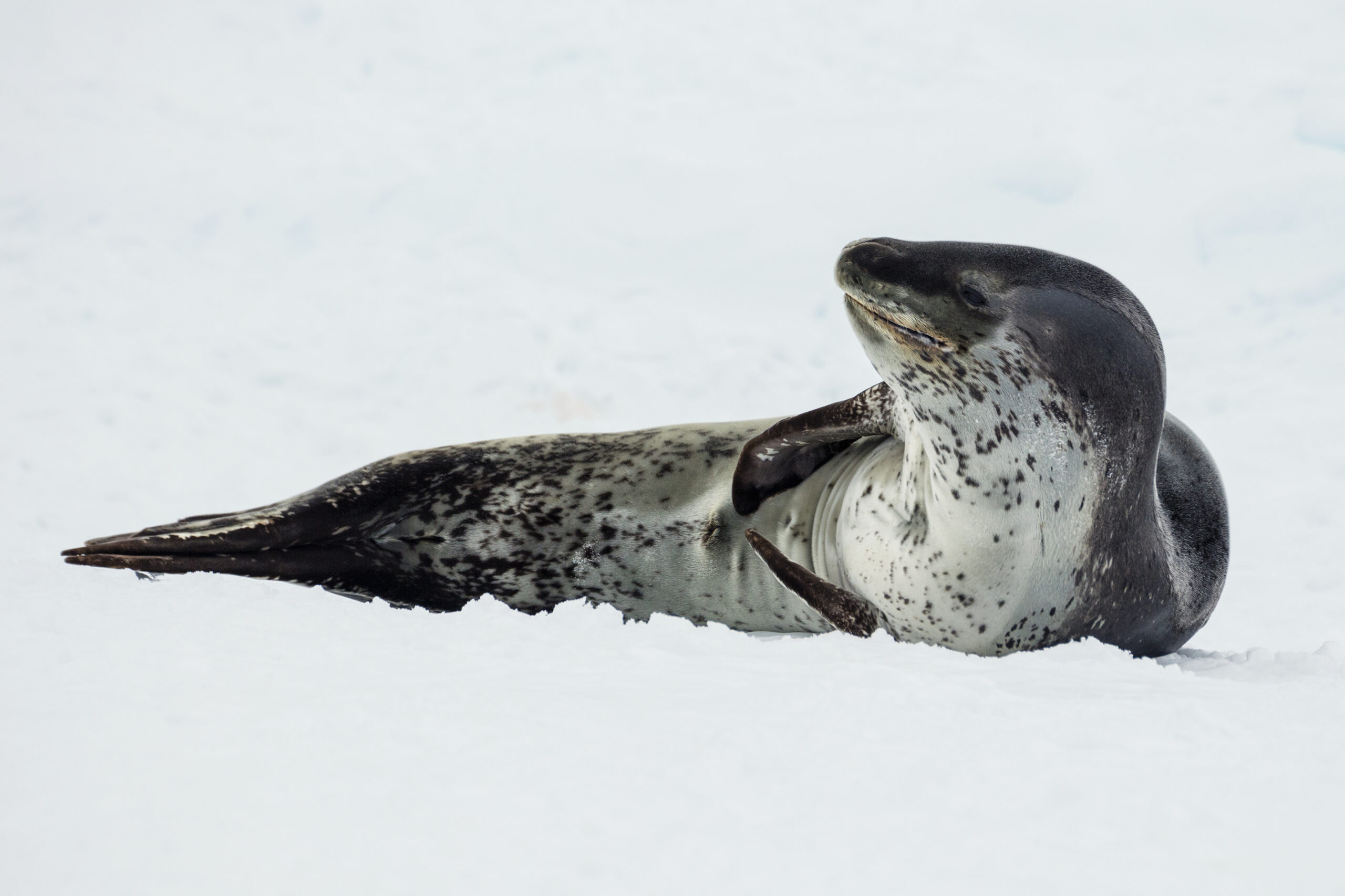 Photo Credit: Godot13 / Wikimedia Commons
In the icy embrace of the Southern Ocean, the leopard seal, or Hydrurga leptonyx, glides through the frigid waters with an elegance that captivates all who witness it. With its long, streamlined body and distinctive spotted coat, this marine mammal is a striking sight against the backdrop of shimmering icebergs and deep blue seas. The leopard seal’s powerful presence is not just about looks; it is a masterful predator, known for its agility and strength as it hunts for fish, squid, and even penguins. This combination of beauty and ferocity makes it a subject of fascination for scientists and nature enthusiasts alike.
As the sun dips below the horizon, casting a golden glow over the Antarctic landscape, the leopard seal can often be seen lounging on floating ice, basking in the cold air. Its large, expressive eyes and playful demeanor reveal a curious intelligence that intrigues researchers. These seals are not just solitary hunters; they also play a vital role in their ecosystem, helping to maintain the balance of marine life in their frigid habitat. With their unique adaptations and behaviors, leopard seals invite us to explore the wonders of the natural world, reminding us of the intricate connections that bind all living things in the wild.
The leopard seal, known scientifically as Hydrurga leptonyx, occupies a distinctive position in the animal kingdom. As a member of the phylum Chordata, which includes all animals with a backbone, this marine mammal is part of the class Mammalia, meaning it shares traits like warm-bloodedness and live births with other mammals. What sets the leopard seal apart is its impressive adaptability to the harsh Antarctic environment, where it thrives as a top predator. With its sleek body and powerful jaws, it is uniquely equipped to hunt a variety of prey, including penguins and fish, making it a vital part of its ecosystem.
| Taxonomic Rank | Scientific Name | Meaning & Significance |
|---|---|---|
| Kingdom | Animalia | This name signifies that leopard seals are part of the vast group of multicellular organisms known as animals, which are characterized by their ability to move and respond to their environment. |
| Phylum | Chordata | Chordata means “having a notochord,” a flexible rod that supports the body. This feature is a key characteristic of all vertebrates, including the leopard seal. |
| Class | Mammalia | Mammalia refers to mammals, which are warm-blooded and possess mammary glands that produce milk for their young. This classification highlights the leopard seal’s nurturing behavior. |
| Order | Carnivora | Carnivora, meaning “meat-eaters,” includes animals that primarily consume flesh. The leopard seal’s sharp teeth and strong jaws are perfect for catching its prey. |
| Family | Phocidae | Phocidae, or true seals, are characterized by their lack of external ear flaps and their ability to swim efficiently. This family classification emphasizes the leopard seal’s aquatic adaptations. |
| Genus | Hydrurga | Hydrurga comes from Greek roots meaning “water worker,” reflecting the leopard seal’s life spent in the ocean and its remarkable swimming abilities. |
| Species | leptonyx | Leptonyx means “slender claw,” which describes the leopard seal’s long, sharp claws that help it grip onto ice and catch slippery prey. |
Understanding the leopard seal’s classification reveals much about its evolutionary journey. As a member of the Carnivora order, it shares a lineage with other meat-eating mammals, showcasing adaptations that have allowed it to thrive in one of the planet’s most extreme environments. Its unique features, from its streamlined body to its hunting prowess, are the result of millions of years of evolution, making it a fascinating example of nature’s ingenuity. The leopard seal not only plays a crucial role in its ecosystem but also serves as a reminder of the diverse paths life can take on Earth.
The evolutionary journey of the leopard seal, or Hydrurga leptonyx, stretches back millions of years, tracing its lineage through the icy waters of the Southern Hemisphere. This marine mammal belongs to the family Phocidae, which includes true seals, and has adapted to thrive in the frigid environments of Antarctica and surrounding regions. Understanding its evolution reveals how this species has become a master of its icy domain.
Leopard seals are believed to have diverged from their ancestral forms around 15 million years ago. Their ancestors were likely similar to other early pinnipeds, which are marine mammals that include seals, sea lions, and walruses. Over time, these ancestors adapted to a life spent mostly in the water, developing streamlined bodies and powerful flippers. The transition from land to sea was significant, allowing them to exploit new food sources and evade terrestrial predators. As they evolved, leopard seals developed specialized hunting techniques, including the ability to dive deep and hold their breath for extended periods, which helped them pursue prey like krill and penguins.
The adaptations of the leopard seal have been vital for its survival in one of the harshest environments on Earth. Its streamlined body and powerful flippers enable it to navigate swiftly through icy waters, while its thick layer of blubber provides essential insulation against the cold. The ability to dive deeply and hold its breath for long periods allows the leopard seal to hunt effectively, targeting prey that few other predators can reach. Together, these traits not only showcase the leopard seal’s evolutionary success but also highlight the intricate balance of life in the polar regions.
The leopard seal is a striking figure in the frigid waters of the Antarctic. With a long, streamlined body that can reach lengths of up to 3.5 meters (about 11.5 feet), it glides effortlessly through the ocean. Its powerful flippers are designed for agility, allowing it to navigate swiftly in pursuit of prey. The leopard seal’s head is broad and features a pronounced snout, giving it a somewhat fierce appearance. Its skin is adorned with a pattern of dark spots against a lighter background, reminiscent of a leopard’s coat, which not only adds to its beauty but also provides effective camouflage in the dappled light of its icy habitat.
| Feature | Description |
|---|---|
| Weight | 200-591 kg (440-1,300 lbs) |
| Length | Up to 3.5 meters (11.5 feet) |
| Skin Type | Fur |
| Color | Light gray with dark spots |
The leopard seal’s impressive size and distinctive coloration serve multiple purposes in its survival. The robust body allows it to dive deep and swim long distances in search of food, while the fur provides insulation against the icy waters. The spotted pattern not only enhances its beauty but also helps it blend into the sun-dappled ocean surface, making it less visible to both prey and predators. Together, these features create a well-adapted predator, perfectly suited to thrive in one of the most challenging environments on Earth.
The leopard seal thrives in the cold, icy waters of the Southern Hemisphere, where the ocean meets the frigid air. Picture vast expanses of shimmering blue, dotted with floating icebergs and the occasional rocky shore. These seals are often seen lounging on the ice, basking in the weak sunlight that filters through the clouds. Their habitat is a world of contrasts, where the stark beauty of the Antarctic landscape provides both a home and a hunting ground.
The climate in these regions is harsh and unforgiving. Temperatures can plummet well below freezing, and the waters are often covered in thick sea ice. Despite these extreme conditions, leopard seals are well-suited to their environment. They prefer areas where the ice is present but not too thick, allowing them to hunt for their favorite prey, such as krill and penguins. The cold waters are rich in nutrients, supporting a diverse ecosystem that is vital for their survival.
Adaptations have made the leopard seal a master of its icy domain. Its thick layer of blubber keeps it warm in freezing temperatures, while its streamlined body allows for swift movement through the water. The leopard seal’s powerful jaws and sharp teeth are perfect for catching slippery fish and other marine life. With keen eyesight and excellent hearing, it can navigate and hunt effectively in the dim light of its polar habitat. These features not only help it survive but also thrive in one of the most extreme environments on Earth.
The daily life of a leopard seal is a blend of hunting, resting, and socializing, all set against the stunning backdrop of icy Antarctic waters. These seals are primarily solitary hunters, often seen gliding through the ocean in search of their favorite meals, which include fish, squid, and even penguins. After a successful hunt, they may haul out onto ice floes to bask in the sun, resting and recharging for their next adventure. Their days are marked by a rhythm of activity and relaxation, perfectly suited to their cold, aquatic environment.
Leopard seals are not entirely solitary; they exhibit interesting social behaviors, especially during breeding season. While they often prefer to hunt alone, they can be found in small groups, particularly when resting on ice. These gatherings can be lively, with seals communicating through a series of vocalizations, including barks and growls. Social interactions can also involve playful behaviors, such as chasing each other in the water or engaging in mock fights. These interactions help establish social bonds and can be crucial for young seals learning to navigate their world.
| Behavior Type | Description |
|---|---|
| Hunting | Leopard seals are skilled hunters, often diving deep to catch fish and squid. They use their speed and agility to surprise their prey. |
| Resting | After hunting, they haul out on ice floes to rest and bask in the sun, which helps them conserve energy. |
| Socializing | During breeding season, they gather in small groups, communicating through vocalizations and engaging in playful behaviors. |
| Communication | Leopard seals use a variety of sounds, including barks and growls, to communicate with each other, especially during social interactions. |
The behaviors of leopard seals are finely tuned to ensure their survival in a challenging environment. Their hunting skills allow them to efficiently catch prey, while their social interactions help them build connections that can be beneficial for breeding and learning. By balancing solitary and social behaviors, leopard seals thrive in the icy waters of the Antarctic, showcasing the adaptability and resilience of life in extreme conditions.
The leopard seal is a true carnivore, meaning it primarily eats meat. Its diet mainly consists of penguins, fish, and squid, making it a skilled predator in the chilly waters of the Antarctic. With its powerful jaws and sharp teeth, the leopard seal is well-equipped to catch and consume its prey. It often hunts alone, using stealth and speed to surprise unsuspecting animals. This hunting behavior not only showcases its agility but also highlights its role as a top predator in its ecosystem.
| Dietary Aspect | Details |
|---|---|
| Diet Type | Carnivore |
| Favorite Foods | Penguins, fish, squid |
| Prey Items | Adélie and emperor penguins, various fish species, and cephalopods like squid |
| Hunting/Foraging Strategies | Stealthy swimming, ambushing prey, and using speed to catch fish and penguins |
The leopard seal’s diet plays a crucial role in shaping its daily routine and the overall health of its environment. By preying on penguins and fish, it helps maintain a balance in the population of these species, ensuring that the ecosystem remains vibrant and diverse. This top predator not only influences the dynamics of its habitat but also showcases the intricate connections between species in the Antarctic waters. As it hunts and forages, the leopard seal embodies the spirit of survival in one of the planet’s most extreme environments.
During the breeding season, which typically occurs from late November to early January, leopard seals engage in intriguing mating behaviors. Males often compete for the attention of females, showcasing their strength and agility in the water. This competition can involve vocalizations and displays of physical prowess, as males try to impress potential mates. Once a female selects a partner, they will mate, and the female will then embark on the journey of pregnancy.
| Reproductive Aspect | Details |
|---|---|
| Gestation Period | About 11 months |
| Litter Size | 1 |
| Age of Maturity | 3 to 4 years |
| Name of Young | Pup |
After giving birth, a female leopard seal shows remarkable dedication to her pup. The young seal, known as a pup, is born weighing around 10 to 15 kilograms (22 to 33 pounds) and is covered in a soft, thick layer of fur. For the first few weeks, the mother provides all the nourishment the pup needs through her rich milk, which is high in fat. This helps the pup grow quickly and develop the strength it needs to thrive in the harsh Antarctic environment. As the pup matures, it learns essential survival skills, such as hunting and swimming, often staying close to its mother until it is ready to venture out on its own. By the time they reach 3 to 4 years of age, these young seals are fully capable of navigating the icy waters and hunting for themselves, continuing the cycle of life in the wild.
The leopard seal holds a significant role in the Antarctic food web, acting as both a predator and prey. As a top predator, it hunts various marine animals, including penguins and fish, showcasing its prowess in the icy waters. However, this position also makes it vulnerable to certain threats, reminding us that even the mightiest have their challenges.
To defend against these dangers, leopard seals have developed several survival strategies. They are agile swimmers, capable of quick movements to evade predators like orcas. When threatened, they can dive deep into the ocean, using their speed and agility to escape. Additionally, their thick layer of blubber provides insulation against the cold and a buffer against potential attacks. By staying aware of their surroundings and using their natural instincts, leopard seals navigate the challenges of their environment, ensuring their survival in a world full of dangers.
A keystone species is an organism that plays a critical role in maintaining the structure of its ecosystem. This means that its presence and activities significantly influence the types and numbers of other species in that environment. The leopard seal, known scientifically as Hydrurga leptonyx, qualifies as a keystone species in the Antarctic ecosystem due to its position as a top predator and its impact on the populations of other marine animals.
Leopard seals are skilled hunters, primarily preying on penguins, fish, and squid. By controlling the populations of these species, they help maintain a balance in the food web. For instance, if leopard seals were to decline in number, penguin populations could surge unchecked, leading to overgrazing of their food sources, such as krill. This imbalance could ripple through the ecosystem, affecting not just the penguins but also the species that rely on krill, including larger whales and seabirds.
Moreover, leopard seals also serve as prey for larger predators, such as orcas. This relationship highlights their role in the food chain, where they contribute to the energy flow within the ecosystem. Their hunting behaviors can also influence the distribution of prey species, as they often target the most abundant or vulnerable individuals. This selective predation helps ensure that the ecosystem remains diverse and resilient.
If leopard seals were to disappear from their habitat, the consequences would be profound. Without these apex predators, the populations of their prey, such as penguins and fish, could explode, leading to overconsumption of available resources. This could result in a collapse of the delicate balance within the Antarctic ecosystem, affecting not only the marine life but also the birds and mammals that depend on these species for survival. The loss of leopard seals would echo through the food web, demonstrating just how vital they are to the health of their environment.
The leopard seal, known scientifically as Hydrurga leptonyx, plays a vital role in its ecosystem, particularly in the cold waters of the Southern Hemisphere. As a top predator, it helps maintain the balance of marine life by controlling the populations of its prey, which includes penguins, fish, and squid. This predatory behavior not only influences the species it hunts but also affects the entire food web, showcasing the interconnectedness of life in these icy environments.
| Ecosystem Service | Impact |
|---|---|
| Population Control | Regulates the numbers of penguins and fish, preventing overpopulation. |
| Nutrient Cycling | Contributes to nutrient distribution through its hunting and feeding habits. |
| Habitat Maintenance | Influences the structure of the marine ecosystem by affecting prey species. |
| Food Source | Serves as prey for larger predators, such as orcas, maintaining the food chain. |
The leopard seal’s influence extends beyond just its role as a predator. By preying on various species, it helps to keep the populations of those animals in check, which in turn allows for a diverse range of marine life to thrive. For example, when leopard seals hunt penguins, they help ensure that the penguin population does not grow too large, which could lead to overgrazing of their food sources. This balance is crucial for the health of the entire ecosystem, as it allows different species to coexist and flourish.
The broader ecological importance of the leopard seal cannot be overstated. As a keystone species, its presence is essential for maintaining the structure and function of its environment. The interactions it has with other marine animals create a dynamic web of life that supports not only the leopard seal but also countless other species. By understanding the role of the leopard seal, we gain insight into the delicate balance of the Antarctic ecosystem and the importance of preserving these unique habitats for future generations.
In the intricate web of life, symbiosis refers to the close interactions between different species, which can take on various forms. These relationships can be mutualistic, where both species benefit; parasitic, where one benefits at the expense of the other; or commensal, where one benefits while the other is neither helped nor harmed. Understanding these connections helps us appreciate the delicate balance of ecosystems, especially in the frigid waters where the leopard seal resides.
| Species/Type | Relationship Type | Description |
|---|---|---|
| Antarctic krill | Mutualistic | Leopard seals feed on krill, which helps control krill populations, while seals benefit from a rich food source. |
| Sea birds (like penguins) | Parasitic | Leopard seals prey on penguins, benefiting from their energy while penguins face a threat to their survival. |
| Remoras | Commensal | Remoras attach to leopard seals, gaining transportation and access to food scraps without affecting the seals. |
These relationships have evolved over time, shaped by the needs and behaviors of the species involved. The leopard seal’s role as a predator helps maintain the balance of marine life, ensuring that no single species dominates the ecosystem. Meanwhile, the presence of remoras illustrates how some species can thrive alongside larger animals without causing harm. Each interaction, whether beneficial or detrimental, contributes to the rich tapestry of life in the Antarctic, highlighting the importance of every creature in maintaining ecological harmony.
Leopard seals are not just strikingly beautiful; they are also full of surprises that make them one of the most intriguing marine mammals in the Antarctic. Here are some captivating facts that showcase their unique traits and behaviors.
The relationship between leopard seals and humanity has evolved over centuries, marked by both admiration and misunderstanding. Historically, these magnificent marine mammals have captured the imagination of explorers and scientists alike. Indigenous peoples of the Antarctic region have long recognized the leopard seal’s significance, weaving it into their cultural narratives. The seal’s striking appearance and powerful presence have made it a symbol of the wild, untamed beauty of the Southern Ocean. As explorers ventured into these icy waters, they documented encounters with leopard seals, often highlighting their fierce hunting skills and unique behaviors.
In contemporary times, interactions between leopard seals and humans have become more complex. Conservation efforts are underway to protect these seals and their habitats, as climate change and human activities threaten their survival. While some researchers study leopard seals to better understand their role in the ecosystem, conflicts can arise, particularly in areas where fishing and seal populations overlap. Additionally, there are ongoing discussions about the ethical implications of wildlife tourism, where people seek to observe these seals in their natural environment. Unlike domesticated animals, leopard seals remain wild and unpredictable, reminding us of the delicate balance between human curiosity and the need for respect in nature.
As we look to the future, the relationship between leopard seals and humanity will likely continue to evolve. With increasing awareness of environmental issues, there is hope for a more harmonious coexistence. By prioritizing conservation and respecting the natural behaviors of these seals, we can foster a deeper understanding of their role in the ecosystem. The challenge lies in balancing human interests with the need to protect these incredible animals and their icy homes. Together, we can ensure that future generations will have the opportunity to marvel at the beauty and power of leopard seals in the wild.
The leopard seal, known scientifically as Hydrurga leptonyx, currently holds a conservation status of Near Threatened according to the International Union for Conservation of Nature (IUCN). This classification indicates that while the species is not immediately at risk of extinction, it faces challenges that could lead to a decline in its population if not addressed. Population estimates suggest that there are tens of thousands of leopard seals in the wild, but trends indicate that their numbers may be decreasing due to various environmental pressures.
| Conservation Factor | Status/Details |
|---|---|
| IUCN Status | Near Threatened |
| Population Estimates | Tens of thousands |
| Trend Direction | Decreasing |
One of the main threats to leopard seals comes from climate change, which is causing the Antarctic ice to melt at alarming rates. This loss of ice habitat affects their breeding and hunting grounds, making it harder for them to find food. Additionally, human activities such as fishing can lead to competition for prey and accidental entanglement in fishing gear. Pollution in the oceans also poses a risk, as it can harm the seals directly or disrupt their food sources.
Conservation efforts are underway to protect the leopard seal and its habitat. Marine protected areas are being established to safeguard critical regions where these seals breed and hunt. Researchers are also studying their populations and behaviors to better understand their needs and how to mitigate threats. With continued efforts and awareness, there is hope that the leopard seal can thrive in its icy domain for generations to come.
| Question | Answer |
|---|---|
| Where do Leopard Seals live? | Leopard Seals are found in the cold waters of the southern hemisphere, particularly around Antarctica. They prefer icy environments, often seen lounging on sea ice or swimming in frigid waters. |
| What do Leopard Seals eat? | Leopard Seals are carnivores, meaning they primarily eat meat. Their diet mainly consists of krill, fish, and even other seals, showcasing their role as top predators in their ecosystem. |
| How do Leopard Seals behave? | Leopard Seals are known for their curious and playful nature. They often engage in social behaviors, such as playing with ice or interacting with other seals, but they can also be solitary hunters. |
| How do Leopard Seals reproduce? | Leopard Seals typically mate in the water, and females give birth to a single pup after a gestation period of about 11 months. The pups are born on the ice and are nursed for several months before they learn to hunt on their own. |
| What threats do Leopard Seals face? | Leopard Seals are currently classified as Near Threatened due to climate change, which affects their icy habitats. Additionally, they face threats from hunting and fishing activities that deplete their food sources. |
| What are some interesting characteristics of Leopard Seals? | Leopard Seals are easily recognized by their spotted coats, which resemble a leopard's fur. They are also known for their powerful jaws and sharp teeth, which help them catch slippery prey like fish and squid. |
| How do Leopard Seals stay warm in cold waters? | Leopard Seals have a thick layer of blubber, which is a type of fat that insulates their bodies against the cold. This adaptation allows them to thrive in icy waters where other animals might struggle to survive. |