Taxonomy & Classification
- Kingdom
- Animalia
- Phylum
- Cnidaria
- Class
- Scyphozoa
- Order
- Semaeostomeae
- Family
- Cyaneidae
- Genus
- Cyanea
- Species
- Cyanea capillata

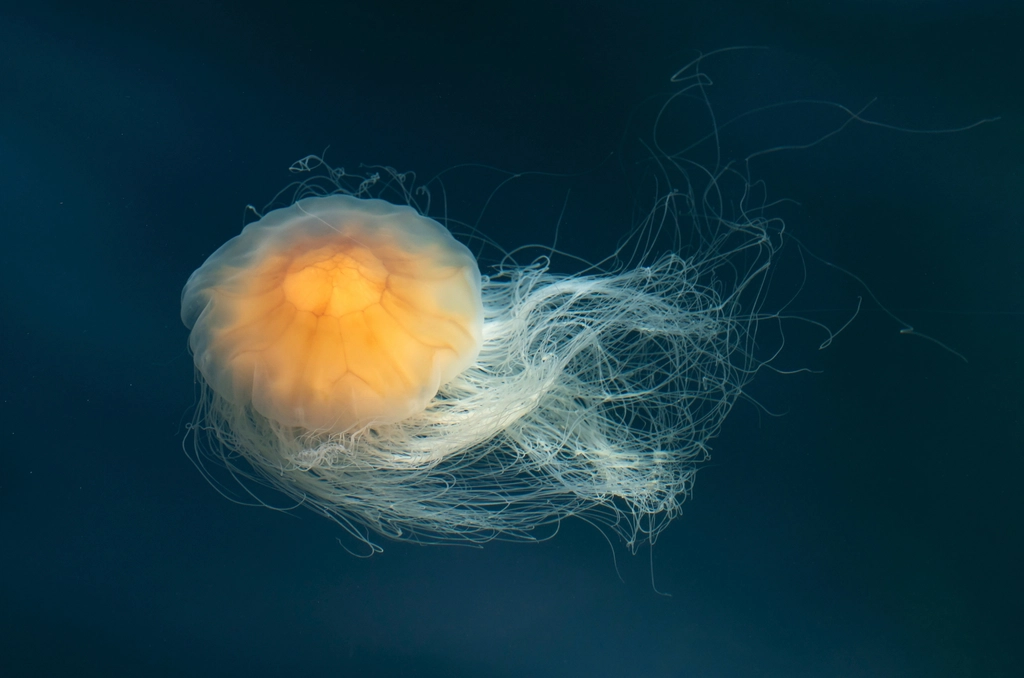 Photo Credit: Rawpixel
In the shimmering depths of the ocean, the Lion’s Mane Jellyfish, or Cyanea, floats gracefully, captivating all who encounter its ethereal beauty. With a bell that can stretch up to eight feet wide, this jellyfish is not just large; it is a living masterpiece, adorned with long, flowing tentacles that trail behind it like a vibrant mane. As sunlight filters through the water, it dances across the jellyfish’s translucent body, creating a mesmerizing display of colors that can range from deep purples to brilliant reds. This stunning spectacle is not only a feast for the eyes but also a marvel of nature that intrigues scientists and nature lovers alike.
The Lion’s Mane Jellyfish thrives in the cooler waters of the North Atlantic and North Pacific Oceans, where it drifts serenely, propelled by gentle currents. Its life is a delicate balance of predator and prey, as it feasts on small fish, zooplankton, and shrimp while also serving as a vital food source for larger marine animals. With a history that stretches back over 650 million years, this jellyfish is one of the oldest living organisms on our planet, offering a glimpse into the ancient oceans that once teemed with life. As we explore the world of the Lion’s Mane Jellyfish, we uncover not just its fascinating biology but also its crucial role in the marine ecosystem, making it a true wonder of the sea.
The Lion’s Mane Jellyfish, scientifically known as Cyanea, occupies a fascinating position in the tree of life. This mesmerizing marine animal belongs to the Kingdom Animalia, which includes all animals, and is part of the Phylum Cnidaria. Cnidarians are known for their stinging cells, called nematocysts, which they use for capturing prey and defense. The Lion’s Mane Jellyfish stands out not only for its impressive size—some can grow to over six feet in diameter—but also for its long, flowing tentacles that can stretch up to 120 feet. This makes it one of the largest jellyfish species in the world, showcasing the incredible diversity of life forms in our oceans.
| Taxonomic Rank | Scientific Name | Meaning & Significance |
|---|---|---|
| Kingdom | Animalia | The kingdom of all animals, highlighting the Lion’s Mane as a living organism. |
| Phylum | Cnidaria | Derived from the Greek word “knide,” meaning “nettle,” referring to the stinging cells that define this group. |
| Class | Scyphozoa | From the Greek “skuphion,” meaning “cup,” which describes the jelly-like, bell-shaped body of these jellyfish. |
| Order | Semaeostomeae | Meaning “with a mouth,” this order includes jellyfish with a distinct oral opening, essential for feeding. |
| Family | Cyaneidae | Named after the genus Cyanea, which is derived from the Greek word “kyanos,” meaning “dark blue,” reflecting the jellyfish’s coloration. |
| Genus | Cyanea | This name emphasizes the unique characteristics of the Lion’s Mane, particularly its impressive size and striking appearance. |
The classification of the Lion’s Mane Jellyfish reveals much about its evolutionary history. As a member of the Cnidaria phylum, it shares a common ancestry with other fascinating marine organisms like corals and sea anemones. This lineage dates back hundreds of millions of years, showcasing the jellyfish’s resilience and adaptability in various ocean environments. The Lion’s Mane’s unique features, such as its size and stinging tentacles, are adaptations that have allowed it to thrive in the ever-changing marine ecosystem. Understanding its place in the tree of life not only highlights its biological significance but also deepens our appreciation for the intricate web of life that exists beneath the waves.
The Lion’s Mane Jellyfish, known scientifically as Cyanea, has a rich evolutionary history that stretches back over 650 million years. This timeline places it among some of the oldest living organisms on Earth, showcasing a lineage that has adapted and thrived through dramatic changes in the planet’s environment. As one of the largest jellyfish species, it has evolved in the cold waters of the Arctic and North Atlantic Oceans, where it has developed unique features to survive and flourish.
The ancestors of the Lion’s Mane Jellyfish were simple, soft-bodied organisms that floated in the ocean. Over time, these early jellyfish began to develop more complex structures, such as tentacles and a bell-shaped body, which allowed them to capture prey more effectively. The transition from these primitive forms to the Lion’s Mane Jellyfish involved significant adaptations, including the development of specialized stinging cells called nematocysts. These cells enable the jellyfish to immobilize its prey, which primarily consists of small fish and plankton. As the environment changed, so did the Lion’s Mane, evolving to grow larger and develop longer tentacles, which can reach up to 120 feet in length, making it a true giant of the sea.
These adaptations have been crucial for the Lion’s Mane Jellyfish’s survival in the ever-changing oceanic landscape. Its impressive size and stinging capabilities help it secure food and defend against threats, while its coloration offers protection from predators. The ability to thrive in diverse environments, thanks to its unique life cycle, ensures that this ancient creature continues to flourish in the depths of our oceans, a testament to the power of evolution.
The Lion’s Mane Jellyfish is a stunning spectacle of the ocean, captivating all who encounter it. With a bell that can reach an impressive diameter of up to eight feet, this jellyfish is one of the largest in the world. Its body is a translucent, gelatinous dome that shimmers in hues of blue and purple, creating a mesmerizing display as it drifts through the water. Long, flowing tentacles cascade from the bell, resembling a lion’s mane, which is how it got its name. These tentacles can stretch over 100 feet, trailing behind like ethereal ribbons in the currents.
| Feature | Description |
|---|---|
| Weight | 200 pounds |
| Most Distinctive Feature | Its size |
| Color | Translucent blue and purple |
| Skin Type | Gelatinous and soft |
| Tentacle Length | Up to 100 feet |
The Lion’s Mane Jellyfish’s impressive size and striking appearance serve vital roles in its survival. The large bell allows it to float effortlessly, while its long tentacles are equipped with specialized cells that can sting and capture prey, such as small fish and plankton. The translucent colors help it blend into the ocean’s depths, providing camouflage from predators. Together, these features create a magnificent yet effective design, allowing this ancient creature to thrive in the vast and mysterious underwater world.
The Lion’s Mane Jellyfish thrives in the cooler waters of the ocean, where it drifts gracefully through the depths. Picture a vast expanse of blue, dotted with patches of sunlight filtering down from above. This jellyfish often floats in the open sea, where it can be found gliding along currents, its long, flowing tentacles trailing behind like a majestic mane. The chilly embrace of the water is its home, providing the perfect environment for this ethereal creature to thrive.
The Lion’s Mane Jellyfish prefers regions where the water temperature is cooler, typically ranging from 40 to 70 degrees Fahrenheit. These temperatures are often found in areas with strong currents and nutrient-rich waters, which are essential for the jellyfish’s survival. The cooler climate not only supports its growth but also helps maintain the delicate balance of its ecosystem, where it plays a vital role in the food web.
Adaptations have allowed the Lion’s Mane Jellyfish to flourish in these specific habitats. Its gelatinous body is designed to withstand the cooler temperatures, while its long tentacles are equipped with specialized cells called nematocysts. These cells help capture prey and defend against predators, making it a successful hunter in its chilly domain. By drifting with the currents, it can also travel to areas rich in food, ensuring it remains well-fed and healthy in its oceanic home.
The Lion’s Mane Jellyfish leads a life that is both tranquil and mesmerizing. Each day, it drifts through the cool waters of the ocean, propelled by gentle currents. This jellyfish spends most of its time floating, using its long, flowing tentacles to capture tiny prey like plankton and small fish. As it glides through the water, it can also be seen pulsating its bell, a rhythmic motion that helps it move and breathe. This daily routine is a blend of feeding, resting, and occasionally, seeking out warmer waters as the seasons change.
While the Lion’s Mane Jellyfish is primarily solitary, it can sometimes be found in groups, especially during breeding seasons. These gatherings are not permanent; rather, they are temporary alliances formed for reproduction. When they come together, they create a stunning display of colors and shapes, as their translucent bodies catch the light. Communication among these jellyfish is subtle and largely chemical, relying on the release of pheromones to signal readiness to mate or to warn others of danger. This social behavior, though limited, plays a crucial role in their life cycle.
| Behavior Type | Description |
|---|---|
| Feeding | Drifting through the water, using tentacles to capture plankton and small fish. |
| Movement | Pulsating bell to propel through the water, allowing for both movement and respiration. |
| Social Structure | Primarily solitary, but can form temporary groups during breeding seasons. |
| Communication | Uses chemical signals, like pheromones, to communicate with others, especially during mating. |
The behaviors of the Lion’s Mane Jellyfish are finely tuned to ensure its survival in the vast ocean. By drifting and feeding efficiently, it maximizes its energy intake while minimizing effort. The ability to form temporary groups during breeding enhances genetic diversity, which is vital for the health of the population. Through these simple yet effective behaviors, the Lion’s Mane Jellyfish continues to thrive in its underwater realm, a testament to the wonders of evolution and adaptation.
The Lion’s Mane Jellyfish is a carnivore, meaning it primarily eats other animals. This jellyfish has a diet that includes a variety of marine life, such as fish, zooplankton, shrimp, and even other jellyfish. It captures its prey using its long, stinging tentacles, which are lined with specialized cells called nematocysts. These cells release toxins that immobilize the jellyfish’s food, allowing it to consume its meal with ease.
| Dietary Aspect | Details |
|---|---|
| Diet Type | Carnivore |
| Favorite Foods | Fish, zooplankton, shrimp, other jellyfish |
| Prey Items | Small fish, tiny crustaceans, and other jellyfish |
| Hunting/Foraging Strategies | Uses stinging tentacles to capture prey as it drifts with ocean currents |
This diet plays a crucial role in the Lion’s Mane Jellyfish’s ecology and daily routine. By feeding on various small marine organisms, it helps maintain the balance of the ocean ecosystem. As it drifts through the water, it not only sustains itself but also influences the populations of its prey. This jellyfish’s feeding habits contribute to the intricate web of life in the ocean, showcasing the interconnectedness of all marine creatures.
The Lion’s Mane Jellyfish has a fascinating approach to reproduction that begins with a spectacular mating ritual. During the breeding season, which typically occurs in late summer to early fall, male jellyfish release sperm into the water. Females, in turn, capture this sperm to fertilize their eggs. This process can create a beautiful dance of jellyfish as they float and pulse through the water, ensuring that their offspring have the best chance of survival in the vast ocean.
| Reproductive Aspect | Details |
|---|---|
| Gestation Period | One day |
| Litter Size | Hundreds to thousands of eggs |
| Age of Maturity | About one year |
| Name of Young | Larvae or planulae |
Once the eggs are fertilized, they develop into tiny larvae called planulae. These planulae are free-swimming and will eventually settle on the ocean floor, where they transform into polyps. This stage is crucial as the polyps will bud off new jellyfish, continuing the life cycle. Interestingly, Lion’s Mane Jellyfish do not provide parental care after the eggs are laid. Instead, the young are left to fend for themselves, relying on their instincts and the rich marine environment to grow and thrive into the majestic adults they will become.
The Lion’s Mane Jellyfish plays a crucial role in the marine food web, serving as both predator and prey. This majestic jellyfish feasts on small fish, zooplankton, and shrimp, while also being a target for larger animals. Its presence helps maintain the balance of ocean ecosystems, but it faces various dangers that threaten its survival.
To defend itself against these threats, the Lion’s Mane Jellyfish has developed some clever survival strategies. Its long, stinging tentacles are lined with specialized cells called nematocysts, which can deliver a painful sting to potential predators. This not only deters larger animals but also helps it capture prey. Additionally, the jellyfish’s gelatinous body allows it to blend into the water, making it less visible to hungry eyes. By using these adaptations, the Lion’s Mane Jellyfish continues to thrive in its ocean home, despite the challenges it faces.
A keystone species is a vital part of its ecosystem, meaning its presence has a significant impact on the environment and other organisms. The Lion’s Mane Jellyfish, known scientifically as Cyanea, qualifies as a keystone species due to its role in the marine food web. This jellyfish not only serves as a predator but also as prey for various marine animals, influencing the population dynamics of its ecosystem.
The Lion’s Mane Jellyfish plays a crucial role in controlling the populations of smaller marine creatures. By feeding on zooplankton, small fish, and shrimp, it helps maintain a balance in these populations. If the jellyfish were to disappear, the numbers of these smaller animals could explode, leading to overgrazing of phytoplankton, the microscopic plants that form the base of the ocean food web. This could disrupt the entire marine ecosystem, affecting everything from fish to larger predators like seals and whales.
Additionally, the Lion’s Mane Jellyfish provides a food source for various species, including sea turtles and some fish. These animals rely on the jellyfish for sustenance, and without it, their survival could be threatened. The jellyfish’s presence also supports the biodiversity of its habitat, as it contributes to the complex interactions among different marine species.
If the Lion’s Mane Jellyfish were to vanish from the ocean, the ripple effects would be profound. The balance of the marine ecosystem would be disrupted, leading to potential overpopulation of certain species and a decline in others. This could result in a less diverse and less resilient ocean environment, ultimately affecting human activities like fishing and tourism. The disappearance of this majestic jellyfish would not only change the underwater landscape but also remind us of the interconnectedness of all life in our oceans.
The Lion’s Mane Jellyfish, or Cyanea, plays a crucial role in its marine ecosystem, acting as both a predator and prey. This fascinating jellyfish thrives in cooler ocean waters, where it drifts gracefully, influencing the balance of life beneath the waves. Its presence helps shape the community of organisms around it, making it a key player in the underwater world. By consuming various marine creatures, it helps regulate populations, ensuring that no single species dominates the ecosystem.
| Ecosystem Service | Impact |
|---|---|
| Predation | Controls populations of small fish and zooplankton, maintaining balance in the food web. |
| Prey for larger species | Serves as a food source for sea turtles, larger fish, and some birds, supporting higher trophic levels. |
| Nutrient cycling | Contributes to nutrient cycling when it decomposes, enriching the surrounding water. |
| Habitat structure | Provides shelter for small marine organisms within its tentacles, creating microhabitats. |
The Lion’s Mane Jellyfish influences its environment in several specific ways. For instance, by preying on zooplankton and small fish, it helps keep these populations in check, preventing overgrazing of phytoplankton, the tiny plants that form the base of the ocean food web. Additionally, when it dies, its body decomposes, releasing nutrients back into the water, which supports the growth of other marine life. This nutrient cycling is vital for the health of the ecosystem, as it promotes the growth of phytoplankton, which in turn supports a wide array of marine species.
The broader ecological importance of the Lion’s Mane Jellyfish cannot be overstated. As a keystone species, its presence significantly impacts the structure and function of its ecosystem. By regulating prey populations and providing food for larger predators, it helps maintain the delicate balance of marine life. The Lion’s Mane Jellyfish is not just a beautiful sight in the ocean; it is a vital component of the underwater world, demonstrating how interconnected all life is in the vast blue expanse.
In the intricate web of life beneath the waves, the Lion’s Mane Jellyfish, known scientifically as Cyanea, engages in various ecological relationships that highlight the beauty of symbiosis. Symbiosis refers to the close interactions between different species, which can be beneficial, harmful, or neutral. These relationships are essential for the health of marine ecosystems, as they help maintain balance and promote biodiversity. The Lion’s Mane Jellyfish, with its stunning appearance and unique lifestyle, forms connections with other marine organisms that illustrate the complexity of ocean life.
| Species/Type | Relationship Type | Description |
|---|---|---|
| Small Fish (e.g., juvenile fish) | Commensal | Small fish often seek refuge among the tentacles of the Lion’s Mane Jellyfish. They benefit from protection against predators while the jellyfish remains unaffected. |
| Zooplankton | Mutualistic | While zooplankton feed on the nutrients in the water, they also help the jellyfish by keeping its tentacles clean from debris, promoting a healthier environment for both. |
| Sea Turtles | Parasitic | Some sea turtles may feed on the Lion’s Mane Jellyfish, taking advantage of its size and abundance. This relationship can be harmful to the jellyfish, as it loses a part of its body. |
These relationships have evolved over time, shaped by the needs and behaviors of the species involved. The Lion’s Mane Jellyfish has adapted to provide shelter for small fish, which in turn helps it thrive in its environment. Meanwhile, the interactions with zooplankton highlight a mutual benefit, where both parties gain from their connection. However, the parasitic relationship with sea turtles reminds us that not all interactions are beneficial. Understanding these dynamics helps us appreciate the delicate balance of marine ecosystems and the roles that each species plays in sustaining life beneath the waves.
The Lion’s Mane Jellyfish is not just a beautiful sight in the ocean; it also has some surprising traits that make it truly special. Here are a few intriguing facts that showcase the wonders of this magnificent marine animal.
The Lion’s Mane Jellyfish, known scientifically as Cyanea, has long captured the imagination of people throughout history. Ancient cultures often viewed this majestic creature as a symbol of mystery and beauty. In some coastal communities, it was even considered a delicacy, with its gelatinous body being harvested for food. Folklore and art have depicted jellyfish in various ways, reflecting humanity’s fascination with the ocean’s wonders. As people ventured into the sea, encounters with these ethereal beings sparked curiosity and respect, leading to a deeper appreciation of marine life.
Today, the relationship between humans and the Lion’s Mane Jellyfish is complex and multifaceted. While some communities continue to harvest them for culinary purposes, others are focused on conservation efforts to protect their habitats. As climate change alters ocean temperatures and ecosystems, jellyfish populations can fluctuate dramatically, sometimes leading to conflicts with fishing industries. Additionally, researchers are studying the potential medicinal properties of jellyfish, exploring how their unique biology might contribute to advancements in science and medicine. This blend of conservation, conflict, and curiosity highlights the ongoing interactions between humanity and this remarkable marine species.
As we look to the future, the relationship between humans and the Lion’s Mane Jellyfish will likely continue to evolve. With growing awareness of environmental issues, there is hope for a more harmonious coexistence. By prioritizing conservation and sustainable practices, we can ensure that this stunning jellyfish remains a vital part of our oceans. As we learn more about their role in the ecosystem, we may find new ways to appreciate and protect these fascinating creatures, fostering a deeper connection between humanity and the wonders of the sea.
The Lion’s Mane Jellyfish, known scientifically as Cyanea, currently holds a conservation status of “Not Evaluated” by the International Union for Conservation of Nature (IUCN). This means that while there is no formal assessment of its population trends, it is believed that there are possibly millions of these jellyfish in the ocean. Their vast numbers suggest that they are not in immediate danger of extinction, but ongoing monitoring is essential to ensure their populations remain stable.
| Conservation Factor | Status/Details |
|---|---|
| IUCN Status | Not Evaluated |
| Estimated Population Size | Possibly millions |
| Population Trend | Stable |
Despite their seemingly secure status, Lion’s Mane Jellyfish face several threats that could impact their populations in the future. Climate change is a significant concern, as rising ocean temperatures can alter their habitats and food availability. Additionally, pollution from human activities can harm their delicate ecosystems. Overfishing can also disrupt the balance of marine life, affecting the jellyfish’s food sources and their role in the ocean’s food web.
Conservation efforts for the Lion’s Mane Jellyfish are still in the early stages, primarily because their populations are not currently at risk. However, scientists and conservationists are advocating for increased research and monitoring to better understand their ecology and the potential impacts of environmental changes. By keeping a close eye on these magnificent creatures, we can help ensure that they continue to thrive in our oceans for generations to come.
| Question | Answer |
|---|---|
| Where do Lion’s Mane Jellyfish live? | Lion’s Mane Jellyfish are found in cooler ocean waters, particularly in the North Atlantic and North Pacific Oceans. They prefer areas with plenty of nutrients, which helps support their diet and growth. |
| What do Lion’s Mane Jellyfish eat? | These jellyfish are carnivores, meaning they primarily eat other animals. Their diet consists of small fish, plankton, and other tiny marine creatures that they capture with their long, stinging tentacles. |
| How do Lion’s Mane Jellyfish behave? | Lion’s Mane Jellyfish are mostly passive creatures that drift with ocean currents. They can move by contracting their bell-shaped body, but they generally prefer to float and let the water carry them. |
| How do Lion’s Mane Jellyfish reproduce? | These jellyfish reproduce through a process called alternation of generations. They start as tiny larvae that settle on the ocean floor, grow into polyps, and eventually transform into adult jellyfish that can reproduce sexually. |
| What threats do Lion’s Mane Jellyfish face? | While Lion’s Mane Jellyfish are not currently evaluated for conservation status, they can be affected by changes in ocean temperature and pollution. These factors can impact their food supply and overall health. |
| What is the most distinctive feature of Lion’s Mane Jellyfish? | The most distinctive feature of Lion’s Mane Jellyfish is their impressive size. They can grow to be one of the largest jellyfish species, with some individuals reaching up to 8 feet in diameter and having tentacles that can extend over 100 feet! |
| Are Lion’s Mane Jellyfish dangerous to humans? | While Lion’s Mane Jellyfish do have stinging tentacles, their sting is usually not harmful to humans. However, it can cause irritation and discomfort, so it's best to admire these beautiful creatures from a safe distance. |