Taxonomy & Classification
- Kingdom
- Animalia
- Phylum
- Chordata
- Class
- Actinopterygii
- Order
- Scorpaeniformes
- Family
- Scorpaenidae
- Genus
- Pterois
- Species
- Pterois volitans

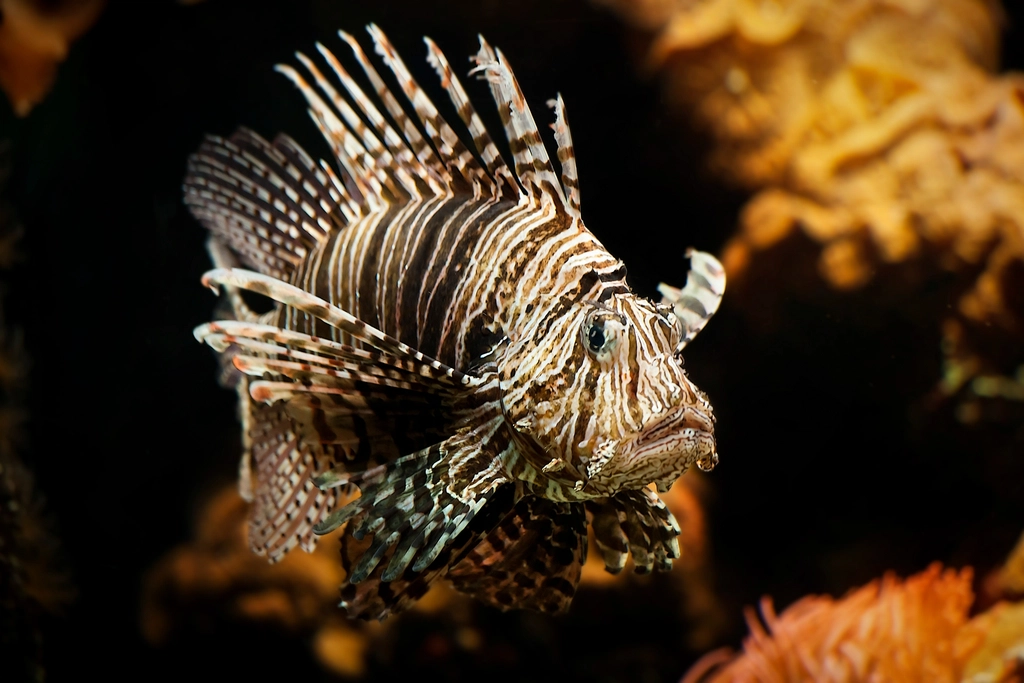 Photo Credit: Rawpixel
In the shimmering waters of the Caribbean and the warm embrace of the Indo-Pacific, the lionfish, scientifically known as Pterois, reigns as a true marvel of the ocean. With its striking red, white, and brown stripes, this fish is a living work of art, gliding gracefully through vibrant coral reefs. Its long, flowing fins resemble a lion’s mane, giving it an air of majesty that captivates both divers and marine biologists alike. But there’s more to this stunning creature than just its beauty; the lionfish is also a masterful predator, equipped with venomous spines that deter would-be attackers and make it a formidable presence in its underwater realm.
Scientists and nature enthusiasts are drawn to the lionfish not only for its dazzling appearance but also for its intriguing role in the ecosystem. As a carnivore, it plays a vital part in controlling the populations of smaller fish and crustaceans, helping to maintain the balance of life on the reef. However, the lionfish’s introduction to non-native waters has sparked concern among conservationists, as it can outcompete local species for food and habitat. This duality of being both a beautiful inhabitant of the ocean and a potential threat to its delicate ecosystems makes the lionfish a fascinating subject of study, inviting us to explore the complexities of marine life and the challenges it faces in a changing world.
The lionfish, a striking inhabitant of the world’s oceans, holds a special place in the animal kingdom due to its unique taxonomic classification and stunning appearance. Belonging to the family Scorpaenidae, which includes many venomous fish, the lionfish is known for its long, flowing fins and bold coloration. These features not only make it visually captivating but also serve as a warning to potential predators about its venomous spines. This combination of beauty and danger makes the lionfish a standout species in marine ecosystems.
| Taxonomic Rank | Scientific Name | Meaning & Significance |
|---|---|---|
| Kingdom | Animalia | This name signifies that lionfish are part of the broad group of multicellular organisms known as animals, which are characterized by their ability to move and respond to their environment. |
| Phylum | Chordata | Chordata means “having a notochord,” a flexible rod that supports the body. In lionfish, this structure is present during their early development, showcasing their connection to all vertebrates, including mammals and birds. |
| Class | Actinopterygii | This class includes ray-finned fishes, which have fins supported by bony rays. Lionfish are part of this group, highlighting their adaptations for swimming and maneuvering in the water. |
| Order | Scorpaeniformes | This order includes many bottom-dwelling fish, often with spiny bodies. The lionfish’s spines are not just for show; they are a defense mechanism against predators, emphasizing its role in the ecosystem. |
| Family | Scorpaenidae | This family is known for its venomous species. The lionfish’s venomous spines serve as a warning and a means of protection, illustrating its evolutionary adaptations for survival. |
| Genus | Pterois | Pterois translates to “feathered,” referring to the lionfish’s long, flowing fins that resemble feathers, enhancing its beauty and making it easily recognizable in the ocean. |
Understanding the lionfish’s classification reveals much about its evolutionary journey. As a member of the Scorpaenidae family, it shares a lineage with other venomous fish, showcasing adaptations that have allowed it to thrive in diverse marine environments. Its unique features, from its striking appearance to its defensive mechanisms, highlight the intricate relationships between species and their habitats. The lionfish is not just a beautiful fish; it is a testament to the wonders of evolution and the complexity of life in our oceans.
The evolutionary journey of the lionfish stretches back millions of years, tracing its roots to the ancient oceans that once teemed with diverse marine life. These fish belong to the family Scorpaenidae, which has been around since the late Cretaceous period, approximately 100 million years ago. Over time, the lionfish evolved into the vibrant and spiny fish we recognize today, adapting to various environments and challenges in the ocean.
Ancestral forms of lionfish were likely less colorful and lacked the striking fins that we see now. As they evolved, they developed their signature long, venomous spines, which serve as a defense mechanism against predators. This adaptation not only helped them survive but also allowed them to thrive in a variety of habitats, from coral reefs to rocky crevices. The evolution of their unique hunting strategy, which involves ambushing prey with incredible speed and agility, marked a significant transition in their feeding behavior.
These adaptations have played a crucial role in the lionfish’s success as a species. Their venomous spines provide a formidable defense, while their vibrant colors and ambush tactics enhance their hunting prowess. With the ability to thrive in diverse habitats and reproduce rapidly, lionfish have not only survived but flourished in the oceans, making them a captivating example of evolutionary success.
The lionfish is a breathtaking spectacle of the underwater world, captivating all who encounter it. With its elongated body and striking fins, it glides gracefully through the water, resembling a living work of art. Its vibrant colors and intricate patterns create a mesmerizing display, making it both beautiful and formidable. The lionfish’s body is adorned with long, venomous spines that fan out like a lion’s mane, giving it an air of majesty and danger. This combination of elegance and intimidation makes the lionfish a true marvel of marine life.
| Feature | Description |
|---|---|
| Size | Typically ranges from 12 to 15 inches long, though some can grow up to 18 inches. |
| Color | Bright red, orange, and white stripes, creating a striking contrast against the blue ocean. |
| Skin Type | Covered in scales that provide protection and help streamline its movement through water. |
| Fins | Long, flowing pectoral fins that resemble a lion’s mane, enhancing its beauty and aiding in navigation. |
| Spines | Venomous spines that serve as a defense mechanism against predators. |
The lionfish’s stunning appearance is not just for show; it plays a crucial role in its survival. The vibrant colors and patterns help it blend into the coral reefs, making it less visible to both prey and predators. Meanwhile, the venomous spines act as a powerful deterrent, warning potential threats to keep their distance. Together, these features create a perfect balance of beauty and danger, allowing the lionfish to thrive in its underwater habitat while captivating the hearts of those who observe it.
The lionfish thrives in the vibrant underwater world of tropical reefs and rocky crevices. Picture a sun-drenched ocean, where colorful corals sway gently with the currents, and schools of fish dart playfully among the corals. This is the lionfish’s home, a place filled with life and color, where it can easily blend in with its surroundings thanks to its striking patterns and spiny fins. The warm, clear waters provide the perfect backdrop for this stunning fish, making it a true jewel of the sea.
Lionfish prefer warm waters, typically found in areas where the temperature ranges from 75 to 85 degrees Fahrenheit. These fish are often spotted in shallow waters, usually at depths of up to 150 feet. The environment is rich in coral reefs, which provide both shelter and hunting grounds. The clear waters allow sunlight to penetrate, supporting the growth of algae and corals that form the foundation of this bustling ecosystem.
Adapted to their specific habitats, lionfish have developed several traits that help them thrive. Their venomous spines serve as a defense mechanism against predators, while their ability to camouflage allows them to ambush prey effectively. With a diet primarily consisting of smaller fish and crustaceans, they are skilled hunters, using their impressive fins to maneuver through the nooks and crannies of the reef. This combination of adaptations makes the lionfish a successful inhabitant of its vibrant underwater home.
The lionfish leads a life filled with both grace and strategy in the warm, inviting waters of tropical reefs. As the sun rises, these fish begin their daily activities, which include hunting for small fish and crustaceans. They are primarily nocturnal, meaning they are most active at night, using their impressive fins to blend into the colorful coral surroundings. During the day, they often rest in crevices or under ledges, conserving energy for their nighttime hunts. With their keen eyesight and ability to detect movement, lionfish are expert ambush predators, waiting patiently for the perfect moment to strike.
Socially, lionfish are generally solitary creatures, but they can sometimes be found in small groups, especially during mating season. Their interactions are often marked by displays of their vibrant fins, which can signal both aggression and courtship. While they may not form tight-knit schools like some other fish, they do have a loose social structure that allows them to communicate through body language and color changes. This social behavior is crucial, as it helps them establish territory and find mates, ensuring the continuation of their species.
| Behavior Type | Description |
|---|---|
| Hunting | Lionfish use their impressive fins to blend into their surroundings, ambushing small fish and crustaceans at night. |
| Resting | During the day, they often hide in crevices or under ledges to conserve energy. |
| Social Interaction | While mostly solitary, they can be seen in small groups during mating season, using fin displays to communicate. |
| Territorial Behavior | They establish territories and may show aggression towards intruders, signaling with body language and color changes. |
The behaviors of lionfish are finely tuned to ensure their survival in the competitive underwater world. Their hunting strategies allow them to efficiently capture prey, while their resting habits help them conserve energy for those crucial nighttime hunts. By establishing territories and engaging in social interactions, they not only secure mates but also maintain their place in the ecosystem. This combination of behaviors makes the lionfish a successful predator and a vital part of the vibrant marine community.
The lionfish is a carnivore, meaning it primarily eats other animals. This stunning fish has a taste for a variety of prey, including small fish, shrimp, and crabs. With its impressive hunting skills, the lionfish uses its venomous spines as a defense mechanism while also employing a clever ambush strategy to catch its meals. It often hides among the coral and rocks, waiting patiently for unsuspecting prey to swim by before striking with lightning speed.
| Dietary Aspect | Details |
|---|---|
| Diet Type | Carnivore |
| Favorite Foods | Small fish, shrimp, crabs |
| Prey Items | Various small marine animals |
| Hunting/Foraging Strategies | Ambush predator, hiding in coral and rocks |
The lionfish’s diet plays a crucial role in its ecological niche. By preying on smaller fish and invertebrates, it helps maintain the balance of marine ecosystems. However, its voracious appetite and rapid reproduction have made it an invasive species in some regions, leading to significant changes in local fish populations. This dynamic relationship with its environment shapes not only the lionfish’s daily routine but also the health of the underwater communities it inhabits.
Lionfish have a fascinating mating ritual that takes place during the warmer months, typically from late spring to early fall. During this breeding season, males engage in elaborate courtship displays to attract females. They often swim in circles, showcasing their vibrant fins and colors. Once a female is enticed, she will join the male in a synchronized dance, which culminates in the release of eggs and sperm into the water. This spectacle is not just a simple act of reproduction; it’s a beautiful display of nature’s artistry.
| Reproductive Aspect | Details |
|---|---|
| Gestation Period | Approximately 24 to 36 hours |
| Litter Size | Up to 15,000 eggs |
| Age of Maturity | About 1 year |
| Name of Young | Fry |
After the eggs are fertilized, they float away, developing into tiny fry. These young lionfish are on their own from the moment they hatch, as lionfish do not provide parental care. The fry are incredibly small and vulnerable, but they quickly adapt to their surroundings. They find shelter among the corals and begin to hunt for tiny plankton and small fish. As they grow, they develop the striking features of adult lionfish, including their long, venomous spines. This journey from fry to adult is a remarkable transformation, showcasing the resilience and adaptability of these captivating fish in their vibrant ocean home.
The lionfish occupies a unique position in the marine food web, often seen as both predator and prey. With its striking appearance and venomous spines, it has few natural enemies. However, this does not mean it is entirely free from threats. In its native habitats, lionfish play a crucial role in controlling the populations of smaller fish and invertebrates, but they also face dangers that can impact their survival.
To defend itself against these threats, the lionfish employs a variety of survival strategies. Its venomous spines serve as a formidable deterrent, making it unappetizing to many would-be predators. Additionally, lionfish are masters of camouflage, blending seamlessly into their colorful reef environments. This ability to hide helps them avoid detection while they hunt or rest. By combining these defensive behaviors with their cunning hunting techniques, lionfish navigate the challenges of their underwater world with remarkable skill.
A keystone species is an organism that plays a critical role in maintaining the structure of its ecosystem. Its presence or absence can significantly impact the environment and the species that inhabit it. The lionfish, with its striking appearance and voracious appetite, qualifies as a keystone species in some ecosystems, particularly in the Caribbean and parts of the Indo-Pacific. Its influence on the marine environment is profound, affecting not just its own population but also the delicate balance of the reef communities it inhabits.
Lionfish are highly effective predators, feeding on a variety of smaller fish and invertebrates. This predatory behavior can lead to a decline in the populations of native species, which may struggle to compete with the lionfish’s aggressive hunting style. For example, studies have shown that lionfish can reduce the numbers of herbivorous fish, which are essential for controlling algae growth on coral reefs. Without these herbivores, algae can overgrow and smother corals, disrupting the entire reef ecosystem.
Moreover, lionfish reproduce rapidly, with a single female capable of releasing up to two million eggs in a year. This prolific breeding contributes to their population explosion in non-native areas, where they have few natural predators. As they proliferate, lionfish can outcompete local fish for food and habitat, leading to significant shifts in community dynamics. Their presence can alter the structure of the reef, making it less diverse and more vulnerable to disease and environmental changes.
If lionfish were to disappear from their current habitats, the immediate effect might be a resurgence of native fish populations. This could lead to a healthier balance within the reef ecosystem, allowing herbivorous fish to thrive and control algae growth. However, the absence of lionfish could also create a vacuum that might be filled by other invasive species, potentially leading to new challenges for the ecosystem. The intricate web of life in coral reefs is delicate, and every species, including the lionfish, plays a part in its ongoing story.
The lionfish occupies a fascinating ecological niche in tropical reefs and rocky crevices, where it plays a pivotal role in shaping its environment. As a carnivore, this striking fish primarily preys on smaller fish and invertebrates, influencing the population dynamics of its prey species. With its venomous spines and impressive hunting skills, the lionfish is both a predator and a competitor, affecting the balance of marine life in its habitat. Its presence can lead to significant changes in the community structure of reef ecosystems, making it a key player in the underwater world.
| Ecosystem Service | Impact |
|---|---|
| Predation | Controls populations of smaller fish and invertebrates, preventing overpopulation. |
| Competition | Competes with native species for food resources, potentially leading to declines in those populations. |
| Habitat alteration | Influences the structure of coral reefs by affecting the diversity of fish species. |
| Food source | Serves as prey for larger predators, contributing to the food web. |
The lionfish’s influence on its ecosystem is particularly evident in areas where it has become invasive. In regions like the Caribbean, lionfish populations have exploded, leading to a dramatic decline in native fish species. For example, studies have shown that lionfish can reduce the numbers of herbivorous fish, which are crucial for maintaining healthy coral reefs. Without these herbivores, algae can overgrow and smother corals, disrupting the entire reef ecosystem. This cascading effect highlights how the lionfish can alter the balance of marine life, demonstrating its powerful role in the underwater community.
Understanding the broader ecological importance of the lionfish is essential for conservation efforts. As a keystone species, its presence can significantly impact the health of coral reefs and the diversity of marine life. Protecting native species and managing lionfish populations are crucial steps in preserving the delicate balance of these vibrant ecosystems. By recognizing the lionfish’s role, we can better appreciate the intricate web of life that thrives beneath the waves and work towards a healthier ocean for future generations.
In the intricate web of life beneath the ocean’s surface, symbiosis plays a vital role in shaping the relationships between different species. Symbiosis refers to the close interactions between organisms, which can be beneficial, harmful, or neutral. These relationships can take many forms, such as mutualism, where both species benefit, parasitism, where one benefits at the other’s expense, and commensalism, where one benefits while the other is neither helped nor harmed. Understanding these connections helps us appreciate the delicate balance of marine ecosystems, where every creature, including the lionfish, has its part to play.
| Species/Type | Relationship Type | Description |
|---|---|---|
| Cleaner Shrimp | Mutualistic | Cleaner shrimp remove parasites and dead tissue from lionfish, benefiting both species. The lionfish gets a health boost, while the shrimp enjoy a meal. |
| Coral Reefs | Commensal | Lionfish often inhabit coral reefs, where they find shelter and hunting grounds. The coral is not affected by the presence of lionfish, making this a commensal relationship. |
| Small Fish | Parasitic | While not a traditional parasite, lionfish prey on small fish, which are harmed in the process. This predatory relationship is crucial for the lionfish’s survival. |
These relationships have evolved over time, shaped by the needs and behaviors of the species involved. The lionfish, with its striking appearance and hunting prowess, has adapted to thrive in its environment, forming partnerships that enhance its survival. The cleaner shrimp, for instance, have developed a mutualistic bond with lionfish, benefiting from the protection of their larger neighbors while providing essential cleaning services. Meanwhile, the lionfish’s role as a predator helps maintain the balance of fish populations in its habitat. Each interaction, whether beneficial or harmful, contributes to the rich tapestry of life in the ocean, reminding us of the interconnectedness of all living things.
Lionfish are not just beautiful; they are also full of surprises that make them truly captivating. These striking fish have a fascinating story to tell, from their unique adaptations to their impact on marine ecosystems.
The lionfish, with its vibrant colors and elegant fins, has a rich history intertwined with human culture. Historically, these fish have been admired for their beauty, often featured in art and folklore across various coastal communities. In some cultures, they symbolize strength and resilience, while in others, they are seen as a delicacy. However, the lionfish’s striking appearance belies its complex relationship with humanity, especially as it has become a topic of concern in recent years due to its invasive nature in non-native waters.
Today, the interactions between lionfish and humans are multifaceted. As lionfish populations have exploded in places like the Caribbean and the Gulf of Mexico, they have posed significant threats to local ecosystems. Their voracious appetite for native fish has led to efforts in conservation and management, including spear-fishing tournaments aimed at reducing their numbers. Some communities have even embraced lionfish as a culinary delight, promoting its consumption to help control its population. This shift not only addresses ecological concerns but also creates new economic opportunities for fishermen and chefs alike.
Looking ahead, the future of the lionfish and humanity’s relationship will likely continue to evolve. As awareness grows about the ecological challenges posed by this species, more communities may adopt innovative strategies to manage their populations. By embracing lionfish as both a culinary option and a subject of scientific study, we can foster a deeper understanding of our oceans and the delicate balance of marine ecosystems. This partnership could lead to healthier reefs and a more sustainable future for both lionfish and the communities that share their waters.
The lionfish is currently classified as “Least Concern” by the International Union for Conservation of Nature (IUCN). This status indicates that, at present, lionfish populations are stable and not facing immediate threats of extinction. However, their population trends can vary by region, and in some areas, they are considered invasive species, which complicates their overall conservation picture.
| Conservation Factor | Status/Details |
|---|---|
| IUCN Status | Least Concern |
| Population Estimates | Stable in many regions, but invasive in others |
| Trend Direction | Varies by location; some areas report increases |
One of the main threats to lionfish comes from their invasive nature in non-native habitats, particularly in the Caribbean and the southeastern United States. They reproduce rapidly, and without natural predators in these new environments, their populations can explode. This overpopulation can lead to significant declines in local fish species, disrupting the delicate balance of marine ecosystems. Additionally, their venomous spines deter potential predators, allowing them to thrive unchecked.
Conservation efforts are underway to manage lionfish populations, especially in areas where they pose a threat to native species. These initiatives include organized culling events, where divers are encouraged to catch lionfish to reduce their numbers. Education programs are also being implemented to raise awareness about the ecological impact of lionfish and promote their consumption as a sustainable seafood option. The outlook for lionfish conservation is mixed; while they remain stable in some regions, ongoing management is crucial to prevent further ecological disruption in areas where they are invasive.
| Question | Answer |
|---|---|
| Where do lionfish live? | Lionfish are found in tropical reefs and rocky crevices, primarily in the warm waters of the Indo-Pacific region. They thrive in environments where they can hide and ambush their prey, making coral reefs an ideal habitat. |
| What do lionfish eat? | Lionfish are carnivores, meaning they primarily eat other animals. Their diet consists of small fish and invertebrates, which they capture using their impressive speed and venomous spines to stun their prey. |
| How do lionfish behave? | Lionfish are known for their solitary behavior, often hunting alone. They are also quite territorial, using their striking appearance and venomous spines to ward off potential threats and competitors. |
| How do lionfish reproduce? | Lionfish are prolific breeders, capable of producing up to 30,000 eggs in a single spawning event. They release their eggs into the water, where they float and develop into larvae, eventually settling into reefs as juvenile fish. |
| What threats do lionfish face? | While lionfish are currently classified as Least Concern, they face threats from habitat loss and overfishing in some areas. However, their invasive nature in non-native regions poses a greater threat to local ecosystems, as they can outcompete native species. |
| What are some interesting characteristics of lionfish? | Lionfish are easily recognized by their striking red, white, and brown stripes and long, venomous spines. These spines not only serve as a defense mechanism but also make them a fascinating subject for underwater photographers and marine enthusiasts. |
| How do lionfish defend themselves? | Lionfish have a unique defense system with their long, venomous spines that can deter predators. When threatened, they can spread their fins wide, showcasing their spines to appear larger and more intimidating. |