Taxonomy & Classification
- Kingdom
- Animalia
- Phylum
- Chordata
- Class
- Mammalia
- Order
- Primate
- Family
- Lorisidae
- Genus
- Loris

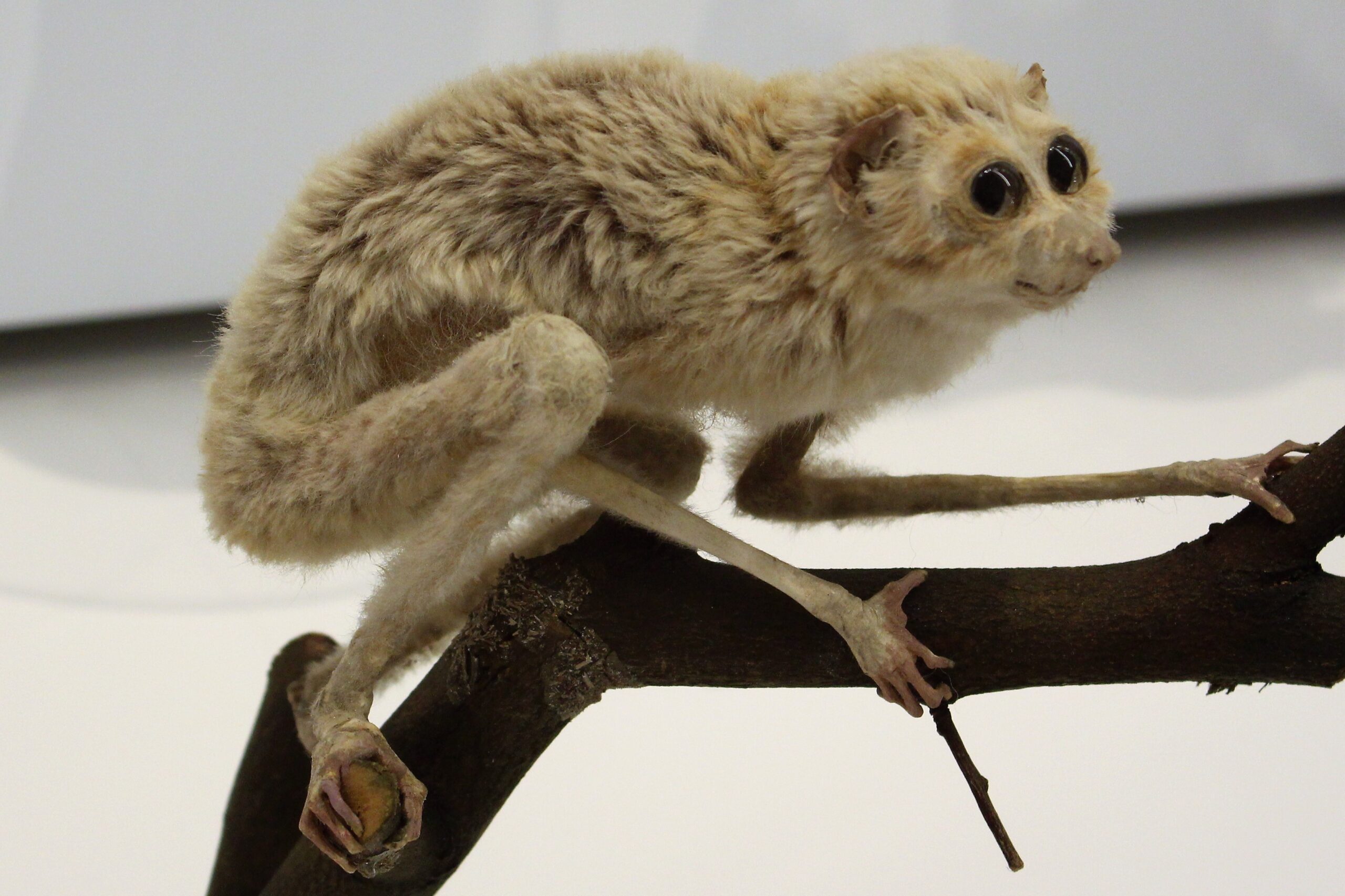 Photo Credit: DenesFeri / Wikimedia Commons
In the heart of Southeast Asia’s lush rainforests, the slow loris, scientifically known as Nycticebus, emerges as a captivating nocturnal marvel. With its large, round eyes that seem to glow in the dim light, this small primate weighs between 0.55 and 4.6 pounds, making it a delicate yet striking presence among the vibrant foliage. Its soft, velvety fur, often adorned with intricate patterns, allows it to blend seamlessly into the dappled shadows of its habitat. As the sun dips below the horizon, the slow loris awakens, ready to embark on its nightly adventures, showcasing behaviors that have fascinated scientists and nature enthusiasts alike.
What truly sets the slow loris apart is its unique blend of charm and mystery. Unlike many of its primate relatives, the slow loris moves with a deliberate grace, using its strong, flexible limbs to navigate the branches with ease. Its diet is as diverse as its environment, consisting of fruits, insects, and even small animals, which it skillfully forages for under the cover of night. But perhaps the most intriguing aspect of the slow loris is its ability to produce a toxin from its elbow glands, a rare trait among mammals. This toxin, which it can deliver through its bite, serves as a defense mechanism against predators, adding an element of danger to its otherwise endearing demeanor. As we delve deeper into the world of the slow loris, we will uncover the secrets of its life, its role in the ecosystem, and the urgent conservation efforts needed to protect this enchanting creature from the brink of extinction.
The Loris occupies a special place in the tree of life, showcasing a blend of characteristics that make it stand out among mammals. Classified within the order Primates, which includes monkeys, apes, and humans, the Loris belongs to the family Lorisidae. This family is known for its slow-moving, nocturnal members, which are primarily found in the tropical forests of Asia and Africa. What sets the Loris apart is its unique method of locomotion; it moves with deliberate slowness, allowing it to blend seamlessly into its surroundings. This stealthy approach is not just a quirky trait; it’s a survival strategy that helps it avoid predators while hunting for insects and fruits.
| Taxonomic Rank | Scientific Name | Meaning & Significance |
|---|---|---|
| Kingdom | Animalia | This name comes from the Latin word for “animal,” highlighting that Loris is part of the vast group of living organisms that are multicellular and capable of movement. |
| Phylum | Chordata | Derived from the Greek word “chordē,” meaning “string,” this classification indicates that Loris has a backbone, a key feature of all vertebrates. |
| Class | Mammalia | This term comes from the Latin “mamma,” meaning “breast,” referring to the fact that all mammals, including the Loris, nurse their young with milk. |
| Order | Primates | From the Latin word “primus,” meaning “first,” this order includes species that are often considered the most advanced in terms of brain development and social behavior. |
| Family | Lorisidae | This name is derived from the genus “Loris,” which is thought to come from the Dutch word “loeris,” meaning “clumsy,” reflecting the slow and careful movements of these animals. |
| Genus | Loris | The genus name itself emphasizes the unique characteristics of these primates, particularly their nocturnal habits and distinctive physical features. |
Understanding the Loris’s classification reveals much about its evolutionary journey. As a member of the primate family, it shares a common ancestor with other primates, which hints at the adaptive strategies that have developed over millions of years. The Loris’s slow, deliberate movements and nocturnal lifestyle suggest a fascinating evolutionary response to its environment, allowing it to thrive in the shadows of the forest. This unique position in the tree of life not only highlights its biological traits but also underscores the intricate connections among all living beings.
The evolutionary journey of the Loris stretches back millions of years, tracing its roots to the early primates that roamed the Earth during the Eocene epoch, around 56 to 34 million years ago. This period marked a significant time of diversification for mammals, as they adapted to various environments. The Loris, part of the family Lorisidae, evolved in the dense forests of Africa and Asia, developing traits that would help it thrive in these lush habitats.
Ancestral forms of the Loris were small, tree-dwelling primates that shared common features with other early primates, such as grasping hands and feet, which allowed them to navigate the branches with ease. Over time, these ancestors underwent major evolutionary transitions, adapting to nocturnal lifestyles. This shift led to the development of large eyes for better night vision, enabling them to hunt and forage in the dark. Additionally, their slow, deliberate movements became a key survival strategy, allowing them to avoid detection by predators while they searched for food.
These evolutionary adaptations have been vital for the Loris’s survival in its natural habitat. The combination of enhanced night vision, stealthy movement, and effective camouflage allows it to thrive in the shadows of the forest. By mastering the art of blending into its surroundings and moving quietly, the Loris has carved out a niche that helps it evade predators while successfully foraging for insects and fruits. This remarkable journey through time showcases how evolution shapes the lives of animals, enabling them to adapt and flourish in their environments.
The Loris is a captivating little primate that leaves a lasting impression with its endearing appearance. Its body is small and compact, typically weighing between 0.55 and 4.6 pounds. This lightweight frame allows it to navigate the trees with grace and agility. The Loris has a round head and a short, stocky body, which gives it a cuddly look. Its limbs are long and flexible, perfect for grasping branches as it moves through its forest home.
| Feature | Description |
|---|---|
| Size | Small, weighing between 0.55 and 4.6 pounds |
| Color | Fur ranges from gray to brown, often with lighter underparts |
| Skin Type | Soft fur that provides warmth and camouflage |
| Most Distinctive Feature | Huge eyes encircled by dark patches, enhancing night vision |
These physical traits work together beautifully to help the Loris thrive in its environment. The large eyes, surrounded by dark patches, are not just for show; they enhance its night vision, allowing it to be an effective nocturnal forager. The soft fur not only keeps the Loris warm but also helps it blend into the dappled light of the forest, making it less visible to predators. This combination of features makes the Loris a master of stealth, perfectly adapted to life in the trees.
The Loris calls the lush rainforests of Southeast Asia its home, where the air is thick with humidity and the canopy is alive with the sounds of chirping insects and rustling leaves. These vibrant forests are a tapestry of green, filled with towering trees, twisting vines, and a rich undergrowth that provides both shelter and food. The dappled sunlight filters through the leaves, creating a magical atmosphere that is perfect for this nocturnal primate, which thrives in the shadows of the trees.
The climate in these regions is typically warm and humid, with temperatures often ranging from 70 to 90 degrees Fahrenheit. Rainfall is abundant, especially during the monsoon season, which helps to keep the forest lush and vibrant. The Loris prefers areas with dense foliage, where it can easily navigate the branches and find its favorite foods, such as fruits, leaves, and insects. This environment not only provides nourishment but also offers protection from predators.
To thrive in such a dynamic habitat, the Loris has developed several clever adaptations. Its large, forward-facing eyes allow it to see well in low light, making it an expert at navigating the forest at night. Its slow, deliberate movements help it blend into the surroundings, avoiding detection by both prey and predators. Additionally, the Loris has a specialized diet that includes toxic plants, which it can consume without harm, allowing it to access a unique food source that many other animals cannot. These adaptations make the Loris a true master of its rainforest home.
As the sun sets and darkness blankets the rainforest, the Loris begins its nightly adventures. This small primate is nocturnal, meaning it is most active at night. With large, expressive eyes adapted for low light, the Loris navigates through the trees with a slow and deliberate grace. Its daily activities include foraging for food, grooming, and socializing with family members. The Loris primarily feeds on fruits, leaves, and insects, using its keen sense of smell to locate tasty treats hidden among the foliage.
Socially, the Loris thrives in family units, which are essential for its survival. These close-knit groups provide support and protection, allowing members to share resources and keep an eye out for predators. Communication among Lorises is subtle yet effective, involving a mix of vocalizations, body language, and scent marking. This social structure not only strengthens bonds within the family but also enhances their ability to thrive in the wild.
| Behavior Type | Description |
|---|---|
| Activity Patterns | Nocturnal foraging for fruits, leaves, and insects, with a focus on slow, deliberate movements to avoid detection. |
| Social Structure | Lives in family units that provide support, protection, and resource sharing. |
| Communication Methods | Utilizes vocalizations, body language, and scent marking to convey messages and strengthen social bonds. |
The behaviors of the Loris are finely tuned to ensure its survival in the wild. By being nocturnal, it avoids many daytime predators while taking advantage of the rich resources available at night. Living in family units enhances safety and increases the chances of finding food. Through their unique communication methods, Lorises maintain strong social ties, which are vital for navigating the challenges of their rainforest home. Each behavior plays a crucial role in helping them thrive in a complex and often dangerous environment.
The Loris has a diverse diet that reflects its adaptability as an omnivore. This means it enjoys a variety of foods, including both plants and animals. As a nocturnal forager, the Loris uses its keen sense of smell and excellent night vision to locate tasty treats in the dark. It often feeds on insects, small birds, and even reptiles, showcasing its ability to hunt and gather a wide range of food sources.
| Dietary Aspect | Details |
|---|---|
| Diet Type | Omnivore |
| Favorite Foods | Insects, small birds, and reptiles |
| Prey Items | Crickets, moths, and small lizards |
| Hunting/Foraging Strategies | Uses keen sense of smell and night vision to locate food |
This varied diet plays a crucial role in the Loris’s ecology and daily routine. By consuming a mix of insects and small animals, the Loris helps control insect populations, contributing to the balance of its rainforest habitat. Its foraging habits also mean that it must be active during the night, which influences its social interactions and behaviors. This nocturnal lifestyle allows the Loris to avoid many predators while taking advantage of the rich food sources available in the dark.
When it comes to mating, the Loris engages in some intriguing behaviors. Breeding typically occurs during specific seasons, often influenced by environmental factors like food availability and climate. Males will display their interest through vocalizations and scent marking, which helps them attract potential mates. Once a pair has formed, they may engage in grooming behaviors, strengthening their bond before the female becomes pregnant.
| Reproductive Aspect | Details |
|---|---|
| Gestation Period | 166–200 days |
| Litter Size | 1 to 2 young |
| Age of Maturity | Approximately 1 year |
| Name of Young | Infants |
After the gestation period, which can last anywhere from about five and a half to nearly seven months, the female Loris gives birth to one or two infants. These tiny, helpless young are born with their eyes closed and rely entirely on their mother for warmth and nourishment. Parental care is crucial during this early stage, as the mother will carry her infants on her belly, keeping them safe and close. As they grow, the young Loris begin to explore their surroundings, learning essential skills from their mother. By the time they reach maturity at around one year old, they are ready to embark on their own adventures in the vibrant world of the rainforest.
The Loris plays a vital role in its ecosystem, nestled within the intricate web of life in Southeast Asia’s rainforests. As both predator and prey, it helps maintain the balance of its environment. While it feasts on insects and fruits, it also finds itself on the menu for various predators. This delicate position makes the Loris particularly vulnerable to threats that can disrupt its survival.
To defend itself against these dangers, the Loris has developed some clever survival strategies. One of its most fascinating adaptations is its ability to remain motionless, blending seamlessly into the branches and foliage. This camouflage helps it avoid detection by predators. Additionally, the Loris produces a toxic secretion from its elbows, which it can lick and apply to its fur. This not only deters potential threats but also makes it unpalatable to those who might try to eat it. Through these remarkable behaviors, the Loris navigates the challenges of its environment, showcasing the resilience of life in the wild.
A keystone species is a vital part of its ecosystem, meaning its presence and activities have a significant impact on the environment and other living things. The Loris, a small primate found in the rainforests of Southeast Asia, qualifies as a keystone species due to its unique role in maintaining the balance of its habitat. By influencing the populations of other species and contributing to the health of the ecosystem, the Loris plays a crucial part in the intricate web of life.
The Loris is an omnivore, which means it eats both plants and animals. This diverse diet allows it to help control insect populations, particularly those that could otherwise become pests. For example, by feeding on insects, the Loris helps keep their numbers in check, which benefits the plants that might otherwise suffer from overgrazing. Additionally, the Loris consumes fruits and leaves, aiding in seed dispersal. When it eats fruit, it often travels to different areas, leaving seeds behind in its droppings. This process helps new plants grow, promoting biodiversity in the rainforest.
Moreover, the Loris lives in family units, which fosters social structures that can influence the behavior of other species. These family groups can help protect their territory and resources, creating a stable environment for various organisms. The presence of the Loris can also attract other animals, as its activities create opportunities for different species to thrive.
If the Loris were to disappear from its rainforest home, the effects would ripple through the ecosystem. Without this small primate, insect populations could surge, leading to overgrazing of plants and a decline in plant diversity. The loss of seed dispersal would hinder the growth of new plants, disrupting the entire food web. Other species that rely on the Loris for food or ecological balance would also suffer, potentially leading to further extinctions. In essence, the absence of the Loris would create a domino effect, unraveling the delicate balance of life in the rainforest.
The Loris occupies a crucial ecological niche in the rainforests of Southeast Asia. As a nocturnal primate, it plays a significant role in the delicate balance of its ecosystem. By foraging at night, the Loris helps control insect populations and disperses seeds, contributing to the health and diversity of the forest. Its unique adaptations, such as large eyes for night vision and a varied diet, allow it to thrive in this vibrant habitat, making it an essential player in the rainforest community.
| Ecosystem Service | Impact |
|---|---|
| Insect Control | Helps maintain balance by reducing pest populations. |
| Seed Dispersal | Facilitates plant growth and forest regeneration. |
| Food Source | Serves as prey for larger predators, supporting the food web. |
| Nutrient Cycling | Contributes to soil health through waste products. |
The Loris influences its environment in several fascinating ways. By feeding on insects, it helps keep these populations in check, preventing outbreaks that could harm plant life. Additionally, as it consumes fruits and leaves, the Loris inadvertently spreads seeds throughout the forest. This process is vital for the growth of new plants, ensuring that the rainforest remains lush and diverse. Furthermore, the Loris itself is a food source for larger predators, linking it to the broader food web and highlighting its importance in maintaining ecological balance.
The broader ecological importance of the Loris cannot be overstated. As a keystone species, its presence is essential for the health of the rainforest ecosystem. The interactions it has with plants and other animals create a ripple effect that supports various life forms. By maintaining insect populations and promoting plant growth, the Loris helps sustain the rich biodiversity of its habitat. Protecting this small primate is not just about saving one species; it is about preserving the intricate web of life that thrives in the rainforests of Southeast Asia.
In the vibrant tapestry of nature, symbiosis plays a crucial role in shaping the lives of various species. Symbiosis refers to the close and often long-term interactions between different biological species. These relationships can be mutualistic, where both species benefit; parasitic, where one benefits at the expense of the other; or commensal, where one benefits while the other is neither helped nor harmed. The Loris, a small primate found in the rainforests of Southeast Asia, engages in several fascinating partnerships with other species, showcasing the intricate connections that exist in its ecosystem.
| Species/Type | Relationship Type | Description |
|---|---|---|
| Fleas | Parasitic | Fleas live on the Loris, feeding on its blood. This relationship can harm the Loris by causing discomfort and potential disease. |
| Fruit Trees | Mutualistic | The Loris helps disperse seeds from the fruits it eats, aiding in the growth of new plants while benefiting from the nutritious food. |
| Birds (like the Asian Glossy Starling) | Commensal | These birds may follow the Loris to feed on insects disturbed by its movement, benefiting from the Loris’s foraging without affecting it. |
The evolution of these relationships highlights the dynamic nature of ecosystems. Over time, species like the Loris have adapted to their environments, forming partnerships that enhance their survival. Mutualistic relationships, such as those with fruit trees, not only provide food for the Loris but also promote plant growth, creating a thriving habitat for many organisms. Meanwhile, parasitic interactions, like those with fleas, remind us of the challenges that come with living in close quarters with other species. Each relationship, whether beneficial or harmful, contributes to the rich complexity of life in the rainforest, illustrating how interconnected all living things truly are.
The Loris is a captivating little primate that holds many surprises for those curious about the natural world. With its large, expressive eyes and unique behaviors, this nocturnal creature is more than just a cute face. Here are some intriguing facts that showcase the Loris’s remarkable adaptations and lifestyle.
Throughout history, the Loris has intrigued humans with its unique characteristics and behaviors. In various cultures, this small primate has been depicted in folklore and art, often symbolizing mystery and the unknown. Ancient texts and local legends have celebrated the Loris for its nocturnal habits and large, expressive eyes, which seem to hold secrets of the night. In some regions, the Loris has been associated with healing and protection, leading to its revered status among certain communities. These historical encounters have laid the groundwork for a complex relationship between the Loris and humanity, one that continues to evolve.
Today, interactions between the Loris and humans are marked by both conservation efforts and challenges. As deforestation and habitat loss threaten their survival, many organizations are working tirelessly to protect these primates and their rainforest homes. However, the Loris also faces conflicts with humans, particularly in the illegal pet trade, where they are captured for their appealing appearance. This has led to a decline in their populations and raised concerns about their welfare. While some people seek to domesticate them, the Loris is not suited for life as a pet, as it requires specific environmental conditions and social structures to thrive.
Looking ahead, the future of the Loris and its relationship with humanity hinges on our ability to balance conservation with cultural appreciation. As awareness grows about the threats these primates face, there is hope for a more harmonious coexistence. By fostering respect for their natural habitats and understanding their needs, we can ensure that the Loris continues to thrive in the wild. Together, we can celebrate this enchanting primate while safeguarding its future for generations to come.
The Loris is currently classified as Critically Endangered, a status that highlights the urgent need for conservation efforts. Population estimates are difficult to determine precisely, but it is believed that their numbers are declining rapidly. This decline is primarily due to habitat loss and illegal wildlife trade, which have significantly impacted their populations across Southeast Asia.
| Conservation Factor | Status/Details |
|---|---|
| IUCN Status | Critically Endangered |
| Population Estimates | Unknown, but declining |
| Trend Direction | Decreasing |
The main threats to the Loris are habitat destruction and poaching. As forests are cleared for agriculture and urban development, these small primates lose their homes and food sources. Additionally, the illegal wildlife trade poses a significant risk, as many Lorises are captured and sold as exotic pets or for traditional medicine. This not only reduces their numbers but also disrupts their social structures and breeding patterns.
Conservation efforts are underway to protect the Loris and its habitat. Organizations are working to raise awareness about the importance of preserving these primates and their ecosystems. Protected areas are being established, and laws are being enforced to combat illegal wildlife trade. While the outlook remains challenging, there is hope that with continued efforts, the Loris can recover and thrive in its natural environment once again.
| Question | Answer |
|---|---|
| What is the natural habitat of the Loris? | Loris live in the lush rainforests of Southeast Asia. These dense forests provide them with plenty of trees to climb and a variety of food sources. |
| What do Loris eat? | Loris are omnivores, which means they eat both plants and animals. Their diet includes fruits, leaves, insects, and small animals, allowing them to adapt to different food sources in their environment. |
| How do Loris behave in the wild? | Loris are nocturnal, meaning they are active at night. They move slowly and quietly through the trees, using their large eyes to see in the dark, which helps them avoid predators. |
| How do Loris reproduce? | Loris typically have a slow reproduction rate, with females giving birth to one or two babies after a gestation period of about six months. The young are cared for by their mothers until they are old enough to fend for themselves. |
| What threats do Loris face in the wild? | Loris are critically endangered due to habitat loss and illegal wildlife trade. Deforestation and the destruction of their rainforest homes make it difficult for them to survive. |
| What is a unique characteristic of the Loris? | One of the most distinctive features of the Loris is its huge eyes, which are surrounded by dark patches. These large eyes help them see well in low light, making them excellent night-time hunters. |
| Are Loris social animals? | Loris are generally solitary creatures, preferring to live alone or in small family groups. They communicate with each other through vocalizations and scent markings to establish their territory. |