Taxonomy & Classification
- Kingdom
- Animalia
- Phylum
- Chordata
- Class
- Aves
- Order
- Psittaciformes
- Family
- Psittacidae
- Genus
- Ara
- Species
- Ara macao

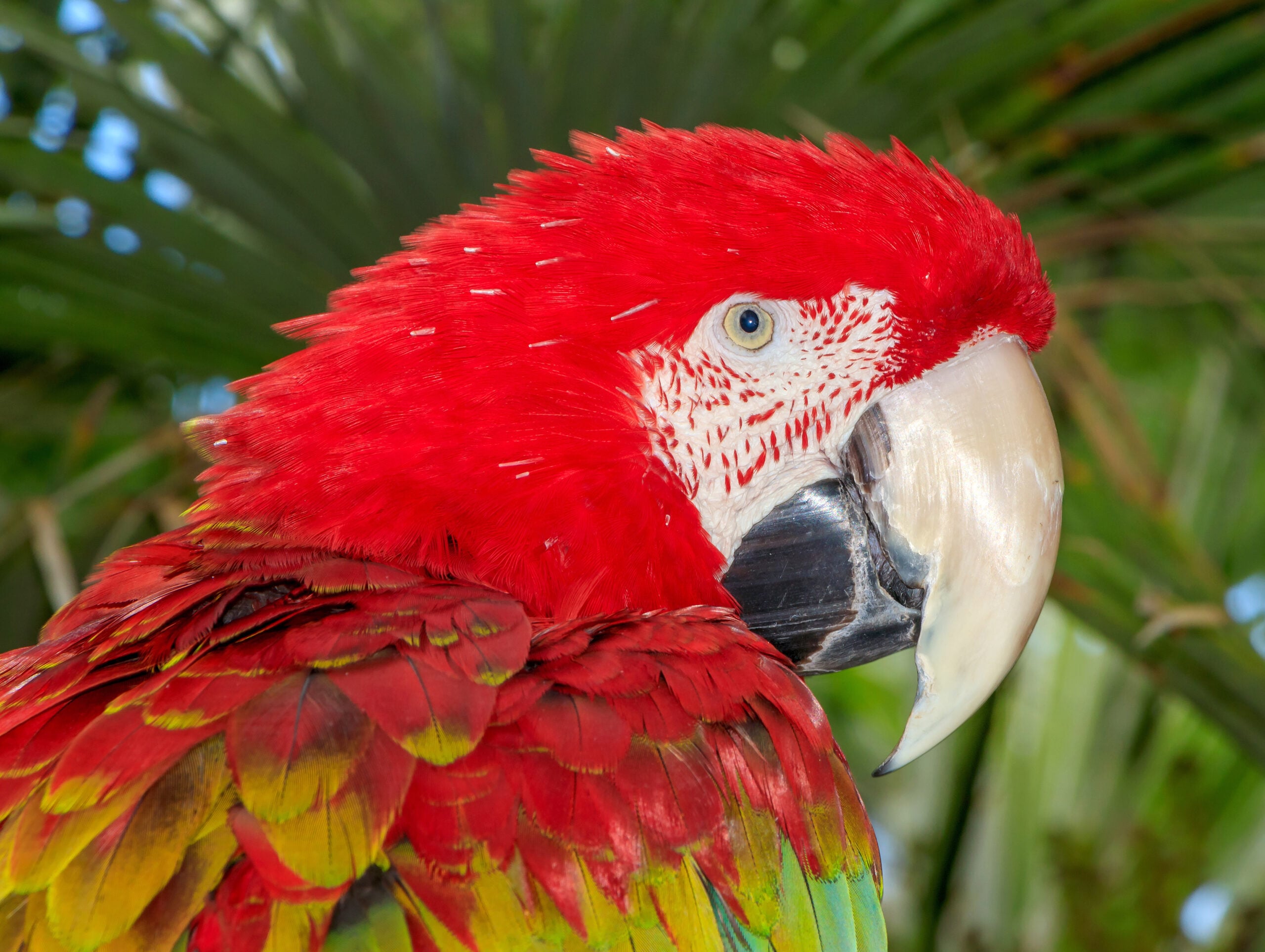 Photo Credit: Llez / Wikimedia Commons
In the heart of the lush tropical rainforests of Central and South America, the Scarlet Macaw, scientifically known as Ara macao, flits through the vibrant canopy like a living rainbow. With its brilliant red, yellow, and blue feathers, this magnificent bird is not just a feast for the eyes; it is a symbol of the rich biodiversity that thrives in these ecosystems. As it soars gracefully from branch to branch, the Scarlet Macaw’s long tail feathers trail behind, creating a stunning display that captivates anyone lucky enough to witness it.
Scientists and nature enthusiasts alike are drawn to the Scarlet Macaw for its striking appearance and complex behaviors. These intelligent birds are known for their playful personalities and strong social bonds, often seen interacting with their mates and family members in lively chatter. Their diet, which includes a variety of fruits, nuts, and seeds, plays a crucial role in their habitat, as they help disperse seeds throughout the forest, contributing to the health of their environment. As we explore the world of the Scarlet Macaw, we will uncover the secrets of its life, its role in the ecosystem, and the challenges it faces in a rapidly changing world.
The Scarlet Macaw, a vibrant and striking bird, holds a special place in the animal kingdom. Taxonomically, it belongs to the Kingdom Animalia, which includes all animals, and is classified under the Phylum Chordata, meaning it has a backbone. This colorful parrot is part of the Class Aves, which encompasses all birds, and it falls within the Order Psittaciformes, known for its members’ strong, curved beaks and zygodactyl feet—two toes facing forward and two backward, perfect for gripping branches. The Scarlet Macaw’s family, Psittacidae, includes other parrots, while its genus, Ara, is home to some of the largest and most colorful species. What makes the Scarlet Macaw truly stand out is not just its dazzling plumage but also its intelligence and social behavior, making it a captivating subject for both scientists and bird enthusiasts alike.
| Taxonomic Rank | Scientific Name | Meaning & Significance |
|---|---|---|
| Kingdom | Animalia | This name signifies all animals, highlighting the Scarlet Macaw’s place among living organisms that share certain biological characteristics. |
| Phylum | Chordata | Meaning “having a cord,” this term refers to animals with a backbone, emphasizing the structural support that allows for mobility and complex behaviors. |
| Class | Aves | Simply meaning “birds,” this classification connects the Scarlet Macaw to all feathered creatures, showcasing its ability to fly and its unique adaptations. |
| Order | Psittaciformes | This name comes from the Greek word for parrot, indicating the bird’s strong beak and social nature, traits common among its relatives. |
| Family | Psittacidae | Derived from the Latin word for parrot, this classification highlights the Scarlet Macaw’s close ties to other parrots, known for their intelligence and vocal abilities. |
| Genus | Ara | This name is thought to come from the Tupi-Guarani word for parrot, emphasizing the bird’s vibrant colors and its role in the ecosystems of Central and South America. |
The classification of the Scarlet Macaw reveals much about its evolutionary history. As a member of the Psittaciformes order, it shares a common ancestor with other parrots, which evolved unique adaptations for life in the treetops of tropical forests. Its striking colors and social behaviors are not just for show; they play crucial roles in communication and mating. Understanding where the Scarlet Macaw fits in the tree of life helps us appreciate the intricate connections between species and the importance of conserving their habitats, ensuring that these magnificent birds continue to thrive in the wild.
The evolutionary journey of the Scarlet Macaw stretches back millions of years, tracing its lineage through the lush forests of Central and South America. This vibrant bird, known scientifically as Ara macao, is part of a larger family called Psittacidae, which includes all parrots. The story of the Scarlet Macaw is one of adaptation and survival, shaped by the changing environments and ecological challenges it faced over time.
The ancestors of modern macaws were likely small, arboreal birds that lived in tropical forests. Over time, these early birds evolved larger bodies and stronger beaks, allowing them to crack open tough seeds and nuts. This transition was crucial, as it enabled them to exploit a food source that many other birds could not. As the climate changed and forests expanded, these birds adapted to a more frugivorous diet, meaning they began to eat more fruits. This shift not only provided them with essential nutrients but also helped in seed dispersal, promoting the growth of new plants in their habitats.
These adaptations have been vital for the Scarlet Macaw’s survival in the wild. Their bright colors not only attract mates but also help them blend into the vibrant foliage of their rainforest homes. The strong beak allows them to access a variety of food sources, while their social nature fosters cooperation and protection against predators. With their intelligence, they navigate complex environments and communicate effectively, ensuring their place in the rich tapestry of the rainforest ecosystem. As they continue to thrive, the Scarlet Macaw remains a symbol of the beauty and resilience of nature.
The Scarlet Macaw is a dazzling spectacle of nature, instantly captivating anyone who lays eyes on it. With a body that can reach up to 33 inches in length, this bird is not just large; it is a living canvas of color. Its long, pointed wings and tail feathers create a striking silhouette against the green backdrop of its rainforest home. The combination of its size and vibrant plumage makes the Scarlet Macaw a true icon of the avian world.
| Feature | Description |
|---|---|
| Weight | 2 lbs |
| Skin Type | Feathers |
| Most Distinctive Feature | Brightly colored plumage |
The Scarlet Macaw’s brilliant feathers serve multiple purposes that enhance its survival. The vivid reds, blues, and yellows not only make it a visual marvel but also play a crucial role in communication and mating displays. These colors can help the macaw blend into the vibrant foliage of its habitat, providing camouflage from predators. Additionally, the feathers are essential for flight, allowing this magnificent bird to soar gracefully through the treetops in search of food and companionship. Together, these features create a harmonious blend of beauty and functionality, showcasing the wonders of evolution in the natural world.
The Scarlet Macaw thrives in the heart of tropical rainforests, where the air is thick with humidity and the canopy is alive with vibrant colors and sounds. These lush environments are filled with towering trees, their branches forming a natural umbrella that shelters a rich diversity of life. Sunlight filters through the leaves, creating a dappled effect on the forest floor, where a variety of plants and animals coexist in harmony. The Scarlet Macaw’s home is a paradise of greenery, where it can often be seen soaring gracefully through the treetops, its brilliant feathers a striking contrast against the deep greens of the forest.
To flourish in these habitats, Scarlet Macaws require a warm and humid climate, typically found in areas where temperatures range from 70 to 90 degrees Fahrenheit. These birds are particularly fond of regions with abundant rainfall, as it supports the growth of the fruiting trees they depend on for food. The dense foliage of the rainforest not only provides nourishment but also offers protection from predators. The combination of warmth, moisture, and rich biodiversity creates an ideal environment for these stunning birds to thrive.
Scarlet Macaws have developed several adaptations that help them navigate and survive in their rainforest homes. Their strong, curved beaks are perfectly designed for cracking open hard nuts and seeds, which are plentiful in their diet. Additionally, their vibrant plumage not only dazzles the eye but also helps them blend into the colorful surroundings of the rainforest, providing camouflage from potential threats. Their social nature allows them to communicate effectively with one another, ensuring they can find food and stay safe in the bustling ecosystem of the rainforest.
The daily life of a Scarlet Macaw is a vibrant tapestry woven with activity, social interaction, and exploration. As dawn breaks, these colorful birds awaken in their treetop homes, stretching their wings and calling out to one another with loud, raucous squawks. Their mornings are often spent foraging for food, which includes a diet rich in fruits, nuts, and seeds. With their strong beaks, they crack open tough shells to access the nutritious treats inside. Throughout the day, they engage in playful antics, swinging from branch to branch, and sometimes even taking a dip in nearby rivers to cool off.
Scarlet Macaws are highly social creatures, often found in flocks that can range from a few individuals to over a dozen. These flocks are not just a means of companionship; they play a crucial role in their survival. Within these groups, macaws communicate through a variety of vocalizations, from loud calls to softer chirps, helping them maintain contact with one another. Social bonds are strengthened through grooming behaviors, where one bird preens the feathers of another, promoting both hygiene and friendship. This social structure is vital, as it allows them to share information about food sources and potential dangers in their environment.
| Behavior Type | Description |
|---|---|
| Activity Patterns | Scarlet Macaws are diurnal, meaning they are active during the day. They spend their mornings foraging and their afternoons socializing and playing. |
| Social Structure | They live in flocks, which provide safety in numbers and help them find food more efficiently. |
| Communication Methods | These birds use a range of vocalizations, including loud squawks and softer calls, to communicate with each other and maintain flock cohesion. |
The behaviors of Scarlet Macaws are not just for show; they are essential for their survival in the wild. By living in flocks, they can better protect themselves from predators and increase their chances of finding food. Their social interactions foster strong relationships that enhance their ability to thrive in the lush, competitive environments of tropical rainforests. Through their vibrant calls and playful nature, Scarlet Macaws not only enrich their own lives but also contribute to the dynamic ecosystem around them.
The Scarlet Macaw is an omnivore, which means it enjoys a varied diet that includes both plant and animal matter. These intelligent birds primarily feast on fruits, nuts, seeds, and flowers, using their strong, curved beaks to crack open tough shells and access the nutritious goodies inside. Their feeding behavior is quite social; they often forage in pairs or small groups, communicating with each other through a series of loud calls. This not only helps them locate food but also strengthens their social bonds.
| Dietary Aspect | Details |
|---|---|
| Diet Type | Omnivore |
| Favorite Foods | Fruits, nuts, seeds, and flowers |
| Prey Items | Occasionally insects and small invertebrates |
| Hunting/Foraging Strategies | Forages in pairs or groups, using loud calls to communicate and locate food |
The diet of the Scarlet Macaw plays a crucial role in its ecology and daily routine. By consuming a variety of fruits and seeds, these birds help in seed dispersal, which is vital for the health of their rainforest habitat. As they move through the trees, they inadvertently plant new seeds, contributing to the growth of the forest. Their social foraging behavior not only enhances their chances of finding food but also fosters strong community ties, making their daily lives as colorful as their feathers.
The mating behavior of Scarlet Macaws is as colorful as their feathers. During the breeding season, which typically occurs between January and March, these birds engage in elaborate courtship displays. Males often perform aerial acrobatics, showcasing their vibrant plumage to attract females. Once a pair forms a bond, they will mate for life, returning to the same nesting site year after year. This strong partnership is essential for raising their young, as both parents play a crucial role in nurturing their offspring.
| Reproductive Aspect | Details |
|---|---|
| Gestation Period | Approximately 28 days |
| Litter Size | 1 to 3 eggs |
| Age of Maturity | 3 to 4 years |
| Name of Young | Chick |
Once the eggs hatch, the real adventure begins. Scarlet Macaw chicks are born helpless, relying entirely on their parents for food and protection. Both the mother and father take turns feeding the chicks a diet of regurgitated fruits and seeds, which is rich in nutrients. As the young macaws grow, they begin to develop their feathers and learn essential skills, such as climbing and flying. Parental care continues for several months, with the young staying close to their parents until they are ready to venture out on their own. This nurturing environment helps ensure that the next generation of Scarlet Macaws is well-prepared to thrive in the wild.
The Scarlet Macaw occupies a vital role in the food web of its tropical rainforest habitat. As a large, colorful bird, it is primarily a herbivore, feeding on fruits, nuts, and seeds. However, it is not at the top of the food chain. Instead, it faces threats from various predators and environmental challenges that can impact its survival.
To defend itself against these dangers, the Scarlet Macaw employs several survival strategies. Its bright plumage, while eye-catching, also serves as a form of camouflage among the vibrant foliage of the rainforest. When threatened, these birds can be quite vocal, using loud calls to alert others in their flock. Additionally, their strong beaks allow them to crack open tough nuts and seeds, providing not just food but also a means to escape predators by quickly maneuvering through the trees. By staying in groups, they enhance their safety, as there is strength in numbers when it comes to spotting danger.
A keystone species is an organism that plays a crucial role in maintaining the structure of its ecosystem. Its presence and activities significantly influence the environment and the other species that inhabit it. The Scarlet Macaw qualifies as a keystone species due to its vital interactions within the tropical rainforest ecosystem. By dispersing seeds and influencing plant growth, these vibrant birds help shape their habitat in ways that benefit many other organisms.
Scarlet Macaws are known for their diet, which consists mainly of fruits, nuts, and seeds. As they feed, they play an essential role in seed dispersal. When they consume fruits, they often travel great distances before excreting the seeds. This process helps to spread various plant species throughout the rainforest, promoting biodiversity. For example, the seeds of certain trees may only germinate after passing through the macaw’s digestive system, ensuring that new plants grow in different areas, which can lead to a healthier and more diverse forest.
Additionally, the social behavior of Scarlet Macaws contributes to their ecological impact. They are often seen in flocks, which not only enhances their safety from predators but also increases their effectiveness in foraging. When they feed together, they can access more food sources and help maintain the balance of plant populations. Their vocalizations and social interactions also play a role in the dynamics of the rainforest, influencing the behavior of other species around them.
If Scarlet Macaws were to disappear from their ecosystem, the consequences would be significant. Without these birds, many plant species would struggle to reproduce and spread, leading to a decline in forest diversity. This loss would ripple through the ecosystem, affecting not only the plants but also the animals that rely on them for food and shelter. The vibrant tapestry of life in the rainforest would become less colorful and less resilient, demonstrating just how vital the Scarlet Macaw is to its home.
The Scarlet Macaw occupies a vital ecological niche in the rainforests of Central and South America. As a keystone species, it plays a crucial role in maintaining the health and balance of its environment. These stunning birds are not just beautiful; they are essential for the survival of many other species and the overall health of their habitat. By feeding on a variety of fruits, nuts, and seeds, Scarlet Macaws help to disperse the seeds of the plants they consume, promoting forest growth and regeneration.
| Ecosystem Service | Impact |
|---|---|
| Seed Dispersal | Helps in the growth of new plants and trees, maintaining forest diversity. |
| Pollination | Contributes to the reproduction of certain flowering plants, supporting biodiversity. |
| Food Source | Provides sustenance for predators and scavengers, supporting the food web. |
| Habitat Creation | Encourages the growth of various plant species, which in turn creates habitats for other animals. |
Scarlet Macaws influence their ecosystem in several specific ways. When they eat fruits and nuts, they often fly long distances before digesting their meals. This behavior allows them to drop seeds far from the parent tree, giving new plants a chance to grow in different areas. For example, a single Scarlet Macaw can disperse hundreds of seeds in a day, which can lead to the growth of new trees and plants that provide food and shelter for countless other species. Additionally, their feeding habits can help control the populations of certain plants, preventing any one species from dominating the landscape.
The broader ecological importance of the Scarlet Macaw cannot be overstated. By facilitating plant growth and maintaining the balance of their rainforest habitat, these birds support a rich tapestry of life. Their activities help ensure that the rainforest remains a vibrant and diverse ecosystem, which is crucial for the health of our planet. Protecting Scarlet Macaws and their habitats means safeguarding the intricate web of life that depends on them, highlighting the interconnectedness of all living things in nature.
In the intricate web of life, symbiosis refers to the close and often long-term interactions between different species. These relationships can take many forms, including mutualism, where both species benefit, commensalism, where one benefits while the other is neither helped nor harmed, and parasitism, where one species benefits at the expense of the other. The Scarlet Macaw, with its vibrant plumage and social nature, engages in various ecological partnerships that highlight the interconnectedness of rainforest ecosystems.
| Species/Type | Relationship Type | Description |
|---|---|---|
| Fruit Trees | Mutualistic | Scarlet Macaws help disperse the seeds of fruit trees as they eat, promoting forest growth while benefiting from the food source. |
| Termites | Commensal | Macaws may nest near termite mounds, benefiting from the protection these structures provide without affecting the termites. |
| Parasitic Wasps | Parasitic | While not directly affecting the macaws, parasitic wasps can target the insects that feed on the macaws’ food sources, indirectly impacting their diet. |
The evolution of these relationships showcases the dynamic nature of ecosystems. Over time, species like the Scarlet Macaw have adapted to thrive alongside others, forming partnerships that enhance their survival. By dispersing seeds, they not only ensure their own food supply but also contribute to the health of their habitat. These connections illustrate how every creature, no matter how colorful or small, plays a vital role in the grand tapestry of life in the rainforest.
The Scarlet Macaw is not just a feast for the eyes with its brilliant colors; it also has some surprising traits that make it truly special. Here are a few intriguing facts that will captivate nature enthusiasts of all ages.
The Scarlet Macaw has long been a symbol of beauty and wonder in human culture. Historically, these vibrant birds have captured the imagination of many civilizations, particularly in Central and South America. Ancient cultures, such as the Maya and Aztecs, revered the Scarlet Macaw, often depicting it in their art and mythology. These birds were not only admired for their stunning plumage but also for their intelligence and social behavior. They were sometimes kept as pets by nobility, showcasing their status and connection to the natural world.
In modern times, the relationship between Scarlet Macaws and humanity has evolved, reflecting both cooperation and conflict. Conservation efforts are underway to protect these magnificent birds from habitat loss and illegal trapping. Organizations work tirelessly to preserve their rainforest homes and educate communities about the importance of biodiversity. However, challenges remain, as deforestation and the illegal pet trade threaten their populations. Some people also attempt to domesticate these birds, leading to ethical concerns about their well-being and the impact on wild populations.
Looking ahead, the future of the Scarlet Macaw and its relationship with humanity hinges on our ability to balance conservation with cultural appreciation. As awareness grows about the ecological importance of these birds, more people are likely to advocate for their protection. By fostering a deeper understanding of their role in the ecosystem and promoting sustainable practices, we can ensure that future generations will continue to marvel at the beauty and intelligence of the Scarlet Macaw. Together, we can create a world where both humans and these magnificent birds thrive.
The Scarlet Macaw, with its dazzling plumage and playful personality, currently holds a conservation status of “Least Concern.” This means that, for now, the species is not facing immediate extinction. However, its population is estimated to be between 50,000 and 499,000 individuals, indicating a healthy number of these magnificent birds in the wild. While the overall population trend is stable, it is essential to keep a watchful eye on their habitats and the challenges they face.
| Conservation Factor | Status/Details |
|---|---|
| IUCN Status | Least Concern |
| Population Estimates | 50,000 – 499,000 |
| Trend Direction | Stable |
Despite their current status, Scarlet Macaws encounter several threats that could impact their future. Habitat loss is a significant concern, as deforestation for agriculture and urban development reduces the lush rainforests they call home. Additionally, illegal trapping for the pet trade poses a serious risk, as these birds are highly sought after for their beauty and intelligence. Climate change also threatens their habitats, altering the delicate balance of the ecosystems they rely on.
Conservation efforts are underway to protect the Scarlet Macaw and its habitats. Organizations are working to preserve rainforests and promote sustainable land use practices. Education programs aim to raise awareness about the importance of these birds and the challenges they face. With continued efforts and community involvement, the outlook for the Scarlet Macaw remains hopeful, ensuring that future generations can enjoy the sight of these vibrant birds soaring through the treetops.
| Question | Answer |
|---|---|
| What is the natural habitat of the Scarlet Macaw? | Scarlet Macaws are typically found in tropical rainforests. These vibrant birds thrive in areas with plenty of trees, as they rely on the forest for food and nesting sites. |
| What do Scarlet Macaws eat? | Scarlet Macaws are omnivores, which means they eat both plants and animals. Their diet mainly consists of fruits, nuts, seeds, and occasionally insects, providing them with the nutrients they need to stay healthy. |
| How do Scarlet Macaws behave in the wild? | Scarlet Macaws are known for their social nature and often live in pairs or small groups. They are playful and intelligent, using their strong beaks to crack open nuts and communicate with each other through loud calls. |
| How do Scarlet Macaws reproduce? | Scarlet Macaws typically mate for life and build their nests in tree cavities. The female usually lays two to four eggs, which both parents help incubate until they hatch after about 28 days. |
| What threats do Scarlet Macaws face? | While Scarlet Macaws are currently listed as Least Concern, they still face threats from habitat loss and illegal trapping for the pet trade. Deforestation is a significant issue, as it reduces their natural living space. |
| What are some interesting characteristics of Scarlet Macaws? | One of the most distinctive features of Scarlet Macaws is their bright, colorful plumage, which includes vibrant red, yellow, and blue feathers. They are also known for their intelligence, capable of learning tricks and mimicking sounds. |
| How long do Scarlet Macaws live? | In the wild, Scarlet Macaws can live up to 30 years, but in captivity, they may live even longer, sometimes reaching 50 years or more. Their long lifespan is partly due to the care they receive in a controlled environment. |