Taxonomy & Classification
- Kingdom
- Animalia
- Phylum
- Echinodermata
- Class
- Echinoidea
- Order
- Echinoida

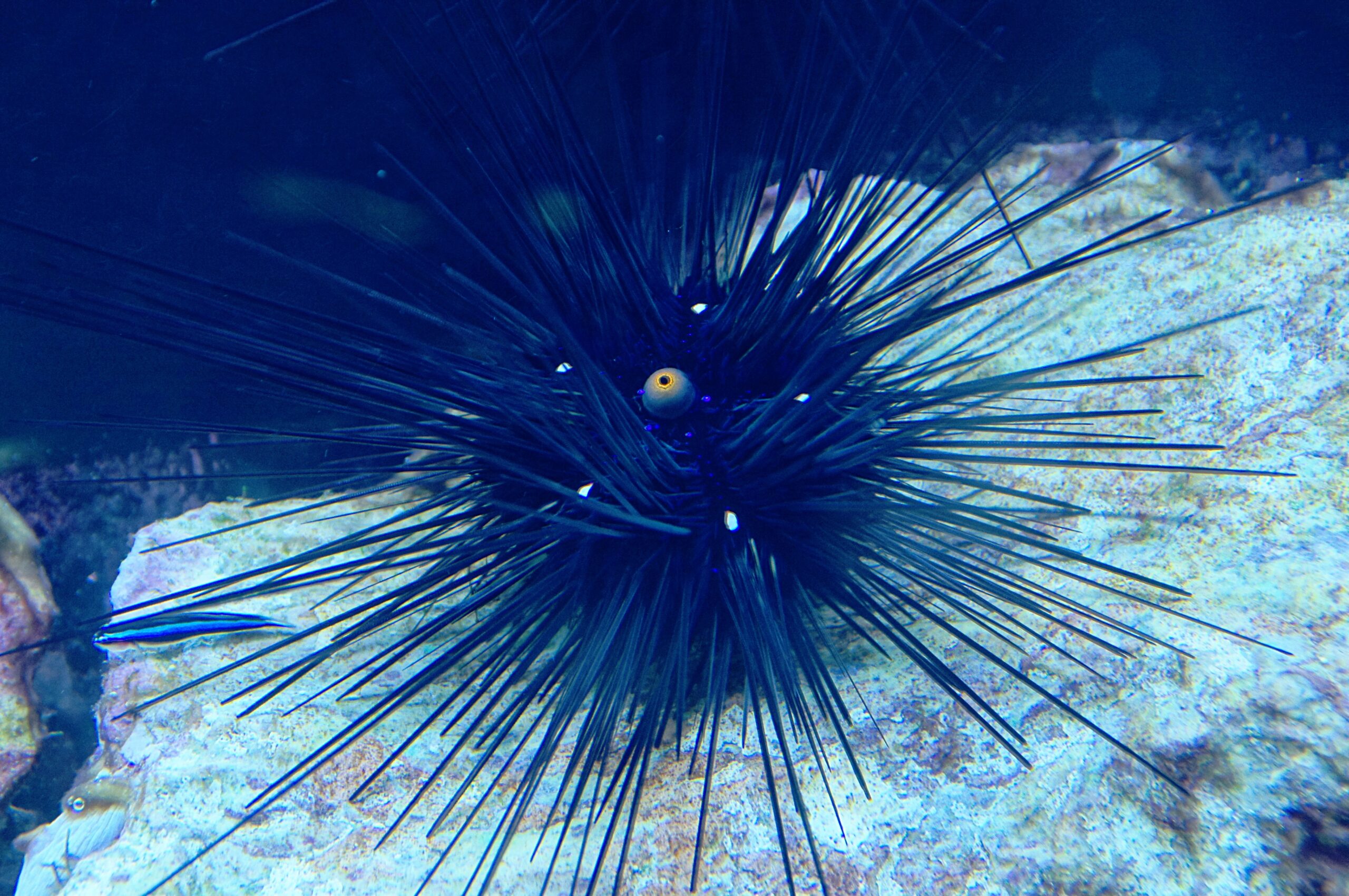 Photo Credit: Little Thought / Wikimedia
In the vibrant underwater world, the sea urchin, known scientifically as Strongylocentrotus, emerges as a captivating character. Picture a small, spiky ball rolling gently across the rocky ocean floor, its hard shell, or test, glistening in the dappled sunlight that filters through the water. With its spines extending outward like a natural armor, the sea urchin is not just a curious sight; it plays a vital role in its ecosystem. These fascinating creatures are often found nestled among colorful coral reefs and rocky substrates, where they contribute to the health of their environment by grazing on algae and helping to maintain the balance of marine life.
Scientists and nature enthusiasts alike are drawn to sea urchins for their unique adaptations and behaviors. Their ability to thrive in diverse habitats, from shallow tidal pools to deep ocean floors, showcases their resilience and versatility. As they glide along the substrate, using their tube feet—tiny, flexible appendages that help them move and cling to surfaces—they reveal a world of intricate interactions. Sea urchins are not just passive residents of the ocean; they are keystone species, meaning their presence significantly impacts the health of coral reefs and the overall marine ecosystem. With a history that stretches back over 450 million years, these ancient travelers continue to intrigue us, inviting exploration into their mysterious lives beneath the waves.
Sea urchins are intriguing members of the animal kingdom, nestled within the phylum Echinodermata. This group is known for its spiny skin and includes other fascinating creatures like starfish and sea cucumbers. Sea urchins belong to the class Echinoidea, which is characterized by their hard, spherical bodies covered in spines. What sets them apart is their unique ability to move using tube feet, which are small, flexible appendages that operate through a hydraulic system. This allows them to navigate the ocean floor with surprising agility, despite their seemingly simple appearance.
| Taxonomic Rank | Scientific Name | Meaning & Significance |
|---|---|---|
| Kingdom | Animalia | The name “Animalia” comes from the Latin word for “animal,” highlighting that sea urchins are part of the vast group of multicellular organisms that are typically motile and consume organic material. |
| Phylum | Echinodermata | “Echinodermata” means “spiny skin” in Greek, which perfectly describes the tough, spiny exterior of sea urchins and their relatives, emphasizing their distinctive protective features. |
| Class | Echinoidea | The term “Echinoidea” translates to “hedgehog-like,” referring to the round shape and spiny covering of these animals, which resembles the prickly appearance of a hedgehog. |
| Order | Ecinoida | This order name is derived from the Greek word “echinos,” meaning “hedgehog,” further reinforcing the spiny nature of these creatures and their evolutionary adaptations. |
Understanding the taxonomic classification of sea urchins reveals much about their evolutionary journey. As echinoderms, they share a common ancestor with other marine animals that have adapted to life on the ocean floor. Their spiny bodies and unique locomotion methods have allowed them to thrive in diverse marine environments. This classification not only highlights their physical characteristics but also underscores their role in the ecosystem, where they contribute to the health of coral reefs and seagrass beds. By studying sea urchins, we gain insights into the complex web of life in our oceans and the evolutionary processes that shape it.
The evolutionary journey of sea urchins stretches back over 450 million years, making them ancient travelers of the ocean depths. These spiny wonders belong to the phylum Echinodermata, a group that has seen significant changes through the ages. Their ancestors roamed the seas long before dinosaurs walked the Earth, adapting to various environments and challenges that arose in the ever-changing marine landscape.
The earliest echinoderms were soft-bodied and lacked the hard, spiny exoskeletons we associate with modern sea urchins. Over time, these ancestors developed a unique body plan characterized by radial symmetry, meaning their bodies are arranged around a central axis. This adaptation allowed them to thrive in diverse habitats, from rocky shores to sandy ocean floors. As they evolved, sea urchins transitioned from a more primitive form to the spiny, globular shapes we see today, which provided protection against predators. Their ability to burrow into the substrate also emerged, giving them a safe haven from threats while allowing them to graze on algae and other food sources.
These evolutionary adaptations have been vital for the survival of sea urchins in the competitive and often harsh marine environment. Their spiny armor deters predators, while their ability to move and cling to surfaces allows them to access food and avoid danger. The capacity to regenerate lost body parts ensures that even after an encounter with a predator, they can continue to thrive. Together, these traits have helped sea urchins endure through the ages, making them a resilient and fascinating part of our oceans today.
The sea urchin is a captivating inhabitant of the ocean floor, resembling a small, spiky ball that rolls through the underwater world. Its body is covered in a hard shell, known as a test, which is made up of interlocking plates. This tough exterior is not just for show; it provides protection against predators. The sea urchin’s spines, which can be long and sharp, radiate outward, creating a formidable barrier. These spines can vary in color, adding to the sea urchin’s striking appearance, and they help the creature navigate its rocky habitat.
| Feature | Description |
|---|---|
| Weight | 3 ounces to 1.7 pounds |
| Skin Type | Plates |
| Color | Varies widely, including purple, green, and black |
| Spines | Long, sharp, and can be colorful |
These features work together to create a well-adapted survivor in the ocean’s depths. The hard plates shield the sea urchin from hungry predators, while the spines deter would-be attackers with their sharpness. The variety of colors not only makes them visually stunning but can also help them blend into their surroundings, providing camouflage against the rocky seafloor. This combination of strength, defense, and stealth allows sea urchins to thrive in their underwater homes, showcasing the incredible ways nature equips its inhabitants for survival.
Sea urchins thrive in vibrant underwater landscapes, often found nestled among the rocky ocean floor and colorful coral reefs. These habitats are bustling with life, where sunlight filters through the water, illuminating the intricate structures of coral and the rugged surfaces of rocks. The sea urchin’s home is a dynamic environment, filled with nooks and crannies that provide shelter and food. Here, they can be seen slowly moving along the substrate, using their tube feet to navigate the terrain.
To flourish in these habitats, sea urchins require specific climate and environmental conditions. They prefer waters that are rich in nutrients, which support the growth of algae—their primary food source. The temperature of their surroundings can vary, but they generally thrive in cooler waters, often between 10 to 20 degrees Celsius (50 to 68 degrees Fahrenheit). Additionally, they need a stable environment with plenty of rocky surfaces to cling to, as this helps protect them from predators and strong currents.
Adaptation is key to the sea urchin’s survival in these diverse habitats. Their hard, spiny exterior not only serves as a defense mechanism against hungry fish but also helps them blend into the rocky seafloor, making them less visible to predators. Their ability to graze on algae allows them to thrive in areas where food is abundant, while their tube feet enable them to move and cling to surfaces, even in turbulent waters. These adaptations make sea urchins well-suited to their underwater homes, allowing them to flourish in the ever-changing ocean environment.
Sea urchins lead a life filled with intriguing daily activities that revolve around their underwater environment. As they glide along the ocean floor, these spiny animals spend their days foraging for food, primarily munching on algae and other plant matter. With their tube feet, which are tiny, flexible appendages that help them move and grasp, sea urchins can navigate rocky surfaces and cling to their favorite dining spots. They are most active during the day, using their keen senses to detect food and avoid predators.
In terms of social behavior, sea urchins often gather in groups, forming colonies that can number in the hundreds. This social structure provides them with safety in numbers, as being part of a larger group can help deter potential threats. Within these colonies, sea urchins communicate through subtle movements and chemical signals, allowing them to share information about food sources or danger. While they may seem solitary at times, their interactions reveal a complex social life that enhances their survival.
| Behavior Type | Description |
|---|---|
| Foraging | Sea urchins actively search for algae and plant matter, using their tube feet to navigate and grasp food. |
| Colony Living | They often gather in large groups, which provides safety from predators and increases foraging efficiency. |
| Communication | Sea urchins communicate through movements and chemical signals, sharing information about food and threats. |
The behaviors of sea urchins are essential for their survival in the vast ocean. By foraging effectively and living in colonies, they not only secure food but also create a protective environment against predators. Their ability to communicate and work together enhances their chances of thriving in a world filled with challenges. Through these daily activities, sea urchins demonstrate the importance of social connections and adaptability in the underwater realm.
Sea urchins are omnivores, which means they enjoy a varied diet that includes both plant and animal matter. These spiny creatures primarily feast on algae, which they scrape off rocks and other surfaces using their unique mouthparts. This mouth, often compared to a tiny, powerful beak, allows them to efficiently gather food. In addition to algae, sea urchins also munch on barnacles and even small fish when the opportunity arises. Their feeding behavior is a fascinating blend of grazing and opportunistic hunting, making them adaptable eaters in their underwater world.
| Dietary Aspect | Details |
|---|---|
| Diet Type | Omnivore |
| Favorite Foods | Algae, barnacles, small fish |
| Prey Items | Algae, barnacles, fish |
| Hunting/Foraging Strategies | Grazing on algae and scraping surfaces; opportunistically feeding on barnacles and small fish |
This diverse diet plays a crucial role in the ecology of their habitats. By consuming algae, sea urchins help maintain the balance of marine ecosystems, preventing algae overgrowth that can suffocate coral reefs. Their foraging habits also influence the distribution of other marine life, as they create spaces for new organisms to thrive. As they go about their daily routines, sea urchins not only sustain themselves but also contribute to the health and vibrancy of their underwater communities.
When it comes to reproduction, sea urchins have a rather interesting approach. During the breeding season, which typically occurs in late spring to early summer, these spiny animals engage in a spectacular mating ritual. Males and females release their sperm and eggs into the water simultaneously, a process known as spawning. This synchronized event increases the chances of fertilization, as the eggs and sperm mix freely in the ocean currents. The vibrant display of colors and the sheer number of gametes released create a mesmerizing spectacle beneath the waves.
| Reproductive Aspect | Details |
|---|---|
| Gestation Period | None; fertilization occurs externally |
| Litter Size | Up to several million eggs |
| Age of Maturity | 2 to 5 years |
| Name of Young | Larvae |
After the eggs are fertilized, they develop into free-swimming larvae, which drift in the ocean for several weeks. During this time, they undergo a series of transformations, eventually settling on the ocean floor and metamorphosing into juvenile sea urchins. Interestingly, sea urchins do not provide parental care; instead, they rely on the vastness of the ocean to nurture their young. Once settled, these young urchins begin to grow and develop their characteristic spines, gradually maturing into adults. This fascinating life cycle showcases the resilience and adaptability of sea urchins in the ever-changing marine environment.
Sea urchins play a vital role in their underwater ecosystems, serving as both grazers and prey. They help control algae populations, which is essential for maintaining the health of coral reefs. However, their position in the food web also makes them vulnerable to various predators and environmental threats.
To defend themselves against these dangers, sea urchins have developed several survival strategies. Their spiny exterior acts as a formidable barrier, deterring many would-be predators. Additionally, they can burrow into crevices in the ocean floor, hiding from larger animals. When threatened, some species can even expel their internal organs to distract predators, allowing them a chance to escape. These clever adaptations help sea urchins navigate the challenges of their underwater world, ensuring their survival in a complex ecosystem.
A keystone species is a vital part of its ecosystem, meaning its presence and activities have a significant impact on the environment and other organisms. Sea urchins qualify as a keystone species due to their crucial role in maintaining the balance of marine ecosystems, particularly in rocky ocean floors and coral reefs. Their grazing habits and interactions with other species help shape the underwater landscape, making them essential players in their habitats.
Sea urchins primarily feed on algae, which they scrape off rocks and other surfaces. By doing this, they help control algae populations, preventing them from overwhelming coral reefs. When sea urchin numbers are healthy, they promote a diverse range of marine life by allowing corals to thrive. However, if sea urchin populations become too low, algae can grow unchecked, leading to a decline in coral health and a reduction in the overall biodiversity of the ecosystem. This balance is crucial, as coral reefs are home to countless species of fish and invertebrates.
Additionally, sea urchins serve as a food source for various predators, including sea otters and certain fish species. Their presence supports these predators, which in turn helps maintain the balance of the food web. When sea urchins are abundant, they provide a steady meal for these animals, ensuring that the ecosystem remains vibrant and interconnected.
Moreover, sea urchins contribute to the physical structure of their habitats. Their grazing can create spaces for other organisms to settle and grow, fostering a rich community of marine life. This activity not only supports biodiversity but also helps maintain the health of the ocean floor, which is essential for many species.
If sea urchins were to disappear, the consequences would be dire. Without these spiny grazers, algae could proliferate unchecked, smothering coral reefs and leading to their decline. This would not only affect the corals but also the myriad of species that depend on them for shelter and food. The entire marine ecosystem would suffer, resulting in a loss of biodiversity and the collapse of the intricate relationships that sustain life in these vibrant underwater worlds. The absence of sea urchins would echo through the food web, demonstrating just how vital they are to the health of our oceans.
Sea urchins are fascinating inhabitants of the ocean that play a crucial role in shaping their ecosystems. These spiny creatures are often found on rocky ocean floors and vibrant coral reefs, where they help maintain the balance of marine life. As omnivores, sea urchins consume a variety of food, primarily algae, which they scrape off surfaces. This feeding behavior not only nourishes them but also prevents algae from overwhelming coral reefs, allowing diverse marine species to thrive.
| Ecosystem Service | Impact |
|---|---|
| Algae Grazing | Controls algae growth, promoting coral health |
| Habitat Modification | Creates space for other marine organisms by feeding |
| Food Source | Serves as prey for various predators, including fish and sea otters |
| Bioturbation | Stirs up sediment, which can enhance nutrient cycling |
Sea urchins have a significant influence on their surroundings. For instance, by grazing on algae, they help maintain the delicate balance of coral reef ecosystems. When sea urchin populations are healthy, they keep algae in check, allowing corals to grow and flourish. However, if sea urchin numbers decline, algae can take over, leading to coral bleaching and a decrease in biodiversity. Additionally, their feeding habits create small spaces in the rocky substrate, which can be beneficial for other marine organisms seeking shelter or a place to lay eggs.
The broader ecological importance of sea urchins cannot be overstated. As a keystone species, their presence is vital for the health of marine ecosystems. They not only support coral reefs but also contribute to the overall productivity of the ocean. By maintaining the balance between algae and coral, sea urchins help ensure that countless other species can thrive in their underwater world. Understanding their role encourages us to protect these spiny wonders and the ecosystems they support, reminding us of the intricate connections that sustain life in our oceans.
In the intricate web of ocean life, sea urchins engage in various partnerships with other species, showcasing the beauty of symbiosis. Symbiosis is a term that describes close relationships between different organisms, which can be beneficial, harmful, or neutral. These relationships can take many forms, such as mutualism, where both species gain advantages, parasitism, where one benefits at the other’s expense, and commensalism, where one species benefits while the other is neither helped nor harmed. Understanding these connections helps us appreciate the delicate balance of marine ecosystems.
| Species/Type | Relationship Type | Description |
|---|---|---|
| Clownfish | Mutualistic | Clownfish find shelter among the spines of sea urchins, gaining protection from predators, while the urchins benefit from the nutrients in the clownfish’s waste. |
| Sea anemones | Mutualistic | Similar to clownfish, some sea urchins share a home with sea anemones, which provide safety in exchange for scraps of food. |
| Parasitic worms | Parasitic | Some worms attach themselves to sea urchins, feeding on their tissues, which can weaken the urchin over time. |
| Small fish | Commensal | Small fish often hide among sea urchins for protection from larger predators, benefiting from the urchin’s spines without affecting the urchin. |
These relationships have evolved over millions of years, shaped by the needs and adaptations of the species involved. Sea urchins, with their hard shells and spiny exteriors, provide a safe haven for various marine life, while also benefiting from the nutrients and protection offered by their partners. This interconnectedness highlights the importance of biodiversity in ocean ecosystems, where each species plays a role in maintaining the health and balance of their underwater world. By studying these relationships, we gain insight into the complex dynamics of life beneath the waves.
Sea urchins are not just spiky balls rolling along the ocean floor; they are fascinating creatures with surprising traits that reveal the wonders of marine life. Here are some intriguing facts that showcase their unique adaptations and roles in the ecosystem.
Throughout history, sea urchins have held a special place in human culture and cuisine. Ancient civilizations, particularly in coastal regions, recognized these spiny marine animals as a delicacy. In Japan, for instance, sea urchin, known as “uni,” is celebrated for its rich, creamy texture and is often served in sushi. Indigenous peoples of the Pacific Northwest also harvested sea urchins, using their shells for tools and their meat for sustenance. This long-standing relationship highlights not only the nutritional value of sea urchins but also their cultural significance, as they have been woven into the fabric of various culinary traditions around the world.
Today, our interactions with sea urchins are more complex, involving both conservation efforts and challenges. As overfishing and habitat destruction threaten their populations, scientists and environmentalists are working to protect these vital creatures. Sea urchins are considered a keystone species, meaning their presence is crucial for maintaining the health of marine ecosystems, particularly coral reefs. However, in some areas, they have become overabundant due to the decline of their natural predators, leading to conflicts with local fisheries. Efforts to manage these populations include sustainable harvesting practices and even aquaculture, where sea urchins are farmed to meet demand without depleting wild stocks.
As we look to the future, the relationship between humans and sea urchins is poised for evolution. With increasing awareness of environmental issues, there is a growing push for sustainable practices that benefit both the sea urchin populations and the ecosystems they inhabit. By fostering a deeper understanding of these spiny animals and their role in marine health, we can ensure that future generations will continue to appreciate and enjoy the wonders of sea urchins, both on our plates and in the ocean.
The conservation status of sea urchins is currently classified as Near Threatened according to the International Union for Conservation of Nature (IUCN). This means that while they are not yet endangered, their populations are declining and could face greater risks in the future. Factors such as overfishing and habitat loss are contributing to this worrying trend, prompting scientists and conservationists to keep a close eye on their numbers.
| Conservation Factor | Status/Details |
|---|---|
| IUCN Status | Near Threatened |
| Population Estimates | Varies by region; some areas show significant declines |
| Trend Direction | Declining |
The main threats to sea urchins stem from human activities and environmental changes. Overfishing is a significant concern, as these spiny animals are harvested for their roe, a delicacy in many cultures. Additionally, habitat destruction, particularly in coral reefs, poses a serious risk. Climate change is also affecting ocean temperatures and acidity, which can disrupt the delicate balance of marine ecosystems where sea urchins thrive.
Conservation efforts are underway to protect sea urchin populations and their habitats. Marine protected areas are being established to safeguard critical environments, while regulations on fishing practices are being enforced to ensure sustainable harvesting. The outlook for sea urchins depends on the success of these initiatives and the continued awareness of their ecological importance. By understanding and addressing the challenges they face, we can help ensure that these fascinating creatures continue to thrive in our oceans.
| Question | Answer |
|---|---|
| Where do sea urchins live? | Sea urchins are commonly found on rocky ocean floors and coral reefs. These habitats provide them with plenty of hiding spots and food sources, allowing them to thrive in diverse marine environments. |
| What do sea urchins eat? | Sea urchins are omnivores, which means they eat both plants and animals. Their diet mainly consists of algae, but they also munch on small invertebrates and detritus, which is decaying organic matter. |
| How do sea urchins behave? | Sea urchins are mostly nocturnal, meaning they are more active at night. During the day, they often hide under rocks or in crevices to protect themselves from predators like fish and sea otters. |
| How do sea urchins reproduce? | Sea urchins reproduce by releasing eggs and sperm into the water, a process called external fertilization. This usually happens during warmer months, and the fertilized eggs develop into free-swimming larvae before settling on the ocean floor. |
| What threats do sea urchins face? | Sea urchins are considered near threatened due to habitat loss and overfishing. Additionally, climate change affects their habitats, leading to coral reef degradation, which is crucial for their survival. |
| What are some interesting characteristics of sea urchins? | Sea urchins have a hard shell called a test, covered in spines that help protect them from predators. They also have tube feet, which are tiny, flexible appendages that allow them to move and cling to surfaces. |
| Can sea urchins regenerate lost parts? | Yes, sea urchins can regenerate lost spines and even some internal organs. This ability helps them recover from injuries and continue to thrive in their environments. |