Taxonomy & Classification
- Kingdom
- Animalia
- Phylum
- Chordata
- Class
- Mammalia
- Order
- Carnivora
- Family
- Felidae
- Genus
- Panthera
- Species
- Panthera Tigris Altaica

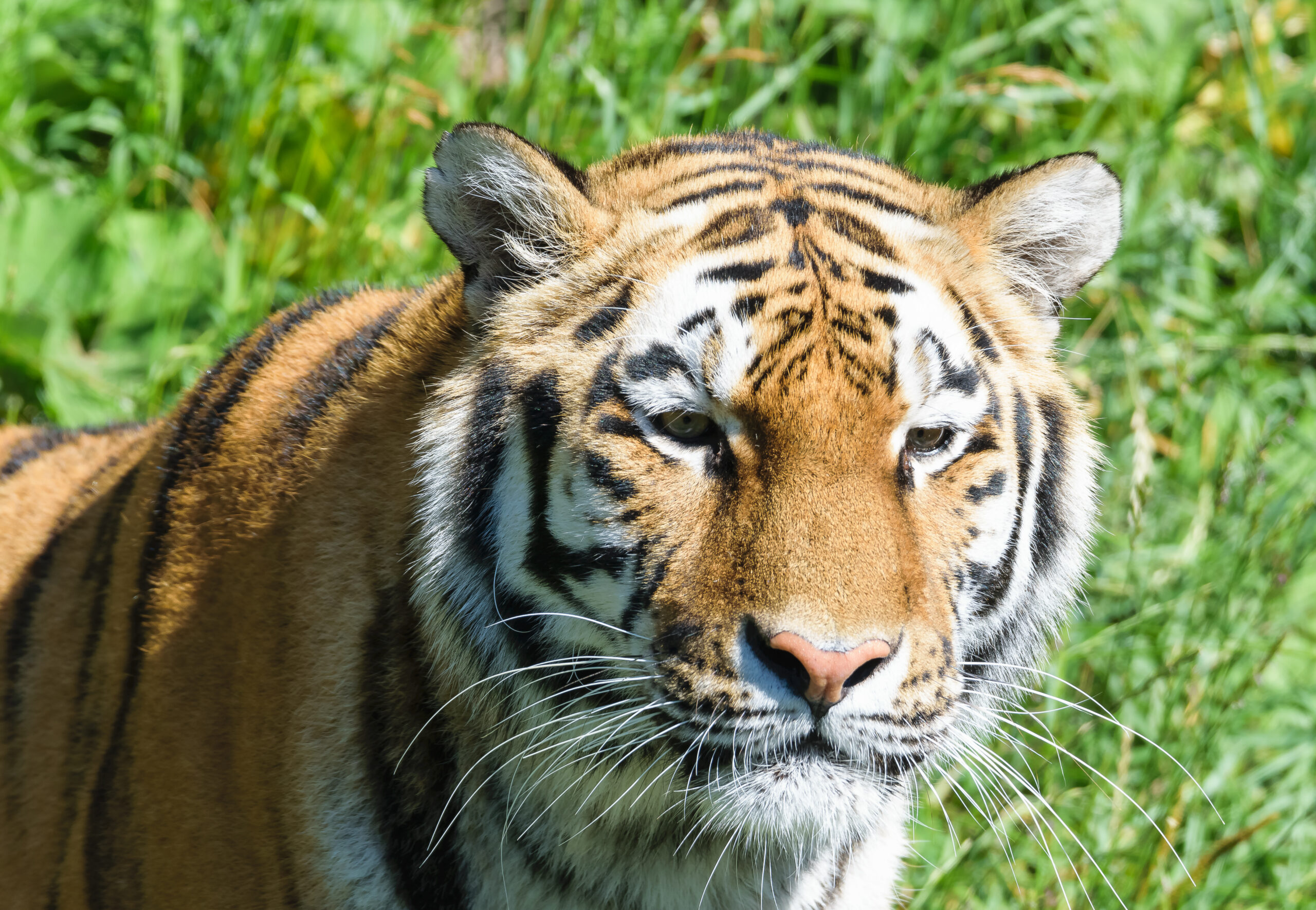 Photo Credit: Magnus Johansson / Wikimedia
In the heart of the Russian Far East, the Siberian tiger, known scientifically as Panthera tigris altaica, prowls through the snow-dusted forests, a living embodiment of power and elegance. With its striking orange coat adorned with bold black stripes, this magnificent big cat blends seamlessly into its surroundings, making it a master of stealth. Imagine a scene where the sun filters through the towering conifers, casting dappled shadows on the forest floor, while the Siberian tiger silently stalks its prey, muscles rippling beneath its thick fur. This solitary hunter is not just a symbol of strength; it captivates scientists and nature enthusiasts alike with its incredible adaptations for survival in one of the harshest climates on Earth.
The Siberian tiger is the largest of all tiger subspecies, with males weighing up to 350 kilograms, or about 770 pounds. Its robust body is designed for both power and agility, allowing it to leap great distances and sprint at impressive speeds. But what truly fascinates researchers is its role as a keystone species, meaning it plays a crucial part in maintaining the balance of its ecosystem. By controlling the populations of large herbivores, the Siberian tiger helps ensure the health of its forest home. As we explore the life of this extraordinary animal, we will uncover the challenges it faces, its unique behaviors, and the vital importance of conservation efforts to protect this majestic creature from the brink of extinction.
The Siberian tiger, known scientifically as Panthera tigris altaica, holds a prestigious position in the animal kingdom. As a member of the Felidae family, which includes all cats, this magnificent big cat is the largest of its kind. What sets the Siberian tiger apart is not just its impressive size, but also its striking orange coat adorned with dark stripes, which helps it blend into the forests and grasslands of its native habitat in the Russian Far East. This powerful predator is an apex hunter, meaning it sits at the top of the food chain, playing a crucial role in maintaining the balance of its ecosystem.
| Taxonomic Rank | Scientific Name | Meaning & Significance |
|---|---|---|
| Kingdom | Animalia | This term means “animals” in Latin, highlighting that Siberian tigers are multicellular organisms that consume organic material for energy. |
| Phylum | Chordata | Chordata refers to animals with a backbone, or spine, which is a key feature that supports their structure and movement. |
| Class | Mammalia | Mammalia signifies that these animals are warm-blooded and have fur or hair, along with mammary glands that allow females to nurse their young. |
| Order | Carnivora | Carnivora means “meat-eaters,” indicating that Siberian tigers primarily hunt and consume other animals for sustenance. |
| Family | Felidae | Felidae is the family of cats, which includes both big cats like tigers and smaller ones like domestic cats, all known for their retractable claws and keen senses. |
| Genus | Panthera | Panthera is a genus that includes the largest cats, such as lions and leopards, and is derived from the Greek word for “panther,” emphasizing their strength and agility. |
| Species | Panthera tigris altaica | The species name tigris comes from the Greek word “tigris,” which means “tiger,” while altaica refers to the Altai Mountains, highlighting the tiger’s geographical range. |
Understanding the Siberian tiger’s classification reveals much about its evolutionary journey. As a member of the Panthera genus, it shares a common ancestor with other big cats, showcasing adaptations that have allowed it to thrive in harsh environments. Its classification within the Carnivora order underscores its role as a skilled predator, while its place in the Felidae family highlights the shared traits that define all cats. This intricate web of relationships not only illustrates the tiger’s unique characteristics but also emphasizes the importance of conserving this majestic species and its habitat for future generations.
The evolutionary journey of the Siberian tiger, or Panthera tigris altaica, stretches back millions of years. This majestic big cat is a descendant of the common ancestor shared with all modern tigers, which roamed the Earth around 2 to 3 million years ago. As the climate changed and habitats shifted, these early felids adapted to their environments, leading to the emergence of distinct tiger subspecies, including the Siberian tiger, which evolved to thrive in the cold, harsh landscapes of Siberia.
The ancestors of the Siberian tiger were part of a larger group of big cats that began to diversify during the Pleistocene epoch, a time marked by ice ages and fluctuating climates. As these early tigers spread across Asia, they developed traits suited for survival in various environments. Over time, the Siberian tiger adapted to the frigid temperatures of its northern habitat, developing a thicker coat and larger body size compared to its southern relatives. These adaptations were crucial for hunting and surviving in the snowy forests and rugged terrains of Siberia.
The adaptations of the Siberian tiger have been key to its survival in one of the most challenging environments on Earth. Its thick fur and large size not only provide warmth but also enhance its hunting prowess, while powerful limbs and camouflage allow it to stalk prey effectively. These traits have enabled the Siberian tiger to remain a top predator in its ecosystem, showcasing the incredible resilience and adaptability of life in the wild.
The Siberian tiger is a breathtaking sight, embodying both power and grace. With a robust body that can weigh between 100 to 350 kilograms, or 220 to 770 pounds, this big cat is built for survival in the harsh climates of its native habitat. Its long, muscular limbs and broad shoulders give it an imposing presence, while its sleek, elongated body allows for agility and stealth. The Siberian tiger’s head is large and strong, featuring sharp, piercing eyes that seem to glow with intelligence and determination.
| Feature | Description |
|---|---|
| Size | Weight ranges from 100 kg to 350 kg (220 lbs to 770 lbs), making it one of the largest tiger subspecies. |
| Color | Rich orange fur with black stripes, providing excellent camouflage in the forested landscapes. |
| Skin Type | Thick fur that insulates against the cold, helping to maintain body heat in frigid temperatures. |
| Eyes | Bright, expressive eyes that can range from yellow to green, enhancing their night vision. |
| Whiskers | Long, sensitive whiskers that help detect nearby objects and navigate through dense underbrush. |
These striking features work together to create a formidable predator. The Siberian tiger’s thick fur not only keeps it warm during the freezing winters but also helps it blend into the dappled light of the forest, making it nearly invisible to both prey and potential threats. Its powerful build allows for explosive bursts of speed when chasing down prey, while its keen eyesight and sensitive whiskers enhance its hunting skills. Together, these adaptations make the Siberian tiger a master of its environment, perfectly equipped to thrive in one of the most challenging habitats on Earth.
The Siberian tiger roams the vast and enchanting landscapes of its home, where dense forests meet rugged mountains. Imagine towering trees draped in lush greenery, their leaves whispering in the cool breeze. This majestic big cat thrives in a world filled with the sounds of rustling leaves and distant animal calls, where sunlight filters through the canopy, creating a dappled pattern on the forest floor. The underbrush is thick, providing perfect cover for this stealthy predator as it stalks its prey.
The climate in these regions is quite varied, but Siberian tigers prefer areas with cold winters and mild summers. They are well-suited to endure harsh conditions, including heavy snowfall and freezing temperatures. The forests they inhabit are often mixed, featuring both coniferous trees, like pines, and deciduous trees that shed their leaves in winter. This combination of vegetation provides ample cover and hunting grounds, allowing the tigers to thrive in their natural environment.
Adaptation is key to the survival of the Siberian tiger in these challenging habitats. Their thick fur, which can grow up to several inches long, keeps them warm during the frigid winters. Additionally, their large paws act like snowshoes, helping them move silently through the snow. These adaptations, along with their keen senses and powerful muscles, make them expert hunters, perfectly equipped to navigate the dense forests and rugged terrains they call home.
The daily life of a Siberian tiger is a blend of stealth, strength, and solitude. These magnificent animals are primarily solitary, meaning they prefer to live and hunt alone rather than in groups. As the sun rises, a Siberian tiger begins its day with a stretch and a yawn, preparing for the hunt. They are most active during dawn and dusk, a behavior known as crepuscular activity. This timing allows them to take advantage of the low light to stalk their prey, which includes deer, boar, and other animals that roam their forested territory. Throughout the day, they may rest in the shade, conserving energy for their next hunt.
Socially, Siberian tigers are fascinating creatures. While they are solitary hunters, they do have a complex social structure. Each tiger has its own territory, which it marks with scent markings and scratch marks on trees. These markings communicate to other tigers that the area is occupied. When tigers do come together, it is usually for mating or a mother raising her cubs. The mother tiger is fiercely protective, teaching her young how to hunt and survive in the wild. Communication among tigers includes vocalizations like roars and growls, as well as body language, which helps them express their feelings and intentions.
| Behavior Type | Description |
|---|---|
| Activity Patterns | Siberian tigers are crepuscular, meaning they are most active during dawn and dusk, allowing them to hunt effectively in low light. |
| Social Structure | These tigers are solitary, each maintaining a territory that they mark to communicate their presence to others. |
| Communication Methods | They use vocalizations like roars and growls, along with scent markings and body language, to convey messages to other tigers. |
The behaviors of Siberian tigers are finely tuned for survival in their challenging environment. Their solitary nature allows them to be stealthy hunters, while their territorial instincts help reduce competition for food. By mastering the art of communication, they can avoid confrontations and ensure their young learn the skills necessary to thrive. Each day in the life of a Siberian tiger is a testament to the balance of power and grace, showcasing the incredible adaptations that have allowed them to reign as one of nature’s most formidable predators.
The Siberian tiger is a true carnivore, meaning it primarily eats meat. This powerful predator has a diet that mainly consists of large ungulates, or hoofed animals, which provide the energy it needs to thrive in its cold, forested habitat. With keen senses and incredible strength, the Siberian tiger employs stealth and patience to stalk its prey, often waiting for the perfect moment to pounce. This hunting strategy is essential for catching animals that can weigh as much as it does, ensuring that it can secure enough food to sustain its robust body.
| Dietary Aspect | Details |
|---|---|
| Diet Type | Carnivore |
| Favorite Foods | Deer, Cattle, Wild Boar |
| Prey Items | Large ungulates such as sika deer and roe deer |
| Hunting/Foraging Strategies | Stealthy stalking and ambush techniques |
This diet plays a crucial role in shaping the ecology of the Siberian tiger’s environment. By preying on large herbivores, these tigers help maintain the balance of their ecosystem, preventing overgrazing and promoting healthy plant growth. Their solitary hunting habits also mean they cover vast territories in search of food, which influences the distribution of prey species. As they roam their expansive home, the Siberian tiger not only fulfills its own needs but also contributes to the intricate web of life in the forests they inhabit.
The mating behavior of Siberian tigers is as captivating as it is essential for the survival of the species. Breeding season typically occurs in the winter months, from January to March. During this time, males and females engage in a series of vocalizations, scent markings, and displays of strength to attract one another. Once a pair has formed, they will mate multiple times over several days, ensuring the best chance of successful reproduction.
| Reproductive Aspect | Details |
|---|---|
| Gestation Period | Approximately 93 to 112 days |
| Litter Size | Average of 3 cubs |
| Age of Maturity | About 2 to 3 years |
| Name of Young | Cubs |
Once the cubs are born, the mother takes on the role of a dedicated caregiver. She provides warmth, protection, and nourishment, nursing her young for about two months. As the cubs grow, they begin to explore their surroundings, learning essential skills like hunting and climbing. The mother teaches them how to stalk prey and navigate their environment, preparing them for a life of independence. By the time they reach maturity at around two to three years old, these young tigers are ready to venture out on their own, continuing the legacy of this magnificent species in the wild.
The Siberian tiger, a top predator in its ecosystem, plays a crucial role in maintaining the balance of its food web. As a carnivore, it helps control the populations of large herbivores, such as deer and wild boar, which in turn affects the vegetation in its habitat. This intricate relationship highlights the importance of the Siberian tiger in its environment, where it stands at the apex of the food chain, ensuring that the natural order is upheld.
To survive these threats, Siberian tigers have developed several defensive behaviors and strategies. They are incredibly stealthy hunters, using their keen senses to detect danger and avoid confrontation. When faced with threats, they can be elusive, often retreating into dense underbrush or climbing trees to escape. Their powerful build and sharp claws also serve as formidable defenses if they need to protect themselves. By adapting to their environment and being cautious, Siberian tigers continue to navigate the challenges of their world, showcasing their resilience in the face of adversity.
A keystone species is an animal that has a disproportionately large impact on its environment relative to its abundance. In simpler terms, if you remove a keystone species, the entire ecosystem can change dramatically. The Siberian tiger, or Panthera tigris altaica, certainly qualifies as a keystone species. As a top predator, it plays a vital role in maintaining the balance of its ecosystem, influencing the populations of other species and the health of its habitat.
The ecological impact of the Siberian tiger is profound. By preying on large herbivores like deer, these tigers help regulate their populations. If deer numbers grow too high, they can overgraze vegetation, leading to habitat degradation. This not only affects the plants but also the many other animals that rely on those plants for food and shelter. The presence of Siberian tigers ensures that herbivore populations remain in check, promoting a healthier and more diverse ecosystem.
Moreover, the Siberian tiger’s hunting habits create opportunities for scavengers. When a tiger makes a kill, it often leaves behind remains that other animals, such as vultures and jackals, can feed on. This scavenging behavior supports a variety of species, contributing to the overall biodiversity of the area. Additionally, the tiger’s role as a top predator helps maintain the balance of the food web, ensuring that no single species dominates the landscape.
If the Siberian tiger were to disappear, the consequences would be severe. Without this apex predator, herbivore populations could explode, leading to overgrazing and the destruction of plant life. This would not only harm the vegetation but also disrupt the entire food web, affecting countless other species that depend on a balanced ecosystem. The loss of the Siberian tiger would echo through the forest, altering the landscape and diminishing the rich tapestry of life that thrives in its shadow.
The Siberian tiger, or Panthera tigris altaica, occupies a vital ecological niche as a top predator in its habitat. This majestic big cat roams the dense forests of the Russian Far East, where it plays a crucial role in maintaining the balance of its ecosystem. By preying on large herbivores, such as deer, the Siberian tiger helps regulate their populations, ensuring that vegetation remains healthy and diverse. This balance is essential for the overall health of the forest, as it allows various plant species to thrive, which in turn supports a wide range of other wildlife.
| Ecosystem Service | Impact |
|---|---|
| Population Control | Regulates herbivore numbers, preventing overgrazing. |
| Habitat Maintenance | Encourages plant diversity by allowing various species to flourish. |
| Food Source | Provides sustenance for scavengers and smaller predators. |
| Genetic Diversity | Maintains healthy populations of prey species through natural selection. |
The influence of the Siberian tiger extends beyond its immediate hunting practices. For instance, when tigers hunt and take down large prey, they create opportunities for scavengers like vultures and hyenas to feed on the remains. This not only supports these scavenger species but also helps clean up the environment, preventing the spread of disease. Additionally, by controlling herbivore populations, tigers indirectly promote a healthier forest ecosystem, allowing various plant species to thrive and providing habitats for countless other animals, from insects to birds.
The broader ecological importance of the Siberian tiger cannot be overstated. As a keystone species, its presence is essential for the health of the entire ecosystem. When tigers thrive, the balance of life in their habitat flourishes, creating a rich tapestry of biodiversity. Protecting these magnificent cats is not just about saving a single species; it is about preserving the intricate web of life that depends on their existence. By ensuring the survival of the Siberian tiger, we also safeguard the future of the forests and the myriad of creatures that call them home.
In the intricate web of life, symbiosis refers to the close relationships between different species that can benefit one or both parties involved. These ecological partnerships can take various forms, including mutualism, where both species gain advantages; commensalism, where one benefits while the other is neither helped nor harmed; and parasitism, where one species benefits at the expense of the other. The Siberian tiger, a majestic predator, interacts with various species in its habitat, showcasing the complexity of these relationships.
| Species/Type | Relationship Type | Description |
|---|---|---|
| Deer (e.g., sika deer) | Predatory | The Siberian tiger preys on deer, helping to control their population and maintain a balanced ecosystem. |
| Birds (e.g., scavenger birds) | Commensal | Scavenger birds often follow tigers to feed on leftover carcasses, benefiting from the tiger’s hunting without affecting the tiger. |
| Parasites (e.g., ticks) | Parasitic | Ticks can attach to Siberian tigers, feeding on their blood and potentially harming their health. |
These relationships have evolved over time, shaped by the needs and behaviors of the species involved. The Siberian tiger’s role as a top predator is crucial for maintaining the health of its ecosystem, as it helps regulate prey populations. Meanwhile, the interactions with scavenger birds illustrate how different species can coexist and benefit from one another. Understanding these connections not only highlights the tiger’s importance in its habitat but also emphasizes the delicate balance of nature, where every species plays a part in the grand tapestry of life.
The Siberian tiger, a symbol of strength and beauty, is not just a big cat; it’s a fascinating creature with many surprising traits that capture the imagination. Let’s dive into some intriguing facts about this magnificent animal that will surely amaze nature enthusiasts of all ages.
The relationship between Siberian tigers and humanity is steeped in history and cultural significance. For centuries, these majestic big cats have inspired awe and reverence in various cultures, particularly in Asia. In folklore and art, the Siberian tiger often symbolizes strength, courage, and protection. Ancient tales depict them as guardians of the forest, embodying the wild spirit of nature. However, this relationship has not always been harmonious. As human populations expanded, encounters with these powerful predators became more frequent, leading to both admiration and fear.
Today, the interactions between Siberian tigers and humans are complex and multifaceted. Conservation efforts are underway to protect these magnificent animals from extinction, as their numbers have dwindled due to habitat loss and poaching. Organizations work tirelessly to create protected areas and promote awareness about the importance of preserving their natural habitats. Yet, conflicts still arise, particularly when tigers venture into human settlements in search of food. This can lead to dangerous encounters, prompting some communities to view tigers as threats rather than symbols of beauty. Unlike domesticated animals, Siberian tigers cannot be tamed, and their wild nature remains a challenge for coexistence.
The future of the relationship between Siberian tigers and humanity hinges on our ability to adapt and find common ground. As awareness grows about the ecological importance of these big cats, there is hope for a more harmonious coexistence. By prioritizing conservation and respecting the wild nature of tigers, we can ensure that future generations will not only hear stories of these magnificent creatures but also witness their majesty in the wild. The journey ahead will require collaboration, understanding, and a commitment to preserving the delicate balance of our shared ecosystems.
The Siberian tiger, or Panthera tigris altaica, is currently classified as Endangered by the International Union for Conservation of Nature (IUCN). This majestic big cat has faced significant challenges over the years, leading to a decline in its population. However, recent conservation efforts have shown promise, with estimates suggesting that there are now around 500 individuals left in the wild. While this number reflects a slight increase, the overall trend remains precarious, as habitat loss and poaching continue to threaten their survival.
| Conservation Factor | Status/Details |
|---|---|
| IUCN Status | Endangered |
| Population Estimates | Approximately 500 individuals |
| Trend Direction | Slowly increasing, but still at risk |
The main threats to the Siberian tiger are deeply intertwined with human activities. Habitat destruction, primarily due to logging and agricultural expansion, has significantly reduced the areas where these tigers can roam and hunt. Additionally, poaching remains a critical issue, as tigers are hunted for their beautiful fur and body parts, which are often used in traditional medicine. The decline of their prey species, such as deer and wild boar, further complicates their survival, making it increasingly difficult for these magnificent cats to find enough food.
Despite these challenges, there is hope for the Siberian tiger thanks to ongoing conservation efforts. Various organizations and governments are working tirelessly to protect their habitats and enforce anti-poaching laws. Protected areas, such as national parks and reserves, have been established to provide safe havens for these tigers. Community engagement and education programs are also crucial, as they help local people understand the importance of preserving this iconic species. With continued dedication and support, the future of the Siberian tiger can be brighter, allowing this incredible animal to thrive once more in its natural home.
| Question | Answer |
|---|---|
| What is the habitat of the Siberian Tiger? | Siberian Tigers primarily live in dense tropical forests, which provide them with the cover they need to hunt and raise their young. These forests are often found in the cold regions of Russia and parts of China, where the tigers can thrive in the chilly climate. |
| What do Siberian Tigers eat? | As carnivores, Siberian Tigers mainly hunt large prey such as deer, wild boar, and even smaller animals like rabbits. Their powerful bodies and sharp claws make them excellent hunters, allowing them to stalk and ambush their prey effectively. |
| How do Siberian Tigers behave in the wild? | Siberian Tigers are solitary animals, meaning they prefer to live and hunt alone rather than in groups. They are also territorial, marking their territory with scent markings to warn other tigers to stay away. |
| How do Siberian Tigers reproduce? | Female Siberian Tigers typically give birth to a litter of two to four cubs after a gestation period of about 93 to 112 days. The cubs are born blind and rely on their mother for food and protection during their early months. |
| What are the main threats to Siberian Tigers? | Siberian Tigers face several threats, including habitat loss due to deforestation and poaching for their beautiful fur and body parts. Conservation efforts are crucial to protect these magnificent creatures and their natural habitats. |
| What are some interesting characteristics of Siberian Tigers? | Siberian Tigers are the largest of all tiger subspecies, with males weighing up to 600 pounds! They have thick fur and a layer of fat that helps them survive in cold climates, making them well-adapted to their environment. |
| How do Siberian Tigers communicate? | Siberian Tigers communicate through a variety of vocalizations, including roars, growls, and chuffs. They also use scent markings and visual signals to convey their presence and establish territory. |