Taxonomy & Classification
- Kingdom
- Animalia
- Phylum
- Arthropoda
- Order
- Radiodonta
- Family
- Anomalocarididae
- Genus
- Anomalocaris
- Species
- Anomalocaris

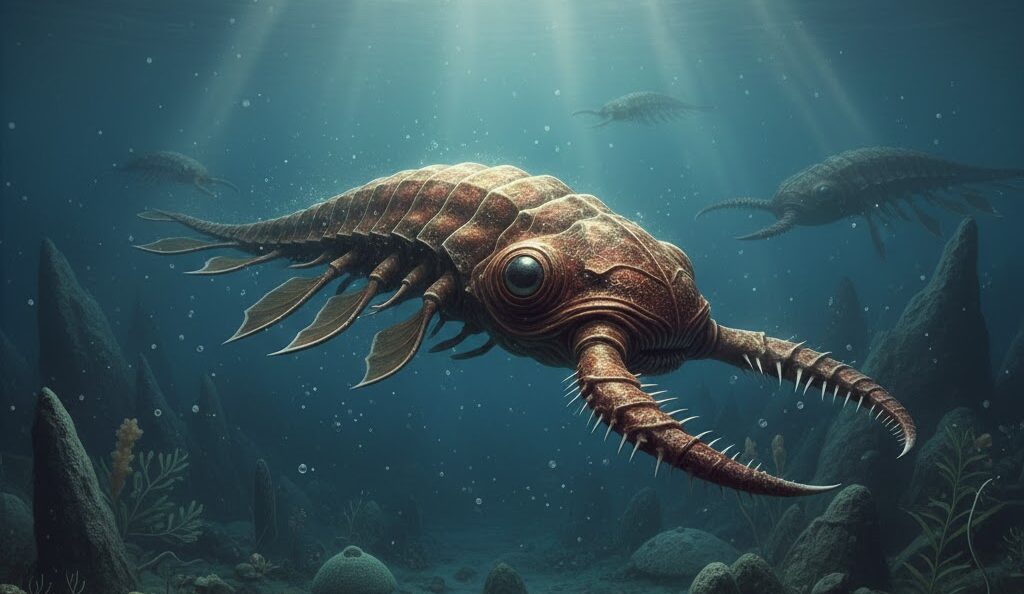 Photo Credit: AnimalsDiscovered
In the warm, shallow seas of the Cambrian period, around 520 million years ago, a remarkable predator named Anomalocaris, meaning “abnormal shrimp,” glided through the water with grace and power. Imagine a creature that could grow up to three feet long, with a streamlined body, large compound eyes, and a pair of spiny appendages that it used to capture its prey. This ancient marvel was not just a sight to behold; it was a key player in the early marine ecosystem, influencing the lives of countless other organisms in its vibrant underwater world.
Anomalocaris is a source of fascination for scientists and nature enthusiasts alike, as it offers a glimpse into a time when life was just beginning to diversify. Its unique feeding adaptations, including a mouth that resembled a circular saw, allowed it to feast on soft-bodied creatures that swam in the Cambrian seas. As it navigated through colorful corals and strange algae, Anomalocaris played a crucial role in shaping its environment, acting as a top predator in a rapidly evolving ecosystem. The study of this extraordinary animal not only helps us understand the past but also sheds light on the complex relationships that have existed in the oceans for millions of years.
Anomalocaris is a captivating figure in the tree of life, sitting within the phylum Arthropoda, which includes familiar animals like insects, spiders, and crustaceans. This ancient marine creature, which lived over 500 million years ago during the Cambrian period, is often celebrated for its unique body structure and predatory lifestyle. With its large, compound eyes and a pair of spiny appendages, Anomalocaris was a top predator of its time, showcasing an evolutionary design that was both effective and innovative. Its classification not only highlights its distinct features but also provides insight into the early development of complex life forms.
| Taxonomic Rank | Scientific Name | Meaning & Significance |
|---|---|---|
| Kingdom | Animalia | This name signifies that Anomalocaris belongs to the broad group of multicellular organisms known as animals, which are characterized by their ability to move and respond to their environment. |
| Phylum | Arthropoda | Meaning “jointed legs,” this name reflects the defining feature of arthropods, which have segmented bodies and jointed appendages, allowing for a wide range of movement. |
| Order | Radiodonta | This term means “radiating teeth,” referring to the unique feeding structures of Anomalocaris and its relatives, which helped them capture prey in the ancient oceans. |
| Family | Anomalocarididae | This family name is derived from the genus Anomalocaris, indicating a close relationship among these early marine predators, all sharing similar anatomical features. |
| Genus | Anomalocaris | The name translates to “unusual shrimp,” highlighting its distinct appearance compared to modern crustaceans, with its large size and unique body plan. |
The classification of Anomalocaris reveals much about its evolutionary history and the environment in which it thrived. As one of the earliest known members of the arthropods, it showcases the beginnings of complex life forms that would eventually lead to the vast diversity of species we see today. Its unique adaptations, such as its specialized feeding appendages and advanced vision, suggest that Anomalocaris played a crucial role in the Cambrian ecosystem, influencing the evolutionary paths of many other organisms. Understanding where it fits in the tree of life helps us appreciate the intricate web of connections that define the history of life on Earth.
Anomalocaris roamed the oceans during the Cambrian period, around 520 million years ago. This was a time when life was just beginning to diversify dramatically, leading to the explosion of various forms of marine life. As one of the earliest large predators, Anomalocaris played a crucial role in shaping the ecosystems of its time, showcasing the evolutionary innovations that would pave the way for future marine animals.
Anomalocaris is part of a lineage that traces back to simple, soft-bodied organisms. Its ancestors were likely small, worm-like creatures that lived in the ocean, feeding on microscopic plankton. Over millions of years, these early forms underwent significant changes, leading to the development of more complex body structures. Anomalocaris itself evolved to have a streamlined body, large compound eyes, and specialized appendages for capturing prey. These adaptations marked a major transition from passive feeding to active predation, allowing it to thrive in a competitive environment.
These evolutionary adaptations were vital for Anomalocaris’s survival in a rapidly changing world. Its keen eyesight and specialized appendages allowed it to become an effective hunter, while its streamlined body facilitated swift movement through the water. As a result, Anomalocaris not only thrived in its environment but also influenced the evolutionary paths of many other marine organisms, leaving a lasting legacy in the history of life on Earth.
Anomalocaris presents an awe-inspiring silhouette that captures the imagination of anyone who gazes upon its ancient form. Imagine a creature that could grow up to three feet long, with a streamlined body that glides through the water like a living torpedo. Its head is adorned with a pair of large, compound eyes, giving it a panoramic view of its surroundings. The body is segmented, resembling a series of overlapping plates, which not only adds to its striking appearance but also provides flexibility and protection. With its long, spiny appendages extending from the front, Anomalocaris looks like a prehistoric predator ready to seize its next meal.
| Feature | Description |
|---|---|
| Size | Up to 3 feet long |
| Color | Likely a mix of greens and browns, blending with the ocean floor |
| Skin Type | Hard exoskeleton, providing protection and support |
| Eyes | Large, compound eyes for excellent vision |
| Appendages | Long, spiny limbs for grasping prey |
These features work in harmony to make Anomalocaris a formidable predator of its time. The size and streamlined shape allow it to swim swiftly through the ancient seas, while the hard exoskeleton protects it from potential threats. Its large eyes enhance its ability to spot prey from a distance, and the spiny appendages are perfectly designed for capturing and holding onto slippery creatures. Together, these adaptations not only showcase the beauty of evolution but also highlight the survival strategies that helped Anomalocaris thrive in a world teeming with life.
Anomalocaris thrived in the warm, shallow seas of the Cambrian period, a time when the oceans were teeming with life. Picture a vibrant underwater world filled with colorful corals, strange algae, and a variety of other marine organisms. These ancient seas were rich in nutrients, providing a perfect environment for Anomalocaris to hunt and flourish. With its agile body gliding through the water, it navigated this bustling habitat, making it a top predator of its time.
The climate of Anomalocaris’s habitat was warm and stable, with temperatures that supported a diverse range of marine life. These shallow seas were often well-lit, allowing sunlight to penetrate and fuel the growth of photosynthetic organisms. The waters were likely calm, with gentle currents that helped distribute nutrients throughout the ecosystem. This environment not only provided food but also a safe space for Anomalocaris to thrive and reproduce.
Anomalocaris was well-adapted to its specific habitat, showcasing features that made it an efficient predator. Its large, compound eyes offered excellent vision, allowing it to spot prey in the bustling waters. The unique structure of its body, with specialized appendages, helped it capture and consume other marine animals. These adaptations were crucial for survival in a competitive environment, enabling Anomalocaris to dominate the Cambrian seas and play a vital role in the early history of life on Earth.
Anomalocaris led a life filled with activity in the warm, shallow seas of the Cambrian period. Each day began with the gentle currents of the ocean, where this ancient predator would glide through the water, using its unique, paddle-like appendages to navigate. Anomalocaris was a skilled hunter, often searching for soft-bodied prey like trilobites and other small marine animals. With its large, compound eyes, it could spot movement from a distance, allowing it to stalk its meals effectively. As the sun filtered through the water, illuminating the vibrant underwater landscape, Anomalocaris would engage in a variety of behaviors, from hunting to resting on the ocean floor.
Socially, Anomalocaris exhibited intriguing group dynamics. While primarily a solitary hunter, it was not uncommon to see these creatures gathering in small groups, especially during feeding frenzies. This behavior likely provided advantages, as they could work together to corner prey or defend against larger predators. Communication among Anomalocaris may have involved subtle movements and changes in body posture, signaling to others about food sources or potential threats. These interactions helped them navigate their environment more effectively, ensuring they could thrive in a world filled with both opportunities and dangers.
| Behavior Type | Description |
|---|---|
| Hunting | Anomalocaris used its large eyes and swift movements to track and capture prey, primarily soft-bodied animals. |
| Group Feeding | Occasionally gathered in small groups to hunt, increasing their chances of successfully capturing prey. |
| Communication | Utilized body movements and postures to signal to others, possibly indicating food sources or threats. |
| Resting | Spent time resting on the ocean floor, conserving energy between hunts and social interactions. |
The behaviors of Anomalocaris were finely tuned to ensure its survival in a competitive and ever-changing environment. By hunting effectively and occasionally collaborating with others, it maximized its chances of finding food. The ability to communicate and respond to the presence of other creatures allowed Anomalocaris to navigate the complexities of its underwater world. These daily activities not only supported its own life but also contributed to the rich tapestry of life in the Cambrian seas, showcasing the interconnectedness of ancient ecosystems.
Anomalocaris was a fierce carnivore, meaning it primarily ate other animals. This ancient predator had a taste for soft-bodied creatures that swam in the Cambrian seas. With its unique feeding adaptations, Anomalocaris was well-equipped to hunt and consume its prey, making it one of the top predators of its time. Its large, compound eyes provided excellent vision, allowing it to spot potential meals from a distance.
| Dietary Aspect | Details |
|---|---|
| Diet Type | Carnivore |
| Favorite Foods | Soft-bodied marine animals, such as trilobites and small mollusks |
| Prey Items | Trilobites, small arthropods, and other early marine life |
| Hunting/Foraging Strategies | Used its large, spiny appendages to grasp and immobilize prey, while its powerful mouth could crush shells |
The diet of Anomalocaris played a crucial role in shaping its ecological niche. As a top predator, it helped maintain the balance of marine life in its environment. By preying on smaller animals, Anomalocaris influenced the population dynamics of various species, ensuring that no single group became too dominant. This daily routine of hunting and foraging not only sustained Anomalocaris but also contributed to the rich tapestry of life in the Cambrian oceans, showcasing the interconnectedness of ancient ecosystems.
Mating behavior in Anomalocaris is a captivating aspect of its life cycle. During the breeding season, which likely coincided with warmer water temperatures, these ancient creatures would engage in elaborate courtship displays. Males may have used their impressive appendages to attract females, showcasing their strength and vitality. This period of mating was crucial for ensuring the continuation of their species in the bustling marine environment of the Cambrian seas.
| Reproductive Aspect | Details |
|---|---|
| Gestation Period | Unknown, but likely several weeks |
| Litter Size | Estimated to be around 20-30 offspring |
| Age of Maturity | Approximately 1-2 years |
| Name of Young | Larvae |
Once the eggs are laid, the young Anomalocaris, known as larvae, begin their journey in the vast ocean. These tiny creatures would drift with the currents, feeding on microscopic organisms as they grew. Parental care in Anomalocaris is not well-documented, but it is believed that the young were left to fend for themselves after hatching. As they matured, they would gradually develop into the impressive adults that once ruled the Cambrian seas, showcasing the incredible adaptability and resilience of life in ancient oceans.
Anomalocaris held a significant position in the Cambrian food web, acting as a top predator in its underwater realm. With its impressive size and specialized feeding adaptations, it hunted smaller marine animals, helping to maintain the balance of life in the ancient oceans. However, being at the top of the food chain did not mean it was free from danger. Like all creatures, Anomalocaris faced threats from various predators and environmental challenges.
To survive these threats, Anomalocaris developed several defensive behaviors. Its large, armored body provided a tough shield against attacks, while its swift swimming abilities allowed it to escape predators quickly. Additionally, Anomalocaris could use its unique appendages to create a cloud of sediment, obscuring its escape route. These strategies helped this ancient marvel navigate the dangers of its time, ensuring its place in the vibrant tapestry of Cambrian life.
A keystone species is a vital part of its ecosystem, playing a crucial role in maintaining the structure and balance of that environment. These species have a disproportionately large impact on their surroundings compared to their abundance. Anomalocaris, an ancient predator from the Cambrian period, qualifies as a keystone species due to its significant role in shaping the marine ecosystems of its time.
Anomalocaris was a top predator in the Cambrian seas, meaning it sat at the top of the food chain. Its presence helped regulate the populations of smaller marine animals, which in turn influenced the overall health of the ecosystem. For example, by preying on soft-bodied creatures, Anomalocaris prevented any one species from becoming too dominant. This balance allowed for a diverse array of life forms to thrive in the shallow, warm waters of the Cambrian period.
Moreover, Anomalocaris likely played a role in nutrient cycling. As it consumed prey, it contributed to the flow of energy through the food web. When it died, its body would decompose, returning essential nutrients to the environment, which supported the growth of plants and other organisms. This process is vital for maintaining the productivity of an ecosystem.
If Anomalocaris had disappeared from its ecosystem, the consequences would have been profound. Without this top predator, smaller marine animals could have multiplied unchecked, leading to overgrazing of available resources. This imbalance would likely have resulted in a decline in biodiversity, as certain species would dominate while others struggled to survive. The entire marine ecosystem could have collapsed, demonstrating just how crucial Anomalocaris was to the health and stability of its ancient world.
Anomalocaris, a fascinating predator from the Cambrian period, played a crucial role in shaping its marine ecosystem. As a top predator, it occupied a unique ecological niche, influencing the population dynamics of various smaller marine organisms. By preying on soft-bodied creatures, Anomalocaris helped maintain a balance in the food web, ensuring that no single species dominated the environment. This balance allowed for greater biodiversity, as different species could thrive without being overconsumed.
| Ecosystem Service | Impact |
|---|---|
| Predation | Controls populations of smaller marine organisms, preventing overpopulation. |
| Nutrient Cycling | Contributes to the breakdown of organic matter, enriching the ocean floor. |
| Habitat Structuring | Influences the distribution of species by creating a dynamic environment. |
Anomalocaris’s influence extended beyond mere predation. By feeding on various soft-bodied animals, it not only kept their populations in check but also encouraged the evolution of defensive adaptations in prey species. This evolutionary arms race led to a diverse array of life forms, as prey developed new ways to evade capture. Additionally, the remains of Anomalocaris and its prey contributed to the nutrient cycling in the ocean, enriching the seafloor and supporting a variety of other organisms.
The broader ecological importance of Anomalocaris cannot be overstated. As a keystone species, it played a vital role in maintaining the structure and balance of its ecosystem. The interactions it fostered among species helped pave the way for the complex marine environments we see today. By understanding the impact of Anomalocaris, we gain insight into the intricate web of life that has evolved over millions of years, reminding us of the delicate balance that sustains our planet’s biodiversity.
In the intricate web of life, symbiosis refers to the close interactions between different species, which can take on various forms. These relationships can be mutualistic, where both species benefit, parasitic, where one benefits at the expense of the other, or commensal, where one benefits while the other is neither helped nor harmed. Understanding these connections helps us appreciate the delicate balance of ecosystems, even those from ancient times, like the Cambrian period when Anomalocaris thrived.
| Species/Type | Relationship Type | Description |
|---|---|---|
| Small Cambrian organisms | Mutualistic | Anomalocaris may have provided protection to smaller organisms while benefiting from their presence as a food source. |
| Other marine predators | Commensal | While hunting, Anomalocaris might have inadvertently stirred up prey for other predators, benefiting them without affecting itself. |
| Soft-bodied prey | Parasitic | As a carnivore, Anomalocaris preyed on soft-bodied creatures, leading to their decline in population. |
The evolution of these relationships likely shaped the survival strategies of Anomalocaris and its contemporaries. By forming mutualistic bonds, Anomalocaris could enhance its hunting efficiency while providing safety to smaller species. Commensal interactions may have allowed it to thrive in a competitive environment, while its predatory nature kept the populations of soft-bodied organisms in check. These dynamic relationships illustrate how interconnected life can be, even in the depths of ancient oceans.
Anomalocaris is a captivating glimpse into the distant past, showcasing the incredible diversity of life that existed over 500 million years ago. This ancient predator not only dominated its environment but also played a crucial role in the evolution of marine ecosystems.
Anomalocaris, a fascinating creature from the Cambrian period, has captured the imagination of scientists and enthusiasts alike. Although it lived over 500 million years ago, its discovery has sparked interest in how ancient life forms relate to humanity. In various cultures, Anomalocaris has been depicted in art and literature, symbolizing the mysteries of evolution and the deep-sea world. Its unique features, like large compound eyes and spiny appendages, have made it a subject of study, helping us understand the early development of complex life on Earth.
Today, our interactions with Anomalocaris are primarily through scientific research and education. While we cannot directly interact with this extinct species, studying its fossils provides insights into the evolution of marine ecosystems. Researchers analyze its anatomy and behavior to draw parallels with modern marine life, enhancing our understanding of biodiversity. Additionally, Anomalocaris serves as a reminder of the importance of conserving marine habitats, as many species today face threats from pollution and climate change. By learning about ancient creatures, we can better appreciate the delicate balance of our oceans and the need to protect them.
As we look to the future, the relationship between humanity and the legacy of Anomalocaris will continue to evolve. By studying this ancient predator, we gain valuable lessons about resilience and adaptation in the face of environmental changes. The fascination with Anomalocaris not only enriches our understanding of the past but also inspires a commitment to preserving the rich tapestry of life that exists today. As we explore the depths of our oceans and the history of life on Earth, we are reminded of our responsibility to protect the natural world for generations to come.
Anomalocaris, the ancient marine predator from the Cambrian period, is classified as extinct. This means that there are no living individuals of this species today. The extinction of Anomalocaris marks the end of a remarkable chapter in Earth’s history, as it was once a dominant force in its underwater ecosystem. While we can only speculate about its population trends during its time, the fossil record indicates that it thrived in the warm, shallow seas of its era.
| Conservation Factor | Status/Details |
|---|---|
| IUCN Status | Extinct |
| Population Estimates | Not applicable |
| Trend Direction | Declining |
The main threats that led to the extinction of Anomalocaris are not entirely clear, but they likely included significant environmental changes. During the Cambrian period, the oceans underwent dramatic shifts, including changes in temperature and sea levels. These alterations could have affected the availability of food sources and suitable habitats for Anomalocaris. Additionally, competition with other emerging species may have played a role in its decline.
Despite its extinction, the legacy of Anomalocaris continues to inspire scientists and paleontologists. Research into its life and environment helps us understand the evolutionary history of marine life. While there are no direct conservation efforts for Anomalocaris, studying its fossils and the ecosystems it inhabited can provide valuable insights into how modern species might adapt to changing environments. The story of Anomalocaris reminds us of the importance of preserving biodiversity today, as we learn from the past to protect the future of our planet’s wildlife.
| Question | Answer |
|---|---|
| What is Anomalocaris? | Anomalocaris is an extinct genus of marine creature that lived during the Cambrian period, around 500 million years ago. It is known for its unique body structure, which included large, compound eyes and a pair of spiny appendages used for capturing prey. |
| Where did Anomalocaris live? | Anomalocaris inhabited the oceans of the Cambrian period, which covered much of the Earth. Fossils have been found in various locations, including Canada and China, indicating it thrived in warm, shallow seas. |
| What did Anomalocaris eat? | Anomalocaris was a carnivore, meaning it primarily ate other animals. Its diet likely consisted of soft-bodied creatures like trilobites and other small marine organisms, which it captured with its specialized appendages. |
| How did Anomalocaris behave? | Anomalocaris is believed to have been an active predator, using its speed and agility to hunt for food. Its large eyes suggest it had good vision, which would have helped it spot prey in the water. |
| How did Anomalocaris reproduce? | While we don't have direct evidence of Anomalocaris reproduction, it likely laid eggs, similar to many marine animals today. The young would have hatched and grown in the ocean, facing many challenges as they developed. |
| What were the threats to Anomalocaris? | As a top predator of its time, Anomalocaris faced threats from larger marine animals and environmental changes. However, it eventually became extinct, likely due to a combination of factors, including competition and habitat changes. |
| What is an interesting characteristic of Anomalocaris? | Anomalocaris is fascinating because it had a unique body plan that set it apart from other creatures of its time. Its large, segmented body and specialized feeding appendages make it one of the most recognizable and studied organisms from the Cambrian period. |