Taxonomy & Classification
- Kingdom
- Animalia
- Phylum
- Chordata
- Class
- Mammalia
- Order
- Pilosa
- Family
- Bradypodidae
- Genus
- Bradypus
- Species
- Choloepus Hoffmani

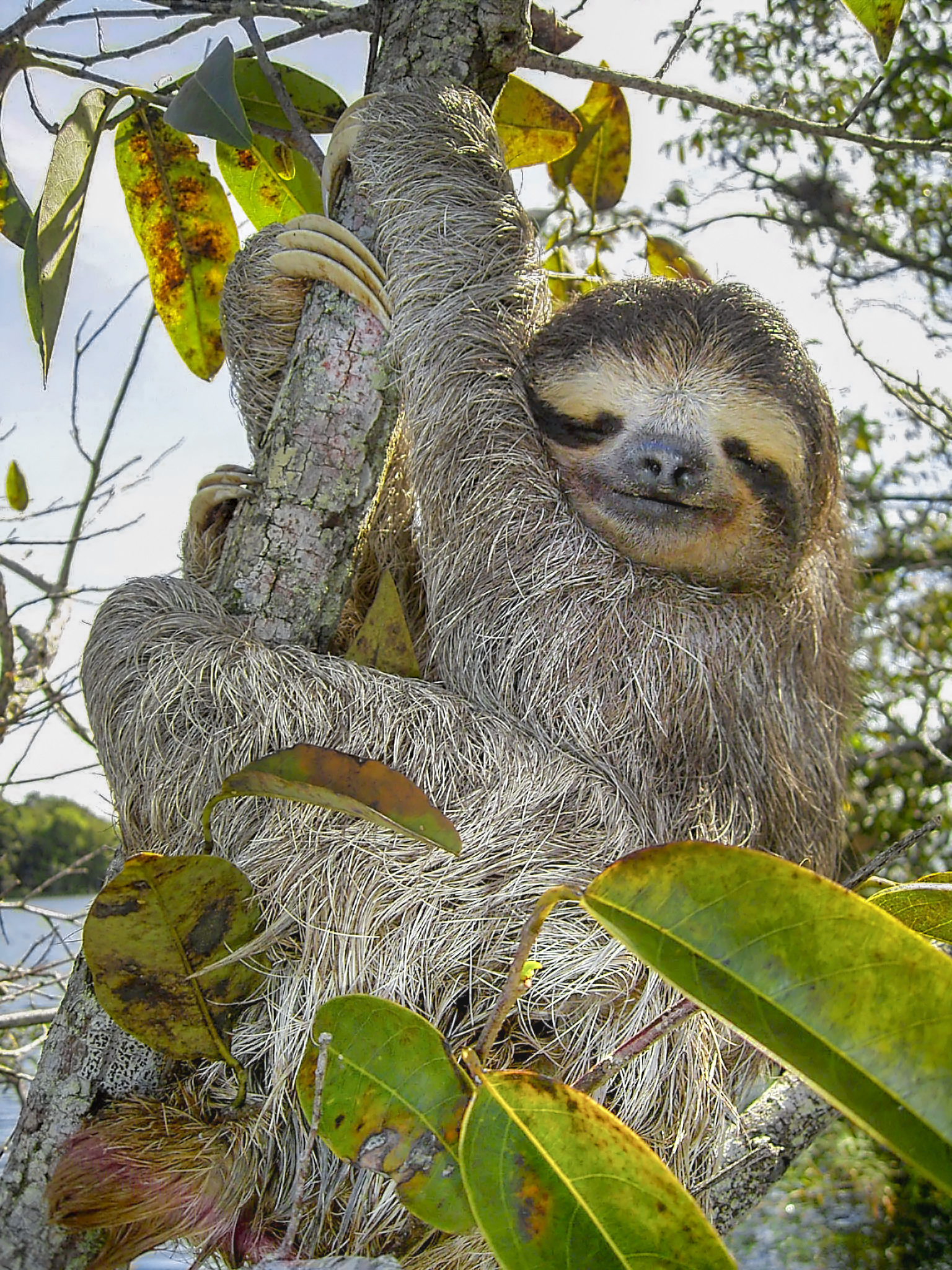 Photo Credit: Archaeodontosaurus / Wikimedia Commons
In the heart of the lush tropical rainforests of Central and South America, the three-toed sloth, known scientifically as Bradypus, hangs gracefully from the branches, embodying a world of tranquility. With its long limbs and shaggy fur, this gentle creature seems to blend seamlessly into the vibrant green canopy, where sunlight filters through the leaves, casting dappled shadows on the forest floor below. The sloth’s large, expressive eyes and slow, deliberate movements create an enchanting image, inviting both scientists and nature enthusiasts to marvel at its unique lifestyle.
What makes the sloth so captivating is not just its leisurely pace but also its remarkable adaptations to life in the trees. These animals are built for a life spent upside down, with specialized claws that allow them to grip branches securely while they munch on tender leaves. Their slow metabolism, which means they process food at a leisurely rate, is a fascinating aspect that intrigues researchers. This slow lifestyle is not just a quirk; it helps them conserve energy in an environment where food can be scarce. As we explore the world of sloths, we will uncover their intriguing behaviors, their vital role in the ecosystem, and the challenges they face in a rapidly changing world.
Sloths are truly captivating animals that hold a special place in the tree of life. They belong to the class Mammalia, which means they are warm-blooded vertebrates that nurse their young with milk. Sloths are part of the order Pilosa, a group that includes both sloths and anteaters. What makes sloths particularly interesting is their slow-paced lifestyle and their unique adaptations for life in the trees. With their long limbs and curved claws, they are perfectly designed for hanging upside down, a behavior that not only helps them evade predators but also allows them to munch on leaves high above the ground.
| Taxonomic Rank | Scientific Name | Meaning & Significance |
|---|---|---|
| Kingdom | Animalia | This name comes from the Latin word “animalis,” meaning “having breath,” highlighting the living, breathing nature of these organisms. |
| Phylum | Chordata | Derived from the Latin “chorda,” meaning “string,” this refers to the notochord, a flexible rod that supports the body in all chordates during some stage of development. |
| Class | Mammalia | This term comes from “mamma,” the Latin word for “breast,” emphasizing the defining characteristic of mammals: the ability to produce milk for their young. |
| Order | Pilosa | From the Latin “pilus,” meaning “hair,” this name reflects the hairy appearance of sloths and anteaters, which helps them blend into their leafy habitats. |
| Family | Bradypodidae | This family name comes from the Greek “bradus,” meaning “slow,” and “pous,” meaning “foot,” aptly describing the slow-moving nature of sloths. |
| Genus | Bradypus | Also derived from the Greek “bradus,” this genus name emphasizes the slow pace of these animals, which is a key aspect of their lifestyle. |
Understanding the taxonomic classification of sloths reveals much about their evolutionary journey. Their slow metabolism and specialized adaptations for a tree-dwelling life have allowed them to thrive in their unique ecological niche. By examining their place in the animal kingdom, we can appreciate how these gentle giants have evolved over millions of years to become masters of their arboreal world, showcasing the incredible diversity of life on our planet.
The evolutionary journey of sloths stretches back millions of years, weaving through the tapestry of time from the late Paleocene epoch, around 65 million years ago, to the present day. These slow-moving mammals have adapted to their lush, arboreal habitats in Central and South America, evolving from ancient ancestors that roamed the earth long before modern sloths took shape. Their story is one of survival, marked by significant changes that allowed them to thrive in a world filled with challenges.
The earliest sloth-like creatures were part of a group known as the Xenarthra, which also includes anteaters and armadillos. These ancestors were much larger and more diverse than today’s sloths, with some species weighing over a ton! As time passed, they began to adapt to a life spent in trees, leading to the development of their signature slow movements and specialized diets. The transition from ground-dwelling giants to the tree-dwelling sloths we know today involved a gradual shift in body structure, including shorter limbs and a more curved spine, perfect for hanging from branches.
These adaptations have been crucial for sloths’ survival in their specific environments. By evolving to have a slow metabolism and a specialized diet, sloths can thrive on the leaves that many other animals cannot digest. Their long claws and low body temperature further enhance their ability to live a life suspended in the trees, where they can avoid many ground-based predators. Together, these traits have allowed sloths to remain a beloved part of the animal kingdom, perfectly suited to their unique ecological niche.
Sloths are enchanting animals that seem to embody a gentle, laid-back lifestyle. Their bodies are built for a life spent hanging upside down in the trees of Central and South America. With a rounded shape and long limbs, sloths have a unique appearance that sets them apart from other mammals. Their slow movements and relaxed demeanor give them an almost whimsical charm, making them a favorite among wildlife enthusiasts.
| Feature | Description |
|---|---|
| Weight | 4.5-6 kg (10-13 lbs) |
| Skin Type | Fur |
The sloth’s lightweight body, combined with its thick fur, serves several important purposes. The fur not only provides insulation but also hosts algae, which helps camouflage the sloth among the leaves. This clever adaptation allows them to blend into their surroundings, making it harder for predators to spot them. Their long limbs and curved claws are perfectly designed for grasping branches, allowing them to hang effortlessly as they munch on leaves. Together, these features create a harmonious blend of form and function, enabling sloths to thrive in their leafy habitats.
Sloths call the lush, vibrant tropical rainforests of Central and South America their home. Imagine a world where towering trees stretch high into the sky, their thick canopies filtering sunlight into a soft, dappled glow. These forests are alive with the sounds of chirping birds, rustling leaves, and the occasional call of a howler monkey. The air is warm and humid, creating a perfect environment for a variety of plants and animals to thrive. Sloths, with their slow and deliberate movements, blend seamlessly into this green paradise, hanging from branches and munching on leaves.
The climate in these regions is typically warm and humid, with temperatures often ranging from 70 to 90 degrees Fahrenheit (21 to 32 degrees Celsius). Rainfall is abundant, with some areas receiving over 100 inches (254 centimeters) of rain each year. This wet environment supports a rich diversity of plant life, including the sloths’ favorite food: leaves. The dense foliage provides not only nourishment but also shelter from predators and harsh weather conditions.
Sloths have evolved to thrive in these specific habitats, developing several adaptations that help them survive. Their long limbs and curved claws are perfect for grasping tree branches, allowing them to hang effortlessly upside down. This position not only conserves energy but also makes it harder for predators to spot them. Additionally, their slow metabolism means they can go for long periods without food, which is ideal in a habitat where leaves can be tough to digest. By perfectly fitting into their rainforest homes, sloths have become masters of their slow-paced world.
Sloths lead a leisurely life, moving at a pace that seems almost dreamlike. Their days are spent hanging from tree branches, where they munch on leaves and take long naps. These slow-moving mammals are known for their relaxed approach to life, often sleeping up to 20 hours a day. When they do wake, they might spend a few hours foraging for food, using their long limbs and sharp claws to reach the tender leaves that make up their diet. This slow lifestyle is not just a choice; it’s a survival strategy that helps them conserve energy in their nutrient-poor diet.
While sloths are primarily solitary animals, they do have interesting social behaviors when they encounter one another. They communicate through a variety of sounds, including soft grunts and whistles, especially during mating season. Although they prefer to live alone, sloths can sometimes be found sharing a tree, especially if food is abundant. Their interactions are generally brief and focused on mating or establishing territory. This solitary nature allows them to avoid competition for food and reduces the risk of attracting predators.
| Behavior Type | Description |
|---|---|
| Activity Patterns | Sloths are mostly inactive, spending up to 20 hours a day sleeping and resting. They are most active during the night, foraging for leaves and moving slowly through the trees. |
| Social Structure | Sloths are solitary animals, preferring to live alone. They only come together during mating season or when food is plentiful. |
| Communication Methods | They communicate using a range of sounds, including grunts and whistles, particularly during mating. Body language, such as slow movements, also plays a role in their interactions. |
The behaviors of sloths are finely tuned to their environment, ensuring their survival in the wild. By moving slowly and conserving energy, they can thrive on a diet that is low in calories. Their solitary lifestyle minimizes competition for food, while their unique communication methods help them find mates when the time is right. In a world where speed often reigns, sloths remind us that sometimes, taking it slow is the best way to go.
Sloths have a primarily herbivorous diet, which means they mainly eat plant material. These fascinating animals are known for their slow and deliberate feeding behavior, often spending hours munching on leaves, buds, and fruit. Their specialized stomachs help them digest tough plant fibers, allowing them to extract the nutrients they need from their leafy meals. This slow-paced eating style is perfectly suited to their low-energy lifestyle, as sloths have a very slow metabolism.
| Dietary Aspect | Details |
|---|---|
| Diet Type | Omnivore |
| Favorite Foods | Leaves, buds, and fruit |
| Prey Items | Primarily plant material |
| Hunting/Foraging Strategies | Slowly browse on leaves and fruits, using their long claws to grasp branches |
This diet plays a crucial role in shaping the sloth’s ecology and daily routine. By consuming leaves and fruits, sloths help maintain the health of their forest habitats, as they contribute to seed dispersal. Their slow movements and low-energy lifestyle allow them to conserve energy, which is essential given their nutrient-poor diet. As a result, sloths spend much of their time resting and digesting, making them a vital part of the rainforest ecosystem while also embodying a unique approach to survival.
Sloths have a rather intriguing approach to mating and reproduction. During the breeding season, which varies by species, males often engage in vocal displays to attract females. These calls can echo through the trees, signaling their readiness to mate. Once a female is receptive, the pair will come together, and after a brief courtship, mating occurs. This process is not rushed; sloths take their time, reflecting their overall slow-paced lifestyle.
| Reproductive Aspect | Details |
|---|---|
| Gestation Period | 5 to 6 months |
| Litter Size | 1 |
| Age of Maturity | 2 to 3 years |
| Name of Young | Baby sloth or pup |
Once a baby sloth is born, it clings to its mother’s fur, using its strong grip to stay secure as she moves through the trees. This close bond is essential for the young sloth’s survival. The mother provides not only nourishment through her milk but also protection and guidance. As the pup grows, it learns to navigate the treetops, gradually becoming more independent. By the time they reach maturity, these young sloths are well-equipped to thrive in their lush, leafy environment, continuing the cycle of life in the canopy.
Sloths occupy a unique position in the food web of their rainforest homes. As slow-moving herbivores, they primarily feed on leaves, which makes them an important part of the ecosystem. However, their leisurely lifestyle also makes them vulnerable to a variety of predators. While they may seem safe hanging high in the trees, danger lurks in the form of animals that are quick and agile, ready to take advantage of their slow pace.
To survive these threats, sloths have developed some clever defensive behaviors. Their slow movements help them blend into the trees, making it hard for predators to spot them. They also have a thick coat of fur that can host algae, providing camouflage among the leaves. When threatened, sloths may remain completely still, relying on their natural disguise to avoid detection. This combination of stealth and patience allows them to navigate the dangers of their environment, ensuring their survival in a world full of challenges.
A keystone species is an organism that plays a critical role in maintaining the structure of its ecosystem. This means that its presence or absence can significantly impact the environment and the other species living there. Sloths, with their unique lifestyle and interactions, can indeed be considered a keystone species in their tropical rainforest habitats.
Sloths contribute to their ecosystem in several important ways. First, their slow movement and feeding habits allow them to play a vital role in the growth of trees. As they munch on leaves, they help prune the foliage, which can encourage new growth and maintain the health of the forest. This pruning also creates space for sunlight to reach lower plants, promoting biodiversity. Additionally, sloths are known to host a variety of organisms, such as algae and insects, on their fur. This relationship not only provides a habitat for these smaller creatures but also contributes to nutrient cycling within the ecosystem.
Moreover, sloths are part of the food web. They serve as prey for larger predators, such as jaguars and harpy eagles. By being a food source for these animals, sloths help sustain the populations of these predators, which in turn keeps the balance of the ecosystem intact. Their role in the food web highlights the interconnectedness of life in the rainforest, where every species, no matter how small, has a part to play.
If sloths were to disappear from their environment, the consequences could be profound. Without these gentle giants, the balance of the rainforest would be disrupted. Trees might become overgrown without the necessary pruning, leading to reduced sunlight for other plants and a decline in plant diversity. The predators that rely on sloths for food would face challenges, potentially leading to their decline as well. This ripple effect could alter the entire ecosystem, demonstrating just how crucial sloths are to the health and stability of their tropical homes.
Sloths occupy a fascinating ecological niche in the tropical rainforests of Central and South America. These slow-moving mammals are not just adorable; they play a vital role in their environment. By spending most of their lives in the trees, sloths help maintain the health of the forest. Their unique lifestyle and diet influence the ecosystem in ways that might surprise you.
| Ecosystem Service | Impact |
|---|---|
| Leaf Consumption | Controls plant growth and promotes biodiversity by allowing sunlight to reach lower vegetation. |
| Seed Dispersal | Helps in the spread of various plant species through their droppings, which enrich the soil. |
| Habitat for Other Species | Provides a home for algae and insects that thrive on their fur, creating a mini-ecosystem. |
| Carbon Storage | Contributes to carbon sequestration by supporting healthy tree growth in the rainforest. |
Sloths influence their environment in several specific ways. For instance, as they munch on leaves, they help control the growth of certain plants, allowing a variety of other species to flourish. This leaf consumption is crucial because it prevents any one type of plant from dominating the forest. Additionally, sloths are known to disperse seeds through their droppings, which helps new plants grow in different areas. This natural process not only supports the diversity of the forest but also enriches the soil, making it more fertile for future generations of plants.
The broader ecological importance of sloths cannot be overstated. As keystone species, their presence is essential for maintaining the balance of their rainforest habitat. Without sloths, the structure of the ecosystem could change dramatically, leading to a decline in plant diversity and the animals that depend on those plants for food and shelter. By supporting a rich tapestry of life, sloths help ensure that the rainforest remains a vibrant and thriving environment for countless species, including themselves. Their slow and steady way of life is a reminder of the intricate connections that bind all living things together in the natural world.
In the intricate web of life, sloths engage in various partnerships with other species, showcasing the beauty of symbiosis. Symbiosis refers to the close and often long-term interactions between different biological species. These relationships can be mutualistic, where both species benefit, parasitic, where one benefits at the expense of the other, or commensal, where one benefits while the other is neither helped nor harmed. Sloths, with their slow movements and unique lifestyles, have developed fascinating connections with other organisms in their rainforest homes.
| Species/Type | Relationship Type | Description |
|---|---|---|
| Green Algae | Mutualistic | Sloths often host green algae on their fur, which provides camouflage in the trees and helps them blend in with their surroundings. In return, the algae benefit from the sloth’s slow movement and nutrient-rich fur. |
| Insects (like moths) | Commensal | Insects, particularly certain types of moths, live in the fur of sloths. They gain a safe place to live, while sloths are generally unaffected by their presence. |
| Parasites (like ticks) | Parasitic | Some ticks and other parasites attach themselves to sloths, feeding on their blood. This relationship is harmful to the sloth, as it can lead to health issues. |
These relationships have evolved over time, shaped by the needs and adaptations of each species involved. The mutualistic bond between sloths and algae not only aids in the sloth’s survival by providing camouflage but also allows the algae to thrive in a unique environment. Meanwhile, the presence of insects in sloth fur highlights the complexity of commensal relationships, where one species finds a home without impacting the other. However, the parasitic relationships remind us that not all interactions are beneficial. Understanding these connections helps us appreciate the delicate balance of ecosystems and the roles that each species plays in maintaining it.
Sloths are often seen as the ultimate symbol of relaxation, but there’s so much more to these fascinating animals than their slow-moving reputation. Here are some surprising facts that reveal the hidden wonders of sloths.
Throughout history, sloths have captured the imagination of humans, often symbolizing a laid-back lifestyle. Indigenous cultures in Central and South America revered these creatures, weaving them into their folklore and art. Sloths were seen as mystical beings, embodying the spirit of the forest. Their slow movements and unique appearance made them a subject of curiosity and admiration. As explorers ventured into the rainforests, they encountered sloths, bringing tales of these gentle animals back to Europe, where they became symbols of leisure and tranquility.
In modern times, the relationship between sloths and humans has evolved significantly. Conservation efforts are underway to protect sloths and their habitats, as deforestation and climate change threaten their survival. Many organizations work tirelessly to rehabilitate injured sloths and educate the public about their ecological importance. However, conflicts arise when sloths venture into human-populated areas, often leading to misunderstandings. While some people may seek to domesticate these animals, sloths are best appreciated in their natural environment, where they can thrive as part of the ecosystem.
As we look to the future, the relationship between sloths and humanity holds both promise and challenges. With increased awareness of environmental issues, more people are advocating for the protection of sloths and their habitats. By fostering a deeper understanding of these remarkable animals, we can ensure that sloths continue to thrive in the wild. The journey ahead will require collaboration between conservationists, local communities, and governments to create a harmonious coexistence that benefits both sloths and the people who share their world.
The conservation status of sloths is a growing concern, as these gentle mammals face significant challenges in their natural habitats. Currently classified as endangered, sloths are experiencing population declines due to various human activities. While exact population estimates can be tricky to pin down, it is clear that their numbers are not what they used to be, prompting urgent calls for conservation efforts.
| Conservation Factor | Status/Details |
|---|---|
| IUCN Status | Endangered |
| Population Estimates | Varies by species; overall decline noted |
| Trend Direction | Decreasing |
Sloths face several threats that contribute to their endangered status. Habitat loss is one of the most pressing issues, primarily due to deforestation for agriculture and urban development. As trees are cut down, sloths lose their homes and food sources, making survival increasingly difficult. Additionally, climate change poses a risk by altering their habitats and affecting the availability of the leaves they depend on for nourishment. These challenges are compounded by poaching and the illegal pet trade, which further endanger their populations.
Conservation efforts are underway to help protect sloths and their habitats. Organizations are working to preserve the rainforests where sloths live, promoting sustainable land use practices that benefit both wildlife and local communities. Education programs are also being implemented to raise awareness about the importance of sloths in their ecosystems. With continued support and effective conservation strategies, there is hope that sloth populations can stabilize and even recover in the future, allowing these charming animals to thrive once more in the wild.
| Question | Answer |
|---|---|
| Where do sloths live? | Sloths are found in the tall trees of tropical rainforests in Central and South America. These lush environments provide them with plenty of leaves to eat and places to hang out safely away from predators. |
| What do sloths eat? | Sloths are omnivores, which means they eat both plants and small animals. Their diet mainly consists of leaves, fruits, and flowers, but they may also munch on insects or small vertebrates when the opportunity arises. |
| How do sloths behave? | Sloths are known for their slow movements and relaxed lifestyle. They spend most of their time hanging upside down in trees, moving only when necessary, which helps them conserve energy and avoid detection by predators. |
| How do sloths reproduce? | Sloths typically mate during the rainy season, and after a gestation period of about six months, a single baby sloth is born. The mother cares for her young for several months, teaching them how to climb and find food. |
| What threats do sloths face? | Sloths are endangered due to habitat loss from deforestation and climate change. Additionally, they face threats from poaching and the illegal pet trade, which further endangers their populations. |
| What are some interesting characteristics of sloths? | One fascinating feature of sloths is their slow metabolism, which allows them to survive on a low-energy diet. They also have a unique adaptation: their fur hosts algae, which helps camouflage them in the trees and provides nutrients. |
| How long do sloths live? | In the wild, sloths can live up to 20 years, while those in captivity may live even longer, sometimes reaching 30 years. Their slow lifestyle contributes to their longevity, as they avoid many dangers that faster animals face. |