Taxonomy & Classification
- Kingdom
- Animalia
- Phylum
- Chordata
- Class
- Reptilia
- Order
- Therapsida
- Family
- Anteosauridae
- Genus
- Anteosaurus
- Species
- Anteosaurus magnificus

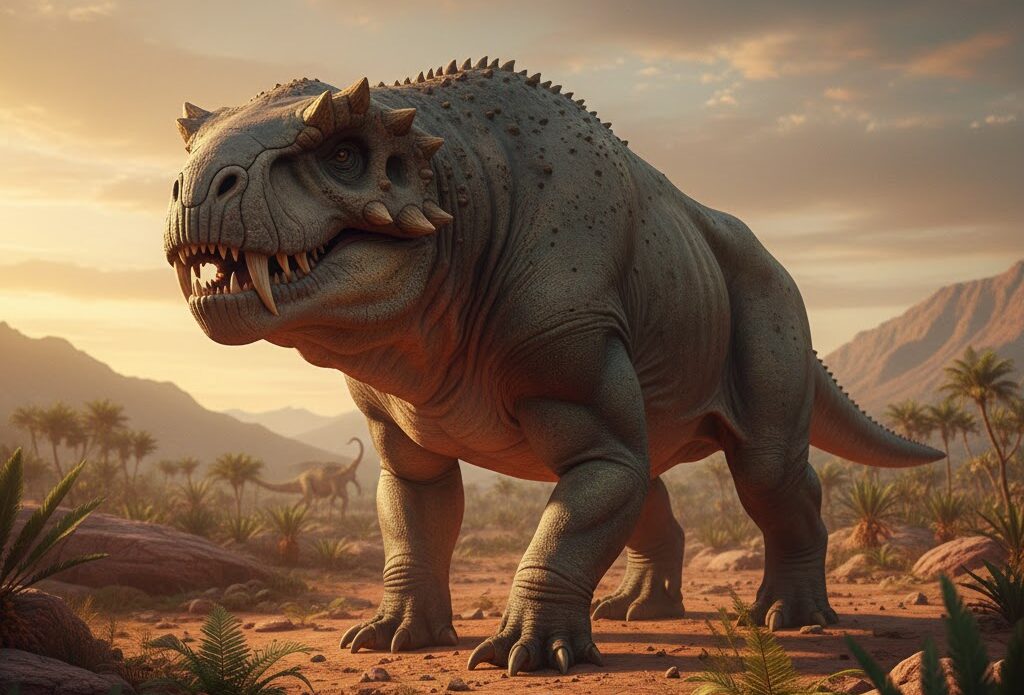 Photo Credit: AnimalsDiscovered
In the lush, semi-aquatic landscapes of the late Permian period, Anteosaurus, known scientifically as Anteosaurus magnificus, roamed the Earth with an air of dominance. Imagine a world where rivers wound through dense vegetation, and the air was thick with the sounds of ancient life. This remarkable creature, a top predator of its time, was built like a tank, with a robust body and powerful limbs that allowed it to navigate both land and water with ease. Its most striking feature was its massive skull, adorned with sharp teeth that hinted at its carnivorous diet, making it a fearsome hunter in its vibrant ecosystem.
What makes Anteosaurus particularly captivating to scientists and nature enthusiasts alike is its role in the evolutionary story of reptiles. As a member of the Therapsida group, which includes ancestors of modern mammals, Anteosaurus offers a glimpse into the transition from reptilian to mammalian traits. This ancient reptile thrived in a world that was both lush and dynamic, showcasing the intricate balance of life during a time when the Earth was undergoing significant changes. With its powerful build and keen hunting skills, Anteosaurus not only shaped its environment but also played a crucial role in the ancient food web, leaving behind a legacy that continues to intrigue researchers today.
Anteosaurus is a captivating member of the animal kingdom, nestled within the fascinating world of ancient reptiles. This creature belongs to the class Reptilia and the order Therapsida, which is a group that includes the ancestors of mammals. What sets Anteosaurus apart is its unique blend of reptilian and mammalian features, showcasing a transitional form that helps us understand the evolution of modern mammals. With its robust skull and powerful jaws, Anteosaurus was a formidable predator during the Permian period, around 260 million years ago.
| Taxonomic Rank | Scientific Name | Meaning & Significance |
|---|---|---|
| Kingdom | Animalia | This name signifies that Anteosaurus is part of the vast group of multicellular organisms known as animals, which are characterized by their ability to move and respond to their environment. |
| Phylum | Chordata | Chordata means “having a notochord,” a flexible rod that provides support. This group includes all animals with a backbone, highlighting Anteosaurus’s place in the vertebrate family. |
| Class | Reptilia | Reptilia refers to reptiles, which are cold-blooded animals with scaly skin. Anteosaurus fits here due to its reptilian characteristics, even though it shows some mammalian traits. |
| Order | Therapsida | Therapsida means “beast face,” a nod to the more advanced skull structure that hints at the evolution of mammals. Anteosaurus is a key player in this transition. |
| Family | Anteosauridae | This family name is derived from the genus Anteosaurus, indicating a close relationship among similar species that share distinct features, such as their large size and powerful jaws. |
| Genus | Anteosaurus | The name Anteosaurus translates to “before lizard,” suggesting its position as a precursor to modern reptiles and its evolutionary significance in the lineage leading to mammals. |
Understanding Anteosaurus’s classification reveals much about its evolutionary history. As a member of the Therapsida order, Anteosaurus showcases the gradual changes that occurred as reptiles evolved into mammals. Its unique blend of features not only highlights the diversity of life during the Permian period but also provides insight into the adaptations that would eventually lead to the rise of mammals. This ancient predator serves as a reminder of the intricate web of life and the ongoing story of evolution that connects all living beings.
The story of Anteosaurus unfolds during the late Permian period, around 260 million years ago. This was a time when the Earth was a very different place, dominated by vast deserts and sprawling supercontinents. As the ancestors of Anteosaurus roamed the land, they were part of a significant evolutionary transition, marking the shift from primitive reptiles to more advanced forms that would eventually lead to the mammals we know today.
Anteosaurus belonged to a group called the Anteosauridae, which were early therapsids. Therapsids are often referred to as “mammal-like reptiles,” and they played a crucial role in the evolution of mammals. These creatures evolved from earlier synapsids, which were among the first vertebrates to develop features like differentiated teeth—meaning they had different types of teeth for different functions, such as tearing and grinding food. Over time, Anteosaurus adapted to its environment, developing characteristics that would help it thrive in a world filled with competition and changing climates.
The adaptations of Anteosaurus were vital for its survival in a challenging world. Its powerful jaws and robust body allowed it to dominate as a predator, while the potential for endothermic traits helped it thrive in varying temperatures. Enhanced sensory capabilities ensured that it could navigate its environment effectively, whether hunting for food or avoiding danger. Together, these features not only made Anteosaurus a successful inhabitant of its time but also paved the way for the evolution of future mammals.
Anteosaurus presents an imposing figure, reminiscent of a prehistoric titan. This ancient reptile boasts a robust body, supported by powerful limbs that hint at its strength and agility. Its most striking feature is undoubtedly its thick skull, which gives it a formidable appearance. With a sturdy neck and a broad, muscular build, Anteosaurus was well-equipped for survival in its harsh environment.
| Feature | Description |
|---|---|
| Weight | 1100-1300 lbs |
| Most Distinctive Feature | Thick skull |
| Body Structure | Robust and muscular |
| Limbs | Powerful and sturdy |
The combination of Anteosaurus’s thick skull and muscular body served multiple purposes in its survival. The heavy skull likely provided protection against predators and rivals, while its strong limbs allowed for swift movement across the rugged terrain of its time. Together, these features made Anteosaurus a formidable presence in the ancient ecosystems it inhabited, showcasing the incredible adaptations that have allowed species to thrive through the ages.
Anteosaurus thrived in a world that was both lush and dynamic, primarily inhabiting semi-aquatic environments. Picture a landscape where rivers meander through dense vegetation, and the air is filled with the sounds of chirping insects and rustling leaves. This ancient reptile roamed the temperate zones of South Africa, where wetlands and marshes provided a rich tapestry of life. The interplay of land and water created a vibrant ecosystem, perfect for a creature that was both a predator and a survivor.
The climate in these regions was generally mild, with warm temperatures and seasonal rainfall that nourished the lush plant life. Anteosaurus required a habitat that offered both water and land, allowing it to hunt for prey while also providing a safe retreat from larger predators. The combination of wet and dry seasons created a diverse environment, supporting a variety of flora and fauna that were essential for its survival.
Adaptations played a crucial role in Anteosaurus’s ability to thrive in these specific habitats. Its powerful limbs were not just for walking on land; they also aided in swimming, making it an adept hunter in both environments. The semi-aquatic lifestyle allowed Anteosaurus to exploit a range of food sources, from fish to smaller terrestrial animals. This versatility was key to its success, enabling it to navigate the challenges of its ever-changing world.
Anteosaurus led a life filled with activity and purpose in its lush, semi-aquatic habitat. Each day began with the sun rising over the dense vegetation, casting a warm glow on the rivers and streams where these ancient reptiles roamed. As a carnivorous predator, Anteosaurus spent much of its time hunting for food, using its keen senses to detect movement in the water and on land. It would stalk its prey, often employing stealth and patience, before launching a powerful attack. When not hunting, Anteosaurus engaged in basking, soaking up the sun to regulate its body temperature, a behavior known as thermoregulation. This daily routine was essential for maintaining energy levels and ensuring survival in a world filled with challenges.
Socially, Anteosaurus exhibited intriguing group dynamics. While primarily solitary hunters, these reptiles sometimes gathered in small groups, especially during mating season or when raising young. This social behavior allowed them to share information about food sources and potential threats. Communication among Anteosaurus individuals likely involved a mix of body language and vocalizations, helping them to establish territory and maintain social bonds. Observing one another’s movements and postures would have been crucial for understanding the intentions of their peers, whether it was to mate, compete, or cooperate.
| Behavior Type | Description |
|---|---|
| Hunting | Stalking prey using stealth and patience, often near water sources. |
| Basking | Soaking up sunlight to regulate body temperature and conserve energy. |
| Social Interaction | Occasional gatherings for mating or raising young, sharing information. |
| Communication | Using body language and vocalizations to establish territory and social bonds. |
The behaviors of Anteosaurus were finely tuned to ensure its survival in a challenging environment. By mastering the art of hunting and forming social connections, these ancient reptiles could navigate their world more effectively. Their ability to communicate and cooperate, even in small groups, provided advantages in both finding food and protecting themselves from larger predators. In the ever-changing landscape of the late Permian period, these daily activities were not just routines; they were vital strategies for thriving in a complex ecosystem.
Anteosaurus was a carnivore, meaning it primarily fed on other animals. This ancient reptile had a powerful build and sharp teeth, perfect for catching and consuming its prey. It likely hunted in a variety of ways, using its strength and agility to ambush unsuspecting animals in its semi-aquatic environment. With a diet focused on meat, Anteosaurus played a crucial role in its ecosystem, helping to maintain the balance of species in its habitat.
| Dietary Aspect | Details |
|---|---|
| Diet Type | Carnivore |
| Favorite Foods | Smaller reptiles and fish |
| Prey Items | Various aquatic and terrestrial animals |
| Hunting/Foraging Strategies | Ambush tactics and stealthy movements |
The diet of Anteosaurus significantly influenced its daily routine and ecological role. By preying on smaller animals, it helped control their populations, ensuring a balanced ecosystem. Its hunting strategies required patience and skill, making each meal a calculated effort. This carnivorous lifestyle not only shaped Anteosaurus’s behavior but also its interactions with other species, creating a dynamic web of life in its lush, semi-aquatic world.
Mating behavior in Anteosaurus was likely influenced by the seasonal changes in its environment. During the breeding season, which may have coincided with warmer months when food was abundant, males would engage in displays to attract females. These displays could have included vocalizations, physical posturing, or even combat with rival males. Once a pair formed, they would mate, setting the stage for the next generation of these ancient reptiles.
| Reproductive Aspect | Details |
|---|---|
| Gestation Period | Approximately 3 to 4 months |
| Litter Size | Typically 2 to 4 young |
| Age of Maturity | About 2 to 3 years |
| Name of Young | Hatchlings |
After hatching, Anteosaurus young, known as hatchlings, would rely heavily on their parents for survival. Parental care was crucial during the early stages of life, as these young reptiles were vulnerable to predators and environmental challenges. The adults likely provided protection and possibly even guidance in hunting techniques. As the hatchlings grew, they would gradually learn to fend for themselves, developing the skills necessary to thrive in their semi-aquatic habitat. This nurturing phase was essential for ensuring that the next generation could grow into strong, independent adults, ready to take on the challenges of their prehistoric world.
Anteosaurus occupies a significant position in the ancient food web, acting as a formidable predator in its semi-aquatic habitat. With its powerful build and sharp teeth, it was well-equipped to hunt a variety of prey, including smaller reptiles and fish. However, being a top predator also means that Anteosaurus faced its own set of dangers from other creatures vying for survival in the same environment.
To defend itself against these threats, Anteosaurus likely relied on a combination of physical strength and strategic behavior. Its robust body allowed it to engage in fierce confrontations when necessary, while its agility helped it escape from larger predators. Additionally, Anteosaurus may have used its environment to its advantage, hiding among dense vegetation or using water to evade danger. These survival strategies were crucial for navigating the challenges of its prehistoric world.
A keystone species is a vital part of its ecosystem, playing a crucial role in maintaining the structure and balance of that environment. These species have a disproportionately large impact on their surroundings compared to their abundance. Anteosaurus, a formidable carnivore from the late Permian period, qualifies as a keystone species due to its role as a top predator in its semi-aquatic habitat in what is now South Africa. Its presence influenced the populations of other species and helped shape the ecosystem around it.
As a top predator, Anteosaurus helped regulate the populations of herbivores and smaller carnivores in its environment. By preying on these animals, it prevented any one species from becoming too dominant, which could lead to overgrazing and depletion of vegetation. This balance allowed for a diverse array of plant life to thrive, supporting various other species that relied on these plants for food and shelter. Additionally, Anteosaurus likely scavenged on carcasses, contributing to nutrient cycling in the ecosystem. This means it helped break down dead animals, returning essential nutrients to the soil and promoting plant growth.
Furthermore, Anteosaurus may have influenced the behavior of other animals in its habitat. The presence of such a powerful predator would have forced smaller animals to adapt their behaviors, such as changing their feeding patterns or seeking refuge in safer areas. This dynamic interaction among species is a hallmark of a healthy ecosystem, showcasing the interconnectedness of life.
If Anteosaurus were to disappear from its ecosystem, the consequences could be significant. Without this apex predator, herbivore populations might surge, leading to overconsumption of vegetation. This could result in habitat degradation, affecting not only plants but also the myriad of species that depend on them for survival. The loss of Anteosaurus would disrupt the delicate balance of its environment, potentially leading to a decline in biodiversity and altering the landscape for generations to come. The story of Anteosaurus reminds us of the intricate web of life and the importance of every species within it.
Anteosaurus, a fascinating inhabitant of the late Permian period, played a crucial role in shaping its semi-aquatic ecosystem in what is now South Africa. As a top predator, it occupied a unique ecological niche, influencing the populations of other species and the overall health of its environment. By preying on various animals, Anteosaurus helped maintain a balance within its habitat, ensuring that no single species dominated the landscape. This balance is essential for the diversity of life, as it allows different organisms to thrive and interact in a complex web of relationships.
| Ecosystem Service | Impact |
|---|---|
| Predation | Controls prey populations, preventing overgrazing and promoting plant diversity. |
| Nutrient Cycling | Contributes to nutrient cycling through waste, enriching the soil and supporting plant growth. |
| Habitat Creation | Influences the structure of the habitat by creating open spaces through hunting activities. |
| Food Source | Serves as a food source for scavengers and smaller predators, supporting a diverse food web. |
Anteosaurus’s influence on its environment can be seen in various ways. By preying on smaller animals, it helped regulate their populations, which in turn allowed vegetation to flourish. This balance was vital for the semi-aquatic habitats, where lush plant life provided shelter and food for countless other species. Additionally, the waste produced by Anteosaurus enriched the soil, promoting healthy plant growth and creating a thriving ecosystem. The open spaces created by its hunting activities also allowed for a variety of plants to grow, further enhancing biodiversity.
The broader ecological importance of Anteosaurus cannot be overstated. As a keystone species, it played a pivotal role in maintaining the structure and balance of its ecosystem. The interactions between Anteosaurus and other organisms helped shape the environment, ensuring that it remained vibrant and diverse. By understanding the impact of such ancient creatures, we gain valuable insights into the delicate balance of ecosystems today and the importance of every species in maintaining the health of our planet.
In the intricate web of life, symbiosis refers to the close interactions between different species, which can take on various forms. These relationships can be mutualistic, where both species benefit, parasitic, where one benefits at the expense of the other, or commensal, where one benefits while the other is neither helped nor harmed. Understanding these connections helps us appreciate how species like Anteosaurus interacted with their environment and other organisms during the late Permian period.
| Species/Type | Relationship Type | Description |
|---|---|---|
| Small fish | Mutualistic | Anteosaurus may have benefited from small fish by having them eat parasites off its skin, while the fish gained a meal and a safe place to live. |
| Insects | Parasitic | Some insects might have laid eggs on Anteosaurus, with their larvae feeding on its flesh, causing harm to the reptile. |
| Water plants | Commensal | Anteosaurus could have used dense vegetation for cover while hunting, benefiting from the plants without affecting them. |
These relationships evolved over time as species adapted to their environments and each other. Mutualistic partnerships, like that with small fish, likely developed because both species found advantages in their interactions. Meanwhile, parasitic relationships, such as those with insects, highlight the darker side of nature, where survival can come at a cost. Commensal relationships, like those with water plants, show how some species can thrive alongside others without direct competition. Together, these connections illustrate the complex dynamics of ancient ecosystems, revealing how Anteosaurus and its companions navigated the challenges of their world.
Anteosaurus is a captivating ancient reptile that roamed the Earth during the late Permian period, around 260 million years ago. This remarkable creature offers a glimpse into a world filled with unique adaptations and behaviors that continue to intrigue scientists and nature enthusiasts alike.
The relationship between Anteosaurus and humanity is a tale woven through time, stretching back to the very roots of our understanding of prehistoric life. While Anteosaurus itself went extinct long before humans walked the Earth, its fossils have sparked curiosity and wonder among scientists and enthusiasts alike. These ancient remains have been pivotal in shaping our knowledge of the Permian period, a time when life on Earth was undergoing dramatic changes. In various cultures, the discovery of such fossils has inspired myths and stories, often portraying these ancient reptiles as symbols of strength and resilience, reflecting humanity’s fascination with the giants of the past.
Today, our interaction with Anteosaurus is primarily through the lens of paleontology, the study of ancient life through fossils. While we cannot directly conserve or protect Anteosaurus, understanding its role in the ecosystem helps us appreciate the importance of biodiversity and the need to protect modern ecosystems. The lessons learned from studying such ancient creatures can inform conservation efforts for today’s endangered species. Additionally, as we uncover more about the past, we often find parallels in the challenges faced by current wildlife, such as habitat loss and climate change, which can lead to conflict between humans and animals.
Looking ahead, the future of our relationship with the legacy of Anteosaurus and similar ancient species lies in our ability to learn from the past. As we continue to explore the mysteries of prehistoric life, we can foster a deeper appreciation for the interconnectedness of all living things. By understanding the triumphs and challenges faced by creatures like Anteosaurus, we can better advocate for the protection of our planet’s biodiversity today. This journey not only enriches our knowledge but also inspires a sense of stewardship for the natural world, ensuring that the lessons of the past guide us toward a more sustainable future.
Anteosaurus, a fascinating ancient reptile from the late Permian period, is classified as extinct. This means that there are no living members of this species today. The population trends for Anteosaurus are not applicable since it has not existed for millions of years. Understanding its extinction helps us learn about the environmental changes and mass extinctions that have shaped life on Earth.
| Conservation Factor | Status/Details |
|---|---|
| IUCN Status | Extinct |
| Population Estimates | N/A |
| Trend Direction | N/A |
The main threats to Anteosaurus were likely linked to dramatic environmental changes during its time. The late Permian period experienced significant shifts, including climate fluctuations and the onset of the Permian-Triassic extinction event. This catastrophic event wiped out a large percentage of Earth’s species, including Anteosaurus. As habitats changed and food sources dwindled, survival became increasingly difficult for many species, leading to their eventual extinction.
While Anteosaurus itself cannot be saved, studying its extinction provides valuable lessons for modern conservation efforts. By understanding the factors that led to the decline of ancient species, scientists can better protect today’s vulnerable animals. Conservationists focus on preserving habitats, combating climate change, and promoting biodiversity to ensure that current species do not face the same fate as Anteosaurus. The outlook for many endangered species today is hopeful, thanks to ongoing efforts to safeguard their environments and promote awareness about the importance of biodiversity.
| Question | Answer |
|---|---|
| What was the habitat of Anteosaurus? | Anteosaurus lived in a semi-aquatic environment, primarily in the temperate zones of what is now South Africa. This means it thrived in areas that were near water, like rivers and lakes, which provided both food and a place to cool off. |
| What did Anteosaurus eat? | Anteosaurus was a carnivore, meaning it primarily ate meat. Its diet likely consisted of smaller animals and possibly fish, which it could catch in its watery habitat. |
| How did Anteosaurus behave? | While we can't know for sure, scientists believe Anteosaurus was a powerful predator. Its thick skull suggests it may have used its strength to hunt and defend itself against other predators. |
| How did Anteosaurus reproduce? | Like many reptiles, Anteosaurus likely laid eggs. The exact details of its reproduction are not well-documented, but it would have needed a safe place to lay its eggs, possibly near water. |
| What threats did Anteosaurus face? | As an extinct species, Anteosaurus faced threats from environmental changes and competition with other predators. Over time, shifts in climate and habitat could have led to its decline. |
| What is an interesting characteristic of Anteosaurus? | One of the most distinctive features of Anteosaurus is its thick skull. This adaptation may have helped it withstand attacks from other animals or allowed it to deliver powerful bites. |
| When did Anteosaurus live? | Anteosaurus lived during the late Permian period, around 260 million years ago. This was a time when the Earth was very different, with lush landscapes and a variety of unique creatures. |