Taxonomy & Classification
- Kingdom
- Animalia
- Phylum
- Chordata
- Class
- Chondrichthyes
- Order
- Myliobatiformes
- Family
- Dasyatidae
- Genus
- Dasyatis

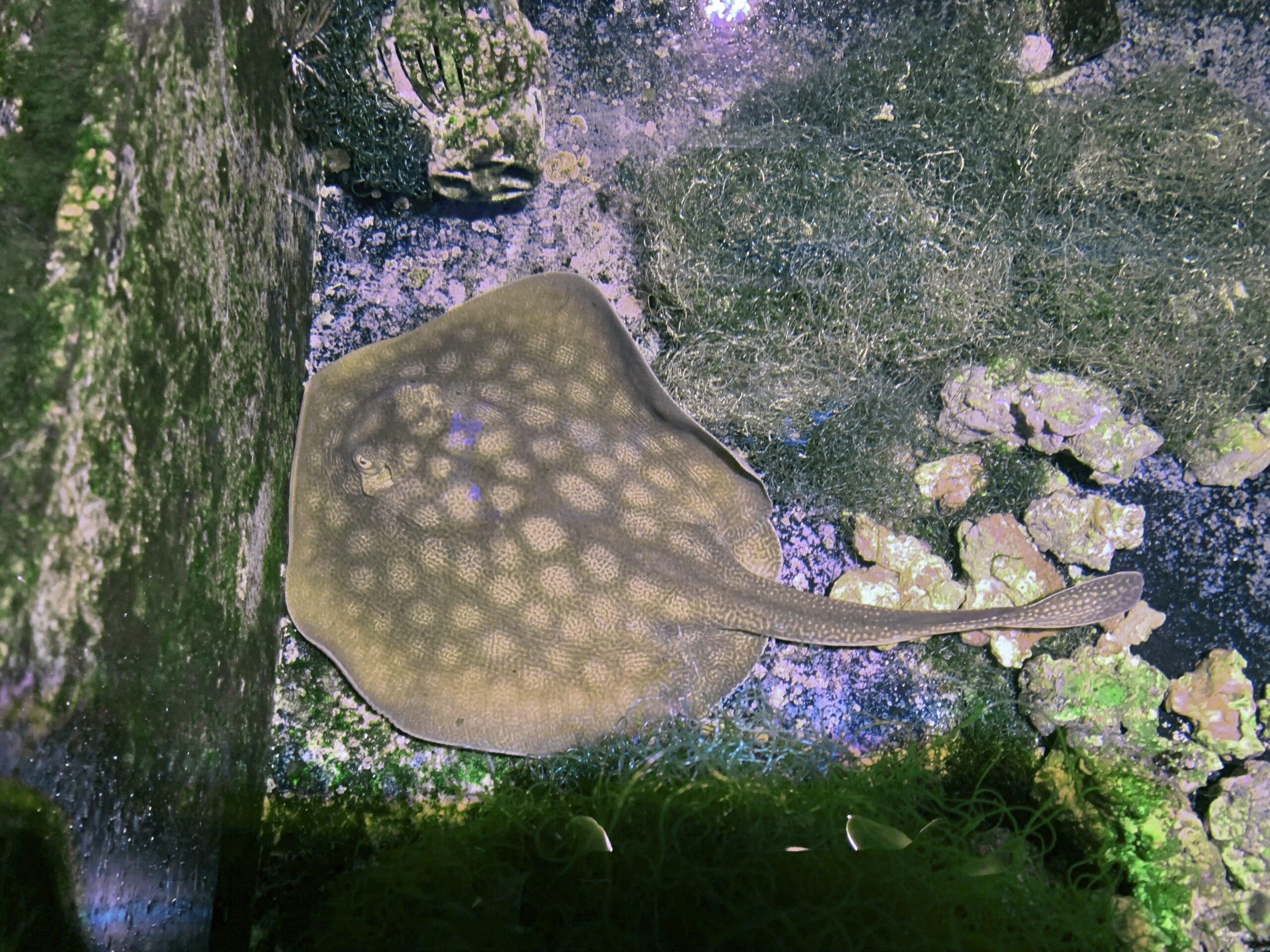 Photo Credit: Coughdrop12 / Wikimedia Commons
Meet the stingray, a mesmerizing inhabitant of our oceans, scientifically known as Dasyatis. Picture this graceful creature gliding effortlessly through the warm, shallow waters of the Black and Mediterranean Seas. With its flat, pancake-like body and wide, wing-like fins, the stingray moves like a ghost beneath the surface, blending seamlessly with the sandy ocean floor. Its smooth skin, often adorned with intricate patterns, adds to its allure, making it a favorite among marine enthusiasts and scientists alike.
Stingrays are not just beautiful; they are also fascinating for their unique adaptations and behaviors. These carnivorous animals have developed specialized hunting techniques, using their keen sense of electroreception to detect the faint electrical signals emitted by their prey, such as snails and clams. This ability allows them to thrive in their habitats, playing a crucial role in maintaining the balance of marine ecosystems. As we dive deeper into the world of stingrays, we will explore their intriguing lifestyles, their vital ecological roles, and the challenges they face in a changing environment. Join us on this adventure to uncover the secrets of these enchanting ocean dwellers!
Stingrays are captivating members of the animal kingdom, nestled within the vast tree of life. They belong to the phylum Chordata, which includes all animals with a backbone, and are classified under the class Chondrichthyes, meaning they have cartilaginous skeletons instead of bones. This unique feature sets them apart from many other fish. Stingrays are part of the order Myliobatiformes, which encompasses various species of rays and skates. Their flattened bodies and long, whip-like tails equipped with venomous spines make them both intriguing and, at times, intimidating. These adaptations help them thrive in diverse marine environments, from shallow coastal waters to deeper oceanic realms.
| Taxonomic Rank | Scientific Name | Meaning & Significance |
|---|---|---|
| Kingdom | Animalia | This name signifies that stingrays are part of the animal kingdom, which includes all multicellular organisms that are heterotrophic, meaning they consume other organisms for energy. |
| Phylum | Chordata | Chordata refers to animals that possess a notochord, a flexible rod that provides support. In stingrays, this is replaced by a backbone as they mature. |
| Class | Chondrichthyes | This term means “cartilage fish,” highlighting that stingrays have skeletons made of cartilage, the same material that makes up human noses and ears. |
| Order | Myliobatiformes | The name comes from Greek roots meaning “millstone” and “shaped,” referring to the flat, disc-like shape of these rays, which resembles a millstone. |
| Family | Dasyatidae | This family name is derived from the Greek word “dasy,” meaning “hairy,” which may refer to the texture of their skin or the presence of small dermal denticles, giving them a unique feel. |
| Genus | Dasyatis | The genus name also comes from the Greek “dasy,” emphasizing the distinctive features of these rays, particularly their flattened bodies and broad pectoral fins. |
The classification of stingrays reveals a rich evolutionary history that connects them to ancient marine life. Their cartilaginous structure suggests a lineage that dates back hundreds of millions of years, showcasing how these creatures have adapted to their environments over time. As members of the Chondrichthyes class, stingrays share a common ancestry with sharks, highlighting their evolutionary significance. Understanding their taxonomic position not only helps us appreciate their unique adaptations but also emphasizes the importance of conserving these remarkable animals and their habitats in our oceans.
The evolutionary journey of stingrays stretches back over 200 million years, placing them among the ancient inhabitants of our oceans. These fascinating animals belong to a group known as elasmobranchs, which includes sharks and skates. Their lineage can be traced to the early Mesozoic era, a time when dinosaurs roamed the land and the seas were teeming with diverse marine life. As the world changed, so did the stingray, adapting to various environments and challenges.
Stingrays evolved from primitive fish-like ancestors that swam in the oceans long before the first dinosaurs appeared. These early relatives had a more traditional body shape, resembling the fish we see today. Over millions of years, they underwent significant changes, flattening their bodies to become the graceful, disc-shaped animals we recognize now. This transformation allowed them to glide effortlessly along the ocean floor, where they hunt for food and avoid predators. Their unique adaptations, such as specialized gills and a powerful tail, further enhanced their survival in diverse marine habitats.
These evolutionary adaptations have played a crucial role in the survival of stingrays. Their flattened bodies and excellent camouflage help them evade predators while they hunt for food. The ability to sense electrical signals allows them to find hidden prey, ensuring they can thrive in their underwater homes. With their venomous spines, they can defend themselves against threats, while their flexible fins provide agility in navigating their surroundings. Together, these traits have made stingrays successful inhabitants of the ocean, showcasing the wonders of evolution in action.
Stingrays glide gracefully through the water, their bodies resembling a smooth, flat pancake. With wide, wing-like pectoral fins that extend from their bodies, they can reach impressive sizes, some weighing as much as 214 pounds! Their skin is covered in tiny, tough scales that give them a unique texture, almost like sandpaper. This sleek design allows them to move effortlessly through their underwater world, blending seamlessly with the ocean floor.
| Feature | Description |
|---|---|
| Weight | 25kg – 97kg (55lbs – 214lbs) |
| Skin Type | Scales |
The combination of their flat bodies and powerful fins allows stingrays to navigate their environment with ease, whether they are hunting for food or evading predators. Their scale-covered skin not only provides protection but also helps them camouflage against sandy ocean beds, making them less visible to both prey and threats. This clever design is a perfect example of how form and function work together in nature, ensuring that stingrays thrive in their aquatic habitats.
Stingrays are often found in warm, shallow waters, where they can easily blend into sandy or muddy ocean floors. Picture a sun-drenched coastline, with gentle waves lapping at the shore. Here, stingrays glide effortlessly, their flat bodies camouflaged against the seafloor. They prefer habitats that provide both shelter and food, often lurking near coral reefs, seagrass beds, and estuaries. These environments are rich in nutrients, making them perfect hunting grounds for these graceful animals.
Stingrays thrive in warm waters, typically enjoying temperatures between 20 to 30 degrees Celsius (68 to 86 degrees Fahrenheit). They are often found in areas with calm waters, where sunlight can penetrate, allowing for the growth of seagrass and algae. These conditions not only provide food but also create a safe haven from larger predators. The gentle currents and stable salinity levels in these regions help maintain a balanced ecosystem, essential for the survival of stingrays and their prey.
To navigate their watery homes, stingrays have developed some impressive adaptations. Their flattened bodies allow them to hide in the sand, making it easier to ambush unsuspecting fish and crustaceans. They also possess electroreceptors, special organs that can detect the electric fields generated by other animals, helping them locate prey even when it’s buried beneath the substrate. This combination of stealth and sensory ability makes stingrays well-suited to their coastal habitats, allowing them to thrive in the vibrant ecosystems of the Black and Mediterranean Seas.
Stingrays lead a life that is both tranquil and intriguing, primarily spending their days gliding through warm, shallow waters. These graceful animals are often found resting on the sandy ocean floor, where they can easily camouflage themselves against predators. As they move, they use their large pectoral fins to propel themselves smoothly, almost like flying underwater. Their daily activities include foraging for food, which consists mainly of small fish, crustaceans, and mollusks. With their keen sense of electroreception, they can detect the faint electrical signals emitted by their prey, making them skilled hunters.
While stingrays are generally solitary creatures, they do exhibit interesting social behaviors during certain times of the year, particularly during mating season. When they come together, they engage in a fascinating dance of courtship, showcasing their graceful movements. Although they prefer to live alone, stingrays can sometimes be spotted in small groups, especially in areas rich in food. This temporary gathering allows them to share information about food sources and potential threats, enhancing their survival in the wild.
| Behavior Type | Description |
|---|---|
| Activity Patterns | Stingrays spend their days foraging for food and resting on the ocean floor, using their pectoral fins to glide gracefully through the water. |
| Social Structure | Primarily solitary, stingrays come together during mating season or in areas with abundant food, forming temporary groups. |
| Communication Methods | Stingrays communicate through body language and movements, especially during courtship, and rely on their electroreception to sense their environment. |
The behaviors of stingrays are finely tuned to ensure their survival in the ocean’s dynamic environment. Their solitary nature allows them to avoid competition for food and reduce the risk of attracting predators. However, when they do come together, their social interactions enhance their ability to find food and navigate their surroundings. By blending into their environment and using their unique hunting skills, stingrays thrive in their underwater world, showcasing the delicate balance of life beneath the waves.
Stingrays are carnivorous animals, meaning they primarily eat other animals. Their diet mainly consists of snails, clams, and squids, which they skillfully hunt in their shallow-water habitats. Using their flat bodies to camouflage against the ocean floor, stingrays can sneak up on their prey. When they find a tasty morsel, they use their powerful jaws to crush the hard shells of clams and snails, making them a formidable predator in their underwater world.
| Dietary Aspect | Details |
|---|---|
| Diet Type | Carnivore |
| Favorite Foods | Snails, clams, and squids |
| Prey Items | Hard-shelled mollusks and soft-bodied cephalopods |
| Hunting/Foraging Strategies | Camouflage on the ocean floor, crushing shells with strong jaws |
This diet plays a crucial role in the ecology of stingrays. By feeding on snails and clams, they help control these populations, ensuring a balanced ecosystem. Their daily routine revolves around foraging for food, which not only sustains them but also influences the health of their marine environment. As they glide through the water, stingrays contribute to the intricate web of life beneath the waves, showcasing the interconnectedness of all ocean inhabitants.
Stingrays have a fascinating mating ritual that often takes place during the warmer months of the year. During this breeding season, males engage in a courtship dance, showcasing their agility and strength. They may chase females, gently nudging them with their bodies to get their attention. Once a female is receptive, the male will grasp her with his mouth, a behavior that helps ensure successful mating. This process is not just about reproduction; it’s a vital part of their social interactions, helping to strengthen bonds between individuals.
| Reproductive Aspect | Details |
|---|---|
| Gestation Period | Three months |
| Average Litter Size | 8 |
| Age of Maturity | 2-3 years |
| Name of Young | Pups |
After the gestation period, which lasts about three months, the female stingray gives birth to live young known as pups. Each litter can contain around eight pups, which are miniature versions of their parents. Once born, these pups are relatively independent and must quickly learn to navigate their environment. While stingrays do not provide extensive parental care, the pups are born with the instincts they need to survive. As they grow, they develop the skills necessary to hunt and thrive in their underwater world, gradually maturing into adults by the age of two to three years. This journey from pup to adult is a remarkable transformation, showcasing the resilience and adaptability of these enchanting marine animals.
Stingrays play a vital role in the ocean’s food web, serving as both predators and prey. These graceful animals feast on small invertebrates and fish, helping to maintain the balance of marine ecosystems. However, they are not without their own challenges. Larger predators, including sharks and sea lions, see stingrays as a tasty meal, making them an important part of the diet for these formidable hunters.
To survive against these threats, stingrays have developed clever defensive behaviors. They often bury themselves in the sand, using their flat bodies to blend in with the ocean floor, making it hard for predators to spot them. When threatened, some species can also deliver a painful sting with their barbed tail, a last resort to deter attackers. By combining camouflage with a potent defense, stingrays navigate the dangers of their underwater world with remarkable skill.
A keystone species is an organism that has a disproportionately large impact on its environment relative to its abundance. This means that if a keystone species were to disappear, the entire ecosystem could change dramatically. Stingrays, with their unique role in marine habitats, can indeed be considered a keystone species. They help maintain the balance of their ecosystems, particularly in the Black and Mediterranean Seas, where they play a crucial role in the health of the ocean floor.
Stingrays are carnivores, primarily feeding on small invertebrates like snails and clams. By preying on these creatures, they help control their populations, preventing any one species from becoming too dominant. This predation is essential for maintaining biodiversity, which is the variety of life in a particular habitat. When stingrays hunt, they also stir up the ocean floor, which can help aerate the sediment and promote the growth of beneficial microorganisms. These tiny organisms are vital for nutrient cycling, which supports the entire marine food web.
Moreover, stingrays serve as prey for larger predators, such as sharks and larger fish. This means they are an important link in the food chain, connecting various levels of the ecosystem. Their presence supports not only the species that rely on them for food but also the health of the overall marine environment. Without stingrays, the balance of predator and prey would be disrupted, leading to potential overpopulation of certain species and a decline in others.
If stingrays were to vanish from their ecosystems, the consequences could be severe. The populations of their prey, like snails and clams, could explode, leading to overgrazing of seagrass beds and other vital habitats. This would not only affect the health of the ocean floor but also the many species that rely on these habitats for shelter and food. Additionally, larger predators that depend on stingrays for sustenance would struggle to find enough food, potentially leading to their decline as well. The ripple effects of losing stingrays would echo throughout the marine ecosystem, highlighting their critical role in maintaining balance and health in the oceans.
Stingrays occupy a vital ecological niche in their marine environments, particularly in the Black and Mediterranean Seas. As carnivores, they play a significant role in controlling the populations of their prey, which includes snails, clams, and various small fish. By hunting these creatures, stingrays help maintain a balanced ecosystem, ensuring that no single species dominates the environment. Their presence contributes to the health of the ocean floor, where they often stir up sediment while foraging, allowing nutrients to circulate and support other marine life.
| Ecosystem Service | Impact |
|---|---|
| Prey Regulation | Controls populations of invertebrates and small fish, preventing overpopulation. |
| Nutrient Cycling | Stirs up sediment while foraging, promoting nutrient distribution in the ecosystem. |
| Habitat Creation | Creates microhabitats in the sand and mud, benefiting other marine organisms. |
| Food Source | Serves as prey for larger predators, contributing to the food web. |
Stingrays influence their ecosystems in several specific ways. For instance, as they hunt for food, they disturb the ocean floor, which helps to aerate the sediment. This process is crucial for the health of benthic organisms—those that live on or near the sea floor—by allowing oxygen and nutrients to reach them. Additionally, by preying on certain species, stingrays help to keep populations in check, which can prevent the overgrowth of algae and other organisms that could otherwise disrupt the balance of the ecosystem.
The broader ecological importance of stingrays cannot be overstated. As keystone species, their presence is essential for maintaining the structure and diversity of marine communities. If stingrays were to disappear, the ripple effects could lead to significant changes in the ecosystem, potentially resulting in the decline of various species and the overall health of the marine environment. By understanding and protecting these fascinating animals, we can help ensure the stability of the ecosystems they inhabit.
In the intricate web of life beneath the waves, stingrays engage in various partnerships with other species, showcasing the beauty of symbiosis. Symbiosis refers to the close interactions between different species, which can be beneficial, harmful, or neutral. These relationships can take many forms, from mutualism, where both species gain advantages, to parasitism, where one benefits at the other’s expense, and commensalism, where one species benefits while the other is neither helped nor harmed. Understanding these connections helps us appreciate the delicate balance of marine ecosystems.
| Species/Type | Relationship Type | Description |
|---|---|---|
| Cleaner Shrimp | Mutualistic | Cleaner shrimp often set up shop on stingrays, removing parasites and dead skin. In return, they get a meal and protection from predators. |
| Remora Fish | Commensal | Remoras attach themselves to stingrays, hitching a ride and feeding on leftover scraps. The stingray is generally unaffected by their presence. |
| Sea Turtles | Mutualistic | Stingrays and sea turtles can often be found in the same habitats. As turtles graze on seagrass, they stir up the sand, making it easier for stingrays to hunt for food. |
These relationships have evolved over time, shaped by the needs and behaviors of the species involved. Mutualistic partnerships, like those with cleaner shrimp, enhance the health of stingrays while providing food for the shrimp. Commensal relationships, such as with remora fish, allow for a free ride and a meal without impacting the stingray. These connections highlight the importance of cooperation and adaptation in the natural world, reminding us that every creature plays a role in the grand tapestry of life beneath the sea.
Stingrays are truly captivating animals that glide through our oceans with grace and mystery. Their unique adaptations and behaviors make them a subject of fascination for nature enthusiasts of all ages.
Stingrays have long held a special place in human culture and history. Ancient civilizations, such as the indigenous peoples of the Americas, revered these creatures, often depicting them in art and mythology. Their graceful movements and unique shapes captured the imagination of many, leading to stories that celebrated their beauty and mystery. In some cultures, stingrays were seen as symbols of protection and strength, while in others, they were associated with the ocean’s power and unpredictability. These historical encounters have laid the groundwork for a complex relationship between stingrays and humanity, one that continues to evolve today.
In modern times, our interactions with stingrays have become more varied and nuanced. Conservation efforts are underway to protect their habitats, as many species face threats from overfishing and habitat destruction. However, conflicts can arise, especially in coastal areas where fishing and tourism intersect. Some people have sought to domesticate stingrays, creating aquariums where they can be observed up close. This has sparked interest in their behavior and biology, but it also raises ethical questions about keeping wild animals in captivity. As we learn more about these fascinating creatures, it becomes clear that our relationship with them is both a privilege and a responsibility.
Looking ahead, the future of our relationship with stingrays will depend on our commitment to understanding and protecting them. As we continue to explore the oceans and learn about these remarkable animals, we must also advocate for their conservation. By fostering a sense of respect and responsibility, we can ensure that future generations will have the opportunity to appreciate the grace and mystery of stingrays in their natural habitats. Together, we can create a world where humans and stingrays coexist harmoniously, celebrating the wonders of the ocean.
Stingrays are currently classified as Near Threatened, indicating that they face potential risks of becoming endangered in the near future. While specific population estimates are not available, their numbers are believed to be declining in many regions. This decline is a cause for concern among conservationists, as it suggests that these graceful creatures may be facing challenges that could impact their survival.
| Conservation Factor | Status/Details |
|---|---|
| IUCN Status | Near Threatened |
| Population Estimates | Not known |
| Trend Direction | Declining |
The main threats to stingrays stem from human activities. Overfishing, both targeted and as bycatch, poses a significant risk to their populations. Bycatch refers to the unintentional capture of non-target species during fishing operations. Additionally, habitat destruction, particularly in coastal areas where they breed and feed, further endangers their survival. Pollution and climate change also contribute to the degradation of their environments, making it harder for stingrays to thrive.
Conservation efforts are underway to protect stingrays and their habitats. Organizations are working to raise awareness about the importance of these animals in marine ecosystems. Initiatives include establishing marine protected areas where stingrays can live without the threat of fishing or habitat destruction. The outlook for stingrays depends on continued conservation actions and the commitment of communities to safeguard their environments. With concerted efforts, there is hope that these magnificent creatures will continue to grace our oceans for generations to come.
| Question | Answer |
|---|---|
| Where do stingrays live? | Stingrays are commonly found in the warm waters of the Black and Mediterranean Seas. They prefer shallow coastal areas where they can easily hide in the sand or mud. |
| What do stingrays eat? | Stingrays are carnivores, meaning they primarily eat meat. Their diet consists of small fish, crustaceans, and mollusks, which they hunt using their keen sense of smell and electroreception. |
| How do stingrays behave? | Stingrays are generally gentle creatures that spend much of their time resting on the ocean floor. They can be social, often seen swimming in groups, but they can also be solitary when hunting. |
| How do stingrays reproduce? | Stingrays reproduce through a process called ovoviviparity, where the eggs develop inside the female's body and she gives birth to live young. This means that the baby stingrays are fully formed and ready to swim away as soon as they are born. |
| What threats do stingrays face? | Stingrays are considered near threatened due to habitat loss and fishing practices. They can get caught in nets or be harmed by boat propellers, which poses a significant risk to their populations. |
| What are some interesting characteristics of stingrays? | One fascinating feature of stingrays is their flat, disc-shaped bodies, which allow them to glide gracefully through the water. They also have a long, whip-like tail that can deliver a painful sting if they feel threatened. |
| Can stingrays be dangerous to humans? | While stingrays are generally not aggressive, they can sting if stepped on or provoked. Their venomous sting can cause pain and swelling, so it's best to be cautious when swimming in areas where they are present. |