Taxonomy & Classification
- Kingdom
- Animalia
- Phylum
- Chordata
- Class
- Mammalia
- Order
- Carnivora
- Family
- Hyaenidae
- Genus
- Hyaena
- Species
- Hyaena hyaena

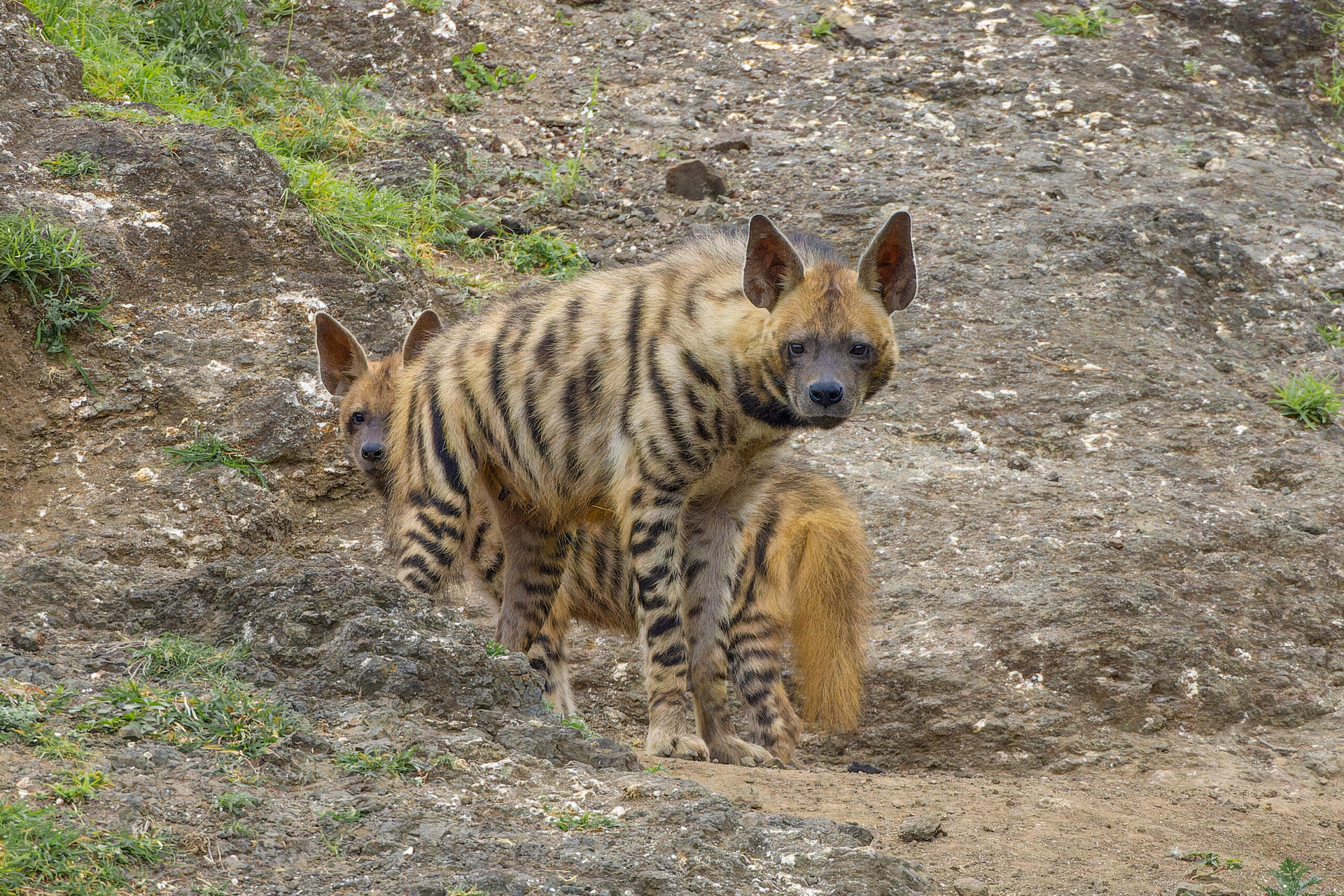 Photo Credit: Tisha Mukherjee / Wikimedia Commons
In the moonlit savannas and rugged hills of Africa and parts of the Middle East, the striped hyena, known scientifically as Hyaena hyaena, prowls with a blend of grace and cunning. This remarkable animal stands out with its distinctive striped coat, a patchwork of earthy browns and blacks that helps it blend into the shadows of its environment. With a sturdy build and a mane that bristles along its back, the striped hyena is not just a scavenger; it is a master of survival, showcasing a unique blend of adaptability and intelligence that captivates both scientists and nature lovers alike.
As night falls, the striped hyena emerges from its den, ready to explore the world around it. Its keen sense of smell guides it to hidden treasures—leftover meals from larger predators or the occasional small animal. Unlike its more famous relatives, the spotted hyena, this species is often overlooked, yet it plays a vital role in its ecosystem. By consuming carrion, or dead animals, the striped hyena helps keep the environment clean and balanced. With a life filled with nocturnal adventures, this fascinating creature invites us to delve deeper into its world, revealing the intricate connections that bind all living things together.
The striped hyena, a captivating member of the animal kingdom, occupies a distinctive position in the tree of life. Scientifically classified under the family Hyaenidae, this intriguing animal is not just a close relative of the more famous spotted hyena but also a unique species in its own right. With its long, shaggy fur and striking stripes, the striped hyena stands out among its carnivorous peers. Unlike its more social relatives, it tends to be more solitary, showcasing a fascinating blend of behaviors that reflect its adaptability to various environments.
| Taxonomic Rank | Scientific Name | Meaning & Significance |
|---|---|---|
| Kingdom | Animalia | This name signifies that striped hyenas are part of the vast group of multicellular organisms that are capable of movement and responsive to their environment. |
| Phylum | Chordata | Chordata means “having a notochord,” which is a flexible rod that supports the body. This group includes all animals with a backbone, like the striped hyena. |
| Class | Mammalia | Mammalia refers to mammals, characterized by having fur or hair and the ability to nurse their young with milk, traits that the striped hyena shares. |
| Order | Carnivora | Carnivora, meaning “meat-eaters,” includes animals that primarily consume meat. The striped hyena is an opportunistic feeder, eating both carrion and plants. |
| Family | Hyaenidae | This family name highlights the hyenas’ unique adaptations, such as their powerful jaws and scavenging habits, which set them apart from other carnivores. |
| Genus | Hyaena | The genus name Hyaena is derived from the Greek word for “hyena,” reflecting the animal’s long-standing recognition in human culture and its distinctive features. |
Understanding the striped hyena’s classification reveals much about its evolutionary journey. As a member of the Hyaenidae family, it shares a common ancestor with other hyenas, which diverged from other carnivorous mammals millions of years ago. This lineage showcases how the striped hyena has adapted to its environment, developing unique traits that allow it to thrive in diverse habitats. Its solitary nature and scavenging behavior highlight the evolutionary pressures that have shaped its lifestyle, making it a fascinating subject for those interested in the intricate web of life on our planet.
The evolutionary journey of the striped hyena stretches back millions of years, weaving through the tapestry of time to reveal a lineage that is both ancient and adaptive. This fascinating animal belongs to the family Hyaenidae, which emerged around 20 million years ago during the Miocene epoch. As the world changed, so did the ancestors of the striped hyena, evolving to thrive in diverse environments across Africa and parts of Asia.
The striped hyena’s ancestors were part of a group of carnivorous mammals that adapted to various ecological niches. Early hyenas were more similar to their relatives, the dogs and cats, but over time, they developed unique traits that set them apart. One significant transition occurred as they began to specialize in scavenging, which allowed them to exploit food sources that other predators might overlook. This shift in diet led to changes in their teeth and jaw structure, enabling them to crush bones and consume tougher materials.
These adaptations have been crucial for the striped hyena’s survival in a world filled with challenges. By developing powerful jaws and an adaptable diet, they can thrive in environments where food may be scarce. Their social behavior enhances their hunting success, while their camouflaged coat provides an edge in avoiding danger. Together, these traits illustrate how the striped hyena has successfully navigated the evolutionary landscape, ensuring its place in the intricate web of life.
The striped hyena is a striking animal that captures attention with its unique appearance. With a body length ranging from 1 to 1.15 meters, it boasts a sturdy build that is both muscular and agile. Its fur is a mix of sandy and grayish tones, adorned with dark stripes that run along its back and legs, giving it a distinctive and eye-catching pattern. The hyena’s long, bushy tail, measuring about 12.5 inches, adds to its overall silhouette, while its large, rounded ears and sharp, expressive eyes contribute to its keen sense of awareness in the wild.
| Feature | Description |
|---|---|
| Height | 1 – 1.15 meters in length |
| Weight | 57 to 90 pounds |
| Skin Type | Fur |
| Most Distinctive Feature | Stripes on their bodies |
These physical characteristics are not just for show; they play vital roles in the striped hyena’s survival. The stripes help with camouflage, allowing the hyena to blend into its surroundings, especially in the dappled light of its savanna and scrubland habitats. This clever adaptation aids in stalking prey and avoiding detection by potential threats. Additionally, their strong build and weight give them the strength needed to scavenge and hunt effectively, making them well-suited for their role as opportunistic feeders in the ecosystem. Together, these features create a well-rounded predator that thrives in its environment.
The striped hyena roams through a variety of habitats that paint a vivid picture of its adaptability. Picture vast deserts with rolling dunes, semi-arid regions where scrubby vegetation thrives, and woodlands filled with the rustle of leaves. This animal is equally at home in rocky terrains and tropical savannas, where the sun beats down and the landscape is dotted with acacia trees. Each of these environments offers a unique blend of shelter and food sources, making them ideal for the striped hyena’s lifestyle.
The striped hyena thrives in climates that can be quite harsh. It prefers areas with low rainfall, which means it often finds itself in dry regions where temperatures can soar during the day and drop significantly at night. These environmental conditions shape its behavior and lifestyle, as the hyena is primarily nocturnal, meaning it is most active at night. This adaptation helps it avoid the heat of the day while searching for food and navigating its territory.
To survive in these diverse habitats, the striped hyena has developed several clever adaptations. Its strong, muscular body allows it to traverse rocky landscapes and navigate through dense scrub. The hyena’s keen sense of smell helps it locate carrion, or dead animals, which is a major part of its diet. Additionally, its ability to tolerate dry conditions means it can go longer without water than many other animals. This remarkable resilience allows the striped hyena to thrive in environments that might seem challenging at first glance.
The striped hyena leads a life filled with activity and adventure, primarily during the cooler hours of the night. As a nocturnal animal, it begins its day at dusk, emerging from its den to explore the surrounding landscape. These hyenas are opportunistic feeders, meaning they eat whatever food is available, including carrion, small mammals, and even fruits. Their keen sense of smell helps them locate food from great distances, and they often scavenge from the kills of larger predators. As night falls, the striped hyena becomes a master of its environment, using its sharp eyesight and agile movements to navigate through the dark.
Socially, striped hyenas are known to form small family groups, which can include a mother and her offspring. These family units are essential for their survival, as they work together to find food and protect one another. Communication is vital in these groups, and striped hyenas use a variety of sounds, including whoops, growls, and even giggles, to convey messages to each other. This social structure not only strengthens their bonds but also enhances their ability to hunt and scavenge effectively.
| Behavior Type | Description |
|---|---|
| Activity Patterns | Nocturnal foragers that hunt and scavenge primarily at night. |
| Social Structure | Small family groups, typically consisting of a mother and her young. |
| Communication Methods | Utilizes a range of vocalizations, including whoops and growls, to communicate. |
In the wild, these behaviors are crucial for the striped hyena’s survival. By working together in family groups, they can efficiently locate food and defend their territory. Their ability to communicate effectively ensures that all members of the group are aware of potential dangers and food sources. This combination of social cooperation and adaptability allows the striped hyena to thrive in diverse environments, showcasing the intricate balance of life in the animal kingdom.
The striped hyena is an omnivore, which means it enjoys a varied diet that includes both plants and animals. This adaptable scavenger primarily feeds on small insects and small animals, but it is not picky. It will also munch on fruits and carrion—dead animals it finds. Striped hyenas are clever foragers, using their keen sense of smell to locate food, often scavenging leftovers from larger predators. Their feeding behavior is a mix of hunting and scavenging, allowing them to thrive in diverse environments.
| Dietary Aspect | Details |
|---|---|
| Diet Type | Omnivore |
| Favorite Foods | Small insects, small animals, fruits, and carrion |
| Prey Items | Insects and small mammals |
| Hunting/Foraging Strategies | Scavenging and foraging, using keen sense of smell |
This diverse diet plays a crucial role in the striped hyena’s ecology and daily routine. By consuming a wide range of foods, they help control insect populations and clean up the environment by eating carrion. Their scavenging habits also mean they can thrive in areas where food might be scarce, allowing them to adapt to various habitats. This flexibility not only supports their survival but also contributes to the balance of their ecosystems, showcasing the important role they play in nature.
Mating season for the striped hyena typically occurs between late winter and early spring. During this time, males engage in a variety of courtship behaviors to attract females. These behaviors can include vocalizations, scent marking, and playful interactions. Once a female is receptive, she will mate with one or more males, which is not uncommon in the hyena world. This mating strategy helps ensure genetic diversity among the young.
| Reproductive Aspect | Details |
|---|---|
| Gestation Period | 90-92 days |
| Litter Size | 1-4 cubs |
| Age of Maturity | 2-3 years old |
| Name of Young | Cub or pup |
After the cubs are born, the mother takes on the primary role of caregiver. She will keep her young hidden in a den, providing them with warmth and protection. The cubs are born blind and helpless, relying entirely on their mother for nourishment. As they grow, they begin to explore their surroundings, learning essential survival skills through play and interaction with their siblings. By the time they reach sexual maturity at around 2 to 3 years old, they are well-equipped to navigate the challenges of life in the wild, having developed both physical strength and social skills.
The striped hyena plays a vital role in its ecosystem, often acting as a scavenger that helps keep the environment clean. Positioned in the food web, it feeds on carrion—dead animals—and helps recycle nutrients back into the soil. This means that while it may not be at the top of the food chain, it is essential for maintaining the balance of its habitat. However, this intriguing animal faces several dangers that threaten its survival.
To defend itself against these threats, the striped hyena has developed several clever survival strategies. It often relies on its keen sense of smell to locate food and avoid danger. When confronted by larger predators, it may use its agility to escape quickly. Additionally, striped hyenas are known for their social behavior, often living in small groups that can work together to fend off threats. By being adaptable and resourceful, these hyenas continue to navigate the challenges of their environment, showcasing their resilience in the face of adversity.
A keystone species is an organism that has a disproportionately large impact on its environment relative to its abundance. In other words, if it were removed, the ecosystem would change dramatically. The striped hyena, with its unique role as a scavenger and omnivore, qualifies as a keystone species in its habitat. By feeding on carrion and helping to control populations of other species, it plays a crucial part in maintaining the balance of its ecosystem.
Striped hyenas are often found in diverse habitats, including deserts, woodlands, and grasslands. Their scavenging behavior is vital for the health of these environments. By consuming dead animals, they help prevent the spread of disease that could arise from decaying carcasses. This not only keeps the area cleaner but also supports the health of other wildlife. For example, when a striped hyena finds a carcass, it may attract other scavengers, such as vultures and jackals, creating a community of animals that benefit from the same resource.
Moreover, the striped hyena’s diet is quite varied, allowing it to adapt to different food sources. This adaptability means that it can help control populations of smaller animals, such as rodents and insects, which can otherwise become overpopulated. By keeping these populations in check, striped hyenas contribute to the overall balance of their ecosystem, ensuring that no single species dominates the landscape.
If striped hyenas were to disappear from their ecosystems, the consequences could be severe. Without these scavengers, dead animals would accumulate, leading to unsightly and unhealthy environments. This could result in increased disease spread among wildlife and even humans. Additionally, the absence of striped hyenas would disrupt the balance of predator and prey relationships, potentially causing overpopulation of certain species and the decline of others. In essence, the striped hyena is not just a fascinating animal; it is a vital player in the intricate web of life.
The striped hyena plays a crucial role in its ecosystem, acting as both a scavenger and a predator. This fascinating animal thrives in diverse habitats, including deserts, woodlands, and grasslands. By consuming carrion—dead animals—it helps to keep the environment clean and free from disease. As an omnivore, the striped hyena also contributes to the balance of its ecosystem by controlling populations of smaller animals and plants, ensuring that no single species dominates the landscape.
| Ecosystem Service | Impact |
|---|---|
| Scavenging | Reduces waste and disease by consuming dead animals. |
| Population Control | Helps maintain balance by preying on small mammals and insects. |
| Seed Dispersal | Contributes to plant growth by spreading seeds through its diet. |
| Habitat Maintenance | Creates space for new growth by clearing out carrion. |
The striped hyena’s scavenging habits are particularly important in arid regions where food can be scarce. For example, when it feeds on the remains of larger animals, it not only prevents the spread of disease but also provides a food source for other scavengers, such as birds and smaller mammals. Additionally, by consuming insects and small rodents, the striped hyena helps to keep these populations in check, which can prevent overgrazing and promote healthier vegetation. This interconnected web of life showcases how one species can influence many others in its environment.
In a broader ecological context, the striped hyena is considered a keystone species, meaning its presence is vital for the health of its ecosystem. If striped hyenas were to disappear, the balance of their habitats could shift dramatically. Overpopulation of smaller animals could lead to habitat degradation, while the accumulation of carrion could result in disease outbreaks. Thus, the striped hyena not only shapes its immediate surroundings but also plays a significant role in maintaining the overall health and diversity of the ecosystems it inhabits.
In the intricate web of life, animals often form partnerships that enhance their survival and well-being. These relationships can take many forms, including symbiosis, where different species interact closely. Symbiotic relationships can be mutualistic, where both species benefit; parasitic, where one benefits at the expense of the other; or commensal, where one benefits while the other is neither helped nor harmed. The striped hyena, with its adaptable nature and diverse habitat, engages in various ecological relationships that illustrate the beauty of cooperation in the animal kingdom.
| Species/Type | Relationship Type | Description |
|---|---|---|
| Vultures | Mutualistic | Striped hyenas and vultures often work together when scavenging. The hyena’s keen sense of smell helps locate carrion, while vultures can spot food from the sky. This partnership ensures both species benefit from the available resources. |
| Small mammals | Commensal | When striped hyenas dig through the ground for food, they may inadvertently create burrows that small mammals can use for shelter. The small mammals gain a safe home, while the hyenas are unaffected by their presence. |
| Parasites (like ticks) | Parasitic | Ticks and other parasites can latch onto striped hyenas, feeding on their blood. This relationship is harmful to the hyenas, as it can lead to health issues, but it benefits the parasites by providing them with nourishment. |
These relationships have evolved over time, shaped by the needs and behaviors of the species involved. The mutualistic bond between striped hyenas and vultures showcases how cooperation can lead to greater success in finding food. Meanwhile, the commensal interactions with small mammals highlight the unintentional benefits that can arise from one species’ activities. On the other hand, parasitic relationships remind us that not all interactions are beneficial. Understanding these dynamics helps us appreciate the complexity of ecosystems and the roles each species plays in maintaining balance in nature.
The striped hyena is a captivating animal that often flies under the radar compared to its more famous relatives, like the spotted hyena. With its unique stripes and intriguing behaviors, this creature has a lot to offer nature enthusiasts.
The relationship between striped hyenas and humanity is steeped in history and cultural significance. In many regions of Africa and the Middle East, these animals have been both feared and revered. Ancient texts and folklore often depict hyenas as symbols of cunning and survival. In some cultures, they are associated with the supernatural, while in others, they are seen as scavengers that clean the land. This duality reflects humanity’s complex feelings toward these creatures, blending admiration with wariness.
Today, interactions between striped hyenas and humans are multifaceted, often marked by conflict and conservation efforts. As human populations expand, hyenas find themselves encroaching on urban areas, leading to clashes over territory and resources. Farmers may view them as threats to livestock, while conservationists work to protect their habitats and promote coexistence. Interestingly, some communities have even attempted to domesticate hyenas, although this practice is rare and controversial. The challenge lies in balancing the needs of both species, ensuring that hyenas can thrive while minimizing conflicts with humans.
Looking ahead, the future of the relationship between striped hyenas and humanity will depend on our ability to adapt and find common ground. As urban areas continue to grow, innovative solutions will be essential to reduce conflicts and promote coexistence. Education and awareness can help shift perceptions, allowing people to appreciate the ecological importance of hyenas. By fostering a sense of stewardship, we can ensure that these fascinating animals continue to thrive alongside us in the wild.
The striped hyena is currently classified as Near Threatened, indicating that it faces potential risks of extinction in the near future. With an estimated population size ranging from 5,000 to 14,000 individuals worldwide, these fascinating animals are experiencing a decline in numbers. This trend is concerning, as it suggests that their habitats and survival are increasingly under threat from various human activities and environmental changes.
| Conservation Factor | Status/Details |
|---|---|
| IUCN Status | Near Threatened |
| Population Estimates | 5,000 to 14,000 |
| Trend Direction | Declining |
The main threats to striped hyenas include habitat loss, which occurs when land is converted for agriculture or urban development. Additionally, they face persecution from humans who often view them as pests or threats to livestock. Poaching and road accidents also contribute to their declining numbers. These challenges make it increasingly difficult for striped hyenas to find food and safe places to live, further endangering their survival.
Conservation efforts are underway to help protect striped hyenas and their habitats. Organizations are working to raise awareness about the importance of these animals in their ecosystems and to promote coexistence with local communities. By implementing protective measures and encouraging sustainable land use, there is hope that the striped hyena population can stabilize and even recover in the future. With continued support and understanding, we can ensure that these remarkable animals remain a part of our world for generations to come.
| Question | Answer |
|---|---|
| What is the habitat of the Striped Hyena? | Striped Hyenas are found in a variety of habitats, including deserts, semi-deserts, woodlands, and scrub forests. They also thrive in acacia bushlands, grasslands, tropical savannas, and rocky terrains. This adaptability helps them survive in different environments across Africa and parts of Asia. |
| What do Striped Hyenas eat? | Striped Hyenas are omnivores, which means they eat both plants and animals. Their diet includes small mammals, carrion (which is dead animals), fruits, and insects. This varied diet allows them to find food in many different habitats. |
| How do Striped Hyenas behave in the wild? | Striped Hyenas are mostly nocturnal, meaning they are active at night. They are known for their social behavior, often living in small family groups. These hyenas communicate through a range of vocalizations, including whoops and growls, which help them stay connected with each other. |
| How do Striped Hyenas reproduce? | Striped Hyenas typically mate during the rainy season, which helps ensure that food is plentiful for raising young. After a gestation period of about 90 to 100 days, the female gives birth to a litter of one to four cubs. The cubs are cared for by both parents and stay with the family group for several months. |
| What threats do Striped Hyenas face? | Striped Hyenas are classified as Near Threatened, primarily due to habitat loss and hunting. As human populations expand, their natural habitats are being destroyed, making it harder for them to find food and shelter. Additionally, they are often persecuted by farmers who see them as threats to livestock. |
| What is a unique characteristic of Striped Hyenas? | The most distinctive feature of Striped Hyenas is the stripes on their bodies, which help them blend into their environment. These stripes are not just for show; they provide camouflage that aids in hunting and avoiding predators. Their unique appearance sets them apart from other hyena species. |
| How do Striped Hyenas communicate? | Striped Hyenas have a rich repertoire of sounds for communication, including whoops, growls, and giggles. These vocalizations help them maintain social bonds and coordinate activities within their group. They also use body language, such as tail position and ear movements, to express their feelings. |