Taxonomy & Classification
- Kingdom
- Animalia
- Phylum
- Arthropoda
- Class
- Insecta
- Order
- Lepidoptera
- Family
- Tortricidae
- Genus
- Epiphyas
- Species
- Epiphyas Postvittana

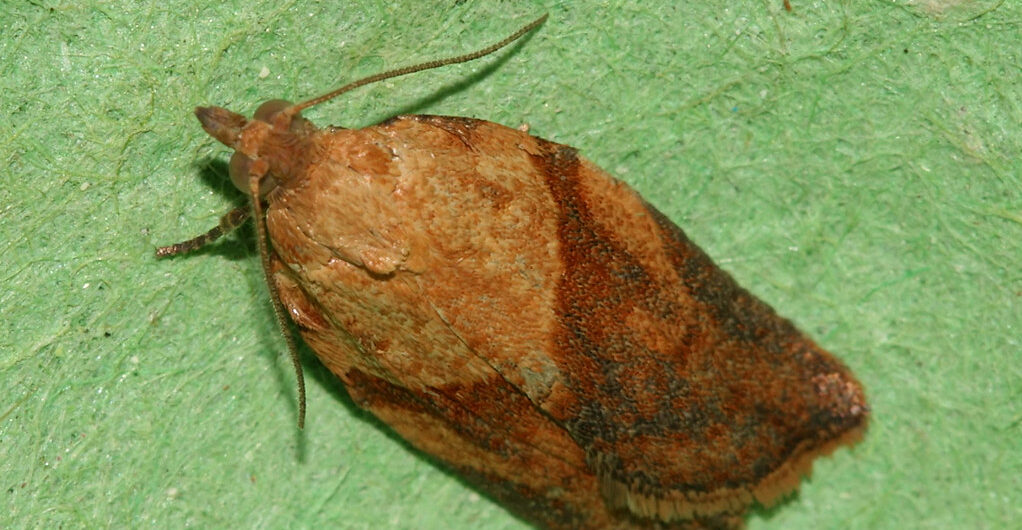 "Light Brown Apple Moth - Epiphyas postvittana" by Danny Chapman is licensed under CC BY 2.0
In the lush, sun-dappled orchards of New Zealand and Australia, the Apple Moth, or Epiphyas postvittana, flits gracefully among the leaves, a tiny marvel of nature. Measuring just a few centimeters in length, this delicate insect boasts a striking appearance with its mottled brown and cream wings that blend seamlessly into its surroundings. As it dances through the air, the Apple Moth captures the attention of both scientists and nature lovers alike, not just for its beauty but for its intriguing role in the ecosystem.
The Apple Moth thrives in vibrant habitats filled with fruit-laden trees, where the sweet scent of ripening apples fills the air. As dusk falls, these nocturnal creatures emerge from their hiding spots, ready to feast on the foliage and fruits that sustain them. Their life cycle is a captivating story of transformation, from egg to caterpillar to adult moth, each stage playing a vital role in the balance of their environment. With their unique behaviors and interactions, Apple Moths are more than just a pretty sight; they are essential players in the intricate web of life, making them a subject of fascination for anyone curious about the natural world.
The Apple Moth, scientifically known as Epiphyas postvittana, occupies a distinctive place in the tree of life. It belongs to the Kingdom Animalia, which includes all animals, and is part of the Phylum Arthropoda, home to creatures with exoskeletons, segmented bodies, and jointed limbs. This moth is classified under the Class Insecta, which encompasses all insects, and the Order Lepidoptera, known for its winged members like butterflies and moths. What sets the Apple Moth apart is its ability to adapt to various environments, particularly its preference for apple trees, where it can cause significant agricultural damage. This adaptability highlights its evolutionary success and the intricate relationships it has with its habitat.
| Taxonomic Rank | Scientific Name | Meaning & Significance |
|---|---|---|
| Kingdom | Animalia | The term “Animalia” comes from the Latin word “animalis,” meaning “having breath” or “living.” This classification signifies that the Apple Moth is a living organism that breathes and moves. |
| Phylum | Arthropoda | “Arthropoda” means “jointed feet” in Greek, referring to the jointed limbs of insects, spiders, and crustaceans. This highlights the Apple Moth’s segmented body and jointed legs, which are essential for its mobility. |
| Class | Insecta | The name “Insecta” is derived from the Latin word “insectum,” meaning “cut into sections.” This reflects the distinct body segments of insects, including the Apple Moth, which has a three-part body structure: head, thorax, and abdomen. |
| Order | Lepidoptera | “Lepidoptera” comes from the Greek words “lepidos,” meaning “scale,” and “ptera,” meaning “wings.” This name is fitting for the Apple Moth, as its wings are covered in tiny scales that create beautiful patterns and colors. |
| Family | Tortricidae | The name “Tortricidae” is derived from the Latin word “tortrix,” meaning “to twist.” This refers to the unique behavior of many moths in this family, including the Apple Moth, which often rolls leaves to create protective shelters for their larvae. |
| Genus | Epiphyas | “Epiphyas” is derived from Greek, meaning “upon the growth.” This name reflects the moth’s life cycle, as it often feeds on the leaves and fruits of plants, particularly apple trees, where it thrives. |
Understanding the Apple Moth’s classification reveals much about its evolutionary journey. As a member of the Lepidoptera order, it shares a lineage with other moths and butterflies, showcasing the diverse adaptations that have allowed these insects to flourish in various environments. The specific traits that define the Apple Moth, such as its leaf-rolling behavior and its affinity for apple trees, illustrate how it has evolved to exploit its ecological niche. This classification not only helps scientists study its biology and behavior but also emphasizes the interconnectedness of life forms within ecosystems.
The evolutionary journey of the Apple Moth, or Epiphyas postvittana, stretches back millions of years, intertwining with the history of its environment and the plants it interacts with. This small but significant moth belongs to the family Tortricidae, a group that has adapted to a variety of habitats and food sources. As the world changed, so did the Apple Moth, evolving traits that allowed it to thrive in diverse ecosystems.
The ancestors of the Apple Moth were likely similar to other early moths, which emerged during the Jurassic period, around 200 million years ago. These early moths were simple in structure, primarily feeding on decaying plant matter. Over time, as flowering plants began to dominate the landscape, moths like the Apple Moth adapted to exploit these new food sources. This transition marked a significant evolutionary step, allowing them to develop specialized feeding habits that would later include fruits and leaves.
The adaptations of the Apple Moth have been crucial for its survival in a world filled with challenges. By blending into its environment, it avoids predators, while its specialized feeding habits allow it to thrive on the resources available in its habitat. The ability to reproduce in large numbers ensures that even if some individuals fall prey to dangers, the species continues to flourish. Through these evolutionary changes, the Apple Moth has carved out a niche for itself, demonstrating the power of adaptation in the natural world.
The Apple Moth is a small yet captivating insect that often goes unnoticed in the grand tapestry of nature. With a delicate body structure, it measures just a few centimeters in length, making it easy to overlook among the leaves and branches of its preferred habitats. Its wings are adorned with intricate patterns that blend shades of brown and cream, allowing it to camouflage seamlessly against the bark of trees and the foliage of apple orchards. This clever disguise is essential for evading predators, as it rests quietly, appearing as just another part of the landscape.
| Feature | Description |
|---|---|
| Weight | 30g (1oz) |
| Skin Type | Hair |
The Apple Moth’s lightweight body and hairy skin serve important purposes in its survival. The fine hairs on its body not only provide a layer of protection but also help in sensing the environment, allowing the moth to detect changes in air currents and potential threats. Its small size and color patterns enhance its ability to blend into its surroundings, making it a master of disguise. Together, these features create a perfect balance of stealth and sensitivity, enabling the Apple Moth to thrive in its natural habitat while avoiding the watchful eyes of predators.
The Apple Moth thrives in a vibrant world filled with lush greenery and fruit-laden trees. Its typical habitat includes gardens, orchards, and woodlands where the air is sweet with the scent of ripening fruit. Here, the moth flits among the leaves and shrubs, finding both shelter and sustenance. The interplay of sunlight filtering through the foliage creates a perfect backdrop for this tiny insect, allowing it to blend seamlessly into its surroundings.
The Apple Moth prefers a temperate climate, which means it enjoys mild weather with distinct seasons. It thrives in areas where the temperature is neither too hot nor too cold, typically ranging from 15 to 30 degrees Celsius (59 to 86 degrees Fahrenheit). This moth is also sensitive to moisture levels, favoring environments that provide enough humidity to support the growth of its preferred host plants, like apple and pear trees.
Adaptation is key to the Apple Moth’s survival in these specific habitats. Its ability to camouflage against the leaves helps it evade predators, while its diet of tender leaves and fruit allows it to thrive in orchards and gardens. The moth has also developed a life cycle that aligns with the growing seasons of its host plants, ensuring that it has a steady food supply. By blending into its environment and timing its life stages perfectly, the Apple Moth continues to flourish in its chosen homes.
The Apple Moth, or Epiphyas postvittana, leads a life that is primarily nocturnal, meaning it is most active during the night. As dusk falls, these small moths emerge from their hiding spots among leaves and branches, ready to explore their surroundings. Their evenings are filled with activities like searching for food, mating, and navigating through the dark. With their keen senses, they can detect the faintest scents of ripe fruits, which guide them to their favorite meals. As dawn approaches, they retreat to their sheltered spots, resting until night returns.
In terms of social behavior, the Apple Moth is quite solitary. Unlike some insects that thrive in large groups, these moths prefer to go about their activities alone. This solitary lifestyle allows them to avoid competition for food and reduces the risk of attracting predators. While they do not engage in complex social interactions, they communicate through pheromones, which are chemical signals that help them find mates. This simple yet effective method ensures that they can reproduce without the need for social gatherings.
| Behavior Type | Description |
|---|---|
| Activity Patterns | Nocturnal foraging for food, primarily fruits, and mating during the night. |
| Social Structure | Solitary lifestyle, avoiding competition and predation. |
| Communication Methods | Use of pheromones to attract mates, allowing for reproduction without social interaction. |
The behaviors of the Apple Moth are finely tuned to ensure its survival in a world filled with challenges. By being active at night, it minimizes encounters with many predators that hunt during the day. Its solitary nature reduces competition for food, while the use of pheromones allows for effective mating without the need for social gatherings. These adaptations not only help the Apple Moth thrive but also highlight the intricate balance of life in its natural habitat.
The Apple Moth, or Epiphyas postvittana, has a diverse diet that makes it an omnivore, meaning it eats both plant and animal matter. This little moth primarily feeds on the foliage and fruit of various plants, particularly favoring apples and other fruits. Its feeding behavior is quite interesting; it uses its specialized mouthparts to chew through leaves and fruits, extracting the nutrients it needs to thrive. By doing so, it plays a role in the ecosystem, helping to recycle nutrients back into the soil.
| Dietary Aspect | Details |
|---|---|
| Diet Type | Omnivore |
| Favorite Foods | Foliage and fruit, especially apples |
| Prey Items | Leaves and ripe fruits |
| Hunting/Foraging Strategies | Chews through leaves and fruits using specialized mouthparts |
The diet of the Apple Moth significantly influences its role in the ecosystem and its daily activities. By feeding on leaves and fruits, it not only sustains itself but also impacts plant health and growth. This feeding behavior can lead to changes in plant populations, as the moths may help control the abundance of certain species. Additionally, their nocturnal lifestyle allows them to forage under the cover of darkness, reducing the risk of predation while they search for their next meal. This delicate balance of feeding and being fed upon is a vital part of the natural world, showcasing the interconnectedness of life.
The mating behavior of the Apple Moth is a captivating dance of pheromones and attraction. During the breeding season, which typically occurs in warmer months, males release chemical signals called pheromones to lure females. Once a female is attracted, they engage in a brief courtship before mating. This process is crucial for the continuation of their species, as it ensures the next generation of these small yet intriguing insects.
| Reproductive Aspect | Details |
|---|---|
| Gestation Period | 3-21 days |
| Litter Size | Varies, typically several dozen eggs |
| Age of Sexual Maturity | 6-10 days |
| Name of Young | Caterpillar |
After mating, the female Apple Moth lays her eggs on suitable host plants, often in clusters. Once the eggs hatch, the young caterpillars emerge and begin their journey of growth. These caterpillars are voracious eaters, munching on leaves and fruit as they develop. Parental care is minimal, as the young are left to fend for themselves. As they grow, they undergo a series of molts, shedding their skin to accommodate their increasing size. Eventually, they will pupate, transforming into adult moths ready to continue the cycle of life. This fascinating process highlights the resilience and adaptability of the Apple Moth in its quest for survival.
The Apple Moth, or Epiphyas postvittana, plays a significant role in its ecosystem, serving as both a herbivore and a food source for various predators. As it feeds on the leaves and fruits of plants, it helps maintain the balance of its environment. However, this small moth is not without its dangers. It faces threats from a variety of predators and environmental challenges that can impact its survival.
To defend itself against these threats, the Apple Moth has developed several survival strategies. It often relies on camouflage, blending in with the leaves and fruits it inhabits, making it harder for predators to spot. Additionally, its nocturnal lifestyle helps it avoid many daytime hunters. When threatened, it may also exhibit erratic flight patterns to confuse predators, increasing its chances of escape. These clever adaptations allow the Apple Moth to navigate the challenges of its environment and continue its role in the food web.
A keystone species is a vital part of its ecosystem, meaning its presence and activities have a significant impact on the environment and other organisms. The Apple Moth, or Epiphyas postvittana, does not quite fit the classic definition of a keystone species. While it plays important roles in its habitat, such as being a herbivore and a food source for predators, its absence would not lead to the collapse of its ecosystem. Instead, it contributes to the balance of its environment in more subtle ways.
The Apple Moth primarily feeds on the leaves and fruits of various plants, which can influence plant health and growth. By munching on foliage, it can help control plant populations, allowing for a diverse range of species to thrive. This feeding behavior can also create opportunities for other organisms, such as fungi and bacteria, to break down plant material, enriching the soil and promoting nutrient cycling. Additionally, the Apple Moth serves as a food source for birds and other predators, linking it to the broader food web.
Moreover, the Apple Moth’s presence can indicate the health of its environment. If populations of these moths are thriving, it often suggests that the ecosystem is balanced and supports a variety of life forms. Conversely, a decline in their numbers might signal environmental stress, such as pollution or habitat loss, which can affect many other species.
If the Apple Moth were to disappear, the effects would ripple through its ecosystem. While it may not be a keystone species, its absence could lead to an overgrowth of certain plants, disrupting the balance of the habitat. This could, in turn, affect the animals that rely on those plants for food and shelter. The loss of the Apple Moth would also mean fewer food options for its predators, potentially leading to declines in their populations as well. In this way, even small creatures like the Apple Moth play a role in maintaining the intricate web of life around us.
The Apple Moth, known scientifically as Epiphyas postvittana, plays a crucial role in its ecosystem, particularly in gardens and orchards. This small insect occupies an ecological niche as both a herbivore and a prey species. By feeding on the leaves and fruits of various plants, it influences plant health and growth, while also providing sustenance for a range of predators. Its nocturnal lifestyle adds an intriguing layer to its interactions, as it becomes active when many other creatures are resting, contributing to the nighttime dynamics of its habitat.
| Ecosystem Service | Impact |
|---|---|
| Herbivory | Regulates plant growth and health by feeding on leaves and fruits. |
| Food Source | Serves as a vital food source for birds, bats, and other predators. |
| Pollination | While not a primary pollinator, it can inadvertently assist in pollination as it moves between plants. |
| Soil Enrichment | Contributes to soil health through its waste, which adds nutrients to the ground. |
The influence of the Apple Moth extends beyond its immediate feeding habits. For instance, when it munches on the leaves of fruit trees, it can stimulate the plants to produce more foliage, which may enhance their overall vigor. This interaction can lead to a more robust ecosystem, as healthier plants provide better habitats and food sources for other organisms. Additionally, the Apple Moth’s presence attracts various predators, such as birds and bats, which rely on it as a food source. This creates a balanced food web, where each species plays a part in maintaining the health of the environment.
The broader ecological importance of the Apple Moth cannot be overstated. As a keystone species, its activities help shape the structure of its ecosystem. By influencing plant dynamics and serving as a food source, the Apple Moth supports a diverse array of life. This interconnectedness highlights the delicate balance of nature, where even the smallest creatures can have significant impacts. Understanding the role of the Apple Moth encourages us to appreciate the complexity of ecosystems and the importance of every organism within them.
In the intricate web of life, symbiosis refers to the close and often long-term interactions between different species. These relationships can take many forms, including mutualism, where both species benefit, parasitism, where one benefits at the expense of the other, and commensalism, where one benefits while the other is neither helped nor harmed. The Apple Moth, or Epiphyas postvittana, engages in various ecological relationships that highlight the complexity of its interactions with other organisms in its environment.
| Species/Type | Relationship Type | Description |
|---|---|---|
| Apple Trees | Mutualistic | The Apple Moth feeds on the leaves and fruit of apple trees, which helps the moth thrive. In return, the moth can help pollinate the flowers, benefiting the tree. |
| Predatory Insects (e.g., Ladybugs) | Parasitic | While the Apple Moth feeds on plants, it can become a target for predatory insects that see it as a food source, illustrating a parasitic relationship where the predator benefits. |
| Fungi | Commensal | Some fungi may grow on the decaying matter left by the Apple Moth, benefiting from the nutrients without affecting the moth directly. |
The evolution of these relationships showcases the dynamic nature of ecosystems. Over time, the Apple Moth has adapted to its environment, forming partnerships that enhance its survival and reproduction. These interactions not only benefit the moth but also contribute to the health of the ecosystems in which it lives. By understanding these connections, we gain insight into the delicate balance of nature and the importance of every species, no matter how small.
The Apple Moth, known scientifically as Epiphyas postvittana, is a small but intriguing insect that plays a significant role in its ecosystem. Here are some surprising facts that will captivate nature enthusiasts of all ages.
The Apple Moth, or Epiphyas postvittana, has a long history of interaction with humans, dating back to its introduction in various regions, including New Zealand and Australia. This small moth has woven itself into the cultural fabric of these areas, often symbolizing the delicate balance between nature and agriculture. In many communities, the Apple Moth has been viewed as both a pest and a part of the local ecosystem, prompting stories and folklore that reflect humanity’s complex relationship with the natural world. Its presence in orchards has sparked both admiration for its beauty and concern for the potential damage it can cause to fruit crops.
Today, the relationship between the Apple Moth and humans is marked by a mix of conservation efforts and conflict. Farmers often find themselves at odds with this insect, as it can cause significant harm to apple trees and other fruit-bearing plants. In response, various pest management strategies have been developed, including biological control methods that utilize natural predators to keep the moth population in check. Meanwhile, conservationists advocate for a balanced approach that protects the Apple Moth’s role in the ecosystem while minimizing its impact on agriculture. This ongoing dialogue highlights the need for sustainable practices that respect both human needs and the natural world.
As we look to the future, the relationship between the Apple Moth and humanity will likely continue to evolve. With increasing awareness of environmental issues, there is a growing emphasis on finding harmony between agricultural practices and ecological health. By fostering a deeper understanding of the Apple Moth’s role in the ecosystem, we can work towards solutions that benefit both farmers and the natural world. This journey will require collaboration, innovation, and a commitment to preserving the delicate balance that sustains life on our planet.
The conservation status of the Apple Moth, or Epiphyas postvittana, is currently classified as “Least Concern” by the International Union for Conservation of Nature (IUCN). This means that, overall, the species is not facing immediate threats that could lead to its extinction. However, population trends can vary by region, and while some areas report stable numbers, others may experience fluctuations due to environmental changes and human activities.
| Conservation Factor | Status/Details |
|---|---|
| IUCN Status | Least Concern |
| Population Estimates | Stable in many regions, but localized declines noted |
| Trend Direction | Varies by region; some areas stable, others declining |
Despite its overall stable status, the Apple Moth faces several threats that can impact its populations. Habitat loss due to urban development and agricultural practices is a significant concern. As orchards and gardens are replaced with buildings or monoculture crops, the natural environments that support these moths diminish. Additionally, the use of pesticides in farming can harm not only the Apple Moth but also other beneficial insects that share its habitat.
Conservation efforts for the Apple Moth focus on habitat preservation and sustainable agricultural practices. By promoting organic farming and reducing pesticide use, we can help maintain healthy ecosystems where these moths can thrive. Education and awareness campaigns also play a crucial role in encouraging communities to protect local habitats. With continued efforts, the outlook for the Apple Moth remains positive, ensuring that this small yet important insect continues to play its role in our environment.
| Question | Answer |
|---|---|
| What is the habitat of the Apple Moth? | The Apple Moth typically lives in areas where there are plenty of leaves, shrubs, and fruit. These environments provide the perfect places for them to hide and find food. |
| What does the Apple Moth eat? | This moth is an omnivore, meaning it eats a variety of things. Its diet mainly consists of leaves, fruits, and sometimes even flowers, making it quite adaptable in its feeding habits. |
| How does the Apple Moth behave? | The Apple Moth is known for its nocturnal behavior, which means it is most active at night. During the day, it often rests on leaves, blending in with its surroundings to avoid predators. |
| How does the Apple Moth reproduce? | Apple Moths lay their eggs on the leaves of plants. Once the eggs hatch, the larvae feed on the leaves, which helps them grow before they pupate and become adult moths. |
| What are the threats to the Apple Moth? | One of the main threats to the Apple Moth is habitat loss due to urban development and agriculture. Additionally, pesticides used in farming can harm their populations. |
| What are some interesting characteristics of the Apple Moth? | The Apple Moth has a unique ability to camouflage itself among leaves, which helps it avoid predators. Its wings are often patterned in ways that mimic the textures of the plants it inhabits. |
| How does the Apple Moth impact its environment? | Apple Moths play a role in their ecosystem by helping to pollinate plants while they feed. However, in large numbers, they can also cause damage to fruit crops, making them a concern for farmers. |