Taxonomy & Classification
- Kingdom
- Animalia
- Phylum
- Arthropoda
- Class
- Insecta
- Order
- Hymenoptera
- Family
- Pompilidae
- Genus
- Pepsis
- Species
- Pepsis albocincta

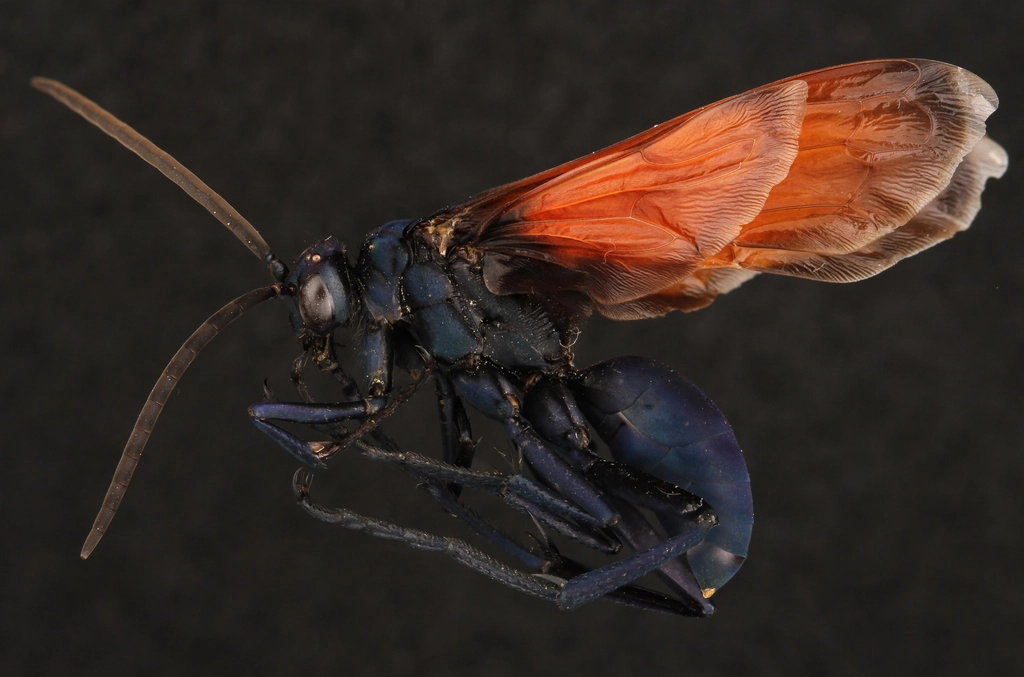 Photo Credit: insectsunlockedproject / Rawpixel
In the sun-drenched corners of the world, where the desert meets the sky, lives a remarkable insect known as the Tarantula Hawk, or Pepsis grossa. This striking wasp, with its vibrant blue-black body and long, slender legs, is not just a feast for the eyes; it’s a masterful predator that commands respect in the animal kingdom. Imagine a scene where this dazzling creature flits through the arid landscape, its wings shimmering in the sunlight as it hunts for its favorite meal: tarantulas. With a body that can stretch up to two inches long, the Tarantula Hawk is both beautiful and formidable, captivating scientists and nature enthusiasts alike.
What makes the Tarantula Hawk truly fascinating is its unique hunting strategy. Unlike many insects, this wasp doesn’t just catch its prey; it paralyzes it with a sting that is considered one of the most painful in the insect world. This sting is not just for show; it allows the Tarantula Hawk to lay its eggs inside the still-living tarantula, providing a fresh meal for the hatching larvae. This extraordinary life cycle showcases the intricate balance of nature, where beauty and brutality coexist. As we explore the world of the Tarantula Hawk, we’ll uncover its behaviors, habitats, and the vital role it plays in its ecosystem, revealing the wonders of this incredible wasp.
The Tarantula Hawk is a striking insect that occupies a fascinating niche in the animal kingdom. Taxonomically, it belongs to the Kingdom Animalia, which includes all animals, and is classified under the Phylum Arthropoda, known for its jointed limbs and exoskeletons. Within the Class Insecta, it finds its place in the Order Hymenoptera, which encompasses bees, wasps, and ants. The Tarantula Hawk is particularly notable for its powerful sting, which is often described as one of the most painful in the insect world. This unique feature, along with its vibrant colors and impressive hunting skills, sets it apart from many other insects.
| Taxonomic Rank | Scientific Name | Meaning & Significance |
|---|---|---|
| Kingdom | Animalia | The kingdom of all animals, highlighting the Tarantula Hawk’s status as a living organism that moves and interacts with its environment. |
| Phylum | Arthropoda | Meaning “jointed feet,” this name reflects the Tarantula Hawk’s segmented body and jointed legs, typical of arthropods. |
| Class | Insecta | This class name comes from the Latin word for “cut,” referring to the segmented body structure of insects, including the Tarantula Hawk. |
| Order | Hymenoptera | Translating to “membranous wings,” this order includes insects with two pairs of wings, like the Tarantula Hawk, which uses its wings for agile flight. |
| Family | Pompilidae | This family name means “wasp,” indicating the Tarantula Hawk’s close relationship with wasps and its predatory nature. |
| Genus | Pepsis | Derived from the Greek word for “to digest,” this name reflects the Tarantula Hawk’s role in the ecosystem as a predator that hunts tarantulas. |
The classification of the Tarantula Hawk reveals much about its evolutionary history and ecological role. As a member of the Hymenoptera order, it shares a lineage with other social and solitary wasps, showcasing a long history of adaptation and survival strategies. Its predatory behavior, particularly its unique hunting of tarantulas, highlights a specialized evolutionary path that has allowed it to thrive in various environments. This intricate web of relationships within the tree of life illustrates not only the Tarantula Hawk’s place in nature but also the remarkable diversity of life forms that have evolved over millions of years.
The evolutionary journey of the Tarantula Hawk, a member of the Pompilidae family, stretches back millions of years, intertwining with the history of wasps and their prey. These insects have adapted to their environments through a series of remarkable changes, allowing them to thrive in diverse habitats. The Tarantula Hawk’s lineage can be traced to early wasps that emerged during the Jurassic period, around 200 million years ago, when the world was a very different place.
Ancestral forms of the Tarantula Hawk were likely smaller and less specialized than their modern descendants. Over time, they evolved to become larger and more robust, developing a unique hunting strategy that involves paralyzing tarantulas. This adaptation is a significant evolutionary transition, as it allowed these wasps to exploit a niche that few other predators could. The ability to deliver a powerful sting, which can incapacitate a tarantula, is a key feature that has been refined over generations. Additionally, their striking coloration serves as a warning to potential predators, a tactic known as aposematism, which helps them avoid being eaten.
These adaptations have been crucial for the Tarantula Hawk’s survival in a competitive ecosystem. By mastering the art of hunting tarantulas, they have carved out a niche that not only provides sustenance for their young but also minimizes competition with other predators. Their powerful sting and vibrant colors further enhance their chances of survival, allowing them to thrive in various environments. The evolutionary story of the Tarantula Hawk is a testament to the wonders of nature and the intricate dance of adaptation and survival.
The Tarantula Hawk is an awe-inspiring wasp that commands attention with its striking appearance. With a body that can reach up to two inches long, it boasts a robust and elongated form, giving it a powerful presence. Its wings are large and translucent, often shimmering in the sunlight, while its legs are long and spindly, perfectly designed for navigating through the underbrush. The combination of its vibrant colors and formidable size makes it a true spectacle of nature.
| Feature | Description |
|---|---|
| Weight | 0.35 to 0.67 ounces |
| Skin Type | Shell |
| Most Distinctive Feature | Spider predation |
The Tarantula Hawk’s features are not just for show; they play crucial roles in its survival. Its sturdy shell protects it from predators, while its impressive size and striking colors can deter potential threats. The large wings allow for agile flight, enabling it to swiftly escape danger or hunt down its favorite prey—spiders. Together, these characteristics create a well-adapted predator, perfectly suited for its environment and lifestyle.
The Tarantula Hawk thrives in a variety of habitats that showcase its adaptability and resilience. Picture a sun-drenched desert scrub, where the ground is dotted with hardy shrubs and cacti, or a lush rainforest teeming with life. These wasps also find their home in expansive grasslands, where the tall grasses sway gently in the breeze. Whether in open arid regions or semi-arid locations, the Tarantula Hawk is well-suited to environments that offer both shelter and hunting grounds.
To flourish in these diverse settings, the Tarantula Hawk requires specific climate and environmental conditions. Generally, it prefers warm temperatures, as these help fuel its energy levels and activity. The dry heat of deserts and the humid warmth of rainforests provide the perfect backdrop for this wasp’s life cycle. These environments also support a variety of prey, particularly tarantulas, which are essential for the Tarantula Hawk’s reproductive strategy.
Adaptation is key to the Tarantula Hawk’s success in its habitats. Its striking coloration not only makes it visually captivating but also serves as a warning to potential predators about its painful sting. The wasp’s ability to navigate through different terrains, from sandy deserts to dense forests, showcases its versatility. By honing its hunting skills and developing a unique reproductive method, where it paralyzes tarantulas to provide live food for its larvae, the Tarantula Hawk has become a master of survival in its chosen environments.
The daily life of a Tarantula Hawk is a blend of solitary exploration and purposeful hunting. These wasps are most active during the warm hours of the day, buzzing through their habitats in search of tarantulas, their primary prey. With keen eyesight, they scan the ground for movement, ready to pounce on unsuspecting spiders. Once they locate a tarantula, the Tarantula Hawk uses its powerful sting to paralyze the spider, ensuring it remains alive but immobile. This allows the wasp to transport the tarantula back to its burrow, where it will lay an egg inside the spider’s body. The egg hatches, and the larva feeds on the still-living tarantula, a gruesome but effective survival strategy.
While Tarantula Hawks are primarily solitary creatures, their interactions can be quite interesting. They do not form colonies like some other wasps; instead, each female operates independently. However, during the mating season, males can be seen competing for the attention of females. They engage in aerial displays, showcasing their strength and agility. Communication among Tarantula Hawks is mostly visual, relying on body movements and flight patterns to convey messages, especially during courtship. This solitary lifestyle allows them to focus on their hunting and reproductive strategies without the complexities of group dynamics.
| Behavior Type | Description |
|---|---|
| Hunting | Tarantula Hawks hunt alone, using their keen eyesight to locate tarantulas, which they paralyze with a powerful sting. |
| Social Structure | These wasps are solitary, with females operating independently and males competing for mates during the breeding season. |
| Communication | They communicate primarily through visual signals, using body movements and flight patterns, especially during mating displays. |
The behaviors of the Tarantula Hawk are finely tuned to ensure survival in a challenging environment. By hunting alone, they minimize competition for food and can focus on their specific prey. Their solitary nature allows them to be efficient hunters, while their unique reproductive strategy ensures that their offspring have a ready food source. This combination of hunting prowess and reproductive strategy makes the Tarantula Hawk a fascinating example of nature’s ingenuity.
The Tarantula Hawk has a diet that is both intriguing and specialized. As an omnivore, it primarily feeds on tarantulas, which are large, hairy spiders that can be found in various habitats. The Tarantula Hawk employs a unique hunting strategy to capture its prey. It uses its powerful sting to paralyze the tarantula, ensuring that the spider remains alive but immobile. This method allows the wasp to transport the tarantula back to its burrow, where it lays its eggs inside the still-living spider. When the eggs hatch, the larvae have a fresh meal to feast on, making this feeding behavior quite remarkable.
| Dietary Aspect | Details |
|---|---|
| Diet Type | Omnivore |
| Favorite Foods | Tarantulas |
| Prey Items | Primarily tarantulas |
| Hunting/Foraging Strategies | Paralyzes tarantulas with a sting and transports them to burrows |
This specialized diet not only shapes the Tarantula Hawk’s daily routine but also plays a crucial role in its ecosystem. By preying on tarantulas, these wasps help regulate spider populations, contributing to the balance of their habitats. Their unique hunting behavior also showcases the intricate relationships between predators and prey in nature. As they hunt and lay their eggs, Tarantula Hawks are not just surviving; they are actively participating in the cycle of life, ensuring that their species continues to thrive in the wild.
The mating rituals of the Tarantula Hawk are as captivating as the wasp itself. During the breeding season, which typically occurs in the warmer months, males engage in elaborate courtship displays to attract females. These displays can include aerial acrobatics and pheromone signaling, which are chemical messages that help convey their readiness to mate. Once a female selects a mate, the pair will copulate, and the female will begin her remarkable reproductive journey.
| Reproductive Aspect | Details |
|---|---|
| Gestation Period | 3-4 days |
| Litter Size | Varies, typically a few larvae |
| Age of Maturity | Soon after pupating |
| Name of Young | Larva |
After mating, the female Tarantula Hawk embarks on a remarkable mission to ensure the survival of her young. She hunts down a tarantula, paralyzing it with her sting, and then lays her eggs on or inside the spider’s body. This gruesome yet fascinating strategy provides the larvae with a fresh food source once they hatch. As the larvae develop, they consume the tarantula, growing rapidly until they are ready to pupate. This process transforms them into adult wasps, ready to take on the world, continuing the cycle of life in their unique and thrilling way.
The Tarantula Hawk plays a vital role in its ecosystem, primarily as a predator of tarantulas. This striking wasp is not only a hunter but also a prey item for various animals, placing it in a complex web of interactions. Its unique hunting strategy, which involves paralyzing tarantulas to use them as living food for its larvae, makes it a fascinating part of the food web. However, like many species, the Tarantula Hawk faces several dangers that threaten its survival.
To defend itself against these threats, the Tarantula Hawk has developed several survival strategies. Its vibrant coloration serves as a warning to potential predators, signaling that it is not a tasty snack. Additionally, when threatened, it can deliver a painful sting, which is one of the most potent among insects. This defensive behavior discourages many would-be attackers. By combining these tactics with its ability to navigate diverse habitats, the Tarantula Hawk continues to thrive despite the challenges it faces.
A keystone species is an organism that has a disproportionately large impact on its environment relative to its abundance. This means that if it were removed, the ecosystem would change dramatically. The Tarantula Hawk, a striking wasp known for its unique hunting habits, qualifies as a keystone species in its ecosystem. By preying on tarantulas, it helps regulate spider populations, which in turn affects the entire food web.
The ecological impact of the Tarantula Hawk is profound. By targeting tarantulas, these wasps control the numbers of these large spiders, preventing them from overwhelming the local ecosystem. This predation is crucial because tarantulas can be significant predators themselves, feeding on various insects and small animals. If their populations were to grow unchecked, they could disrupt the balance of the ecosystem, leading to a decline in other species.
Moreover, the Tarantula Hawk’s role extends beyond just controlling tarantula populations. When it hunts, it also serves as a food source for other animals. Birds and larger insects may prey on these wasps, linking them to various levels of the food chain. This connection highlights their importance in maintaining biodiversity, as they contribute to the survival of other species that rely on them for sustenance.
If the Tarantula Hawk were to disappear, the consequences could be severe. Without this wasp, tarantula populations might surge, leading to a decline in the insects and small animals they prey upon. This imbalance could ripple through the ecosystem, affecting plant life and other animal species. Ultimately, the absence of the Tarantula Hawk would disrupt the delicate balance of its habitat, showcasing just how vital this wasp is to the health of its environment.
The Tarantula Hawk plays a crucial role in shaping its ecosystem, acting as both a predator and a pollinator. Found in diverse habitats like desert scrub, rainforests, and grasslands, this striking wasp helps maintain the balance of its environment. By hunting tarantulas, it controls spider populations, which can otherwise grow unchecked. Additionally, as it moves from flower to flower, it contributes to the pollination process, helping plants reproduce and thrive. This dual role makes the Tarantula Hawk an essential player in its ecological niche.
| Ecosystem Service | Impact |
|---|---|
| Predation | Controls tarantula populations, preventing overpopulation and maintaining balance in the food web. |
| Pollination | Assists in the reproduction of various flowering plants, promoting biodiversity. |
| Soil Aeration | Through its burrowing behavior, it helps aerate the soil, improving water infiltration and nutrient cycling. |
The influence of the Tarantula Hawk extends beyond its immediate hunting habits. For instance, by preying on tarantulas, it not only keeps their numbers in check but also affects the entire food web. When tarantulas are less abundant, other species that rely on them for food, such as certain birds and mammals, may thrive. Furthermore, as the Tarantula Hawk visits flowers for nectar, it inadvertently transfers pollen, which is vital for plant reproduction. This interaction supports a variety of plant species, ensuring that the ecosystem remains vibrant and diverse.
The broader ecological importance of the Tarantula Hawk cannot be overstated. As a keystone species, its presence is vital for the health of its environment. If this wasp were to disappear, the consequences would ripple through the ecosystem, leading to an imbalance that could affect many other organisms. By controlling spider populations and aiding in plant reproduction, the Tarantula Hawk helps sustain the intricate web of life that supports countless species, including humans. Understanding its role encourages us to appreciate the delicate connections that exist in nature and the importance of every creature, no matter how small.
In the intricate web of life, symbiosis refers to the close and often long-term interactions between different species. These relationships can take many forms, including mutualism, where both species benefit, parasitism, where one benefits at the expense of the other, and commensalism, where one benefits while the other is neither helped nor harmed. The Tarantula Hawk, a striking wasp known for its impressive hunting skills, engages in various ecological relationships that highlight the complexity of nature.
| Species/Type | Relationship Type | Description |
|---|---|---|
| Tarantulas | Parasitic | The Tarantula Hawk lays its eggs on or inside tarantulas, using them as a living food source for its larvae. |
| Flowers | Mutualistic | While searching for nectar, Tarantula Hawks inadvertently pollinate flowers, aiding in plant reproduction. |
| Other Insects | Commensal | Some insects may benefit from the presence of Tarantula Hawks, as their hunting activities can help control pest populations. |
The evolution of these relationships showcases the adaptability and survival strategies of the Tarantula Hawk. By utilizing tarantulas as hosts for their young, these wasps ensure that their larvae have a ready food supply, while the pollination of flowers helps maintain the health of their ecosystem. Each interaction is a testament to the delicate balance of nature, where species evolve together, shaping their environments and each other in the process. Through these partnerships, the Tarantula Hawk not only thrives but also contributes to the richness of its habitat.
The Tarantula Hawk is not just a striking wasp; it’s a masterful predator with some truly astonishing traits that make it stand out in the insect world. Here are some surprising facts that will pique the interest of nature enthusiasts of all ages.
The relationship between the Tarantula Hawk and humanity is as intriguing as the wasp itself. Historically, these striking insects have captured the imagination of various cultures. In some regions, they are seen as symbols of strength and resilience due to their impressive hunting skills. Folklore often paints them as fierce guardians of the desert, while their dramatic encounters with tarantulas have inspired stories and myths. This cultural significance highlights how humans have long been fascinated by the natural world and the creatures that inhabit it.
In modern times, interactions between Tarantula Hawks and humans have evolved. While these wasps are not domesticated, they play a role in local ecosystems that can benefit human activities, such as agriculture. Their predation on tarantulas helps control spider populations, which can be beneficial in certain areas. However, there can also be conflict; their painful sting, which is among the most intense in the insect world, can lead to fear and misunderstanding. Conservation efforts are increasingly important as habitats change due to human activity, and understanding the role of Tarantula Hawks in their ecosystems can help promote coexistence.
Looking ahead, the future of the relationship between Tarantula Hawks and humanity will likely depend on our ability to appreciate and understand these remarkable insects. As we face environmental challenges, fostering a sense of respect for all creatures, including the Tarantula Hawk, will be essential. By promoting conservation and education, we can ensure that these fascinating wasps continue to thrive alongside us, enriching our ecosystems and inspiring future generations.
The Tarantula Hawk, a captivating wasp known for its striking appearance and unique hunting methods, currently holds a conservation status of “Least Concern.” This means that, overall, the species is not facing immediate threats that could lead to its extinction. Population trends suggest that Tarantula Hawks are stable across many regions, allowing them to thrive in various habitats. However, localized declines may occur due to specific environmental changes or habitat loss.
| Conservation Factor | Status/Details |
|---|---|
| IUCN Status | Least Concern |
| Population Estimates | Stable in many regions |
| Trend Direction | Stable |
Despite their current stable status, Tarantula Hawks face several threats that could impact their populations in the future. Habitat destruction, primarily due to urban development and agricultural expansion, poses a significant risk. As their natural environments shrink, these wasps may struggle to find suitable places to hunt and reproduce. Additionally, climate change can alter the ecosystems they depend on, affecting both their prey and their own survival.
Conservation efforts for the Tarantula Hawk are not as prominent as those for more endangered species, but awareness is growing. Protecting their habitats through sustainable land use practices can help ensure that these fascinating wasps continue to thrive. By promoting biodiversity and maintaining healthy ecosystems, we can support the Tarantula Hawk and many other species that share its environment. The outlook remains positive, as long as we remain vigilant in our efforts to protect the natural world.
| Question | Answer |
|---|---|
| What is the habitat of the Tarantula Hawk? | Tarantula Hawks are found in a variety of habitats, including desert scrub, rainforests, and grasslands. They thrive in open arid or semi-arid locations, where they can easily hunt for their prey. |
| What do Tarantula Hawks eat? | These fascinating insects are omnivores, meaning they eat both plants and animals. Their diet primarily consists of nectar from flowers, but they are also known for hunting tarantulas, which they use to feed their young. |
| How do Tarantula Hawks behave? | Tarantula Hawks are known for their unique hunting behavior. They locate tarantulas, sting them to paralyze them, and then lay their eggs on the spider's body, providing a fresh food source for the larvae when they hatch. |
| How do Tarantula Hawks reproduce? | During reproduction, female Tarantula Hawks search for a suitable tarantula to paralyze. After laying their eggs on the spider, the larvae feed on the still-living tarantula, ensuring they have plenty of food as they grow. |
| What threats do Tarantula Hawks face? | While Tarantula Hawks are currently classified as Least Concern, they can face threats from habitat loss due to human activities. Additionally, they may be affected by pesticides and other chemicals that harm their environment. |
| What is an interesting characteristic of Tarantula Hawks? | One of the most distinctive features of Tarantula Hawks is their ability to hunt and subdue tarantulas. Their sting is also incredibly painful, ranking among the most painful insect stings, which they use as a defense mechanism against predators. |
| Where can I find Tarantula Hawks? | Tarantula Hawks are found in various regions around the world, particularly in warmer climates. You can spot them in places like the southwestern United States, parts of Africa, and even in some areas of South America. |