Taxonomy & Classification
- Kingdom
- Animalia
- Phylum
- Chordata
- Class
- Reptilia
- Order
- Squamata
- Family
- Acrochordidae
- Genus
- Acrochordus
- Species
- Acrochordus arafurae

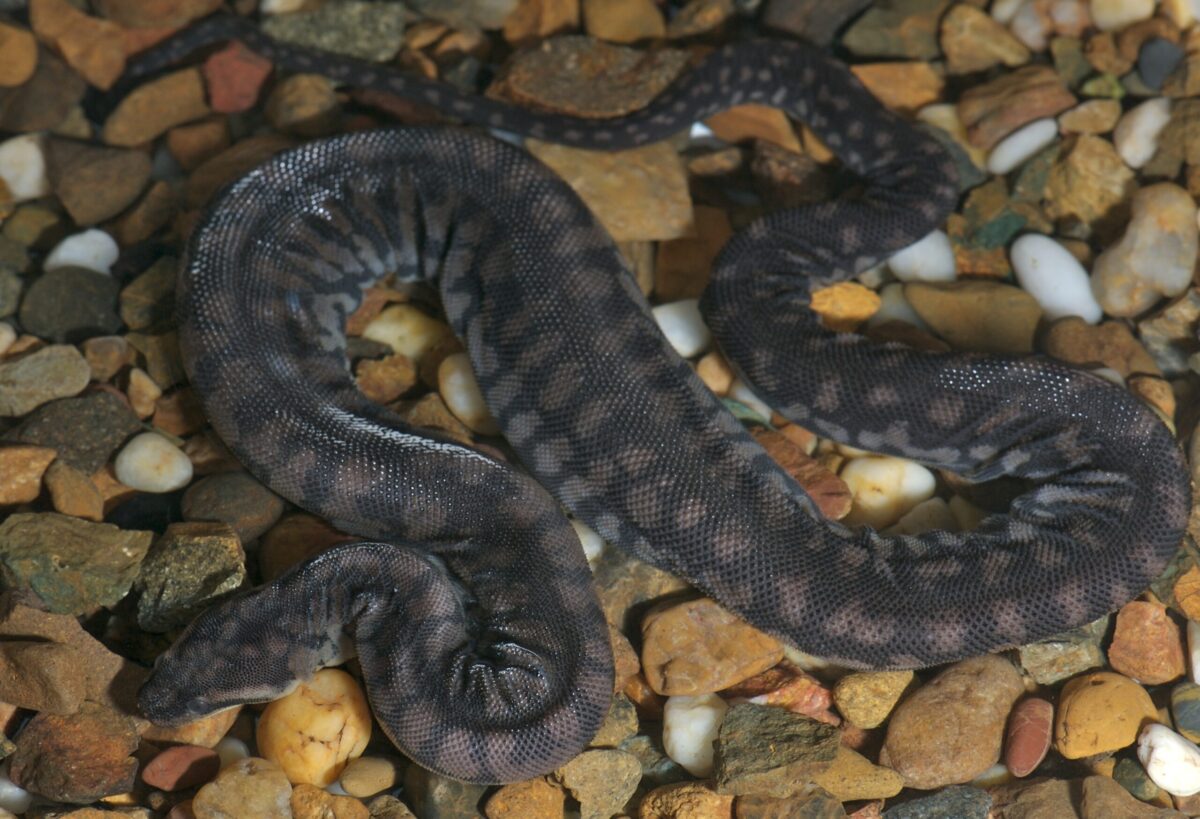 "Arafura file snake (Acrochordus arafurae) in captivity" by Smacdonald (talk) is licensed under CC BY-SA 3.0
In the warm, shimmering waters of Southeast Asia and northern Australia, the Arafura File Snake, or Acrochordus arafurae, glides gracefully through its brackish habitat. With a body that can reach impressive lengths, this semi-aquatic reptile is easily recognized by its unique, rough-textured skin, which resembles the surface of a file—hence its name. The Arafura File Snake is not just a striking sight; it plays a vital role in its ecosystem, helping to maintain the balance of aquatic life by preying on fish. This fascinating creature captivates scientists and nature enthusiasts alike, drawing them into the mysteries of its underwater world.
Imagine a tranquil scene where mangroves sway gently in the breeze, their roots submerged in the clear water. Here, the Arafura File Snake hunts with remarkable skill, using its keen senses to detect the slightest movements of its slippery prey. Its adaptations, such as a flattened head and specialized scales, allow it to navigate effortlessly through the water, making it a master of its environment. As we explore the life of the Arafura File Snake, we will uncover the secrets of its behavior, diet, and the important role it plays in the delicate balance of coastal ecosystems. Join us on this adventure to learn more about this extraordinary reptile and the wonders of the natural world it inhabits.
The Arafura File Snake, scientifically known as Acrochordus arafurae, occupies a distinctive niche in the animal kingdom. This intriguing reptile belongs to the family Acrochordidae, which is known for its unique adaptations to aquatic life. Unlike many other snakes, the Arafura File Snake has a rough, textured skin that helps it grip slippery surfaces, making it an expert swimmer. Its specialized body shape and lifestyle set it apart from other snakes, showcasing the incredible diversity of life on our planet.
| Taxonomic Rank | Scientific Name | Meaning & Significance |
|---|---|---|
| Kingdom | Animalia | This name signifies that the Arafura File Snake is part of the vast group of multicellular organisms known as animals, which are characterized by their ability to move and respond to their environment. |
| Phylum | Chordata | Chordata means “having a notochord,” a flexible rod that supports the body. This group includes all animals with a backbone, highlighting the Arafura File Snake’s place among vertebrates. |
| Class | Reptilia | Reptilia refers to reptiles, which are cold-blooded animals with scaly skin. This classification emphasizes the Arafura File Snake’s adaptations to both land and water environments. |
| Order | Squamata | Squamata means “scaly,” a fitting description for snakes and lizards. This order includes the Arafura File Snake’s relatives, showcasing its evolutionary ties to other squamates. |
| Family | Acrochordidae | Acrochordidae translates to “rough cord,” referring to the snake’s distinctive, textured skin that aids in swimming and gripping surfaces in its aquatic habitat. |
| Genus | Acrochordus | The name Acrochordus also relates to the snake’s rough skin, emphasizing its unique adaptations for life in water, where it hunts for fish and other prey. |
Understanding the Arafura File Snake’s taxonomic classification reveals much about its evolutionary journey. As a member of the Acrochordidae family, it shares a lineage with other specialized aquatic snakes, showcasing adaptations that have allowed it to thrive in its unique habitat. This classification not only highlights its physical characteristics but also provides insight into the ecological roles these snakes play in their environments, reminding us of the intricate web of life that connects all living beings.
The evolutionary journey of the Arafura File Snake, or Acrochordus arafurae, stretches back millions of years, tracing its lineage through a fascinating tapestry of adaptation and survival. This species is part of the Acrochordidae family, which has evolved to thrive in aquatic environments. The Arafura File Snake is a modern representative of a lineage that has adapted to life in freshwater habitats, particularly in the coastal regions of northern Australia and New Guinea.
The ancestors of the Arafura File Snake were likely more terrestrial, resembling other snake species that roamed the land. Over time, as some snakes ventured into water, they began to develop traits that would help them navigate this new environment. One major transition was the development of a more streamlined body, allowing for efficient swimming. Additionally, their skin evolved to be more textured, which helps them grip slippery surfaces, a crucial adaptation for catching prey in water.
These adaptations have been vital for the Arafura File Snake’s survival in its aquatic habitat. By developing specialized skin and a diet tailored to its environment, this snake has become a proficient hunter in the waters it calls home. Its ability to navigate and thrive in challenging conditions showcases the incredible power of evolution, allowing it to flourish where many other species might struggle.
The Arafura File Snake is a captivating sight, with a body that seems to glide effortlessly through its watery habitat. This snake has a long, slender form that can reach impressive lengths, often measuring around 2 to 3 meters (6.5 to 10 feet). Its skin is covered in small, rough scales that give it a textured appearance, almost like a living piece of art. The coloration is a blend of muted browns and greens, allowing it to blend seamlessly into the murky waters and riverbanks of its native regions.
| Feature | Description |
|---|---|
| Size | Typically 2 to 3 meters (6.5 to 10 feet) long |
| Color | Muted browns and greens for camouflage |
| Skin Type | Rough, small scales that provide texture |
The combination of its length, coloration, and textured skin serves multiple purposes in the wild. The muted colors help the Arafura File Snake remain hidden from both predators and prey, making it an effective ambush hunter. Its rough scales not only aid in gripping slippery surfaces but also provide protection against potential threats. Together, these features create a well-adapted predator, perfectly suited for life in the rivers and estuaries of its environment.
The Arafura File Snake thrives in the warm, shallow waters of coastal regions, particularly in brackish environments where freshwater meets saltwater. Picture a serene landscape where mangroves sway gently in the breeze, and the sun glimmers on the surface of the water. This snake is often found in rivers, estuaries, and lagoons, where it can easily navigate through the tangled roots and submerged vegetation. The interplay of land and water creates a rich habitat teeming with life, making it an ideal home for this aquatic reptile.
The climate in these regions is typically tropical, characterized by warm temperatures and seasonal rainfall. The Arafura File Snake prefers areas where the water is calm and the environment is lush, providing plenty of cover and food sources. These habitats often experience fluctuations in salinity, which means the snake has adapted to thrive in both freshwater and brackish conditions. The warm waters are essential for the snake’s metabolism, helping it to stay active and hunt effectively.
Adaptations have finely tuned the Arafura File Snake to its watery world. Its smooth, textured skin helps it glide through the water with ease, while its ability to tolerate varying salinity levels allows it to explore different habitats. The snake’s keen sense of touch and specialized sensory organs enable it to detect prey even in murky waters. These features not only enhance its hunting skills but also ensure its survival in the dynamic environments it calls home.
The Arafura File Snake leads a life that is both tranquil and purposeful, primarily spending its days in the warm, shallow waters of coastal regions. As a semi-aquatic reptile, it is often seen gliding gracefully through the water, using its unique, textured skin to navigate effortlessly. This snake is most active during the day, hunting for fish and other small aquatic creatures. With its keen sense of touch and ability to detect vibrations in the water, it can locate prey with remarkable precision.
While the Arafura File Snake is primarily solitary, it does exhibit interesting behaviors when it comes to its environment. These snakes are not territorial, which means they can often be found in the same areas without conflict. They may occasionally come together during mating season, but otherwise, they prefer to enjoy their own company. Communication among these snakes is subtle; they rely on body language and the vibrations in the water to signal their presence to one another, rather than vocalizations.
| Behavior Type | Description |
|---|---|
| Activity Patterns | Active during the day, hunting for fish and small aquatic animals in shallow waters. |
| Social Structure | Primarily solitary, with occasional gatherings during mating season. |
| Communication Methods | Uses body language and water vibrations to communicate with other snakes. |
The behaviors of the Arafura File Snake are finely tuned to ensure its survival in a dynamic environment. By being active during the day, it maximizes its hunting opportunities while avoiding competition with nocturnal predators. Its solitary nature allows it to thrive without the stress of territorial disputes, and its unique communication methods help it navigate its world effectively. Together, these traits make the Arafura File Snake a master of its aquatic domain, perfectly adapted to the challenges of its habitat.
The Arafura File Snake has a diet that primarily consists of fish, making it a skilled hunter in its aquatic environment. This snake is particularly adept at catching its slippery prey, using its unique adaptations to navigate through the water with ease. With a keen sense of sight and the ability to blend into its surroundings, the Arafura File Snake employs stealth and patience to ambush unsuspecting fish, ensuring a successful meal.
| Dietary Aspect | Details |
|---|---|
| Diet Type | Carnivorous |
| Favorite Foods | Fish |
| Prey Items | Various species of fish found in brackish waters |
| Hunting/Foraging Strategies | Stealthy ambush, using camouflage and quick strikes |
The diet of the Arafura File Snake plays a crucial role in its ecological niche. By preying on fish, it helps maintain the balance of aquatic ecosystems, controlling fish populations and contributing to the health of its habitat. This feeding behavior also influences the snake’s daily routine, as it must spend time hunting and foraging in the shallow waters where its prey is abundant. The interplay between the Arafura File Snake and its environment showcases the intricate connections that define life in coastal ecosystems.
The mating behavior of the Arafura File Snake is a captivating spectacle that occurs during the warmer months, typically from late spring to early summer. During this breeding season, males engage in a series of courtship displays, which may include swimming in circles around females and gently rubbing against them. This ritual helps establish dominance and attract potential mates. Once a female is receptive, mating takes place, leading to the fascinating process of reproduction.
| Reproductive Aspect | Details |
|---|---|
| Gestation Period | Approximately 4-5 months |
| Litter Size | 10-27 young |
| Age of Maturity | 2-3 years |
| Name of Young | Hatchlings |
After the gestation period, the female Arafura File Snake gives birth to live young, known as hatchlings. These tiny snakes are fully formed and ready to swim away shortly after birth, showcasing their independence from the start. Parental care is minimal, as the mother does not stay with her young. Instead, the hatchlings must fend for themselves, navigating their aquatic environment and learning to hunt for food. As they grow, they develop the skills necessary to thrive in their habitat, maturing into adults within a few years. This journey from hatchling to adult is a testament to the resilience and adaptability of the Arafura File Snake.
The Arafura File Snake plays a vital role in its ecosystem, primarily as a predator of fish. Positioned in the food web, it helps maintain the balance of aquatic life in its coastal habitat. However, like many species, it faces various dangers that threaten its survival.
To defend itself against these threats, the Arafura File Snake employs several clever strategies. Its tough, textured skin makes it less appealing to predators, while its ability to blend into the murky waters provides excellent camouflage. When threatened, it can also dive deeper into the water, escaping the notice of hungry eyes above. By using these survival tactics, the Arafura File Snake continues to thrive in its unique environment, showcasing the resilience of nature.
A keystone species is an organism that has a disproportionately large impact on its environment relative to its abundance. These species help maintain the structure of an ecosystem, influencing the types and numbers of other species present. The Arafura File Snake, or Acrochordus arafurae, qualifies as a keystone species in its habitat. By preying on fish and other aquatic organisms, it plays a crucial role in regulating populations and maintaining the balance of its ecosystem.
The Arafura File Snake primarily feeds on fish, which makes it an important predator in its coastal habitat. By controlling fish populations, it helps prevent any one species from becoming too dominant, which could lead to a decline in biodiversity. For example, if the snake were to disappear, certain fish species might overpopulate, leading to overgrazing of aquatic plants and altering the entire ecosystem. This balance is vital for the health of the mangrove and estuarine environments where the snake resides.
Additionally, the Arafura File Snake serves as prey for larger predators, such as birds of prey and larger fish. This means it contributes to the food web, supporting a variety of other species. Its presence helps sustain the populations of these predators, which in turn influences the dynamics of the entire ecosystem. The snake’s role as both predator and prey highlights its importance in maintaining ecological balance.
If the Arafura File Snake were to vanish from its ecosystem, the consequences could be severe. Fish populations could explode, leading to overgrazing of aquatic plants and a decline in water quality. This shift could disrupt the entire food web, affecting not only the fish but also the birds and other animals that rely on them for survival. The loss of this snake would ripple through the ecosystem, highlighting just how interconnected all species are in maintaining a healthy environment.
The Arafura File Snake, known scientifically as Acrochordus arafurae, plays a crucial role in its ecosystem, particularly in the coastal waters where it resides. This semi-aquatic snake is not just a predator; it helps shape the community of organisms around it. By preying on fish and other aquatic creatures, the Arafura File Snake influences the population dynamics of these species, ensuring that no single group dominates the ecosystem. This balance is essential for maintaining a healthy environment, where various species can thrive together.
| Ecosystem Service | Impact |
|---|---|
| Predation | Controls fish populations, preventing overpopulation and promoting biodiversity. |
| Habitat Structure | Influences the distribution of aquatic plants by affecting herbivore populations. |
| Nutrient Cycling | Contributes to nutrient cycling through its feeding habits, impacting water quality. |
| Food Source | Serves as prey for larger predators, supporting the food web. |
The Arafura File Snake’s influence can be seen in various ways. For instance, by keeping fish populations in check, it allows for a diverse range of aquatic plants to flourish. This, in turn, provides habitat and food for other species, creating a vibrant ecosystem. Additionally, as the snake consumes its prey, it helps recycle nutrients back into the water, which is vital for the health of the entire aquatic community. Without this balance, the ecosystem could become unbalanced, leading to declines in both plant and animal life.
The broader ecological importance of the Arafura File Snake cannot be overstated. As a keystone species, its presence is essential for maintaining the structure and function of its habitat. By regulating fish populations and contributing to nutrient cycling, the Arafura File Snake supports a complex web of life that includes everything from tiny microorganisms to larger predators. Protecting this remarkable snake is not just about preserving one species; it is about safeguarding the intricate relationships that sustain the health of coastal ecosystems.
In the intricate web of life, symbiosis refers to the close and often long-term interactions between different species. These relationships can take many forms, including mutualism, where both species benefit, parasitism, where one benefits at the expense of the other, and commensalism, where one benefits while the other is neither helped nor harmed. The Arafura File Snake, with its unique adaptations and ecological role, engages in various relationships that highlight the interconnectedness of life in its coastal habitat.
| Species/Type | Relationship Type | Description |
|---|---|---|
| Fish (various species) | Mutualistic | The Arafura File Snake preys on fish, helping to control their populations. In return, the presence of the snake can indicate a healthy ecosystem, benefiting other species that rely on balanced aquatic environments. |
| Water plants (like seagrass) | Commensal | The snake often uses seagrass beds for shelter and hunting grounds. While the plants are not affected by the snake’s presence, they provide essential habitat for both the snake and its prey. |
| Parasites (like leeches) | Parasitic | Occasionally, the Arafura File Snake may host parasites such as leeches. These organisms benefit by feeding on the snake’s blood, which can weaken the snake but does not usually lead to its death. |
The evolution of these relationships showcases the dynamic nature of ecosystems. Over time, the Arafura File Snake has adapted to thrive in its environment, forming connections that enhance its survival and that of other species. By preying on fish, it helps maintain a balance in the aquatic food web, while its interactions with plants and parasites illustrate the complexity of life beneath the waves. These partnerships not only support the snake but also contribute to the overall health of its coastal habitat, demonstrating how every creature plays a role in the grand tapestry of nature.
The Arafura File Snake is a captivating reptile that thrives in the warm, shallow waters of coastal regions. With its unique adaptations and intriguing behaviors, this snake offers a glimpse into the wonders of aquatic life.
The Arafura File Snake, known scientifically as Acrochordus arafurae, has a rich history intertwined with human culture, particularly among the coastal communities of Southeast Asia and northern Australia. Historically, these snakes have been both feared and revered. In some cultures, they are seen as symbols of strength and resilience, while in others, they evoke caution due to their aquatic nature and potential for conflict with fishermen. Folklore often features these snakes, highlighting their mysterious presence in the waters where they dwell, creating a blend of admiration and wariness among local populations.
In contemporary times, the relationship between humans and the Arafura File Snake has evolved, reflecting both conservation efforts and challenges. As coastal habitats face threats from pollution and climate change, conservationists are working to protect these unique reptiles and their environments. However, conflicts can arise, especially when fishing activities overlap with the snake’s hunting grounds. While some communities have embraced the idea of coexistence, others may resort to capturing or harming these snakes out of fear or misunderstanding. Interestingly, there are also efforts to study the Arafura File Snake for potential insights into aquatic ecosystems, showcasing a growing appreciation for its ecological role.
As we look to the future, the relationship between humans and the Arafura File Snake holds promise for both understanding and conservation. With increased awareness of environmental issues and the importance of biodiversity, there is hope that communities will foster a more harmonious coexistence with this fascinating reptile. By valuing the Arafura File Snake not just as a creature of the water but as a vital part of the ecosystem, we can work together to ensure its survival for generations to come.
The Arafura File Snake, or Acrochordus arafurae, currently holds a conservation status of “Least Concern” according to the International Union for Conservation of Nature (IUCN). This classification suggests that, at present, the species does not face an immediate threat of extinction. However, population trends indicate that while the overall numbers appear stable, localized declines may occur due to environmental changes and habitat degradation.
| Conservation Factor | Status/Details |
|---|---|
| IUCN Status | Least Concern |
| Population Estimates | Stable, but localized declines noted |
| Trend Direction | Stable overall, with some areas experiencing decline |
The main threats to the Arafura File Snake stem from habitat loss and degradation, primarily due to human activities. Coastal development, pollution, and climate change are significant factors that can disrupt the delicate ecosystems where these snakes thrive. As mangroves and shallow waters are altered or destroyed, the Arafura File Snake’s hunting grounds and breeding sites become increasingly compromised, putting pressure on their populations.
Conservation efforts are underway to protect the habitats of the Arafura File Snake and ensure its survival. Initiatives include habitat restoration projects and the establishment of marine protected areas. By safeguarding these vital ecosystems, conservationists aim to maintain the balance of life in coastal regions. The outlook for the Arafura File Snake remains cautiously optimistic, as long as proactive measures continue to be implemented to address the challenges it faces.
| Question | Answer |
|---|---|
| What is the habitat of the Arafura File Snake? | The Arafura File Snake is typically found in the coastal waters of northern Australia and New Guinea. It prefers shallow, warm waters where it can easily hunt for its prey. |
| What does the Arafura File Snake eat? | This snake primarily feeds on eels and other fish. Its specialized teeth help it grip slippery prey, making it an effective hunter in its aquatic environment. |
| How does the Arafura File Snake behave? | Arafura File Snakes are known for their calm demeanor and are often seen swimming gracefully in the water. They are non-venomous and tend to avoid confrontation, preferring to escape rather than bite. |
| How does the Arafura File Snake reproduce? | This species is ovoviviparous, meaning the female gives birth to live young rather than laying eggs. The young snakes are born fully formed and ready to swim, which helps them survive in their aquatic habitat. |
| What threats do Arafura File Snakes face? | These snakes are threatened by habitat loss due to coastal development and pollution. Additionally, they can be affected by overfishing, which reduces their food supply. |
| What are some interesting characteristics of the Arafura File Snake? | The Arafura File Snake has a unique, flattened body that helps it glide through the water. Its coloration, which can range from brown to gray with lighter patterns, provides excellent camouflage against the ocean floor. |
| Are Arafura File Snakes dangerous to humans? | No, Arafura File Snakes are not dangerous to humans. They are non-venomous and generally shy, making them safe to encounter in the wild. |