Taxonomy & Classification
- Kingdom
- Animalia
- Phylum
- Chordata
- Class
- Aves
- Order
- Galliformes
- Family
- Phasianidae
- Genus
- Meleagris

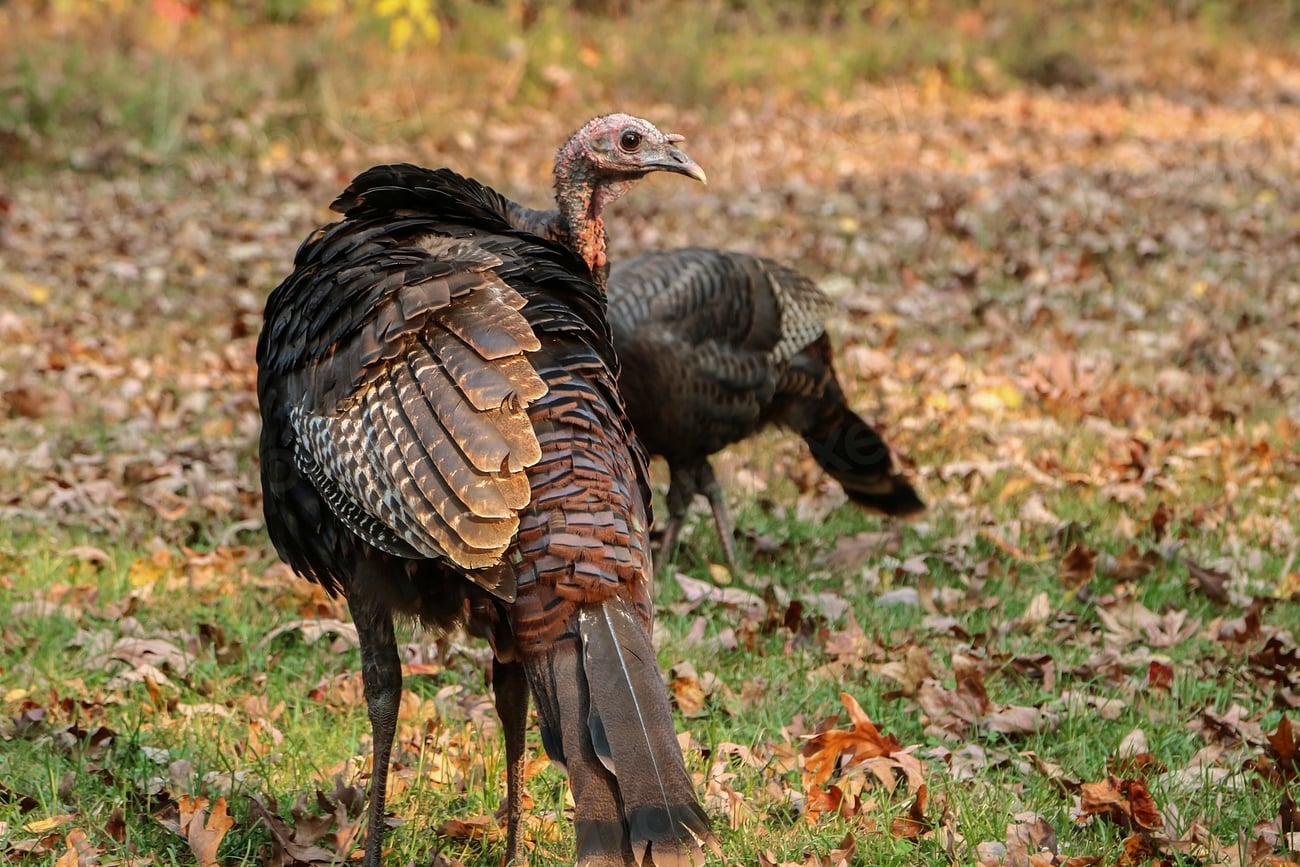 Photo Credit: National Park Service / Rawpixel
In the heart of North America, the wild turkey, known scientifically as Meleagris gallopavo, roams through a tapestry of vibrant landscapes. Imagine a sun-drenched morning where the air is filled with the sounds of rustling leaves and cheerful bird calls. Here, the wild turkey struts confidently, its iridescent feathers shimmering in shades of bronze, green, and gold. With a wingspan that can reach up to five feet, this impressive bird is not just a sight to behold; it is a marvel of evolution, captivating scientists and nature lovers alike with its complex behaviors and social structures.
Wild turkeys are more than just their striking appearance. They are social creatures that thrive in flocks, showcasing a range of vocalizations that communicate everything from alarm calls to mating displays. As they forage for seeds, insects, and berries, their keen eyesight helps them navigate the forest floor, always alert to potential predators. This adaptability to various habitats—from dense woodlands to open fields—demonstrates their resilience and resourcefulness. In this article, we will explore the fascinating world of the wild turkey, delving into its behaviors, diet, and the vital role it plays in the ecosystem, revealing why this bird is much more than a holiday centerpiece.
The turkey, a bird that struts proudly across North America, holds a special place in the tree of life. Taxonomically, it belongs to the Kingdom Animalia, which includes all animals, and is classified under the Phylum Chordata, meaning it has a backbone. Within this phylum, turkeys are part of the Class Aves, which encompasses all birds. What makes turkeys particularly interesting is their classification in the Order Galliformes, a group that includes ground-feeding birds like chickens and quails. This order is known for its robust bodies and strong legs, traits that help these birds thrive in various environments. The turkey’s unique blend of physical characteristics and behaviors, such as its impressive plumage and social nature, sets it apart in the avian world.
| Taxonomic Rank | Scientific Name | Meaning & Significance |
|---|---|---|
| Kingdom | Animalia | This name comes from the Latin word “animalis,” meaning “having breath” or “living.” It signifies all living organisms that breathe and move. |
| Phylum | Chordata | Derived from the Greek word “chordē,” meaning “string,” this term refers to animals with a notochord, a flexible rod that supports the body, which in turkeys becomes the backbone. |
| Class | Aves | This Latin term simply means “birds.” It highlights the defining features of birds, such as feathers and beaks, which are essential for their survival. |
| Order | Galliformes | From the Latin “gallus,” meaning “rooster,” this name reflects the group’s connection to domesticated birds and their ground-dwelling habits. |
| Family | Phasianidae | This name comes from “phasianus,” the Latin word for pheasant, indicating a family of birds that are often colorful and ground-nesting. |
| Genus | Meleagris | Derived from the Greek word “meleagris,” which refers to the guinea fowl, this name connects turkeys to their relatives in the bird family tree. |
The classification of the turkey reveals a rich evolutionary history that connects it to a diverse array of birds. As a member of the Galliformes order, turkeys share traits with other ground-dwelling birds, showcasing adaptations that have allowed them to thrive in various habitats. Their lineage reflects a journey through time, illustrating how these birds have evolved to become the fascinating creatures we see today. Understanding their place in the animal kingdom not only highlights their unique characteristics but also emphasizes the intricate web of life that connects all living beings.
The evolutionary journey of the turkey is a captivating tale that stretches back millions of years. This bird, known scientifically as Meleagris, is part of the Phasianidae family, which includes other ground-dwelling birds. The story begins in the late Miocene epoch, around 10 million years ago, when the ancestors of modern turkeys began to diverge from their relatives. Over time, these birds adapted to their environments, leading to the diverse species we see today.
The earliest ancestors of turkeys were likely small, ground-dwelling birds that roamed the forests and grasslands of North America. As they evolved, they developed several key features that helped them thrive in various habitats. One major transition was the development of a more robust body structure, allowing them to forage effectively on the ground. Their diet shifted from primarily insects to a more varied menu that included seeds, fruits, and nuts, which provided essential nutrients for growth and reproduction.
These adaptations have played a vital role in the turkey’s survival. The combination of strong legs for quick escapes, social structures for protection, and effective communication has allowed turkeys to thrive in diverse environments. Their ability to adapt to changing conditions and utilize various food sources has ensured their place in the ecosystem, making them a resilient and enduring species. As we observe these birds today, we can appreciate the intricate evolutionary story that has shaped them into the fascinating animals they are.
The turkey is a striking bird that captures attention with its impressive size and colorful plumage. Standing tall, it can weigh anywhere from 3 to 11 kilograms, or about 6.6 to 24 pounds. This hefty body is supported by strong legs, allowing it to strut confidently across the ground. Its feathers, which can display a dazzling array of colors, create a visual spectacle, especially during courtship displays. The turkey’s broad, rounded body and long tail feathers add to its distinctive silhouette, making it a memorable sight in the wild.
| Feature | Description |
|---|---|
| Weight | 3 – 11 kg (6.6 – 24 lbs) |
| Skin Type | Feathers |
The combination of size and vibrant feathers serves important survival purposes. The turkey’s weight provides it with stability and strength, helping it evade predators. Its feathers not only offer insulation but also play a crucial role in communication and mating displays. When a male turkey fans out its tail, it showcases its colorful plumage, attracting potential mates and asserting dominance. Together, these features create a bird that is not only visually stunning but also well-adapted to thrive in its environment.
The turkey calls a variety of habitats home, thriving in environments that range from lush forests to open grassy plains. Picture a vibrant landscape where tall trees provide shelter and shade, while patches of shrubland burst with life. In these areas, turkeys can be seen foraging for food, their feathers shimmering in the dappled sunlight. They enjoy the mix of cover and open space, which allows them to roam freely while staying alert to potential predators.
Turkeys prefer climates that offer a balance of warmth and moisture. They thrive in regions with moderate temperatures, as extreme cold or heat can be challenging for them. These birds are often found in areas that receive ample rainfall, which helps sustain the vegetation they rely on for food. The combination of forests, shrublands, and grassy plains creates a rich ecosystem where turkeys can find seeds, nuts, and insects to munch on.
Adaptation is key to the turkey’s survival in these diverse habitats. With their keen eyesight and acute hearing, they can detect danger from afar, allowing them to escape quickly if needed. Their strong legs enable them to run swiftly across open fields, while their ability to fly short distances helps them reach the safety of trees when threatened. These adaptations not only enhance their chances of survival but also allow them to thrive in a variety of environments, making them a true testament to nature’s ingenuity.
Turkeys are social birds that thrive in flocks, engaging in a variety of daily activities that reflect their lively nature. As the sun rises, these birds begin their day with a series of vocalizations, which can include gobbles, clucks, and purrs. These sounds serve as a way to communicate with one another, helping to maintain group cohesion. Throughout the day, turkeys forage for food, pecking at seeds, insects, and plants. They are often seen scratching the ground with their feet to uncover hidden treats. As evening approaches, they gather in trees or on the ground to roost, ensuring safety from predators during the night.
Social behavior is a cornerstone of turkey life. Living in flocks allows them to benefit from group dynamics, such as increased vigilance against threats. When one turkey spots a potential danger, it can alert the others, creating a network of awareness. Within these flocks, turkeys establish a social hierarchy, where dominant individuals often lead the group to food sources and safe resting spots. This social structure is vital for their survival, as it helps them navigate their environment more effectively and find resources more efficiently.
| Behavior Type | Description |
|---|---|
| Activity Patterns | Turkeys forage for food during the day, using their keen eyesight to spot seeds and insects. They often scratch the ground to uncover hidden food sources. |
| Social Structure | Turkeys live in flocks with a clear hierarchy. Dominant birds lead the group, guiding them to food and safe areas. |
| Communication Methods | Turkeys use a variety of vocalizations, including gobbles and clucks, to communicate with each other, alerting the flock to danger or signaling their location. |
These behaviors are not just interesting; they are essential for the survival of turkeys. By living in flocks, they enhance their chances of finding food and avoiding predators. Their communication skills allow them to stay connected, ensuring that every member of the group is aware of potential threats. This combination of social interaction and strategic foraging makes turkeys well-adapted to their environments, showcasing the intricate balance of life in the wild.
Turkeys are omnivores, which means they enjoy a varied diet that includes both plants and animals. These resourceful birds forage for food on the ground, using their keen eyesight to spot tasty treats. They often scratch at the soil with their strong legs and feet, uncovering hidden insects, seeds, and nuts. Turkeys are also known to peck at berries and other fruits, making their meals as diverse as the environments they inhabit.
| Dietary Aspect | Details |
|---|---|
| Diet Type | Omnivore |
| Favorite Foods | Insects, nuts, seeds, berries |
| Prey Items | Insects |
| Hunting/Foraging Strategies | Scratching the ground, pecking at plants |
This diverse diet plays a crucial role in the turkey’s ecology and daily routine. By consuming a wide range of foods, turkeys help control insect populations and disperse seeds, contributing to the health of their habitats. Their foraging behavior not only sustains them but also shapes the ecosystem around them, making them important players in their natural world. As they search for food, turkeys also engage in social interactions, further enriching their daily lives.
During the breeding season, which typically occurs in spring, male turkeys engage in a captivating display to attract females. They puff out their feathers, fan their tails, and produce a series of gobbling sounds that echo through the woods. This courtship ritual is not just for show; it helps females choose the strongest and healthiest mates. Once a female selects a male, they will mate, and the female will begin the process of laying eggs.
| Reproductive Aspect | Details |
|---|---|
| Gestation Period | 28 days |
| Litter Size | 10 to 14 eggs |
| Age of Maturity | 5 to 6 months |
| Name of Young | Poults |
After the eggs hatch, the young turkeys, known as poults, are surprisingly independent. They can walk and forage for food almost immediately, following their mother closely as she leads them to safe feeding areas. The mother turkey is very protective, guiding her poults and teaching them essential survival skills. As they grow, these young birds develop their adult feathers and learn to fly, usually by the time they are about 5 to 6 months old. This journey from vulnerable chicks to fully grown turkeys is a remarkable transformation, showcasing the resilience and adaptability of these fascinating birds.
Turkeys occupy a fascinating position in the food web, serving as both prey and a source of sustenance for various predators. Their size and social behavior make them a vital part of their ecosystem, where they contribute to the balance of nature. However, this also means they face numerous dangers that threaten their survival.
To defend themselves against these threats, turkeys have developed several clever survival strategies. They rely on their excellent eyesight to spot danger from afar, allowing them to take flight or run for cover. When threatened, turkeys can quickly take to the trees, where they are safer from ground predators. Their social nature also plays a role; by flocking together, they can alert one another to potential dangers, increasing their chances of survival in the wild.
A keystone species is an organism that plays a critical role in maintaining the structure of its ecosystem. This means that its presence and activities significantly influence the types and numbers of other species in that environment. The wild turkey, scientifically known as Meleagris gallopavo, qualifies as a keystone species due to its impact on the ecosystems it inhabits, particularly in North America.
Turkeys are omnivores, meaning they eat both plants and animals, which allows them to interact with various components of their ecosystem. By foraging for seeds, fruits, and insects, they help control plant populations and contribute to seed dispersal. For example, when turkeys eat berries, they often travel some distance before excreting the seeds, which can lead to new plant growth in different areas. This not only supports plant diversity but also provides food and habitat for other wildlife.
Additionally, turkeys serve as prey for a variety of predators, including foxes, hawks, and coyotes. Their presence supports these predator populations, creating a balanced food web. When turkeys are abundant, they help sustain the populations of these predators, which in turn keeps herbivore populations in check. This balance is crucial for maintaining healthy ecosystems, as it prevents overgrazing and promotes biodiversity.
If wild turkeys were to disappear from their ecosystems, the effects would ripple through the food web. Without turkeys, predator populations might decline due to a lack of food, leading to an increase in herbivore numbers. This could result in overgrazing, which would harm plant communities and reduce habitat for other animals. The loss of this keystone species would disrupt the delicate balance of the ecosystem, highlighting just how vital turkeys are to their environment.
The turkey plays a vital role in its ecosystem, acting as both a consumer and a contributor to the health of its environment. As an omnivore, it forages for a wide variety of foods, including seeds, fruits, insects, and small animals. This diverse diet helps control insect populations and promotes plant growth by dispersing seeds. By moving through different habitats like forests, shrublands, and grassy plains, turkeys help maintain the balance of these ecosystems, ensuring that various species can thrive alongside them.
| Ecosystem Service | Impact |
|---|---|
| Seed Dispersal | Turkeys help spread seeds through their droppings, promoting plant diversity. |
| Insect Control | By eating insects, turkeys help keep pest populations in check. |
| Soil Aeration | As they scratch the ground for food, turkeys aerate the soil, improving its health. |
| Food Source | Turkeys serve as prey for various predators, contributing to the food web. |
Turkeys influence their surroundings in many fascinating ways. For instance, when they forage for food, they disturb the soil, which can help with nutrient mixing and promote healthier plant growth. Their foraging habits also create small clearings in dense vegetation, allowing sunlight to reach the ground and encouraging new plant life to sprout. Additionally, as they consume a variety of insects, they help control populations that could otherwise become overwhelming, benefiting both plants and other animals in the area.
The broader ecological importance of turkeys cannot be overstated. As a keystone species, their presence supports a diverse range of life forms, from the plants they help grow to the predators that rely on them for food. By maintaining the balance of their ecosystems, turkeys contribute to the overall health and resilience of their habitats. This interconnectedness highlights the importance of every species, no matter how big or small, in the intricate web of life on our planet.
In the intricate web of life, turkeys engage in various partnerships with other species, showcasing the beauty of symbiosis. Symbiosis refers to the close interactions between different species, which can be beneficial, harmful, or neutral. These relationships can take many forms, such as mutualism, where both species gain advantages, parasitism, where one benefits at the other’s expense, and commensalism, where one species benefits while the other is neither helped nor harmed. Understanding these connections helps us appreciate the delicate balance of ecosystems and the roles that different animals play within them.
| Species/Type | Relationship Type | Description |
|---|---|---|
| Oxpeckers | Mutualistic | These birds perch on turkeys, eating ticks and parasites off their skin, providing the turkeys with relief while getting a meal. |
| Ticks | Parasitic | Ticks latch onto turkeys to feed on their blood, which can weaken the birds and transmit diseases. |
| Plants (e.g., acorns) | Commensal | Turkeys feed on acorns and other seeds, helping to disperse the plants’ seeds through their droppings, benefiting the plants without affecting the turkeys. |
These relationships have evolved over time, shaped by the needs and behaviors of the species involved. Mutualistic partnerships, like that between turkeys and oxpeckers, highlight how cooperation can enhance survival for both parties. Meanwhile, parasitic relationships, such as those with ticks, remind us of the challenges that come with living in a shared environment. Commensal interactions, like those with plants, illustrate how turkeys contribute to their ecosystem while simply going about their daily lives. Together, these connections create a rich tapestry of life, demonstrating the importance of every species in maintaining ecological balance.
Turkeys are more than just a holiday centerpiece; they are fascinating birds with a rich tapestry of behaviors and adaptations that many people may not know about. Here are some surprising facts that will intrigue nature enthusiasts of all ages.
The relationship between turkeys and humanity is steeped in history and cultural significance. These birds have been part of human life for thousands of years, especially in North America, where they were domesticated by Indigenous peoples long before European settlers arrived. Turkeys have not only provided sustenance but have also woven themselves into the fabric of various traditions and celebrations, most notably Thanksgiving in the United States. This annual feast celebrates gratitude and community, showcasing the turkey as a symbol of abundance and togetherness.
In contemporary times, the interactions between turkeys and humans have evolved, reflecting both cooperation and conflict. On one hand, conservation efforts aim to protect wild turkey populations and their habitats, ensuring that these birds continue to thrive in the wild. On the other hand, domestication has led to the breeding of turkeys for agricultural purposes, raising ethical questions about animal welfare. Additionally, wild turkeys sometimes find themselves in conflict with humans, as they can invade gardens and backyards, leading to a complex relationship that requires understanding and management.
As we look to the future, the relationship between turkeys and humanity will likely continue to evolve. With growing awareness of animal welfare and environmental conservation, there is potential for a more harmonious coexistence. By fostering respect for these remarkable birds and understanding their role in our ecosystems, we can ensure that turkeys remain a cherished part of our lives, both in the wild and on our tables. The journey ahead invites us to explore new ways to appreciate and protect these fascinating creatures.
The conservation status of the turkey is currently classified as Least Concern by the International Union for Conservation of Nature (IUCN). This means that, overall, turkeys are not facing immediate threats that could lead to their extinction. In fact, their population is stable, and in some areas, it is even increasing. This positive trend is a testament to successful management practices and conservation efforts that have helped maintain healthy turkey populations across their range.
| Conservation Factor | Status/Details |
|---|---|
| IUCN Status | Least Concern |
| Population Estimates | Stable, with millions of individuals across North America |
| Trend Direction | Increasing in some regions |
Despite their stable status, turkeys face several threats that could impact their populations in the future. Habitat loss is a significant concern, as urban development and agricultural expansion reduce the natural spaces where turkeys thrive. Additionally, hunting pressure can affect local populations, especially if not managed sustainably. Predation by natural enemies, such as coyotes and raccoons, also plays a role in their survival, particularly for young turkeys that are more vulnerable.
Conservation efforts for turkeys are ongoing and have shown promising results. Wildlife management programs focus on habitat restoration and protection, ensuring that turkeys have the environments they need to flourish. Education and outreach initiatives help raise awareness about the importance of these birds and their ecosystems. With continued support and responsible management, the outlook for turkeys remains bright, allowing future generations to enjoy these fascinating birds in the wild.
| Question | Answer |
|---|---|
| What is the natural habitat of turkeys? | Turkeys are commonly found in forests, shrublands, and grassy plains. They prefer areas with plenty of cover, such as trees and bushes, which help them hide from predators. |
| What do turkeys eat? | Turkeys are omnivores, meaning they eat both plants and animals. Their diet includes seeds, nuts, fruits, insects, and even small reptiles, making them adaptable to different environments. |
| How do turkeys behave in the wild? | Turkeys are social birds that often live in flocks. They communicate with each other using a variety of sounds, including gobbles, clucks, and purrs, which help them stay connected and alert to danger. |
| How do turkeys reproduce? | During mating season, male turkeys display their colorful feathers and puff up to attract females. After mating, the female lays a clutch of eggs, usually in a nest on the ground, and incubates them until they hatch. |
| What are the main threats to turkeys? | While turkeys are currently classified as Least Concern, they face threats from habitat loss and hunting. Predators like foxes and raccoons can also pose a risk to turkey nests and young chicks. |
| What are some interesting characteristics of turkeys? | Turkeys have excellent vision and can see in color, which helps them spot predators. They can also fly short distances, reaching speeds of up to 55 miles per hour, especially when escaping danger. |
| How do turkeys care for their young? | After the eggs hatch, turkey chicks are precocial, meaning they are relatively mature and mobile. The mother leads them to food and water, teaching them how to find their own meals and stay safe from predators. |