Taxonomy & Classification
- Kingdom
- Animalia
- Phylum
- Chordata
- Class
- Actinopterygii
- Order
- Scombriformes
- Family
- Scombridae
- Genus
- Thunnus
- Species
- Thunnus albacares

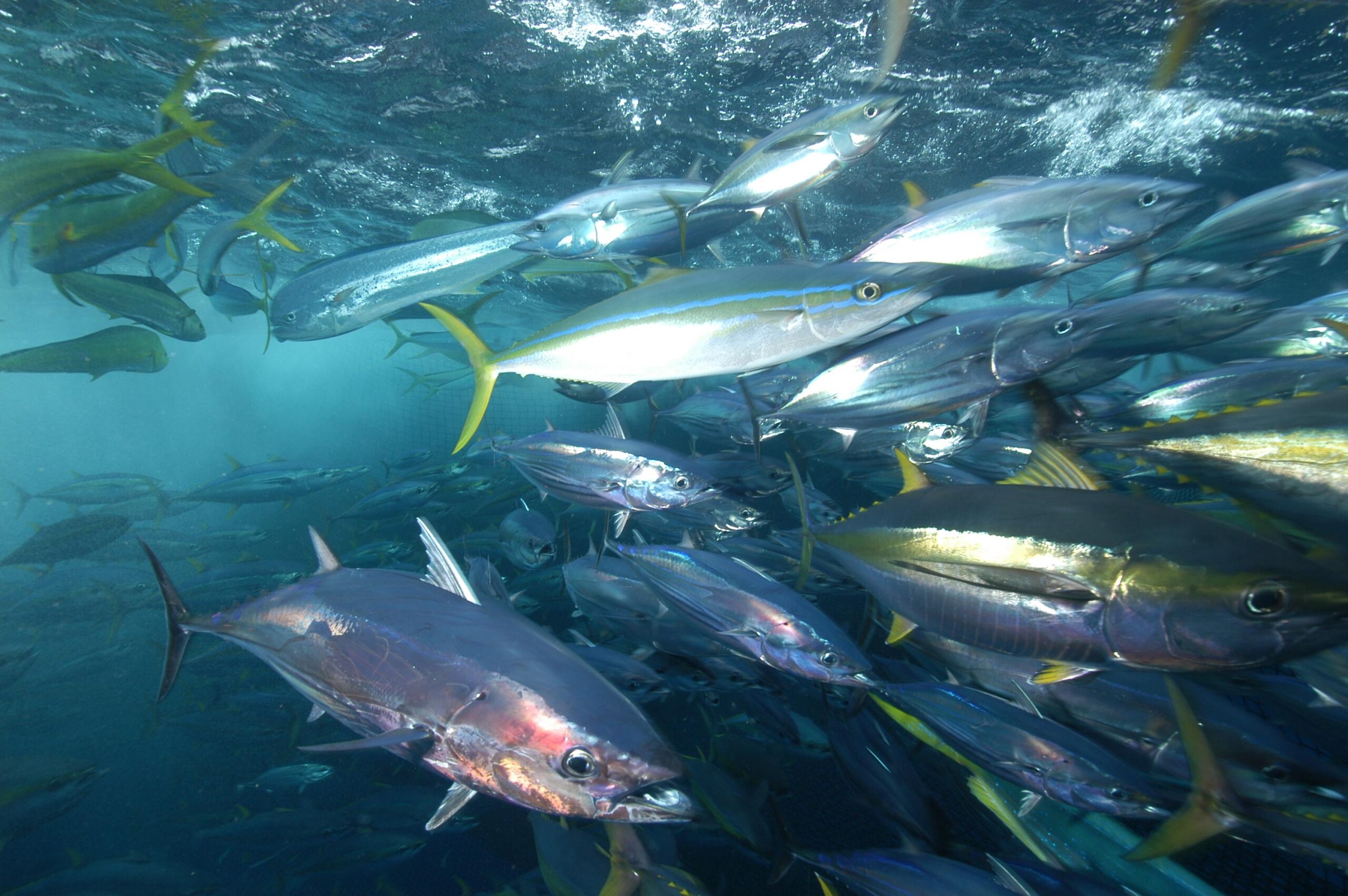 Photo Credit: OptimusPrimeBot / Wikimedia Commons
In the shimmering blue expanse of the ocean, the Yellowfin Tuna, or Thunnus albacares, glides through the water with a grace that captivates all who encounter it. With its sleek, torpedo-shaped body and striking yellow fins, this remarkable fish is a true marvel of the marine world. As it swims, the sunlight dances off its metallic skin, creating a dazzling display that can mesmerize even the most seasoned ocean explorers. Scientists and nature enthusiasts alike are drawn to the Yellowfin Tuna not just for its beauty, but also for its incredible speed and agility, making it one of the fastest fish in the sea.
Living in warm, tropical waters, the Yellowfin Tuna thrives in a dynamic environment where it plays a crucial role in the ocean’s ecosystem. As a top predator, it helps maintain the balance of marine life by controlling the populations of smaller fish and cephalopods. This fish is not just a solitary swimmer; it often travels in schools, showcasing a social side that adds to its intrigue. With a diet that includes a variety of prey, from fish to crustaceans, the Yellowfin Tuna is a masterful hunter, using its keen senses and swift movements to catch its meals. Join us as we dive deeper into the world of the Yellowfin Tuna, exploring its fascinating behaviors, vital role in the ocean, and the challenges it faces in a changing environment.
The Yellowfin Tuna, scientifically known as Thunnus albacares, occupies a fascinating position in the tree of life. It belongs to the Kingdom Animalia, which includes all animals, and is part of the Phylum Chordata, meaning it has a backbone. This sleek and powerful fish is classified under the Class Actinopterygii, which encompasses ray-finned fishes. What sets Yellowfin Tuna apart is its incredible speed and agility, making it one of the fastest fish in the ocean. With its streamlined body and distinctive yellow fins, it is not only a marvel of evolution but also a vital part of marine ecosystems and human economies.
| Taxonomic Rank | Scientific Name | Meaning & Significance |
|---|---|---|
| Kingdom | Animalia | This name signifies that Yellowfin Tuna is part of the vast group of multicellular organisms known as animals. |
| Phylum | Chordata | Chordata means “having a notochord,” which is a flexible rod that supports the body, a feature present in all vertebrates, including this tuna. |
| Class | Actinopterygii | This term translates to “ray-finned fishes,” highlighting the structure of their fins, which are supported by bony rays. |
| Order | Scombriformes | This order includes fast-swimming fish, emphasizing the Yellowfin Tuna’s remarkable speed and predatory lifestyle. |
| Family | Scombridae | Scombridae refers to the mackerel family, indicating the close relationship between Yellowfin Tuna and other similar fish known for their speed and streamlined bodies. |
| Genus | Thunnus | The name Thunnus is derived from the Latin word for tuna, reflecting its identity as a significant and well-known fish in both ecology and cuisine. |
The classification of Yellowfin Tuna reveals much about its evolutionary journey. As a member of the Scombridae family, it shares a lineage with other fast, agile fish, showcasing adaptations that have allowed it to thrive in open ocean environments. Its unique physical traits, such as the ability to regulate body temperature and its streamlined shape, are results of millions of years of evolution, enabling it to be a top predator in its habitat. Understanding where Yellowfin Tuna fits in the tree of life not only highlights its biological significance but also underscores the intricate connections among species in the vast tapestry of marine life.
The evolutionary journey of the Yellowfin Tuna, or Thunnus albacares, stretches back millions of years, tracing its lineage through the vast oceans of the world. This species belongs to the family Scombridae, which includes other fast-swimming fish like mackerels and bonitos. The ancestors of modern tunas began to diverge from other fish around 100 million years ago, during the late Cretaceous period. As the oceans changed, so did these fish, adapting to their environments in ways that would allow them to thrive in the open sea.
The early ancestors of the Yellowfin Tuna were likely smaller and less streamlined than their modern descendants. Over time, they developed key adaptations that enhanced their survival. One major transition was the evolution of a more torpedo-shaped body, which allows for swift movement through water. This shape reduces drag, making it easier for the tuna to chase down prey. Additionally, the development of a specialized circulatory system helps maintain a higher body temperature, allowing the tuna to be more active and agile in cooler waters.
The adaptations of the Yellowfin Tuna have played a crucial role in its success as a species. By evolving a streamlined body and powerful muscles, it can outswim many predators and catch fast-moving prey. Its ability to regulate body temperature gives it an edge in various ocean environments, allowing it to thrive in both warm and cooler waters. With sharp eyesight, it can detect food and threats, ensuring its survival in the competitive marine ecosystem. These evolutionary traits not only highlight the tuna’s resilience but also its remarkable ability to adapt to the ever-changing oceanic world.
The Yellowfin Tuna is a striking sight in the ocean, embodying both grace and power. Its streamlined body is built for speed, allowing it to dart through the water with incredible agility. This fish can grow quite large, reaching weights of up to 450 pounds, making it one of the heavier members of the tuna family. With a sleek, smooth skin that glistens in the sunlight, the Yellowfin Tuna showcases a vibrant palette of colors, including deep blue on its back and a silvery sheen on its sides. The most eye-catching feature is its long, yellow-colored secondary fins, which trail behind like ribbons as it swims.
| Feature | Description |
|---|---|
| Weight | Up to 450 lbs |
| Skin Type | Smooth |
| Color | Deep blue on the back, silvery sides, and bright yellow fins |
| Body Shape | Streamlined and torpedo-like |
| Fins | Long yellow secondary fins |
The combination of these features is not just for show; they play a crucial role in the Yellowfin Tuna’s survival. The smooth skin reduces drag, allowing it to swim swiftly and evade predators. Its vibrant colors help it blend into the ocean depths, providing camouflage against both prey and threats. The long yellow fins are not only visually stunning but also aid in maneuverability, helping this fish navigate through the water with ease. Together, these adaptations make the Yellowfin Tuna a master of its aquatic domain, perfectly equipped for life in the open sea.
The Yellowfin Tuna thrives in the vast, open waters of the world’s oceans, where the sun’s rays dance on the surface and the currents create a dynamic playground. These fish prefer warm, tropical seas, often found in the upper layers of the water column, where they can easily chase after schools of smaller fish. Picture a shimmering blue expanse, dotted with the occasional coral reef, where these agile swimmers glide effortlessly, their sleek bodies cutting through the waves.
Yellowfin Tuna are particularly fond of warm waters, typically found in temperatures ranging from 70 to 85 degrees Fahrenheit. They are often spotted near the surface, where the sunlight penetrates, creating a vibrant ecosystem teeming with life. These fish are also drawn to areas with strong currents and upwellings, where nutrient-rich waters rise to the surface, attracting their favorite prey. This combination of warmth and food availability makes their oceanic home a bustling hub of activity.
To thrive in these specific habitats, Yellowfin Tuna have developed remarkable adaptations. Their streamlined bodies allow them to swim at impressive speeds, reaching up to 50 miles per hour when chasing prey. They also possess a unique ability to regulate their body temperature, which helps them remain active in warmer waters. This endothermic trait, meaning they can generate their own body heat, gives them an edge over other fish, allowing them to hunt effectively even in cooler depths. With these adaptations, Yellowfin Tuna not only survive but flourish in the vibrant tapestry of ocean life.
The daily life of a Yellowfin Tuna is a whirlwind of activity, filled with swimming, hunting, and socializing. These fish are known for their incredible speed and agility, often gliding through the warm waters of the ocean in search of food. As they swim, they engage in a variety of behaviors, from foraging for small fish and squid to navigating the currents. Their keen eyesight helps them spot prey from a distance, and they can cover large areas in their quest for a meal.
Socially, Yellowfin Tuna are not solitary creatures. They often form schools, which are groups of fish that swim together. This behavior provides safety in numbers, as there is strength in a large group. Within these schools, they exhibit fascinating dynamics, such as synchronized swimming and coordinated hunting strategies. This teamwork allows them to catch prey more effectively and evade predators. Communication among the fish is subtle but important, involving body language and perhaps even changes in swimming patterns to signal each other.
| Behavior Type | Description |
|---|---|
| Activity Patterns | Yellowfin Tuna are active swimmers, often moving in search of food and exploring their environment. They can swim at speeds up to 75 km/h (about 47 mph), making them one of the fastest fish in the ocean. |
| Social Structure | These fish typically form schools, which can range from a few individuals to hundreds. This social behavior helps them protect each other from predators and increases their hunting efficiency. |
| Communication Methods | While they do not have vocal cords, Yellowfin Tuna communicate through body movements and possibly changes in swimming speed and direction, helping them coordinate their actions within the school. |
The behaviors of Yellowfin Tuna are not just fascinating; they are essential for survival. By swimming in schools, they reduce the risk of being targeted by larger predators. Their speed and agility allow them to escape danger and catch prey efficiently. This combination of social interaction and individual skill ensures that Yellowfin Tuna thrive in the vast, competitive ocean environment. Each day is a new adventure, filled with challenges and opportunities that shape their lives in the deep blue sea.
The Yellowfin Tuna is a carnivore, meaning it primarily eats other animals. This sleek fish has a varied diet that includes fish, crustaceans, cephalopods, and mollusks. To catch its meals, the Yellowfin Tuna employs impressive hunting techniques, often working in groups to herd schools of smaller fish. With its incredible speed and agility, it can swiftly dart through the water, making it a formidable predator in the ocean.
| Dietary Aspect | Details |
|---|---|
| Diet Type | Carnivore |
| Favorite Foods | Fish, crustaceans, cephalopods, and mollusks |
| Prey Items | Smaller fish, shrimp, squid, and other marine animals |
| Hunting/Foraging Strategies | Hunts in groups, uses speed and agility to chase down prey |
The diet of the Yellowfin Tuna plays a crucial role in its ecology and daily routine. By preying on a variety of marine life, it helps maintain the balance of the ocean ecosystem. This fish’s hunting behavior not only influences its own survival but also impacts the populations of its prey. As a result, the Yellowfin Tuna is an essential player in the vibrant tapestry of ocean life, contributing to the health and dynamics of its underwater world.
As the sun sets over the warm tropical waters, Yellowfin Tuna engage in a spectacular mating ritual. During the breeding season, which typically occurs in the warmer months, these fish gather in large schools. Males and females perform synchronized swimming displays, darting and swirling through the water. This vibrant dance not only attracts potential mates but also helps ensure that the eggs and sperm are released in the same area, increasing the chances of fertilization.
| Reproductive Aspect | Details |
|---|---|
| Gestation Period | A few days |
| Litter Size | Up to 2 million eggs |
| Age of Maturity | About 3 to 4 years |
| Name of Young | Fry |
Once the eggs are fertilized, they float freely in the ocean, where they hatch into tiny fry. These young fish are incredibly vulnerable at this stage, relying on the currents to carry them to safer, more sheltered areas. As they grow, they begin to develop the speed and agility characteristic of their species. While Yellowfin Tuna do not provide parental care after spawning, their sheer numbers and rapid growth help ensure that some will survive to adulthood, eventually joining the ranks of these magnificent ocean predators.
The Yellowfin Tuna plays a crucial role in the ocean’s food web, acting as both predator and prey. As a fast and agile fish, it hunts smaller fish and cephalopods, while also being a target for larger marine animals and humans. This dual role highlights its importance in maintaining the balance of marine ecosystems, where every species relies on one another for survival.
To defend itself against these threats, the Yellowfin Tuna employs several survival strategies. Its incredible speed allows it to escape predators in a flash, darting away with powerful bursts of energy. Additionally, its streamlined body helps it navigate through the water with ease, making it a challenging target. While it may not have physical defenses like spines or shells, its agility and quick reflexes are key to evading danger in the vast ocean.
A keystone species is an organism that has a disproportionately large impact on its environment relative to its abundance. In simpler terms, if you remove a keystone species, the entire ecosystem can change dramatically. The Yellowfin Tuna, known scientifically as Thunnus albacares, qualifies as a keystone species in its ocean habitat. Its role as both predator and prey helps maintain the balance of marine life, making it essential for the health of its ecosystem.
Yellowfin Tuna are powerful predators that primarily feed on smaller fish, crustaceans, and cephalopods. By hunting these species, they help control their populations, preventing any one group from overwhelming the ecosystem. For example, if Yellowfin Tuna were to decline significantly, the populations of their prey could explode, leading to overgrazing of phytoplankton and other vital marine plants. This imbalance could disrupt the entire food web, affecting not just the fish but also the larger marine mammals and birds that rely on these fish for food.
Moreover, Yellowfin Tuna are social animals that often travel in schools. This group behavior not only aids in their hunting efficiency but also provides a food source for larger predators, such as sharks and dolphins. By being part of this intricate web of life, Yellowfin Tuna contribute to the overall biodiversity of their habitat. Their presence supports a variety of species, creating a rich and dynamic marine environment.
If Yellowfin Tuna were to disappear from the oceans, the consequences would be severe. The balance of marine life would be thrown into chaos, leading to overpopulation of their prey species. This could result in a decline in phytoplankton, which is crucial for oxygen production and serves as the foundation of the marine food web. Ultimately, the loss of Yellowfin Tuna would not only affect the species that depend on them but could also lead to a decline in fish populations that humans rely on for food, highlighting the interconnectedness of life in our oceans.
The Yellowfin Tuna, known scientifically as Thunnus albacares, plays a vital role in its oceanic ecosystem. As a top predator, it helps maintain the balance of marine life by controlling the populations of smaller fish and cephalopods. This dynamic interaction ensures that no single species dominates the environment, allowing for a diverse and healthy ecosystem. The presence of Yellowfin Tuna indicates a thriving marine habitat, as they require abundant food sources and clean waters to flourish.
| Ecosystem Service | Impact |
|---|---|
| Population Control | Regulates the numbers of smaller fish and cephalopods, preventing overpopulation. |
| Food Source | Serves as prey for larger marine animals, including sharks and marine mammals. |
| Nutrient Cycling | Contributes to nutrient distribution in the ocean through its feeding and excretion. |
| Habitat Formation | Influences the behavior of other species, shaping the community structure in its habitat. |
The influence of Yellowfin Tuna extends beyond mere predation. For instance, their hunting patterns can affect the distribution of schools of smaller fish, which in turn impacts the feeding habits of other marine animals. When Yellowfin Tuna hunt, they often create a ripple effect, causing smaller fish to scatter and altering the dynamics of the surrounding ecosystem. This behavior not only helps maintain balance but also fosters a rich tapestry of interactions among various marine species.
The broader ecological importance of Yellowfin Tuna cannot be overstated. As a keystone species, their presence is crucial for the health of ocean ecosystems. If Yellowfin Tuna populations decline, the consequences can ripple throughout the food web, leading to imbalances that affect countless other species. By supporting biodiversity and contributing to the overall health of marine environments, Yellowfin Tuna exemplify the intricate connections that define life in our oceans.
In the intricate web of ocean life, Yellowfin Tuna engage in various partnerships with other species, showcasing the beauty of symbiosis. Symbiosis refers to the close interactions between different species, which can be beneficial, harmful, or neutral. These relationships can take many forms, such as mutualism, where both species gain advantages, or commensalism, where one benefits while the other is neither helped nor harmed. Understanding these connections helps us appreciate the delicate balance of marine ecosystems and the roles that different species play within them.
| Species/Type | Relationship Type | Description |
|---|---|---|
| Remoras | Mutualistic | Remoras attach themselves to the Yellowfin Tuna, gaining protection and transportation while helping to keep the tuna clean by eating parasites off its skin. |
| Cleaner Wrasse | Mutualistic | These small fish clean the tuna by removing dead skin and parasites, benefiting from a meal while providing a health service to the tuna. |
| Sharks | Commensal | Yellowfin Tuna often swim alongside sharks, gaining safety in numbers. The sharks benefit from the tuna’s speed and agility, but the tuna are not affected by the presence of the sharks. |
These relationships have evolved over time, shaped by the needs and behaviors of the species involved. The mutualistic partnerships, like those with remoras and cleaner wrasse, highlight how cooperation can lead to greater survival for both parties. Meanwhile, the commensal relationship with sharks illustrates how species can coexist in ways that enhance their chances of thriving in the vast ocean. By understanding these connections, we gain insight into the complex dynamics of marine life and the importance of preserving these relationships for the health of our oceans.
The Yellowfin Tuna is not just a fish; it’s a marvel of the ocean, showcasing incredible adaptations and behaviors that make it a standout species. Here are some surprising facts that will surely captivate nature enthusiasts of all ages.
The relationship between Yellowfin Tuna and humanity is as deep as the ocean itself. Historically, these magnificent fish have been a vital source of food and cultural significance for many coastal communities around the world. Ancient civilizations, from the Mediterranean to the Pacific Islands, revered the Yellowfin Tuna not just for its taste but also for its role in local traditions and economies. Fishermen have long celebrated the thrill of catching these powerful swimmers, often incorporating them into rituals and festivals that honor the sea and its bounty.
In modern times, our interactions with Yellowfin Tuna have become more complex. As demand for this fish has surged, so too have concerns about overfishing and sustainability. Conservation efforts are now underway to protect Yellowfin populations and their habitats. However, conflicts arise as commercial fishing practices often clash with the needs of local communities and the health of marine ecosystems. Some innovative approaches, like aquaculture, aim to domesticate Yellowfin Tuna, providing a sustainable alternative to wild-caught fish. Yet, this method also raises questions about the impact on the species and the environment.
Looking ahead, the future of the relationship between Yellowfin Tuna and humanity hinges on our ability to balance our needs with the health of ocean ecosystems. As awareness grows about the importance of sustainable practices, there is hope that we can protect these incredible fish while still enjoying their presence in our diets and cultures. By fostering a respectful and responsible connection with Yellowfin Tuna, we can ensure that future generations will continue to marvel at their beauty and significance in our world.
The Yellowfin Tuna, known scientifically as Thunnus albacares, currently holds a conservation status of Near Threatened according to the International Union for Conservation of Nature (IUCN). This means that while the species is not yet endangered, it faces significant risks that could lead to a decline in its population if not addressed. Estimates suggest that there are millions of Yellowfin Tuna swimming in the world’s oceans, but their numbers are not as stable as they once were. The population trends indicate a worrying direction, as overfishing and environmental changes continue to impact their habitats and breeding grounds.
| Conservation Factor | Status/Details |
|---|---|
| IUCN Status | Near Threatened |
| Estimated Population Size | Millions |
| Population Trend | Declining |
One of the main threats to Yellowfin Tuna is overfishing, which occurs when too many fish are caught at once, preventing the population from replenishing itself. This species is highly sought after for its delicious meat, making it a target for commercial fishing operations. Additionally, bycatch—fish and other marine animals unintentionally caught while fishing for a different species—also poses a significant risk. Environmental changes, such as rising ocean temperatures and habitat degradation, further complicate their survival, as these factors can disrupt their breeding and feeding patterns.
Conservation efforts are underway to protect the Yellowfin Tuna and ensure its future in our oceans. Various organizations and governments are working together to implement sustainable fishing practices, which aim to balance the needs of fishermen with the health of marine ecosystems. By establishing fishing quotas and protected areas, they hope to allow Yellowfin Tuna populations to recover. The outlook for this species depends on continued awareness and action, as the collective efforts of individuals, communities, and nations can make a significant difference in preserving this vital part of our oceanic world.
| Question | Answer |
|---|---|
| Where do Yellowfin Tuna live? | Yellowfin Tuna are found in warm ocean waters around the world. They prefer the open sea, often swimming in the upper layers of the water, where they can easily hunt for food. |
| What do Yellowfin Tuna eat? | As carnivores, Yellowfin Tuna primarily eat smaller fish, squid, and crustaceans. Their sharp eyesight helps them spot prey from a distance, making them effective hunters. |
| How do Yellowfin Tuna behave? | Yellowfin Tuna are known for their speed and agility, capable of swimming up to 50 miles per hour. They often travel in schools, which can help them avoid predators and increase their hunting success. |
| How do Yellowfin Tuna reproduce? | Yellowfin Tuna spawn, or reproduce, in warm waters, usually during the spring and summer months. A female can release millions of eggs at once, which are fertilized by males in the water. |
| What threats do Yellowfin Tuna face? | Yellowfin Tuna are considered Near Threatened due to overfishing and habitat loss. Commercial fishing practices can significantly reduce their populations, impacting the entire ocean ecosystem. |
| What is a unique characteristic of Yellowfin Tuna? | One of the most distinctive features of Yellowfin Tuna is their long, yellow-colored secondary fins. These fins not only help them swim but also make them easily recognizable among other tuna species. |
| Can Yellowfin Tuna be kept in aquariums? | While it is technically possible to keep Yellowfin Tuna in large aquariums, it is not common. Their size and need for open water make them challenging to care for in captivity. |