Taxonomy & Classification
- Kingdom
- Animalia
- Phylum
- Chordata
- Class
- Mammalia
- Order
- Perissodactyla
- Family
- Equidae
- Genus
- Equus
- Species
- Equus caballus

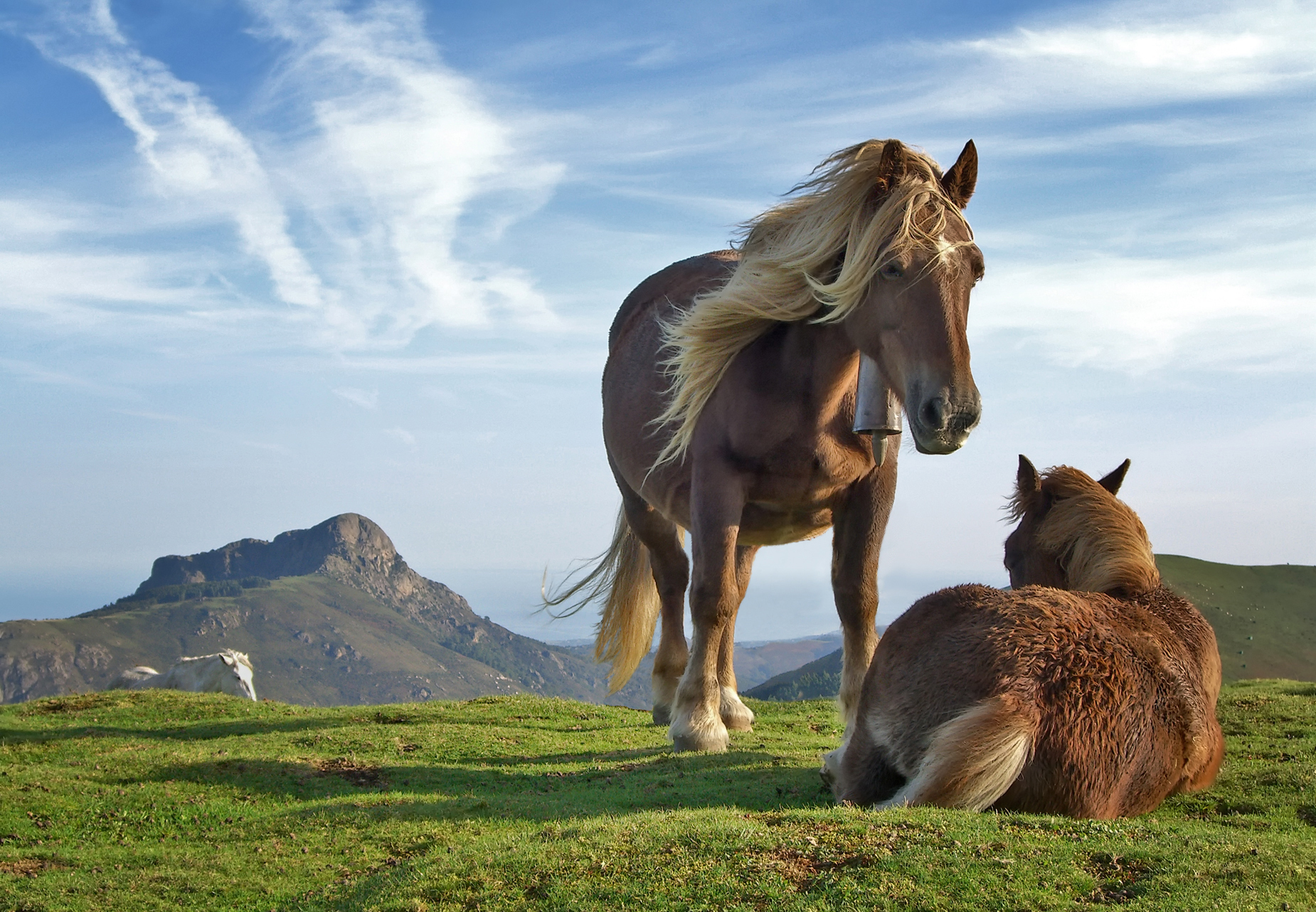 Photo Credit: Richard Bartz / Wikimedia Commons
In the vast, sun-drenched grasslands of North America, the horse, known scientifically as Equus ferus caballus, gallops with an elegance that captivates all who witness it. With its powerful legs and flowing mane, this magnificent animal embodies both strength and grace. Horses are not just beautiful; they are also incredibly intelligent and social creatures, often seen forming close bonds within their herds. Their keen senses and ability to communicate through body language make them fascinating subjects for scientists and nature enthusiasts alike.
Imagine a scene where a group of horses grazes peacefully, their coats shimmering in the golden light of dawn. As the wind rustles through the tall grasses, these animals exhibit a range of behaviors, from playful foals frolicking to the watchful stallion keeping an eye on the surroundings. Horses have a rich evolutionary history, having adapted to various environments over millions of years. This adaptability, combined with their role as herbivores, allows them to shape their ecosystems in significant ways. As we explore the world of horses, we will uncover their unique behaviors, social structures, and the deep connection they share with humans, revealing why these remarkable animals have captured our hearts for centuries.
Horses hold a special place in the tree of life, showcasing a fascinating blend of evolutionary history and biological traits. Classified within the kingdom Animalia, horses belong to the phylum Chordata, which includes all animals with a backbone. They are part of the class Mammalia, meaning they are warm-blooded and nurse their young with milk. What sets horses apart is their unique order, Perissodactyla, which includes odd-toed ungulates, or hoofed animals with an odd number of toes. This classification highlights their specialized adaptations for running and grazing, making them one of the most iconic animals in human history.
| Taxonomic Rank | Scientific Name | Meaning & Significance |
|---|---|---|
| Kingdom | Animalia | The name “Animalia” comes from the Latin word “animalis,” meaning “having breath” or “living.” This reflects the vital characteristic of all animals: the ability to breathe and move. |
| Phylum | Chordata | “Chordata” is derived from the Latin word “chorda,” meaning “string” or “cord.” This refers to the notochord, a flexible rod that supports the body, which is a key feature during the early development of all chordates. |
| Class | Mammalia | The term “Mammalia” comes from “mamma,” the Latin word for “breast.” This name highlights the defining trait of mammals: females possess mammary glands that produce milk for their young. |
| Order | Perissodactyla | “Perissodactyla” translates to “odd-toed,” from the Greek words “perissos” (odd) and “daktulos” (finger or toe). This name is significant because horses have one main toe, which forms their hoof, adapted for speed and endurance. |
| Family | Equidae | The name “Equidae” comes from the Latin word “equus,” meaning “horse.” This family includes all horse-like animals, emphasizing their shared characteristics and evolutionary lineage. |
| Genus | Equus | “Equus” is the Latin word for horse, and it signifies the genus that encompasses all modern horses, donkeys, and zebras, highlighting their close genetic relationships. |
The classification of horses reveals much about their evolutionary journey. As members of the order Perissodactyla, they share a common ancestor with other odd-toed ungulates, such as rhinoceroses and tapirs. This lineage showcases how horses have adapted over millions of years to thrive in diverse environments, from grasslands to deserts. Their unique physical traits, like their powerful legs and specialized digestive systems, reflect the evolutionary pressures they faced, allowing them to become the swift and resilient animals we know today. Understanding their place in the tree of life not only deepens our appreciation for these magnificent creatures but also highlights the intricate connections that bind all living things.
The evolutionary journey of the horse spans millions of years, tracing back to the Eocene epoch, around 55 million years ago. This timeline reveals a remarkable transformation from small, forest-dwelling ancestors to the powerful, fast-running animals we see today. The story of the horse is one of adaptation, survival, and the gradual changes that shaped its body and behavior to thrive in diverse environments.
The earliest known horse-like creature was Hyracotherium, often affectionately called “Eohippus.” This small animal, about the size of a dog, had a flexible back and multiple toes on each foot, which helped it navigate the dense forests of its time. As the climate changed and grasslands began to spread, horses underwent significant evolutionary transitions. Over millions of years, they evolved into larger forms like Mesohippus and then into the more recognizable Miohippus. These changes included a shift from multiple toes to a single hoof, which provided better support for running on hard ground. The final leap in this evolutionary saga brought us to the modern horse, Equus, which emerged around 4 to 5 million years ago, perfectly adapted for speed and endurance.
These evolutionary adaptations have been vital for the horse’s survival in a changing world. The development of a single hoof and longer legs allowed them to escape predators and travel great distances, while their specialized digestive system enabled them to thrive on grass, a plentiful food source. Social behavior and enhanced senses further contributed to their success, allowing them to form protective groups and stay alert to potential dangers. Together, these traits have made horses one of the most successful and enduring species on the planet.
The horse is a magnificent animal, exuding strength and grace in its every movement. With a powerful body structure, horses are built for speed and endurance. Their long legs are designed for swift gallops across open fields, while their muscular frames provide the strength needed for various tasks, from riding to pulling heavy loads. The horse’s head is distinctively shaped, featuring a long, straight profile and large, expressive eyes that convey intelligence and curiosity. Their ears are mobile, constantly swiveling to catch sounds from all directions, making them highly aware of their surroundings.
| Feature | Description |
|---|---|
| Weight | 380-550 kg (840-1,200 lbs) |
| Skin Type | Hair |
These physical features work together to enhance the horse’s survival in the wild and domesticated environments. Their weight allows them to carry riders and equipment, while their strong legs enable them to escape predators quickly. The hair covering their skin not only provides protection from the elements but also helps regulate body temperature. Together, these characteristics make horses not just beautiful to behold but also incredibly well-adapted to their roles in nature and human society.
Horses thrive in a variety of habitats, but they are most commonly found in small forests and expansive grasslands. Imagine wide-open spaces where the sun shines brightly, and the wind rustles through the tall grasses. These environments provide horses with plenty of room to roam and graze. The gentle slopes and flat plains are perfect for these majestic animals to run freely, showcasing their incredible speed and agility.
Horses prefer climates that offer a mix of warm days and cool nights. They thrive in areas where the weather is mild, as extreme heat or cold can be challenging for them. Grasslands provide ample food sources, while small forests offer shade and shelter from harsh weather. These environments often experience seasonal changes, which can influence the availability of food and water, making adaptability crucial for survival.
To flourish in their habitats, horses have developed several adaptations. Their strong legs allow them to cover large distances quickly, which is essential for escaping predators. Their keen eyesight helps them spot danger from afar, while their social nature encourages them to live in herds, providing safety in numbers. Additionally, horses have a unique digestive system that enables them to efficiently process grass and other plant materials, ensuring they get the nutrients they need to thrive in their diverse environments.
Horses lead vibrant daily lives filled with activities that reflect their natural instincts and social structures. As herd animals, they thrive on routine, often starting their day at dawn. They graze on grass, munching on their favorite snacks while enjoying the fresh morning air. Throughout the day, they engage in various behaviors, such as trotting, rolling in the dirt, and socializing with their companions. These activities not only keep them physically fit but also help them bond with one another, reinforcing their social ties.
Social behavior is a cornerstone of a horse’s life. Living in herds, horses develop complex relationships that are essential for their well-being. They communicate through a variety of sounds, body language, and even facial expressions. For instance, a horse may whinny to call out to a friend or flatten its ears to signal discomfort. Within the herd, there is often a hierarchy, with dominant horses leading the group and ensuring safety. This social structure helps them navigate their environment and respond to threats, as they rely on one another for protection and companionship.
| Behavior Type | Description |
|---|---|
| Activity Patterns | Horses graze for about 16 hours a day, interspersed with periods of rest and play. |
| Social Structure | Herds are typically led by a dominant mare, with a clear hierarchy among members. |
| Communication Methods | Horses use vocalizations, body language, and facial expressions to communicate with each other. |
The behaviors of horses are not just fascinating; they are vital for survival. By living in herds, horses can protect each other from predators and share resources like food and water. Their social interactions help them learn from one another, ensuring that they can adapt to changes in their environment. This blend of social structure and daily activities creates a dynamic lifestyle that has allowed horses to thrive in the wild for thousands of years.
Horses are herbivores, which means they primarily eat plants. Their diet mainly consists of grasses, fruits, and leaves. These magnificent animals have evolved to be efficient grazers, using their strong teeth to tear and chew tough plant material. Horses spend a significant part of their day foraging for food, often grazing for hours at a time. This feeding behavior not only provides them with the energy they need but also helps maintain the health of their digestive system.
| Dietary Aspect | Details |
|---|---|
| Diet Type | Herbivore |
| Favorite Foods | Grass, fruits, and leaves |
| Prey Items | None (as they do not hunt) |
| Foraging Strategies | Grazing and selective feeding |
The diet of a horse plays a crucial role in its ecology and daily routine. By grazing on grasses, horses help to maintain the balance of their ecosystems, preventing overgrowth and promoting biodiversity. Their constant movement in search of food also encourages the growth of new plants, which benefits other animals in their habitat. This relationship between horses and their environment highlights the importance of their herbivorous diet, shaping not only their health but also the health of the landscapes they inhabit.
When it comes to mating, horses have a fascinating courtship ritual. The breeding season typically occurs in the spring and summer months when the weather is warm and food is plentiful. During this time, stallions, or male horses, will often display their strength and agility to attract mares, or female horses. They may engage in playful behaviors, such as running and kicking up their heels, to impress potential mates. Once a mare is receptive, the stallion will mate with her, and the journey of reproduction begins.
| Reproductive Aspect | Details |
|---|---|
| Gestation Period | Approximately 11 months |
| Litter Size | 1 |
| Age of Maturity | 2 to 4 years |
| Name of Young | Foal |
After a successful mating, the mare will carry her foal for about 11 months. When the time comes, she gives birth to a single foal, which is a delightful sight to behold. Foals are born with the ability to stand and walk shortly after birth, a crucial skill for survival in the wild. The mare is very attentive, nurturing her young with care. She provides not only milk but also guidance as the foal learns to graze and socialize with other horses. As the foal grows, it will reach maturity between the ages of 2 to 4 years, eventually becoming a strong and independent adult horse, ready to join the herd and continue the cycle of life.
Horses occupy a significant position in the food web, primarily as herbivores. This means they play a crucial role in transferring energy from plants to higher levels of the ecosystem. While they are not at the top of the food chain, they are still vulnerable to various predators and threats that can impact their survival. Understanding these dangers helps us appreciate the challenges these magnificent animals face in the wild.
To defend themselves against these threats, horses have developed several survival strategies. Their keen senses allow them to detect danger from afar, and their strong legs enable them to flee quickly when needed. Horses often stay in groups, which provides safety in numbers, as they can watch for predators together. Additionally, their powerful kicks can deter attackers, making them formidable opponents when threatened. Through these behaviors, horses demonstrate their resilience and adaptability in the face of danger.
A keystone species is an organism that has a disproportionately large impact on its environment relative to its abundance. This means that if a keystone species were to disappear, the entire ecosystem could change dramatically. Horses, while not traditionally classified as a keystone species, do play an important role in their habitats, particularly in grasslands and small forests.
Horses contribute to their ecosystems in several significant ways. As herbivores, they graze on grasses and other vegetation, which helps to maintain the health of plant communities. By eating certain plants, they prevent any one species from dominating the landscape, allowing for a diverse array of plant life to flourish. This diversity is crucial because it supports various other species, from insects to birds, that rely on different plants for food and shelter.
Moreover, horses help to aerate the soil with their hooves as they move around. This natural process allows water and nutrients to penetrate deeper into the ground, promoting healthier plant growth. Their droppings also serve as a natural fertilizer, enriching the soil and providing essential nutrients for plants. This cycle of grazing, trampling, and fertilizing creates a vibrant ecosystem that benefits many other organisms.
If horses were to vanish from their ecosystems, the consequences could be severe. Without their grazing, certain plants might overgrow, leading to a decline in biodiversity. This could disrupt the balance of the ecosystem, affecting not only plants but also the animals that depend on them for food and habitat. The loss of horses would ripple through the food web, potentially leading to the decline of other species and altering the landscape in ways that could take years to recover. In essence, while horses may not be the classic keystone species, their presence is vital for the health and stability of their environments.
Horses play a vital role in shaping their ecosystems, particularly in grasslands and small forests. As herbivores, they consume vast amounts of plant material, which helps maintain the balance of vegetation in their habitats. By grazing, horses prevent certain plant species from dominating, allowing a diverse range of flora to thrive. This diversity is essential for supporting various other species, creating a rich tapestry of life in their environment.
| Ecosystem Service | Impact |
|---|---|
| Grazing | Controls plant growth and promotes biodiversity |
| Soil Aeration | Hoof action helps to aerate the soil, improving water infiltration |
| Seed Dispersal | Horses can help spread seeds through their droppings, aiding plant reproduction |
| Habitat Creation | Their grazing habits create open spaces that benefit other wildlife |
Horses influence their ecosystems in several specific ways. For instance, their grazing patterns can create a mosaic of different plant communities, which in turn supports a variety of insects, birds, and small mammals. When horses move through their habitat, they trample certain areas, which can lead to the growth of new plants. This process not only helps maintain the health of the grasslands but also creates habitats for other species. Additionally, when horses defecate, they deposit seeds from the plants they’ve eaten, helping to spread those plants across the landscape.
The broader ecological importance of horses cannot be overstated. As keystone species, their presence significantly impacts the structure and function of their ecosystems. If horses were to disappear, the balance of plant life would shift dramatically, potentially leading to overgrowth of certain species and a decline in overall biodiversity. By maintaining healthy grasslands and forests, horses contribute to the stability of their ecosystems, ensuring that a wide array of life can flourish alongside them. Their role is a beautiful reminder of how interconnected all living things are in the natural world.
In the intricate web of life, horses engage in various partnerships with other species, showcasing the beauty of symbiosis. Symbiosis refers to the close and often long-term interactions between different biological species. These relationships can be mutualistic, where both species benefit, parasitic, where one benefits at the expense of the other, or commensal, where one benefits while the other is neither helped nor harmed. Understanding these connections helps us appreciate how horses fit into their ecosystems and interact with the world around them.
| Species/Type | Relationship Type | Description |
|---|---|---|
| Birds (e.g., oxpeckers) | Mutualistic | Oxpeckers perch on horses and eat ticks and parasites from their skin, providing relief to the horse while getting a meal. |
| Flies | Parasitic | Certain flies lay eggs on horses, and their larvae can cause discomfort and irritation, feeding on the horse’s skin. |
| Grass | Commensal | Horses graze on grass, which benefits from being trimmed, allowing it to grow healthier, while the grass does not gain or lose from the horse’s presence. |
These relationships have evolved over time, shaped by the needs and behaviors of both horses and the species they interact with. Mutualistic partnerships, like those with oxpeckers, highlight how cooperation can enhance survival for both parties. Meanwhile, parasitic relationships remind us of the challenges that come with living in a shared environment. Understanding these dynamics not only enriches our knowledge of horses but also emphasizes the interconnectedness of all life forms, revealing how each species plays a role in the grand tapestry of nature.
Horses are truly captivating animals, with a rich history and a variety of surprising traits that many people may not know. Here are some intriguing facts that showcase their remarkable nature.
Horses and humans have shared a remarkable journey throughout history, one that dates back thousands of years. From the earliest encounters, when humans first tamed these majestic animals for transportation and labor, horses have woven themselves into the fabric of human culture. They have been symbols of power, freedom, and companionship, appearing in art, literature, and mythology across various civilizations. The bond between horses and people has shaped societies, influencing everything from agriculture to warfare, and even the development of trade routes.
Today, the relationship between horses and humans continues to evolve, marked by both cooperation and conflict. While many people cherish horses as beloved companions and partners in various activities like riding and racing, others face challenges related to their care and conservation. In some regions, wild horse populations are managed to balance ecological health and human interests, leading to debates about land use and animal rights. Domestication has transformed horses into versatile animals, serving roles in therapy, sport, and recreation, yet it also raises questions about their welfare and the responsibilities humans have toward them.
As we look to the future, the relationship between horses and humans holds both promise and responsibility. With growing awareness of animal welfare and conservation, there is an opportunity to deepen our understanding and appreciation of these incredible animals. By fostering a respectful partnership, we can ensure that horses continue to thrive alongside us, enriching our lives and ecosystems for generations to come. The journey ahead invites us to explore new ways to connect with these magnificent creatures, celebrating their spirit while safeguarding their well-being.
The conservation status of horses is currently classified as Data Deficient by the International Union for Conservation of Nature (IUCN). This means that there is not enough information available to make a clear assessment of their overall population trends. While some horse populations, particularly domesticated breeds, are thriving, wild horse populations face various challenges. The exact number of wild horses is difficult to estimate, but they are believed to be declining in certain regions due to habitat loss and other pressures.
| Conservation Factor | Status/Details |
|---|---|
| IUCN Status | Data Deficient |
| Population Estimates | Varies widely; domesticated populations are large, while wild populations are harder to quantify |
| Trend Direction | Declining in some areas, stable or increasing in others |
One of the main threats to wild horse populations is habitat loss, which occurs when land is converted for agriculture, urban development, or other human activities. Additionally, competition for resources with livestock can further strain their survival. Wild horses also face challenges from climate change, which can alter their habitats and food availability. These factors combined create a precarious situation for these magnificent animals, making it essential to monitor their populations closely.
Conservation efforts are underway to protect wild horse populations and their habitats. Organizations and governments are working to create protected areas where horses can roam freely and thrive. Additionally, initiatives aimed at educating the public about the importance of wild horses in ecosystems are gaining traction. The outlook for horses varies by region, but with continued awareness and action, there is hope for a brighter future for these iconic animals.
| Question | Answer |
|---|---|
| What is the natural habitat of horses? | Horses are often found in small forests and grasslands. These environments provide them with plenty of space to roam and graze, which is essential for their diet. |
| What do horses eat? | Horses are herbivores, meaning they primarily eat plants. Their diet consists mainly of grasses, hay, and grains, which provide the necessary nutrients for their health and energy. |
| How do horses behave in the wild? | In the wild, horses are social animals that live in groups called herds. They communicate through vocalizations and body language, forming strong bonds with each other for protection and companionship. |
| How do horses reproduce? | Horses typically mate in the spring, and after a gestation period of about 11 months, a foal is born. Foals are able to stand and run shortly after birth, which helps them keep up with the herd and avoid predators. |
| What threats do horses face in the wild? | Horses face several threats, including habitat loss due to human development and competition with livestock for food. Additionally, they can be vulnerable to predators like wolves and mountain lions. |
| What are some interesting characteristics of horses? | Horses have a unique ability to sleep both standing up and lying down, thanks to a special locking mechanism in their legs. They also have excellent memories and can recognize people and other horses even after long periods apart. |
| Are horses endangered? | Horses are currently classified as Data Deficient, meaning there is not enough information to determine their overall population status. However, some specific breeds may be at risk due to declining numbers. |