Taxonomy & Classification
- Kingdom
- Animalia
- Phylum
- Chordata
- Class
- Reptilia
- Order
- Squmata
- Family
- Colubridae
- Genus
- Ahaetulla
- Species
- Ahaetulla prasina

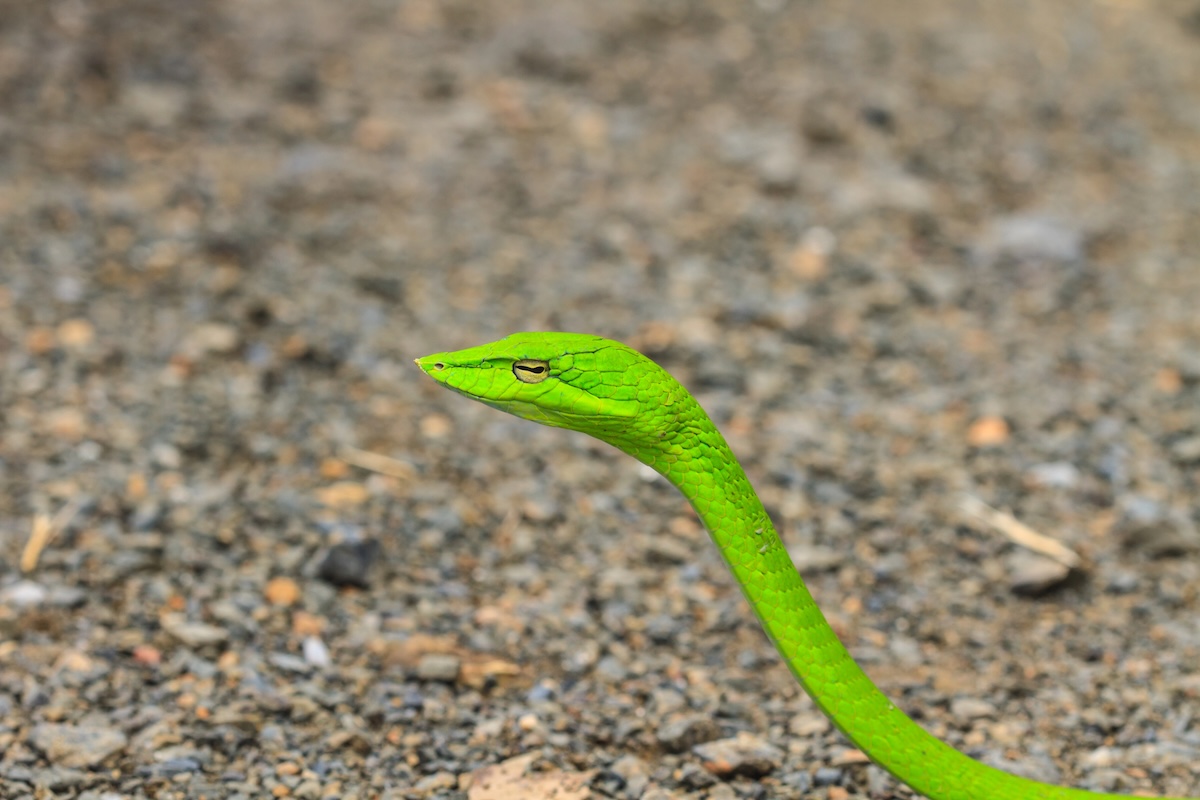 Photo Credit: sirichai2514 at Deposit Photos
In the heart of Southeast Asia’s lush rainforests, the Asian Vine Snake, known scientifically as Ahaetulla, glides gracefully among the branches. With its slender, elongated body and vibrant green coloration, this remarkable snake blends seamlessly into the foliage, making it a master of camouflage. Imagine a sun-dappled canopy where the air is thick with the sounds of chirping birds and rustling leaves. Here, the Asian Vine Snake hangs like a delicate ribbon, poised and ready to strike at unsuspecting prey, such as frogs and lizards, that wander too close.
What makes Ahaetulla particularly captivating to scientists and nature lovers alike is not just its striking appearance but also its unique adaptations. This snake is diurnal, meaning it is active during the day, and it uses its keen eyesight to spot potential meals from a distance. Its slender form allows it to navigate through the treetops with ease, while its ability to remain still for long periods makes it an expert ambush predator. As we explore the life of the Asian Vine Snake, we will uncover the secrets of its behavior, diet, and the vital role it plays in its ecosystem, revealing just how interconnected life is in these vibrant tropical habitats.
The Asian Vine Snake, scientifically known as Ahaetulla, occupies a distinctive place in the tree of life. This slender, agile snake is part of the family Colubridae, which includes many non-venomous snakes. What sets the Asian Vine Snake apart is its remarkable ability to mimic the appearance of vines and branches, allowing it to blend seamlessly into its forest habitat. This camouflage not only aids in hunting but also provides protection from predators. With its elongated body and vibrant green coloration, the Asian Vine Snake is a true marvel of adaptation in the animal kingdom.
| Taxonomic Rank | Scientific Name | Meaning & Significance |
|---|---|---|
| Kingdom | Animalia | This classification includes all animals, highlighting the Asian Vine Snake’s status as a living organism that moves, eats, and interacts with its environment. |
| Phylum | Chordata | Chordates are animals with a backbone. The Asian Vine Snake has a flexible spine that allows it to navigate through trees with ease. |
| Class | Reptilia | This class includes reptiles, which are cold-blooded and often have scaly skin. The Asian Vine Snake’s scales help it retain moisture in its humid habitat. |
| Order | Squamata | Squamata is the order of reptiles that includes snakes and lizards. The Asian Vine Snake’s elongated body and ability to shed its skin are characteristic of this group. |
| Family | Colubridae | This family consists of many non-venomous snakes. The Asian Vine Snake is known for its mild temperament and non-threatening nature. |
| Genus | Ahaetulla | The name Ahaetulla is derived from the Greek word for “to be without,” referring to its non-venomous nature and its ability to remain still like a vine. |
Understanding the Asian Vine Snake’s classification reveals much about its evolutionary journey. As a member of the Colubridae family, it shares a lineage with many other snakes that have adapted to various environments. Its unique adaptations, such as its camouflage and arboreal lifestyle, showcase the incredible ways in which species evolve to survive and thrive in their habitats. This snake not only exemplifies the diversity of life on Earth but also highlights the intricate connections between form, function, and environment in the natural world.
The evolutionary journey of the Asian Vine Snake, belonging to the genus Ahaetulla, stretches back millions of years. This snake is a member of the Colubridae family, which is one of the largest families of snakes, encompassing a wide variety of species. The lineage of Ahaetulla can be traced to ancient ancestors that roamed the Earth during the late Cretaceous period, around 100 million years ago. Over time, these ancestors adapted to their environments, leading to the diverse forms of snakes we see today.
The early ancestors of the Asian Vine Snake were likely more robust and less specialized than their modern descendants. As they evolved, they transitioned from a more generalized body structure to the slender, elongated form that characterizes Ahaetulla. This change allowed them to navigate through the dense foliage of their tropical habitats with ease. Their coloration also shifted, evolving into vibrant greens and yellows that provide excellent camouflage among leaves and branches. This adaptation not only helps them avoid predators but also aids in ambushing prey.
The adaptations of the Asian Vine Snake have been vital for its survival in the wild. Its slender body and prehensile tail allow it to expertly maneuver through the treetops, while its green coloration provides essential camouflage. The large eyes enhance its ability to hunt and avoid danger, making it a skilled predator. Together, these features have enabled the Asian Vine Snake to thrive in its lush, tropical habitat, showcasing the incredible power of evolution in shaping life on Earth.
The Asian Vine Snake is a striking example of nature’s artistry, with its long, pencil-thin body that seems almost to float through the air. This snake can reach impressive lengths, often stretching up to six feet, but its slender form makes it appear even more elongated. Its head is narrow and slightly flattened, giving it a streamlined look that helps it navigate through the branches of trees with ease. The overall impression is one of elegance and agility, as it glides effortlessly among the foliage, blending seamlessly into its surroundings.
| Feature | Description |
|---|---|
| Size | Can grow up to 6 feet long |
| Color | Typically bright green, with some variations including yellow or brown |
| Skin Type | Covered in smooth, shiny scales |
| Body Shape | Pencil-thin, allowing for agile movement |
| Head Shape | Narrow and slightly flattened for streamlined navigation |
These physical features work together to create a master of camouflage and agility. The vibrant green color allows the Asian Vine Snake to blend in with the leaves and branches of its forest habitat, making it nearly invisible to both predators and prey. Its slender body is not just for show; it enables the snake to move gracefully among the trees, where it hunts for small birds and lizards. The combination of its size, color, and shape makes the Asian Vine Snake a perfect example of how evolution shapes animals to thrive in their environments.
The Asian Vine Snake thrives in lush, tropical environments that are rich in greenery and life. Picture a vibrant rainforest, where sunlight filters through a dense canopy of leaves, creating a mosaic of light and shadow on the forest floor. This snake is often found gracefully draped over branches, blending seamlessly with the foliage. Its slender body mimics the vines and twigs around it, making it a master of camouflage in its leafy domain.
The Asian Vine Snake prefers warm, humid climates typical of tropical and subtropical regions. These areas usually experience high rainfall, which keeps the environment moist and supports a diverse array of plant life. The temperature in these habitats often ranges from 20 to 30 degrees Celsius (68 to 86 degrees Fahrenheit), providing the perfect conditions for this snake to thrive. The humidity helps maintain the moisture levels in its skin, which is crucial for its survival.
Adaptations have finely tuned the Asian Vine Snake to its specific habitat. Its elongated body allows it to navigate through the branches with ease, while its green coloration provides excellent camouflage against predators and prey alike. This snake has also developed a keen sense of sight, enabling it to spot small animals, such as frogs and lizards, from a distance. By blending into its surroundings and using its agility, the Asian Vine Snake has become a skilled hunter in the vibrant tapestry of the rainforest.
The Asian Vine Snake leads a life that is both active and stealthy, primarily during the day. As a diurnal creature, it spends its mornings basking in the sun, soaking up warmth to fuel its energy for the day ahead. Once fully warmed, it embarks on a quest for food, often hunting small lizards and frogs. With its keen eyesight, this snake can spot its prey from a distance, using its long, slender body to navigate through the branches and leaves of its forest home. The Asian Vine Snake is an expert at blending in with its surroundings, making it a master of camouflage as it waits patiently for the perfect moment to strike.
Socially, the Asian Vine Snake tends to be solitary, preferring to hunt and live alone. However, during the breeding season, males may engage in displays of dominance, showcasing their agility and strength to attract females. These interactions can be quite dynamic, as males may coil around each other in a dance-like manner, demonstrating their fitness. While they are not known to form tight-knit groups, they do share their habitat with others of their kind, often crossing paths without much interaction. This independence allows them to thrive in their lush environments, where they can find ample food and shelter.
| Behavior Type | Description |
|---|---|
| Hunting | The Asian Vine Snake uses its excellent vision to spot prey from a distance, often waiting motionless to ambush small lizards and frogs. |
| Social Structure | Generally solitary, these snakes come together only during the breeding season, where males may compete for females through displays of agility. |
| Communication | While not vocal, they communicate through body language, especially during mating rituals, where movements can signal dominance or attraction. |
The behaviors of the Asian Vine Snake are finely tuned to ensure its survival in the wild. By being an expert hunter and a master of camouflage, it can effectively avoid predators while securing its meals. Its solitary nature allows it to minimize competition for resources, while the brief social interactions during breeding ensure the continuation of its lineage. Each aspect of its daily life is a testament to the delicate balance of nature, where every action plays a crucial role in the survival of the species.
The Asian Vine Snake is a carnivore, meaning it primarily eats other animals. This slender snake has a particular taste for frogs, lizards, insects, and even small birds. Its feeding behavior is quite fascinating; it relies on its exceptional camouflage to blend into the leafy surroundings of its tropical habitat. When prey comes too close, the Asian Vine Snake strikes with remarkable speed and precision, using its sharp teeth to capture its meal.
| Dietary Aspect | Details |
|---|---|
| Diet Type | Carnivore |
| Favorite Foods | Frogs, lizards, insects, small birds |
| Prey Items | Frogs, lizards, insects, small birds |
| Hunting/Foraging Strategies | Uses camouflage to ambush prey; strikes quickly when prey is close |
This diet plays a crucial role in the Asian Vine Snake’s ecology and daily routine. By preying on a variety of small animals, it helps maintain the balance of its ecosystem, controlling populations of frogs and insects. Its hunting strategy, which relies on stealth and patience, allows it to thrive in its lush environment. As it navigates through the trees, the Asian Vine Snake not only finds food but also contributes to the vibrant tapestry of life in the rainforest.
The mating behavior of the Asian Vine Snake is a captivating spectacle, especially during the breeding season, which typically occurs in the warmer months. Males engage in a fascinating courtship ritual, where they may perform intricate movements to attract females. This often involves displaying their vibrant colors and engaging in a dance-like motion, showcasing their agility and fitness. Once a female is receptive, she will mate with a male, leading to the next stage of their life cycle.
| Reproductive Aspect | Details |
|---|---|
| Gestation Period | Approximately 60 to 70 days |
| Litter Size | 4 to 12 eggs |
| Age of Maturity | About 2 to 3 years |
| Name of Young | Neonate or snakelets |
After the eggs are laid, the female Asian Vine Snake provides no further parental care. The neonates, or snakelets, are born fully formed and ready to fend for themselves. These young snakes are miniature versions of their parents, equipped with the skills they need to survive in their lush habitats. As they grow, they will shed their skin multiple times, a process known as ecdysis, allowing them to grow and develop into the agile adults they are destined to become. The journey from neonate to maturity is filled with challenges, but these snakes are well-adapted to thrive in their vibrant environments.
The Asian Vine Snake plays a crucial role in its ecosystem, acting as both predator and prey. This slender serpent is a skilled hunter, primarily feeding on small animals like frogs and lizards. However, it also finds itself in the crosshairs of various predators, making it an important link in the food web. By maintaining a balance between its hunting and being hunted, the Asian Vine Snake contributes to the health of its tropical habitat.
To survive these threats, the Asian Vine Snake has developed several clever defensive strategies. Its green coloration allows it to blend seamlessly into the foliage, making it hard for predators to spot. When threatened, it may freeze in place, mimicking a twig or vine, which can confuse potential attackers. Additionally, its agility and ability to quickly retreat into the dense vegetation provide an effective escape route. These adaptations help the Asian Vine Snake navigate the dangers of its environment, ensuring its survival in the wild.
A keystone species is an organism that has a disproportionately large impact on its environment relative to its abundance. These species help maintain the structure of an ecosystem, influencing the types and numbers of various other organisms. The Asian Vine Snake, with its unique role as both predator and prey, qualifies as a keystone species in its tropical habitat. By regulating populations of its prey, it helps maintain a balance that supports the overall health of its ecosystem.
The Asian Vine Snake primarily feeds on small animals such as frogs, lizards, and insects. By controlling these populations, it prevents any one species from becoming too dominant, which could lead to a decline in biodiversity. For example, if the snake were to disappear, the frog population might explode, leading to overgrazing of vegetation and a subsequent decline in plant diversity. This change could ripple through the ecosystem, affecting other animals that rely on those plants for food and shelter.
Additionally, the Asian Vine Snake serves as a food source for larger predators, such as birds of prey. Its presence supports these higher trophic levels, creating a complex web of interactions. The snake’s unique ability to camouflage among the leaves also plays a role in its ecosystem. This adaptation not only aids in its hunting but also influences the behavior of other animals that share its habitat, as they must be wary of this stealthy predator.
If the Asian Vine Snake were to vanish from its ecosystem, the consequences could be severe. The unchecked growth of its prey species could lead to significant changes in plant life, disrupting the delicate balance of the rainforest. This shift would not only affect the plants but also the myriad of other species that depend on them for survival. In essence, the disappearance of this slender serpent would create a domino effect, highlighting just how crucial it is to the health and stability of its environment.
The Asian Vine Snake, known scientifically as Ahaetulla, plays a vital role in its ecosystem, particularly in tropical rainforests. This slender, agile snake occupies a unique ecological niche as both a predator and prey. By hunting small animals like frogs, lizards, and insects, it helps regulate their populations, ensuring a balanced environment. Its presence indicates a healthy ecosystem, as it thrives in areas rich in biodiversity.
| Ecosystem Service | Impact |
|---|---|
| Population Control | Regulates numbers of small animals, preventing overpopulation. |
| Food Source | Serves as prey for larger predators, contributing to the food web. |
| Habitat Indicator | Indicates the health of tropical ecosystems through its presence. |
The Asian Vine Snake’s influence extends beyond its immediate hunting habits. For instance, by preying on frogs, it helps control their populations, which can otherwise explode in numbers and disrupt the balance of the ecosystem. Additionally, as a food source for larger predators, such as birds of prey, it plays a crucial role in the food web. Its ability to camouflage among leaves and branches not only aids in its hunting but also highlights the intricate relationships between species in its habitat.
The broader ecological importance of the Asian Vine Snake cannot be overstated. As a keystone species, it helps maintain the structure of its ecosystem, influencing the types and numbers of other species that can thrive in its environment. By ensuring that populations of small animals remain in check, it supports the overall health of the rainforest. This delicate balance is essential for the survival of countless other species, making the Asian Vine Snake a key player in the vibrant tapestry of life in tropical ecosystems.
In the intricate web of life, symbiosis refers to the close interactions between different species, which can take on various forms. These relationships can be mutualistic, where both species benefit, parasitic, where one benefits at the expense of the other, or commensal, where one benefits while the other is neither helped nor harmed. The Asian Vine Snake, with its striking appearance and unique lifestyle, engages in several ecological partnerships that highlight the complexity of nature’s relationships.
| Species/Type | Relationship Type | Description |
|---|---|---|
| Tree Frogs | Mutualistic | Asian Vine Snakes often share their habitat with tree frogs. The snakes benefit from the frogs’ presence as they provide a food source, while the frogs gain protection from larger predators by being in the dense foliage where the snakes reside. |
| Birds | Commensal | Some birds, like certain species of flycatchers, may benefit from the presence of Asian Vine Snakes. The snakes help control the population of insects, which in turn provides a more abundant food source for the birds without affecting the snakes. |
| Insects | Parasitic | While not a direct relationship, the Asian Vine Snake can sometimes host parasites like mites. These tiny creatures benefit from the snake’s body, feeding on its skin or blood, which can be harmful to the snake over time. |
The evolution of these relationships showcases the dynamic nature of ecosystems. Over time, species adapt to their surroundings and the organisms they interact with, leading to partnerships that enhance survival and reproduction. For the Asian Vine Snake, these connections not only provide food and protection but also contribute to the overall health of its habitat. By understanding these relationships, we gain insight into the delicate balance of life in the wild, where every species plays a role in the grand tapestry of nature.
The Asian Vine Snake is a captivating creature that showcases the wonders of evolution and adaptation. With its slender, pencil-thin body and vibrant colors, this snake is not just a sight to behold but also a master of survival in its lush tropical habitat.
The Asian Vine Snake has long been a part of human culture, particularly in regions where it is commonly found, such as Southeast Asia. Historically, these snakes have been featured in local folklore and traditional stories, often symbolizing agility and stealth. In some cultures, they are revered for their beauty and grace, while in others, they may be viewed with suspicion due to their snake-like appearance. This duality reflects humanity’s complex relationship with nature, where admiration and fear often coexist.
In modern times, interactions between the Asian Vine Snake and humans have evolved significantly. While these snakes are not typically aggressive, they can sometimes find themselves in conflict with people, especially in agricultural areas where they may prey on small animals. Conservation efforts are increasingly important as habitat loss threatens their populations. Many organizations are working to educate communities about the ecological role of the Asian Vine Snake, emphasizing its importance in controlling pest populations. Unlike some other snake species, the Asian Vine Snake is not commonly kept as a pet, but its striking appearance has sparked interest among reptile enthusiasts.
As we look to the future, the relationship between the Asian Vine Snake and humanity holds promise. With increased awareness and education, people can learn to appreciate these snakes for their ecological contributions rather than fear them. By fostering a sense of stewardship for the environment, we can ensure that the Asian Vine Snake continues to thrive in its natural habitat, enriching the biodiversity of our planet. Together, we can create a world where humans and wildlife coexist harmoniously, celebrating the wonders of nature.
The Asian Vine Snake, known scientifically as Ahaetulla, currently holds a conservation status of “Least Concern” according to the International Union for Conservation of Nature (IUCN). This classification suggests that, at present, the species does not face immediate threats that could lead to its extinction. However, specific population estimates remain unknown, making it challenging to assess trends accurately. While the overall status is stable, ongoing monitoring is essential to ensure that this beautiful snake continues to thrive in its natural habitat.
| Conservation Factor | Status/Details |
|---|---|
| IUCN Status | Least Concern |
| Estimated Population Size | Unknown |
| Population Trend | Stable |
The main threats to the Asian Vine Snake include habitat loss and degradation, primarily due to deforestation and urbanization. As rainforests are cleared for agriculture or development, the lush environments that these snakes depend on are rapidly disappearing. Additionally, pollution and climate change can further disrupt their habitats, affecting the delicate balance of the ecosystems they inhabit. These factors can lead to a decline in prey availability, which is crucial for their survival.
Conservation efforts for the Asian Vine Snake focus on habitat protection and restoration. By safeguarding the tropical rainforests where they live, we can help ensure that these snakes have a stable environment to thrive in. Education and awareness programs are also vital, as they encourage local communities to appreciate and protect their natural surroundings. With continued efforts, the outlook for the Asian Vine Snake remains positive, allowing future generations to marvel at this slender, vibrant inhabitant of the rainforest.
| Question | Answer |
|---|---|
| What is the habitat of the Asian Vine Snake? | The Asian Vine Snake is typically found in tropical and subtropical forests. They prefer areas with plenty of trees and shrubs, as they are excellent climbers and often stay high up in the branches. |
| What does the Asian Vine Snake eat? | This snake is a carnivore, meaning it primarily eats other animals. Its diet mainly consists of small lizards and frogs, which it captures with its quick strikes. |
| How does the Asian Vine Snake behave? | Asian Vine Snakes are known for their calm demeanor and are often seen resting on branches. They are non-aggressive and rely on their camouflage to avoid predators, blending in with the leaves around them. |
| How does the Asian Vine Snake reproduce? | These snakes are oviparous, which means they lay eggs. The female typically lays a clutch of eggs in a safe, hidden location, where they will incubate until they hatch. |
| What threats do Asian Vine Snakes face? | While the Asian Vine Snake is currently listed as Least Concern, it still faces threats from habitat destruction due to deforestation. Additionally, they can be at risk from predators like birds of prey. |
| What is a distinctive feature of the Asian Vine Snake? | The most distinctive feature of the Asian Vine Snake is its pencil-thin body. This slender shape helps it navigate through branches and leaves, making it less visible to both prey and predators. |
| Are Asian Vine Snakes venomous? | No, Asian Vine Snakes are not venomous. They rely on their speed and agility to catch prey rather than using venom to subdue it. |