Taxonomy & Classification
- Kingdom
- Animalia
- Phylum
- Chordata
- Class
- Reptilia
- Order
- Squamata
- Family
- Viperidae
- Genus
- Sistrurus
- Species
- Sistrurus catenatus

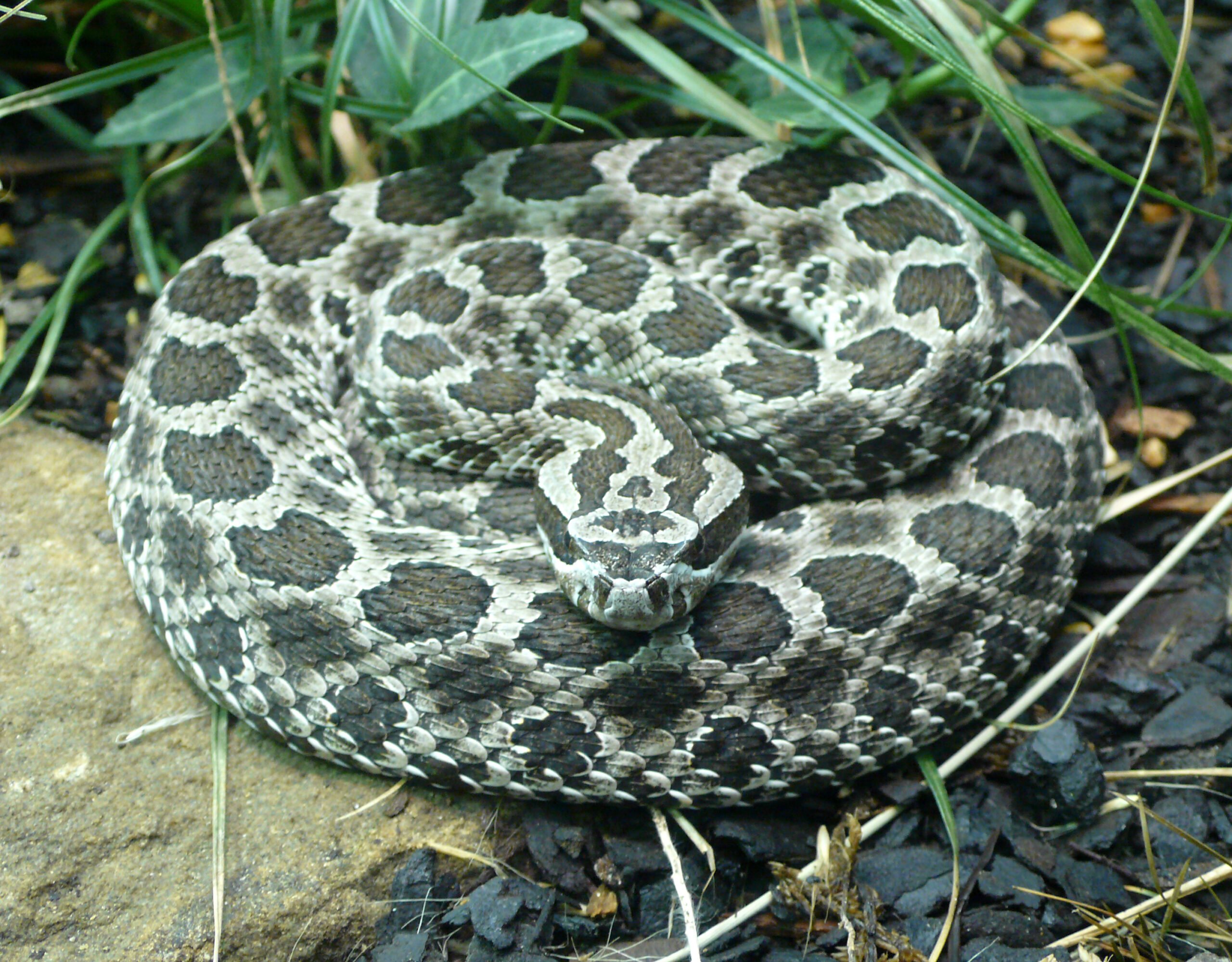 Photo Credit: Slick-o-bot / Wikimedia Commons
In the heart of North America’s wetlands and prairies, the Massasauga rattlesnake, scientifically known as Sistrurus catenatus, slithers through its vibrant habitat, a master of camouflage among the grasses and wildflowers. This small rattler, typically measuring between 18 to 30 inches long, boasts a stout body adorned with intricate patterns of gray and brown, allowing it to blend seamlessly into the earthy tones of its surroundings. With its distinctive triangular head and the telltale rattle at the end of its tail, the Massasauga is not just another snake; it is a fascinating creature that captures the attention of scientists and nature enthusiasts alike.
As dusk falls and the world cools, the Massasauga comes alive, showcasing its nocturnal lifestyle. This little snake plays a vital role in its ecosystem, helping to control populations of small mammals and other creatures. Its presence is a reminder of the delicate balance of nature, where every species, no matter how small, contributes to the health of its environment. With a rich history intertwined with human culture and a unique mating ritual that involves captivating courtship dances, the Massasauga rattlesnake invites us to explore the wonders of the natural world, revealing the intricate connections that bind all living things together.
The Massasauga, a small but intriguing rattlesnake, occupies a special place in the tree of life. Scientifically classified within the Kingdom Animalia, it belongs to the Phylum Chordata, which includes all animals with a backbone. As a member of the Class Reptilia, the Massasauga shares its lineage with lizards, turtles, and other snakes. What sets this species apart is its ability to thrive in diverse habitats, from wetlands to grasslands, showcasing its adaptability. This adaptability, combined with its distinctive rattle, makes the Massasauga a captivating example of evolutionary success within the family of venomous snakes.
| Taxonomic Rank | Scientific Name | Meaning & Significance |
|---|---|---|
| Kingdom | Animalia | This name signifies that the Massasauga is part of the vast group of multicellular organisms known as animals, which are characterized by their ability to move and respond to their environment. |
| Phylum | Chordata | Chordata means “having a notochord,” a flexible rod that provides support. This feature is a key characteristic of all vertebrates, including the Massasauga. |
| Class | Reptilia | Reptilia refers to reptiles, which are cold-blooded animals that lay eggs and have scaly skin. The Massasauga’s scaly body helps it retain moisture in its often dry habitats. |
| Order | Squamata | Squamata means “scaly,” highlighting the presence of scales on snakes and lizards. The Massasauga’s scales are not just for protection; they also help it blend into its surroundings. |
| Family | Viperidae | This family includes vipers and pit vipers, known for their long, hinged fangs that allow them to deliver venom. The Massasauga’s venom is used to subdue prey, showcasing its role as a predator. |
| Genus | Sistrurus | Sistrurus is derived from a Greek word meaning “to hiss,” which reflects the hissing sound the Massasauga makes when threatened, a behavior that serves as a warning to potential predators. |
Understanding the Massasauga’s classification reveals much about its evolutionary journey. As a member of the Viperidae family, it shares a common ancestor with other venomous snakes, highlighting the adaptations that have allowed these reptiles to thrive in various environments. The unique features of the Massasauga, from its rattle to its specialized hunting techniques, are not just fascinating traits; they are the result of millions of years of evolution, showcasing the intricate web of life that connects all living beings.
The evolutionary journey of the Massasauga rattlesnake stretches back millions of years, tracing its lineage to ancient reptiles that roamed the Earth long before the first dinosaurs appeared. This small but captivating snake, belonging to the Viperidae family, has adapted to a variety of environments across North America. Its story is one of survival, shaped by the changing landscapes and climates over time.
The ancestors of the Massasauga were likely similar to other early snakes, which emerged around 100 million years ago. These primitive reptiles gradually evolved from lizard-like creatures, losing their limbs and developing elongated bodies. As they adapted to their environments, some species began to exhibit specialized traits, such as venom for hunting and defense. The Massasauga, specifically, evolved from a lineage that adapted to temperate climates, developing a unique set of characteristics that allowed it to thrive in grasslands, wetlands, and rocky areas.
These adaptations have been crucial for the Massasauga’s survival in a world filled with challenges. Its venom enables it to capture prey efficiently, while its camouflage provides protection from predators. The rattle serves as a clever warning system, helping to avoid confrontations. Additionally, its small size and ability to regulate body temperature allow it to thrive in diverse habitats. Together, these traits illustrate the remarkable ways in which the Massasauga has evolved to meet the demands of its environment, ensuring its place in the intricate web of life.
The Massasauga rattlesnake presents a striking appearance that captures the imagination. This small rattler, typically measuring between 18 to 30 inches long, has a stout body that is both muscular and agile. Its head is slightly wider than its neck, giving it a distinctive triangular shape. The Massasauga’s skin is covered in smooth, shiny scales that glisten in the sunlight, enhancing its allure. With a pattern of dark brown or grayish blotches against a lighter background, it blends seamlessly into its surroundings, making it a master of camouflage.
| Feature | Description |
|---|---|
| Size | 18 to 30 inches long |
| Color | Dark brown or grayish blotches on a lighter background |
| Skin Type | Smooth, shiny scales |
| Head Shape | Triangular, wider than the neck |
These physical features work together to enhance the Massasauga’s survival in the wild. Its coloration allows it to blend into the rocky and grassy environments it often inhabits, making it less visible to both predators and prey. The smooth scales not only provide protection but also help the snake move swiftly through its habitat. The triangular head shape is not just for show; it houses venomous fangs that are essential for capturing and subduing prey. Together, these characteristics make the Massasauga a well-adapted predator in its ecosystem, showcasing the beauty and efficiency of nature’s designs.
The Massasauga rattlesnake thrives in a variety of habitats that paint a vivid picture of its life. Imagine wide-open prairies dotted with wildflowers, marshy wetlands teeming with life, and serene lake areas where the sun glistens on the water’s surface. These environments provide the perfect backdrop for this small rattler, allowing it to blend seamlessly into its surroundings. The Massasauga often finds refuge among the grasses and reeds, where it can bask in the sun or hide from potential predators.
The climate and environmental conditions that the Massasauga prefers are quite specific. It enjoys areas with a mix of open spaces and dense vegetation, which provide both warmth and cover. The temperature in these habitats can vary, but the Massasauga is often found in regions that experience warm summers and mild winters. This snake is particularly fond of moist environments, as they help support the small mammals and amphibians it preys upon.
Adaptation is key to the Massasauga’s survival in these diverse habitats. Its coloration, which often mimics the earthy tones of its surroundings, allows it to remain hidden from both predators and unsuspecting prey. Additionally, the Massasauga has developed a unique ability to thrive in both dry and wet conditions, making it a versatile inhabitant of prairies, marshes, and lakes. This adaptability not only helps it find food but also ensures it can navigate the challenges of its environment, from fluctuating temperatures to varying water levels.
As the sun sets and the world cools, the Massasauga rattlesnake begins its nightly adventures. This small rattler is primarily nocturnal, meaning it is most active during the night. As darkness blankets its habitat, the Massasauga slithers out from its hiding spots, which can include rocky crevices or dense vegetation. Its daily activities revolve around hunting for food, basking in the warmth of the earth, and avoiding potential predators. With its keen sense of smell and heat-sensing pits, the Massasauga is well-equipped to navigate the night, searching for small mammals, birds, and amphibians to satisfy its hunger.
While the Massasauga is generally a solitary creature, it does have interesting social behaviors during certain times of the year. Mating season brings these snakes together, allowing them to engage in courtship rituals. During this time, males may compete for the attention of females, showcasing their strength and agility. Outside of mating, however, these snakes prefer to keep to themselves, often retreating to their own territories. Communication among Massasaugas is subtle; they rely on body language and the vibrations of the ground to sense each other’s presence, rather than vocal sounds.
| Behavior Type | Description |
|---|---|
| Activity Patterns | Nocturnal foraging for food, primarily at night. |
| Social Structure | Generally solitary, coming together mainly during mating season. |
| Communication Methods | Uses body language and ground vibrations to sense other snakes. |
The behaviors of the Massasauga rattlesnake are finely tuned to ensure its survival in the wild. By being nocturnal, it avoids the heat of the day and reduces the risk of predation from larger animals. Its solitary nature allows it to maintain a territory where it can hunt and bask without competition. During mating season, the brief social interactions help ensure the continuation of the species. Each of these behaviors plays a crucial role in the Massasauga’s life, allowing it to thrive in its diverse habitats.
The Massasauga rattlesnake is a carnivore, which means it primarily eats other animals. This small snake has a varied diet that includes small mammals, lizards, other snakes, and even centipedes. It uses a combination of stealth and ambush tactics to catch its prey, often waiting patiently for the right moment to strike. With its keen senses, the Massasauga can detect movement and vibrations, allowing it to hunt effectively in its environment.
| Dietary Aspect | Details |
|---|---|
| Diet Type | Carnivore |
| Favorite Foods | Small mammals, lizards, other snakes, centipedes |
| Prey Items | Field mice, voles, and various reptiles |
| Hunting/Foraging Strategies | Stealth and ambush, waiting for prey to come close |
The Massasauga’s diet plays a crucial role in its ecology and daily routine. By preying on small mammals and other creatures, it helps control their populations, contributing to a balanced ecosystem. Its nocturnal hunting habits allow it to take advantage of cooler temperatures, making it an efficient predator. This adaptability not only shapes its survival but also influences the dynamics of the habitats it occupies, showcasing the interconnectedness of life in the wild.
The Massasauga rattlesnake has a fascinating mating ritual that takes place during the warmer months, typically from late spring to early summer. Males engage in a captivating courtship dance, where they may intertwine their bodies and engage in combat to win the attention of a female. Once a male successfully attracts a female, they mate, and the female will store the male’s sperm until she is ready to fertilize her eggs. This unique reproductive strategy allows her to time the birth of her young for optimal conditions.
| Reproductive Aspect | Details |
|---|---|
| Gestation Period | Approximately 3 months |
| Litter Size | 4 to 20 young |
| Age of Maturity | 2 to 3 years |
| Name of Young | Neonates |
After the gestation period, the female Massasauga gives birth to live young, known as neonates, which are miniature versions of adults. These tiny snakes are fully independent from the moment they are born, equipped with their own venom and the ability to hunt. Interestingly, the mother does not provide any parental care after giving birth. Instead, the neonates must quickly learn to navigate their environment, find food, and avoid predators. As they grow, they shed their skin several times, a process called molting, which helps them develop into mature adults ready to thrive in their habitats.
The Massasauga rattlesnake plays a crucial role in its ecosystem, sitting comfortably in the middle of the food web. As a predator, it helps control populations of small mammals and other creatures, while also serving as prey for larger animals. This balance is essential for maintaining the health of its habitat, which includes wetlands, prairies, and grasslands.
To survive against these threats, the Massasauga has developed several clever defensive behaviors. When feeling threatened, it may remain motionless, blending into its surroundings with its camouflaged scales. If that doesn’t work, it can rattle its tail to warn potential predators, a sound that echoes through the grasslands. In extreme situations, it may strike, delivering a venomous bite to deter attackers. These strategies help the Massasauga navigate the dangers of its world, ensuring its survival in the wild.
A keystone species is an organism that has a disproportionately large impact on its environment relative to its abundance. In simpler terms, these species play a crucial role in maintaining the structure of an ecosystem. The Massasauga rattlesnake, while not the largest or most visible animal in its habitat, qualifies as a keystone species due to its significant influence on the populations of other animals and the overall health of its ecosystem.
The Massasauga’s role as a predator is vital. By feeding on small mammals, lizards, and even other snakes, it helps regulate these populations. This control prevents any one species from becoming too dominant, which could lead to imbalances in the ecosystem. For example, if the Massasauga were to disappear, the populations of its prey, like rodents, could explode. This surge could result in overgrazing of vegetation, which would affect other animals that rely on those plants for food and shelter.
Additionally, the Massasauga serves as prey for larger predators, such as hawks and foxes. This connection creates a ripple effect throughout the food web. When the Massasauga is present, it supports not only its own survival but also the survival of the animals that depend on it for food. Its presence helps maintain a balanced ecosystem where various species can thrive together.
If the Massasauga were to vanish from its environment, the consequences could be severe. The unchecked growth of small mammal populations would lead to significant changes in plant life, which could, in turn, affect other animals that rely on those plants. The entire ecosystem could become unbalanced, leading to a decline in biodiversity. This highlights the importance of the Massasauga not just as a fascinating snake, but as a vital player in the intricate web of life.
The Massasauga rattlesnake plays a vital role in its ecosystem, acting as both predator and prey. This small but significant snake thrives in diverse habitats like prairies, marshes, and lake areas. By occupying this ecological niche, the Massasauga helps maintain the balance of its environment. Its presence influences the populations of various small mammals and other creatures, creating a ripple effect that supports the health of the entire ecosystem.
| Ecosystem Service | Impact |
|---|---|
| Population Control | Regulates numbers of small mammals, preventing overpopulation. |
| Prey for Larger Animals | Serves as a food source for birds of prey and larger mammals. |
| Soil Health | Contributes to nutrient cycling through its predation and waste. |
| Habitat Structure | Influences vegetation patterns by controlling herbivore populations. |
The Massasauga’s influence can be seen in specific examples throughout its habitat. For instance, by preying on small mammals like mice and voles, it helps keep their populations in check. This is crucial because an overabundance of these animals can lead to overgrazing, which negatively impacts plant life. Additionally, the Massasauga itself becomes a meal for larger predators, such as hawks and foxes, creating a balanced food web. Its nocturnal lifestyle also means it is active at night, allowing it to hunt and interact with its environment when many other animals are resting.
The broader ecological importance of the Massasauga cannot be overstated. As a keystone species, its presence is essential for maintaining the structure and health of its ecosystem. By regulating prey populations and serving as a food source for other animals, the Massasauga helps ensure that the intricate web of life in its habitat remains intact. Protecting this small rattlesnake is not just about saving one species; it’s about preserving the delicate balance of nature that supports countless other forms of life.
In the intricate web of life, symbiosis refers to the close and often long-term interactions between different species. These relationships can take many forms, including mutualism, where both species benefit, parasitism, where one benefits at the expense of the other, and commensalism, where one benefits while the other is neither helped nor harmed. The Massasauga rattlesnake, with its unique lifestyle and habitat preferences, engages in various ecological relationships that highlight the interconnectedness of nature.
| Species/Type | Relationship Type | Description |
|---|---|---|
| Small mammals (e.g., mice, voles) | Predator-Prey | The Massasauga preys on small mammals, helping to control their populations and maintain ecological balance. |
| Birds (e.g., crows, hawks) | Commensal | Birds may benefit from the presence of the Massasauga by scavenging on its leftovers, while the snake remains unaffected. |
| Ticks | Parasitic | Ticks can latch onto the Massasauga, feeding on its blood, which can weaken the snake but does not usually lead to its death. |
The relationships that the Massasauga rattlesnake forms with other species have evolved over time, shaped by the demands of survival and the need for balance in ecosystems. These interactions not only benefit the Massasauga by providing food and sometimes protection but also play a crucial role in the health of their habitats. By understanding these connections, we can appreciate how every creature, big or small, contributes to the vibrant tapestry of life on Earth.
The Massasauga rattlesnake is a captivating creature that often goes unnoticed in the wild. This small but mighty snake has some surprising traits that make it truly special.
The Massasauga rattlesnake has a rich history intertwined with human culture and folklore. Native American tribes often regarded this snake with a mix of reverence and fear, weaving it into their stories and traditions. In some cultures, the Massasauga symbolized strength and resilience, while in others, it was seen as a harbinger of danger. Early European settlers, however, viewed the snake with suspicion, often leading to encounters that resulted in conflict. This complex relationship has shaped how humans perceive and interact with the Massasauga throughout history.
Today, the interactions between the Massasauga and humanity are evolving, especially as conservation efforts gain momentum. Many regions are working to protect this species, which is considered threatened in some areas due to habitat loss and human encroachment. Unfortunately, misunderstandings about the snake’s nature often lead to conflict, with people fearing it as a dangerous predator. In some cases, the Massasauga is even targeted for extermination. However, education and awareness campaigns are helping to foster a more positive relationship, emphasizing the importance of this snake in maintaining ecological balance.
As we look to the future, the relationship between the Massasauga rattlesnake and humanity holds promise. With increased awareness and understanding, we can learn to coexist peacefully with this fascinating species. By recognizing the vital role the Massasauga plays in our ecosystems, we can work together to ensure its survival. The journey ahead will require collaboration, respect, and a commitment to preserving the natural world, allowing both humans and Massasaugas to thrive side by side.
The Massasauga rattlesnake, a small yet intriguing member of the rattlesnake family, currently holds a conservation status of “Least Concern” according to the International Union for Conservation of Nature (IUCN). This means that, overall, the species is not facing immediate threats of extinction. However, population trends can vary by region, with some local populations experiencing declines due to habitat loss and other pressures. Understanding these trends is crucial for ensuring the long-term survival of this fascinating reptile.
| Conservation Factor | Status/Details |
|---|---|
| IUCN Status | Least Concern |
| Population Estimates | Varies by region; some local declines noted |
| Trend Direction | Stable in many areas, declining in others |
Despite its overall stable status, the Massasauga faces several significant threats. Habitat destruction is one of the primary concerns, as urban development, agriculture, and land conversion reduce the natural spaces where these snakes thrive. Additionally, road mortality poses a danger, as many Massasaugas are struck by vehicles while crossing roads. Climate change also plays a role, altering the ecosystems that support their populations and potentially affecting their food sources.
Conservation efforts are underway to protect the Massasauga and its habitats. Organizations and wildlife agencies are working to preserve critical habitats and promote awareness about the importance of this species. By creating protected areas and implementing road safety measures, they aim to reduce the risks that threaten the Massasauga’s survival. With continued efforts and public support, the outlook for this remarkable rattlesnake remains hopeful, ensuring that future generations can appreciate its role in the ecosystem.
| Question | Answer |
|---|---|
| What is the habitat of the Massasauga? | The Massasauga is commonly found in prairie, marsh, and lake areas. These habitats provide the right mix of moisture and shelter, which are essential for their survival. |
| What does the Massasauga eat? | This snake is a carnivore, meaning it primarily eats other animals. Its diet mainly consists of small mammals, birds, and amphibians, which it hunts using its keen sense of smell and heat-sensing pits. |
| How does the Massasauga behave? | The Massasauga is known for being relatively shy and prefers to avoid confrontation. When threatened, it may coil up and rattle its tail, mimicking the sound of a rattlesnake to scare off predators. |
| How does the Massasauga reproduce? | Massasaugas are ovoviviparous, which means they give birth to live young rather than laying eggs. The female typically gives birth to 5 to 20 baby snakes in late summer, after a gestation period of about three months. |
| What are the main threats to the Massasauga? | Habitat loss due to urban development and agriculture poses a significant threat to the Massasauga. Additionally, they are sometimes killed out of fear or misunderstanding, despite their generally non-aggressive nature. |
| What are some interesting characteristics of the Massasauga? | The Massasauga has a distinctive pattern of dark blotches on a lighter background, which helps it blend into its surroundings. This camouflage is crucial for both hunting and avoiding predators. |
| Is the Massasauga dangerous to humans? | While the Massasauga is venomous, it is not considered dangerous to humans. Its bites are rare and usually occur only when the snake is accidentally stepped on or provoked. |