Taxonomy & Classification
- Kingdom
- Animalia
- Phylum
- Chordata
- Class
- Mammalia
- Order
- Primates
- Family
- Cebidae
- Species
- Macaca Fascicularis

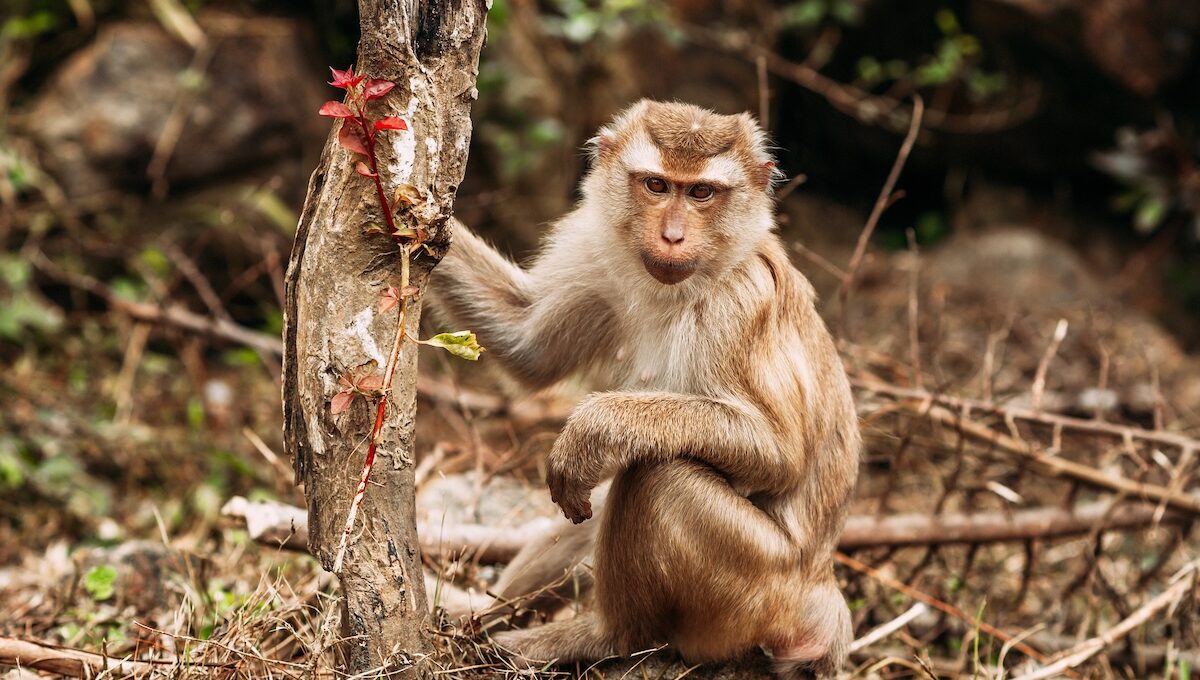 Photo Credit: sotnikov_mikhail at Deposit Photos
In the heart of a vibrant rainforest, the capuchin monkey, scientifically known as Cebus apella, swings gracefully from branch to branch. With its expressive face framed by a tuft of fur, this small primate captures the imagination of anyone lucky enough to witness its antics. Capuchins are known for their intelligence and dexterity, often using tools to crack open nuts or extract insects from crevices. Their social nature and playful behavior make them a favorite among scientists and nature lovers alike, who are drawn to their complex interactions and problem-solving skills.
As the sun filters through the thick canopy, illuminating the lush greenery below, capuchin monkeys chatter and call to one another, creating a symphony of sounds that fills the air. Their agile bodies are perfectly adapted for life in the trees, allowing them to navigate their environment with ease. These fascinating creatures not only play a vital role in their ecosystem by dispersing seeds and maintaining the health of their habitat, but they also offer a glimpse into the evolutionary journey of primates. Join us as we explore the captivating world of capuchin monkeys, uncovering their behaviors, habitats, and the important roles they play in the natural world.
Monkeys are intriguing members of the animal kingdom, sitting comfortably within the class Mammalia, which includes all mammals. They belong to the order Primates, a group that also encompasses humans, apes, and lemurs. What sets monkeys apart is their remarkable adaptability and social behavior. With their agile limbs and expressive faces, they navigate the treetops with ease, showcasing a blend of intelligence and playfulness that captivates both scientists and animal lovers alike. Their ability to communicate and form complex social structures makes them a vital part of the ecosystems they inhabit.
| Taxonomic Rank | Scientific Name | Meaning & Significance |
|---|---|---|
| Kingdom | Animalia | This name comes from the Latin word “animalis,” meaning “having breath” or “living.” It signifies all living organisms that are not plants or fungi, highlighting the diverse life forms on Earth. |
| Phylum | Chordata | Derived from the Latin “chorda,” meaning “string,” this name refers to animals that have a notochord, a flexible rod that supports the body. This feature is crucial in the development of vertebrates, including monkeys. |
| Class | Mammalia | This term comes from the Latin “mamma,” meaning “breast.” It reflects the defining characteristic of mammals: females possess mammary glands that produce milk to nourish their young. |
| Order | Primates | From the Latin “primus,” meaning “first,” this name indicates the evolutionary significance of primates. It highlights their advanced traits, such as larger brains and enhanced vision, which set them apart from other mammals. |
| Family | Cebidae | This family name is derived from the Greek word “kebos,” referring to a type of monkey. It encompasses New World monkeys, known for their prehensile tails and social structures. |
Understanding where monkeys fit in the tree of life reveals much about their evolutionary journey. As primates, they share a common ancestor with humans, which explains many of their social behaviors and cognitive abilities. Their classification within the Cebidae family highlights their adaptation to life in the trees of Central and South America, where they have evolved unique traits to thrive in their environments. This rich evolutionary history not only connects them to other primates but also emphasizes the intricate web of life that binds all living beings together.
The evolutionary journey of monkeys stretches back millions of years, weaving through the rich tapestry of life on Earth. Monkeys are part of the primate family, which began to diverge from other mammals around 65 million years ago, shortly after the dinosaurs vanished. This timeline reveals a fascinating story of adaptation and survival, as these agile animals evolved to thrive in diverse environments, from lush rainforests to arid savannas.
The earliest primates were small, tree-dwelling creatures that lived in the shadows of the dinosaurs. These ancestral forms, known as Plesiadapiforms, had features that hinted at their future as primates, such as grasping hands and feet, which allowed them to navigate branches with ease. As the world changed, so did these early primates. By around 40 million years ago, the first true monkeys emerged, splitting into two main groups: New World monkeys, found in the Americas, and Old World monkeys, which inhabit Africa and Asia. This split marked a significant evolutionary transition, as each group adapted to their specific environments, developing unique traits that would help them survive.
These evolutionary adaptations have been vital for monkeys’ survival in a world full of challenges. Their ability to climb and swing through trees not only helps them escape predators but also allows them to access food sources that ground-dwelling animals cannot reach. Living in social groups enhances their chances of survival, as they can work together to find food and protect one another. With their complex communication skills, monkeys can share information about dangers and food locations, making them even more resilient. Overall, these adaptations have shaped monkeys into the diverse and successful primates we see today, showcasing the wonders of evolution in action.
Monkeys are captivating animals that come in a variety of shapes and sizes, each with its own distinct charm. Generally, they possess a flexible body structure that allows for agile movement through trees and across varied terrains. Their limbs are long and strong, equipped with dexterous fingers and toes that help them grasp branches and swing effortlessly. With expressive faces and bright eyes, monkeys often display a range of emotions, making them relatable and engaging to observe.
| Feature | Description |
|---|---|
| Weight | Monkeys can weigh anywhere from 0.1 kg (0.22 lbs) to 30 kg (60 lbs), depending on the species. |
| Skin Type | Monkeys have hair-covered skin, which varies in texture and color across different species. |
| Color | Their fur can range from earthy browns and grays to vibrant hues like red, yellow, or even blue, depending on the species. |
| Body Structure | Monkeys typically have a compact body with long limbs, allowing for climbing and swinging. |
The combination of their lightweight bodies and strong limbs is essential for survival in their natural habitats. The hair covering their skin not only provides warmth but also offers camouflage among the leaves and branches, helping them evade predators. Their varied colors can signal health and vitality to potential mates, while their agile movements enable them to forage for food and escape danger. Together, these features create a well-adapted animal that thrives in diverse environments, from lush rainforests to arid savannas.
Monkeys thrive in a variety of habitats, each offering a unique environment that supports their lively lifestyles. Picture a lush tropical forest, where sunlight filters through a dense canopy of leaves, creating a warm and vibrant atmosphere. Here, monkeys swing gracefully from branch to branch, their playful antics echoing through the trees. In contrast, some monkeys find their home in open grasslands or even on rugged mountainous plains, where they adapt to the challenges of a less sheltered environment. These diverse settings provide the perfect backdrop for their social interactions and foraging behaviors.
The climate in these habitats varies widely, but monkeys generally prefer warm temperatures and abundant rainfall, especially in tropical regions. They thrive in environments where food sources, like fruits and leaves, are plentiful. In grasslands, they may face more extreme temperatures, but they adapt by seeking shade during the hottest parts of the day. Monkeys are also sensitive to their surroundings, often relying on the availability of water and shelter to stay safe from predators and harsh weather.
Adaptation is key to a monkey’s survival in these diverse habitats. Their agile limbs and prehensile tails, which can grasp branches, allow them to navigate through trees with ease. In open areas, some species have developed social structures that help them work together to find food and protect each other from threats. Their keen intelligence enables them to learn and adapt to new challenges, whether it’s finding the best foraging spots or communicating with one another through a variety of vocalizations. This remarkable ability to adjust to their surroundings is what makes monkeys such successful inhabitants of our planet.
Monkeys lead vibrant and active daily lives, filled with a mix of play, foraging, and social interaction. As the sun rises, they awaken in their treetop homes, stretching and grooming one another to shake off the night’s rest. Their mornings often begin with a hearty breakfast of fruits, leaves, and insects, which they skillfully find among the branches. Throughout the day, they swing from limb to limb, showcasing their impressive agility and dexterity. This playful behavior not only helps them stay fit but also strengthens their bonds with one another.
Social behavior is at the heart of a monkey’s life. Living in groups called troops, these animals thrive on cooperation and communication. Troops can vary in size, sometimes consisting of just a few individuals or numbering in the dozens. Within these groups, monkeys establish complex hierarchies, where each member has a role. They use a variety of vocalizations, facial expressions, and body language to convey messages, whether it’s warning others of danger or inviting them to play. This social structure is essential for their survival, as it fosters teamwork in finding food and protecting against predators.
| Behavior Type | Description |
|---|---|
| Activity Patterns | Monkeys are diurnal, meaning they are active during the day. They spend their time foraging for food, playing, and grooming each other. |
| Social Structure | Monkeys live in troops with a clear hierarchy. Each member has a rank, which can influence access to food and mates. |
| Communication Methods | They communicate through vocalizations, gestures, and facial expressions, allowing them to share information about food sources and threats. |
The behaviors of monkeys are not just entertaining; they are vital for their survival in the wild. By living in troops, they can work together to find food and protect each other from predators. Their social interactions help them learn from one another, ensuring that skills and knowledge are passed down through generations. This combination of cooperation and communication makes monkeys not only fascinating to observe but also incredibly successful in their natural habitats.
Monkeys are omnivores, which means they enjoy a varied diet that includes both plant and animal matter. Their feeding behavior is quite dynamic, often involving foraging in trees and on the ground. Monkeys use their keen eyesight and dexterous hands to locate food, making them skilled foragers. They are known to eat a wide range of foods, from juicy fruits to crunchy seeds and even tasty insects. This diverse diet not only provides them with essential nutrients but also keeps their daily routines lively and engaging.
| Dietary Aspect | Details |
|---|---|
| Diet Type | Omnivore |
| Favorite Foods | Fruits, seeds, and insects |
| Prey Items | Insects and small invertebrates |
| Hunting/Foraging Strategies | Foraging in trees and on the ground, using keen eyesight and dexterous hands |
This varied diet plays a crucial role in shaping the ecology of monkeys and their daily activities. By consuming a mix of fruits, seeds, and insects, they help in seed dispersal, which is vital for plant growth in their habitats. Their foraging habits also encourage social interactions, as monkeys often work together to find food. This not only strengthens their social bonds but also ensures that they can thrive in their environments, adapting to the availability of food throughout the seasons.
Mating behavior in monkeys is as diverse as the species themselves. Many monkeys engage in elaborate courtship rituals, which can include vocalizations, grooming, and playful displays. Breeding seasons vary, with some species mating year-round while others have specific times of the year when they are more likely to reproduce. This timing often aligns with environmental factors, such as food availability, ensuring that the young have the best chance of survival.
| Reproductive Aspect | Details |
|---|---|
| Gestation Period | Approximately 5 to 6 months |
| Litter Size | 1 |
| Age of Maturity | 2 to 5 years, depending on the species |
| Name of Young | Infant |
Parental care in monkeys is a vital part of their reproductive success. Mothers are typically the primary caregivers, nurturing their infants with warmth and protection. They carry their young on their bodies, often clinging to their fur, which helps the infants feel secure. As the young grow, they learn essential skills through observation and play, gradually becoming more independent. This nurturing environment is crucial for their development into healthy adults, ready to take on the challenges of life in the wild.
Monkeys play a vital role in their ecosystems, often positioned near the top of the food web. They are not only important for their own survival but also for the health of their habitats. By eating fruits and seeds, they help in seed dispersal, which promotes plant growth. However, despite their agility and intelligence, monkeys face numerous dangers in the wild.
To survive these threats, monkeys have developed a range of defensive behaviors. They often live in groups, which provides safety in numbers; when one monkey spots danger, it can alert the others with loud calls. Their agility allows them to quickly escape into the treetops, where many predators cannot follow. Additionally, some species have evolved clever tactics, like using their intelligence to outsmart threats or employing camouflage to blend into their surroundings. These strategies help ensure that monkeys can thrive despite the dangers they face.
A keystone species is a vital part of its ecosystem, meaning its presence and activities have a significant impact on the environment and other living things. Monkeys can indeed qualify as keystone species in many habitats, particularly in tropical forests. Their behaviors and interactions with other species help shape the ecosystem, making them essential for maintaining balance and health in their surroundings.
Monkeys contribute to their ecosystems in several important ways. For instance, as omnivores, they eat a wide variety of foods, including fruits, leaves, and insects. This feeding behavior helps control insect populations and promotes plant growth by dispersing seeds. When monkeys consume fruits and then travel through the forest, they drop seeds in different locations, allowing new plants to grow. This process is known as seed dispersal, and it is crucial for the regeneration of many tree species, which in turn supports countless other organisms.
Additionally, monkeys often serve as prey for larger predators, such as big cats and birds of prey. By being part of the food web, they help sustain these predators, which rely on them for survival. Their social structures also play a role in their ecosystems. Monkeys often live in groups, and their interactions can influence the behavior of other species around them, creating a dynamic community where various animals coexist and thrive.
If monkeys were to disappear from their ecosystems, the effects would be profound. Without their seed dispersal, many plant species could struggle to reproduce, leading to a decline in forest diversity. This loss would ripple through the food web, affecting not only the plants but also the animals that depend on them for food and shelter. Predators that rely on monkeys for sustenance would face food shortages, potentially leading to their decline as well. In essence, the absence of monkeys would disrupt the delicate balance of their ecosystems, highlighting just how crucial these lively primates are to the health of their environments.
Monkeys occupy a crucial ecological niche, acting as both foragers and seed dispersers in their environments. Found in tropical forests, grasslands, and mountainous plains, these lively primates contribute significantly to the health of their ecosystems. Their omnivorous diet allows them to consume a wide variety of foods, from fruits and leaves to insects and small animals. This diverse diet not only sustains them but also helps maintain the balance of their habitats.
| Ecosystem Service | Impact |
|---|---|
| Seed Dispersal | Monkeys help spread seeds through their droppings, promoting plant growth and diversity. |
| Foraging | By foraging for food, monkeys help control insect populations and contribute to nutrient cycling. |
| Habitat Modification | As they feed on fruits and leaves, monkeys can shape the structure of their habitats, influencing which plants thrive. |
| Social Interactions | Their social behaviors can affect the distribution of other species, creating a dynamic community. |
Monkeys are particularly influential in tropical forests, where they play a vital role in seed dispersal. For instance, when a monkey eats a fruit, it often travels some distance before the seed is excreted. This process allows new plants to grow in different areas, which can lead to a more diverse and resilient forest ecosystem. Additionally, their foraging habits help control insect populations, as they consume various insects while searching for food. This natural pest control is essential for maintaining the health of the plants they rely on.
The broader ecological importance of monkeys cannot be overstated. As keystone species, their activities support the intricate web of life in their habitats. By promoting plant diversity and influencing the populations of other animals, monkeys help maintain the balance of their ecosystems. Their presence is a reminder of how interconnected all living things are, and how the loss of one species can ripple through the entire environment. Understanding and protecting monkeys is vital for preserving the rich biodiversity of our planet.
In the intricate web of life, monkeys engage in various partnerships with other species, showcasing the beauty of symbiosis. Symbiosis refers to the close interactions between different species, which can be beneficial, harmful, or neutral. These relationships are essential for the health of ecosystems, as they help species thrive together in their habitats. Monkeys, with their playful nature and social structures, often form unique bonds that illustrate the interconnectedness of life in tropical forests, grasslands, and mountainous plains.
| Species/Type | Relationship Type | Description |
|---|---|---|
| Birds (e.g., oxpeckers) | Mutualistic | Monkeys and certain birds, like oxpeckers, share a beneficial relationship. The birds eat parasites off the monkeys’ skin, providing the monkeys relief from pests while getting a meal in return. |
| Fungi | Mutualistic | Some monkeys help disperse fungal spores by foraging for fruits that grow near these fungi. In return, the fungi benefit from the nutrients found in monkey droppings, promoting their growth. |
| Ticks | Parasitic | Ticks are small parasites that can latch onto monkeys, feeding on their blood. This relationship is harmful to the monkeys, as it can lead to health issues and discomfort. |
| Termites | Commensal | Monkeys sometimes disturb termite mounds while foraging, which allows other animals to access the termites. The monkeys benefit from their food source, while the termites are unaffected. |
These relationships have evolved over time, shaped by the needs and behaviors of the species involved. Mutualistic partnerships, like those between monkeys and birds, highlight how cooperation can enhance survival for both parties. Meanwhile, parasitic relationships remind us that not all interactions are beneficial. Understanding these connections helps us appreciate the delicate balance of ecosystems, where every species plays a role in the grand story of life on Earth.
Monkeys are truly captivating animals, full of surprises that can leave even the most seasoned nature enthusiasts in awe. Their behaviors and adaptations reveal a world of complexity and intelligence that often goes unnoticed.
Throughout history, monkeys have held a special place in human culture and mythology. From ancient civilizations that revered them as symbols of playfulness and mischief to modern-day representations in films and literature, these primates have sparked our imagination. In many cultures, monkeys are seen as wise tricksters, embodying both intelligence and curiosity. This long-standing relationship has shaped our understanding of these animals, often reflecting our own traits and behaviors. As we have encountered monkeys in the wild, we have also learned from them, leading to a fascinating interplay between our species.
Today, the relationship between monkeys and humans is complex and multifaceted. On one hand, conservation efforts are underway to protect their habitats and ensure their survival in the face of deforestation and climate change. Organizations around the world are working tirelessly to rehabilitate injured monkeys and educate communities about the importance of preserving these animals. However, conflicts also arise, particularly in areas where human populations encroach on monkey habitats. In some regions, monkeys are seen as pests, raiding crops and causing damage, which can lead to negative perceptions and even harm to the animals. Additionally, the domestication of certain monkey species for entertainment or companionship raises ethical questions about their welfare and the impact on wild populations.
As we look to the future, the relationship between monkeys and humanity will likely continue to evolve. With increasing awareness of environmental issues, there is hope for a more harmonious coexistence. By fostering respect and understanding, we can work towards solutions that benefit both monkeys and humans. Education and conservation efforts will play a crucial role in shaping this relationship, ensuring that future generations can appreciate the wonders of these remarkable primates while also protecting their natural habitats. Together, we can create a world where both species thrive.
The conservation status of monkeys varies widely across different species, but many are currently classified as “Least Concern” by the International Union for Conservation of Nature (IUCN). This means that, overall, monkeys are not facing immediate extinction threats. However, population trends can differ significantly among species, with some experiencing declines due to various environmental pressures. While many monkeys thrive in their habitats, others are struggling to maintain stable populations.
| Conservation Factor | Status/Details |
|---|---|
| IUCN Status | Least Concern |
| Population Estimates | Varies by species; some are stable, while others are declining |
| Trend Direction | Mixed; some species are increasing, others decreasing |
Despite their overall stable status, monkeys face significant threats that can impact their populations. Habitat loss is one of the most pressing issues, primarily due to deforestation for agriculture and urban development. As forests are cleared, monkeys lose their homes and food sources, making survival increasingly difficult. Additionally, hunting and the illegal pet trade pose serious risks, as some species are captured for entertainment or as exotic pets. Climate change also plays a role, altering habitats and food availability, which can further stress monkey populations.
Conservation efforts are underway to protect monkeys and their habitats. Many organizations are working to preserve forests and promote sustainable land use practices that benefit both wildlife and local communities. Education programs are also crucial, raising awareness about the importance of monkeys in ecosystems and the threats they face. With continued efforts and support, there is hope for a brighter future for these lively primates, ensuring they remain a vibrant part of our planet’s biodiversity.
| Question | Answer |
|---|---|
| Where do monkeys live? | Monkeys are found in a variety of habitats, including tropical forests, grasslands, and mountainous plains. They thrive in warm climates, where they can easily find food and shelter among the trees. |
| What do monkeys eat? | Monkeys are omnivores, which means they eat both plants and animals. Their diet can include fruits, leaves, seeds, insects, and even small animals, depending on what is available in their environment. |
| How do monkeys behave in groups? | Monkeys are very social animals and often live in groups called troops. These troops help them protect each other from predators and find food more efficiently, and they communicate through vocalizations, facial expressions, and body language. |
| How do monkeys reproduce? | Monkeys typically have a gestation period of about five to six months, depending on the species. After giving birth, mothers are very attentive to their young, often carrying them on their backs and teaching them essential survival skills. |
| What threats do monkeys face? | Monkeys face several threats, including habitat loss due to deforestation and hunting. Climate change also poses a risk, as it can alter their habitats and food sources, making survival more challenging. |
| What are some interesting characteristics of monkeys? | Monkeys are known for their intelligence and problem-solving abilities. Some species can use tools, like sticks to extract insects from tree bark, and they have complex social structures that can be quite fascinating to observe. |
| Can monkeys communicate with each other? | Yes, monkeys have a variety of ways to communicate, including vocal calls, gestures, and facial expressions. These forms of communication help them convey messages about food, danger, and social interactions within their troops. |